What Are Silane and Siloxane Concrete Sealers?
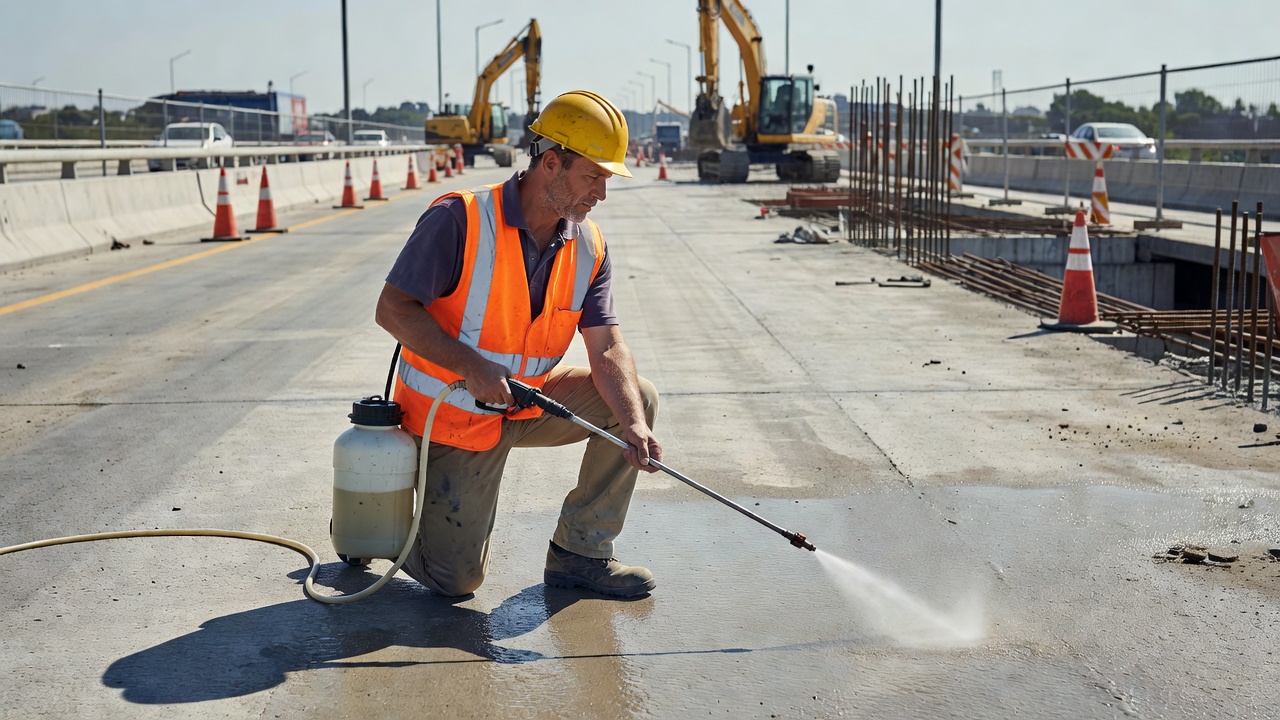
Silane and siloxane sealers represent a class of penetrating hydrophobic treatments that protect concrete from water absorption and chloride ingress without altering the surface appearance or reducing friction. Unlike film-forming coatings such as acrylics, epoxies, or urethanes that create a visible surface layer, penetrating sealers chemically react with the cementitious matrix inside the concrete pores to create a water-repellent lining that remains fully vapor permeable. This distinction makes them the preferred protection system for bridge decks, parking structures, airport pavements, marine structures, and other reinforced concrete exposed to chloride-laden water where both corrosion protection and surface friction are critical requirements.
The fundamental mechanism involves alkyltrialkoxysilane molecules - organosilicon compounds with the general formula R-Si(OR’)3, where R represents an alkyl group (typically isobutyl, octyl, or propyl) and OR’ represents hydrolysable alkoxy groups (methoxy, ethoxy, or propoxy). When applied to dry concrete, the alkoxy groups hydrolyze upon contact with atmospheric moisture and the alkaline pore solution, forming reactive silanol groups (Si-OH). These silanols then condense with hydroxyl groups on the concrete pore surface, forming stable covalent Si-O-Si bonds that permanently anchor the alkyl group to the pore wall. The alkyl group extends into the pore space, creating a molecular-scale hydrophobic barrier that prevents liquid water from entering the pore while allowing water vapor to pass through. This is fundamentally different from film-forming sealers which physically block the pores at the surface.
Chemistry of Silane, Siloxane, and Silicone Resins
The chemistry of organosilicon concrete sealers spans three related but distinct molecular classes: alkoxysilanes (commonly called silanes), siloxanes, and silicone resins. Each class differs in molecular size, polymerization state, penetration behavior, and performance characteristics.
Alkoxysilanes
Alkoxysilanes are monomeric organosilicon compounds consisting of a single silicon atom bonded to one organic alkyl group and three hydrolysable alkoxy groups. The most common variants used in concrete protection are isobutyltriethoxysilane and octyltriethoxysilane, with the alkyl chain length influencing the degree of water repellency imparted. The molecular weight of a typical alkoxysilane is approximately 200-300 g/mol, and the molecular diameter is 1-2 nanometers - substantially smaller than the typical concrete pore diameter of 10-1000 nanometers. This size differential enables deep capillary penetration into the concrete pore structure.
The hydrolysis-condensation reaction proceeds in two steps. First, in the presence of moisture and alkaline pH (the concrete pore solution has a pH of 12.5-13.5 due to calcium hydroxide and alkali hydroxides), the alkoxy groups hydrolyze:
R-Si(OR’)3 + 3H2O -> R-Si(OH)3 + 3R’OH
The resulting silanol groups (Si-OH) are highly reactive. They condense with hydroxyl groups (Si-OH) present on the concrete pore surface - specifically with the silanol groups of the calcium silicate hydrate (C-S-H) gel that constitutes the primary binding phase of hydrated cement:
R-Si(OH)3 + HO-Si(concrete) -> R-Si-O-Si(concrete) + H2O
This forms a permanent covalent bond that chemically anchors the alkylsilane molecule to the pore wall. The alkyl group (R) projects into the pore space, creating a hydrophobic surface that repels liquid water through the lotus effect principle - the surface tension of water on the alkyl layer exceeds the cohesive tension of the water droplet, causing it to bead and roll off rather than spread and absorb.
The reaction requires alkaline pH to proceed at a practical rate. In neutral or acidic conditions, the condensation reaction is slow or inhibited. This pH dependence means that carbonated concrete (pH < 9) - where atmospheric CO2 has neutralized the pore solution - may not achieve adequate chemical bonding with silane sealers. This is a critical inspection consideration: silane sealer applied to carbonated concrete may fail prematurely because the covalent bond to the substrate never fully forms.
Active solids content is the key formulation parameter for alkoxysilane sealers. Commercial products range from 20% active solids (diluted in alcohol or water solvent) to 100% active solids (neat product). The ODOT field study used sealers with 40-50% active solids in alcohol solvent, applied at rates of 125-250 ft2/gal. The MoDOT specification requires a minimum of 40% active silane content for bridge deck applications. Higher solids content generally correlates with deeper penetration and longer service life, though the relationship is not strictly linear because higher viscosity at higher solids can reduce penetration into dense concrete.
Siloxanes
Siloxanes are oligomeric or low-polymeric organosilicon compounds consisting of 2-10 repeating Si-O-Si units. They are formed by controlled pre-polymerization of alkoxysilanes, resulting in molecules with a molecular weight of approximately 500-1500 g/mol and molecular diameters of 2-5 nanometers. The Si-O-Si backbone is the same structure formed when silane bonds to concrete, meaning siloxanes arrive at the surface partially polymerized.
Because siloxane molecules are larger than monomeric silanes, they penetrate less deeply into the concrete pore structure - typically 1-3 mm versus 3-10 mm for silanes. However, the larger molecular size provides more effective surface-level water repellency because the thicker molecular layer at the pore mouth prevents water ingress more efficiently. In blended formulations (silane/siloxane blends), the small silane molecules penetrate deep into the pores while the larger siloxane molecules concentrate near the surface, producing both deep-zone protection and immediate surface water beading.
Siloxanes are less sensitive to pH conditions than monomeric silanes because partial pre-polymerization reduces the dependence on in-situ condensation. They also require lower active solids content for effective performance - typical siloxane sealers contain 5-20% active solids compared to 20-100% for silanes. This makes siloxane-based products generally more economical on a per-gallon basis, though the shallower penetration must be weighed against the application requirements.
Silicone Resins
Silicone resins (also called siliconates or silicone water repellents) are highly polymerized organosilicon compounds with molecular weights exceeding 5000 g/mol. They form a cross-linked silicone network within the concrete surface region. The most common type used in concrete protection is methyl siliconate (potassium methyl siliconate, CH3-Si(OH)2-OK), which is water-soluble and applied as an aqueous solution. Upon reaction with atmospheric CO2, the siliconate converts to an insoluble polymethylsiloxane network within the concrete pores.
Silicone resins provide the deepest penetration of the three classes because the initial water-soluble molecule can penetrate deeply before reacting, but the resulting silicone network has limited breathability compared to the discrete molecular lining provided by silanes and siloxanes. Silicone resin treatments are commonly used for vertical surfaces (building facades, retaining walls) and for concrete with high porosity where deep penetration is desired. However, for bridge decks and other horizontal traffic surfaces subjected to abrasion and high chloride exposure, silane and siloxane formulations are the dominant specification.
| Parameter | Silane (Alkoxysilane) | Siloxane | Silicone Resin |
|---|---|---|---|
| Molecular size | 1-2 nm (monomeric) | 2-5 nm (oligomeric) | >5 nm (polymeric) |
| Molecular weight | 200-300 g/mol | 500-1500 g/mol | >5000 g/mol |
| Typical active solids | 20-100% | 5-20% | 3-10% |
| Penetration depth | 3-10 mm | 1-3 mm | 2-8 mm |
| Solvent | Alcohol or water | Alcohol or water | Water |
| pH sensitivity | Requires alkaline pH | Less sensitive | Less sensitive |
| Vapor permeability | Excellent | Excellent | Good |
| Relative cost | Highest | Moderate | Most economical |
| Typical application | Bridge decks, horizontal traffic surfaces | Parking structures, general horizontal surfaces | Vertical surfaces, facades, restoration |
Solvent Types: Alcohol-Based vs. Water-Based
Silane and siloxane sealers are formulated in two solvent systems: alcohol-based (typically isopropanol, ethanol, or glycol ether) and water-based (with surfactants to emulsify the silane/siloxane in water). The solvent choice significantly affects application behavior and performance.
Alcohol-based (solvent-borne) sealers have been the traditional standard for bridge deck applications. Alcohol evaporates quickly, allowing the silane to penetrate the concrete before the solvent evaporates. The ODOT field study exclusively used alcohol-based silane sealers at 40-50% active solids. Alcohol-based formulations typically achieve deeper penetration than equivalent water-based formulations because alcohol has lower surface tension (21.7 mN/m for isopropanol vs 72.8 mN/m for water) and wets the concrete pores more effectively.
Water-based formulations have gained market share due to lower VOC (volatile organic compound) content, reduced odor, and easier cleanup. Modern water-based silane/siloxane blends use proprietary surfactants to emulsify the active ingredients in water, achieving penetration depths that approach alcohol-based formulations. The Nebraska DOT field study (2015) found that a 40% silane water-based formulation showed medium performance on penetration depth while a lithium/silane-siloxane blend showed comparable performance to alcohol-based products. Water-based products require longer drying times between application and traffic reopening.
Penetration Depth
Penetration depth is the single most important parameter governing the long-term effectiveness of a penetrating concrete sealer. It is defined as the distance from the concrete surface to the deepest point at which the sealer has chemically bonded to the pore walls and imparted hydrophobic properties. For bridge deck applications, AASHTO and state DOT specifications typically require a minimum penetration depth of 1/8 inch (3.2 mm), verified after construction by dye staining of core samples.
The penetration depth is governed by a complex interaction of material and application parameters:
Pore structure of the concrete is the most fundamental factor. Concrete with higher water-to-cement ratio (w/c) has a more open pore structure that permits deeper sealer penetration. The ODOT field bridges had w/c = 0.42 with minimum cement content of 565 lb/yd3 and 20% fly ash replacement - a relatively dense concrete mixture. In laboratory testing with w/c = 0.45 mixtures, the same silane achieved penetration depths of 5-8 mm compared to 3-5 mm in the field structures. Concrete with w/c > 0.50 may permit penetration exceeding 10 mm, while dense concrete with w/c < 0.40 or concrete treated with lithium silicate densifiers may limit penetration to less than 2 mm.
Surface moisture content is the most critical application variable. Moisture completely stops silane penetration. If the concrete surface or near-surface pores contain free water, the silane reacts with that water at the surface rather than penetrating deeper into the pore structure. The MoDOT engineering policy explicitly states that concrete must be clean and DRY - moisture will completely stop silane penetration. Under summer conditions, 24-48 hours of drying after rainfall or extended curing is typically required before sealer application. Some specifications require a moisture content below 50% RH measured at 1-inch depth using a moisture meter.
Application rate directly controls the volume of sealer available to penetrate the concrete. The ODOT study used application rates of 125-250 ft2/gal for a 40-50% active silane, which corresponds to approximately 50-100 mL/m2 of active silane. Higher application rates generally produce deeper penetration up to the saturation point of the concrete’s absorption capacity. Beyond that point, excess sealer either evaporates or remains at the surface without additional penetration benefit. MoDOT specifies a uniform application rate of 200 ft2/gal for all bridge deck silane treatments.
Active solids content determines how much silane is available to bond within the pores. Higher solids content means more molecules available to line the pore walls, but also increases viscosity which can reduce penetration speed. The ODOT study compared ATS-42 (>40% solids) with DECK-SIL 1700 (100% solids two-part system) and found that the 100% solids product achieved approximately 20% greater penetration depth when applied to the same concrete under the same conditions.
Application method affects the uniformity and depth of penetration. Low-pressure, high-volume sprayers are the standard application method for bridge decks, achieving uniform coverage at the specified application rate. Ponding the sealer on the surface (creating a continuous liquid film) for a defined period improves penetration depth. The ODOT laboratory study ponded silane for 1 hour to achieve the required 1/8-inch penetration depth. In field applications, multiple flood coats (two or three applications at 15-30 minute intervals) are more effective than a single heavy application because the initial coat wets the pores and the subsequent coats push the sealer deeper.
Concrete temperature affects the reaction rate and viscosity. MoDOT specifies application at concrete temperatures between 40F and 90F. Below 40F, the condensation reaction proceeds too slowly for practical use. Above 90F, the solvent evaporates too quickly, reducing the time available for penetration before the sealer dries. Nighttime application is encouraged during summer months to reduce evaporation rates.
Verification of penetration depth is performed by extracting cores (typically 3/4-inch diameter by 1-inch height), splitting them longitudinally, and applying a dye that differentiates treated from untreated concrete. The ODOT study used two staining methods with good agreement: blue dye (Powder Rit Dye) ponded for 30 minutes stains untreated concrete blue while treated concrete remains unstained, and mineral-based cutting oil (Rockhound oil) ponded for 60 seconds wets untreated surfaces while beading on treated surfaces. The penetration depth is measured from the top surface to the maximum depth of hydrophobic treatment visible in the stained cross-section. A minimum of 1/8 inch is required for acceptance.
Water Repellency and Chloride Screening
The hydrophobic surface created by silane and siloxane treatments provides two primary protective functions: water repellency (preventing liquid water absorption) and chloride ion screening (reducing ingress of dissolved chlorides from deicing salts and seawater). These functions are related but have distinct performance metrics and implications for concrete durability.
Water Repellency
Water repellency is measured by the water absorption rate of treated versus untreated concrete, typically determined using the RILEM Tube Test or Karsten Tube Test. A glass tube is sealed to the concrete surface and filled with water, and the water level drop over time is measured. Treated concrete typically shows a reduction in water absorption of 80-95% compared to untreated concrete of the same mixture.
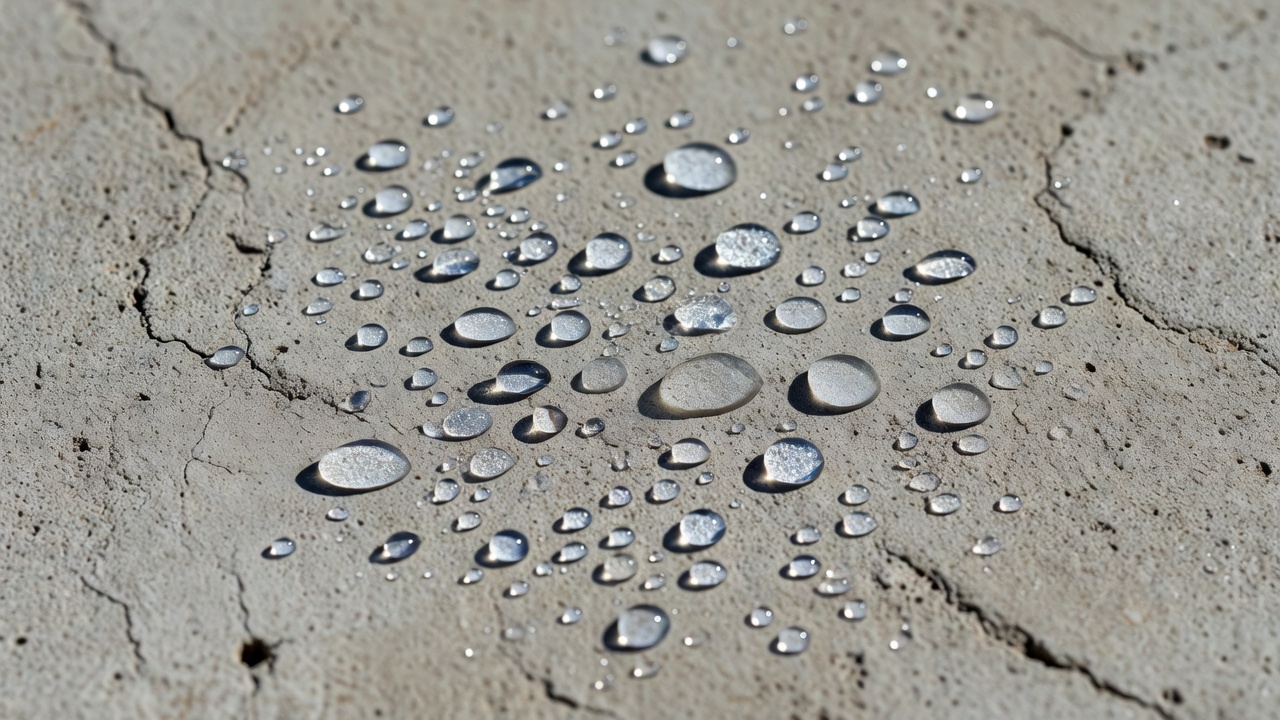
The water beading effect is the most visible field indicator of active water repellency. When water is sprayed onto a properly treated concrete surface, it forms discrete spherical droplets that bead up and roll off the surface rather than spreading and absorbing. If water absorbs into the concrete and darkens the surface, the sealer has deteriorated or was never properly applied. The water beading test is a simple, non-destructive field method for screening sealer condition - it should be performed during every routine inspection of treated concrete surfaces.
Water repellency degrades over time through the alkaline pore solution attack mechanism described in the ODOT study. The Si-O-Si bond between the alkylsilane molecule and the concrete pore wall is susceptible to hydrolysis under high pH conditions. The concrete pore solution - rich in Ca(OH)2, NaOH, and KOH at pH 12.5-13.5 - gradually breaks these bonds, releasing the alkylsilane molecules from the pore walls. This deterioration progresses from the interior of the concrete toward the surface, which is why the travel lane/shoulder comparison in the ODOT study showed no significant difference - abrasion from traffic was not removing the sealer, the sealer was being chemically destroyed from within.
Chloride Screening Efficiency
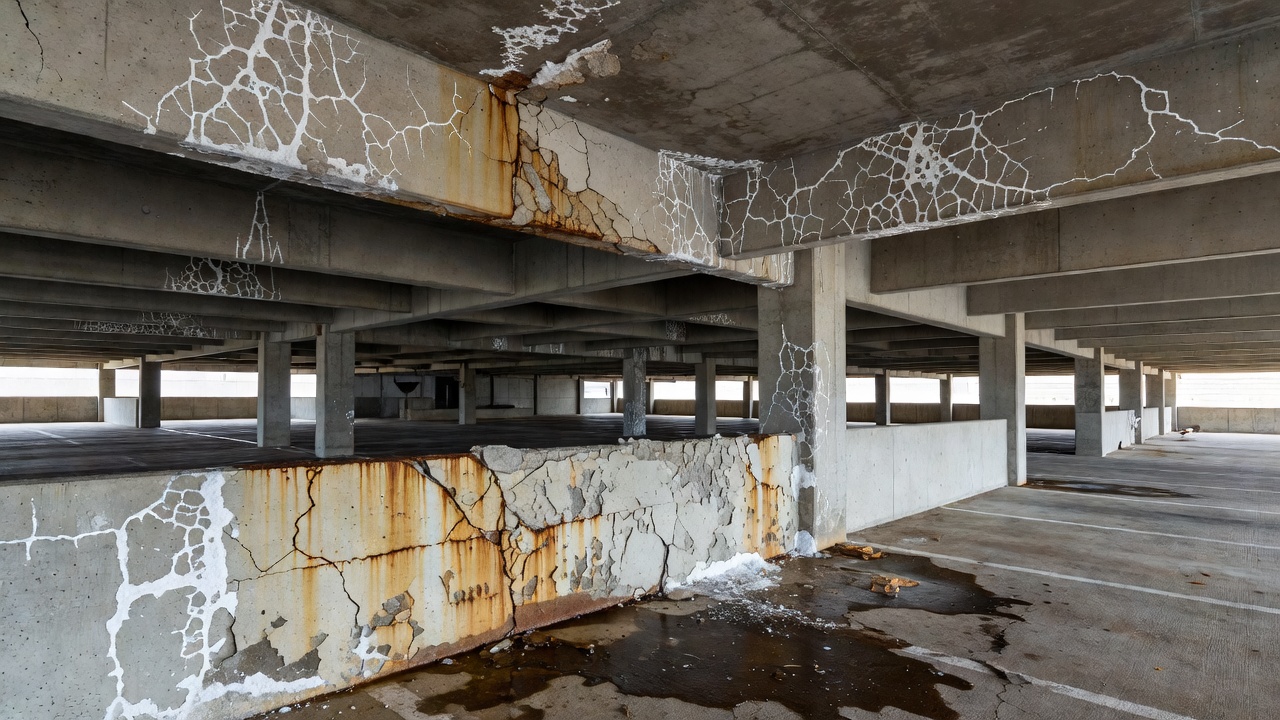
Chloride screening is the more critical function for reinforced concrete durability. The corrosion of reinforcing steel in concrete is driven by chloride ions penetrating the concrete cover to the depth of the reinforcement. Once the chloride concentration at the rebar surface exceeds the chloride threshold level (typically 0.05-0.15% by weight of concrete for uncoated black steel), the passive oxide film on the steel surface is destroyed, and active corrosion initiates. The corrosion products occupy approximately 2-6 times the volume of the original steel, generating tensile stresses that crack and spall the concrete cover.
The ODOT laboratory study evaluated chloride screening efficiency using 45-day sodium chloride ponding (simulating exposure to deicing salts). Concrete samples were treated with two silane formulations and compared to untreated controls. The results quantified the dramatic protective effect:
| Treatment | Chloride Penetration Depth | Total Chloride Uptake Reduction |
|---|---|---|
| Control (no sealer) | Full depth penetration | - |
| ATS-42 (standard silane, >40% solids) | Reduced by 5x vs control | ~85% reduction |
| DECK-SIL 1700 (two-part silane-epoxy, 100% solids) | Negligible penetration after 45 days | ~99% reduction |
The two-part system (DECK-SIL 1700) showed superior performance because its 100% solids content and epoxy-enhanced formulation produced deeper penetration and more complete pore lining. After 45 days of continuous ponding with 15% sodium chloride solution, the chloride penetration was essentially undetectable in the treated zone.
Advanced evaluation methods used in the ODOT study included micro-XRF (micro X-ray fluorescence) for non-destructive chemical imaging of chloride profiles in concrete cores. This technique provides spatial maps of chloride distribution at 50 um resolution, distinguishing between aggregates and cement paste to analyze chloride content specifically in the paste phase. The micro-XRF mapping showed chloride concentration at the concrete surface (0-1 mm depth) in treated samples but no significant penetration beyond 5 mm, while untreated control samples showed chloride penetration through the full core depth.
X-ray radiography was also used as a rapid screening method for evaluating silane effectiveness. A contrast-enhancing salt (KI, 10% solution) was mixed into the ponded water to make the penetrating solution visible in X-ray images. The X-ray scans showed that in silane-treated mortar, the salt solution penetrated only 1 mm from the surface after 40 days of exposure, while in untreated controls the solution penetrated through the full sample depth within 5 hours. The X-ray method enables chloride screening evaluation in days rather than months, making it a promising tool for quality assurance testing of sealer applications.
Application Methods
Proper application of silane and siloxane sealers requires strict adherence to surface preparation, environmental conditions, and application procedures. The manufacturer’s published application instructions are the authoritative reference, but several general principles apply across all products and specifications.
Surface Preparation
The concrete surface must be clean, dry, and sound before sealer application. Contaminants that block pore entry - dirt, oil, grease, curing compounds, form release agents, efflorescence, laitance, and previous coatings - must be removed. Pressure washing at 3000-5000 psi with appropriate cleaning agents is the standard method for removing surface contaminants. The surface must then be allowed to dry completely - typically 24-48 hours depending on ambient temperature, humidity, and concrete moisture content.
Surface preparation is particularly critical for existing structures that may have accumulated years of dirt, oil drips from vehicles, rubber deposits (on runways), and environmental grime. The CP Tech Center literature review emphasized that for concrete penetrating sealers to be effective, they must have the ability to penetrate sufficiently into the concrete substrate - and this penetration is blocked by any surface contamination that fills or seals the pore mouths.
Concrete should be a minimum of 28 days old before sealer application to allow full hydration and development of the alkaline pore solution needed for the silane bonding reaction. Green concrete (less than 7 days) should never be treated because the pore structure is still forming and the high moisture content prevents penetration.
Application Equipment and Procedure
Low-pressure, high-volume sprayers are the standard equipment for horizontal surface applications such as bridge decks, parking decks, and pavements. The sprayer should deliver a uniform, fan-shaped spray pattern at pressures of 20-40 psi. Hand-pump sprayers are specifically discouraged by DOT specifications because they produce inconsistent coverage and application rates.
The application procedure for bridge deck sealers per MoDOT EPG 771.16:
- Surface temperature must be between 40F and 90F. Below 40F, the chemical reaction slows unacceptably. Above 90F, solvent evaporation prevents adequate penetration.
- Apply in even flood coats at the specified application rate (200 ft2/gal per MoDOT). The surface should appear uniformly wet for the duration of the specified flood time.
- Allow penetration time between coats. For two-coat systems, the recommended interval between coats is 15-30 minutes, allowing the first coat to fully wet the pores before the second coat drives the sealer deeper.
- Prevent overspray on adjacent traffic lanes, bridge railings, drainage scuppers, waterproofing membranes, and expansion joints.
- Allow drying time before opening to traffic - typically 2-4 hours under favorable conditions. Traffic reopening before the sealer has fully cured can pick up the unreacted sealer on tires and reduce effectiveness.
- Crack filling should be performed after sealer application according to MoDOT policy, not before. Applying sealer before crack filler improves adhesion of the filler and provides protection to the concrete adjacent to the crack.
Nighttime application during summer months is encouraged to reduce solvent evaporation rates and maximize penetration depth. In hot weather (above 85F), the effective penetration window before solvent evaporation may be as short as 10-15 minutes, requiring rapid application and potentially misting the surface with water to cool it before application.
Application Rates and Coverage
Coverage rates vary by product formulation, concrete porosity, and specification requirements:
| Source | Product Type | Application Rate | Notes |
|---|---|---|---|
| MoDOT | Silane (general) | 200 ft2/gal | Standard bridge deck rate |
| ODOT Study | ATS-42 (standard silane) | 125-250 ft2/gal | 40%+ solids, 6.76 lb/gal |
| ODOT Study | DECK-SIL 1700 (two-part) | 100 ft2/gal | 100% solids, 7.68 lb/gal |
The application rate is typically expressed in square feet per gallon (or square meters per liter). A lower numerical value means more sealer per unit area. The 100 ft2/gal rate for the 100% solids product delivers approximately twice the mass of active silane per unit area compared to the 125-250 ft2/gal rate for the 40% solids product, consistent with its superior penetration and chloride screening performance.
Common Application Errors
The most frequent application errors that compromise sealer performance include applying to damp concrete (moisture blocks penetration), insufficient application rate (inadequate volume to achieve minimum penetration depth), uneven coverage (streaks or missed areas leading to localized chloride ingress), applying at improper temperature (too cold for reaction or too hot for adequate penetration), and opening to traffic too soon (tire pickup of unreacted sealer).
The ACI 345.1R-06 Guide for Maintenance of Concrete Bridge Members emphasizes that for concrete penetrating sealers to be effective, they must have the ability to penetrate sufficiently into the concrete substrate - and they must be applied according to the manufacturer’s instructions, which take precedence over generic specifications when they differ.
Performance Life and Reapplication
The service life of silane sealers on concrete bridge decks has been quantified by the landmark ODOT 12-year field study (FHWA-OK-15-05), which evaluated 60 bridge decks (360 cores total) spanning 6 to 20 years of service. The study provides the most comprehensive field performance data available for silane sealers in bridge deck service.
Field Performance Results
The study tested cores from travel lanes and shoulders at each bridge, using blue dye staining to measure silane penetration depth. Bridges were classified as effective (>=1/8 inch penetration depth remaining) or ineffective (<1/8 inch). Results by age group:
| Age Group | Bridges Tested | % Effective (Travel Lane) | % Effective (Shoulder) |
|---|---|---|---|
| 6-12 years | 29 | 100% | 100% |
| 15 years | 12 | 66.7% | 66.7% |
| 17-20 years | 19 | 21% | 16% |
The average silane layer thickness declined by 25% at 15 years and 75% at 17-20 years compared to the 6-12 year baseline:
| Age Group | Travel Lane (inches) | Shoulder (inches) |
|---|---|---|
| 6-12 years | 0.24 +/- 0.06 | 0.25 +/- 0.06 |
| 15 years | 0.19 +/- 0.13 | 0.19 +/- 0.13 |
| 17-20 years | 0.07 +/- 0.11 | 0.06 +/- 0.10 |
Key Findings on Deterioration Mechanism
The most important finding of the ODOT study was that abrasion from traffic is NOT the primary deterioration mechanism. The difference in silane depth between travel lanes (subjected to millions of vehicle passes) and shoulders (minimal traffic) was small and statistically insignificant across all age groups. Two-way ANOVA analysis showed less than 10% probability that the travel lane and shoulder depths were actually different - they were statistically indistinguishable.
Surface deterioration (weathering, UV degradation) was also ruled out - less than 5% of field samples showed any evidence of surface deterioration.
The study concluded that the primary deterioration mechanism is chemical attack by the alkaline pore solution. The high pH environment (12.5-13.5) within the concrete gradually breaks the Si-O-Si bonds that anchor the silane molecules to the pore walls. This was confirmed by FT-IR analysis of samples showing loss of Si-O-Si absorption peaks in aged samples, consistent with published literature by Tosun et al. on silane stability in alkaline environments.
This finding has a significant practical implication: silane sealer deterioration progresses from the interior of the concrete toward the surface, not from the surface inward. The sealer fails first at the deepest penetration depth and gradually retreats toward the surface. This explains why the travel lane and shoulder show identical deterioration rates - the mechanism is chemical, not mechanical.
An additional implication is that concrete mixtures with higher supplementary cementitious material (SCM) content - fly ash, slag, silica fume - may extend silane service life. SCMs consume Ca(OH)2 through the pozzolanic reaction, reducing the pore solution alkalinity and slowing the rate of Si-O-Si bond hydrolysis.
Recommended Reapplication Intervals
Based on the field performance data, reapplication schedules are specified by transportation agencies:
| Agency/Source | Recommended Reapplication Interval | Basis |
|---|---|---|
| MoDOT | 7-10 years | Engineering Policy 771.16 |
| CF Silicones (manufacturer) | 3-5 years | General recommendation |
| ODOT Study | ~12 years before significant deterioration | Field performance data |
| ASCE Journal (concrete pavement joints) | 3-6 years for optimal performance | Field study of joints |
The MoDOT interval of 7-10 years is the most common DOT specification for bridge decks and aligns well with the ODOT data showing 100% effectiveness at 12 years but declining by 15 years. The 3-5 year manufacturer recommendation is more conservative and may be appropriate for aggressive exposure environments (marine, heavy deicing salt application, frequent freeze-thaw cycling). The ASCE Journal study (2021) on concrete pavement joints protected by silane found an ideal reapplication interval of 3-5 years, with a realistic estimate of 5-6 years.
For airports, the recommended reapplication interval depends on traffic volume, deicing fluid exposure, and climate. Major international airports with frequent deicing operations typically specify 5-7 year reapplication intervals for pavement treatments.
Effects on Surface Appearance, Friction, and Bond
Penetrating silane and siloxane sealers are designed to be invisible - they do not alter the surface appearance, texture, color, gloss, or skid resistance of the treated concrete. This distinguishes them fundamentally from film-forming sealers (acrylics, epoxies, urethanes, polyaspartics) which create a visible surface coating that can peel, yellow, gloss, and become slippery when wet.
Appearance
Silane and siloxane sealers do not change the color or texture of concrete. The sealer penetrates into the pore structure and bonds to the pore walls, leaving the surface itself completely unchanged. The concrete retains its natural appearance after treatment - there is no visible film, no gloss or sheen, no color shift, and no change in the surface texture. This is critical for architectural concrete, historic structures, and any application where aesthetic appearance must be preserved.
The only visible effect of an active sealer is the water beading behavior when water is applied. Water forms discrete spherical droplets on the surface instead of spreading and darkening the concrete. This is actually a beneficial visual indicator for inspectors - the water beading test provides immediate confirmation that the sealer is present and functioning.
Friction and Skid Resistance
Because penetrating sealers do not form a surface film, they do not reduce skid resistance or friction coefficient. The macrotexture and microtexture of the concrete surface are completely unchanged, meaning the tire-pavement friction characteristics remain identical to untreated concrete.
This is a critical safety requirement for bridge decks, parking structures, and airport pavements where surface friction is a primary safety parameter. Film-forming sealers - particularly epoxy and polyurethane coatings - can reduce friction coefficients by 30-60% when wet, creating a hydroplaning hazard. Penetrating sealers eliminate this risk entirely.
Standardized friction tests confirm that penetrating sealers do not measurably affect skid resistance:
- ASTM E303 (British Pendulum Tester) - measures friction coefficient on wet surfaces
- ASTM E1911 (Dynamic Friction Tester) - measures friction at various slip speeds
- ASTM E274 (Locked Wheel Skid Trailer) - measures friction under loaded rolling tire
Studies by the Nebraska Department of Transportation and multiple state DOTs have confirmed that penetrating silane and siloxane treatments show no statistically significant difference in friction coefficient compared to untreated concrete.
Bond of Overlays and Coatings
A consideration for maintenance planning is the effect of penetrating sealers on the bond of subsequent overlays, coatings, or repair materials. Because the sealer makes the pore walls hydrophobic, it can reduce the bond strength of cementitious overlays, epoxy coatings, or other materials that rely on mechanical interlock with the concrete surface.
For this reason, silane sealers should not be applied to concrete that will later receive a bonded overlay unless the overlay material specifically includes a bonding agent formulated for hydrophobic surfaces. If a bonded overlay is planned as part of future rehabilitation, the sealer should be applied only to the areas that will not be overlaid, or a surface preparation step (grinding, shotblasting, or acid etching) should be planned to restore surface bond capacity.
The MoDOT specification notes that silane sealer should be applied before crack fillers because the sealer improves filler adhesion. However, if subsequent surface treatments or overlays are anticipated, the sealer application should be carefully coordinated to avoid bond problems.
Silane Sealer in Bridge Deck Preservation
Bridge deck preservation is the primary application driving the development and specification of silane concrete sealers. Bridge decks are the most exposed and vulnerable element of a bridge structure - they directly receive traffic loading, deicing salt application, freeze-thaw cycling, and UV exposure. The annual cost of corrosion to US highway bridges is estimated by FHWA at $8.3 billion, with chloride-induced corrosion of reinforcing steel in decks being the dominant deterioration mechanism.
Role in Preventive Maintenance
Silane sealers are a preventive maintenance treatment applied to bridge decks that are still in good condition (typically rated 6 or higher on the FHWA 0-9 NBI scale) to extend their service life and delay the onset of corrosion-related deterioration. They are not a restorative treatment for decks that already have significant chloride contamination, active corrosion, or delamination - once corrosion has initiated, removal of chloride-contaminated concrete and cathodic protection or removal and replacement are typically required.
The ACI 345.1R-06 Guide for Maintenance of Concrete Bridge Members classifies penetrating sealers (silane and siloxane) as a preventive maintenance activity appropriate for concrete decks with:
- No existing chloride contamination exceeding the threshold level at rebar depth
- No active corrosion (half-cell potentials more positive than -200 mV CSE)
- No delamination or spalling
- Surface cracks less than 0.5 mm width (wider cracks require filling before sealer application)
MoDOT Specification Framework
The Missouri Department of Transportation (MoDOT) specification in Section 771.16 provides a model framework for bridge deck silane sealer application. Key requirements:
- Application code R322 - applies to new concrete bridge decks and decks requiring re-treatment
- Surface type - concrete only, not applicable to bituminous overlays or epoxy-sealed surfaces
- Surface condition - clean, dry, 40F-90F temperature range
- Application rate - 200 ft2/gal, uniform coverage
- Equipment - low-pressure, high-volume sprayer, hand-pump sprayers prohibited
- Timing - apply before crack fillers
- Reapplication - every 7-10 years, consider within first 3 years if excessive cracking develops
- Materials - per Section 1053.10 (silane sealer material specification)
- PPE - per manufacturer recommendations and MSDS requirements
Integration with Bridge Management Systems
The FHWA Specifications for the National Bridge Inventory (SNBI), effective for data collection from January 2025, includes concrete condition ratings that reflect the presence and condition of protective treatments. While SNBI does not have a dedicated sealer condition field comparable to B.C.07 for bearings, the deck condition rating (D.C.12) and the protective coating field provide mechanisms for documenting the presence and effectiveness of silane sealer treatments.
For National Highway System (NHS) bridges, element-level data collection per the AASHTO Manual for Bridge Element Inspection (MBEI) allows bridge management systems to track sealer condition as part of the overall deck preservation history. The condition state distribution of the concrete deck element reflects the protective benefit of an active sealer, and the deterioration rate modeling can incorporate the expected service life extension provided by sealer treatment.
Inspection of Sealer Condition
Inspecting the condition of an existing silane sealer treatment is challenging because the sealer is invisible - there is no surface film to observe, no peeling or blistering to see. However, several methods are available for evaluating whether the sealer remains effective or has deteriorated to the point where reapplication is needed.
Water Beading Test
The water beading test is the simplest, quickest field method for screening sealer condition. Water is sprayed onto the concrete surface from a spray bottle, and the inspector observes the water behavior:
- Active sealer: Water forms discrete spherical beads that remain on the surface and roll off when the surface is tilted. The concrete does not darken.
- Deteriorating sealer: Water partially beads but some absorption occurs, with localized darkening of the concrete.
- Failed or absent sealer: Water spreads and absorbs immediately into the concrete, producing a uniform darkening of the surface.
The water beading test is qualitative and provides only a surface-level indication of sealer presence. A positive beading test indicates the surface layer (top 1-2 mm) of the concrete still has hydrophobic properties, but it does not confirm that the sealer remains at the specified penetration depth deeper in the concrete. A negative test (water absorbs) is a reliable indicator that reapplication is needed.
Dye Staining of Core Samples
Dye staining is the standard quantitative method for measuring remaining sealer penetration depth. The procedure used in the ODOT study:
- Extract a core (3/4-inch diameter by 1-inch height) from the treated concrete.
- Split the core longitudinally using a splitting tool or saw.
- Apply blue dye (Powder Rit Dye) to the split face - pond for 30 minutes, then rinse.
- Alternatively, apply mineral-based cutting oil (Rockhound oil) - pond for 60 seconds, then wipe.
- Inspect the stained surface: treated concrete resists dye absorption and remains light, untreated concrete absorbs the dye and darkens.
- Measure the penetration depth from the top surface to the boundary of the treated zone.
- If the remaining penetration depth is less than 1/8 inch, reapplication at the next scheduled interval should be considered.
Both staining methods showed good agreement in the ODOT study. The dye method provides more distinct visual contrast and is generally preferred for documentation purposes.
Chloride Sampling and Profiling
Chloride profiling is the most technically rigorous method for assessing sealer condition but also the most expensive and time-consuming. The procedure follows AASHTO T 259 (Resistance of Concrete to Chloride Ion Penetration) and AASHTO T 260 (Sampling and Testing for Chloride Ion in Concrete):
- Extract cores from the treated concrete (multiple locations for statistical representation).
- Mill the cores in thin layers (typically 1-2 mm increments) from the surface downward.
- Analyze each layer for acid-soluble chloride content.
- Plot the chloride concentration profile as a function of depth from the surface.
- Compare the profile to established thresholds:
- Chloride threshold for corrosion initiation: 0.05-0.15% by weight of concrete for uncoated black steel rebar
- Depth of chloride penetration: depth at which concentration falls below the threshold
For a properly sealed deck, the chloride concentration at 1/2 inch depth should be near zero. For a deck with deteriorated sealer, chlorides may have penetrated to 1-2 inches or deeper, indicating active corrosion risk at the rebar level.
The chloride profile method provides the most direct evidence of sealer performance because it measures the actual protective function rather than inferring it from dye patterns. However, it requires laboratory analysis and specialized sample preparation, making it impractical for routine screening. It is typically reserved for acceptance testing of new sealer applications, 5-year or 10-year condition assessments of critical bridge decks, forensic investigation of deck deterioration, and validation of water beading and dye staining results.
Relationship to Half-Cell Potential Surveys
Half-cell potential mapping per ASTM C876 can provide complementary information about sealer condition. If a bridge deck was treated with silane sealer at construction and subsequently shows corrosion potentials more negative than -350 mV (vs. Cu/CuSO4) in localized areas, this indicates that the sealer has failed in those areas and chloride ingress has initiated corrosion. The half-cell potential map overlaid on a cover depth map (from cover meter survey) provides powerful diagnostic insight: areas with low cover and sealer failure are the highest priority for repair or reapplication.
Airport Applications
Silane and siloxane penetrating sealers are widely used in airport concrete pavement preservation, where the combination of high freeze-thaw exposure, deicing fluid chemical attack, and strict safety requirements makes them particularly valuable.
Runway and Taxiway Requirements
ICAO Annex 14, Volume I, Aerodrome Design and Operations, Section 2.9 establishes requirements for runway surface friction characteristics. For safety-critical surfaces, any surface treatment must not reduce the friction coefficient below specified minimum levels. Penetrating silane and siloxane sealers satisfy this requirement because they do not alter the pavement macrotexture (the large-scale surface texture provided by grooving, tining, or exposed aggregate) or microtexture (the fine-scale surface roughness of the cement paste and aggregate particles).
The FAA Advisory Circular AC 150/5320-6F (Airport Pavement Design and Evaluation) and AC 150/5380-6B (Airport Pavement Management) reference the use of penetrating sealers as a preventive maintenance tool for extending pavement life. Sealers are particularly effective for protecting new concrete pavement at the time of construction, preventing chloride and moisture ingress from the beginning of service life.
Protection from Deicing Fluids
Airport concrete pavements in cold climates are subjected to intensive aircraft deicing and anti-icing fluid applications. These fluids - primarily ethylene glycol and propylene glycol based - are aggressive chemical agents that can chemically attack the cement paste matrix and accelerate deterioration. Deicing fluids also create a high-moisture, high-chemical environment that promotes water absorption and freeze-thaw damage.
Penetrating silane and siloxane sealers reduce the absorption of deicing fluids into the concrete pore structure by 70-90%, significantly reducing chemical attack and freeze-thaw damage. This is particularly important in apron areas where aircraft are deiced before takeoff, as these areas receive the highest concentration of deicing fluid application.
Airfield Pavement Inspection
The inspection of silane sealer condition on airport pavements follows the same methods as bridge decks (water beading, dye staining, chloride profiling), with the addition of friction testing to verify that the sealer has not reduced skid resistance. Continuous friction measurement equipment (CFME) per ASTM E274 or the FAA’s Runway Friction Tester (RFT) provides quantitative friction data to verify that pavement surface characteristics remain within acceptable limits after sealer application.
The segregation of airfield pavement management into preventive maintenance (including sealer application) and corrective maintenance follows FAA guidance. Sealers are typically considered part of the preventive maintenance program, applied at 7-10 year intervals or as recommended by the manufacturer, with condition monitoring at each pavement evaluation cycle.
Environmental and Safety Aspects
Volatile Organic Compounds (VOCs)
Alcohol-based silane sealers contain significant levels of volatile organic compounds (VOCs) from the alcohol solvent - typically isopropanol, ethanol, or glycol ether at 50-80% of the formulation by weight. VOC content must comply with applicable air quality regulations, which in the United States are enforced at the state level under the Clean Air Act.
California’s South Coast Air Quality Management District (SCAQMD) Rule 1113 and similar regulations in other states limit VOC content of architectural coatings and industrial maintenance coatings. Some alcohol-based silane sealers may exceed local VOC limits in areas with strict air quality regulations. Water-based silane/siloxane formulations have significantly lower VOC content (typically <100 g/L compared to 400-700 g/L for alcohol-based products) and are preferred in VOC-regulated areas.
The shift toward water-based formulations is driven by both regulatory compliance and workplace safety concerns. However, specifiers should verify that water-based formulations meet the same penetration depth and performance requirements as the alcohol-based products they replace. The Nebraska DOT study noted that some water-based silane/siloxane blends showed medium performance on penetration depth, indicating that product selection should be based on validated performance data rather than simple VOC compliance.
Worker Safety
Silane and siloxane sealers require appropriate personal protective equipment (PPE) during application, as specified in the manufacturer’s Safety Data Sheet (SDS). Typical requirements include:
- Respiratory protection: Organic vapor respirator (N95 or half-face with organic vapor cartridge) for alcohol-based formulations, particulate respirator for water-based formulations
- Eye protection: Safety glasses or chemical splash goggles
- Skin protection: Chemical-resistant gloves (nitrile or neoprene), long sleeves, and long pants
- Foot protection: Chemical-resistant boots or shoe covers where overspray is possible
Alcohol-based formulations may produce flammable vapors during application, particularly in enclosed or partially enclosed spaces such as parking garages. Explosion-proof application equipment and adequate ventilation are required. Some DOT specifications prohibit application in enclosed structures without continuous fresh air supply and gas monitoring.
Environmental Precautions
Overspray control is required to prevent sealer from contacting adjacent structures, vehicles, vegetation, and water bodies. Silane sealers that enter waterways can be toxic to aquatic organisms, and the alcohol solvent can deplete dissolved oxygen in surface waters. MoDOT specifically requires that runoff from crack sealing operations be controlled to prevent waterway contamination.
Drip and spill containment is required during application. Drip pans and absorbent materials should be available at the application site. Spills on soil should be excavated to the depth of penetration and disposed as hazardous waste per local regulations.
Storage and Handling
Silane and siloxane sealers must be stored in sealed containers at temperatures between 40F and 100F. Freezing can damage water-based formulations, and high temperatures can increase pressure in sealed containers of alcohol-based products. Shelf life is typically 12-18 months from the date of manufacture, with containers showing the manufacture date and batch number for quality traceability.
Empty containers should be triple-rinsed before disposal, with the rinse water used as part of the sealer application (if compatible with the product) or disposed as hazardous waste. Container disposal follows state and local regulations for hazardous waste containers.
Standards and Specification Framework
Several standards and specification documents govern the selection, application, and testing of silane and siloxane concrete sealers:
AASHTO Specifications:
- AASHTO T 259 - Standard Method of Test for Resistance of Concrete to Chloride Ion Penetration (ponding test used for sealer chloride screening evaluation)
- AASHTO T 260 - Standard Method of Test for Sampling and Testing for Chloride Ion in Concrete and Concrete Raw Materials
- AASHTO M 321 - Standard Specification for Penetrating Concrete Sealers (material specification for silane and siloxane sealers)
ASTM Standards:
- ASTM C666 - Standard Test Method for Resistance of Concrete to Rapid Freezing and Thawing (used to evaluate sealer effectiveness for freeze-thaw protection)
- ASTM C1202 - Standard Test Method for Electrical Indication of Concrete’s Ability to Resist Chloride Ion Penetration (rapid chloride permeability test, sometimes used for sealer evaluation)
- ASTM E303 - Standard Test Method for Measuring Surface Frictional Properties Using the British Pendulum Tester (verifies friction is not reduced by sealer)
AASHTO/ACI Guidance:
- ACI 345.1R-06 - Guide for Maintenance of Concrete Bridge Members (classifies penetrating sealers as preventive maintenance)
- ACI 546R - Concrete Repair Guide (references sealers for corrosion protection)
FHWA Documents:
- FHWA-HRT-04-133 - Manual for Corrosion Protection of Concrete Structures (discusses sealer treatment for corrosion prevention)
- FHWA-OK-15-05 - Expected Life of Silane Water Repellent Treatments on Bridge Decks (the definitive field performance study)
State DOT Specifications:
- Most state DOTs have standard specifications for penetrating concrete sealer materials and application (e.g., MoDOT Sec 771.16, Caltrans, TxDOT)
- These typically reference AASHTO M 321 for material qualification and include project-specific application rates and acceptance criteria
The CP Tech Center literature review (2022) on evaluation of penetrating sealers provides the most comprehensive synthesis of test methods and performance criteria, including chloride ion intrusion (AASHTO T 259/260), freeze-thaw resistance (ASTM C666), rapid chloride ion permeability (ASTM C1202), and salt ponding resistance. The review concluded that properly selected and applied silane and siloxane sealers are effective for reducing chloride ingress and extending the service life of concrete bridge decks when applied as part of a comprehensive preventive maintenance program.
Frequently Asked Questions
- What is the difference between silane and siloxane concrete sealers?
- Silane and siloxane are chemically related but differ in molecular size and behavior. Silane (alkyltrialkoxysilane) consists of single molecules approximately 1-2 nanometers in size, which can penetrate 3-10 mm into concrete pores before chemically bonding. Siloxanes are pre-polymerized chains of silane molecules (Si-O-Si backbone), approximately 2-5 nanometers in size, which penetrate less deeply but form more effective surface-level water repellency. In blended sealers, the silane component penetrates deeply to provide long-term protection, while the siloxane component stays nearer the surface to provide immediate water beading. According to ASTM and AASHTO specifications, silane sealers typically require 20-100% active solids content for bridge deck applications, while siloxane sealers are effective at 5-20% active solids due to their larger molecular structure. Both chemistries require alkaline concrete (pH > 9) to catalyze the bonding reaction.
- How long does silane sealer last on concrete bridge decks?
- A landmark 12-year field study by the Oklahoma Department of Transportation (FHWA-OK-15-05) evaluated 60 bridge decks treated with alcohol-based silane sealers at 40-50% active ingredient concentration. The study found that 100% of treated bridges maintained effective hydrophobic protection (>=1/8 inch penetration depth) for 6-12 years. At 15 years, 66.7% of bridges remained effective. At 17-20 years, only 16-21% remained effective. The average silane layer thickness reduced by approximately 25% at 15 years and 75% at 17-20 years compared to the first 12 years. Critically, the study found that abrasion from traffic was NOT a significant deterioration mechanism - the difference in silane depth between travel lanes and shoulders was statistically insignificant. The primary failure mechanism was chemical attack by alkaline pore solution (high pH from Ca(OH)2) breaking Si-O-Si bonds from within the concrete. MoDOT specifies reapplication at 7-10 year intervals.
- How do you inspect and test silane sealer condition on concrete?
- Silane sealer condition is assessed through three primary methods: (1) Water beading test - spraying water onto the concrete surface and observing whether water beads up (sealer present and active) or absorbs and darkens the concrete (sealer deteriorated or absent). This is the simplest field-screening test. (2) Dye staining of core samples - extracting a core (typically 3/4-inch diameter), splitting it, and applying a blue dye (e.g., Powder Rit Dye) or mineral-based cutting oil. Treated concrete resists dye penetration, while untreated concrete absorbs the dye, revealing the depth of silane penetration. The ODOT study used this method with 30-minute dye ponding for verification of >=1/8 inch penetration. (3) Chloride profiling per AASHTO T 259/T 260 - ponding a chloride solution on the concrete surface for a specified period, then measuring chloride penetration depth and concentration profile to quantify the sealer's screening efficiency.
- Are silane and siloxane sealers effective for airport concrete pavements?
- Yes, silane and siloxane sealers are widely used on airport pavements including runways, taxiways, and apron areas. They provide critical protection against water ingress, freeze-thaw damage, and deicing fluid chemical attack - all major deterioration mechanisms for airfield concrete. Unlike film-forming coatings, penetrating sealers do not reduce friction (skid resistance), which is essential for aircraft safety. ICAO Annex 14, Volume I, Section 2.9 requires that runway surface friction characteristics be maintained, penetrating sealers do not alter macrotexture or microtexture. They also do not produce glare or reflection that could impair pilot visibility. The FAA Advisory Circular AC 150/5320-6F (Airport Pavement Design and Evaluation) references the use of sealers for extending pavement life. Many major international airports specify penetrating silane/siloxane treatments for new concrete pavement protection and as part of preventive maintenance programs.
- Does silane sealer change the appearance or friction of concrete?
- No, silane and siloxane sealers are penetrating treatments that do not form a surface film. They chemically bond to the pore walls within the concrete matrix, leaving the surface appearance, texture, color, and skid resistance completely unchanged. This is a critical advantage over film-forming sealers (acrylics, epoxies, urethanes) which create a visible surface layer that can become slippery when wet, can peel or delaminate, and may alter the concrete's aesthetic appearance. The vapor permeability (breathability) of the concrete is maintained because the sealer lines the pores rather than filling them. This prevents moisture trapping that could lead to freeze-thaw damage. ASTM E303 and ASTM E1911 skid resistance tests confirm that penetrating sealers do not measurably affect friction coefficients. This characteristic makes them the preferred choice for bridge decks, parking structures, and airport pavements where surface friction is safety-critical.