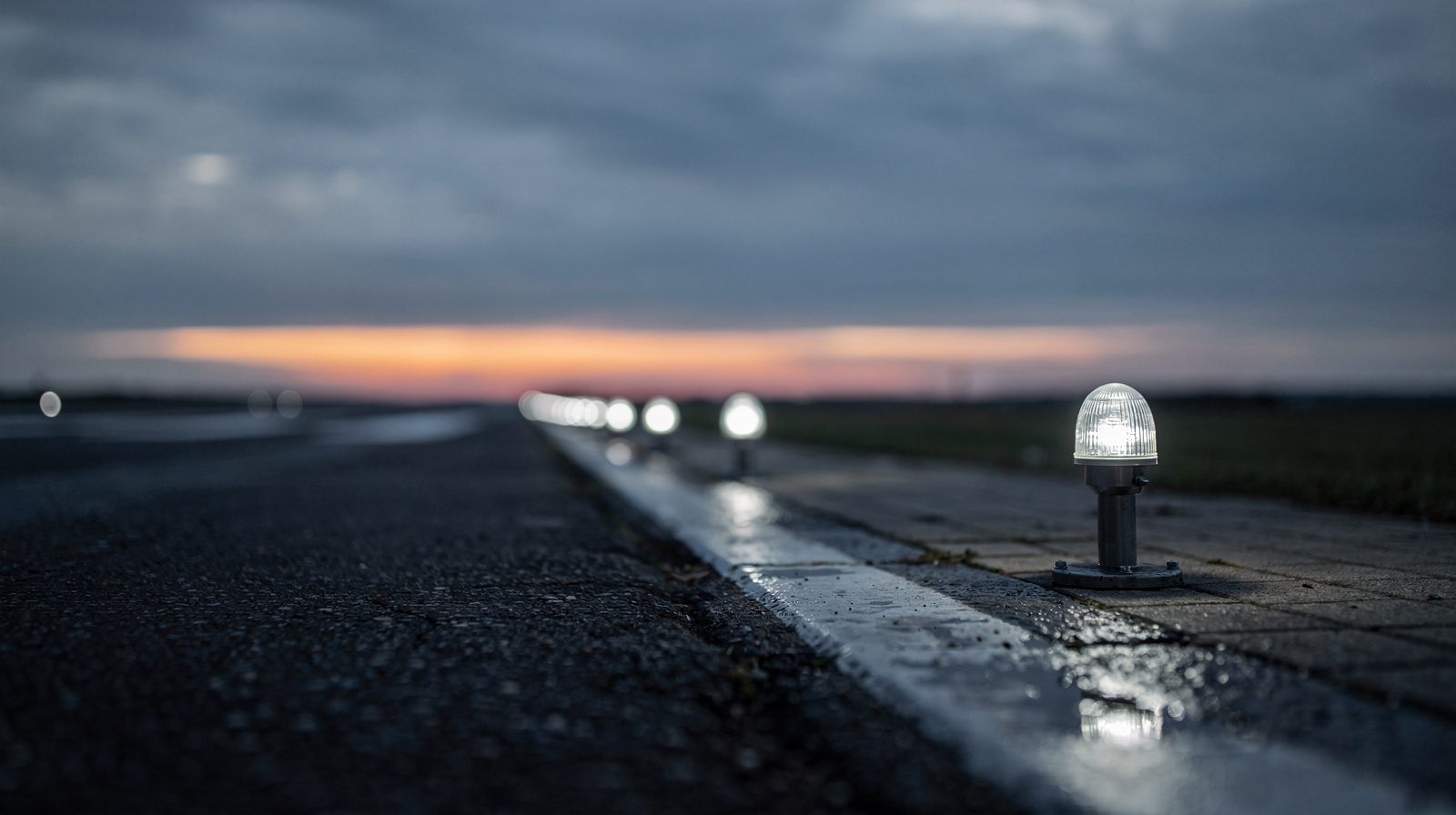
What is a Spectroradiometer?
Spectroradiometer – Instrument Measuring Spectral Radiance
Definition and Detailed Concept
A spectroradiometer is a precision instrument engineered to measure the absolute spectral power distribution of light, typically from ultraviolet (UV) through visible (VIS) and into the near-infrared (NIR) regions. Unlike radiometers or photometers, which provide integrated or visually-weighted measurements, a spectroradiometer resolves light intensity as a function of wavelength. This capability delivers high-fidelity radiometric, photometric, and colorimetric data, making spectroradiometers indispensable for applications requiring detailed spectral information.
A typical spectroradiometer includes input optics (lens, integrating sphere, or fiber), a dispersive element (diffraction grating or prism), and a wavelength-sensitive detector array (such as silicon CCD or InGaAs for NIR). The system disperses incoming light into its component wavelengths, and the detector records the intensity at each wavelength, producing a high-resolution spectral power distribution. This dataset allows computation of radiometric quantities (like spectral radiance, irradiance, and flux) and colorimetric values (such as chromaticity coordinates and correlated color temperature).
Spectroradiometers are widely used in photometry, remote sensing, LED and lighting characterization, environmental and atmospheric monitoring, material science, and medical phototherapy. Their accuracy, repeatability, and spectral resolution are critical in laboratory, industrial, and field settings. International standards bodies such as ICAO (International Civil Aviation Organization) and the CIE (Commission Internationale de l’Éclairage) specify spectroradiometric measurements for regulatory compliance in aviation lighting and other safety-critical domains.
Comparative Overview of Light Measurement Instruments
Radiometer: Measures total radiant power over a band of wavelengths, without resolving spectral details. Used for total energy applications like UV exposure or thermal mapping.
Spectrometer: Resolves light into spectral components for qualitative and quantitative analysis, but typically does not provide absolute, traceable measurements unless calibrated.
Photometer: Measures light intensity weighted by the human eye’s sensitivity (V(λ)), reporting in lux or lumens. Lacks wavelength resolution and cannot provide colorimetric or radiometric data.
Spectroradiometer: Combines the spectral resolution of a spectrometer with radiometric calibration, enabling absolute quantification of light by wavelength. Supports comprehensive radiometric, photometric, and colorimetric analyses, vital for scientific, industrial, and regulatory applications.
ICAO and CIE documentation highlight spectroradiometers as essential for verifying and calibrating airport lighting systems, ensuring conformity with international standards for luminous intensity and chromaticity.
Operating Principles and Technical Features
Measurement Principles
Spectroradiometers disperse incoming light using optical elements (gratings or prisms) onto an array of photosensitive detectors. The optics focus collected light onto the dispersive element, which separates light by wavelength. Detector arrays (CCD, CMOS, InGaAs) convert photons to electrical signals, digitized and processed to yield the spectral power distribution.
Key Quantities
- Spectral Radiance (Lλ): Radiant power per unit area, solid angle, and wavelength. Essential for display and aviation lighting brightness and color quantification.
- Spectral Irradiance (Eλ): Power received per unit area, per wavelength, used in solar energy and environmental monitoring.
- Spectral Flux (Φλ): Total radiant power resolved by wavelength, basis for calculating total luminous flux.
- Photometric and Colorimetric Values: Luminance/illuminance, chromaticity, and CCT, derived from spectral data using CIE standards.
Technical Features
- Spectral Range: Coverage from 200 nm (UV) to 2500 nm (NIR), depending on detector technology. Some models use multiple detectors/modules for broad coverage.
- Spectral Resolution: Defines the ability to resolve fine spectral features (FWHM), high-resolution instruments (≤1 nm) are used for narrowband sources and detailed analysis.
- Sensitivity and Dynamic Range: Advanced models use cooled detectors for low noise and high sensitivity. Wide dynamic range allows accurate measurement from weak to intense sources.
- Calibration: Radiometric calibration with traceable standards ensures accuracy. Wavelength calibration uses emission lines from reference lamps. Regular recalibration is required for regulated industries.
- Input Optics: Options include integrating spheres (total flux), cosine diffusers (irradiance), telescopic lenses (radiance), and fiber coupling for remote sampling.
- Software: Provides real-time spectral analysis, automated reporting, batch processing, and remote operation.
ICAO and CIE require traceable, reproducible measurements and regular calibration for aviation and regulatory applications.
Application Areas and Use Cases
Remote Sensing & Environmental Monitoring
Spectroradiometers underpin remote sensing by providing reflectance and radiance data from natural and artificial surfaces. They’re used for vegetation health (NDVI), soil analysis, water quality, and atmospheric measurements (solar irradiance, aerosol thickness). Aviation authorities use them to verify runway and taxiway lighting compliance with ICAO standards.
Laboratory Analysis & Calibration
In labs, spectroradiometers calibrate light sources, displays, and lamps, supporting certification and R&D. Gonio-spectroradiometers provide angular-resolved spectral flux for complex emitters.
LED & Solid-State Lighting
LED production lines use spectroradiometers for spectral binning, color checks, and regulatory compliance. Accurate spectral analysis ensures safety, color rendering, and efficiency, with real-time calculation of CRI, CCT, and chromaticity.
Mineral Identification & Geology
Portable NIR spectroradiometers identify minerals in the field by matching measured spectra to reference libraries. Used in mining for quality control and environmental compliance.
Photobiological Safety & Medical Applications
Spectroradiometers certify dose accuracy in UV phototherapy and monitor photometric hazards in clinics and workplaces.
Industrial Quality Control
Used for color/appearance evaluation, material characterization, and process monitoring in industries from food to aerospace.
Solar & Outdoor Lighting
Measure solar spectral irradiance for photovoltaic research and verify outdoor/aviation lighting for safety, visibility, and regulatory compliance.
Product and Model Highlights
- Spectral Evolution NaturaSpec™ Series: Rugged field spectroradiometers (350–2500 nm) for environmental, mining, and agri monitoring.
- Spectral Evolution RS-Series: Laboratory-grade dynamic range and modular optics.
- Spectral Evolution CalibraSpec 6500A/4500A: Ultra-high spectral resolution for scientific research and photometric calibration.
- Instrument Systems CAS Series: High-performance array spectroradiometers for LED manufacturing and lighting research.
- Konica Minolta CL-500A, CS-2000 Plus, CS-3000: Accurate photometric/colorimetric measurements for displays and lighting.
- Labsphere Illumia Plus/Pro: Integrating sphere-based systems for total luminous flux and spectral power distribution.
- JETI Specbos, ILT 570/970: Portable spectroradiometers for rapid spot radiance and irradiance measurements.
Selecting the Right Spectroradiometer
- Define Application: Determine spectral range (UV, VIS, NIR), required resolution, and sensitivity for your source.
- Portability: Fieldwork favors rugged, battery-powered units, labs may prioritize resolution and stability.
- Calibration: Ensure traceability to national standards and regular recalibration for regulatory compliance.
- Software & Integration: Look for real-time analysis, automation, and LIMS integration.
- Accessories & Support: Evaluate input optics, calibration standards, and manufacturer support.
ICAO and CIE mandate traceability and documentation for aviation lighting measurement.
ICAO and International Aviation Standards
Spectroradiometers are critical for calibration, verification, and maintenance of aviation lighting, as detailed in ICAO Annex 14 and CIE guidelines. These standards require:
- Chromaticity Compliance: Aviation lights must emit within specified chromaticity boundaries.
- Intensity & Distribution: Verified using calibrated spectroradiometers.
- Traceability: All measurements must be traceable to international standards.
Spectroradiometers deliver the required absolute, reproducible measurements to ensure regulatory compliance and operational safety.
Example Use Cases
Remote Sensing – Vegetation and Soil Analysis
A field scientist uses a full-range spectroradiometer to collect reflectance spectra from crops, quantifying plant health and supporting precision agriculture.
LED Manufacturing – Production Line Testing
A manufacturer deploys an array spectroradiometer for real-time spectral binning and color checks, ensuring every LED batch meets CRI, CCT, and chromaticity requirements.
Laboratory Lamp Calibration
A photometry lab employs a cooled, high-resolution spectroradiometer for lamp and display calibration, ensuring traceability and compliance with CIE and ICAO standards.
Spectroradiometers are indispensable for any application demanding precise spectral, photometric, or colorimetric light analysis, whether in aviation, research, manufacturing, or field science. Their versatility, accuracy, and compliance with international standards make them a cornerstone of modern light measurement.
Frequently Asked Questions
- What is the main advantage of a spectroradiometer over a radiometer or photometer?
- A spectroradiometer provides full spectral information, enabling quantification of radiometric, photometric, and colorimetric parameters with high accuracy. Radiometers only measure total power in a band, and photometers are limited to the human eye’s response without spectral detail. Spectroradiometers are essential for tasks requiring both quantitative and qualitative light analysis, such as verifying chromaticity of runway lighting or LED color binning.
- How is a spectroradiometer calibrated?
- Calibration involves two processes: radiometric calibration using traceable standard lamps to set absolute responsivity, and wavelength calibration using emission line sources to verify the wavelength axis. Regular recalibration, as prescribed by ICAO and CIE, maintains accuracy, especially for regulatory and aviation measurements.
- What measurement geometries are possible with a spectroradiometer?
- Spectroradiometers support various geometries via input optics: integrating spheres for total flux, cosine diffusers for planar irradiance, and telescope/spot optics for directional radiance or luminance. This flexibility allows adaptation to many measurement scenarios in lab and field.
- Can spectroradiometers be used outdoors or in harsh environments?
- Yes. Field spectroradiometers feature robust housings, environmental sealing, and battery operation. Fiber optic sampling, rapid acquisition, and data logging make them ideal for remote sensing, aviation audits, and mineral exploration, ensuring reliability in demanding conditions.
This is a reference entry. TarmacView provides drone inspection services and doesn't sell the equipment or materials described in this glossary.