What is Sulfate Attack on Concrete?
Definition of Sulfate Attack on Concrete
Sulfate attack is a progressive chemical and physical deterioration process in cement-based materials caused by the reaction of sulfate ions (SO₄²⁻) with the hydration products of Portland cement. These reactions produce expansive crystalline compounds, predominantly ettringite (3CaO·Al₂O₃·3CaSO₄·32H₂O) and gypsum (CaSO₄·2H₂O), which generate internal tensile stresses that exceed the concrete’s tensile strength capacity. The result is a characteristic pattern of expansion, cracking, spalling, surface softening, strength reduction, and eventual structural disintegration.
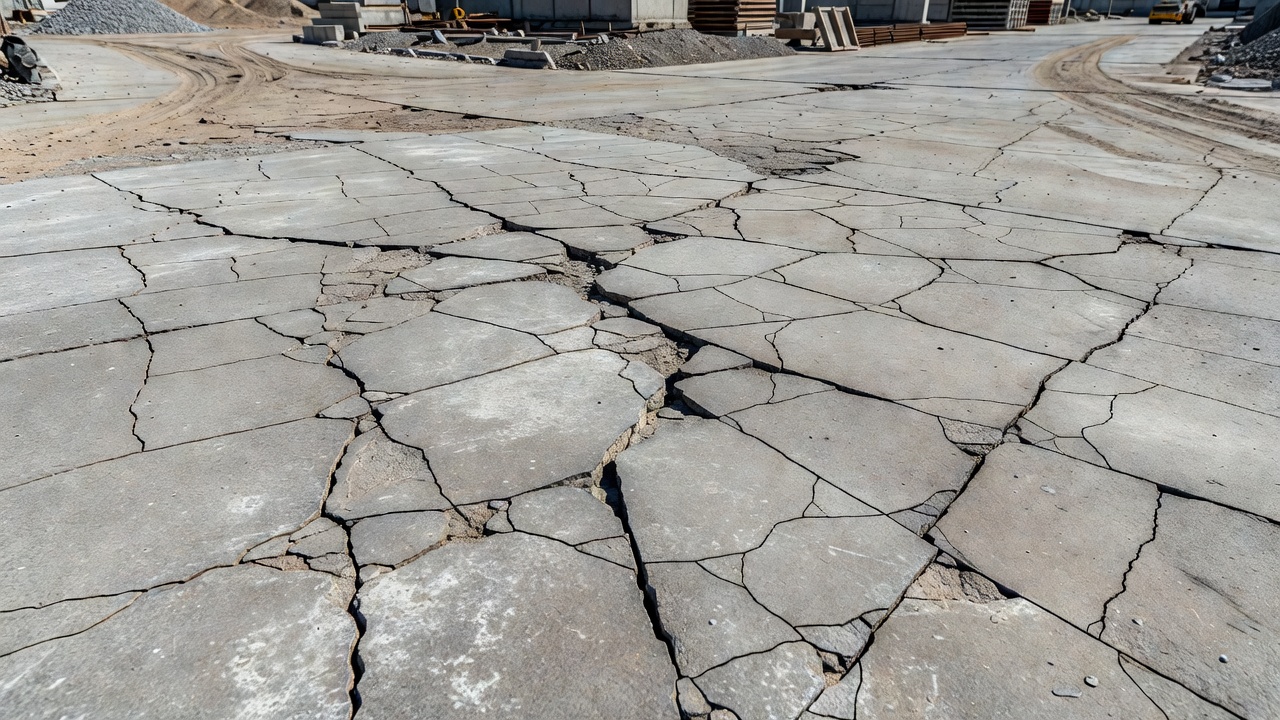
Sulfate attack is recognized globally as one of the most severe durability threats to concrete infrastructure. Structures most vulnerable include concrete pavements, bridge piers and abutments, foundations, tunnel linings, retaining walls, drainage structures, marine structures, and airport pavements constructed in sulfate-rich environments. The deterioration mechanism is classified under two primary categories: external sulfate attack (ESA), where sulfate ions ingress from the surrounding environment, and internal sulfate attack (ISA), including delayed ettringite formation (DEF), where sulfate sources are inherent within the concrete mixture itself.
The chemical environment that triggers sulfate attack is widespread. Sulfate ions are naturally present in soils across arid and semi-arid regions, in seawater (approximately 2,700 ppm SO₄²⁻), in groundwater flowing through gypsum-bearing strata, and in industrial effluents from mining operations, fertilizer production, and chemical manufacturing. Soil sulfate concentrations can exceed 10,000 ppm (1% by weight) in certain regions of the Middle East, Australia, the western United States, and parts of Canada, creating extremely aggressive exposure conditions for buried concrete elements.
Chemistry of Sulfate Attack
The chemical mechanisms underlying sulfate attack involve a complex sequence of reactions between penetrating sulfate ions and the hydrated cement paste. The primary cement hydration products susceptible to sulfate attack are calcium hydroxide (Ca(OH)₂, also called portlandite), tricalcium aluminate (C₃A) and its hydration products (monosulfoaluminate and calcium aluminate hydrates), and under certain conditions, the calcium silicate hydrate (C-S-H) gel that provides the primary binding matrix of concrete.
Formation of Gypsum
The first major reaction occurs when sulfate ions from the environment react with calcium hydroxide present in the hydrated cement paste:
Ca(OH)₂ + SO₄²⁻ + 2H₂O → CaSO₄·2H₂O + 2OH⁻
Calcium hydroxide (portlandite) is a hydration product of Portland cement, typically comprising 20-25% of the hydrated paste volume. The reaction consumes portlandite to form gypsum (calcium sulfate dihydrate). Crystal growth of gypsum in confined pore spaces generates expansive pressures within the concrete matrix. This reaction also consumes OH⁻ ions, resulting in a pH reduction of the pore solution, which can destabilize other hydration products and, in reinforced concrete, potentially initiate corrosion of embedded steel.
Gypsum formation is often associated with surface softening and paste erosion, particularly in concrete exposed to magnesium sulfate (MgSO₄) solutions, where the attack is more aggressive due to the additional decomposition of C-S-H gel by magnesium ions. The magnesium ion (Mg²⁺) replaces calcium in the C-S-H structure, forming magnesium silicate hydrate (M-S-H), which has no cementing value, thereby directly destroying the concrete’s binding matrix.
Formation of Ettringite
The second and most expansive reaction involves the conversion of monosulfoaluminate and tricalcium aluminate hydration products into ettringite, a high-sulfate calcium sulfoaluminate mineral with 32 molecules of water of crystallization:
3CaO·Al₂O₃·CaSO₄·12H₂O (monosulfoaluminate) + 2SO₄²⁻ + 2Ca²⁺ + 20H₂O → 3CaO·Al₂O₃·3CaSO₄·32H₂O (ettringite)
Alternatively, direct reaction of tricalcium aluminate with sulfate and calcium sources:
3CaO·Al₂O₃ + 3CaSO₄·2H₂O + 26H₂O → 3CaO·Al₂O₃·3CaSO₄·32H₂O
Ettringite formation is accompanied by a solid volume increase of approximately 120-300% compared to the original reactants. When this crystallization occurs within the confined pore structure of hardened concrete, the expansive forces generate tensile stresses that can exceed 5-10 MPa, far above the typical tensile strength of concrete (2-5 MPa). The result is progressive microcracking that propagates through the cement paste, creating pathways for further sulfate ingress and accelerating the deterioration cycle.
Thaumasite Form of Sulfate Attack
A particularly damaging variant is thaumasite sulfate attack (TSA) , which directly attacks the C-S-H gel rather than the aluminate phases. Thaumasite (CaSiO₃·CaCO₃·CaSO₄·15H₂O) is a complex mineral that forms under specific conditions requiring sulfate, carbonate, low temperatures (typically below 15°C), and high moisture:
C-S-H + SO₄²⁻ + CO₃²⁻ + Ca²⁺ + H₂O → CaSiO₃·CaCO₃·CaSO₄·15H₂O (thaumasite)
TSA is catastrophic because it destroys the primary binder of concrete, the C-S-H gel. Affected concrete transforms into a white, pulpy, non-cohesive mush that has no structural strength and can be crumbled by hand pressure. This form of attack is particularly insidious because it can progress rapidly in buried concrete, tunnel linings, bridge foundations, and cold-region infrastructure where temperatures remain low and moisture is abundant. Carbonate sources include limestone aggregates, carbonated concrete surfaces, or carbonate-rich groundwater.
External vs Internal Sulfate Attack
External Sulfate Attack (ESA)
External sulfate attack occurs when sulfate ions migrate into hardened concrete from the external environment. The process follows a well-documented sequence: sulfate-laden water or soil solution contacts the concrete surface, sulfate ions diffuse through the pore network driven by concentration gradients, and chemical reactions occur with hydration products when critical concentrations are reached.
The rate and severity of ESA depend on multiple factors:
| Factor | Influence on ESA Severity |
|---|---|
| Sulfate concentration | Higher concentrations (above 1,500 ppm in water) accelerate reaction rates |
| Sulfate cation type | MgSO₄ is more aggressive than Na₂SO₄ due to C-S-H decomposition |
| Concrete permeability | Lower permeability (w/cm < 0.40) significantly slows sulfate ingress |
| Temperature | Reaction rates increase with temperature, optimum around 5-15°C for thaumasite |
| Wet-dry cycling | Alternating conditions concentrate sulfates and accelerate crystallization |
| Moisture availability | Continuous moisture is required for ionic transport and reaction |
Sources of external sulfates include seawater (2,700 ppm SO₄²⁻), sulfate-rich soils (gypsum, anhydrite, pyrite oxidation), groundwater in sedimentary formations, industrial effluents from mining, chemical plants, and fertilizer manufacturing, and deicing chemicals containing sulfate compounds.
Internal Sulfate Attack and Delayed Ettringite Formation (DEF)
Internal sulfate attack arises from sulfate sources incorporated into the concrete during mixing. The most common cause is the presence of sulfate-bearing aggregates, particularly those containing gypsum, pyrite (FeS₂), or other sulfide minerals that oxidize to sulfates when exposed to moisture and oxygen in the alkaline concrete environment. Contaminated aggregates can introduce sufficient soluble sulfate to trigger expansive reactions throughout the concrete mass.
Delayed ettringite formation (DEF) is a specific form of ISA that occurs when concrete is subjected to elevated temperatures, typically above 70°C (158°F) during curing or early service, which initially suppresses normal ettringite formation by decomposing it and binding sulfate within the C-S-H gel. As the concrete cools and subsequently becomes saturated with moisture over months or years, the sulfate is gradually released, forming ettringite belatedly in the already hardened and confined microstructure. The expansion caused by DEF is often more severe than ESA because the ettringite formation occurs uniformly throughout the concrete mass rather than progressing from the surface inward.
DEF is a particular concern for precast concrete elements subjected to accelerated heat curing, massive concrete pours where internal heat generation approaches 70°C, and concrete pavements in hot climates where mix temperatures exceed recommended limits. Unlike ESA, DEF does not require an external sulfate source, the sulfate originates from the cement itself, making it an internal durability problem that cannot be addressed through environmental controls alone.
Visual Indicators of Sulfate Attack
Recognition of sulfate attack in the field requires careful observation of characteristic distress patterns. The visual manifestations evolve with the progression of the chemical deterioration.
Map Cracking (Pattern Cracking)
The most distinctive visual sign of sulfate attack is map cracking, an interconnected network of fine cracks forming polygonal patterns resembling dried mud or alligator skin on the concrete surface. This cracking pattern results from differential expansion: the outer layers of concrete expand more than the interior due to higher sulfate concentrations near the surface, creating tensile stresses that generate the characteristic pattern. Map cracking typically develops first at corners, edges, and joints where sulfate ingress is most pronounced. As deterioration progresses, crack widths increase from hairline (0.1 mm) to visible (1-3 mm), and the pattern extends across entire slab surfaces.
Whitish and Yellowish Deposits
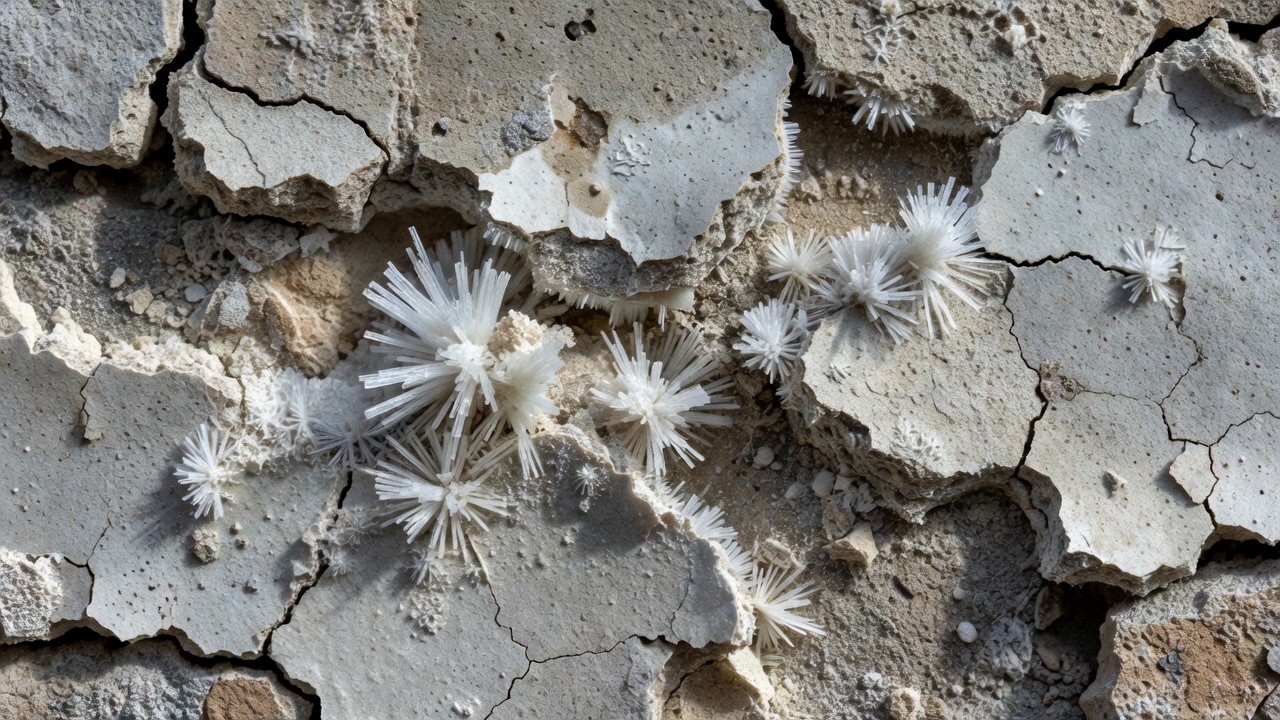
Surface deposits of reaction products are common visual indicators. Gypsum deposits appear as soft, whitish, powdery accumulations on concrete surfaces, while ettringite may form as white or pale yellow needle-like crystalline masses within cracks, air voids, and joint faces. These deposits can be accompanied by efflorescence-like staining, but unlike simple efflorescence (which consists of soluble salts that can be washed away), sulfate attack deposits are chemically bound to the concrete and cannot be removed by simple water washing.
Surface Softening and Paste Erosion
Progressive softening of the concrete surface is a hallmark of advanced sulfate attack, particularly when magnesium sulfate is the aggressive agent. The surface can be scratched or gouged with a steel tool, and the cement paste appears to have lost its binding capacity. Erosion of the surface paste exposes fine aggregate particles, creating a rough, sandy texture. In severe cases, the concrete surface can be rubbed away with hand pressure, leaving exposed aggregate particles standing proud of the eroded paste.
Spalling and Delamination
As sulfate-induced expansion continues, it leads to delamination (separation of surface mortar layers) and spalling (detachment of concrete fragments). Joint spalling is particularly common in concrete pavements affected by sulfate attack, where expansive forces concentrate at joint interfaces. The spalled areas may exhibit laminar fractures parallel to the surface, with whiter, softer material visible on fracture faces.
Sulfate Exposure Classes per ACI 318
The American Concrete Institute’s ACI 318-19 (Building Code Requirements for Structural Concrete) defines Exposure Category S specifically for sulfate attack. Table 19.3.2.1 establishes four exposure classes based on the severity of sulfate exposure, with corresponding durability requirements for concrete mixtures.
| Exposure Class | Soil Sulfate (% by weight) | Water Sulfate (ppm) | Cement Type Required | Max w/cm | Min f’c (MPa/psi) |
|---|---|---|---|---|---|
| S0 | < 0.10 | < 150 | No special requirement | No special requirement | No special requirement |
| S1 | 0.10 - 0.20 | 150 - 1,500 | Type II (moderate resistance) | 0.50 | 28 / 4,000 |
| S2 | 0.20 - 2.00 | 1,500 - 10,000 | Type V (high resistance) | 0.45 | 31 / 4,500 |
| S3 | > 2.00 | > 10,000 | Type V + pozzolans/slag | 0.40 | 35 / 5,000 |
For S0 (negligible exposure) , no sulfate-specific durability requirements apply, though other exposure categories (freeze-thaw, water, chloride) may impose restrictions.
S1 (moderate exposure) covers typical soil and groundwater conditions where sulfate concentrations warrant moderate protective measures. Type II cement limits C₃A content to a maximum of 8%, reducing the available aluminate phase for expansive ettringite formation.
S2 (severe exposure) requires Type V cement with a maximum C₃A content of 5%, which provides significantly higher sulfate resistance. The reduced w/cm ratio of 0.45 decreases permeability, slowing sulfate ion ingress.
S3 (very severe exposure) represents the most aggressive conditions, sulfate concentrations exceeding 10,000 ppm in water or 2% in soil. In addition to Type V cement, the code requires the use of supplementary cementitious materials (SCMs) such as Class F fly ash, ground granulated blast-furnace slag, or silica fume, combined with a maximum w/cm of 0.40 and minimum strength of 35 MPa. Some specifications also mandate pozzolanic additions at levels demonstrated by ASTM C1012 testing to provide adequate sulfate resistance.
The American Concrete Institute also references ACI 201.2R (Guide to Durable Concrete) for comprehensive guidance on sulfate attack assessment and mitigation, and ACI 211.1 for proportioning of sulfate-resistant concrete mixtures.
Testing for Sulfate Resistance
ASTM C1012, Length Change of Mortar Bars Exposed to Sulfate Solution
The primary standardized test for assessing sulfate resistance is ASTM C1012, which measures the linear expansion of mortar bars (25 × 25 × 285 mm) immersed in a sodium sulfate solution containing 50 g/L Na₂SO₄ (approximately 352 moles/m³ of SO₄²⁻). The test procedure involves:
- Casting mortar bars and companion cubes per ASTM C109/C109M
- Curing until cubes achieve 20.0 ± 1.0 MPa (3,000 ± 150 psi) compressive strength
- Initial length measurement, followed by continuous immersion in sulfate solution
- Periodic length change measurements at 1, 2, 3, 4, 8, 12, 15, and 18 weeks, and at 6, 9, 12, 15, and 18 months
Expansion limits for sulfate-resistant cements are defined in ASTM C1157 (Standard Performance Specification for Hydraulic Cement):
| Test Age | Maximum Expansion for High Sulfate Resistance (HS) |
|---|---|
| 6 months | 0.05% |
| 12 months | 0.10% |
| 18 months | 0.10% |
Cements or blends exceeding these limits are classified as having moderate sulfate resistance (MS) or no special sulfate resistance designation.
ASTM C452, Potential Expansion of Portland Cement Mortar Exposed to Sulfate
This accelerated test method is applicable only to Portland cements (not blended cements or SCM-containing mixtures). It incorporates gypsum directly into the mortar to provide an internal sulfate source, measuring expansion at 14 days. While faster than C1012, the test is less representative of field conditions where sulfate ingress occurs gradually from external sources.
Supplementary Testing Methods
| Test Method | Purpose | Standard |
|---|---|---|
| Petrographic examination | Identify ettringite, gypsum, thaumasite in concrete cores | ASTM C856 |
| Compressive strength testing | Measure strength retention after sulfate exposure | ASTM C39 |
| Rapid chloride permeability | Assess pore structure density correlating to sulfate resistance | ASTM C1202 |
| Water absorption / sorptivity | Quantify permeability affecting sulfate ingress | ASTM C1585 |
| X-ray diffraction (XRD) | Identify and quantify crystalline reaction products | Quantitative XRD |
| Scanning electron microscopy (SEM) | Examine microstructure and ettringite morphology | SEM-EDS |
Performance-Based Specifications
Modern specifications increasingly use performance-based approaches rather than prescriptive C₃A limits alone. ASTM C1157 permits classification as High Sulfate Resistance (HS) cement based on ASTM C1012 expansion limits, regardless of chemical composition. This allows optimization of blended cements and SCM combinations that may have higher C₃A but superior sulfate resistance due to denser microstructure and reduced permeability.
Sulfate Attack in Airport Pavements
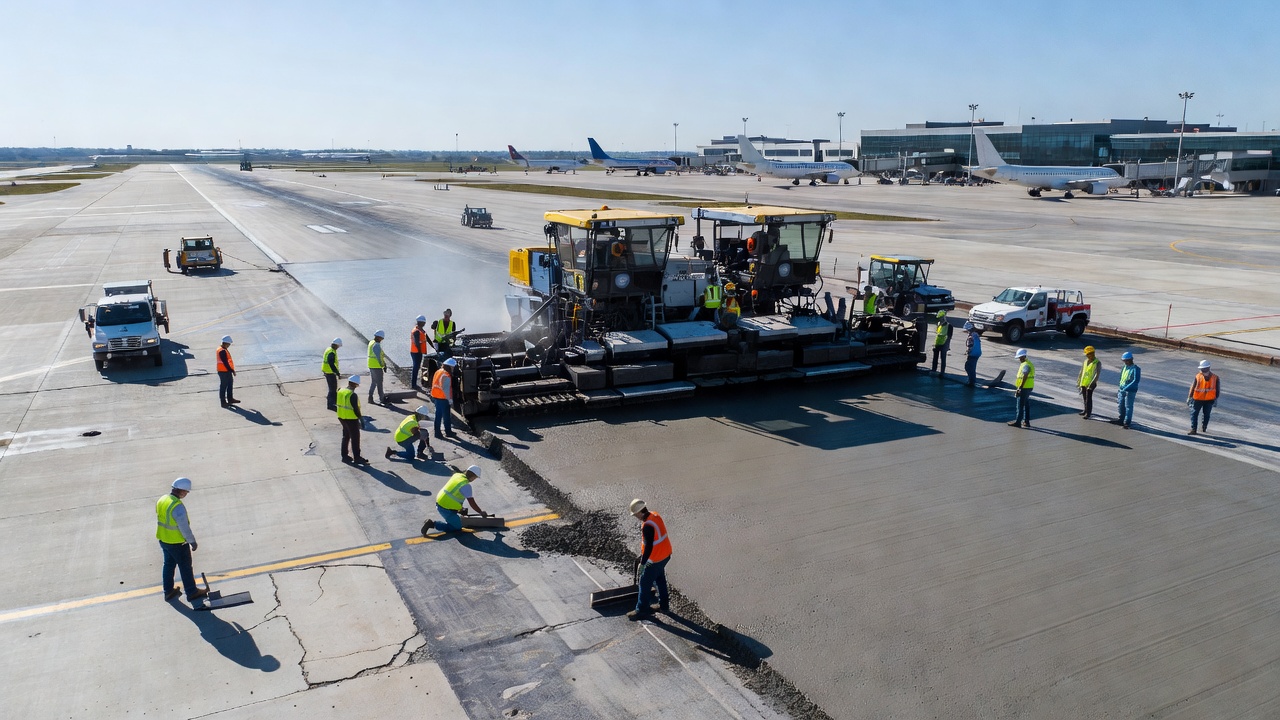
Airport concrete pavements face unique sulfate exposure challenges that require specialized design and construction considerations. The Federal Aviation Administration (FAA) provides guidance in AC 150/5320-6G (Airport Pavement Design and Evaluation), while ICAO addresses pavement durability requirements in Annex 14 and Doc 9157 Part 3.
Sources of Sulfates at Airports
Airport pavements are exposed to sulfates from multiple sources that often act in combination:
- Subgrade and subbase soils, particularly in arid regions with gypsiferous soils
- Groundwater, rising through capillary action into the pavement structure
- Marine environments, coastal airports exposed to seawater spray and tidal zones
- Deicing chemicals, some formulations contain sulfate compounds
- Industrial runoff, from airport maintenance facilities and cargo operations
- Sulfate-bearing aggregates, used in concrete production from local sources
FAA Guidance for Sulfate-Resistant Airport Pavements
FAA AC 150/5320-6G requires geotechnical investigation of soil sulfate concentrations during airfield pavement design. For rigid pavements in sulfate-prone environments, the following measures are recommended:
| Sulfate Exposure Level | Water-Soluble SO₄ (%, soil) | Required Cement | Maximum w/cm | Minimum f’c (MPa) |
|---|---|---|---|---|
| Mild | < 0.10 | Type I/II | 0.49 | 4.5 (flexural) |
| Moderate | 0.10 - 0.20 | Type II | 0.45 | 4.5 (flexural) |
| Severe | 0.20 - 2.00 | Type V | 0.40 | 4.8 (flexural) |
| Very Severe | > 2.00 | Type V + SCMs | 0.38 | 5.0 (flexural) |
For airport pavements, flexural strength (modulus of rupture) is the primary design criterion rather than compressive strength, reflecting the slab bending behavior under aircraft loading. FAA Item P-501 (Concrete Pavement) specifications incorporate sulfate resistance requirements based on soil test results.
Enhanced Risk Factors at Airports
Airport pavements experience deterioration mechanisms that can synergistically accelerate sulfate attack:
- Aircraft loading produces tensile stresses in the slab that, combined with sulfate-induced expansion, accelerate crack propagation
- Wet-dry cycling along pavement edges, joints, and shoulder interfaces concentrates sulfate solutions through evaporation
- Freeze-thaw cycling in cold climates exacerbates cracking initiated by sulfate expansion
- Jet blast and propeller wash remove surface water but can concentrate sulfate deposits through evaporation
- Deicing operations introduce additional chemical loading, including chloride-sulfate interactions that can either accelerate or modify attack mechanisms depending on ion concentrations
ICAO and International Standards
ICAO Annex 14, Volume I (Aerodromes) requires that pavement surfaces be free of cracks or disintegration that could generate FOD or affect aircraft operations. While Annex 14 does not explicitly address sulfate attack, the Aerodrome Design Manual (Doc 9157 Part 3) recommends that pavement materials be selected considering environmental aggressiveness, including sulfate exposure.
International practice follows exposure classification systems similar to ACI 318. Eurocode 2 (EN 206) defines exposure classes XA1, XA2, and XA3 for chemical attack corresponding to sulfate concentrations of 200-600 mg/L, 600-3,000 mg/L, and 3,000-6,000 mg/L SO₄²⁻ in groundwater, requiring progressively more resistant concrete mixtures.
Prevention of Sulfate Attack
Effective prevention of sulfate attack requires an integrated approach combining materials selection, mixture proportioning, construction practices, and environmental management.
Sulfate-Resistant Cement Types
ASTM C150 Type V cement is the most sulfate-resistant Portland cement, with strict limits on aluminates:
- C₃A (tricalcium aluminate): ≤ 5% (compared to ≤ 8% for Type II and ≤ 15% for Type I)
- C₄AF + 2×C₃A: ≤ 25%
The reduction in C₃A content limits the available aluminate phase for expansive ettringite formation. However, Type V cement alone is often insufficient for very severe exposures and must be combined with supplementary cementitious materials.
| Cement Type | C₃A Limit | Sulfate Resistance | Primary Application |
|---|---|---|---|
| Type I | ≤ 15% | None (general purpose) | Normal exposures |
| Type II | ≤ 8% | Moderate | S1 exposure |
| Type V | ≤ 5% | High | S2 exposure |
| Type V + SCMs | ≤ 5% | Very High | S3 exposure |
| Blended (Type IP/IS) | Variable | Varies | Performance-tested |
Supplementary Cementitious Materials (SCMs)
Class F fly ash at replacement levels of 25-35% significantly enhances sulfate resistance through three mechanisms: (1) pozzolanic reaction consumes calcium hydroxide (Ca(OH)₂), reducing the available reactant for gypsum formation, (2) pore refinement reduces permeability, slowing sulfate ion diffusion, and (3) dilution of C₃A content relative to total cementitious material.
Ground granulated blast-furnace slag (GGBFS) at 50-65% replacement provides excellent sulfate resistance, particularly against magnesium sulfate attack. The slag reacts with calcium hydroxide and alkalis to form a denser, less permeable microstructure with reduced C₃A content and enhanced binding capacity for sulfate ions.
Silica fume at 8-12% replacement improves sulfate resistance primarily through extreme pore refinement and reduction of calcium hydroxide content. Silica fume produces a very dense matrix that significantly reduces sulfate ingress, though its effectiveness against magnesium sulfate attack is somewhat limited compared to slag or fly ash.
Water-Cementitious Materials Ratio
The w/cm ratio is the single most critical parameter governing concrete permeability, and therefore sulfate resistance. A reduction from w/cm 0.50 to 0.40 can reduce water permeability by more than an order of magnitude (from approximately 10⁻¹⁰ to 10⁻¹¹ m/s), proportionally slowing sulfate ion penetration rates. For airport pavements in severe exposures, a maximum w/cm of 0.40 is typically specified.
Curing Practices
Proper curing is essential for sulfate-resistant concrete. Extended wet curing (7-14 days) allows maximum hydration of cementitious materials, particularly pozzolanic reactions in SCM-containing mixtures that develop strength and density more slowly than pure Portland cement. Curing compounds, wet burlap, or continuous water spraying should maintain surface moisture throughout the curing period. Inadequate curing leaves the surface porous and permeable, precisely the condition that accelerates sulfate ingress.
Drainage and Water Management
Subsurface drainage around concrete structures reduces sulfate exposure by diverting aggressive groundwater away from the concrete. For airport pavements, edge drains, subbase drainage layers, and proper cross-slopes (1.5-2.0% for runways per FAA) reduce moisture accumulation beneath slabs, limiting sulfate transport through capillary action.
Detection and Assessment of Sulfate Attack
Field Inspection Techniques
Early detection of sulfate attack requires systematic inspection by qualified personnel. The Pavement Condition Index (PCI) methodology (ASTM D5340 for airfields) includes sulfate attack within its distress identification protocols. Field inspectors look for:
- Characteristic map cracking patterns on slab surfaces
- Joint distress, spalling, widening, or deterioration at joint faces
- Surface softening assessed by scratch tests with metal tools
- Deposits of whitish reaction products on exposed surfaces
- Edge deterioration along pavement edges and adjacent to shoulders
- Core condition, extracted cores examined for internal cracking, ettringite-filled air voids, and paste softening
Petrographic Examination
Detailed petrographic analysis per ASTM C856 (Standard Practice for Petrographic Examination of Hardened Concrete) provides definitive diagnosis of sulfate attack. Thin-section petrography using a polarizing light microscope can reveal:
- Ettringite deposited in air voids, cracks, and paste-aggregate interfaces
- Gypsum formation within the cement paste
- Microcracking radiating from aggregate particles
- Thaumasite replacing C-S-H gel in affected concrete
- Secondary deposition patterns indicating solution transport pathways
- Alteration zones at different depths from the exposed surface, quantifying progression rate
Scanning electron microscopy (SEM) with energy-dispersive X-ray spectroscopy (EDS) provides elemental confirmation of reaction products, distinguishing ettringite (calcium, aluminum, sulfur) from thaumasite (calcium, silicon, sulfur, carbon) and gypsum (calcium, sulfur).
Mechanical Testing
Quantifying the extent of sulfate-induced deterioration requires mechanical testing:
| Test | Parameter Measured | Typical Indicator of Attack |
|---|---|---|
| Compressive strength (ASTM C39) | Strength reduction | >15% loss compared to unaffected concrete |
| Splitting tensile strength (ASTM C496) | Tensile capacity reduction | >20% loss indicates significant internal damage |
| Ultrasonic pulse velocity (ASTM C597) | Internal cracking/voids | Velocity < 3,500 m/s suggests internal deterioration |
| Resonant frequency (ASTM C215) | Dynamic modulus reduction | Frequency decrease correlates with crack development |
| Core expansion (modified ASTM C1012) | Residual expansion potential | Indicates ongoing sulfate reactivity |
Chemical Testing of Soil and Water
Proper assessment begins with geochemical analysis of soil and groundwater at the project site. Key tests include:
- Water-soluble sulfate (SO₄²⁻) by gravimetric or turbidimetric methods
- Total sulfate content including gypsum, anhydrite, and pyritic sulfur
- pH measurement, acidic conditions (pH < 6.5) can accelerate sulfate attack
- Magnesium ion (Mg²⁺) concentration, indicates potential for C-S-H attack
- Carbonate/bicarbonate content, assesses thaumasite formation potential
Interpretation of Test Results
The integration of field observations, petrographic examination, and laboratory testing allows classification of sulfate attack severity:
- Stage 1 (Initiation), Sulfate ions penetrate concrete, no visible distress. Petrography shows ettringite in air voids and incipient microcracking.
- Stage 2 (Progressive), Map cracking visible at slab edges and joints. Core examination shows ettringite-filled cracks, gypsum deposition in paste. Strength loss 5-15%.
- Stage 3 (Advanced), Extensive map cracking across slab surfaces, joint spalling, surface softening. Petrography shows pervasive ettringite deposition, gypsum, and paste alteration. Strength loss 15-30%.
- Stage 4 (Critical), Disintegration of concrete surface, large-scale spalling, exposure of coarse aggregate. Thaumasite may be present in cold, wet conditions. Strength loss >30%. Structural capacity compromised.
Summary
Sulfate attack on concrete is a complex, progressive chemical deterioration process driven by the reaction of sulfate ions with cement hydration products to form expansive crystalline compounds, primarily ettringite, gypsum, and under specific conditions, thaumasite. The mechanism is classified as external (sulfates from the environment) or internal (sulfates within the concrete mixture), with distinct prevention and mitigation strategies for each.
The visual hallmarks of sulfate attack include map cracking, whitish surface deposits, surface softening, and progressive spalling that can lead to complete loss of structural integrity. ACI 318 Exposure Category S defines four severity classes (S0 through S3) with corresponding material requirements, while FAA AC 150/5320-6G provides specific guidance for airport pavements where sulfate attack can affect operational safety through FOD generation, roughness development, and structural capacity loss.
Prevention requires an integrated approach: Type V cement for severe exposures, supplementary cementitious materials (Class F fly ash, slag, silica fume) to reduce permeability and consume calcium hydroxide, low w/cm ratios (0.40 maximum for severe exposures), proper curing, and effective drainage. Detection relies on systematic field inspection (PCI methodology), petrographic examination (ASTM C856), mechanical testing, and geochemical analysis of soil and groundwater.
For airfield construction in sulfate-prone environments, early geotechnical investigation, appropriate exposure classification, and implementation of sulfate-resistant concrete specifications are essential investments in long-term pavement performance and operational safety.
Frequently Asked Questions
- What causes sulfate attack on concrete?
- Sulfate attack is caused by the chemical reaction between sulfate ions (SO₄²⁻) and the hydration products of Portland cement, primarily calcium hydroxide (Ca(OH)₂) and tricalcium aluminate (C₃A). Sulfate ions penetrate the concrete from external sources such as sulfate-rich soil, seawater, groundwater, or industrial effluents, or originate internally from contaminated aggregates, excess gypsum in cement, or certain admixtures. The reactions produce expansive compounds, ettringite and gypsum, that can increase in volume by up to 300%, generating internal tensile stresses that crack and disintegrate the concrete.
- What is the difference between external and internal sulfate attack?
- External sulfate attack (ESA) occurs when sulfate ions from outside sources, soil, groundwater, seawater, or industrial chemicals, penetrate the concrete through its pore system and react with cement hydration products. Internal sulfate attack (ISA), including delayed ettringite formation (DEF), occurs when sulfate compounds are already present within the concrete mixture from contaminated aggregates, excess gypsum in cement, or certain admixtures. DEF specifically happens when concrete is heat-cured above 70°C (158°F), which initially suppresses ettringite formation, later, as the concrete cools and becomes moisture-saturated, ettringite forms belatedly, causing expansion and cracking.
- How do you test concrete for sulfate resistance?
- The primary test method is ASTM C1012, which measures the length change of mortar bars immersed in a sodium sulfate solution (50 g/L Na₂SO₄). Mortar prisms are cured until they reach 20.0 ± 1.0 MPa compressive strength, then immersed in the sulfate solution. Length change measurements are taken at regular intervals up to 18 months. Expansion limits are specified in ASTM C1157 and ACI 201.2R. Additional tests include ASTM C452 (sulfate resistance of Portland cement), ASTM C267 (chemical resistance of mortars), and petrographic examination (ASTM C856) to identify ettringite deposition patterns, microcracking, and thaumasite formation.
- What is the difference between sulfate attack and thaumasite attack?
- While both are forms of sulfate attack, thaumasite sulfate attack (TSA) is a distinct mechanism that attacks the calcium silicate hydrate (C-S-H) gel itself, the primary binder in hardened cement paste. TSA transforms concrete into a soft, non-cohesive, mushy mass that can be easily crumbled by hand, unlike classic sulfate attack which primarily targets the aluminate phases to form expansive ettringite. Thaumasite formation requires three conditions: a source of sulfate, a source of carbonate (from limestone aggregate, carbonated concrete, or groundwater), and low temperatures (typically below 15°C). TSA is particularly aggressive in buried concrete foundations and tunnel linings in cold, wet, sulfate-rich soils.
- What cement type is best for sulfate resistance?
- The most sulfate-resistant cement is ASTM C150 Type V (high sulfate resistance), which has a maximum tricalcium aluminate (C₃A) content of 5%, significantly lower than Type I (general purpose) which typically has 8-12% C₃A. Type II cement (moderate sulfate resistance) limits C₃A to 8% maximum. For very severe exposures, Type V cement with a maximum C₃A of 5% and a maximum C₄AF + 2×C₃A of 25% is recommended. Blended cements incorporating supplementary cementitious materials (SCMs) like fly ash (Class F), ground granulated blast-furnace slag (at 50-65% replacement), or silica fume can also provide excellent sulfate resistance by reducing permeability and consuming calcium hydroxide through pozzolanic reactions.
- How does sulfate affect airport concrete pavements?
- Airport concrete pavements in sulfate-rich soils or marine environments are highly susceptible to sulfate attack. The deterioration manifests as map cracking, joint deterioration, surface scaling, and loss of structural capacity, directly affecting pavement ride quality, friction characteristics, and FOD (Foreign Object Debris) potential. FAA AC 150/5320-6G and ICAO Annex 14 require consideration of soil sulfate concentrations during pavement design. For severe exposures (water-soluble sulfate > 10,000 ppm or 0.10% by weight), Type V cement with a low water-cement ratio (maximum 0.40) and proper drainage are mandatory. Sulfate attack at airfields is often accelerated by the combined effects of wet-dry cycling, deicing chemicals, freeze-thaw action, and heavy aircraft loading.
- What are the visual signs of sulfate attack on concrete?
- The classic visual indicator is map cracking (pattern cracking), an interconnected network of fine cracks resembling dried mud or alligator skin on the concrete surface. Other signs include whitish or yellowish deposits of gypsum and ettringite on crack faces and exposed surfaces, progressive surface softening and paste erosion, spalling along joints and crack edges, delamination of surface mortar layers, and in advanced cases, complete disintegration where concrete crumbles under light pressure. For thaumasite attack, the concrete transforms into a white, pulpy, non-cohesive mass with no residual strength. These visual indicators are often accompanied by measurable expansion, strength loss, and increased permeability.
- How can sulfate attack on concrete be prevented?
- Prevention strategies follow a multi-pronged approach: (1) Use sulfate-resistant cement (Type V or Type II for moderate exposures) with C₃A content limited according to exposure severity, (2) Incorporate supplementary cementitious materials, Class F fly ash (25-35% replacement), ground slag (50-65%), or silica fume (8-12%), to reduce permeability and consume free calcium hydroxide, (3) Maintain a low water-cementitious materials ratio (maximum 0.40 for severe exposures, 0.45 for moderate), (4) Ensure proper curing to achieve maximum hydration and a dense, impermeable microstructure, (5) Provide adequate concrete cover over reinforcement, (6) Incorporate drainage systems to divert sulfate-laden water away from concrete, (7) Use high-quality, non-reactive aggregates, (8) Apply surface sealers or coatings in extreme cases, (9) For airport pavements, design proper joint spacing and sealant systems to minimize moisture ingress.
- What are the ACI 318 sulfate exposure classes?
- ACI 318-19 defines Exposure Category S (sulfate exposure) with four classes based on water-soluble sulfate concentration in soil or sulfate concentration in water. Class S0 (negligible) applies when soil sulfate < 0.10% by weight or water sulfate < 150 ppm, no special sulfate protection needed. Class S1 (moderate) applies for soil sulfate 0.10-0.20% or water sulfate 150-1,500 ppm, requires Type II cement, maximum w/cm 0.50, minimum f'c 28 MPa (4,000 psi). Class S2 (severe) applies for soil sulfate 0.20-2.00% or water sulfate 1,500-10,000 ppm, requires Type V cement, maximum w/cm 0.45, minimum f'c 31 MPa (4,500 psi). Class S3 (very severe) applies for soil sulfate > 2.00% or water sulfate > 10,000 ppm, requires Type V cement plus pozzolans/slag, maximum w/cm 0.40, minimum f'c 35 MPa (5,000 psi).
- Can sulfate attack occur in concrete without visible cracks?
- Yes, sulfate attack can progress internally for extended periods before manifesting visible surface distress. The chemical reactions and expansive compound formation begin at the microscopic level within the pore structure of the cement paste. Petrographic examination (ASTM C856) of concrete cores can reveal early-stage sulfate attack through the presence of ettringite in air voids, microcracks radiating from aggregate particles, deposition of gypsum in paste, and alteration of C-S-H microstructure, all before any surface cracking is visible. This subcritical damage phase may last months to years, depending on sulfate concentration, permeability, temperature, and moisture conditions. Early detection requires periodic coring and petrographic analysis for structures in known sulfate-prone environments.