What is the Superpave Gyratory Compactor (SGC)?
What is the Superpave Gyratory Compactor?
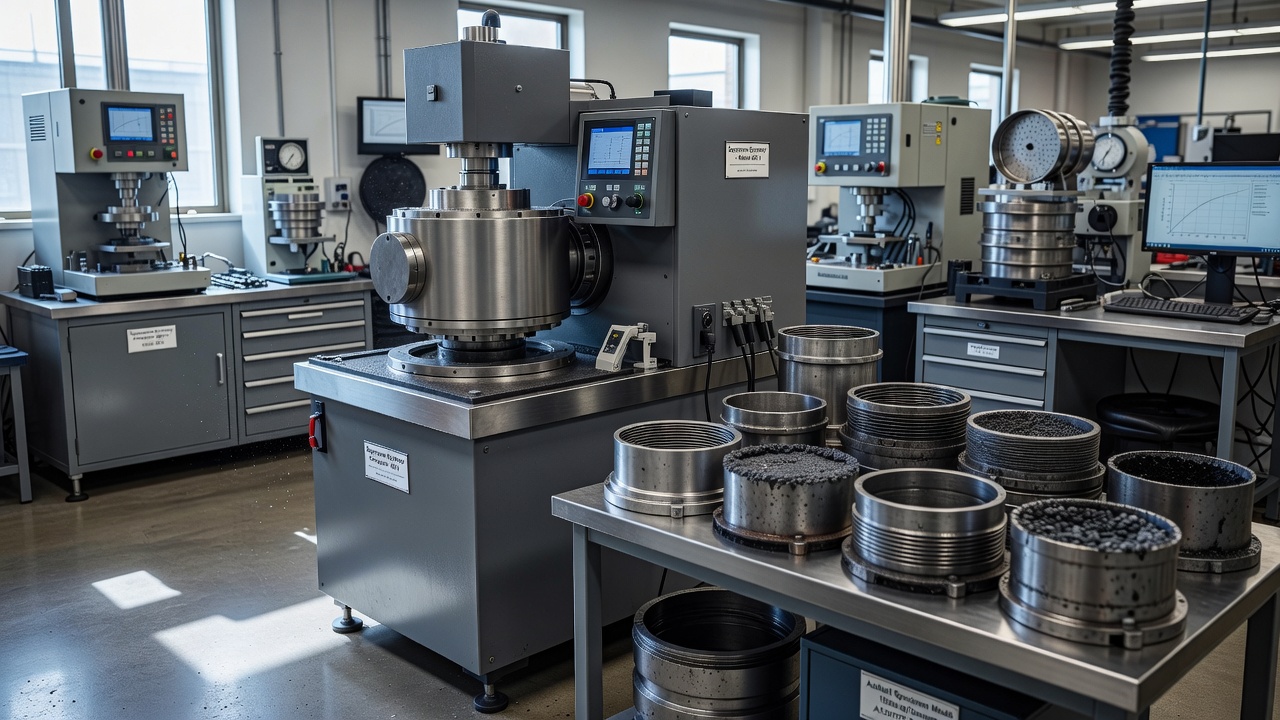
The Superpave Gyratory Compactor (SGC) is the standard laboratory compaction device used in the Superpave (SUperior PERforming Asphalt PAVEments) mix design system. Developed under the Strategic Highway Research Program (SHRP) between 1987 and 1993, the SGC replaced the Marshall drop hammer (impact compaction) and the Hveem kneading compactor as the primary device for preparing laboratory-compacted asphalt specimens for mix design and quality control. The SGC was a direct outcome of the $50 million SHRP asphalt research program, which sought to develop improved methods for specifying, testing, and designing asphalt materials.
The SGC operates by applying a constant vertical pressure of 600 kPa (87 psi) to a loose hot mix asphalt (HMA) sample contained in a cylindrical steel mold, while simultaneously tilting the mold at a gyration angle of 1.25 degrees and rotating it at 30 gyrations per minute. This combined action, vertical compression plus gyratory shearing, creates a kneading effect that reorients aggregate particles into a dense, interlocked configuration that closely resembles the particle orientation achieved by steel-wheel and pneumatic-tire rollers in field construction. This is the fundamental advantage of the SGC over impact compaction methods: the gyratory motion produces specimens with aggregate structure and density characteristics that are mechanically analogous to field-compacted pavement.
The SGC is not merely a compaction device, it is an integral component of the Superpave volumetric mix design system. The device records specimen height continuously during compaction, allowing the operator to generate a densification curve that plots specimen density as a function of the number of gyrations. This curve provides essential information about the mixture’s compactability and its potential behavior under traffic. The SGC was first introduced in AASHTO TP4 (Provisional Standard) and later elevated to full standard status as AASHTO T312 (Preparing and Determining the Density of Hot-Mix Asphalt Specimens by Means of the Superpave Gyratory Compactor). The ASTM equivalent standard is ASTM D6925 (Standard Test Method for Preparation and Determination of the Relative Density of Hot Mix Asphalt Specimens by Means of the Superpave Gyratory Compactor).
SGC Principle and Operating Parameters
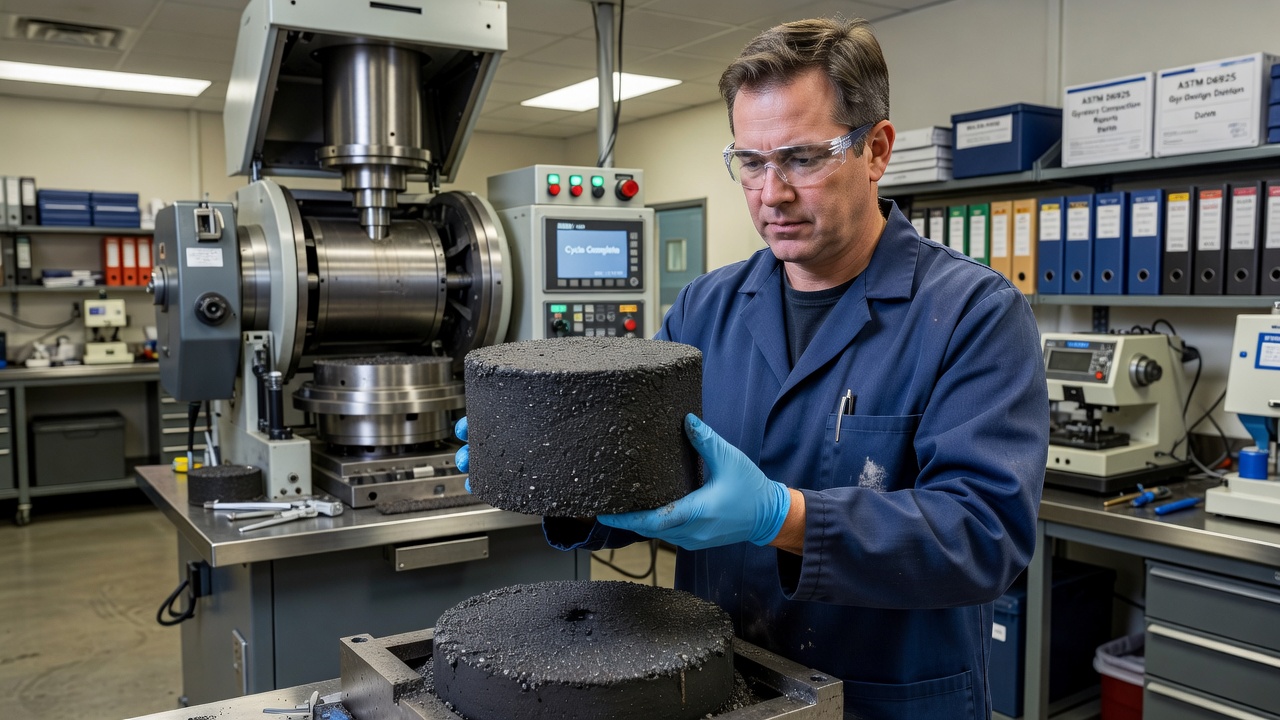
The SGC’s operating principle is rooted in the gyratory shear compaction concept that was originally developed by the Texas Highway Department in the 1960s and later refined by the U.S. Army Corps of Engineers and the French Laboratoire Central des Ponts et Chaussées (LCPC) . The SHRP researchers selected to use a gyratory compactor with operating protocols very similar to the French LCPC gyratory compactor, which had been in use in Europe for several decades. The key parameters that define SGC operation were established through extensive experimentation during the SHRP program and are specified in AASHTO T312.
| Operating Parameter | Specification Value | Tolerance |
|---|---|---|
| Vertical pressure | 600 kPa (87 psi) | ±18 kPa |
| Gyration angle | 1.25° (internal angle) | ±0.02° |
| Gyration speed | 30.0 gyrations per minute | ±0.5 gyrations/min |
| Mold inside diameter | 149.90 - 150.00 mm (new) | – |
| Specimen target height | 115 mm | ±5 mm |
| Specimen diameter | 150 mm (standard) | – |
The vertical pressure of 600 kPa was selected to represent the typical contact pressure of pneumatic-tire rollers used in initial breakdown rolling during asphalt construction. The SHRP researchers evaluated pressures ranging from 200 kPa to 800 kPa and determined that 600 kPa provided the best correlation with field densities while still being achievable with standard laboratory equipment. The gyration angle of 1.25 degrees was established after initial SHRP work used a 1.0-degree angle and found it insufficient to achieve 4% air voids at the design number of gyrations. Early SGC prototypes operated at 1.14 degrees, which was increased to 1.25 degrees to provide adequate compactive effort. The rotational speed of 30 gyrations per minute was selected after a study demonstrated that volumetric properties at 6, 15, and 30 rpm were not statistically different, the higher speed was chosen to reduce testing time.
The SGC load frame applies the vertical pressure through a hydraulic or pneumatic actuator that maintains constant pressure throughout the compaction process. The mold assembly consists of a cylindrical steel mold, a base plate, and an upper ram (top plate) that transmits the vertical load to the specimen. The gyration is achieved by tilting the entire mold assembly relative to the vertical axis while simultaneously rotating it around its vertical centerline. Modern SGC units incorporate internal angle measurement sensors that directly measure the gyration angle from within the mold cavity, eliminating the compliance errors associated with external frame-mounted angle measurements.
Comparison with Marshall Hammer Compaction
The SGC and the Marshall hammer represent fundamentally different approaches to laboratory compaction of asphalt mixtures. The Marshall method, developed by Bruce Marshall of the Mississippi Highway Department in 1939 and refined by the U.S. Army Corps of Engineers during World War II, uses impact compaction, a 4.54 kg (10 lb) sliding hammer dropped from a height of 457 mm (18 inches), applying 50 or 75 blows per face of the specimen. The Marshall method produces a specimen 102 mm (4 inches) in diameter and approximately 63.5 mm (2.5 inches) in height.
| Characteristic | Marshall Method | SGC (Superpave) |
|---|---|---|
| Compaction mechanism | Impact (drop hammer) | Gyratory shear + vertical pressure |
| Compactive effort | 50 or 75 blows per face | 50 to 125 gyrations (Ndesign) |
| Specimen size | 102 mm × 63.5 mm | 150 mm × 115 mm |
| Performance criteria | Stability (kN) and Flow (mm) | Volumetric properties (Va, VMA, VFA) |
| Traffic consideration | Fixed compaction (all mixes) | Variable Ndesign by traffic level |
| Densification data | None provided | Continuous compaction curve |
| Aggregate orientation | Uniaxial compression | Kneading action (field-like) |
The Marshall hammer applies purely vertical impact energy, which compresses the specimen but does not create the shear reorientation of aggregate particles that occurs during field rolling. This produces specimens with a different aggregate structure than field-compacted pavement. Research has shown that Marshall-compacted specimens have a more random aggregate orientation, while SGC-compacted specimens exhibit preferred aggregate orientation with the long axes of particles aligning perpendicular to the direction of compaction, identical to the orientation observed in field cores.
The Marshall stability and flow test measures the peak load (stability) and vertical deformation (flow) when the compacted specimen is loaded diametrically at 60°C. While these parameters have been used for decades, they do not directly measure fundamental material properties. The stability test measures a combination of shear and compression rather than pure shear strength, and the flow measurement is an empirical deformation index rather than a fundamental strain measurement. The SGC, by contrast, does not use stability and flow criteria, it relies on volumetric properties (air voids at Ndesign, VMA, VFA, and dust-to-binder ratio) that have a direct relationship with mixture performance.
The specimen size difference is also significant. The SGC’s 150 mm diameter specimen accommodates larger aggregate particles (up to 25 mm NMAS) and provides a larger cross-sectional area that reduces the edge effects and variability inherent in smaller specimens. The larger specimen also provides sufficient material for subsequent performance testing, such as the Hamburg Wheel Tracking Test (AASHTO T324) or the Asphalt Pavement Analyzer (AASHTO T340), which require larger test specimens than the Marshall method can provide.
Design Gyrations: Ndes, Nmax, and Nini
The SGC defines three critical gyration numbers that relate directly to the expected 20-year traffic level in millions of Equivalent Single Axle Loads (ESALs) . These three parameters, Ninitial (Nini), Ndesign (Ndes), and Nmax, together define the complete compaction envelope for the mixture.
Ndesign (Ndes)
Ndesign is the design number of gyrations that produces a specimen density equivalent to the expected field density after traffic compaction over the pavement design life. This is the primary compaction level used for mix design, the target at Ndesign is 4.0% air voids. The number of gyrations at Ndesign ranges from 50 for low traffic (<0.3 million ESALs) to 125 for traffic ≥30 million ESALs per AASHTO R35.
The original Superpave Ndesign table contained 28 different levels based on the combination of design high air temperature and traffic level. However, research conducted under NCHRP Project 9-9 demonstrated that many of these levels were redundant, producing statistically similar volumetric properties. The table was consolidated to four levels (50, 75, 100, and 125 gyrations), selected so that the VMA difference between adjacent levels would be at least 1%, a threshold considered significant for mix design purposes. The NCHRP 9-9(1) study further validated these levels through extensive field verification, correlating laboratory SGC compaction with in-place densification under actual traffic.
| 20-Year Traffic (million ESALs) | Ninitial | Ndesign | Nmax |
|---|---|---|---|
| < 0.3 | 6 | 50 | 75 |
| 0.3 to < 3 | 7 | 75 | 115 |
| 3 to < 10 | 8 | 100 | 160 |
| 10 to < 30 | 8 | 100 | 160 |
| ≥ 30 | 9 | 125 | 205 |
Note: For 3 to <10 million ESALs, some agencies may use 75/115 as an alternative.
Nmax
Nmax is the maximum number of gyrations that produces a density that should never be exceeded in the field. At Nmax, the air void content must be ≥2.0%. This requirement ensures that the mixture has sufficient resistance to continued densification under traffic. If the air voids at Nmax fall below 2.0%, the mixture is considered too compactable, under traffic loading, the air voids could decrease below the minimum level required for stability, leading to rutting, flushing (bleeding), or shoving. The Nmax value was originally derived from the concept that any mixture compacting to greater than 98% of theoretical maximum specific gravity in the laboratory would be prone to excessive densification or rutting in the field.
The relationship between Ndesign and Nmax was established during the SHRP program through the analysis of field cores recovered from nine SPS-9 projects. The researchers determined that the average Nmax level was approximately 1.10 × log(Ndesign) . This relationship was used to compute the Nmax values for each Ndesign level in the standard table.
Ninitial (Nini)
Ninitial is the number of gyrations used to evaluate the compactability of the mixture during early-stage construction. At Ninitial, the specimen density must be at or below a specified percentage of theoretical maximum density (Gmm) . The percentage limit varies by traffic level: ≤91.5% for low traffic (<0.3 million ESALs) and ≤89.0% for high traffic (≥30 million ESALs).
The Ninitial requirement is a compactability check that prevents the use of tender mixes, mixtures that compact too quickly under the roller and become unstable. If the density at Ninitial exceeds the specified limit, the mixture is considered too compactable, which means it will densify rapidly during construction and may continue to densify under traffic, leading to rutting. Tender mixes are typically associated with excessive natural (uncrushed) sand content, rounded aggregate particles, or insufficient angularity. The Ninitial check forces the mix designer to adjust the aggregate blend (typically by increasing crushed aggregate content or reducing natural sand) until the Ninitial density falls below the specified limit.
The relationship between Ninitial and Ndesign was established through the SHRP-A001 Task F experiment, in which field cores were analyzed to determine the compaction curve shape. The researchers found that the average Ninitial level was approximately Ninitial = 0.45 × log(Ndesign) . The Ninitial value is lower for high-traffic mixes because these mixtures require a higher resistance to early densification, they must be stiff enough to resist compacting too quickly under the roller.
Compaction Curve Analysis
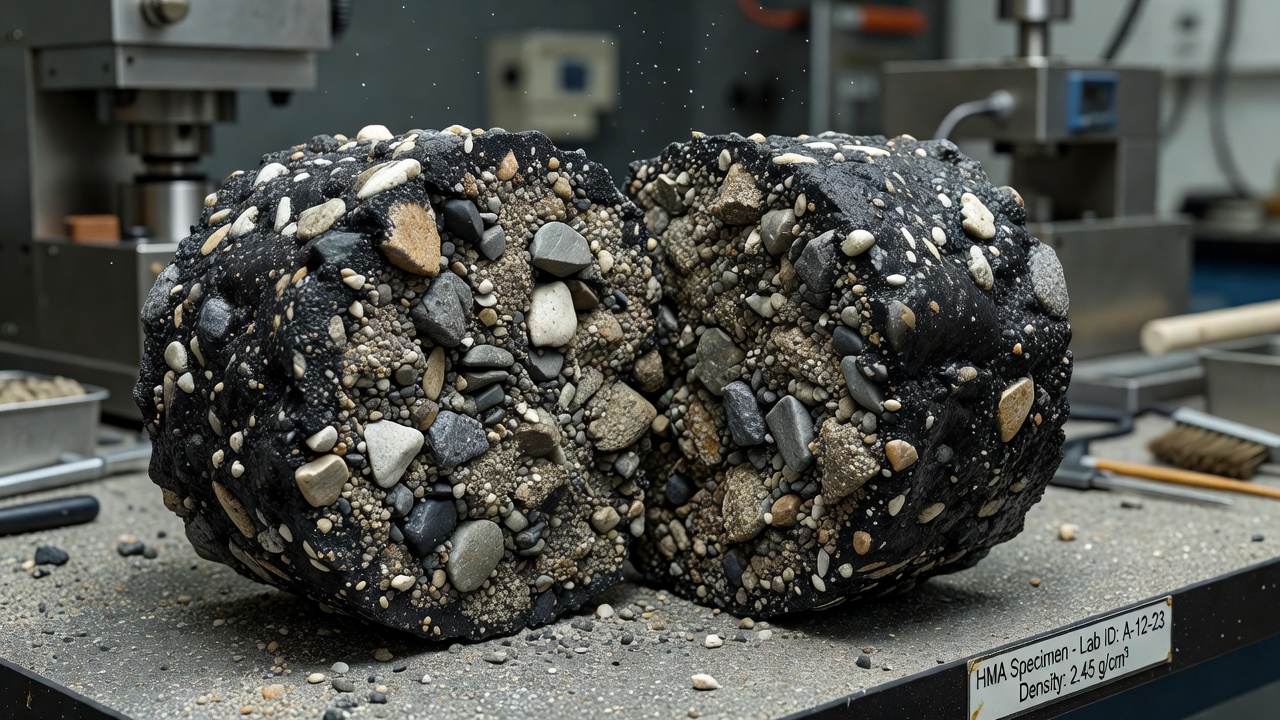
The compaction curve (also called the densification curve) is one of the most valuable outputs of the SGC. The SGC records the specimen height after each gyration (or at specified intervals), allowing the operator to calculate the specimen density at each gyration count and plot it as a function of the number of gyrations. The density is expressed as %Gmm, the percentage of the theoretical maximum specific gravity measured on the loose mixture per AASHTO T209 (Rice test).
The compaction curve has a characteristic shape: a steep initial slope during the first 10-20 gyrations as the loose mixture rapidly densifies, followed by a gradually decreasing rate of densification as the specimen approaches its maximum compacted density. The curve asymptotically approaches the maximum density achievable under the given compaction parameters. The mathematical form of the curve follows a power-law relationship:
%Gmm = A - B × N^(-C)
Where:
- %Gmm = density at N gyrations (% of Gmm)
- N = number of gyrations
- A, B, C = regression constants specific to the mixture
The slope of the compaction curve at any point represents the rate of densification (the change in density per gyration). Mixtures that compact very rapidly (steep initial slope, high C value) may be tender, they achieve high density with minimal compactive effort and may be unstable under traffic. Mixtures that compact very slowly (shallow slope throughout, low C value) may be hard to compact in the field, they require excessive roller passes to achieve the target density, increasing construction costs and potentially leading to segregation or inadequate compaction.
The compaction curve provides three key pieces of information:
K (Gyratory Compaction Slope), also called the gyratory slope, is calculated as the slope of the linear portion of the compaction curve on a semi-log plot (log gyrations versus %Gmm). The K value is influenced by aggregate gradation, binder content, binder grade, and aggregate angularity. More angular aggregates and stiffer binders produce lower K values (slower compaction), while rounded aggregates and softer binders produce higher K values (faster compaction).
Cinitial (%Gmm at Ninitial), the density achieved at the Ninitial gyration level. This must be ≤89.0-91.5% of Gmm depending on traffic level. High Cinitial values indicate excessive compactability and potential tenderness.
Cmax (%Gmm at Nmax), the density achieved at the Nmax gyration level. This must be ≤98.0% of Gmm (air voids ≥2.0%). Low Cmax values (below 96%) indicate good resistance to over-compaction, while Cmax values approaching 98% or higher indicate potential rutting susceptibility.
The compaction curve is also sensitive to production variability during quality control testing. A shift in the compaction curve between design specimens and production specimens can indicate changes in binder content, gradation, or aggregate properties. An upward shift (higher density at the same gyration count) may indicate higher binder content or finer gradation, while a downward shift may indicate lower binder content, coarser gradation, or stiffer binder. The FHWA recommends comparing the compaction curve from each production test with the design compaction curve to detect these shifts early.
Specimen Preparation
Specimen preparation for SGC compaction follows a rigorous procedure defined in AASHTO T312 and ASTM D6925. The quality of the compaction result depends critically on proper specimen preparation technique.
Sample Mass Determination, The mass of loose HMA required to produce a specimen of the target height (115 mm ± 5 mm) depends on the mixture’s density. A typical starting mass for a 150 mm diameter specimen is 4500-4700 grams, but the exact mass must be determined by trial compaction. The target is to produce a specimen with a height of 115 mm ± 5 mm at Ndesign gyrations. If the specimen height falls outside this range, the sample mass is adjusted accordingly. The mass is calculated as:
Mass = Gmm × Volume × (%Gmm at Ndes / 100)
Where the volume is based on a specimen diameter of 150 mm and target height of 115 mm.
Short-Term Aging (Conditioning), Before compaction, the loose HMA mixture is conditioned to simulate the short-term aging that occurs during plant mixing, transport, and laydown. The conditioning procedure requires heating the loose mixture in a forced-draft oven for 2 hours at the compaction temperature (typically 135-155°C depending on the PG binder grade). The mixture is stirred after 60 minutes to ensure uniform conditioning. This conditioning allows the binder to absorb into the aggregate pores and produces specimens with volumetric properties that correlate with field performance.
Compaction Temperature, The compaction temperature is determined from the temperature-viscosity relationship of the PG binder. For standard PG binders, the compaction temperature range corresponds to the temperature at which the binder kinematic viscosity is 0.28 ± 0.03 Pa·s. For modified binders (PG 76-22 or higher), the manufacturer’s recommended compaction temperature is used. The temperature is controlled within ±3°C during compaction.
Compaction Procedure, The conditioned mixture is placed in the preheated SGC mold (heated to compaction temperature). A paper disc is placed on the bottom of the mold to prevent sticking. The mixture is leveled, a paper disc is placed on top, and the mold is placed in the SGC. The upper ram is lowered to the surface of the mixture, and the SGC applies a 600 kPa seating pressure for 5-10 seconds before gyratory compaction begins. The SGC then applies the selected number of gyrations while recording specimen height automatically.
Extrusion, After compaction, the SGC extrudes the compacted specimen from the mold. The specimen is allowed to cool at room temperature for at least 30 minutes before handling. The specimen is labeled with mixture identification, binder content, compaction temperature, number of gyrations, and date of compaction.
Specimen Cooling and Storage, Compacted specimens are cooled at room temperature for 12-24 hours before volumetric testing. Rapid cooling (e.g., using a fan) may cause differential thermal stresses that affect the air void structure. Specimens are stored on a flat surface to prevent warping and are protected from direct sunlight and contaminants.
Volumetric Analysis from SGC Specimens
The SGC specimens are used to determine the volumetric properties of the asphalt mixture, the fundamental quality indicators used in Superpave mix design. The volumetric analysis begins after the specimen has cooled to room temperature (typically 24 hours after compaction).
Bulk Specific Gravity (Gmb), The bulk specific gravity of the compacted specimen is measured per AASHTO T166 (Saturated Surface-Dry method). The specimen is weighed dry, then submerged in water for 3-5 minutes to saturate the surface voids, then weighed submerged and in the SSD (saturated surface-dry) condition. The bulk specific gravity is calculated as:
Gmb = Dry Mass / (SSD Mass - Submerged Mass)
For mixtures with absorptive aggregates (water absorption >2%), AASHTO T275 (Paraffin-Coated method) or AASHTO T331 (CoreLok method) is used instead, because the SSD method may overestimate bulk specific gravity by allowing water to infiltrate the internal void structure.
Theoretical Maximum Specific Gravity (Gmm), The Gmm is measured on the loose (uncompacted) mixture per AASHTO T209 (the Rice test). A representative sample of the loose mixture is weighed, placed in a vacuum pycnometer, covered with water, and subjected to a partial vacuum (27.5 ± 2.5 mmHg) for 15 ± 2 minutes to remove entrapped air. The volume of the mixture is determined by water displacement, and Gmm is calculated as:
Gmm = Dry Mass / (Mass of Water Displaced)
Volumetric Calculations, From Gmb and Gmm, the key volumetric properties are calculated:
Air Voids (Va) = 100 × [1 - (Gmb / Gmm)]
Voids in Mineral Aggregate (VMA) = 100 - (Gmb × Ps / Gsb)
Where Ps = percent aggregate (by total mass), and Gsb = bulk specific gravity of the combined aggregate.
Voids Filled with Asphalt (VFA) = 100 × [(VMA - Va) / VMA]
Dust-to-Binder Ratio (P0.075/Pbe) = P0.075 / Pbe
The target in Superpave mix design is 4.0% air voids at Ndesign. The optimum binder content is selected by preparing specimens at 4-5 binder contents, plotting the volumetric properties versus binder content, and selecting the binder content that yields 4.0% air voids while satisfying all other criteria (VMA ≥ minimum, VFA within range, dust-to-binder within range, Ninitial density ≤ limit, Nmax air voids ≥ 2.0%).
SGC Calibration and Maintenance
The accuracy and reproducibility of SGC compaction results depend critically on proper calibration and maintenance. The FHWA identified calibration as a major issue affecting inter-laboratory variability, leading to the development of internal angle measurement technology.
Internal Angle Measurement, Traditional SGC calibration measured the external gyration angle, the angle of the machine frame relative to the vertical. However, research demonstrated that frame compliance under the 600 kPa vertical load causes the frame to deflect slightly, altering the effective gyration angle inside the mold. This deflection is not captured by external angle measurements. Studies at the University of Arkansas showed that the original Pine SGC had an internal angle of 1.18 degrees when set to an external angle of 1.25 degrees as required by AASHTO T312. Similarly, the Troxler 4140 had an internal angle of 1.19 degrees at an external setting of 1.25 degrees.
Internal angle measurement devices (such as the Rapid Angle Measurement (RAM) device) measure the gyration angle from sensors located inside the specimen mold, directly measuring the angle imposed on the specimen. This provides a true measurement of the compaction energy delivered to the specimen. Current AASHTO T312 specifications require calibration using internal angle measurement to verify the 1.25° ± 0.02° gyration angle.
Effect of Debris Under Base Plate, A study by the FHWA documented that debris under the SGC base plate can significantly reduce the effective internal angle. As shown in FHWA TechBrief FHWA-HIF-11-032, an intrusion of 0.1 mm under the base plate decreased the effective internal angle by approximately 0.05 degrees, a significant change given the ±0.02° tolerance. An intrusion of 0.6 mm reduced the internal angle to approximately 0.85-0.88 degrees, representing a 25% reduction in compactive effort. This finding emphasizes the critical importance of keeping the SGC mold plates clean.
Mold Wear, SGC molds wear over time, particularly in the area where compaction occurs (approximately 1-5 inches from the bottom of the mold). AASHTO T312 specifies the inside diameter as 149.90 to 150.00 mm when measured at the top and bottom edges. However, the FHWA notes that it is unclear at what diameter greater than 150.00 mm (in the compaction zone) mold wear becomes excessive and significantly affects volumetric properties. Agencies and laboratories should periodically measure the inside diameter at multiple heights (every 1 inch from the bottom) to track wear and replace molds when the diameter exceeds acceptable limits.
Base Plate / Mold Gap, The gap between the base plate diameter and the mold inside diameter can affect the internal angle measurement. Studies have shown that for gaps ranging from 0.24 mm to 0.62 mm, there was no consistent effect on internal angle, though the data suggested a potential decrease in internal angle with increasing gap size. The FHWA continues to study this issue with the goal of recommending specification limits for the base plate / mold gap.
Routine Maintenance Schedule, At a minimum, manufacturers’ recommended maintenance tasks must be performed at the specified frequencies. This includes:
- Daily: Clean all surfaces, plates, and molds with compressed air.
- Weekly: Check pressure calibration, verify gyration speed.
- Monthly: Check mold diameters, inspect bearings and rollers for wear.
- Quarterly: Verify internal angle with RAM device or equivalent.
- Annually: Factory calibration of load cell, pressure transducer, and angle measurement system.
SGC for Airport Mix Designs
The application of the SGC to airport pavement mix design follows specifications developed by the Federal Aviation Administration (FAA) within its Item P-401 specification (Plant Mix Bituminous Pavements, AC 150/5370-10H). Airport pavements present unique loading conditions compared to highways, including higher tire pressures (100-250 psi versus 80-120 psi for trucks), higher wheel loads (up to 40,000 kg per wheel for large aircraft), and different dynamic loading characteristics (aircraft landing loads versus rolling highway loads).
Gyration Levels for Airport Mixes, Airport asphalt mixes use different gyration levels than highway mixes. For general aviation aircraft with maximum takeoff weight ≤60,000 pounds, 50 gyrations are specified. For commercial service airfields serving heavy aircraft (Boeing 737/777, Airbus A320/A380), 75 gyrations may be specified. These lower gyration levels compared to highway Ndesign values (50-125) reflect the different traffic patterns and loading characteristics of airports, aircraft traffic is channelized (narrow wander width) but fewer total passes occur compared to highway traffic.
The National Center for Asphalt Technology (NCAT) conducted a validation study under the Airport Asphalt Pavement Technology Program (AAPTP) to confirm that 50 and 75 gyrations in the SGC produce volumetric properties equivalent to the traditional Marshall compaction of 50 and 75 blows per face. The study found that the SGC at 50 gyrations produced specimens with approximately 0.2% higher air voids than 50-blow Marshall specimens, and at 75 gyrations produced specimens with approximately 0.3% higher air voids than 75-blow Marshall specimens, a statistically insignificant difference.
PG Binder Grade Bumping, The FAA requires PG binder grade bumping to account for higher aircraft tire pressures. The base PG grade is selected from climatic data only (no traffic bumping). Grade bumping is applied using the following guidance:
- When the upper temperature limit reaches 92°C or greater (indicating a modified binder), PG Plus testing per AASHTO M320 is required.
- The Asphalt Institute’s binder specification database is used as the reference for binder grade selection.
Common airport binder grades include PG 64-22 (temperate climates), PG 70-22 (warm climates, moderate traffic), PG 76-22 (hot climates, heavy traffic), and PG 76-28 (hot climates with cold winter temperatures, heavy traffic).
Performance Testing, The FAA P-401 specification requires loaded wheel testing for mix design evaluation. The default method is the Asphalt Pavement Analyzer (APA) per AASHTO T340 with 250 psi hose pressure at 64°C, with a maximum rut depth of 10 mm at 4,000 passes. Alternative methods include APA at 100 psi and 64°C (max 5 mm at 8,000 passes) or the Hamburg Wheel Tracking Test per AASHTO T324 (max 10 mm at 20,000 passes). These performance tests, conducted on SGC-compacted specimens, ensure that the mix will resist rutting under the high tire pressures and loads of aircraft operations.
Compaction Quality Control, The FAA specifies field compaction as a percentage of Theoretical Maximum Density (TMD) rather than the percentage of laboratory bulk density used in older specifications. The target density range is 92-98% of Gmm (corresponding to 2-8% air voids in the field). Acceptance is based on Percent Within Limits (PWL) methodology per FAA specifications, with joint density pay items for longitudinal and transverse construction joints.
The ICAO (International Civil Aviation Organization) references FAA and ASTM standards for airport pavement materials through Annex 14, Aerodromes and the Aerodrome Design Manual (Doc 9157, Part 3) . While ICAO does not write its own detailed materials specifications, the international consensus requires that airport pavements be constructed to standards equivalent to FAA P-401, which effectively mandates the use of SGC-based Superpave methodology for critical airfield pavements.
SGC in Quality Control
The SGC is used extensively in quality control (QC) and quality assurance (QA) programs for Superpave production. During production QC testing, samples of the plant-produced mixture are obtained, short-term aged (typically 1 hour at compaction temperature), and compacted to Ndesign gyrations in the SGC. The compacted specimens are tested for bulk specific gravity (Gmb), and the air voids, VMA, VFA, and dust-to-binder ratio are calculated.
Acceptance Criteria, The measured air voids at Ndesign must be within 4.0% ± 1.0% for the production to be considered conforming. VMA must meet the minimum requirement for the NMAS (e.g., ≥13% for 19.0 mm NMAS). VFA must be within the specified range for the traffic level. The dust-to-binder ratio must be within 0.6-1.2. The Ninitial density (checked at the specified Nini gyrations) must be ≤89.0-91.5% of Gmm depending on traffic level.
Compaction Curve Verification, During QC testing, the compaction curve from the production specimens is compared to the curve from the design specimens. A shift in the curve may indicate a change in mixture properties:
- Upward shift (higher density at same gyration count): May indicate higher binder content, finer gradation, softer binder, or increased angularity loss.
- Downward shift (lower density at same gyration count): May indicate lower binder content, coarser gradation, stiffer binder, or contamination.
The FHWA recommends that production compaction curves be maintained within ±1.0% of Gmm of the design compaction curve at any given gyration count.
Statistical Acceptance, SGC results are used in Percent Within Limits (PWL) acceptance procedures per AASHTO R9 and R42. Production is divided into lots (typically 500-1000 tons), each subdivided into 4-5 sublots. One random sample per sublot is tested. The PWL is calculated from the sample mean and standard deviation relative to the specification limits. Most agencies require a minimum PWL of 90% for 100% payment, with reduced pay factors for lower PWL values.
Dispute Resolution, When QC and QA test results differ significantly, statistical comparison using F-tests (for variance comparison) and t-tests (for means comparison) determines whether the results come from the same population. If the tests indicate a significant difference at the 95% confidence level, resolution testing (typically at an independent laboratory) is required.
Standards Governing SGC Operation
The Superpave Gyratory Compactor is governed by a suite of AASHTO and ASTM standards that define the equipment specifications, operating procedures, and design criteria.
AASHTO T312, “Preparing and Determining the Density of Hot-Mix Asphalt (HMA) Specimens by Means of the Superpave Gyratory Compactor.” This is the primary standard governing SGC operation. It specifies the compaction parameters (600 kPa, 1.25°, 30 rpm), mold specifications, temperature control requirements, calibration procedures (including internal angle measurement), and the procedure for determining the density of the compacted specimen.
ASTM D6925, “Standard Test Method for Preparation and Determination of the Relative Density of Hot Mix Asphalt Specimens by Means of the Superpave Gyratory Compactor.” This is the ASTM equivalent of AASHTO T312. The operating parameters are identical, though there may be minor differences in the reporting requirements and precision statements.
AASHTO R35, “Superpave Volumetric Design for Hot-Mix Asphalt.” This standard specifies the Superpave volumetric mix design procedure, including the selection of Ndesign levels based on traffic (the Ndesign table), the target of 4.0% air voids at Ndesign, and the evaluation of the compacted specimens.
AASHTO M323, “Standard Specification for Superpave Volumetric Mix Design.” This standard specifies the acceptance criteria for Superpave mixtures, including minimum VMA requirements (based on NMAS), VFA ranges (based on traffic level), dust-to-binder ratio limits, and the Ninitial and Nmax density requirements.
ASTM D6926, “Standard Practice for Preparation of Asphalt Mixture Specimens Using the Marshall Apparatus.” This standard covers Marshall compaction, which is directly comparable to the SGC method in terms of the broader Superpave system context.
ASTM D7226, “Standard Test Method for Determining the Percentage of Fractured Particles in Coarse Aggregate.” This is one of the aggregate consensus property standards referenced in Superpave specifications that affect SGC test results through aggregate quality.
The precision and bias statements in AASHTO T312 and ASTM D6925 provide the expected variability for SGC testing:
| Parameter | Single-Operator Precision (1s) | Multi-Laboratory Precision (1s) |
|---|---|---|
| Gmb | 0.009 | 0.020 |
| %Gmm | 0.5% | 1.1% |
These precision values mean that replicate specimens from the same mixture prepared by the same operator should have bulk specific gravity values within ±0.009 (68% confidence level) or ±0.018 (95% confidence level). Results from different laboratories should be within ±0.020 (68%) or ±0.040 (95%). Understanding these precision limits is essential for interpreting QC/QA test results and resolving disputes.
The standards are maintained by the AASHTO Subcommittee on Materials (for AASHTO standards) and ASTM Committee D04 on Road and Paving Materials (for ASTM standards). Both organizations coordinate through the Expert Task Group (ETG) on Mixtures and Aggregates, which is jointly sponsored by FHWA, AASHTO, and industry partners. The ETG reviews technical issues related to SGC operation and Superpave mix design and recommends revisions to the standards as new research becomes available.
Frequently Asked Questions
- What is a Superpave Gyratory Compactor?
- The Superpave Gyratory Compactor (SGC) is a laboratory device that compacts hot mix asphalt (HMA) specimens using a combination of vertical pressure (600 kPa) and gyratory kneading motion at 1.25 degrees and 30 gyrations per minute. It was developed under the Strategic Highway Research Program (SHRP) as the standard compaction device for the Superpave mix design system. The SGC produces 150 mm diameter cylindrical specimens that more closely simulate field roller compaction than the Marshall impact hammer. The device records densification data throughout compaction, producing a compaction curve that provides insight into mixture compactability and behavior under traffic.
- How does the SGC differ from the Marshall hammer?
- The SGC applies a kneading gyratory action combined with vertical pressure (600 kPa) at 30 gyrations per minute and 1.25 degrees gyration angle, while the Marshall method uses impact compaction from a 4.54 kg hammer dropped from 457 mm (50 or 75 blows per face). The SGC produces 150 mm diameter × 115 mm height specimens versus Marshall's 102 mm × 63.5 mm specimens. The SGC's gyratory motion produces aggregate orientation similar to field rollers, while Marshall impact compaction does not replicate field conditions. The SGC also records the complete densification curve, providing data on mixture compactability that the Marshall method cannot provide.
- What are Ninitial, Ndesign, and Nmax in SGC compaction?
- Ninitial (Nini) is typically 6-9 gyrations, the density at this point must be below a specified percentage of theoretical maximum density (≤89.0-91.5% depending on traffic) to prevent tender mixes. Ndesign (Ndes) is 50-125 gyrations depending on 20-year traffic level in ESALs, the target at Ndesign is 4.0% air voids for mix design. Nmax is 75-205 gyrations, at Nmax, the air voids must be ≥2.0% to prevent excessive densification under traffic. These three levels together ensure the mixture can be adequately compacted in the field, will not rut under traffic, and will have sufficient durability.
- What is the compaction curve in SGC testing?
- The compaction curve is a plot of specimen density (as % of theoretical maximum specific gravity, Gmm) versus the number of gyrations during SGC compaction. The curve has a characteristic shape: rapid densification in the first few gyrations followed by a gradually decreasing rate of densification as the specimen becomes more compact. The slope of the curve at any point represents the rate of compaction. The curve provides valuable information about mixture behavior, steep initial slopes indicate tender mixes, shallow slopes indicate hard-to-compact mixes, and the overall shape reveals how the mixture will respond to field compaction and traffic densification.
- How is the SGC used for airport mix design?
- The FAA uses the SGC within its P-401 specification for airport asphalt pavements. Airport mixes typically use lower gyration levels than highway applications: 50 gyrations for general aviation aircraft pavements (≤60,000 lbs) and 75 gyrations for commercial service airfields. The PG binder grade selected accounts for higher aircraft tire pressures (100-250 psi) through grade bumping. Performance testing using the Asphalt Pavement Analyzer (APA) per AASHTO T340 is required with 250 psi hose pressure at 64°C. The FAA specifies compaction as a percentage of theoretical maximum density (TMD) with a target of 92-98% of Gmm.
- What standards govern SGC operation?
- The primary standards for the Superpave Gyratory Compactor are AASHTO T312 (Preparing and Determining the Density of Hot-Mix Asphalt Specimens by Means of the Superpave Gyratory Compactor) and ASTM D6925 (Standard Test Method for Preparation and Determination of the Relative Density of Hot Mix Asphalt Specimens by Means of the Superpave Gyratory Compactor). AASHTO R35 governs the Superpave volumetric design procedure and specifies the Ndesign levels based on traffic. AASHTO M323 specifies the Superpave volumetric mix design requirements including VMA, VFA, and dust-to-binder ratio criteria.
- What is internal angle measurement for SGC calibration?
- Internal angle measurement is a calibration method that measures the gyration angle from sensors located inside the specimen mold rather than from the external frame of the compactor. This was developed because frame compliance under the 600 kPa load can affect external angle measurements. Research showed that when set to an external angle of 1.25 degrees, some compactors had an actual internal angle as low as 1.18 degrees. The internal angle measurement device (such as the Rapid Angle Measurement or RAM device) provides more accurate and reproducible angle calibration, resulting in more consistent volumetric properties between different SGC units.
- What are the common maintenance issues affecting SGC performance?
- Key maintenance issues affecting SGC performance include: debris under the base plate (as little as 0.1 mm intrusion can decrease effective internal angle by approximately 0.05 degrees), mold wear (mold diameter exceeding 150.00 mm in the compaction zone), excessive gap between the mold and base plate, worn bearings and rollers, and general cleanliness of all surfaces and plates. Per AASHTO T312, mold inside diameter must be between 149.90 and 150.00 mm when measured at the top and bottom edges. Regular calibration and maintenance per manufacturer recommendations is essential for consistent specimen density.
- How does the SGC help in quality control of asphalt production?
- The SGC is used in quality control to verify that the produced asphalt mixture meets the volumetric design requirements. During QC testing, specimens are compacted to Ndesign gyrations and the air voids, VMA, VFA, and dust-to-binder ratio are calculated. The measured air voids at Ndesign must be 4.0% ± 1.0% for acceptance. The densification curve from production specimens is compared to the design curve to detect changes in mixture behavior. SGC results are also used with Percent Within Limits (PWL) statistical acceptance procedures per AASHTO R9 and R42.
- What specimen sizes can the SGC produce?
- The SGC primarily produces 150 mm diameter specimens for standard Superpave mix design, with a target height of 115 mm ± 5 mm. The mass required is typically 4500-4700 grams of loose HMA depending on the mixture density. Some SGC models can accommodate 100 mm diameter molds for smaller specimens when aggregate size permits. The 150 mm specimen size is preferred because it accommodates larger aggregate sizes (up to 25 mm nominal maximum aggregate size) and provides a larger cross-section for volumetric calculations and subsequent performance testing.