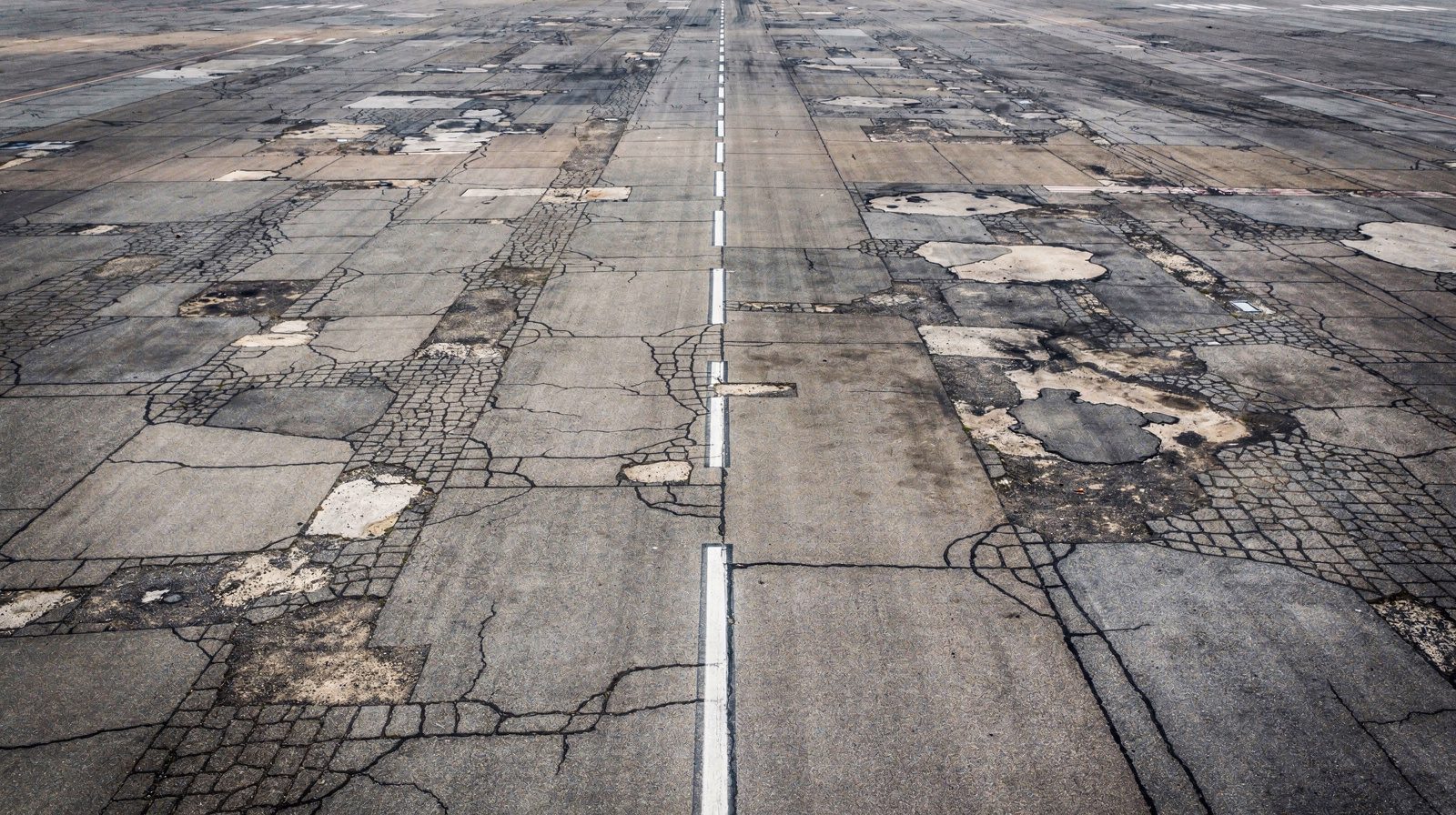
What is a Tack Coat in Asphalt Pavement Construction?
Definition and Purpose of a Tack Coat
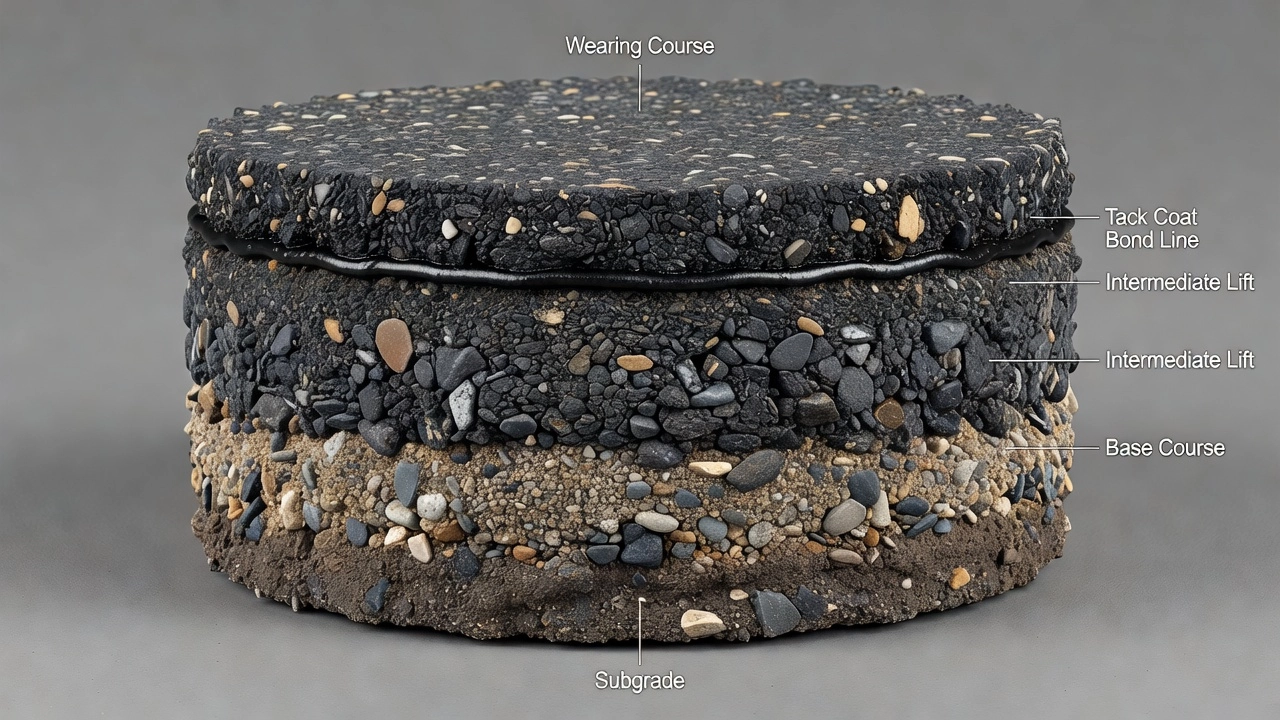
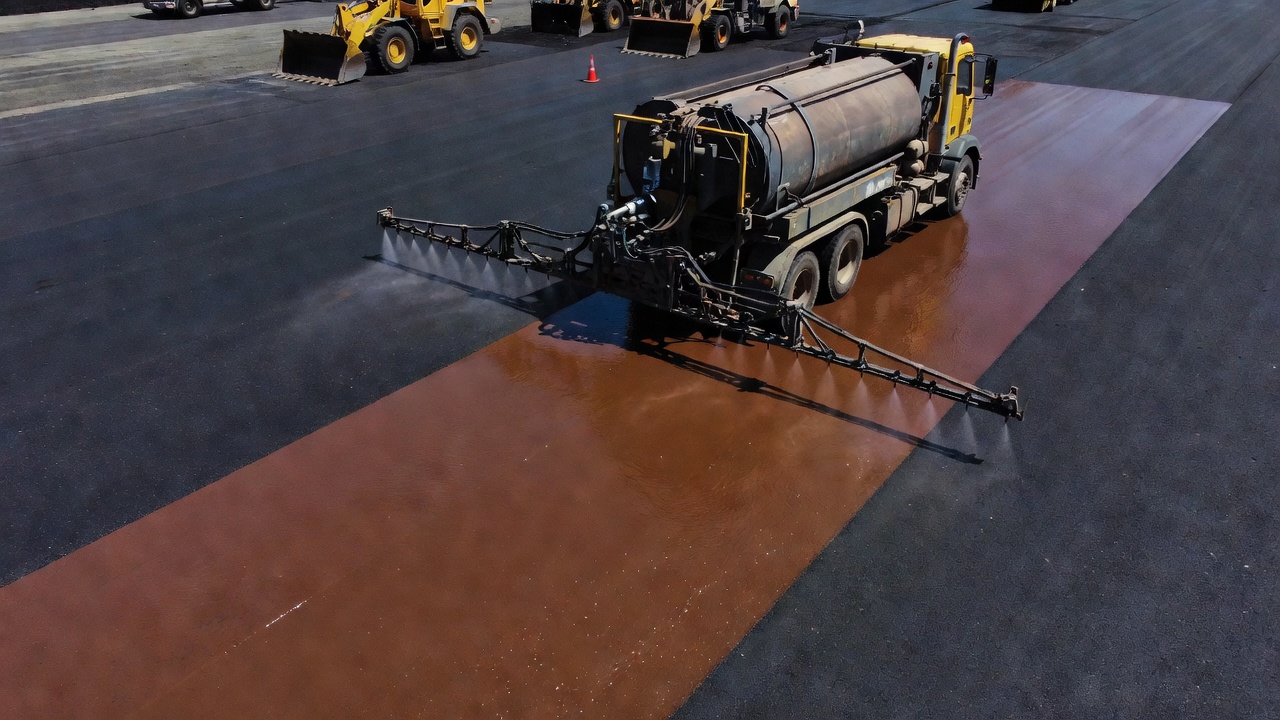
A tack coat is defined by ASTM as “an application of bituminous material to an existing relatively non-absorptive pavement surface to provide a thorough bond between old and new surfacing.” In practice, the tack coat is a light spray application of diluted or undiluted asphalt emulsion applied to an existing asphalt pavement, Portland cement concrete pavement, or between successive lifts of new hot mix asphalt (HMA) prior to placing the next layer. The tack coat functions as the adhesive interface that transforms multiple independent pavement layers into a single monolithic structural unit.
The fundamental purpose of a tack coat is load transfer. Asphalt pavement structures are designed on the assumption that all layers work together to distribute traffic loads across the pavement system. When wheel loads are applied at the pavement surface, tensile and shear stresses develop at the bottom of each bound layer. If layers are not properly bonded, these stresses cannot be effectively transferred across the interface. The layers behave independently, each one bending and flexing on its own rather than as part of a unified structure. This condition shifts the neutral axis of the composite section, dramatically increasing tensile strains at the bottom of each unbonded layer and accelerating fatigue damage.
The FHWA TechBrief on Tack Coat Best Practices (FHWA-HIF-16-017) emphasizes that “a key, but sometimes overlooked, component of an asphalt pavement is the bond strength between asphalt pavement layers.” Research by Roffe and Chaignon demonstrated that if a pavement displays no bonding within its layers, a 60% loss of service life can be expected. Brown and Brunton reported that no bonding causes a 75% reduction in pavement life, and at 70% bond strength, a 70% reduction in life. Most strikingly, King and May reported that with only a 10% loss of bond, a 50% reduction in fatigue life would be expected.
The tack coat serves additional purposes beyond structural bonding. It seals the existing pavement surface against moisture infiltration between layers, preventing water from migrating along the interface and causing stripping or moisture damage. The tack coat also protects the underlying pavement from the effects of aging, particularly in milled sections where the protective surface course has been removed, exposing fresher asphalt to oxidation.
Tack Coat Materials
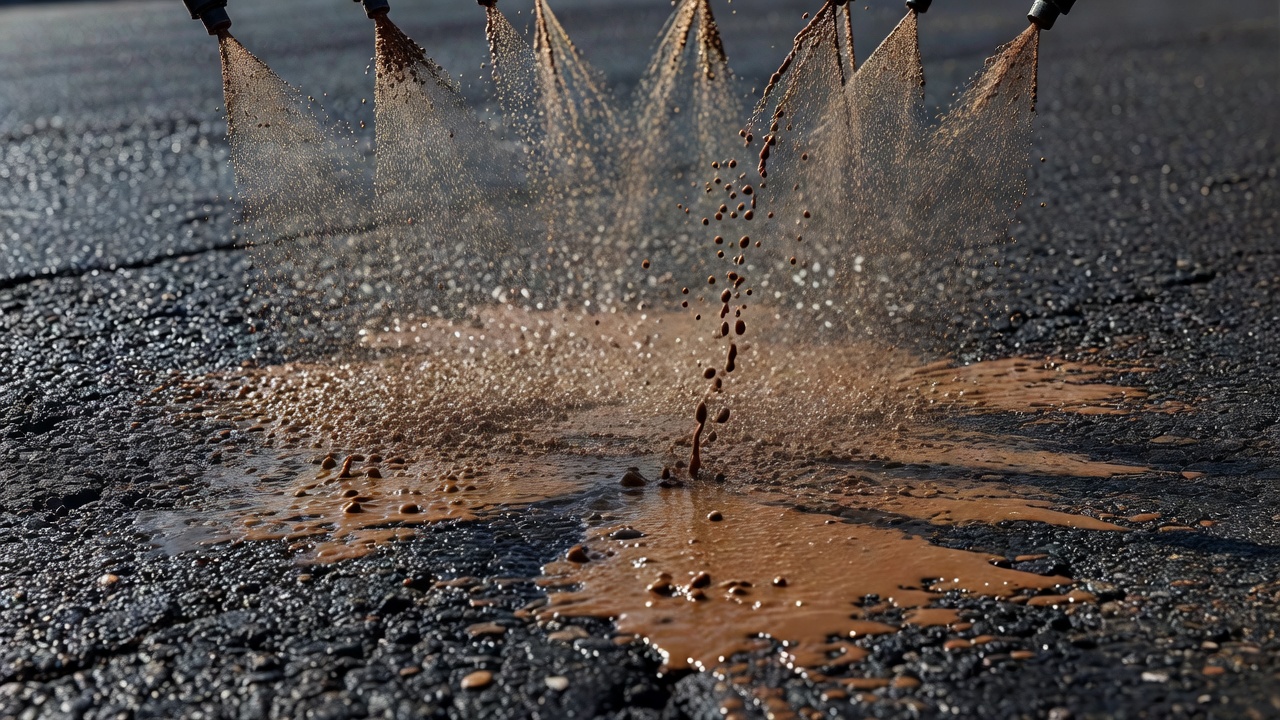
The vast majority of tack coat applications today use asphalt emulsions, a mixture of asphalt binder, water, and an emulsifying agent (surfactant or soap). The emulsion exists as a stable suspension of microscopic asphalt droplets in water. When the emulsion is sprayed and the water evaporates (the “breaking” process), the asphalt droplets coalesce back into a continuous asphalt film on the pavement surface.
Emulsion Classification System
Asphalt emulsions are classified by two primary characteristics: electrical charge (ionic type) and setting speed.
Ionic charge: Anionic emulsions (SS-1, RS-1, MS-2) carry a negative charge on the asphalt droplets. Cationic emulsions (CSS-1, CRS-1, CQS-1) carry a positive charge, denoted by the prefix “C.” Cationic emulsions are generally preferred in damp or coastal conditions because they are less sensitive to moisture and temperature at the time of application. The absence of the letter “C” denotes an anionic emulsion. Anionic and cationic emulsions must never be mixed or used together.
Setting speed: The setting classification describes how quickly the asphalt droplets coalesce and the water separates. The categories are:
| Setting Type | Designation | Typical Break Time (70°F) | Min. Residual Asphalt (%) | Dilutable? |
|---|---|---|---|---|
| Slow Setting | SS-1, SS-1h, CSS-1, CSS-1h | 60-240 minutes | 57 (ASTM D977/D2397) | Yes (1:1 max) |
| Rapid Setting | RS-1, RS-2, CRS-1, CRS-2 | 15-45 minutes | 55-65 | No |
| Quick Setting | QS-1, QS-1h, CQS-1, CQS-1h | 10-30 minutes | 57 | Yes |
| High Float | HFMS-2, HFMS-2h | 30-90 minutes | 60-65 | No |
Slow-setting emulsions (SS-1, SS-1h, CSS-1, CSS-1h) are the most widely used tack coat materials in the United States. They contain 57% minimum residual asphalt by weight and can be diluted with water (up to 1:1 ratio) to improve application uniformity. The “h” suffix indicates a harder (lower penetration grade) base asphalt was used in the emulsion. Slow-setting emulsions are favored for their excellent application characteristics and uniform coverage, but they take longer to break and cure, making them less suitable for night work, cool weather, or short construction windows.
Rapid-setting emulsions (RS-1, RS-2, CRS-1, CRS-2) break significantly faster than slow-setting types because of their higher emulsifying agent concentration and different chemistry. RS-1 has a minimum 55% residual asphalt, while RS-2 has a minimum 63% residual. CRS-2 (cationic rapid-setting, high viscosity) maintains a minimum 65% residual. Rapid-setting emulsions cannot be diluted with water. Their higher viscosity makes uniform coverage more difficult to achieve, and they are more prone to tracking onto equipment tires. They are preferred for night paving and cooler weather conditions.
Quick-setting emulsions (QS-1, CQS-1) were originally developed for slurry seal and micro-surfacing applications but are increasingly used as tack coats, particularly for night work, cool weather, and rapid construction schedules. They contain an additive that accelerates the setting time. Quick-setting emulsions have lower viscosities than rapid-setting types and can be diluted, making uniform coverage easier to achieve.
Polymer-modified asphalt emulsions (PMAE) incorporate polymer additives, either preblended with the asphalt binder before emulsification or added as latex. These polymers enhance the elasticity, cohesion, and temperature susceptibility of the residual asphalt film, improving bond strength at both high and low service temperatures. PMAE products are designated with a “P” suffix (e.g., SS-1hP, PMCRS-2, PMRS-2h). They are increasingly specified for high-stress applications such as intersections, heavy truck routes, airport pavements, and spray-paver applications.
Trackless or non-tracking tack (NT/TT) is a newer category of polymer-modified emulsion designed specifically to address the problem of tracking, the pickup and transfer of tack coat material to adjacent pavement surfaces via construction equipment tires. Trackless tack emulsions use harder base asphalts combined with polymer modification to produce a residual film that, while still providing excellent bond strength, is less tacky to the touch and more resistant to pickup under tire loads. Many state DOT specifications now include NT or TT designations for these products. Although there is no official ASTM standardization for trackless tack nomenclature, the term “non-tracking” or “reduced-tracking” tack is widely understood in the industry.
Hot Asphalt Binder
Hot performance-grade (PG) asphalt binders are also used as tack coat materials, particularly in southern states, for night paving projects, and when installing geosynthetic pavement interlayers. Unlike emulsions, hot asphalt binders do not contain water and therefore have no break or set time, they provide immediate bond upon cooling. The PG grade selected is typically the same grade used in the hot mix asphalt being placed. Hot binders are applied at much higher temperatures (300-350°F) than emulsions (120-180°F). However, they are less forgiving of surface moisture, dust, or milled texture because they will bead up rather than wet the surface. Tracking can also be problematic when ambient temperatures exceed 85°F.
Cutback Asphalt
Cutback asphalts (asphalt binder dissolved in petroleum solvents such as naphtha or kerosene) were historically used as tack coats but are now rarely used in the United States due to environmental concerns regarding solvent evaporation, the relatively low flash point creating safety hazards, and research showing that cutbacks achieve lower bond strengths than emulsions.
Tack Coat Application Rate and Uniformity
The application rate of a tack coat is the single most critical factor determining its performance. It is essential to distinguish between three different rate expressions: residual asphalt rate, undiluted emulsion rate, and diluted emulsion rate.
Residual Asphalt Rate
Residual asphalt is the amount of asphalt binder remaining on the pavement surface after all water has evaporated from the emulsion. All specifications should express the target application rate in terms of residual asphalt. The Asphalt Institute and NCHRP Report 712 provide the following recommended residual application rates based on surface condition:
| Surface Type | Residual Rate (gal/yd²) | Undiluted Emulsion Rate* (gal/yd²) | Diluted 1:1 Rate* (gal/yd²) |
|---|---|---|---|
| New Asphalt (freshly placed) | 0.02 - 0.05 | 0.03 - 0.07 | 0.06 - 0.14 |
| Existing Asphalt (aged, weathered) | 0.04 - 0.07 | 0.06 - 0.11 | 0.12 - 0.22 |
| Milled Asphalt Surface | 0.04 - 0.08 | 0.06 - 0.12 | 0.12 - 0.24 |
| Portland Cement Concrete | 0.03 - 0.05 | 0.05 - 0.08 | 0.10 - 0.16 |
*Assumes emulsion contains 67% asphalt, 33% water. These are approximate bar rates, actual rates depend on the specific emulsion’s residual content as determined by distillation testing.
The higher end of each range should be used for pavements with greater surface roughness, more wear and weathering, open-textured surfaces, and higher traffic volumes. Milled surfaces require the highest rates because milling increases the effective surface area by creating a rough texture with exposed aggregate.
Calculating Application Rates
Calculating the proper application rate requires knowing the residual asphalt content of the emulsion. If the specification requires 0.04 gal/yd² residual on an existing asphalt surface and the emulsion has a 57% residual content, the calculation proceeds as:
- Undiluted emulsion rate = Residual rate / Residual fraction = 0.04 / 0.57 = 0.07 gal/yd²
If the emulsion will be diluted 1:1 with water, the diluted rate becomes:
- Diluted rate = Undiluted rate × (1 + dilution ratio) = 0.07 × 2.0 = 0.14 gal/yd² of diluted emulsion
The Caltrans Tack Coat Guidelines (2024) provide estimating tables that account for the minimum residual percentage. For RS-1 emulsion (55% minimum residual), the minimum application rate on existing HMA is calculated as 0.03 (residual rate) / 0.55 = 0.05 gal/yd² of undiluted emulsion, and 0.07 / 0.55 = 0.11 gal/yd² for a milled surface.
Uniformity of Application
Uniform distribution of the tack coat across the entire paved area is essential. Non-uniform application, often called “zebra tack” or “corn rows”, produces alternating stripes of heavy and light tack that create zones of widely varying bond strength. The heavy stripes may contain enough binder to create a lubricated slippage plane, while the light stripes may have insufficient binder to develop any meaningful bond.
Achieving uniform application requires:
- Proper spray-bar height, The bar must be set at the correct height above the pavement to achieve a 3-way overlap of spray fan patterns from each nozzle. Typical height is 8-12 inches above the surface.
- Correct nozzle size and angle, All nozzles must be identical in size, in good condition (not worn or partially plugged), and set at the proper angle (typically 15-30 degrees from vertical).
- Consistent pump pressure, The distributor pump must maintain consistent pressure throughout the application. Pressure fluctuations produce variable application rates.
- Proper distributor calibration, The distributor truck must be calibrated before each project to verify the application rate at the specified travel speed and pump settings.
- Temperature control, Emulsion application temperature must be within the manufacturer’s recommended range (typically 120-180°F for slow-setting emulsions, 125-185°F for rapid-setting).
Modern distributor trucks equipped with computerized flow control systems can maintain highly consistent application rates across varying travel speeds. However, even the best equipment requires regular calibration and maintenance. The NAPA QIP-128 publication recommends that distributor trucks be inspected and calibrated at the beginning of each paving season and whenever nozzles are changed or maintenance is performed.
Breaking and Curing of Tack Coat Emulsion
The break and cure of an emulsion tack coat are two distinct processes that must be understood for proper construction sequencing.
Tack coat break is the moment when the water begins to separate from the asphalt in the emulsion, visible as a color change from brown to black. At the break point, the asphalt droplets have coalesced sufficiently to form a continuous film, but some water still remains within the film. The emulsion has lost its milky brown appearance and become uniformly black.
Tack coat set (or full cure) occurs when all water has completely evaporated from the emulsion, leaving only the residual asphalt binder film on the pavement surface. At this point, the tack coat is fully cured and ready to receive the overlay.
The time required for break and set depends on several factors:
| Factor | Effect on Break/Set Time |
|---|---|
| Temperature (air and pavement) | Higher temperature accelerates break and set. Below 50°F, break times increase dramatically. |
| Humidity | High humidity slows evaporation, extending both break and set times. |
| Wind | Higher wind speeds accelerate evaporation, reducing break and set times. |
| Application rate | Higher rates increase the volume of water that must evaporate, extending set times. |
| Dilution | Diluted emulsions contain more water, requiring longer set times. |
| Emulsion type | RS (rapid setting) breaks faster than SS (slow setting). Cationic emulsions typically break faster than anionic. |
| Sunlight | Direct sunlight warms the pavement and accelerates evaporation. Overcast conditions slow the process. |
In warm summer conditions (85°F+, low humidity, sunny), slow-setting emulsions typically break within 30-60 minutes and set within 2-4 hours. Rapid-setting emulsions can break in 15-30 minutes under the same conditions. In cool weather (50-60°F, overcast, high humidity), slow-setting emulsions may require 4-8 hours or longer to fully break, and complete curing may extend to 24 hours or more.
The USAF Civil Engineer School and NCAT research emphasize that the overlay must not be placed before the tack coat has fully broken. Placing HMA over unbroken emulsion traps water at the interface. The trapped water turns to steam at HMA placement temperatures (300-320°F), creating high-pressure steam voids that prevent any bond from forming. The result is a debonded interface that will fail under traffic within months.
Conversely, allowing the tack coat to set too long before placing the overlay, particularly in hot, sunny conditions, can cause the residual asphalt film to become too stiff and oxidized, reducing its adhesive capacity. The ideal window for placing the overlay is after the emulsion has fully broken but before the residual film has significantly aged. Most specifications require the overlay to be placed within the same working day as tack coat application.
Consequences of Poor Bonding
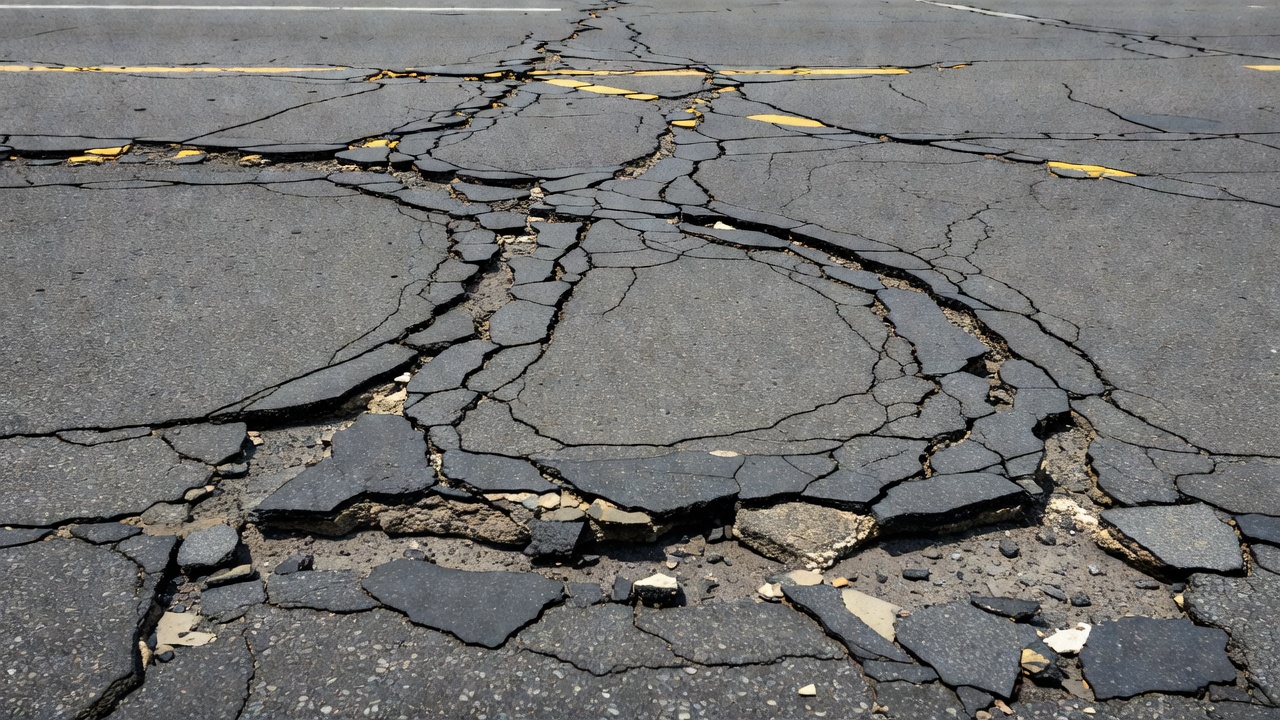
The failure to achieve proper interlayer bond through adequate tack coat application leads to several distinct and often progressive pavement distress mechanisms. These failures are not merely cosmetic, they dramatically reduce pavement service life and can create safety hazards, particularly on airport runways and high-speed highways.
Slippage Cracking
Slippage cracking is the most visible and characteristic distress caused by inadequate tack coat bonding. These cracks appear as crescent or half-moon shaped cracks in the wheel paths, typically with the open end of the crescent pointing in the direction of traffic. Slippage cracks are caused by horizontal shear forces from braking, accelerating, or turning vehicles acting on a surface layer that is not adequately bonded to the underlying layer. The overlay slides or shoves relative to the underlying pavement, creating tensile stresses at the surface that manifest as these distinctive curved cracks.
Slippage cracking is most prevalent at:
- Intersections and traffic signals, where braking and acceleration are concentrated
- Bus stops and transit lanes, heavy shear loads from repeated braking
- Airport runway touchdown zones, high-impact dynamic shear from aircraft landing
- Steep grades, where vehicles apply high tractive forces
- Curves and roundabouts, where lateral shear forces are applied
The FAA and TxDOT guidance specifically warn that excessive tack coat can be as harmful as insufficient tack coat. Too much tack coat creates a lubricated slippage plane between layers, where the excess asphalt binder acts as a shear plane rather than an adhesive. The residual asphalt film should be thin enough to transfer aggregate-to-aggregate contact across the interface, not so thick that the asphalt itself becomes the shear plane.
Delamination
Delamination occurs when entire sections of the overlay separate from the underlying pavement across large areas. Unlike slippage cracking which is localized to shear zones, delamination can affect entire lane widths or full pavement sections. Delaminated areas may remain intact under light traffic but fail catastrophically under heavy loads, particularly when moisture has infiltrated the debonded interface.
Delamination is often detected by:
- Hollow sounds when tapping the pavement surface (a “drummy” or “hollow” sound during chain drag or hammer sounding surveys)
- Longitudinal cracking along wheel paths
- Edge raveling at pavement edges where the overlay peels away
- Pothole formation where delaminated sections break out under traffic
Premature Fatigue Cracking
Perhaps the most economically significant consequence of poor bonding is the dramatic reduction in pavement fatigue life. When pavement layers act independently instead of as a monolithic unit, the stress distribution through the pavement structure changes fundamentally. The neutral axis shifts, and tensile strains at the bottom of the unbonded layer increase dramatically. Research consistently shows that unbonded layers experience tensile strains 2-5 times higher than bonded layers under the same loading.
Willis and Timm documented a case study at the NCAT Test Track where two structurally identical pavement sections (N7 and N8) were built with the same thickness and materials. Section N8 experienced premature fatigue failure because delamination occurred between the layers, while the bonded section N7 performed as designed. Forensic investigation confirmed that debonding was the sole cause of the early failure.
The FHWA TechBrief summarizes the cost implications: the cost of tack coat represents 0.1-0.2% of total project costs on new construction and 1.0-2.0% on mill-and-overlay projects. However, the cost to repair a bond failure requiring replacement of just the top lift is 30-100% of the original project cost. Tack coat is widely recognized as the lowest-cost insurance available for long-term pavement performance.
Moisture Damage
A poorly bonded interface provides a pathway for water to migrate horizontally between pavement layers. This trapped moisture accelerates stripping (the loss of adhesion between asphalt binder and aggregate in the HMA), freeze-thaw damage in colder climates, and pumping (the expulsion of water and fine material under traffic loading). The presence of water at the interface also reduces the effective bond strength by up to 50%, compounding the structural deficiency.
Tack Coat Inspection
Inspection of tack coat application and condition is a critical quality control function that should be performed at every stage of the construction process. The inspection protocol involves verification of materials, equipment, application, and post-application condition.
Pre-Application Inspection
Before tack coat application begins, the inspector must verify:
Surface condition, The existing pavement must be clean, dry, and free of all loose material, dust, dirt, oil, grease, vegetation, and moisture. On milled surfaces, all milling residue must be removed by mechanical sweeping and, if necessary, compressed air cleaning. The inspector should perform a simple adhesion test: press a piece of duct tape onto the surface, if it picks up dust, the surface is not adequately cleaned.
Material certification, The tack coat material must be accompanied by a certificate of analysis or manufacturer’s certification confirming that it meets the specified grade and all applicable ASTM or AASHTO requirements. For emulsions, the residual asphalt content, Saybolt viscosity, sieve test, and distillation residue properties should be verified.
Equipment condition, The distributor truck must be in good working order with all nozzles clean, properly sized, and correctly angled. The spray bar height must be set correctly for the specific nozzle configuration. The distributor must have been calibrated within the required timeframe.
Weather conditions, Ambient temperature, pavement temperature, humidity, wind speed, and weather forecast must all be within specification limits. Most specifications require minimum ambient temperatures of 40-50°F (4-10°C) and rising, with no rain expected within 24 hours.
Traffic control, All necessary traffic control measures must be in place to protect the freshly tacked surface from traffic.
Application Inspection
During application, the inspector must monitor:
Application temperature, Verify that the emulsion temperature is within the manufacturer’s recommended range. For SS-1 and CSS-1 emulsions, typical application temperature is 120-140°F. For RS emulsions, 140-180°F. For hot asphalt binders, 300-350°F.
Application rate verification, The inspector should verify the application rate by: (1) checking the distributor’s computerized rate readout, (2) performing a catch-can test (placing a row of pre-weighed pans or paper pads across the pavement, running the distributor over them, and weighing the material collected), and (3) confirming the travel speed and pump settings.
Uniformity of coverage, Visually inspect the sprayed surface for streaks, stripes, gaps, puddles, or any non-uniform distribution. Zebra tack must be immediately corrected. Any areas missed by the distributor should be hand-applied using a spray wand.
Edge and joint coverage, Ensure that longitudinal and transverse construction joints receive proper coverage. Vertical surfaces such as curbs, gutters, and existing pavement edges that will contact the new HMA must also be tacked.
Post-Application Inspection
After application and before the overlay is placed, the inspector must confirm:
Emulsion break confirmation, The emulsion must be fully broken (uniform black color throughout, no brown areas). Light brown areas indicate unbroken emulsion that still contains water. A simple test: touch the tacked surface with a paper towel, if it comes away with brown residue, the emulsion has not broken.
Condition of tack coat, The tack coat should be tacky to the touch but not so wet that it transfers to shoes or tires. If the tack coat has been allowed to cure for an extended period and has become dry and non-tacky, additional tack may be needed at a reduced rate.
Time since application, Verify that the overlay is being placed within the allowable time window. If too much time has elapsed, the residual film may have become too oxidized to develop adequate bond.
Temperature of tack coat at time of overlay, In cool weather, if the tack coat has been in place for several hours and has cooled significantly, the overlay should be placed quickly after the tack coat to ensure the heat from the HMA helps reactivate the bond.
Airport Pavement Tack Coat Specifications
FAA Specifications
The Federal Aviation Administration (FAA) provides comprehensive tack coat specifications in AC 150/5370-10, Standard Specifications for Construction of Airports. The relevant items for tack coat in airport construction are:
Item P-603, Emulsified Asphalt Tack Coat covers the application of emulsified asphalt tack coat for airport pavements. Key requirements include:
- Material, Emulsified asphalt conforming to AASHTO M 140 (SS-1, SS-1h) or AASHTO M 208 (CSS-1, CSS-1h).
- Application rate, Residual asphalt application rates per FAA standards: 0.05 to 0.15 gal/yd² of diluted emulsion, depending on surface condition. The FAA emphasizes that rates should be at the lower end for dense, tight surfaces and at the higher end for open, textured, or milled surfaces.
- Dilution, Emulsion may be diluted with an equal volume of potable water, with water added to the emulsion (never the reverse).
- Surface preparation, The existing surface must be clean, dry, and free of all loose or foreign material. On existing asphalt pavements scheduled for overlay, milling of at least 1.5 inches is recommended.
- Application temperature, Minimum application temperature of 50°F (10°C) for emulsion and rising, with the pavement surface temperature above 60°F (15°C).
- Curing, No traffic is permitted on the tacked surface until the emulsion has completely broken. The overlay must be placed before the tack coat becomes non-tacky from prolonged exposure.
Item P-401, Plant Mix Bituminous Pavements also includes tack coat provisions within its general construction requirements. The latest P-401 specification changes emphasize that tack coat is critical for achieving adequate interlayer bond, particularly for airport pavements subject to high tire pressures and dynamic shear loads from aircraft operations.
ICAO Standards
The International Civil Aviation Organization addresses tack coat application in the context of airport pavement construction and maintenance through:
ICAO Annex 14, Aerodromes, Volume I, Chapter 10 establishes the requirement that aerodrome pavements must be maintained in a condition that does not impair the safety of aircraft operations. Proper interlayer bonding through tack coat is implicit in achieving structural integrity.
ICAO Aerodrome Design Manual (Doc 9157, Part 3, Pavements), This document provides guidance on flexible pavement design and construction, including the importance of proper bonding between pavement layers. The manual references FAA and ASTM standards for tack coat materials and application.
ICAO Airport Services Manual (Doc 9137, Part 9, Airport Maintenance Practices), This manual addresses pavement inspection and maintenance, including the identification of bond-related distresses such as slippage cracking and delamination during routine pavement condition inspections.
Specific Requirements for Airport Tack Coat
Airport pavements differ from highway pavements in several critical respects that affect tack coat requirements:
- Higher tire pressures, Aircraft tires operate at pressures of 100-250 psi, compared to 80-120 psi for truck tires. Higher contact pressures generate correspondingly higher interlayer shear stresses.
- Concentrated loads, Aircraft apply very high single-wheel loads (up to 50,000+ lbs per main gear tire) that concentrate stress at the pavement surface and layer interfaces.
- Dynamic loading, Landing impact, braking during landing roll, and turning on taxiways all generate dynamic shear forces at layer interfaces.
- Fuel and chemical resistance, The residual binder from tack coat must be resistant to jet fuel, hydraulic fluid, and deicing chemicals that may spill onto pavement surfaces.
- FOD prevention, Any debonding or delamination creates a foreign object debris (FOD) hazard on runways and taxiways. Loose pavement fragments can be ingested into jet engines or damage aircraft tires and structures.
The FAA and ICAO require that airport pavement tack coat operations be conducted with particular attention to quality control and inspection, given the safety-critical nature of airport pavements.
Quality Control and Testing
Material Testing
All tack coat materials must be tested to verify compliance with applicable ASTM or AASHTO standards before use. The key tests include:
For emulsions:
- Residue by distillation (ASTM D6998/D7497), Determines the actual residual asphalt content. Minimum 57% for SS and CSS grades.
- Saybolt Furol viscosity (ASTM D7496), Measures the viscosity of the emulsion at 77°F (25°C) or 122°F (50°C) depending on grade.
- Sieve test (ASTM D6933), Determines the percentage of asphalt particles retained on a No. 20 (850 μm) sieve. Maximum 0.1% retained.
- Particle charge test (ASTM D7402), Confirms whether the emulsion is cationic or anionic.
- Storage stability (ASTM D6930), 24-hour stability test to ensure the emulsion remains homogeneous during storage.
For residue from distillation:
- Penetration (ASTM D5), Measures the hardness of the residual asphalt. For SS-1h and CSS-1h, typical penetration is 40-90 dmm at 77°F.
- Ductility (ASTM D113), Minimum 40 cm at 77°F for most residues.
- Softening point (ASTM D36), Ring and ball softening point, typically 115-140°F.
- Solubility (ASTM D2042), Minimum 97.5% solubility in trichloroethylene.
Field Quality Control
Catch-can testing is the most common field method for verifying application rate. The procedure involves:
- Placing a row of pre-weighed paper pads or metal pans across the pavement perpendicular to the distributor path.
- Running the distributor truck over the pads at normal operating speed.
- Collecting the pads, reweighing them, and calculating the application rate based on the weight gain and the known area of each pad.
- Comparing the measured rate to the specified target rate. Variations of more than ±10% should trigger corrective action.
Non-destructive bond testing is increasingly used for quality assurance. Available methods include:
- AASHTO TP-114, Interlayer Shear Strength (ISS) Test, A direct shear test performed on field-extracted cores or laboratory-compacted samples. The core is mounted in a shear fixture with the layer interface aligned with the shear plane. A normal load of up to 30 psi may be applied, and the shear load is increased at a constant rate until failure. ISS values of 40 psi or greater are considered indicative of satisfactory bond strength.
- Torque bond test, A simpler field test where a metal plate is bonded to the pavement surface using the tack coat material, and the torque required to shear the bond is measured.
- Pull-off adhesion test, A metal dolly is bonded to the tacked surface, and the tensile force required to pull the dolly off is measured.
Frequency of Testing
The National Asphalt Pavement Association (NAPA) recommends the following minimum testing frequencies:
| Test | Frequency |
|---|---|
| Emulsion residue by distillation | One test per emulsion shipment, minimum weekly |
| Emulsion viscosity | One test per 50,000 gallons |
| Application rate (catch can) | Daily, minimum 3 tests per day |
| ISS testing (AASHTO TP-114) | One set of 3 cores per project or per 500 tons of HMA |
| Surface cleanliness verification | Before each tack coat application |
| Break and set time verification | Each day of tack coat application |
Troubleshooting Common Tack Coat Problems
| Problem | Likely Cause | Corrective Action |
|---|---|---|
| Emulsion not breaking | Cold temperature, high humidity, excessive dilution, wrong emulsion type | Wait for warmer/drier conditions, use RS emulsion, reduce dilution ratio |
| Zebra tack (striped application) | Plugged/worn nozzles, incorrect bar height, inconsistent pump pressure | Clean/replace nozzles, adjust bar height, recalibrate distributor |
| Tracking onto tires | Emulsion not fully broken, excessive rate, slow-setting emulsion in warm weather | Allow full break before traffic, reduce rate, use trackless tack |
| Tack coat washing off in rain | Insufficient break time, rain before emulsion set, wrong emulsion type | Do not apply when rain is forecast, use RS emulsion for faster break |
| Poor bond strength after paving | Surface contamination, insufficient rate, tack too old/cured, water trapped at interface | Clean surface thoroughly, verify rate, place HMA within optimal window, ensure full break |
| Fat spots bleeding through overlay | Excessive tack coat rate, localized puddling, uneven application | Reduce application rate, ensure uniform distribution, hand-correct puddles |
| Tack coat beading on surface | Surface moisture, cold surface, incompatible materials | Ensure surface is dry and above minimum temperature, verify material compatibility |
Summary of Best Practices
The National Asphalt Pavement Association’s Quality Improvement Publication 128 (QIP-128) distills the best practices for emulsion tack coats into the following key points:
Always use a tack coat between asphalt layers. The cost is insignificant (0.1-2.0% of project cost) compared to the cost of repairing bond failures (30-100% of original project cost).
Specify and verify residual asphalt rate, not emulsion rate. Residual asphalt is what remains to provide bond after the water evaporates.
Select the appropriate emulsion type for the conditions. Use slow-setting emulsions for favorable weather, rapid-setting or quick-setting emulsions for cool weather, night work, or short construction windows. Use trackless tack where construction traffic tracking is a concern.
Dilute at the terminal, not in the distributor. Field dilution is difficult to control accurately. If dilution is necessary, have it done by the emulsion supplier who can control the ratio precisely.
Apply the correct rate for the surface condition. Milled surfaces require the highest rates (0.04-0.08 gal/yd² residual). New asphalt requires the lowest (0.02-0.05 gal/yd² residual).
Ensure uniform application. Zebra tack patterns indicate poor application quality that will produce variable bond strength. Maintain distributor equipment properly and verify calibration.
Allow full break before placing overlay. Never pave over unbroken emulsion. Confirm complete break by visual inspection (uniform black color) before allowing HMA placement.
Place the overlay within the same working day. Extended exposure causes the residual film to oxidize and lose adhesive capacity. If the tack coat becomes non-tacky, apply a fresh light application.
Keep the surface clean. The bond is only as strong as the interface. Any dust, dirt, moisture, or debris at the interface will compromise the bond regardless of tack coat quality.
Perform quality control testing. Use catch-can tests to verify application rates, and consider AASHTO TP-114 interlayer shear strength testing for critical projects.
Frequently Asked Questions
- What is the difference between a tack coat and a prime coat?
- A tack coat is applied between layers of asphalt pavement or between existing pavement and a new overlay to bond the layers together. A prime coat, by contrast, is applied to an untreated granular base course before the first layer of asphalt is placed. The prime coat penetrates into the granular base, coating and binding loose particles, hardening the surface, and plugging capillary voids. Tack coat does not penetrate, it remains as a thin adhesive film on the surface.
- How long does a tack coat take to break and cure?
- The break time for a tack coat emulsion varies from 15 minutes to several hours depending on emulsion type, application rate, temperature, humidity, and wind. Rapid-setting emulsions (RS-1, CRS-2) break faster, typically 15-45 minutes in warm conditions. Slow-setting emulsions (SS-1, CSS-1) may take 1-4 hours. Full cure (complete water evaporation) can take 2-24 hours. Higher temperatures accelerate curing while high humidity and cool temperatures slow it down. The overlay should not be placed until the emulsion has fully broken, showing a uniform black color with no brown areas.
- What happens if too much tack coat is applied?
- Excessive tack coat application creates a lubricated slippage plane between pavement layers rather than a bonded interface. The excess asphalt binder acts as a lubricant under traffic shear stresses, causing the overlay to slide relative to the underlying layer. This manifests as crescent-shaped slippage cracks, particularly in braking and acceleration zones. Excess tack coat can also bleed through the new overlay, creating fat spots on the surface that reduce friction and create safety hazards. The residual application rate should never exceed 0.08 gallons per square yard on any surface.
- Is a tack coat always necessary between asphalt layers?
- While some research has shown that adequate bond strength can develop without a tack coat when a fresh asphalt layer is placed within 2-3 days of the previous lift, the preponderance of industry guidance from FHWA, AASHTO, NAPA, and FAA recommends always using a tack coat between lifts. The cost of tack coat is 0.1-2.0% of total project cost, but repairing a bond failure costs 30-100% of the original project cost. Tack coat is considered low-cost insurance for pavement performance.
- What are the different types of tack coat materials?
- The most common tack coat materials are slow-setting emulsions (SS-1, SS-1h, CSS-1, CSS-1h) which contain 57% minimum residual asphalt. Rapid-setting emulsions (RS-1, RS-2, CRS-1, CRS-2) have faster break times suitable for night work. Quick-setting emulsions (QS-1, CQS-1) are used for rapid construction. Trackless or non-tracking tack (NT/TT) emulsions are polymer-modified with harder base asphalts that resist pickup on tires. Polymer-modified emulsions (SS-1hP, PMCRS-2) provide enhanced bond strength. Hot asphalt binders (PG grades) are used for geosynthetic interlayers and night paving.
- How do you calculate the correct tack coat application rate?
- The application rate is specified in terms of residual asphalt, the amount of asphalt binder remaining after the emulsion water evaporates. For example, a specification calling for 0.04 gal/yd² residual on a milled surface means the contractor must apply enough emulsion to leave 0.04 gal/yd² of asphalt binder. Since SS-1 emulsion contains approximately 57% residual asphalt, the undiluted application rate would be 0.04 / 0.57 = 0.07 gal/yd². If diluted 1:1 with water, the rate becomes 0.07 × 2 = 0.14 gal/yd² of diluted emulsion. The Asphalt Institute provides recommended rates per surface type.
- What is trackless or non-tracking tack coat?
- Trackless tack (also called non-tracking tack) is a polymer-modified asphalt emulsion formulated with a harder base asphalt that reduces the tackiness of the residual film. Standard emulsions can be picked up by construction vehicle tires and tracked onto adjacent pavement surfaces, creating tracking problems. Trackless tack emulsions are designed to have a higher softening point and faster strength gain, allowing haul trucks and pavers to drive over the tacked surface shortly after application without picking up the material. Many state DOTs now specify NT or TT emulsions for projects with heavy construction traffic.
- What is AASHTO TP-114 interlayer shear strength testing?
- AASHTO TP-114 is a standard test method for determining the interlayer shear strength (ISS) of asphalt pavement layers bonded by tack coat. The test uses a shear fixture to apply a direct shear load to a pavement core specimen at the layer interface while a normal load is applied. The shear force is increased at a constant rate until failure occurs at the bond line. Research has shown that ISS values of 40 psi or greater are required for satisfactory pavement performance. The test can be performed on field-extracted cores or laboratory-compacted samples and is used for quality assurance, product evaluation, and forensic analysis of bond failures.
- What surface preparation is needed before applying tack coat?
- The existing pavement surface must be clean, dry, and free of all loose material, dust, dirt, oil, grease, and vegetation. On existing pavements, milling is recommended as it removes weathered surface material, improves grade irregularities, and increases surface area for bonding. After milling, the surface must be thoroughly cleaned by mechanical sweeping and/or compressed air to remove all milling fines and debris. On new asphalt surfaces, only light sweeping is typically needed. On Portland cement concrete, the surface must be clean and may require shotblasting or milling to remove curing compounds or surface contaminants.
- Can tack coat be applied in wet or cold weather?
- Tack coat should not be applied in wet weather, when rain is imminent, or when the pavement surface is damp or has standing water. Water on the surface prevents the emulsion from properly wetting and bonding to the pavement. Cold weather also affects tack coat performance. Most specifications require a minimum ambient temperature of 40-50°F (4-10°C) and rising. Rapid-setting emulsions are preferred for cooler weather applications. Slow-setting emulsions are not recommended below 60°F (15°C). Hot asphalt binders can be used in colder conditions since they do not rely on water evaporation for curing.