What is Tarmac?
Tarmac – Paved Airport Surface – Airport Operations
Tarmac is a widely recognized term in aviation, but its technical meaning and use are frequently misunderstood. While “tarmac” originally referred to a tar-bound aggregate pavement (tarmacadam), invented in 1902, it has become a catch-all word for any paved airport surface. However, modern airports use advanced materials like asphalt concrete and Portland cement concrete for constructing runways, taxiways, aprons, and ramps.
Modern Airport Surfaces
Runway
A runway is a specifically prepared rectangular area, engineered for the landing and takeoff of aircraft. Runways require exceptional smoothness, strength, and friction, using layers of asphalt or concrete. ICAO and FAA standards govern their design, maintenance, and marking.
Taxiway
Taxiways link runways, aprons, and terminals, providing aircraft movement routes on the ground. Built from similar materials as runways, taxiways are designed for lower speeds but must still withstand heavy loads and frequent turning.
Apron (Ramp)
The apron (or ramp in North America) is the area where aircraft are parked for boarding, loading, refueling, and servicing. Because of the heavy static loads and exposure to chemicals, aprons are usually made from Portland cement concrete or, in some cases, high-strength asphalt.
Ramp
In US aviation, “ramp” is synonymous with “apron.” It is the hub for aircraft turnaround, servicing, and ground vehicle activity. Ramps are subject to rigorous safety protocols and are constructed to handle heavy loads and chemical exposure.
Airport Pavement Materials
Asphalt Concrete
Asphalt concrete is a flexible, durable surface made from aggregates and bitumen. It is favored for runways, taxiways, and aprons due to its speed of construction, flexibility, and ease of repair.
Portland Cement Concrete
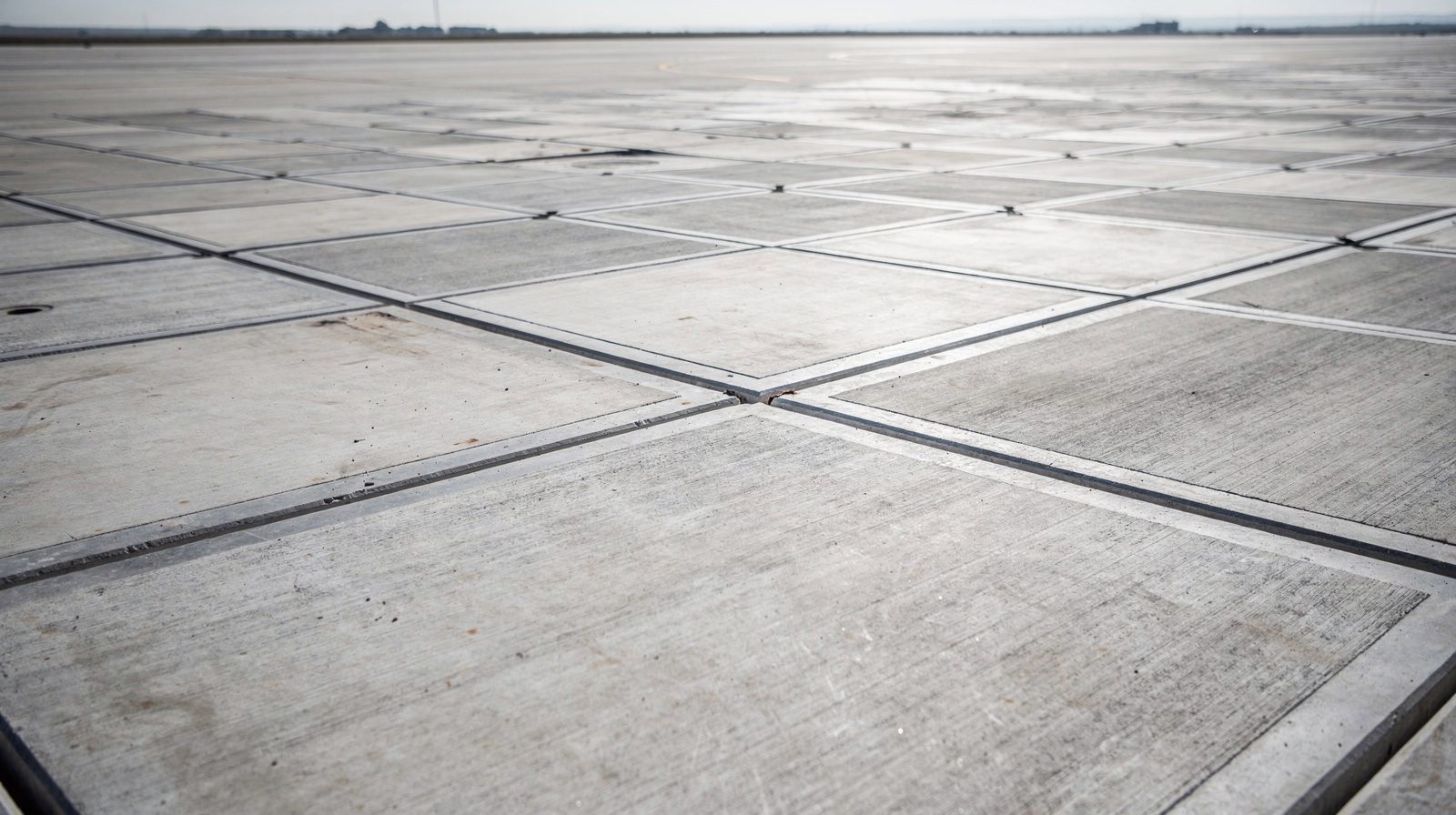
Portland cement concrete is a rigid pavement with high compressive strength and durability, preferred for areas bearing static loads or requiring long service life, such as aprons and high-traffic taxiways.
Tarmac Delay – Regulatory Use
A tarmac delay occurs when passengers are kept onboard an aircraft for an extended period on the ground, typically waiting for takeoff or to deplane. In the US, airlines must follow strict rules for passenger welfare during such delays, but the term refers to any paved surface, not to the material itself.
Construction and Maintenance
Airport Pavement Construction
Airport pavement construction starts with site preparation and subgrade stabilization, followed by base layer placement and then paving with asphalt or concrete. Precision in grading, compaction, and smoothness is vital for safety and performance.
Airport Pavement Maintenance
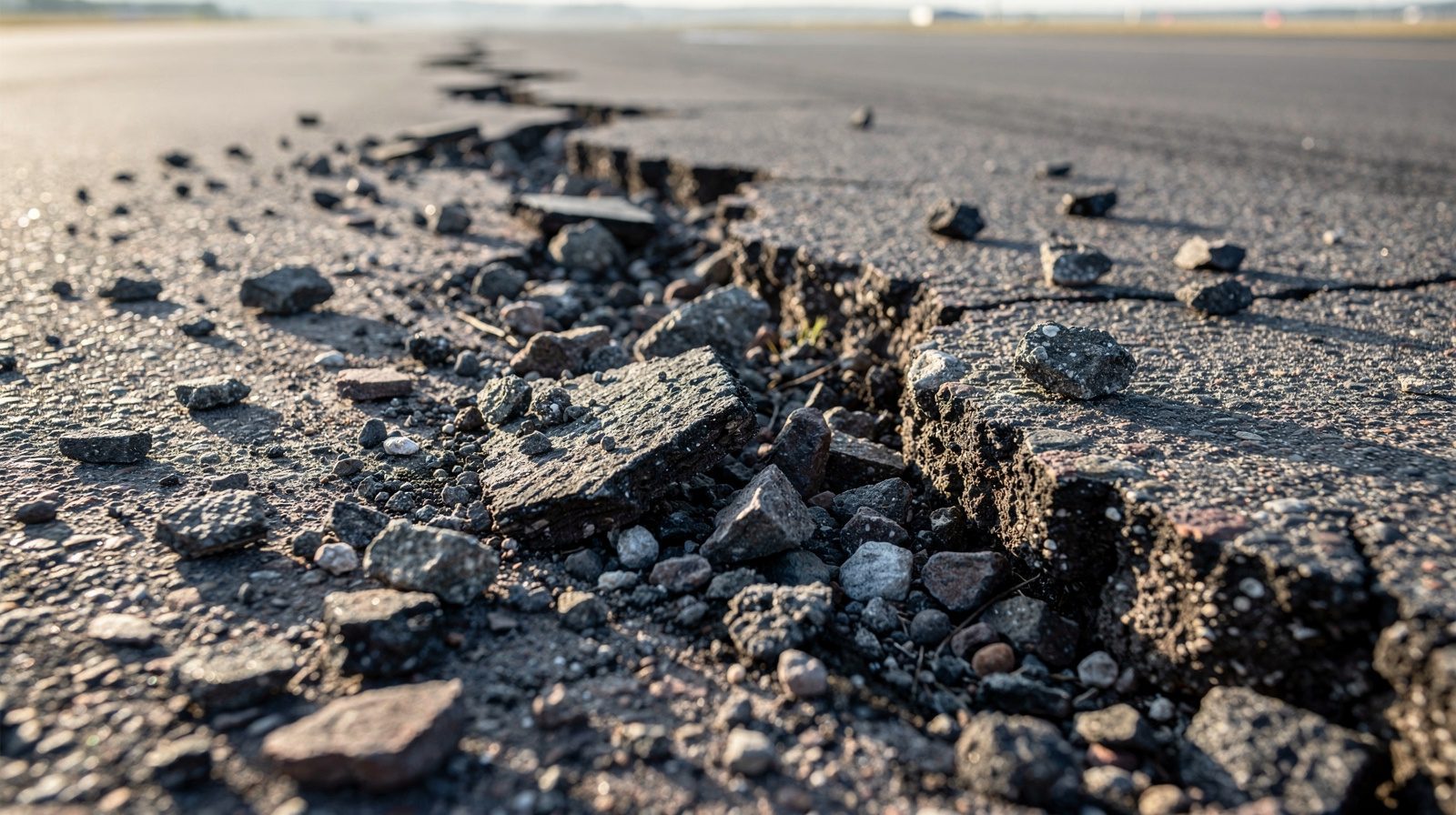
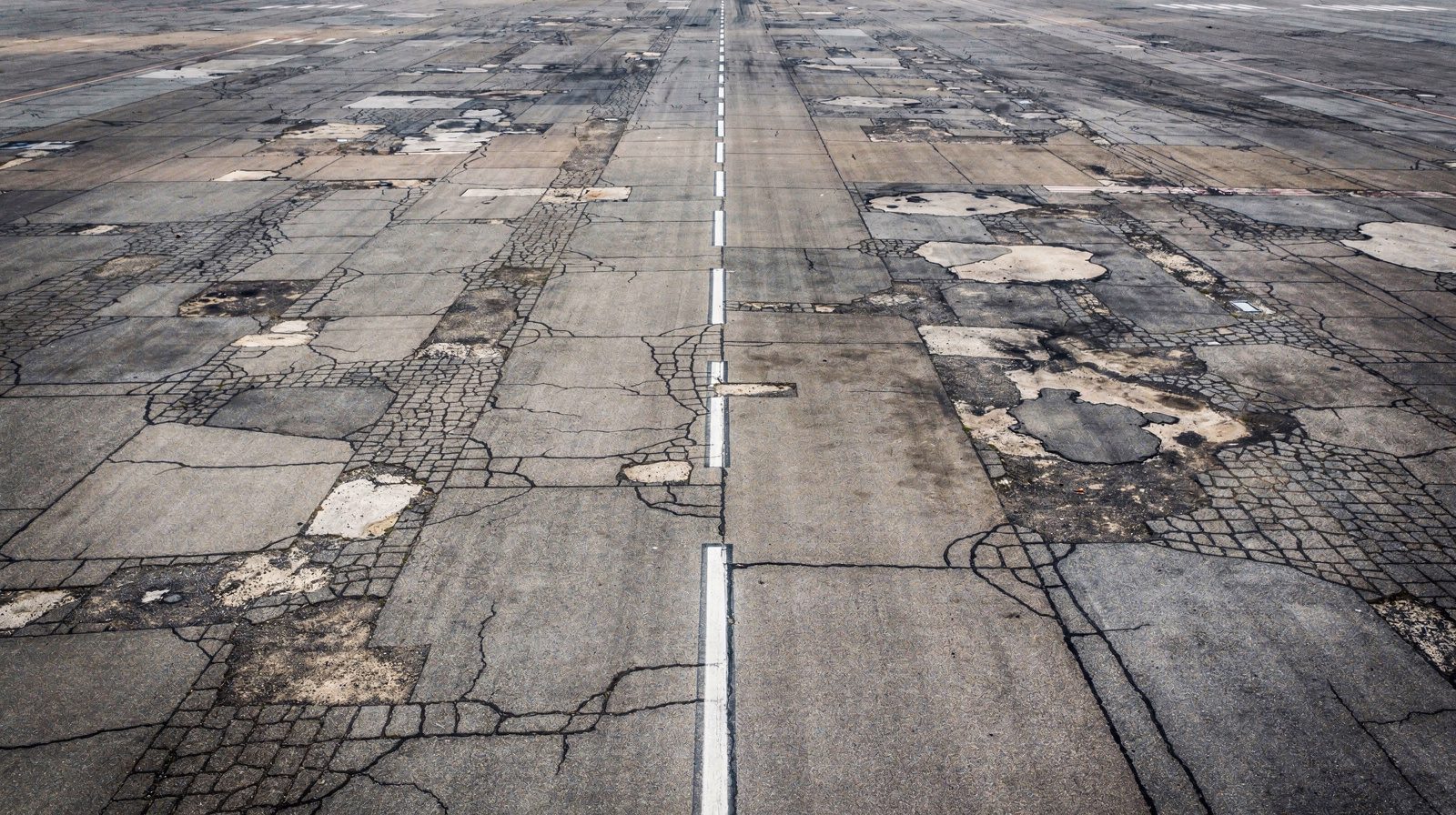
Regular inspection, preventive repair, and rehabilitation are essential to preserve pavement integrity. Maintenance activities include crack sealing, patching, overlays, and friction testing, ensuring compliance with ICAO and FAA safety standards.
Material Choices by Airport Area
| Airport Area | Primary Function | Typical Material | Key Design Considerations |
|---|---|---|---|
| Runway | Takeoff/landing at high speeds | Asphalt/Concrete | Smoothness, friction, load bearing, rapid repair |
| Taxiway | Aircraft ground movement | Asphalt/Concrete | Turning forces, fuel/oil resistance, intersection strength |
| Apron/Ramp | Parking, servicing, passenger/cargo handling | Concrete/Asphalt | Static load, chemical resistance, drainage |
| Service Roads | GSE/support vehicle access | Asphalt/Concrete | Cost, speed of construction, durability |
Real-World Examples
- Chicago O’Hare International Airport: Uses both asphalt and concrete, concrete for main runways, asphalt for rapid-repair taxiways.
- Salt Lake City International Airport: Uses Portland cement concrete for main runway and aprons, asphalt for other surfaces.
- Akureyri Airport, Iceland: Imported granite aggregate for durable asphalt, addressing challenging climate and soil.
- Barra Airport, Scotland: Unique use of tidal beach as runway, Antarctica airstrips use compacted snow or ice.
Glossary of Related Terms
| Term | Definition | Example/Context |
|---|---|---|
| Tarmac | Tar-bound aggregate pavement, colloquial for any airport paved surface | “The tarmac most people know today was actually patented by Edgar Purnell Hooley in 1901…” |
| Runway | Defined area for aircraft takeoff/landing | “Aircraft accelerate down the runway before takeoff.” |
| Taxiway | Paved route connecting runways, aprons, and terminals | “Aircraft followed the taxiway to the gate.” |
| Apron/Ramp | Area where aircraft are parked and serviced | “Baggage carts moved across the apron.” |
| Asphalt Concrete | Flexible pavement made from aggregate and bitumen | “The new runway was resurfaced with high-performance asphalt.” |
| Portland Cement Concrete | Rigid pavement made from aggregate, cement, and water | “Aprons are constructed using reinforced concrete.” |
| Tarmac Delay | Extended ground holding of passengers onboard aircraft | “Federal rules limit tarmac delays to three hours.” |
Summary
While “tarmac” is commonly used to describe airport pavements, professionals rely on precise terms, runway, taxiway, apron, ramp, and accurate material descriptions (asphalt concrete, Portland cement concrete) to ensure safe, compliant airport operations.
For more information or expert advice on airport pavement design, maintenance, and terminology, contact us or schedule a demo .ule a demo](/contact/).demo/).
Frequently Asked Questions
- What is tarmac?
- Tarmac, short for tarmacadam, is a tar-bound aggregate pavement invented in 1902. In aviation, 'tarmac' is a colloquial term often used to refer to any paved airport surface, such as runways, taxiways, aprons, or ramps. However, modern airports primarily use asphalt concrete or Portland cement concrete for these surfaces.
- Why is 'tarmac' not used in official airport documents?
- Regulatory authorities like ICAO and FAA do not use 'tarmac' as a technical term for airport surfaces. Instead, they use precise terms like runway, taxiway, apron, or ramp. The only official use is in 'tarmac delay,' referring to regulatory context, not pavement type.
- What materials are used for modern airport pavements?
- Modern airport pavements are constructed using asphalt concrete (a blend of mineral aggregate and bitumen) or Portland cement concrete (aggregate, cement, water). Material choice is based on load, durability, speed of construction, and cost.
- What is the difference between runway, taxiway, apron, and ramp?
- A runway is for takeoff and landing. Taxiways connect runways to other airport areas. Aprons (or ramps) are where aircraft are parked, serviced, and boarded. Each has unique design criteria and construction standards.
- What is a tarmac delay?
- A tarmac delay is when passengers are kept on an aircraft on the ground for an extended period without the option to deplane. In the US, regulations limit this to 3 hours for domestic and 4 hours for international flights, except for safety or security reasons.
This is a reference entry. TarmacView provides drone inspection services and doesn't sell the equipment or materials described in this glossary.