
Terminal Building
A terminal building is the main structure in an airport that facilitates the movement of passengers and cargo between ground transport and aircraft, integrating...
6 min read
Airport infrastructure
Passenger handling
+2
A terminal building is a core airport facility for passenger, baggage, and cargo processing, integrating safety, security, comfort, and connectivity across landside and airside operations. Terminals support passenger journeys, airline and governmental functions, and commercial activities, shaped by rigorous design, technology, and regulatory standards.
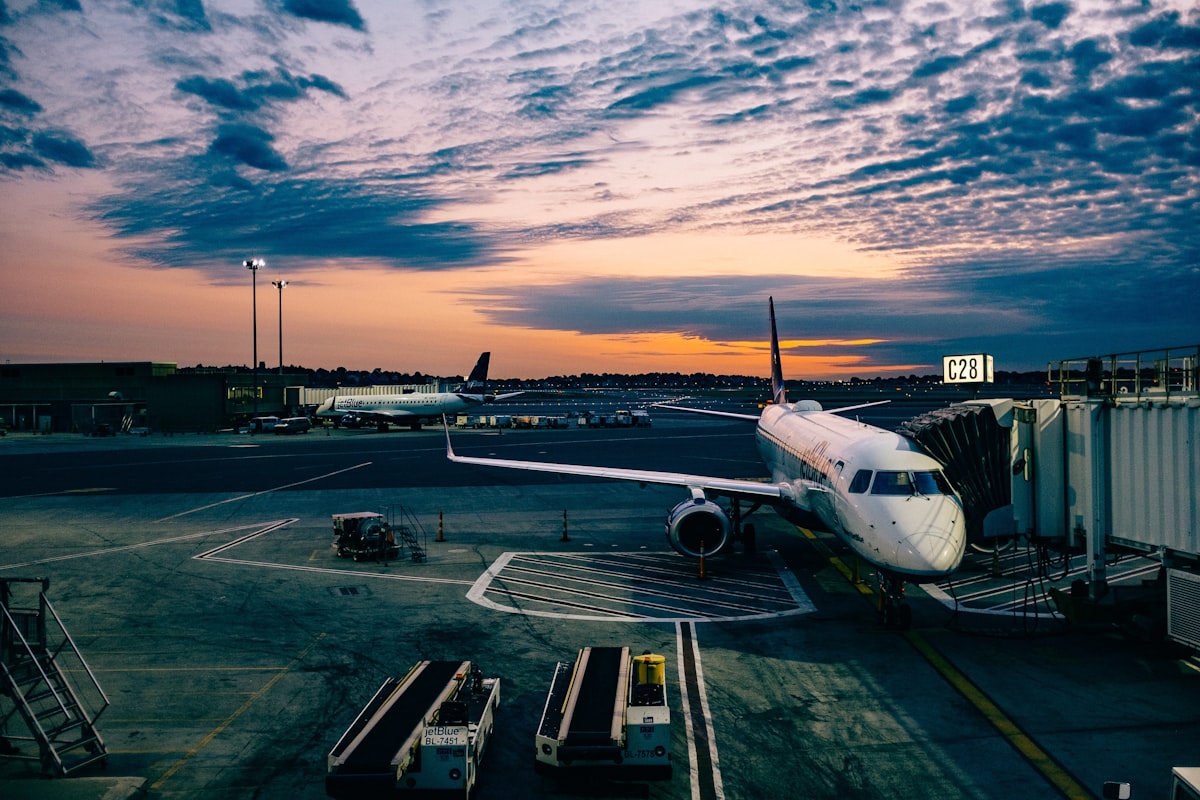
A terminal building is the central structure within an airport where the processing of passengers, baggage, and cargo takes place as they move between ground transportation and aircraft. According to the International Civil Aviation Organization (ICAO), a terminal is a “building or group of buildings on an airport where the processing of passengers, baggage, and cargo is carried out.” Terminals act as the interface between landside (public access, parking, drop-off) and airside (secure, aircraft-related) airport operations, seamlessly connecting road, rail, and sometimes maritime transport with air travel.
Terminal buildings support a wide variety of functions, from facilitating passenger journeys to hosting essential airline and government services such as customs, immigration, and security. Their design must ensure safety, efficiency, and comfort for passengers and staff, integrating mechanical, electrical, and information technology systems to support smooth operations. Regulatory guidance from ICAO, IATA, and the FAA ensures that terminals meet capacity, accessibility, safety, and sustainability standards.
Terminal buildings are engineered to accommodate multiple, interdependent functions:
Major components include:
| Area/Component | Description |
|---|---|
| Curbside | Entry/exit point for vehicles, integrating traffic and security. |
| Check-in/Bag Drop | Counters, kiosks, self-service bag drops for registration/luggage. |
| Security Screening | Checkpoints with advanced screening technologies. |
| Concourse | Main circulation areas leading to gates, shops, amenities. |
| Gates | Boarding/deboarding points, often with jet bridges. |
| Baggage Claim | Area for baggage retrieval, often integrated with customs. |
| Customs/Immigration | Secure zones for border checks, document, and biometric verification. |
| Retail and F&B | Shops, restaurants, and concessions for passenger comfort. |
| Lounges | Premium waiting areas with extra amenities. |
| Administrative/Support | Offices, technical rooms, staff access, and mechanical facilities. |
These components are designed for both routine operations and resilience in emergencies, with redundancy built into critical systems.
Terminal buildings vary by function and layout:
Physical layouts include:
Example: Newark Liberty International Airport Terminal A (opened 2023) uses a three-level linear design, handling over 13 million passengers annually with 33 gates and a focus on openness, intuitive movement, and security.
A passenger’s journey through the terminal consists of:
Designers aim to minimize walking distances, reduce bottlenecks, and ensure accessibility for all. IATA recommends walking distances from security to the furthest gate not exceed 300 meters without mobility aids in large terminals.
Quantitative parameters (e.g., minimum space per passenger, maximum walking distances) are set by regulations and validated through operational simulations.
Terminal projects require collaboration among:
Early and ongoing stakeholder engagement ensures operational needs, safety, and passenger experience goals are met.
Major terminal projects follow a lifecycle:
Example: JFK Airport’s $19B redevelopment involves phased construction, technology integration, and stakeholder collaboration to deliver world-class terminals.
John F. Kennedy International Airport (JFK)
Newark Liberty International Terminal A
LaGuardia Terminal B
These cases highlight the importance of modularity, stakeholder engagement, and technology in terminal evolution.
Terminals must comply with:
A terminal building is the heart of airport operations, connecting people, baggage, and cargo with air travel through integrated design, advanced technology, and rigorous safety standards. Continuous innovation in layout, systems, and stakeholder collaboration ensures terminals meet the dynamic needs of modern aviation, delivering efficiency, security, and a superior passenger experience.
Optimize passenger flow, enhance security, and create a world-class experience with our airport terminal solutions. Discover how modern design and technology can elevate your infrastructure.
A terminal building is the main structure in an airport that facilitates the movement of passengers and cargo between ground transport and aircraft, integrating...
Landside refers to all public-access areas of an airport, including passenger terminals, parking, ground transport, and cargo handling zones. Efficient landside...
Airport infrastructure consists of the physical structures, facilities, and systems that ensure the safe, efficient, and resilient operation of airports. These ...