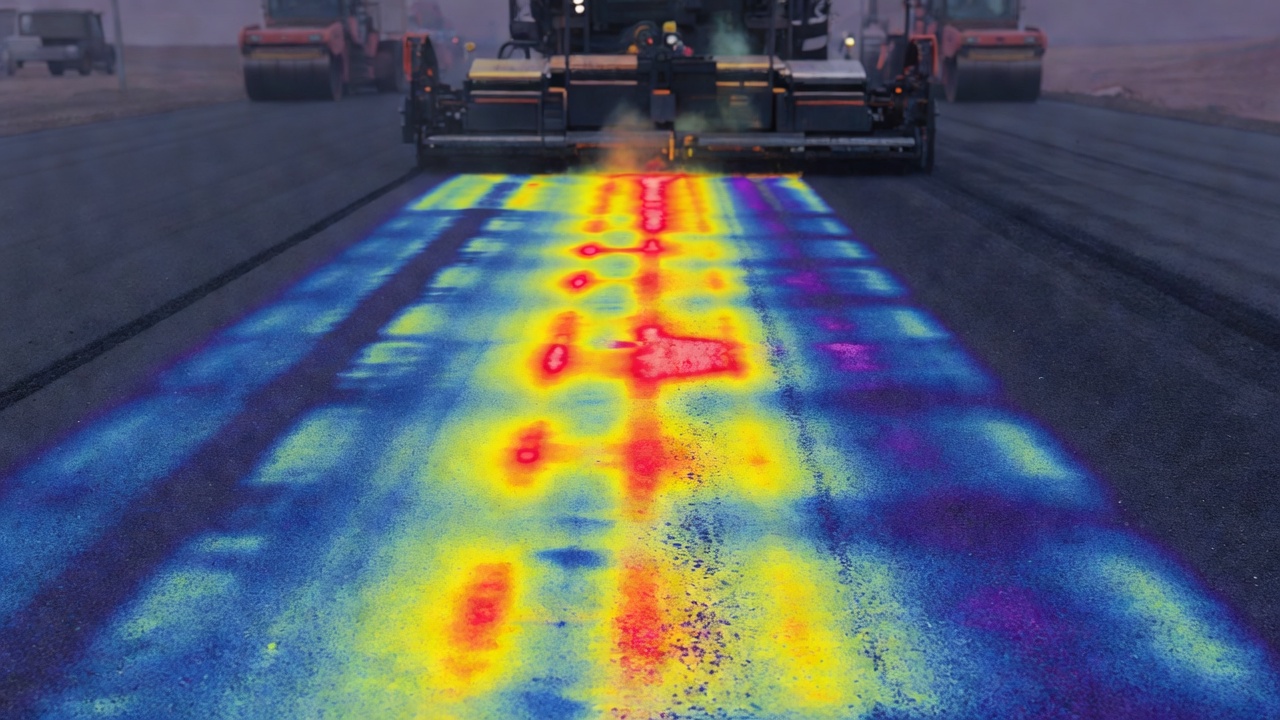
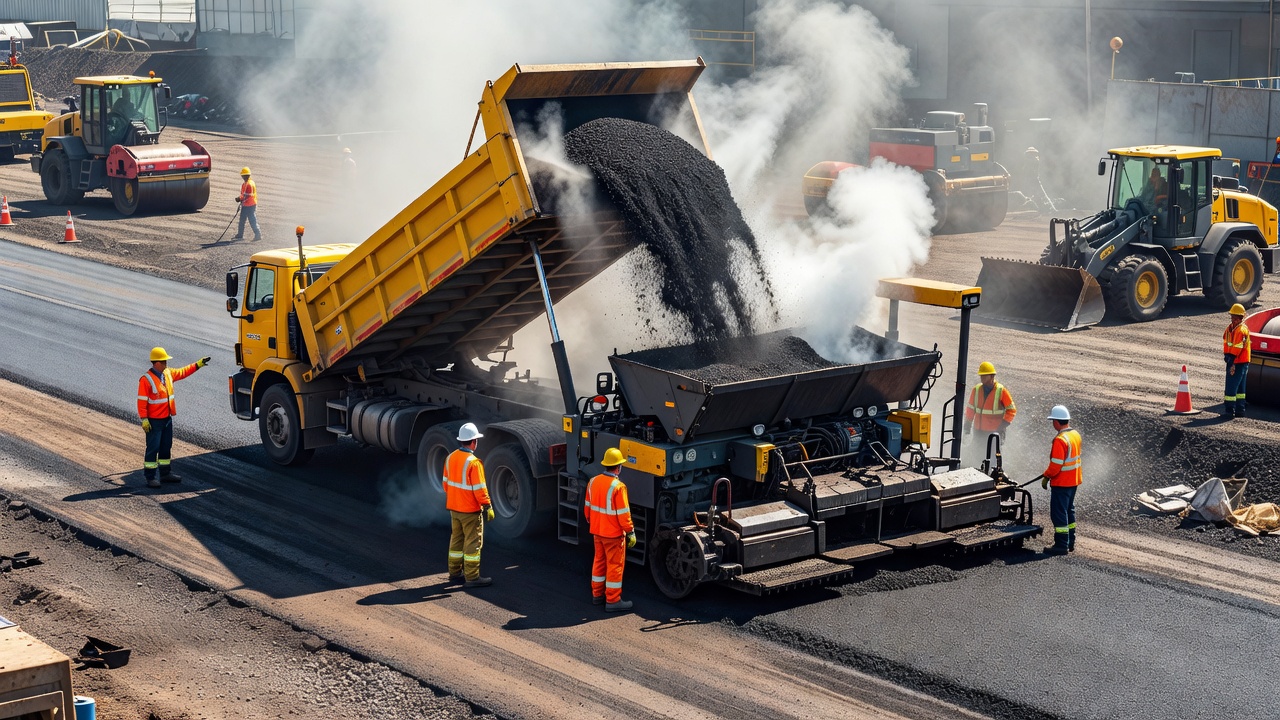
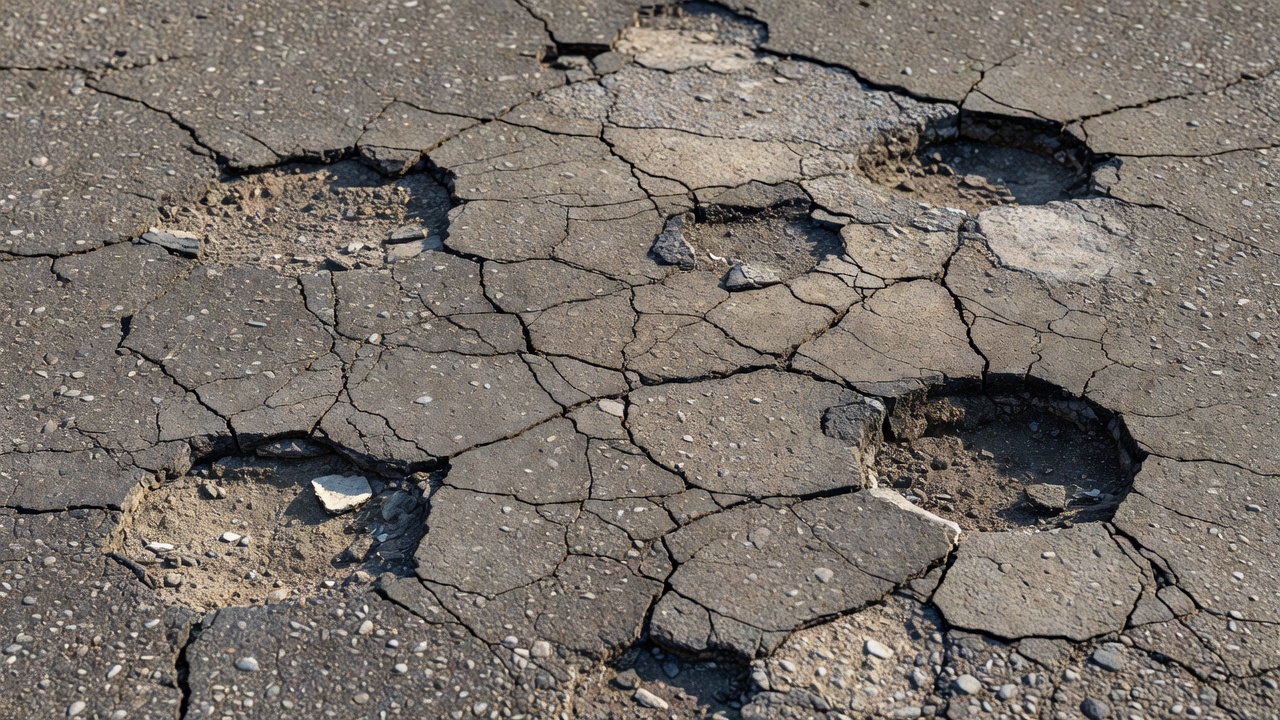
Thermal segregation is the non-uniform temperature distribution in hot mix asphalt (HMA) during transport and placement, where cooler areas compact less, resulting in localized low-density zones with higher air voids that are prone to raveling, cracking, and moisture damage. It creates a distinctive patchy distress pattern. Covers causes, detection (thermal imaging during paving; infrared; visual), and prevention.
Thermal Segregation in Asphalt Pavements
1. Definition and Mechanism
Thermal segregation is defined as a non-uniform temperature distribution across the uncompacted mat of hot mix asphalt (HMA) during paving operations. It is a construction-related defect distinct from aggregate segregation, though both produce similar distress symptoms in the finished pavement. The universally accepted quantitative definition, established through research by Sebesta, Scullion, and others at the Texas Transportation Institute and validated by the National Center for Asphalt Technology (NCAT), identifies thermal segregation as a temperature differential exceeding 14°C (25°F) between the hottest and coldest zones within the uncompacted mat immediately behind the paver screed.
The mechanism by which thermal segregation causes pavement damage is fundamentally linked to the temperature-dependent viscosity of asphalt binder and the cessation temperature concept. As HMA cools, the asphalt binder increases in viscosity, reducing the lubricity required for aggregate particles to rearrange under roller compaction. The cessation temperature — commonly accepted as 80°C (175°F) for conventional HMA mixtures — is the temperature below which the binder becomes too viscous for further particle rearrangement and density gain, regardless of the number of roller passes applied.
In a thermally segregated mat, cold zones cool to cessation temperature significantly faster than the surrounding hot mat. The roller operator establishes a compaction pattern based on the general mat temperature, typically monitoring the hottest areas. By the time the roller reaches the cold spots, those areas may already be below cessation temperature. The result is inadequate compaction — the cold zone retains higher air voids, lower density, and reduced mechanical properties compared to the properly compacted hot zones.
NCAT research by Fernandez Cerdas (2012) on 28 Alabama paving projects demonstrated a statistically significant negative correlation between thermal segregation magnitude and in-place density. The study found that cold spots consistently exhibited air void contents 2–4% higher than adjacent hot spots, correlating directly with reduced fatigue life. Bending beam fatigue testing showed that cold-spot specimens failed in significantly fewer cycles than hot-spot specimens, with the initial stiffness being the parameter most affected by the higher air void content in thermally segregated areas.
2. Causes of Thermal Segregation
Thermal segregation does not originate from a single source but from a combination of factors in the HMA production, transport, and placement process. Understanding each causal factor is essential for designing effective prevention strategies.
Truck Bed Cooling and Crust Formation
HMA is loaded into haul trucks at production temperatures typically between 120°C and 175°C (250°F to 350°F) , depending on the binder grade and mixture type. During transport, the HMA mass transfers heat to the surrounding environment through the truck bed walls and the exposed top surface. The outer layer of the HMA load — approximately 25–75 mm (1–3 in.) thick — cools rapidly, forming a temperature crust around a significantly hotter interior core. This crust is typically 15–30°C (27–54°F) cooler than the core temperature upon arrival at the paving site, depending on haul distance, ambient temperature, wind speed, and truck bed insulation.
When the truck discharges into the paver hopper, the cold crust material enters first (from the top of the load) and last (from the bottom corners of the bed). This end-of-load effect is the most commonly cited cause of thermal segregation, as the coldest material flows into the paver at the beginning and end of each truckload, creating a cyclic pattern of cold spots at regular longitudinal intervals in the mat.
Paver Stoppage
When the paver stops — whether due to truck exchange, material shortage, or operational delays — the HMA remaining in the paver hopper, auger chamber, and screed assembly continues to lose heat to the ambient air, the machine components, and the underlying surface. Research published in the ASCE Journal of Materials in Civil Engineering on the effects of paver stoppage on temperature segregation demonstrates that a 5-minute stoppage can create a cold zone extending 3–6 m (10–20 ft.) behind the restart point. The restart process compounds the problem: the first material laid after a stoppage has been sitting in the hopper cooling, while the paver’s augers and screed are also cold, drawing additional heat from the first few meters of material.
Wind and Ambient Temperature Effects
Wind speed has a disproportionately large effect on HMA cooling rate compared to ambient temperature alone. MnDOT’s PaveCool modeling software and NAPA’s cold weather compaction guidelines (QIP-118) document that wind speeds under 10 knots (11.5 mph) have a minor effect, but as wind speed increases, the convective heat transfer coefficient at the mat surface rises dramatically. A 25 km/h (15 mph) wind can double the cooling rate of an exposed HMA mat compared to still air conditions at the same ambient temperature. This effect is most pronounced on thin lifts (less than 50 mm) where the volume-to-surface-area ratio is low.
Loading Practices at the Plant
Improper truck loading at the HMA plant can initiate thermal segregation before the truck leaves the facility. When HMA is discharged from the storage silo into the truck bed in a single large mass, large aggregate particles tend to roll down the pile and collect at the base and corners of the truck bed. This creates both aggregate segregation and, critically, differential cooling rates — the finer material at the center of the pile retains heat better than the coarse material at the edges. Standard industry practice recommends loading in three smaller drops: one at the front of the bed, one at the rear, and one in the center. This method produces a more uniform temperature distribution and reduces aggregate segregation.
Haul Distance and Logistics
Haul distances exceeding 30–45 minutes (one way) significantly increase the risk of thermal segregation unless the truck beds are insulated and tarped. The rate of heat loss from the HMA follows Newton’s Law of Cooling and is proportional to the temperature differential between the mix and the ambient environment. Longer hauls in cold weather (below 10°C / 50°F) can result in crust temperatures falling below the minimum placement temperature specified for the mixture, forcing the contractor to reject the load or — worse — place material that cannot be adequately compacted.
3. Temperature Differential Thresholds and Classification
Multiple transportation agencies have established standardized thresholds for classifying thermal segregation severity. These thresholds are fundamental to quality control specifications and acceptance criteria.
Classification
Temperature Differential
Compaction Impact
Corrective Action Required
None
< 14°C (< 25°F)
No significant compaction impairment
None
Moderate
14°C – 28°C (25°F – 50°F)
Localized density reduction; 1–3% higher air voids
Process adjustment; evaluate with density profiles
Severe
> 28°C (> 50°F)
Significant density reduction; > 3% higher air voids; full-depth compaction failure
Suspend operations; remove and replace affected area
The 14°C (25°F) threshold originates from the SWUTC/15/600451-00111-1 study on infrared thermography applications, which established that differentials below this value produce statistically insignificant density variations. The 50°F threshold used by TxDOT for the severe classification is based on research showing that differentials exceeding this magnitude consistently produce mat areas where compaction cannot achieve the minimum specified density regardless of roller effort.
Research by Willoughby et al. (2001) for the Washington State Department of Transportation (WSDOT Report 476.1) confirmed that temperature differentials greater than 25°F can potentially cause compaction problems, establishing the foundation for many current specifications. The study evaluated multiple paving projects and correlated thermal imaging data with core density results to validate these thresholds.
The cessation temperature is not a fixed value but depends on mixture characteristics:
Conventional HMA (PG 64-22): 80°C (175°F)
Polymer-modified HMA: 93–100°C (200–212°F) — higher viscosity requires higher temperature for workability
Warm Mix Asphalt (WMA): 70–85°C (158–185°F) — lower working temperature range
High RAP mixtures: Varies based on virgin binder grade and RAP binder properties
4. Consequences of Thermal Segregation on Pavement Performance
The detrimental effects of thermal segregation on pavement performance are well-documented through field studies, laboratory testing, and long-term pavement monitoring. The root cause of all these distresses is inadequate compaction resulting in elevated air voids within the cold zones.
Density Reduction and Air Void Increase
The direct consequence of thermal segregation is a reduction in in-place density of 1–4% in cold zones compared to adjacent properly compacted areas. In a typical HMA pavement specification requiring 92–96% of laboratory maximum specific gravity (Gmm — Rice density), a cold zone achieving only 88–91% Gmm represents a substantial increase in interconnected air voids. The target air void content for newly constructed HMA is typically 4–7%. Thermally segregated cold zones commonly exhibit 8–12% air voids, which is the critical range where water permeability increases exponentially.
The relation between air voids and pavement durability follows an established pattern: for every 1% increase in air voids above the target, the fatigue life decreases by approximately 10% and the mixture’s resistance to moisture damage decreases proportionally. This relationship was derived from the Strategic Highway Research Program (SHRP) studies and validated by subsequent NCAT research.
Premature Distress: Raveling
Raveling — the progressive loss of aggregate particles from the pavement surface — is the most characteristic distress pattern associated with thermal segregation. In cold zones where the binder is too viscous to coat and bond aggregate particles effectively during compaction, the mechanical interlock between particles is insufficient to resist traffic abrasion. The raveling typically appears as isolated patches that correspond to the cold zones identified by thermal imaging during construction. These patches progressively deepen as traffic removes more aggregate, creating surface depressions that accelerate the next distress mechanism.
Premature Distress: Cracking
Thermally segregated zones are more susceptible to both fatigue (alligator) cracking and thermal cracking. The higher air void content reduces the mixture’s tensile strength and fracture resistance. Under repeated traffic loading, the cold zone reaches its fatigue limit sooner than the surrounding properly compacted material, producing a localized pattern of interconnected cracks that may be the first visible sign of pavement distress. The cracking typically initiates at the bottom of the HMA layer in the cold zone and propagates upward (bottom-up fatigue cracking), although thin overlays may exhibit top-down cracking.
Premature Distress: Potholes
Potholes form when a localized area of pavement weakens under traffic and the material fails catastrophically. Thermally segregated zones are prime initiation points for potholes because they combine low density, high permeability, and weak aggregate interlock. Water enters the high air void structure, and freeze-thaw cycling in cold climates accelerates the deterioration. The characteristic pothole that develops from thermal segregation is typically small (0.1–0.5 m²), round or oval, and surrounded by sound pavement, creating a distinctive isolated pothole pattern as opposed to the continuous pothole development seen in structurally failed pavements.
Moisture Damage and Stripping
The high air void content in thermally segregated cold zones provides pathways for water to penetrate the pavement structure. Water trapped within the air voids generates pore pressure under traffic loading, weakening the bond between asphalt binder and aggregate — a phenomenon known as stripping. The loss of adhesion between binder and aggregate accelerates all other distress mechanisms and significantly reduces the pavement’s remaining service life.
5. Detection Methods
Accurate detection of thermal segregation requires a combination of real-time temperature monitoring during construction and post-construction evaluation of the compacted mat.
Handheld Thermal Cameras
Handheld thermal (infrared) cameras are the most basic tool for thermal segregation detection. The test procedure described in TxDOT Test Method Tex-244-F specifies the equipment requirements and methodology. A compliant thermal camera must:
Measure temperatures from 0°C to 245°C (32°F to 475°F) with an accuracy of ± 2.2°C (± 4.0°F) or ± 2% of reading
Produce infrared images with a minimum resolution of 19,200 pixels
Display actual, maximum, and minimum temperatures on a liquid crystal display (LCD) screen
Store a minimum of 500 images
Have thermal sensitivity better than 0.06°C (0.11°F)
Support measurement modes including center spot, area box, and auto hot/cold detection
The procedure requires the operator to walk alongside the paver at a distance of approximately 1 m (3–4 ft.) from the mat edge, maintaining a consistent angle to capture the full mat width. The maximum baseline temperature is determined from the first 6 m (20 ft.) of mat behind the paver. The minimum temperature is recorded continuously over a 45 m (150 ft.) test section. The difference between these values determines the segregation classification.
Paver-Mounted Thermal Imaging Systems
Advanced thermal imaging systems provide real-time, full-width temperature profiles of the mat behind the screed. The MOBA Pave-IR system — developed through TxDOT research and subsequently commercialized — is the most widely deployed system. Its specifications per Tex-244-F include:
Measurement at maximum transverse spacing of 300 mm (12 in.)
Temperature range of 0–245°C (32–475°F) with accuracy of ± 2.2°C (± 4.0°F)
Measurement repeatability of ± 0.5°C (± 0.9°F)
Spot size maximum of 250 mm (10 in.) at installed operating height
Full mat width profiling up to 3.7 m (12 ft.) with 0.6 m (2 ft.) edge exclusion zones
Distance measurement via distance measuring instrument (DMI) with GPS integration
The system collects, displays, saves, and analyzes temperature data in real time. It determines low and high temperatures using the statistical 1st percentile and 98.5th percentile, respectively, eliminating outlier readings. Output files include longitudinal temperature profiles tied to station numbers and GPS coordinates, enabling precise identification of segregation locations for subsequent evaluation or remedial action.
Infrared Temperature Bar
The infrared temperature bar — also known as the Pave-IR system — is a transverse bar-mounted array of infrared sensors attached to the rear of the paver screed. Development through TxDOT Project 0-4577 produced Generation 1, 2, and 3 versions, each improving sensor density, data acquisition rate, and software analysis capability. The bar typically contains 8–16 infrared sensors spaced at 300 mm (12 in.) intervals across the mat width, collecting temperature readings at increments of 150–300 mm (6–12 in.) along the paving direction. Data collection and processing software allow the paving crew to identify suspected segregated areas in real time and make operational adjustments before the material is compacted.
Visual Pattern Recognition
Visual identification of thermal segregation after compaction is possible but requires experienced inspectors. The characteristic appearance includes:
Patchy surface texture — cold zones appear darker, smoother, or shinier than surrounding areas due to inadequate compaction
Longitudinal streaks — corresponding to cold material from truck bed corners flowing into the paver
Raveling initiation — fine aggregate loss in localized patches within the first 1–2 years of service
Visual identification is unreliable for moderate segregation (25–50°F differential) and is most effective for severe cases (>50°F). The visual appearance can be confused with aggregate segregation, binder-rich areas, or differential aging, making thermal imaging the preferred detection method.
Ground Penetrating Radar (GPR)
Ground penetrating radar is an emerging technology for detecting thermal segregation in completed overlays. TxDOT research project 0-4577 developed recommendations for GPR-based segregation detection using surface dielectric measurements. For coarse-graded mixtures, locations with surface dielectrics outside ± 0.8 of the mean value should be investigated. For dense-graded mixtures, the threshold is ± 0.4 of the mean. The RadSeg software package enables rapid analysis of GPR data, and three-channel GPR systems can collect data over both wheel paths and the centerline in a single pass.
6. Prevention Strategies
Preventing thermal segregation requires addressing each causal factor in the HMA production, transport, and placement chain.
Insulated Truck Beds and Tarping
The single most effective transport measure is the combination of insulated truck beds and mandatory tarping. The insulation layer — typically 25–50 mm (1–2 in.) of fiberglass or polyurethane foam encapsulated between the truck bed metal panels — reduces heat loss through the bed walls by 50–70%. Tarping eliminates convective heat loss from the top surface of the HMA load and prevents wind-induced cooling. Studies by the National Asphalt Pavement Association (NAPA) and multiple state DOTs have demonstrated that tarping alone can reduce crust temperature differential by 8–14°C (15–25°F) on a typical 30-minute haul.
Truck loading protocol is equally important. Three-drop loading — one drop at the front, one at the rear, one in the center — minimizes aggregate segregation and produces a more thermally uniform load. Each drop should be approximately one-third of the total load volume.
Material Transfer Vehicles (MTVs)
The material transfer vehicle (MTV) is the most effective equipment-based solution for thermal segregation prevention. The MTV receives HMA from haul trucks, temporarily stores the material in an agitated, heated hopper, and transfers it to the paver via a conveyor system. The MTV performs three critical functions:
Remixing — the MTV’s auger system blends the cold crust material with the hot core material, homogenizing the temperature to within 5–10°C (9–18°F) of the average mix temperature
Continuous paving — the MTV allows the haul truck to discharge without contacting the paver, enabling the paver to maintain continuous forward motion without stops for truck exchange
Buffer storage — the MTV hopper capacity (typically 15–25 metric tons) provides a material buffer that allows the paver to continue operating during brief gaps in truck arrival
NCAT research on 28 Alabama projects found that remixing operations were a key factor in reducing high temperature differentials. Projects using MTVs consistently demonstrated smaller temperature differentials and higher in-place densities compared to projects with direct truck-to-paver discharge.
Remixing Devices on the Paver
Some paver manufacturers offer remixing devices — augers or paddles installed in the paver hopper or auger chamber — that provide limited temperature blending of the HMA before it exits the screed. While less effective than MTVs, these devices can reduce moderate temperature differentials by 5–10°C (9–18°F). The effectiveness depends on the specific design and the degree of temperature non-uniformity in the incoming material.
Logistics and Scheduling
Proper logistics management can eliminate many causes of thermal segregation:
Limit haul distances to 45 minutes maximum for uninsulated trucks in moderate weather
Schedule truck arrivals at 3–5 minute intervals to maintain continuous paving
Avoid extended waiting by staging trucks near the paving site rather than queuing on the haul road
Minimize paver stoppage time — target less than 2 minutes per truck exchange
Reject excessively cold material — implement a minimum placement temperature specification (typically 115–130°C / 240–265°F depending on mixture type)
Real-Time Thermal Monitoring
Implementing real-time thermal monitoring as a process control tool allows the paving crew to identify temperature uniformity problems immediately and make corrections. The thermal imaging system displays color-coded temperature maps on a cab-mounted monitor, alerting the operator when the mat temperature differential approaches the 25°F threshold. The system enables:
Immediate identification of cold spots from end-of-load crust
Feedback to truck drivers on tarping effectiveness
Verification that MTV remixing is achieving temperature homogenization
Documentation for quality control records and acceptance decisions
7. Thermal Segregation in Airport Paving
Airport asphalt pavement construction introduces additional considerations for thermal segregation management due to the higher performance requirements and different construction conditions compared to highway paving.
FAA Specifications
The Federal Aviation Administration’s standard specifications for airport construction (AC 150/5370-10H, Item P-401 for bituminous pavement) establish quality control requirements that implicitly address thermal segregation. The specification requires:
Minimum placement temperature based on binder grade and lift thickness
Compaction requirements tied to density relative to laboratory maximum specific gravity
Quality control testing at frequencies appropriate for the project scope
Control strip establishment to validate the paving process before production begins
While the FAA specification does not explicitly mandate thermal profiling, the density requirements create a quality control framework that exposes thermal segregation when it occurs. Airport paving projects commonly specify 92–96% of Gmm for the surface course, and any cold zone falling below this threshold triggers investigation and corrective action.
Airport-Specific Risk Factors
Airport paving presents unique challenges for thermal segregation control:
Wider paving widths — Runways and taxiways often require 7.5–15 m (25–50 ft.) wide passes, which increases the time for the full-width mat to cool before roller compaction
Thicker lifts — Airport pavements typically use 75–100 mm (3–4 in.) compacted lift thickness, which has a more favorable volume-to-surface-area ratio but may require additional roller passes
Night paving operations — Many airport projects are restricted to nighttime hours, with ambient temperatures 5–15°C (10–30°F) cooler than daytime, accelerating mat cooling
Limited compaction windows — Runway closures are tightly scheduled, creating pressure to pave quickly even when conditions are marginal
Higher binder content — Airport HMA mixtures often use polymer-modified binders with higher placement temperatures and narrower compaction temperature windows
Best Practices for Airport Paving
For airport projects, thermal segregation prevention should include:
Mandatory use of insulated trucks with tarps for all hauls exceeding 20 minutes
Material transfer vehicles for all runway and major taxiway paving
Paver-mounted thermal imaging systems with real-time display for the crew
Extended thermal profiling at the beginning of each paving shift to validate the process
Night paving temperature adjustment factors to account for the faster cooling rate
8. Inspection of Thermally Segregated Pavement
Inspecting an existing pavement suspected of having thermal segregation requires a systematic approach combining thermal imaging, density testing, and visual assessment.
Field Inspection Protocol
The following protocol is adapted from TxDOT and FAA inspection guidelines for evaluating thermally segregated pavements:
Step 1 — Thermal Survey: For new construction, review the thermal profile records from the paving operation. For existing pavements, conduct a thermal survey using a handheld thermal camera on a hot day (to maximize temperature contrast) or during the early morning when surface moisture highlights permeability differences.
Step 2 — Density Testing: Extract 100 mm (4 in.) diameter pavement cores from identified cold zones and adjacent hot zones for comparison. The density difference between cold and hot zones should not exceed 2% of Gmm for acceptable construction. Cores should also be tested for air void content using saturated surface-dry (SSD) method per ASTM D2726.
Step 3 — Visual Distress Survey: Document the extent and severity of raveling, cracking, and other distresses in the identified cold zones. The characteristic patchy pattern of distress — isolated areas of raveling or cracking surrounded by sound pavement — strongly suggests thermal segregation as the root cause.
Step 4 — Permeability Testing: Field permeability testing using devices such as the falling-head field permeameter (ASTM PS 129) can identify cold zones, as areas with air voids above 8% typically exhibit significantly higher permeability than well-compacted areas.
Density Profile Procedure (Tex-207-F)
TxDOT’s Test Method Tex-207-F (Segregation Density Profile) provides a standardized procedure for evaluating areas identified as having severe thermal segregation. The procedure requires extracting cores at a minimum of five locations across the affected area and comparing the density to the project specification requirements. If the average density falls below the specified minimum, the area is considered unacceptable and must be removed and replaced.
Interpretation of Results
Parameter
Acceptable
Marginal
Unacceptable
Cold zone density vs. hot zone density
≤ 1.5% lower
1.5–3.0% lower
> 3.0% lower
Cold zone air voids
≤ 7%
7–10%
> 10%
Field permeability
< 1 × 10⁻⁵ cm/sec
1–5 × 10⁻⁵ cm/sec
> 5 × 10⁻⁵ cm/sec
Visual distress at 2 years
None
Minor raveling
Raveling with cracking
9. Specifications and Acceptance Criteria
Various transportation agencies have incorporated thermal segregation requirements into their standard specifications. These specifications typically take one of two forms: thermal profile requirements that establish direct limits on mat temperature differential, or density-based specifications that indirectly penalize thermal segregation through compaction requirements.
TxDOT’s HMA specifications incorporate thermal profiling as both a quality control requirement and an incentive mechanism. Contractors who use thermal imaging systems may receive:
Elimination of density profile testing requirements (reduced testing burden)
Relaxed placement temperature requirements
Acceptance incentives based on temperature uniformity data
The specification requires corrective action for recurring moderate segregation and mandatory suspension of operations to eliminate severe segregation. Areas with severe thermal segregation must be evaluated using the Tex-207-F segregation density profile procedure.
Alabama DOT Thermal Profile Specification
ALDOT’s thermal profile specification, developed following the NCAT research by Fernandez Cerdas, requires thermal profiling for all major paving projects. Key requirements include:
Maximum temperature differential of 25°F (14°C) within any 150-ft. (45 m) test section
Corrective action when differential exceeds 30°F (17°C)
Removal and replacement when differential exceeds 50°F (28°C) and density verification confirms compaction deficiency
FAA P-401 Density Requirements
The FAA specification (Item P-401) uses density as the primary acceptance criterion, which indirectly controls thermal segregation. The specification requires:
Each lot (typically one day’s production) must achieve average density of 96% of Marshall or Superpave Gyratory Compactor (SGC) density
No individual test may fall below 94% of laboratory density
When density falls below 94%, an investigation must determine the cause, and thermal segregation must be considered as a potential factor
Recommended Specification Framework
A comprehensive thermal segregation specification should include:
Equipment requirements — thermal imaging system meeting ASTM or equivalent standards
Data collection protocol — frequency, location, and format of thermal profiles
Threshold classification — moderate (25–50°F) and severe (>50°F) with corresponding actions
Corrective action requirements — process adjustments for moderate, suspension for severe
Removal and replacement criteria — when density verification confirms that segregated areas fail to meet minimum compaction requirements
Documentation requirements — electronic records of thermal profiles tied to stationing or GPS
10. Repair of Thermally Segregated Asphalt Pavement
Repair strategies for thermally segregated pavements depend on the extent, severity, and age of the distress at the time of detection.
Early Detection During Construction
When severe thermal segregation is detected during construction (through thermal imaging or immediately post-compaction density testing), the most appropriate repair is immediate removal and replacement. The affected area should be delineated using the thermal profile data, cut with a saw or milling machine to clean vertical edges, and replaced with fresh HMA at the proper temperature. The replacement material should be compacted with particular attention to the longitudinal and transverse joints.
TxDOT specification requires suspension of paving operations when severe thermal segregation is detected, and the contractor must demonstrate that the process has been corrected before resuming production. The removed material can often be recycled through the HMA plant.
Partial-Depth Repair (Patching)
For pavements where thermal segregation has manifested as isolated raveling or potholes within the first 1–3 years of service, partial-depth patching is the most common repair method. The procedure involves:
Delineating the distressed area (extending at least 300 mm (12 in.) into sound pavement on all sides)
Milling or saw-cutting to a depth of 50–75 mm (2–3 in.) or the full thickness of the defective layer
Cleaning the cavity and applying a tack coat to all vertical faces
Placing and compacting fresh HMA in lifts not exceeding 75 mm (3 in.) compacted thickness
Sealing all repair joints with hot-applied crack sealant
Milling and Overlay
When thermal segregation distress affects more than 10–15% of the pavement surface area, or when the damage extends through multiple cold zones, milling and overlay is the appropriate rehabilitation. The extent of milling should be determined by coring: typically 50–75 mm (2–3 in.) is sufficient to remove the segregated surface layer. The overlay should incorporate the prevention measures described in Section 6 — particularly MTV use and thermal monitoring — to ensure the replacement surface does not repeat the segregation problem.
The overlay thickness should be designed considering the structural requirements of the specific pavement section. For airport pavements, the overlay must comply with FAA AC 150/5320-6F design procedures.
Full-Depth Reconstruction
In rare cases where thermal segregation has caused rapid deterioration of an entire pavement section (commonly when combined with moisture damage and stripping), full-depth reconstruction may be necessary. This is determined through falling weight deflectometer (FWD) testing, coring, and structural evaluation. The reconstruction should incorporate all available prevention measures and enhanced quality control requirements to prevent recurrence.
Long-Term Monitoring
Pavements with documented thermal segregation should be placed on an accelerated monitoring schedule — annual inspection rather than the standard 3–5 year cycle. The monitoring should track:
Raveling extent and progression rate
Crack density evolution in cold zones
Ride quality (international roughness index — IRI) changes
Friction loss at the surface
This data informs the optimal timing for rehabilitation before distress becomes widespread.
Summary
Thermal segregation is a well-understood construction defect in hot mix asphalt pavements that results from temperature differentials exceeding 14°C (25°F) in the uncompacted mat. The mechanism involves the cold zones cooling to cessation temperature (80°C/175°F for conventional HMA) before roller compaction achieves the required density, producing localized areas of high air voids, low density, and reduced mechanical properties. These areas develop characteristic premature distress patterns — raveling, cracking, and potholes — that significantly reduce pavement service life.
Detection relies on thermal imaging technology ranging from handheld cameras to sophisticated paver-mounted systems that provide real-time, full-width temperature profiles with GPS location data. Prevention requires a systematic approach including insulated truck beds with mandatory tarping, material transfer vehicles for remixing and continuous paving, proper logistics to minimize paver stoppage, and real-time thermal monitoring. For airport pavements, the higher performance requirements and challenging construction conditions — particularly night paving and wide passes — demand even more rigorous thermal segregation prevention measures.
Specifications from TxDOT, ALDOT, and other agencies provide established thresholds and corrective action frameworks. The FAA’s density-based specification for P-401 mixtures indirectly controls thermal segregation, and thermal profile requirements are increasingly incorporated into project specifications nationwide. When thermal segregation is detected after construction, repair strategies range from localized patching (for early, isolated distress) to milling and overlay (for widespread surface damage) to full-depth reconstruction (in severe cases with structural deterioration). Early detection through construction-phase thermal monitoring remains the most effective strategy for preventing the pavement performance problems caused by thermal segregation.
Frequently Asked Questions
Thermal segregation is a construction-related defect where hot mix asphalt (HMA) exhibits non-uniform temperature distribution across the uncompacted mat during paving. Cooler areas, typically from the crust that forms on HMA during transport, cool to cessation temperature faster than the surrounding hot mat. This prevents adequate roller compaction, creating localized low-density zones with excessive air voids that are prone to raveling, cracking, moisture damage, and premature failure.
The universally accepted threshold is a temperature differential exceeding 14°C (25°F) between the hottest and coldest areas of the uncompacted HMA mat. TxDOT classifies differentials of 25°F–50°F as moderate segregation and differentials exceeding 50°F as severe segregation. The cessation temperature — below which no further compaction can occur — is commonly taken as 80°C (175°F) for conventional HMA.
Thermal segregation is detected using three primary methods: (1) handheld thermal cameras that capture infrared images of the mat temperature distribution behind the paver; (2) paver-mounted infrared thermal imaging systems (e.g., MOBA Pave-IR) that provide real-time full-width temperature profiles tied to GPS coordinates; and (3) visual inspection identifying patchy, non-uniform surface texture after compaction. The most authoritative method follows standard test procedures such as Tex-244-F.
Thermal segregation is caused by factors that create uneven cooling of HMA during transport and placement: (1) cooling of the surface layer (crust) of HMA in truck beds during hauling; (2) paver stoppages that allow mix in the hopper to cool; (3) end-of-load cooling from the last material in the truck; (4) wind and low ambient temperatures accelerating surface cooling; (5) long haul distances without adequate truck insulation or tarping; and (6) improper loading at the plant that creates temperature variations within the truck.
Thermal segregation prevention measures include: (1) using insulated truck beds and mandatory tarping for all haul vehicles; (2) employing material transfer vehicles (MTVs) to remix and rehomogenize HMA temperature before delivery to the paver; (3) maintaining continuous paver operation with minimal stops through proper truck logistics; (4) using remixing devices on the paver; (5) applying real-time thermal imaging to monitor mat temperature uniformity; and (6) limiting haul distances and scheduling deliveries to avoid extended waiting times.
Improve Your Asphalt Pavement Quality
Ensure your asphalt paving projects meet the highest quality standards. Our experts can help you implement thermal segregation prevention measures, conduct thermal profiling, and develop quality control programs that eliminate premature pavement failure.
Thermal segregation is the non-uniform temperature distribution in hot-mix asphalt during transport and placement, where cooler areas compact less, resulting in...
Hot Mix Asphalt (HMA) for Airport and Road Pavements
Hot Mix Asphalt (HMA) is the standard flexible pavement material produced by heating and mixing aggregate and asphalt binder at 150–180°C, then placing and comp...
Warm Mix Asphalt (WMA) technologies reduce HMA production and placement temperatures by 20-40°C through additives or processes: organic waxes (Sasobit), chemica...
25 min read
Asphalt Materials
Pavement Construction
+3
Cookie Consent We use cookies to enhance your browsing experience and analyze our traffic. See our privacy policy.