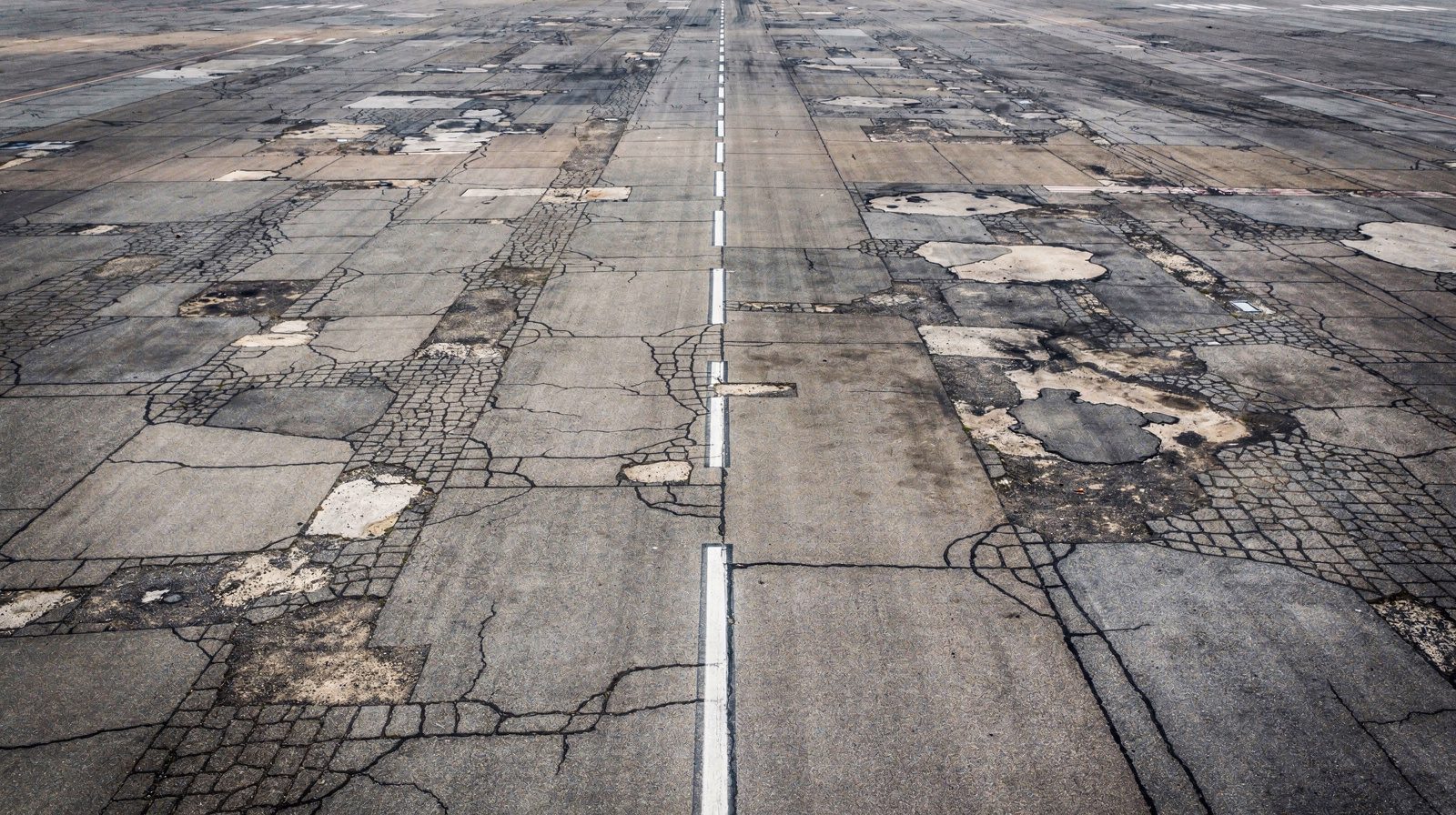
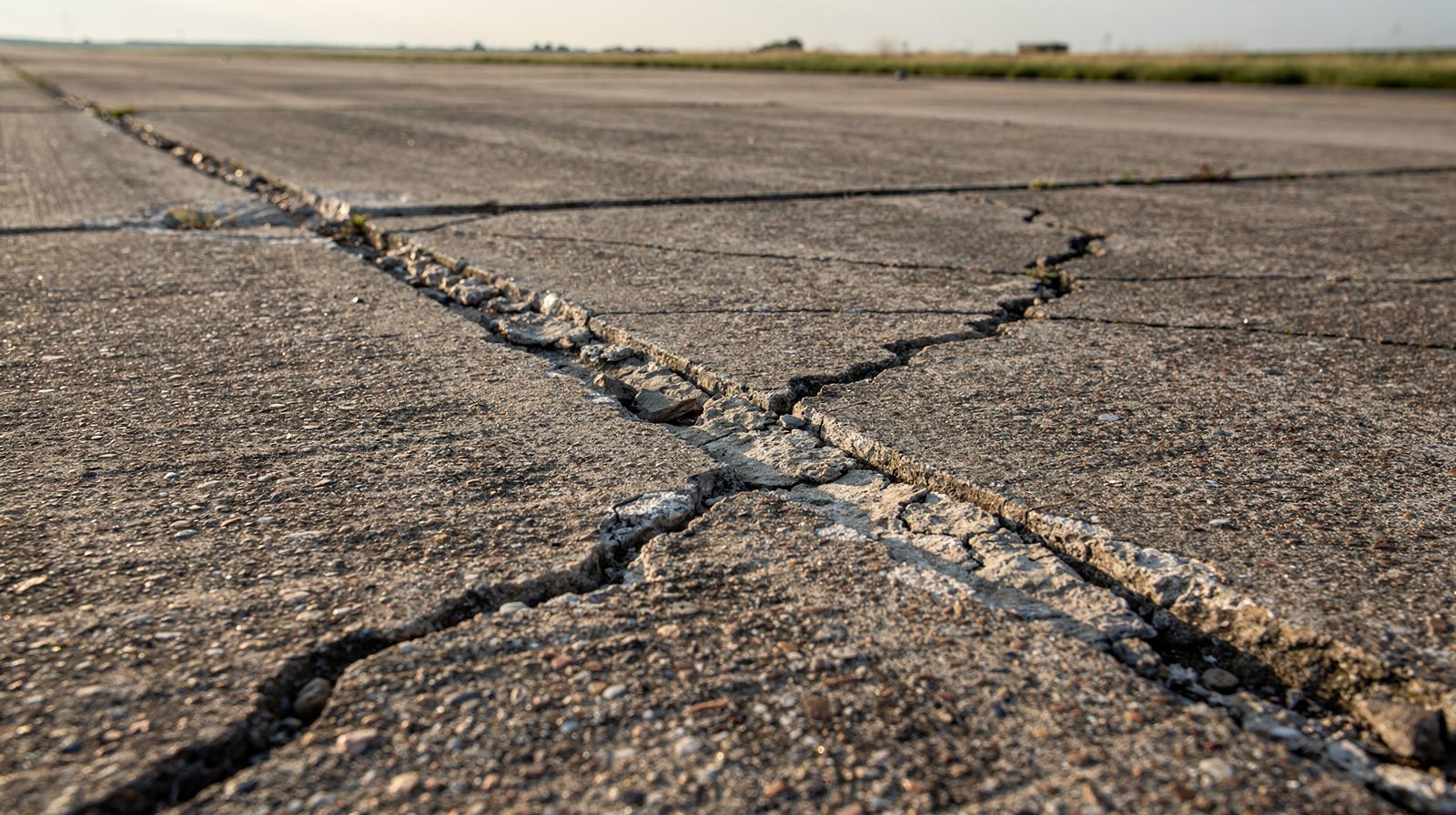
What is Transverse Cracking in Pavements?
Definition and Orientation of Transverse Cracking
Transverse cracking is a pavement distress classified by the FHWA Long-Term Pavement Performance (LTPP) Distress Identification Manual (FHWA-HRT-13-092) as cracks that are predominantly perpendicular to the pavement centerline. This orientation distinguishes them from longitudinal cracks, which run parallel to the centerline (ACP-4), and block cracks (ACP-8), which form a network of interconnected polygons. Transverse cracks are formally designated as distress type ACP-6 for asphalt concrete pavements, JCP-4 for jointed concrete pavements, and CRCP-3 for continuously reinforced concrete pavements.
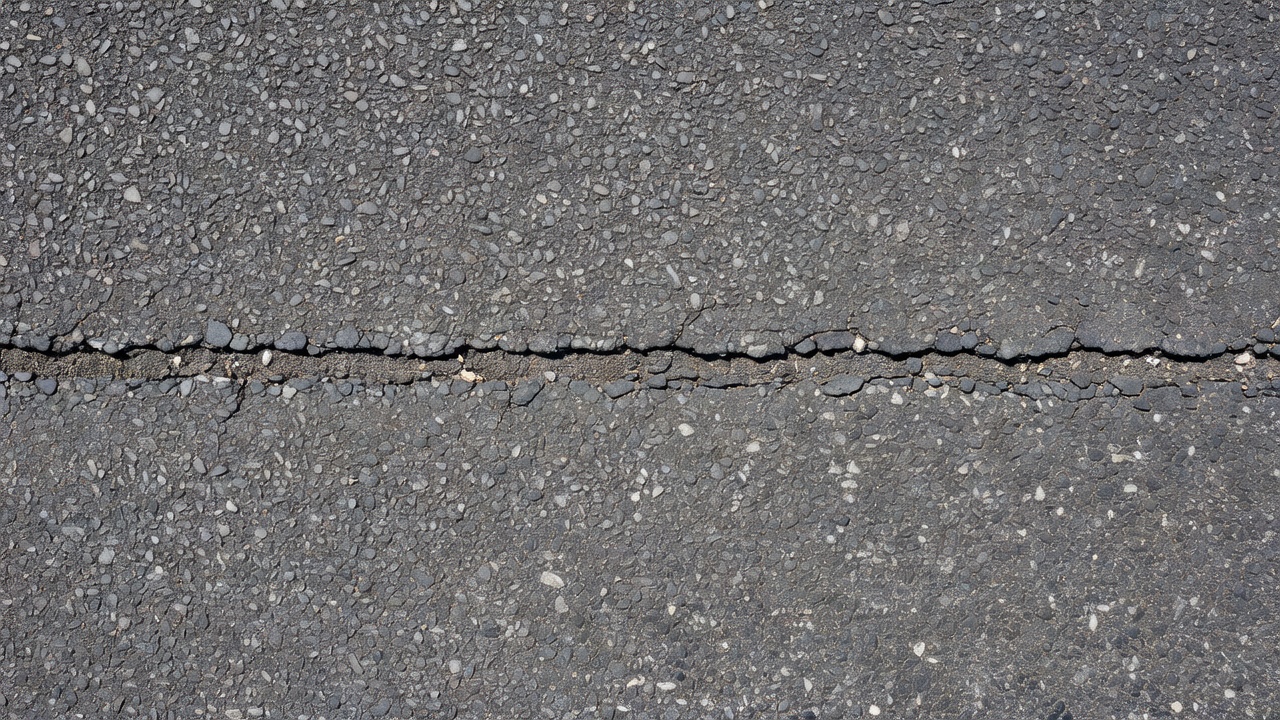
The Washington Asphalt Pavement Association defines transverse cracks as “cracks perpendicular to the pavement’s centerline or laydown direction.” The ASTM D6433 standard practice for Pavement Condition Index (PCI) surveys classifies cracking as longitudinal/transverse (L&T) when the crack extends predominantly across the pavement width. The Missouri IDEA PCI manual specifies that “transverse cracks extend across the pavement at approximately right angles to the pavement’s center line or direction of lay down.”
Transverse cracks are significant because they provide direct pathways for moisture infiltration into the pavement structure, leading to subgrade weakening, pumping, and accelerated deterioration under traffic loading. They are typically full pavement depth cracks, meaning they extend through the entire asphalt layer thickness. When thermal in origin, they initiate at the pavement surface where temperature gradients are most extreme and propagate downward. When reflective in origin, they initiate at the bottom of the overlay where stress concentrations occur at underlying crack or joint locations and propagate upward to the surface.
The orientation criterion for transverse cracking requires that the crack form an angle of approximately 90 degrees to the pavement centerline. In practice, cracks deviating up to 45 degrees from perpendicular may still be classified as transverse, though cracks that deviate significantly are typically classified as longitudinal or random. The FHWA LTPP protocol requires that the surveyor determine the predominant orientation of each crack during field inspection, considering the crack’s path over its entire length.
Causes of Transverse Cracking
Thermal Contraction, Low-Temperature Cracking
The most common cause of transverse cracking in asphalt pavements is thermal contraction, also referred to as low-temperature cracking or thermal cracking. This mechanism dominates in cold-climate regions where pavements experience rapid and significant temperature drops. The underlying physics is straightforward but the material response is complex.
As the temperature decreases, the asphalt binder and aggregate matrix contract. The asphalt layer is restrained from free contraction by its length (the pavement is continuous over long distances), friction with the underlying base layer, and the structural continuity of the pavement itself. This restraint converts the thermal contraction strain into tensile stress within the pavement layer.
The thermal tensile stress is described by the fundamental relationship:
σₜ = −EαΔT
Where σₜ is the thermal tensile stress, E is the elastic (relaxation) modulus of the asphalt mixture, α is the coefficient of thermal contraction of the mixture, and ΔT is the negative temperature change. The negative sign indicates that a temperature drop (negative ΔT) produces tensile stress (positive σₜ).
The critical factor in low-temperature cracking is the stress relaxation capability of the asphalt binder. At low temperatures, asphalt binder becomes stiff and brittle, it loses its ability to relax stresses through viscous flow. When the rate of stress buildup from rapid cooling exceeds the rate of stress relaxation, the accumulated stress can exceed the mixture’s tensile strength, and a crack initiates. This typically occurs at the pavement surface, where cooling rates are highest, and the crack propagates downward through the pavement thickness.
The key material properties influencing thermal cracking resistance include: the low-temperature stiffness of the asphalt binder (measured by the Bending Beam Rheometer, BBR, per AASHTO T 313), the thermal contraction coefficient of the mixture (typically 2.0 to 3.0 × 10⁻⁵ per degree Celsius for asphalt concrete), the relaxation modulus of the mixture, and the tensile strength of the mixture. The Superpave binder performance grading system (PG grading) directly addresses low-temperature cracking resistance by specifying the minimum temperature at which the binder can withstand thermal stresses without cracking.
Research using LTPP data has consistently shown that pavements in freeze regions have a significantly higher amount of transverse cracking than those in moderate-freeze and no-freeze regions. The LTPP Specific Pavement Studies (SPS-1 and SPS-8) experiments have provided extensive data on the relationship between binder grade, layer thickness, and thermal cracking performance. Thicker asphalt layers generally exhibit better thermal cracking resistance because they distribute temperature gradients over a greater depth, reducing the surface-to-depth temperature differential.
Reflective Cracking
Reflective cracking occurs when cracks or joints in underlying pavement layers propagate upward through an asphalt overlay. This mechanism is responsible for a substantial proportion of transverse cracking in asphalt overlays placed over existing concrete pavements or over cement-stabilized base layers that have developed shrinkage cracks.
The reflective cracking mechanism operates through three fracture modes:
Mode I, Opening (Thermal Movement): Horizontal expansion and contraction of the underlying concrete slab caused by temperature and moisture changes generates tensile stress at the crack tip in the overlay. As the slab contracts in cold weather, the crack or joint opening widens, pulling the overlay apart from below. This produces a tensile stress concentration at the overlay bottom directly over the crack or joint.
Mode II, Shear (Traffic Loading): Differential vertical deflection across a joint or crack under traffic loading induces shear stress at the overlay bottom. When a wheel load passes over a joint, the loaded slab deflects downward while the unloaded slab remains relatively stationary, creating a shear differential that transfers high shear stresses into the overlay.
Mode III, Mixed Mode: After initial crack propagation, the crack typically propagates under a combination of tensile and shear loading, known as mixed-mode fracture. This produces a characteristic crack path that may not be perfectly vertical through the overlay thickness.
The rate of reflective crack propagation depends on the traffic loading magnitude and frequency, the amplitude of thermal movement at the underlying joint (a function of slab length and temperature range), the overlay thickness, and the modulus and fracture resistance of the overlay mixture. Thicker overlays (150 mm or greater) provide significantly longer reflective cracking resistance than thin overlays (50 mm or less).
In the FHWA LTPP survey protocol, reflective cracking at joints is identified as ACP-5 but is recorded under the transverse cracking category (ACP-6) or longitudinal cracking (ACP-4) based on the crack’s orientation on the surface, it is not reported as a separate distress code. The surveyor must know the slab dimensions beneath the AC surface to identify reflection cracks at joints correctly.
Shrinkage Cracking in Semi-Rigid Base Pavements
In pavements constructed with semi-rigid bases (cement-stabilized, lime-fly ash-stabilized, or lean concrete bases), transverse cracking can originate from shrinkage of the base material itself. The mechanism involves two distinct processes:
Dry shrinkage: As water is lost from the cement-stabilized base material through evaporation, hydration, and drainage, the material undergoes volumetric contraction. This contraction is restrained by the subgrade friction and structural continuity, generating tensile stresses within the base layer.
Temperature shrinkage: Temperature fluctuations, particularly during the early-age curing period and through seasonal cycles, induce thermal contraction and expansion of the base material. Cement-stabilized materials have a thermal contraction coefficient similar to concrete (approximately 1.0 to 1.5 × 10⁻⁵ per degree Celsius).
When the combined shrinkage stresses exceed the tensile strength of the stabilized base, cracks form in the base layer. These base cracks then act as stress concentrators, initiating reflective cracks that propagate upward through the asphalt surface layer. Research by Chen et al. (2022, PMC9613646) has shown that the type of stabilized base material significantly affects cracking resistance, lime and fly ash-stabilized macadam exhibits the strongest cracking resistance, while cement-stabilized macadam has the weakest resistance.
The study also found that reducing the shrinkage coefficient of the base material, increasing layer thicknesses, and improving tensile strength all increase transverse crack spacing (fewer cracks). The best structural combinations for maximizing crack spacing were identified as 15fp-AC25, 15fp-AC20, 15df-AC25, and 17fp-AC25, combinations that featured thicker structural layers and lower shrinkage coefficients.
FHWA LTPP Severity Classification
The FHWA Long-Term Pavement Performance (LTPP) program has established standardized severity classification systems for transverse cracking that differ between asphalt concrete pavements (ACP), jointed concrete pavements (JCP), and continuously reinforced concrete pavements (CRCP). These classifications are essential for consistent pavement condition assessment across the United States and Canada.
Severity Classification for Asphalt Concrete Pavements (ACP-6)
For transverse cracking in asphalt pavements, the severity is determined primarily by the mean crack width, with additional consideration of adjacent random cracking within a 0.3 m zone on either side of the crack.
| Severity | Mean Crack Width Criteria | Additional Criteria |
|---|---|---|
| Low | Mean width ≤ 6 mm (unsealed), or sealed with sealant in good condition where width cannot be determined | No adjacent random cracking |
| Moderate | Mean width > 6 mm and ≤ 19 mm | Or any crack ≤ 19 mm with adjacent low-severity random cracking within 0.3 m |
| High | Mean width > 19 mm | Or any crack ≤ 19 mm with adjacent moderate-to-high severity random cracking within 0.3 m |
Source: FHWA-HRT-13-092, Distress Identification Manual, 5th Edition (May 2014)
The measurement rule for ACP transverse cracks states that the entire crack is rated at the highest severity level present for at least 10 percent of the total crack length. This means that if a crack has a 2 m section at Moderate severity and the remaining 18 m at Low severity (90 percent Low, 10 percent Moderate), the entire crack is rated as Moderate.
Crack width is measured at the widest point of the crack within each defined severity section. The 6 mm threshold was selected because cracks wider than 6 mm generally allow significant water infiltration and are wide enough to accommodate a sealant reservoir. The 19 mm threshold (approximately 3/4 inch) represents the point at which edge deterioration, raveling, and secondary cracking become significant concerns.
Severity Classification for Jointed Concrete Pavements (JCP-4)
Transverse cracking in jointed concrete pavements uses tighter crack width thresholds than ACP, along with consideration of spalling and faulting.
| Severity | Crack Width and Associated Criteria |
|---|---|
| Low | Crack widths < 3 mm with no spalling and no measurable faulting, or well-sealed cracks where width cannot be determined |
| Moderate | Crack widths ≥ 3 mm and < 6 mm, or with spalling < 75 mm, or faulting up to 6 mm |
| High | Crack widths ≥ 6 mm, or with spalling ≥ 75 mm, or faulting ≥ 6 mm |
Source: FHWA-HRT-13-092, §JCP-4, pp. 40–41
The tighter thresholds for PCC reflect the different performance characteristics of concrete. Concrete cracks are less likely to self-heal than asphalt cracks, and the rigid pavement structure is more sensitive to crack width for load transfer efficiency across the crack. A 3 mm crack in concrete represents a significant discontinuity, whereas a 3 mm crack in asphalt would still be classified as Low severity.
Spalling is measured as the width of the spalled area measured from the face of the crack. Faulting (vertical displacement across the crack) is measured using a Georgia faultmeter or Dipstick profiler and recorded to the nearest millimeter.
Severity Classification for Continuously Reinforced Concrete Pavements (CRCP-3)
In CRCP, transverse cracking is expected and designed, the continuous steel reinforcement intentionally creates closely spaced fine transverse cracks to control stress distribution. Severity is therefore based on spalling extent rather than crack width.
| Severity | Criteria |
|---|---|
| Low | Not spalled, or spalling along ≤ 10% of crack length |
| Moderate | Spalling along > 10% and ≤ 50% of crack length |
| High | Spalling along > 50% of crack length |
Source: FHWA-HRT-13-092, §CRCP-3, pp. 64–65
The CRCP classification recognizes that some degree of transverse cracking is inherent to properly functioning CRCP. The steel reinforcement maintains tight crack widths (typically < 0.5 mm) through restraint, so crack width is not a useful severity indicator. Instead, the progression from tight, well-controlled cracks to cracks with significant spalling indicates a loss of structural integrity.
Crack Spacing and Its Diagnostic Significance
Transverse crack spacing, the distance between adjacent transverse cracks measured center-to-center along the pavement longitudinal direction, provides important diagnostic information about the cause and severity of the distress. The spacing pattern can be classified as equal (uniform) or random (irregular), each with distinct implications.
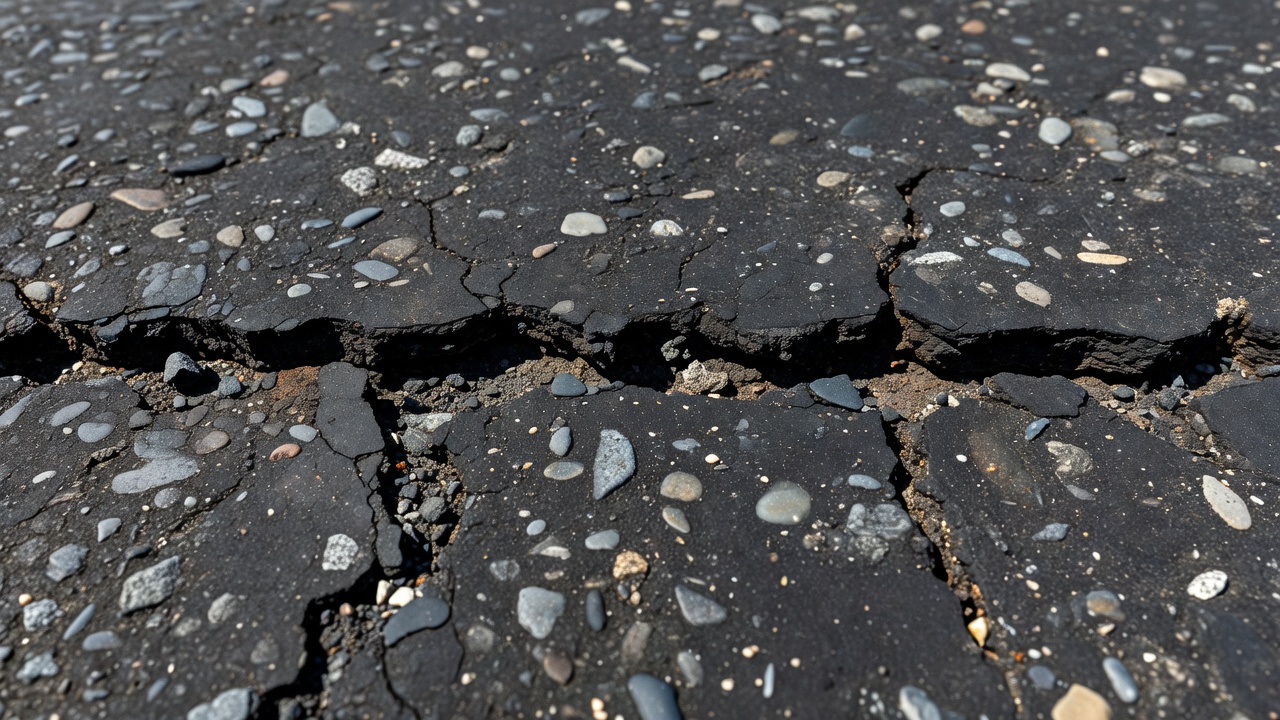
Equal Spacing (Uniform Pattern)
Equal or regularly spaced transverse cracks are typically associated with thermal contraction cracking in asphalt pavements. When the pavement cools uniformly over long distances, tensile stresses build up gradually until they exceed the tensile strength at the weakest point. After the first crack forms, the stress is relieved in the adjacent area, establishing a stress-free zone around the crack. As cooling continues, stress builds up again until a second crack forms at a distance where stress has accumulated sufficiently. This process produces a pattern of cracks at relatively uniform intervals.
The characteristic spacing for thermal transverse cracks in asphalt pavements is typically in the range of 20 to 66 meters. Research by Osterkamp et al. (1986) found an average crack spacing of 23.6 meters for low-temperature thermal cracks. A more recent study by Chen et al. (2022) on semi-rigid base asphalt pavements reported crack spacing ranging from 32.8 m to 66.5 m after the appearance of reflective cracks.
The implications of spacing are significant for pavement management:
| Spacing Pattern | Typical Range | Implication |
|---|---|---|
| Widely spaced | > 20 m | Fewer cracks, each crack undergoes larger thermal movement (> 3 mm/year), more difficult to seal effectively, higher per-crack maintenance cost |
| Moderately spaced | 5 to 20 m | Moderate number of cracks, moderate thermal movement, standard crack sealing is effective |
| Closely spaced | < 5 m | Many cracks, each crack undergoes smaller thermal movement (< 3 mm/year), may indicate underlying base distress or advanced aging, full rehabilitation may be more cost-effective than individual crack treatment |
| Very closely spaced | < 1 m | Characteristic of properly functioning CRCP, steel reinforcement controls crack width, should not spall significantly if design is adequate |
Random Spacing (Irregular Pattern)
Random or irregularly spaced transverse cracks typically indicate reflective cracking from underlying slab joints, base cracks, or a combination of thermal and structural mechanisms. When an asphalt overlay is placed over a jointed concrete pavement, the crack pattern in the overlay mirrors the joint pattern of the underlying slabs, which may be at non-uniform intervals depending on slab design and joint placement.
Random spacing can also indicate:
- Variable subgrade support, sections with weaker support develop cracks at different intervals
- Non-uniform base shrinkage, shrinkage cracks in cement-stabilized bases form at irregular intervals depending on material variability, curing conditions, and moisture gradients
- Combined mechanisms, a mix of thermal cracks and reflective cracks produces an irregular overall pattern
Working Crack Definition
The concept of a “working” crack is central to crack treatment decisions, particularly the distinction between crack sealing and crack filling. Per FHWA and SHRP research, a working crack undergoes horizontal movement of ≥ 3 mm annually due to thermal expansion and contraction. Transverse thermal cracks in asphalt pavements are typically working cracks because they respond to seasonal and daily temperature cycles.
The movement amplitude depends on:
- Crack spacing, wider spacing produces larger individual crack movement
- Thermal contraction coefficient of the mixture
- Annual temperature range at the pavement location
- Pavement restraint from base layer friction and structural continuity
Working cracks require crack sealing (with bond breaker, backer rod, and sealant reservoir) rather than simple crack filling because the cyclic movement would cause adhesive or cohesive failure in a simple fill treatment.
Transverse Cracking in PCC Pavements
Joint-Related Cracking (JPCP)
In jointed plain concrete pavements (JPCP), controlled transverse cracks are actually designed into the pavement through the placement of saw-cut contraction joints at regular intervals, typically 4.5 to 6.0 meters (15 to 20 feet) for highway and airfield pavements. These joints are intended to induce cracking at predetermined locations where load transfer devices (dowel bars) and joint sealants are provided to maintain structural continuity and prevent moisture infiltration.
The design of JPCP relies on the principle that natural random cracking will be controlled by creating weak planes at regular intervals. The saw-cut joints are typically cut to a depth of approximately one-quarter to one-third of the slab thickness within 4 to 12 hours after concrete placement, before tensile stresses from drying shrinkage and thermal contraction become large enough to cause uncontrolled cracking.

Joint seal damage (JCP-5) is assessed by the percentage of joint length affected by sealant failure: Low for less than 10 percent, Moderate for 10 to 50 percent, and High for more than 50 percent. Spalling of transverse joints (JCP-7) uses spall width thresholds: Low for less than 75 mm, Moderate for 75 to 150 mm, and High for more than 150 mm measured from the face of the joint.
Mid-Slab Transverse Cracking (JPCP)
When tensile stresses exceed the concrete’s flexural strength between the designed contraction joints, uncontrolled mid-slab transverse cracking occurs. This is considered a structural distress because it indicates that the slab is cracking at locations without load transfer devices or sealant protection.
The FHWA SPS-2 (Specific Pavement Studies-2) experiment, reported in FHWA-HRT-16-073, provided extensive data on mid-slab transverse cracking in JPCP. Key findings include:
- Base type strongly influences cracking resistance: Slabs on permeable asphalt-treated base (PATB) had the best cracking resistance, dense-graded aggregate base (DGAB) provided moderate resistance, and lean concrete base (LCB) provided the worst resistance. PATB bases delayed transverse cracking onset by several years compared to LCB.
- Slab thickness is critical: Thicker slabs (279 mm) cracked significantly less than thin slabs (203 mm) under equivalent traffic and environmental conditions.
- Climate effect: Surface cracking was worse in dry climatic zones than wet zones, likely due to increased drying shrinkage and curling stresses.
- Crack initiation location: Most transverse cracks initiated from the slab edge close to the shoulder, where combined curling, warping, and traffic stresses are maximum.
- Width effect: Standard slab widths (3.66 m) started cracking transversely earlier than wide slabs (4.27 m), but long-term crack levels were similar between the two widths.
- Strength paradox: Sections with high slab strength exhibited earlier cracking in some cases, because higher strength concrete typically has higher stiffness and lower creep, leading to greater stress development under restrained shrinkage and thermal contraction.
Transverse Cracking in CRCP
In continuously reinforced concrete pavements, transverse cracks are designed and expected, the continuous longitudinal steel reinforcement (typically 0.6 to 0.7 percent of the cross-sectional area) induces closely spaced fine transverse cracks (typically 0.5 to 2.5 m spacing) that are held tight by the steel restraint. This creates a “cracked but structurally continuous” pavement system.
The measurement protocol for CRCP transverse cracks under LTPP is specific:
- Count cracks that intersect an imaginary longitudinal line at mid-lane
- Cracks propagating from pavement edges are counted as individual cracks
- Cracks that do not cross mid-lane are not counted but are mapped for reference
- Units recorded: Number of cracks and length in meters at each severity level
CRCP transverse cracking becomes a distress when the steel restraint is inadequate and crack widths become excessive, leading to spalling, water infiltration, and corrosion of the steel reinforcement. The LTPP severity classification (based on spalling extent rather than crack width) recognizes that narrow, tight cracks are acceptable while wide or spalled cracks indicate deterioration.
Measurement Methods for Transverse Cracking
Crack Count
The fundamental measurement for transverse cracking is the count of individual cracks within the survey section. The LTPP standard survey section length is 152.5 m (500 feet). For ACP, transverse cracks less than 0.3 m in length are not recorded. For CRCP, only cracks crossing the mid-lane line are counted. The count is reported separately for each severity level.
Crack Spacing Measurement
Crack spacing is measured center-to-center between adjacent transverse cracks along the longitudinal direction. On LTPP surveys, cracks are mapped on plan sheets using standardized symbols, and spacing measurements are derived from the mapped crack locations. The HPMS (Highway Performance Monitoring System) reporting protocol calculates percent cracking within a section as a supplementary metric.
Crack Width Measurement
Crack width is the primary severity classification parameter for ACP and JCP transverse cracking. The FHWA LTPP procedure specifies:
- Width measured at the widest point of the crack within each defined severity section
- “Mean width” represents the average width along the crack length for classification purposes
- ACP thresholds: 6 mm (Low to Moderate boundary) and 19 mm (Moderate to High boundary)
- JCP thresholds: 3 mm (Low to Moderate) and 6 mm (Moderate to High)
Practical measurement tools include:
- Crack width gauge / comparator card, provides precision of ±0.5 mm, most common field tool
- Digital caliper, higher precision (±0.1 mm) but requires contact with the crack surface
- Laser crack measurement system (LCMS), automated, non-contact measurement for high-speed surveys, uses laser line scanners to measure crack geometry in 3D
- Straight edge (1.2 m), used for rut depth measurement (a separate distress), not for crack width
Spalling and Faulting Measurement
When transverse cracks are accompanied by spalling or faulting, additional measurements are required:
- Spall width, measured from the face of the crack, thresholds at 75 mm and 150 mm for severity classification
- Spall percentage, percentage of crack length affected by spalling, used for CRCP severity classification
- Faulting, vertical elevation difference across the crack, measured with Georgia faultmeter or Dipstick profiler, recorded to nearest millimeter at 15.25 m intervals
Sealant Condition Assessment
Sealant condition is assessed for transverse cracks that have been previously sealed. The LTPP protocol defines sealant as “in good condition” only if at least 1 meter of continuous sealant in good condition is present. For transverse cracks specifically, sealant is recorded only when it is in good condition for at least 90 percent of the crack length. Cracks with sealant in poor condition are classified as unsealed for severity determination.
ASTM D6433 PCI Method
The ASTM D6433 standard practice for Pavement Condition Index (PCI) surveys uses a deduct value system for transverse cracking. Survey sample units (standard area of ±230 m² for roads) are evaluated, and the extent of transverse cracking is measured as the number of cracks and their length, converted to an extent value (percentage of slab area or linear meters per sample unit). The PCI is calculated as 100 minus the total deduct value, with specific deduct value curves calibrated for transverse cracking distress.
The PCI deduct value for transverse cracking increases with both severity and extent. At Low severity with low extent, the deduct value is small (typically 1 to 5 points). At High severity with extensive cracking affecting a large percentage of the sample unit, the deduct value can reach 40 to 60 points, significantly reducing the overall PCI.
AI-Based Detection of Transverse Cracking
Automated Data Collection Technology
Modern pavement condition surveys increasingly rely on automated data collection systems that operate at prevailing highway speeds. The FHWA report FHWA-RC-20-0005 (Guidelines for Cracking Assessment for Vendor Selection, 2020) documents that the majority of state agencies now use automated or semi-automated systems for network-level distress data collection.
The dominant technologies are:
- 2D imaging systems, high-resolution line-scan or area-scan cameras capture pavement surface images at resolutions typically in the range of 1 to 3 mm per pixel
- 3D laser systems (LCMS), laser line scanners measure transverse pavement profiles using triangulation, producing 3D surface data at sub-millimeter resolution in the vertical dimension
The FHWA survey of agencies found that most specify a minimum detectable crack width of 1 to 3 mm for vendor equipment qualification. The FHWA RIP (Research Implementation Program) is “implemented based on the premise that an accurate pavement surface condition assessment can be accomplished using automated crack detection.”
Deep Learning Approaches for Crack Detection and Classification
Object detection models such as the YOLO (You Only Look Once) family are widely used for real-time crack detection in pavement imagery. YOLOv10 has achieved 98.96 percent accuracy on the SUT-Crack dataset for crack detection. These models detect cracks as bounding box objects and can classify them by orientation (transverse vs. longitudinal) based on the bounding box aspect ratio and angle.
Semantic segmentation models provide pixel-level classification of crack regions. Architectures such as Residual-Attention UNet 3+ and improved U-Net variants achieve accurate pixel-level crack segmentation, distinguishing crack pixels from background pavement. This enables precise measurement of:
- Crack width, through pixel-to-millimeter calibration based on survey system resolution
- Crack length, from the segmented crack skeleton
- Crack orientation angle, calculated from the principal axis of the segmented crack region, enabling automatic classification as transverse, longitudinal, or diagonal
Vision Transformer (ViT) architectures represent an emerging approach for pavement crack classification. Unlike CNNs that process images through local receptive fields, ViT models capture global crack patterns through self-attention mechanisms, potentially offering advantages for distinguishing transverse cracks from longitudinal cracks based on overall pattern context.
Orientation Detection and Classification
A key capability of AI-based systems is the automatic determination of crack orientation to classify cracks as transverse, longitudinal, or diagonal. This is accomplished through:
- Principal component analysis (PCA) of the crack pixel coordinates, the first principal component direction gives the crack orientation angle
- Hough transform, detects straight line segments in the crack mask and determines their angle relative to the survey direction
- CNN-based orientation classification, the network learns to classify orientation directly from the crack image patch
For TarmacView applications, crack orientation is a fundamental parameter for distress classification. Transverse cracks are defined as having an orientation angle of 60 to 120 degrees relative to the pavement centerline direction. Cracks with angles outside this range are classified as longitudinal or random.
Performance Validation
The FHWA guidelines for automated crack assessment validation (FHWA-RC-20-0005) require statistical equivalence testing between vendor results and ground reference. Acceptance limits are typically set at ±4 percent to ±7.5 percent for HPMS cracking measurements. The validation uses paired t-tests to determine whether the automated system produces measurements that are statistically equivalent to manual reference surveys.
The minimum requirements for automated transverse crack detection include:
- Crack detection rate (recall) of at least 85 percent for cracks wider than 3 mm
- False positive rate below 10 percent
- Crack width measurement accuracy within ±1 mm for cracks wider than 2 mm
- Orientation classification accuracy of at least 90 percent (correctly distinguishing transverse from longitudinal)
These performance levels are achievable with current deep learning systems using high-quality training data and proper survey conditions (good lighting, clean and dry pavement surface, adequate image resolution).
Crack Sealing and Repair of Transverse Cracking
Crack Sealing vs. Crack Filling
The distinction between crack sealing and crack filling is fundamental to proper transverse crack treatment. The FHWA and Strategic Highway Research Program (SHRP) define these as distinct operations based on crack movement characteristics:
| Parameter | Crack Sealing | Crack Filling |
|---|---|---|
| Crack type | “Working” cracks (≥ 3 mm annual horizontal movement) | “Non-working” cracks (< 3 mm annual movement) |
| Typical application | Transverse thermal cracks (ACP) | Longitudinal cracks, block cracks |
| Objective | Prevent water and incompressible material intrusion | Reduce water infiltration |
| FHWA classification | Preventive Maintenance | Routine Maintenance |
| Reservoir preparation | Routed rectangular reservoir with backer rod | Cleaning only, no routing |
| Sealant placement | Into and slightly above the crack (bond breaker required) | Into the crack only |
| Typical width range | 3 to 25 mm | 3 to 25 mm |
Source: NCHRP Report 784, CalTrans criteria
Since transverse thermal cracks are working cracks, they require crack sealing with proper reservoir preparation, not simple crack filling.
Reservoir Geometry and Preparation
The geometry of the routed reservoir is critical to sealant performance. Research has established that a rectangular reservoir shape (not V-shaped) minimizes strain in the sealant during crack movement by providing uniform stress distribution. The shape factor (width-to-depth ratio) is the key design parameter:
| Width:Depth Ratio | Recommendation Source | Application |
|---|---|---|
| > 1.5:1 | Khuri and Tons (minimum threshold) | Minimum ratio to avoid premature sealant failure |
| 2:1 | Schutz (recommended) | General application recommended ratio |
| 4:1 | Chong and Phang (cold regions) | Best performance in cold climates with large thermal movement |
For transverse thermal cracks in cold regions, a 16 mm wide × 4 mm deep reservoir (4:1 shape factor) provides optimal performance. For warmer climates, a 12 mm × 12 mm reservoir is commonly used. The rectangular shape is achieved through hot-air routing equipment that cuts a precise channel along the crack path.
A backer rod is placed at the bottom of the reservoir before sealant installation. The backer rod:
- Prevents sealant from bonding to the bottom of the reservoir (reduces triaxial stress)
- Controls sealant depth by providing a compression fit at the correct depth
- Prevents three-sided adhesion that would cause premature cohesive failure
Without a backer rod, sealant bonded to all three sides of the reservoir (bottom and both vertical walls) experiences a triaxial stress state during crack opening, leading to rapid cohesive failure. With a backer rod, sealant bonds only to the two vertical walls, creating a biaxial stress state with controlled deformation.
Sealant Materials, ASTM D6690 Classification
Hot-poured crack sealants are specified under ASTM D6690-12 which defines four types:
| Type | Climate Application | Low-Temperature Test | Extension Requirement |
|---|---|---|---|
| Type I | Moderate climates | Tested at −18°C | 50% extension |
| Type II | Most climates (general purpose) | Tested at −29°C | 50% extension |
| Type III | Most climates (replaces SS-S-1401C) | Tested at −29°C | 50% extension |
| Type IV | Very cold climates | Tested at −29°C | 200% extension |
For transverse thermal cracks experiencing large annual movement, Type IV sealants (with 200 percent extension capability) are recommended for cold-climate applications. Type II or Type III is suitable for moderate climates.
A newer performance-based grading (SG) system developed by Al-Qadi and colleagues provides more precise material selection. Grades are expressed as SG XX-YY where XX represents the high-temperature tracking resistance (in degrees Celsius) and YY represents the low-temperature flexibility limit (in degrees Celsius). For example, SG 70-16 indicates a sealant suitable for high pavement temperatures up to 70°C and low pavement temperatures down to −16°C. The system uses Dynamic Shear Rheometer (DSR), Bending Beam Rheometer (BBR), and direct tension tests to characterize sealant properties.
Seasonal Considerations for Sealant Application
The timing of crack sealing significantly affects performance because the crack width varies seasonally with pavement temperature:
| Season | Crack Condition | Effect on Installed Sealant | Recommendation |
|---|---|---|---|
| Winter | Crack at maximum width | Most material accommodated in reservoir, sealant may be squeezed out in summer | Not recommended, sealant will be compressed severely in warm weather |
| Spring / Autumn | Crack at mid-width (50% of maximum opening) | Minimal sealant deformation during both hot and cold extremes | Optimal timing for installation |
| Summer | Crack at minimum width (maximum closure) | Severe tensile stress on sealant when crack opens in winter, high risk of cohesive or adhesive failure | Not recommended |
Source: Masson et al., cited in NCHRP Report 784
The optimal application window is spring or autumn when the ambient temperature is moderate and the crack is at approximately 50 percent of its maximum opening. This provides balanced sealant deformation capacity for both winter expansion and summer contraction.
Repair Strategy by Severity for Asphalt Pavements
| Severity | Crack Condition | Recommended Treatment |
|---|---|---|
| Low | Mean width ≤ 6 mm, infrequent cracks, no edge deterioration | Crack sealing with rubberized crack seal material, rout rectangular reservoir (12 mm × 12 mm or 4:1 shape factor depending on climate) |
| Moderate | Mean width 6 to 19 mm, moderate frequency | Crack sealing with mastic material for wider cracks, consider routing wider reservoir (up to 20 mm) |
| High | Mean width > 19 mm, numerous cracks, edge deterioration present | Crack sealing with mastic material for individual cracks, if crack density > 50%, consider surface treatment or rehabilitation overlay |
| Crack density Low (0-25%) | Edge deterioration Low (0-25%) | Do nothing or preventive sealing |
| Crack density Moderate (26-50%) | Edge deterioration Low to Moderate | Crack treatment (seal or fill) |
| Crack density High (51-100%) | Any edge deterioration | Surface treatment, mill and overlay, or reconstruction |
Sources: AsphaltWA, FHWA guidelines, NCHRP Report 784
Repair Strategy for Concrete Pavement Transverse Cracks
| Severity | Recommended Treatment |
|---|---|
| Low (< 3 mm, no spalling) | Seal with epoxy or polymer injection, rout and seal if crack is active |
| Moderate (3-6 mm, spalling < 75 mm) | Rout and seal, partial-depth spall repair if spalling is present, consider dowel bar retrofit if faulting is developing |
| High (≥ 6 mm, significant spalling or faulting) | Full-depth slab replacement or crack stitching + dowel bar retrofitting, slab replacement preferred for airport pavements |
Critical Application Requirements for Crack Sealing
Successful crack sealing of transverse cracks requires strict adherence to material-specific application conditions:
- Crack must be dry and clean, moisture or debris prevents adhesion, compressed air cleaning followed by heat lance drying is standard practice
- Hot-applied sealant temperature, typically 180 to 205°C (varies by product specification)
- Reservoir preparation, clean with compressed air (90 psi minimum), heat lance to dry the crack walls
- Finish, recessed or flush finish (not overband) preferred for traffic areas to prevent pick-up by tires
- Minimum ambient temperature, ≥ 4°C (40°F) and rising for most hot-pour sealants, cold-applied sealants may have lower minimum temperatures
For concrete pavement crack repair, additional considerations include ensuring that the repair material has compatible thermal expansion properties with the existing concrete and that load transfer across the crack is restored if the crack is wide or faulted.
Frequently Asked Questions
- What causes transverse cracking in asphalt pavements?
- Transverse cracking in asphalt pavements is primarily caused by thermal contraction (low-temperature cracking). When the temperature drops rapidly, the asphalt binder contracts, generating tensile stress within the pavement layer. The thermal stress is calculated as σt = −EαΔT, where E is the elastic modulus, α is the temperature shrinkage coefficient, and ΔT is the temperature differential. When this stress exceeds the asphalt mixture's tensile strength, a crack initiates, typically at the pavement surface where thermal gradients are most extreme, and propagates downward. Reflective cracking from underlying concrete joints or cement-stabilized base cracks is another major cause. In semi-rigid base pavements, drying shrinkage and temperature shrinkage of the cement-stabilized base layer can also induce transverse cracking that reflects through the surface.
- How is transverse cracking severity classified according to FHWA LTPP?
- The FHWA LTPP Distress Identification Manual defines three severity levels for transverse cracking in asphalt concrete pavements (ACP-6): Low severity, mean crack width ≤ 6 mm (unsealed) or sealed in good condition, Moderate severity, mean crack width > 6 mm and ≤ 19 mm, or any crack ≤ 19 mm with adjacent low-severity random cracking within 0.3 m, High severity, mean crack width > 19 mm, or any crack with adjacent moderate-to-high severity random cracking within 0.3 m. For jointed concrete pavements (JCP-4): Low, crack width < 3 mm, Moderate, 3 to 6 mm, or with spalling < 75 mm, or faulting up to 6 mm, High, ≥ 6 mm, or spalling ≥ 75 mm, or faulting ≥ 6 mm.
- What is the difference between transverse cracking and reflective cracking?
- Transverse cracking describes crack orientation, perpendicular to the centerline, while reflective cracking describes the mechanism by which cracks propagate from an underlying layer to the surface. In the FHWA LTPP manual, reflective cracking at joints (ACP-5) is defined as cracks in AC overlay surfaces that occur over joints in concrete pavements. On LTPP surveys, reflective cracks are recorded under the transverse cracking (ACP-6) or longitudinal cracking (ACP-4) categories based on their orientation, not as a separate distress code. Transverse reflective cracks are caused by thermal movement of the underlying slab (Mode I opening) and traffic loading (Mode II shear) that generate tensile and shear stresses at the crack tip in the overlay.
- How are transverse cracks measured during pavement inspection?
- Transverse cracks are measured by count, length, width, and spacing. Crack width is measured at the widest point using a calibrated crack width gauge, digital caliper, or laser crack measurement system. The FHWA LTPP protocol uses 'mean width' as the average along the crack length. For ACP, cracks less than 0.3 m in length are not recorded. For CRCP, cracks are counted if they intersect an imaginary mid-lane longitudinal line. Spacing is measured center-to-center along the longitudinal direction. The entire crack is rated at the highest severity level present for at least 10 percent of the crack length. In PCI surveys per ASTM D6433, transverse cracking deduct values are applied based on extent, measured as number of cracks and length per sample unit.
- What is the significance of transverse crack spacing?
- Crack spacing provides diagnostic information about the cause of transverse cracking. Equal or uniform spacing is typically associated with thermal contraction cracking in asphalt pavements, where tensile stresses exceed tensile strength at relatively uniform intervals. Research by Chen et al. (2022) found that transverse crack spacing in semi-rigid base asphalt pavements ranged between 32.8 m and 66.5 m after reflective cracking appeared. Osterkamp et al. (1986) reported an average crack spacing of 23.6 m for low-temperature transverse cracks. Wider spacing (> 20 m) means fewer cracks, but each crack undergoes larger thermal movement, making sealing more difficult. Closely spaced cracks (< 5 m) may indicate underlying base distress. Random or irregular spacing typically indicates reflective cracking from underlying slab joints at non-uniform intervals.