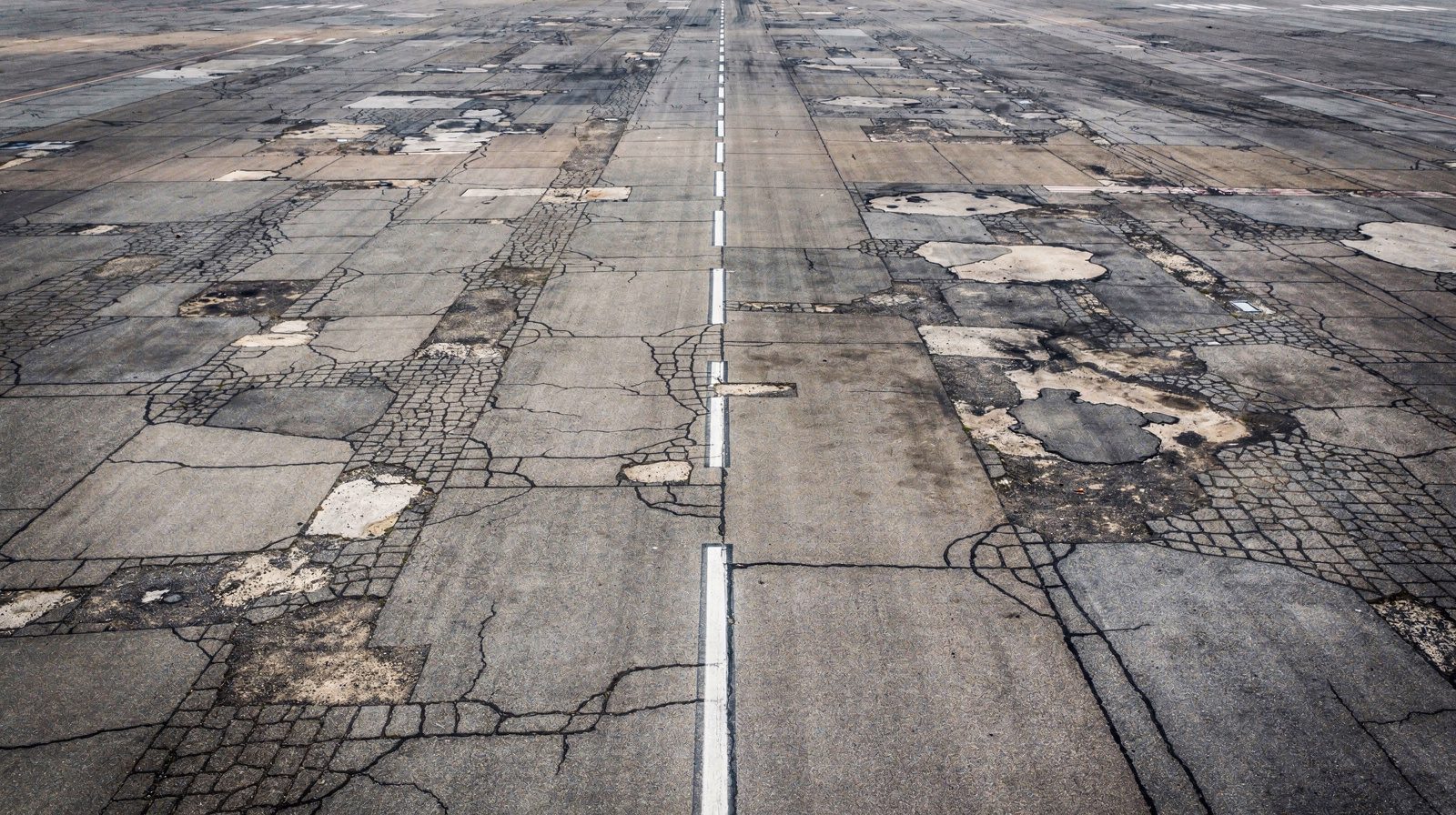
What is a Transverse Joint in Concrete Pavements?
Definition and Purpose of Transverse Joints
A transverse joint is a planned, constructed discontinuity oriented across the width of a portland cement concrete (PCC) pavement slab, created by sawing, forming, or construction stoppage at regular intervals to control the location and character of cracking. In jointed plain concrete pavement (JPCP), the most common type of rigid pavement worldwide, transverse joints are the single most important design element determining pavement performance, ride quality, and service life.
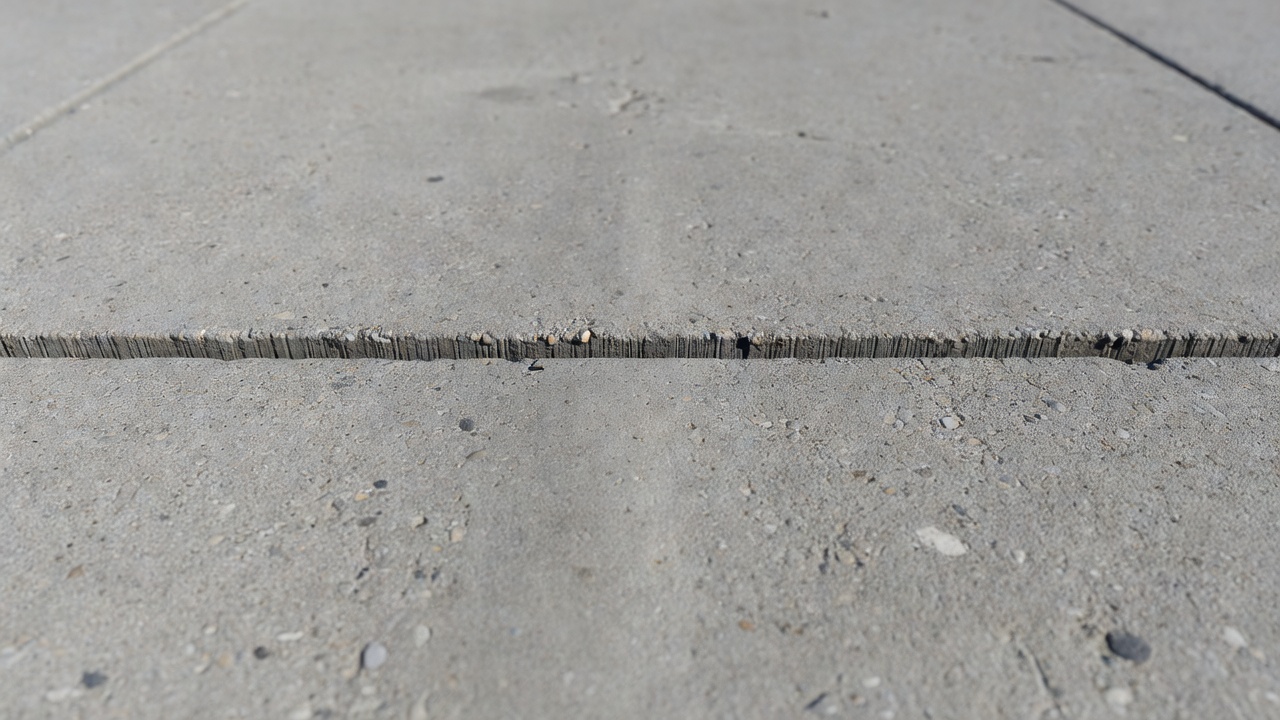
The FHWA Technical Advisory T 5040.30 defines five primary functions of transverse joints. The first and most critical function is crack control, concrete undergoes volumetric changes from drying shrinkage, thermal contraction, and moisture warping that generate tensile stresses exceeding the concrete’s tensile strength. Without transverse joints, these stresses cause uncontrolled, random cracking across the slab surface. By creating a weakened vertical plane at regular intervals, transverse joints force cracks to form at the intended location, producing a uniform slab geometry that allows load transfer and sealant installation.
The second function is load transfer, transverse joints transfer traffic loads from the approach slab to the leave slab through aggregate interlock between the fractured concrete faces below the saw cut or through engineered dowel bars. This load transfer reduces edge and corner deflections, limiting the tensile stresses that cause corner breaks and mid-slab cracking. The third function is infiltration prevention, properly designed and maintained transverse joints minimize the entry of surface water, deicing chemicals, and incompressible materials such as sand and gravel into the pavement structure. Water entry leads to pumping, subgrade erosion, and faulting. Incompressible materials cause spalling and blowups.
The fourth function is construction facilitation, transverse joints divide the pavement into slabs of manageable size for construction staging, lane-at-a-time paving, and curing. The fifth function accommodates movement at pavement intersections with structures or other pavement types through isolation joints.
Transverse joints are classified under three main structural types according to the ACPA (American Concrete Pavement Association) airfield joint classification system. Type B is an undoweled contraction joint relying solely on aggregate interlock for load transfer, suitable only for low-volume pavements with short joint spacing and stabilized bases. Type C is a doweled contraction joint using smooth steel dowel bars for positive load transfer, the standard for high-volume highways and airfields. Type D is an undoweled contraction joint with a sawed or formed groove, used for intermediate contraction joints on runways and aprons where traffic volumes are moderate.
Types of Transverse Joints
Contraction Joints (Control Joints)
Contraction joints are the most common transverse joint type in JPCP and the primary mechanism for crack control. They are created by sawing a groove into the hardened concrete (or forming during placement) that creates a weakened vertical plane approximately 1/4 to 1/3 of the slab depth deep. As the concrete continues to shrink and contract, a crack forms below the saw cut, propagating through the remaining slab thickness. The resulting fracture surface below the cut provides aggregate interlock for load transfer. Contraction joints are designed to open and close as the concrete expands and contracts with temperature and moisture changes, the joint width typically varies from nearly closed in summer to 3-6 mm open in winter, depending on slab length and temperature range.
The FAA Advisory Circular 150/5320-6G and ACPA classify contraction joints by load transfer mechanism. Undoweled contraction joints (Type B/D) rely entirely on aggregate interlock from the fractured concrete faces below the saw cut. Aggregate interlock is effective only when crack widths remain below 0.9 mm (0.035 inches) based on research by the FHWA Long-Term Pavement Performance (LTPP) program. For medium to high traffic volumes, slab deflections and joint movements exceed this threshold, causing aggregate interlock degradation and necessitating dowel bars. Doweled contraction joints (Type C) incorporate smooth steel dowel bars placed at mid-depth across the joint. The dowels transfer shear loads without restraining joint opening or closing, the bar is debonded from the concrete on one side of the joint, typically achieved by coating one half of the dowel with a debonding agent or by using a plastic sleeve.
For airport pavements serving aircraft exceeding 100,000 lb (45,360 kg) gross weight, the FAA requires Type C doweled contraction joints for the last three transverse joints at the ends of runways, taxiways, and aprons before a free edge or isolation joint. This requirement ensures positive load transfer at the pavement ends where slab movements and deflections are greatest.
Construction Joints
Transverse construction joints result from the placement of concrete next to already-hardened concrete at the end of a paving day, during equipment breakdowns, or during weather delays. These joints are by necessity rather than by design intent, although skilled construction planning allows them to coincide with planned contraction joint locations.
Type E (ACPA classification) is a doweled construction joint. Dowel bars extend from the hardened concrete into the freshly placed concrete, providing load transfer across the joint. The exposed dowels from the first pour must be clean and properly aligned before the adjacent concrete is placed. The ACPA recommends that transverse construction joints be placed at planned contraction joint locations whenever possible to maintain uniform slab geometry and avoid creating a slab length that deviates from the design spacing.
The key difference between a contraction joint and a construction joint is the crack plane. In a contraction joint, the crack below the saw cut creates matching irregular fracture surfaces that provide aggregate interlock. In a construction joint, there is no crack, the joint is a cold joint between two separate concrete placements. Therefore, construction joints must always be doweled, they cannot rely on aggregate interlock because there are no matching fracture surfaces.
Isolation Joints (formerly Expansion Joints)
Isolation joints separate intersecting pavements and isolate the main pavement from fixed structures such as manholes, drain inlets, bridge abutments, and building foundations. The terminology has evolved significantly, the FAA and ACPA no longer recommend the term “expansion joint” for regularly spaced joints in the pavement, revising the nomenclature to “isolation joint” for intersection locations.
Type A (ACPA classification) is a thickened edge isolation joint. This joint type incorporates a full-depth compressible filler material, typically bituminous-impregnated fiberboard per ASTM D1751, cork per ASTM D1752, or preformed expansion joint filler per ASTM D994, that compresses as the adjacent slabs expand in hot weather. No dowel bars are used in isolation joints because the filler material prevents direct slab-to-slab contact.
The FAA AC 150/5320-6G specifies that all intersections of runway, taxiway, or apron pavements require a thickened edge isolation joint. Concrete panels on both sides of the isolation joint must be thickened by 25%, with the thickened section tapered back over at least 10 ft (3 m), preferably the full panel length. This thickening reduces edge bending stresses and deflection under aircraft loads.
The reason regular “expansion” joints are no longer recommended is documented in the ACPA Airfield Joints guidance, when expansion joints are placed at regular intervals (every 200-300 ft as was historical practice), slabs can migrate toward the expansion joint, causing all the contraction joints between expansion joints to open excessively. This wide joint opening degrades aggregate interlock, increases sealant stress, and leads to premature joint failure, sealant rupture, water infiltration, and pumping. Modern practice eliminates regularly spaced expansion joints entirely and relies on contraction joints with properly designed load transfer.
Transverse Joint Spacing Design
Transverse joint spacing is a critical design parameter that directly influences pavement performance, load transfer, sealant durability, and ride quality. The spacing must be close enough to prevent intermediate cracking but not so close as to be uneconomical or create excessive numbers of joints requiring maintenance.
Rule-of-Thumb Methods
The most widely used rule of thumb for transverse joint spacing, documented in the FHWA T 5040.30 and Pavement Interactive references, states that joint spacing should be less than 18 to 24 times the slab thickness. For a 9-inch (230 mm) slab, the maximum joint spacing is 18 ft (5.5 m). For a 12-inch (305 mm) slab, the maximum is 24 ft (7.3 m). The AASHTO 1993 Guide for Design of Pavement Structures additionally recommends that the maximum panel dimension in feet should not exceed 1.5 to 2.0 times the slab thickness in inches.
The aspect ratio of the slab, the ratio of the longer side to the shorter side, must be controlled to prevent corner cracking. The FHWA T 5040.30 specifies that the ratio of panel length to width shall not exceed 1.5. Pavement Interactive recommends a more stringent aspect ratio of less than 1.25. Standard US practice has converged on 15-ft (4.5 m) panel lengths with 12-ft (3.6 m) panel widths, giving an aspect ratio of 1.25. Many state highway agencies impose a cap of 15 ft on JPCP panel length, particularly when slab thickness is less than 8 inches, to prevent spalling and panel cracking.
Radius of Relative Stiffness Method
The Westergaard radius of relative stiffness (ℓ) provides an analytical basis for joint spacing design by considering the interaction between the concrete slab and the underlying foundation. The formula is:
ℓ = [E × h³ / (12 × (1-µ²) × k)]^¼
Where ℓ = radius of relative stiffness (in or mm), E = modulus of elasticity of concrete (typically 4-5 million psi or 28-35 GPa), h = slab thickness (in or mm), µ = Poisson’s ratio for concrete (typically 0.15), and k = modulus of subgrade reaction (psi/in or MPa/m, typically 100-800 pci or 27-216 MPa/m).
The key design parameter is the ratio of joint spacing (L) to radius of relative stiffness (ℓ). Research and field performance data have established the following thresholds:
| L/ℓ Ratio | Recommendation | Source |
|---|---|---|
| < 4.4 | Transverse cracking increases above this threshold | ACI 2002 |
| < 5.0 | FAA conservative maximum for airport pavements | FAA AC 150/5320-6G |
| < 7.0 | Adequate for stabilized foundations under certain conditions | ACPA Wiki, field data |
For a 225 mm (9 in) slab on a subgrade with k = 100 pci (27 MPa/m), ℓ = 1067 mm, giving a maximum joint spacing of 5.3 m (17.5 ft) at L/ℓ = 5.0. On a stronger foundation with k = 800 pci (216 MPa/m), ℓ = 635 mm, giving a maximum spacing of 3.2 m (10.4 ft). This demonstrates that stronger foundations allow closer joint spacing because the slab behaves more stiffly.
FAA-Recommended Maximum Joint Spacing
FAA Advisory Circular 150/5320-6G (Table 3-7) provides detailed maximum joint spacing tables for airport rigid pavements. The tables differentiate between pavements with and without stabilized base courses.
Without Stabilized Base (Granular Subbase):
| Slab Thickness | Maximum Joint Spacing |
|---|---|
| ≤ 6 in (152 mm) | 12.5 ft (3.8 m) |
| 6.5-9 in (165-229 mm) | 15 ft (4.6 m) |
| > 9 in (229 mm) | 20 ft (6.1 m) |
With Stabilized Base:
| Slab Thickness | Maximum Joint Spacing |
|---|---|
| 8-10 in (203-254 mm) | 12.5 ft (3.8 m) |
| 10.5-13 in (267-330 mm) | 15 ft (4.6 m) |
| 13.5-16 in (343-406 mm) | 17.5 ft (5.3 m) |
| > 16 in (406 mm) | 20 ft (6.1 m) |
Stabilized bases reduce the required joint spacing for a given slab thickness because they create higher frictional restraint between the slab and base, increasing tensile stresses in the concrete. Additional FAA requirements include: transverse spacing must not exceed 1.25 times longitudinal spacing, joint spacing exceeding 20 ft requires documented technical analysis demonstrating L/ℓ ≤ 5.0, and longitudinal joint spacing must divide the pavement section evenly into lanes.
Random and Matched Joint Spacing
Historical practice in the 1960s and 1970s used random joint spacing patterns (e.g., 12-13-18-17 ft repeating) to avoid harmonic vehicle responses that could cause resonant vibration and ride quality issues. The FHWA T 5040.30 no longer recommends random spacing due to constructability problems, inconsistent crack control, and sealant performance concerns. Properly constructed conventional 15-ft panels with adequate load transfer do not produce severely objectionable ride quality.
A critical requirement is that transverse joint locations must be matched across all lanes, including concrete shoulders. Misaligned joints create a condition where the working joint in one lane terminates within the adjacent slab panel, causing cracks to propagate from the working joint across the adjacent panel. If joints cannot be aligned for operational reasons, the FHWA requires that the longitudinal joint between the mismatched lanes be isolated with foam board or other compressible material.
Saw Cutting Timing and Depth
The timing and depth of saw cutting for transverse contraction joints are among the most critical construction quality control parameters. Incorrect saw cutting is a leading cause of random cracking, spalling, and premature joint deterioration.
Saw Cut Depth Requirements
Conventional sawing requires a cut depth of 1/4 to 1/3 of the total slab depth, with the absolute minimum never less than 1/4 depth. For a 250 mm (10 in) slab, this requires a cut depth of 63 to 83 mm (2.5 to 3.3 in). For a 300 mm (12 in) slab, the minimum cut depth is 75 mm (3 in) at 1/4 depth. Longitudinal contraction joints require a deeper cut, 1/3 of slab depth, because they experience less stress from traffic loading.
Early-entry sawing (also called early-age sawing) allows shallower cuts. The FHWA Early-Entry Sawing TechBrief (FHWA-HIF-07-031) specifies a minimum depth of 25 mm (1 in) for early-entry sawing because the cut is made when the concrete is very young (1-4 hours after placement) and the tensile stresses from shrinkage have not yet fully developed. The Iowa Department of Transportation specifies 32 ± 6 mm (1.25 ± 0.25 in) for early-entry saw cuts. A Texas study on 330 mm (13 in) slabs found that 25 mm (1 in) depth was satisfactory. A Missouri study on 300 mm (12 in) slabs found that 38 mm (1.5 in), approximately 1/8 slab thickness, was successful. Swedish research documented that a depth of 1/5 slab thickness for early-entry sawing produced cracking control equivalent to conventional sawing.
Saw Cutting Timing
The sawing window concept is fundamental to successful joint construction. The window opens when the concrete is hard enough to support sawing equipment and resist raveling (aggregate dislodgement from the cut face), and closes when tensile stresses from shrinkage and thermal contraction exceed the concrete’s tensile strength, causing uncontrolled random cracking.
Conventional sawing typically begins 4 to 12 hours after final finishing, depending on concrete mix properties, ambient temperature, wind, humidity, and concrete temperature. The window varies considerably, hot, dry, windy conditions accelerate strength gain and stress development, narrowing the window. Cool, humid conditions extend the window. The ACI 2001 report on concrete pavement construction notes that the conventional sawing window can be as short as 2-3 hours under extreme conditions.
Early-entry sawing can begin as soon as 1 to 4 hours after concrete placement and can be performed as soon as workers can walk on the concrete without excessive indentation. The equipment used is lighter (11-227 kg or 25-500 lb) than conventional saws, uses up-cutting blade rotation to keep debris out of the joint, and operates dry (no water cooling), allowing earlier entry without damaging the concrete surface.
| Parameter | Conventional Sawing | Early-Entry Sawing |
|---|---|---|
| Timing after placement | 4-12 hours | 1-4 hours |
| Cut depth | 1/4 to 1/3 slab depth | 25 mm (1 in) minimum |
| Typical blade diameter | Standard (350-450 mm) | 200-350 mm (10-14 in) |
| Cooling method | Water-cooled | Dry cutting |
| Equipment weight | Heavy (500+ kg) | 11-227 kg (25-500 lb) |
| Blade rotation | Down-cutting | Up-cutting |
The FHWA T 5040.30 specifies that transverse joints must be cut in succession, not skip-sawed. Skip-sawing, cutting every 5th or 6th joint and allowing the intermediate joints to crack naturally, produces a wide range of crack widths. Some joints open wide while others remain tight, leading to excessive sealant stresses, sealant failure in wide joints, and inadequate crack width for sealant installation in tight joints.
The short joint technique involves terminating the saw cut approximately 13 to 19 mm (0.5 to 0.75 in) before the blade reaches the slab edge. This prevents the saw from breaking out the weak concrete at the slab edge, which causes unsightly edge spalling and provides a stress concentration point. The remaining thin concrete section cracks through under natural shrinkage stresses, producing a clean edge.
Dowel Bar Load Transfer
Dowel bars are the engineered solution for transferring shear loads across transverse joints while allowing free joint opening and closing in response to thermal and moisture movements. The FHWA T 5040.30 states that studies indicate dowels are beneficial for ALL conventional jointed concrete pavements, not just high-volume highways.
Standard Dowel Design Specifications
The FHWA T 5040.30 and AASHTO specifications establish the following standard parameters for dowel bars in highway and airfield pavements:
| Parameter | Standard Specification |
|---|---|
| Length | 18 inches (460 mm) |
| Diameter | At least 1/8 of pavement thickness |
| Minimum diameter (slabs ≤ 10 in) | 1.25 inches (32 mm) |
| Minimum diameter (slabs > 10 in) | 1.5 inches (38 mm) |
| Spacing (center-to-center) | 12 inches (305 mm) |
| Placement depth | Mid-depth of slab |
| Material | Cylindrical carbon steel, smooth finish |
| Corrosion protection | Epoxy coating or barrier system |
The dowel diameter is a function of slab thickness because thicker slabs generate higher shear forces at the joint. The 1/8-thickness rule ensures sufficient bearing area between the dowel and the concrete to prevent bearing stress failure. The 18-inch (460 mm) length is based on research showing this embedment length is sufficient to develop the required load transfer without causing excessive bearing stress at the dowel-concrete interface. The 12-inch spacing provides uniform load distribution across the joint width, with dowels concentrated in the wheel path areas where loads are highest.
Load Transfer Efficiency
Load Transfer Efficiency (LTE) is the quantitative measure of a joint’s ability to transfer load from the loaded slab to the unloaded slab. It is measured using a Falling Weight Deflectometer (FWD) and calculated as:
LTE = (δ_unloaded / δ_loaded) × 100%
Where δ_unloaded = deflection on the unloaded side of the joint and δ_loaded = deflection on the loaded side of the joint. LTE ranges from 0% (no load transfer, slabs deflect independently) to 100% (perfect load transfer, both slabs deflect equally).
LTE thresholds for pavement evaluation are generally:
- Good: 70-100%, adequate load transfer
- Fair: 50-70%, reduced load transfer, monitor condition
- Poor: < 50%, inadequate load transfer, intervention needed
Load transfer in JPCP is achieved through three mechanisms. Aggregate interlock provides load transfer through mechanical locking between the fractured concrete surfaces below the saw cut. The ACPA notes that aggregate interlock is only effective when crack widths remain below 0.9 mm (0.035 inches), above this threshold, the interlocking surfaces separate and load transfer is lost. Dowel bars provide positive mechanical load transfer independent of crack width. Cement-treated subbase (CTB) can provide substantial joint support by reducing slab deflections.
Dowel Placement and Alignment
Proper dowel placement is critical for joint performance. The NCHRP Report 637 and FHWA HRT-20-070 provide the following alignment tolerances based on extensive field surveys using Magnetic Imaging Tomography (MIT) scanning technology:
| Alignment Parameter | Description | Tolerance |
|---|---|---|
| Horizontal skew | Rotation in horizontal plane | Within 5° |
| Vertical tilt | Rotation in vertical plane | Within 5° |
| Longitudinal translation | Position along slab length | Within 1 in (25 mm) |
| Vertical translation | Deviation from mid-depth | Within 2 in of mid-depth |
The FHWA LTPP study (HRT-20-070) scanned 23,300 dowels (1.5-inch diameter) from 1,997 joints and 21,240 dowels (1.25-inch diameter) from 1,824 joints across 121 test sections. The majority of dowels had good alignment. The study found that the biggest contribution of dowel misalignment was its effect on load transfer, leading to potential faulting problems. Severe misalignment, particularly vertical tilt that locks the joint, can cause localized distress and cracking.
Alternate Dowel Systems
The FHWA T 5040.30 identifies alternate dowel systems that may be used: alternate materials such as GFRP (glass fiber-reinforced polymer), stainless steel, and other metallic alloys, alternate shapes such as hollow, sleeved/clad cylindrical, flat plate dowels, and reduced-length dowels, and nonuniform spacing with more dowels concentrated in wheel paths. For example, Utah DOT uses 4 dowels per wheel path, and the Illinois Tollway uses 5-dowel “mini-baskets” per wheel path to concentrate load transfer where it is most needed.
Dowel Basket Anchoring
Dowel baskets must be securely anchored to prevent displacement during concrete placement. The FHWA T 5040.30 specifies minimum 8 fasteners for a standard 10-12 ft lane, with more fasteners required for weaker subbase/subgrade and as few as 6 for stabilized subbases. Fasteners should be evenly spaced, half on each side of the basket. Anchor pins must be placed on the leave side of basket wires to prevent pushing in the direction of paving.
Airport Dowel Requirements
For airport pavements, the FAA AC 150/5320-6G and ACPA Airfield Joints guidance specify:
- Dowels at transverse contraction joints for aircraft exceeding 100,000 lb (45,360 kg) gross weight
- The last three transverse contraction joints at the ends of runways, taxiways, and aprons must be doweled (Type C)
- Longitudinal construction joints must be Type E (doweled) unless serving as isolation joints
- Load transfer is achieved through dowels, aggregate interlock, or cement-treated subbase (CTB)
Transverse Joint Distresses
Transverse joints are the focal point for most distresses in JPCP. The FHWA LTPP Distress Identification Manual (FHWA-RD-03-031) identifies several distinct distress types that occur at or adjacent to transverse joints.
Joint Seal Damage (LTPP Distress 5a)
Joint seal damage includes sealant adhesion loss (sealant separates from the concrete joint wall), cohesion failure (sealant tears internally), extrusion (sealant pushed out of the joint), missing sealant, or complete sealant failure. The LTPP distress identification criteria require that the joint seal must be identified as defective before related distresses such as pumping can be recorded. Seal damage is measured as the number of joints affected and rated at Low, Moderate, or High severity based on the extent and character of failure. Open joints allow water infiltration that leads to pumping, subgrade erosion, and faulting, while incompressible material entry causes spalling and blowups.
Spalling of Transverse Joints (LTPP Distress 7)
Spalling is the breakdown, disintegration, or chipping of concrete at the joint edges. It is measured by counting the number of affected joints and the linear meters of spalling. Severity is rated Low (spalling < 10% of joint length with no loose material), Moderate (spalling 10-50% of joint length with some loose pieces), or High (spalling > 50% of joint length with significant material loss or pieces over 0.1 m²). Common causes include: incompressible materials in the joint preventing slab expansion, inadequate concrete consolidation around dowel bars, late sawing causing the crack to wander from the saw cut, freeze-thaw deterioration of saturated concrete, deicer chemical attack, and overstress at joint edges from loss of load transfer.
Faulting of Transverse Joints (LTPP Distress 12)
Faulting is the measurable difference in elevation across a transverse joint or crack, caused by the accumulation of incompressible material beneath the leave slab or the erosion of subgrade material from beneath the approach slab. The measurement unit is millimeters of vertical displacement. No severity levels are defined, the measured value is used directly. Faulting of 3-6 mm is noticeable to vehicle occupants as a thump or jarring sensation. Faulting exceeding 13 mm is considered high severity and indicates severe loss of support. Primary causes include pumping of subgrade or subbase fines through the joint, loss of load transfer from aggregate interlock degradation, dowel misalignment, and heavy traffic loading combined with water presence.
Corner Breaks (LTPP Distress 1)
A corner break is a crack that intersects the transverse and longitudinal joints at approximately 45 degrees, with side lengths ranging from 0.3 m to one-half slab width on each side of the corner. The crack is typically caused by loss of support beneath the slab corner from pumping, combined with heavy traffic loading. Severity is rated as Low (single piece, no spalling > 10% of crack length, no measurable faulting), Moderate (spalling > 10% of length at Low severity, or faulting < 13 mm), or High (spalling at Moderate-High severity > 10% of length, or faulting ≥ 13 mm, or corner in multiple pieces or patched).
Pumping (LTPP Distress 16)
Pumping is the ejection of water and fine-grained subgrade or subbase material from beneath the pavement through joints under passing wheel loads. It is measured as the number of joints affected and meters of pumping-affected joint length. No severity levels are defined. Pumping requires three simultaneous conditions: free water at the slab-foundation interface, a dynamic wheel load sufficient to deflect and pressurize the water, and an open joint providing an expulsion path. The FHWA LTPP manual explicitly requires that the joint seal must be identified as defective before pumping can be recorded.
Blowups (LTPP Distress 11)
Blowups are the buckling, shattering, or upward movement of pavement at a joint, caused by incompressible materials obstructing slab expansion during hot weather. The distress is measured by count only, with no severity levels. Blowups create Foreign Object Debris (FOD) hazards that are especially critical at airports, where loose concrete fragments can be ingested by jet engines. Prevention requires effective joint sealant to prevent incompressible material entry and proper isolation joints at structures.
Joint Inspection and Pavement Condition Index (PCI)
The Pavement Condition Index (PCI) is the standard quantitative method for evaluating pavement condition, developed by the US Army Corps of Engineers in the late 1970s and codified in ASTM D5340 (airports) and ASTM D6433 (roads and parking lots). The PCI provides a numerical rating from 0 (failed) to 100 (good) that reflects the severity and density of visible surface distresses.
| PCI Range | Condition | Recommended Action |
|---|---|---|
| 86-100 | Good | Routine maintenance |
| 71-85 | Satisfactory | Maintenance |
| 56-70 | Fair | Maintenance (candidate for preservation) |
| 41-55 | Poor | Rehabilitation |
| 26-40 | Very Poor | Major rehabilitation |
| 11-25 | Serious | Reconstruction |
| 0-10 | Failed | Reconstruction |
The FAA AC 150/5320-6G specifies that pavements with PCI above 70 are candidates for routine maintenance, while pavements with PCI below 55 require rehabilitation planning.
Joint-Related Distress Types in PCI
For jointed concrete pavements, the PCI survey captures the following joint-related distresses, each with defined measurement units and severity levels:
| Distress | Measurement Unit | Severity Levels |
|---|---|---|
| Corner breaks | Count | Low, Moderate, High |
| D-cracking | Number of slabs, m² | Low, Moderate, High |
| Transverse joint seal damage | Number of joints | Low, Moderate, High |
| Longitudinal joint seal damage | Number, linear meters | No severity defined |
| Spalling, longitudinal joints | Linear meters | Low, Moderate, High |
| Spalling, transverse joints | Number of joints, linear meters | Low, Moderate, High |
| Faulting, transverse joints/cracks | Millimeters | No severity (measured value) |
| Pumping | Number, linear meters | No severity defined |
| Blowups | Count | No severity defined |
PCI Calculation Methodology
The PCI calculation follows a standardized procedure. Each distress type is identified and rated for severity (Low, Moderate, High) and density (extent of distress measured in count, linear meters, or square meters). Each severity/density combination yields a deduct value from standardized curves developed by the US Army Corps of Engineers based on extensive field studies. Total deduct values are computed for all distresses in the surveyed section and adjusted using correction curves that account for the interaction of multiple distress types. The final PCI is:
PCI = 100, Total Adjusted Deduct Value
For example, a pavement section with transverse joint spalling (Moderate severity, 15% density, deduct value = 25), corner breaks (Low severity, 5% density, deduct value = 10), and faulting (5 mm, deduct value = 8) would have a total deduct value of 43. After applying the correction curve (which reduces the total for multiple distress interactions), the adjusted deduct might be 38, yielding a PCI of 62, the “Fair” range.
Transverse Joint Sealant Condition
Joint sealant is a critical component of transverse joint performance. The ACPA Technical Bulletin TB010-2018 and FHWA HIF-19045 Joint and Crack Sealing Checklist provide detailed specifications for sealant selection, installation, and inspection.
Sealant Types and Usage
Three primary sealant types are used for transverse joints in concrete pavements:
| Sealant Type | Usage Share | Key Properties |
|---|---|---|
| Hot-pour rubberized asphalt | ~25% of transverse joints | Heated to 190-210°C, shape factor 1:1 (width = depth), strain capacity 15-50% |
| Silicone (cold-applied) | ~52% of transverse joints | Ambient temperature pour, shape factor 2:1 (width = 2× depth), strain capacity 30-50%, ~30 min cure to tack-free |
| Preformed compression seals (neoprene) | ~21% of transverse joints | Preformed rubber strip, installed under compression, immediate traffic-ready |
Hot-pour sealants are the most traditional type but require melting equipment and have shorter service life (5-8 years typically). Silicone sealants have become the preferred type for new construction in most US states and airports, with service life of 10-15 years. Compression seals offer the longest service life (10-20 years) but require precise joint width control during construction and may not accommodate large joint movements.
Reservoir Design
The joint reservoir is the widened upper portion of the saw cut that contains the sealant. The reservoir width is determined by the estimated joint opening and the allowable sealant strain:
W = ΔL / S
Where W = required joint width, ΔL = estimated joint opening, and S = allowable sealant strain. Hot-pour sealants with S = 0.15-0.50 require a 1:1 width-to-depth shape factor. Silicone sealants with S = 0.30-0.50 require a 2:1 width-to-depth shape factor. Typical reservoir widths are 10-15 mm (0.4-0.6 inches).
The shape factor, the ratio of joint width to sealant depth, is critical for sealant performance. If the shape factor is too high (sealant too shallow), the sealant experiences excessive strain and fails in cohesion. If the shape factor is too low (sealant too deep), the sealant experiences excessive stress at the bond line and fails in adhesion.
Backer rod material (closed-cell polyethylene foam) is placed in the joint below the sealant to control the shape factor and provide a bond breaker preventing three-sided adhesion. The FHWA HIF-19045 specifies that backer rod diameter shall be 25% to 50% greater than the reservoir width to ensure tight contact with the joint walls.
Sealant Inspection Protocol
The FHWA Joint and Crack Sealing Checklist (HIF-19045) provides a comprehensive inspection protocol for joint sealant installation:
Pre-Installation Checks: Verify joint size is appropriate for field conditions, confirm sealant type is appropriate for climate, verify sealant from approved source within shelf life, confirm backer rod correct size and type.
Joint Preparation: Old sealant (if reseal) completely removed, concrete cured minimum 7 days dry weather before sawing, joint sawn or refaced to rectangular reservoir with cut vertical sides, joint flushed with high-pressure water to remove slurry, abrasive cleaning nozzle positioned 1-2 inches above joint, two passes per face, joint blown clean with clean, dry air, wipe test or finger test confirms joint walls free of dust, dirt, moisture, or oil.
Weather Requirements: Air and surface temperature meeting manufacturer requirements, typically 40°F (4°C) minimum and rising, not at or below dew point, no rain imminent, no moisture in joint.
Installation Verification: Sealant filled from bottom up to specified level with uniform surface, non-sag sealants tooled to force material against sidewalls, specified recess from surface maintained, adhesion test performed by pulling up random sections of cured sealant, sample stretch test and hand pull test performed.
Sealing vs. Filling
The ACPA TB010-2018 distinguishes between sealing and filling of joints. Sealing uses a backer rod, requires rigorous reservoir preparation, controls the shape factor, provides better water infiltration control, requires critical adhesion, and is typical for airfields and high-speed highways. Filling does not use backer rod, requires less rigorous preparation, provides limited shape factor control, offers moderate water infiltration control, has less critical adhesion requirements, and is typical for low-speed urban streets.
Common Sealant Problems
Common sealant problems and their causes include: no adhesion (joint not clean, wet joint, low temperature, concrete not cured), sealant pickup or pullout (traffic too soon, insufficient recess, excessive sealant, contamination), bleeding (old incompatible sealant on reseal project), and preformed seal installed too high (installed without required recess).
Airport PCC Transverse Joint Requirements
Airport pavement transverse joint requirements are more stringent than highway requirements due to the higher loads, safety-critical operations, and FOD hazards associated with aircraft operations. The governing documents are FAA Advisory Circular 150/5320-6G (Airport Pavement Design and Evaluation), FAA AC 150/5370-10H (Standard Specifications for Construction of Airports), and ICAO Aerodrome Design Manual Part 3 (Pavements).
Mandatory Joint Sealing
Unlike highway pavements where some states permit open (unsealed) joints, airport pavements require sealed joints to prevent Foreign Object Debris (FOD). The FAA AC 150/5320-6G states that joint sealing is mandatory for pavements serving jet airplanes. Loose sealant fragments, displaced backer rod, or aggregate from spalled joints can be ingested by jet engines, causing catastrophic damage. Jet fuel-resistant sealants per ASTM D3582 are specified for areas subject to fuel spillage. Timely resealing of joints extends the functional life of rigid airport pavements by preventing water infiltration, subgrade erosion, and FOD generation.
Isolation Joint Requirements
All intersections of runway, taxiway, or apron pavements require a thickened edge isolation joint (Type A). Key specifications include:
- Concrete panels on both sides of the isolation joint thickened by 25%
- Thickened section tapered back over at least 10 ft (3 m), preferably the full panel length
- Full-depth compressible filler per ASTM D1751, D1752, or D994
- Future expansion: isolation joint required where runway or taxiway extension is expected
- New-to-existing pavement connections: intersecting pavements must be isolated, extensions of taxiways or runways require doweled construction joints
Transition Requirements
At locations where rigid pavement transitions to flexible pavement (asphalt), the FAA requires:
- Matched subgrade elevation on both sides of the transition
- Stabilized base under the flexible pavement section
- Minimum 10 ft (3 m) transition section on each side
- Thickened pavement section at the transition to reduce edge stress levels
ICAO Requirements
The ICAO Aerodrome Design Manual (Doc 9157, Part 3) incorporates the FAA standards for airport pavements through the ICAO ACR-PCR protocol for pavement strength reporting. Key ICAO provisions for transverse joints include:
- Joint spacing designed to control cracking from thermal and moisture stresses
- Load transfer devices at joints for pavements serving heavy aircraft
- Effective joint sealing to prevent water infiltration and FOD
- Isolation joints at all pavement intersections and around fixed structures
- Regular inspection and maintenance of joint sealant
The FAA AC 150/5320-6G standards are mandatory for all airport improvement projects receiving federal funding through the Airport Improvement Program (AIP) or Passenger Facility Charges (PFC), per Grant Assurance #34 and PFC Assurance #9. Compliance with 14 CFR Part 139 (Airport Certification) is also required.
ACPA Airfield Joint Design Guidance
The ACPA provides additional guidance for airfield joints serving aircraft exceeding 100,000 lb (45,360 kg): doweled contraction joints (Type C) are required for the last three transverse joints before a free edge or isolation joint, undoweled contraction joints (Type D) are acceptable for intermediate contraction joints on runways and aprons, load transfer is achieved through dowels, aggregate interlock, or cement-treated subbase (CTB), and thickened edges reduce slab bending stresses and edge deflections.
Joint Performance and Pavement Life
The performance of transverse joints directly determines the service life of JPCP. Well-designed, properly constructed, and maintained joints can provide 20-40 years of service life for highways and 20-30 years for airport pavements before requiring major rehabilitation. Joint-related distresses are the primary factor driving PCI reduction and rehabilitation timing.
Sealant Service Life
Joint sealant service life depends on sealant type, climate, traffic volume, and joint movement. Typical service lives are:
- Hot-pour rubberized asphalt: 5-8 years
- Silicone (cold-applied): 10-15 years
- Preformed compression seals: 10-20 years
Factors affecting sealant performance include temperature extremes, UV exposure, wet-freeze cycles, poor drainage (accelerates sealant distress), high traffic levels (increased joint deflection), longer joint spacing (greater joint movement), and concrete coefficient of thermal expansion. The ACPA notes that joint opening movements at transverse joints induce higher stress and strain in sealant than longitudinal joints because transverse joints experience the full slab length change.
Performance Feedback Cycle
The relationship between joint condition and pavement deterioration follows a feedback cycle. Initial joint sealant failure allows water and incompressibles to enter the joint. Water infiltration leads to pumping and subgrade erosion beneath the slab corners, causing loss of support. Loss of support increases slab deflections under traffic, which accelerates sealant damage and aggregate interlock degradation. Reduced load transfer increases slab corner stresses, causing corner breaks and faulting. Faulting creates dynamic impact loading that accelerates deterioration of both the joint and the slab.
Interrupting this cycle requires timely maintenance intervention. The FAA recommends joint sealant inspection every 1-3 years and resealing every 5-10 years depending on sealant type. Slab stabilization (undersealing) can restore support and extend pavement life by 10-15 years when pumping is detected early. Full-depth slab replacement is required when joint distress reaches High severity with corner breaks, faulting exceeding 13 mm, or extensive spalling.
Inspection-Driven Maintenance Decisions
The following matrix summarizes recommended maintenance actions based on transverse joint condition:
| Joint Condition | PCI Range | Recommended Action | Typical Frequency |
|---|---|---|---|
| Intact sealant, no distress | 86-100 | Routine inspection | Annually |
| Minor sealant adhesive failure | 71-85 | Spot sealant repair | As needed |
| Sealant failure, no spalling/faulting | 56-70 | Joint resealing | Every 5-10 years |
| Spalling (Low-Moderate), faulting < 5 mm | 41-55 | Joint repair + resealing, slab stabilization if pumping | Immediate |
| Spalling (Moderate-High), faulting 5-13 mm | 26-40 | Partial-depth repair, diamond grinding for faulting, slab stabilization | Urgent |
| Extensive spalling, faulting > 13 mm, corner breaks | 0-25 | Full-depth slab replacement | Critical |
The PCI-driven approach to joint maintenance ensures that resources are allocated efficiently, preventive maintenance (resealing) when PCI is above 70, corrective maintenance (joint repair, stabilization) when PCI is 41-70, and major rehabilitation (slab replacement) when PCI falls below 40. This approach maximizes pavement life and minimizes lifecycle costs by addressing joint deterioration before it progresses to structural failure requiring expensive slab replacement.
Frequently Asked Questions
- What is the purpose of transverse joints in concrete pavements?
- Transverse joints serve five primary functions in jointed plain concrete pavement (JPCP). First and most critically, they control cracking by creating a weakened vertical plane that forces cracks to form at the joint location rather than randomly across the slab. This prevents the uncontrolled, irregular cracking that would otherwise occur from drying shrinkage, thermal contraction, and moisture warping stresses. Second, they provide load transfer from one slab to the next, reducing edge and corner deflections and stresses at the joint. Third, they minimize infiltration of surface water, deicing chemicals, and incompressible materials into the joint system. Fourth, they divide the pavement into suitable increments for construction. Fifth, they accommodate pavement movements at intersections with other pavements or structures. Without transverse joints, concrete pavements would develop random cracking patterns that compromise structural integrity, ride quality, and service life.
- What types of transverse joints are used in concrete pavements?
- There are three primary types of transverse joints used in concrete pavements. Contraction joints (also called control joints) are the most common type in JPCP, created by sawing a groove into the hardened concrete to create a weakened plane. They control cracking from thermal and moisture-related stresses and may use dowel bars (Type C, doweled contraction joint) or aggregate interlock (Type B, undoweled contraction joint) for load transfer. Construction joints result from the placement of concrete next to already-hardened concrete, such as at the end of a day's paving. They are typically doweled (Type E, doweled construction joint) and can be made to coincide with planned contraction joints. Isolation joints (formerly called expansion joints) separate intersecting pavements and isolate embedded fixtures. The FAA and ACPA no longer recommend expansion joints at regular spacing because they allow slabs to migrate, causing contraction joints to open unnecessarily and degrading aggregate interlock. Isolation joints use full-depth compressible filler material (per ASTM D1751, D1752, or D994) and no dowel bars, with concrete panels on both sides thickened by 25%.
- How is transverse joint spacing determined for concrete pavements?
- Transverse joint spacing is determined using rules of thumb and analytical methods. The primary rule of thumb states that joint spacing should be less than 18 to 24 times the slab thickness. For example, a 9-inch (230 mm) slab requires joints at 18 feet (5.5 m) or less. The ratio of panel length to width should not exceed 1.5 (FHWA T 5040.30), and ideally the aspect ratio should be kept below 1.25. The radius of relative stiffness method uses Westergaard's formula to calculate ℓ (the radius of relative stiffness) and requires L/ℓ ratios below 5.0 (FAA conservative recommendation) to 7.0 (adequate for stabilized foundations). For highway pavements, US standard practice has converged around 15-foot (4.5 m) panel lengths and 12-foot (3.6 m) panel widths, with a cap of 15 ft in many states to prevent spalling. FAA Advisory Circular 150/5320-6G provides detailed joint spacing tables based on slab thickness and base type. Without stabilized base, maximum spacing ranges from 12.5 ft for slabs ≤6 inches to 20 ft for slabs >9 inches. With stabilized base, spacing is reduced to 12.5-20 ft depending on thickness. Joints must be matched across all lanes to prevent crack propagation.
- What are the saw cutting requirements for transverse joints?
- Saw cutting requirements for transverse joints include depth, timing, and sequencing specifications. For conventional sawing, the cut depth must be 1/4 to 1/3 of the total slab depth. For a 10-inch (250 mm) slab, this translates to 2.5 to 3.3 inches (63-83 mm) depth. The minimum cut depth shall never be less than 1/4 of the slab depth. Sawing must occur within a critical window, generally 4 to 12 hours after final finishing for conventional sawing, but as early as 1 to 4 hours for early-entry sawing. Sawing too early causes raveling (aggregate dislodgement), while sawing too late allows random cracking from residual stress buildup. Early-entry sawing can use shallower cuts (minimum 25 mm or 1 inch) because it occurs when concrete is very young and stresses are low. Transverse joints must be cut in succession, never skip-sawed (cutting every 5th or 6th joint), as skip sawing produces a wide range of crack widths that cause excessive sealant stresses. The short joint technique terminates the saw cut approximately 0.5 to 0.75 inches before reaching the slab edge to prevent breakout at the weak concrete edge.
- How do dowel bars work in transverse joints?
- Dowel bars transfer loads across transverse joints without restricting joint opening and closing in response to daily and seasonal temperature and moisture changes. Standard US practice specifies smooth cylindrical carbon steel dowels that are 18 inches (460 mm) long, with a diameter at least 1/8 of the pavement thickness (minimum 1.25 inches for slabs ≤10 inches, 1.5 inches for thicker slabs), spaced at 12 inches (305 mm) center-to-center, and placed at mid-depth of the slab. Dowels are epoxy-coated for corrosion protection. Load transfer efficiency (LTE) is measured as the ratio of deflection on the unloaded side to the loaded side: LTE = (δ_unloaded / δ_loaded) × 100%. Good LTE ranges from 70-100%. Aggregate interlock provides load transfer only when cracks are narrower than 0.9 mm (0.035 inches), making dowels essential for medium to high traffic volume pavements. For airport pavements serving aircraft over 100,000 lb (45,360 kg), dowels are required at the last three transverse contraction joints at the ends of runways, taxiways, and aprons. Proper dowel alignment is critical, tolerances include horizontal skew within 5°, vertical tilt within 5°, and longitudinal translation within 1 inch.
- What are the common distresses found at transverse joints?
- The FHWA Long-Term Pavement Performance (LTPP) Distress Identification Manual identifies several joint-related distresses. Joint seal damage (Distress 5a) includes sealant adhesion loss, cohesion failure, extrusion, or complete sealant failure that allows water and incompressibles to enter the joint system. Spalling of transverse joints (Distress 7) is the breakdown or disintegration of concrete at joint edges, caused by incompressibles preventing expansion, inadequate consolidation around dowels, late sawing causing crack wandering, freeze-thaw damage, deicer chemical attack, or overstress at joint edges. Faulting of transverse joints (Distress 12) is the difference in elevation across a joint, caused by pumping of subgrade fines, loss of load transfer from aggregate interlock degradation, or dowel misalignment. Faulting exceeding 13 mm is considered high severity. Corner breaks (Distress 1) occur when a crack intersects adjacent transverse and longitudinal joints at approximately 45 degrees, typically from loss of support. Pumping (Distress 16) is the ejection of water and fine material from beneath the slab through joints, indicating active water movement and loss of support. Blowups (Distress 11) involve buckling or shattering of pavement at joints from incompressible materials obstructing slab expansion, creating foreign object debris (FOD) hazards critical at airports.
- How are transverse joints evaluated in PCI surveys?
- The Pavement Condition Index (PCI) rates pavement condition from 0 (failed) to 100 (good) based on the severity and density of visible distresses. For jointed concrete pavements, joint-related distresses that contribute to PCI include corner breaks, D-cracking, transverse joint seal damage, transverse joint spalling, faulting, pumping, and blowups. Each distress is assigned a type, severity level (Low, Moderate, High), and density (extent measured in count, linear meters, or square meters). Each combination yields a deduct value from standardized curves developed by the US Army Corps of Engineers. Total deduct values are computed and adjusted using correction curves, and PCI = 100 − Total Adjusted Deduct Value. PCI above 70 indicates candidates for routine maintenance, while PCI below 55 indicates need for rehabilitation. For airports, FAA AC 150/5320-6G specifies that PCI surveys follow ASTM D5340. The transverse joint seal must be identified as defective before pumping can be recorded. Joint faulting is measured in millimeters without severity levels, while spalling and seal damage are rated as Low, Moderate, or High.
- What are the airport-specific requirements for transverse joints?
- Airport transverse joint requirements are specified in FAA Advisory Circular 150/5320-6G and ICAO Aerodrome Design Manual Part 3. Key requirements include: (1) All intersections of runway, taxiway, or apron pavements require a thickened edge isolation joint (Type A) with concrete panels on both sides thickened by 25%, tapered over at least 10 ft (3 m). (2) The last three transverse contraction joints at the ends of runways, taxiways, and aprons must be doweled (Type C) for load transfer. (3) Joint sealing is mandatory for airfield pavements to prevent Foreign Object Debris (FOD), loose aggregate or sealant fragments can cause jet engine ingestion damage. (4) Jet fuel-resistant sealants are specified per ASTM D3582. (5) Transverse joint spacing must not exceed 1.25 times longitudinal spacing, and spacing over 20 ft requires documented technical analysis. (6) Longitudinal joint spacing must divide the pavement section evenly. (7) For rigid-to-flexible transitions, a stabilized base under the flexible pavement and matched subgrade elevation are required. FAA AC 150/5320-6G is mandatory for AIP/PFC-funded projects per Grant Assurance #34 and PFC Assurance #9.