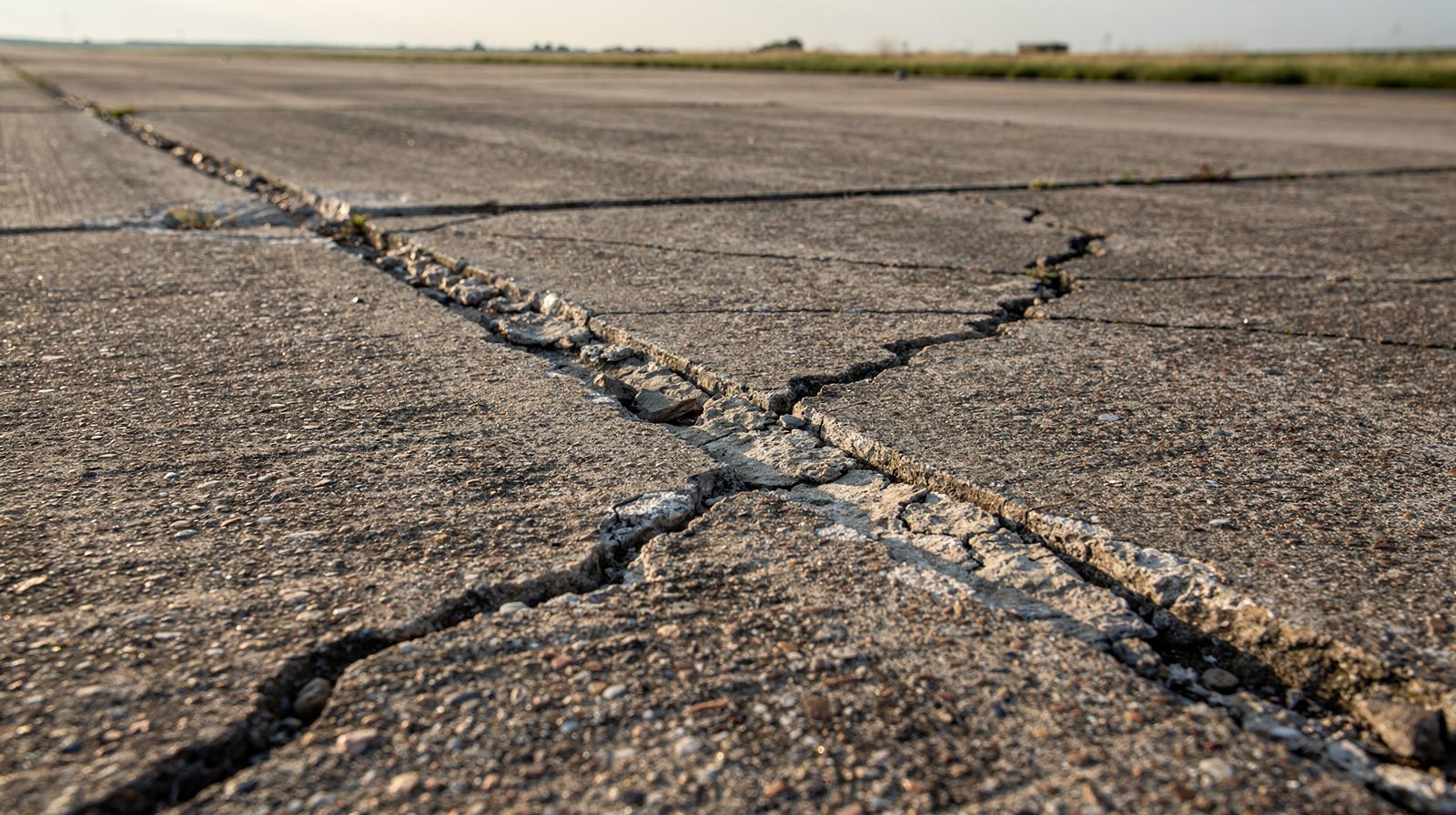
What is a Viscosity-Graded (VG) Asphalt Binder?
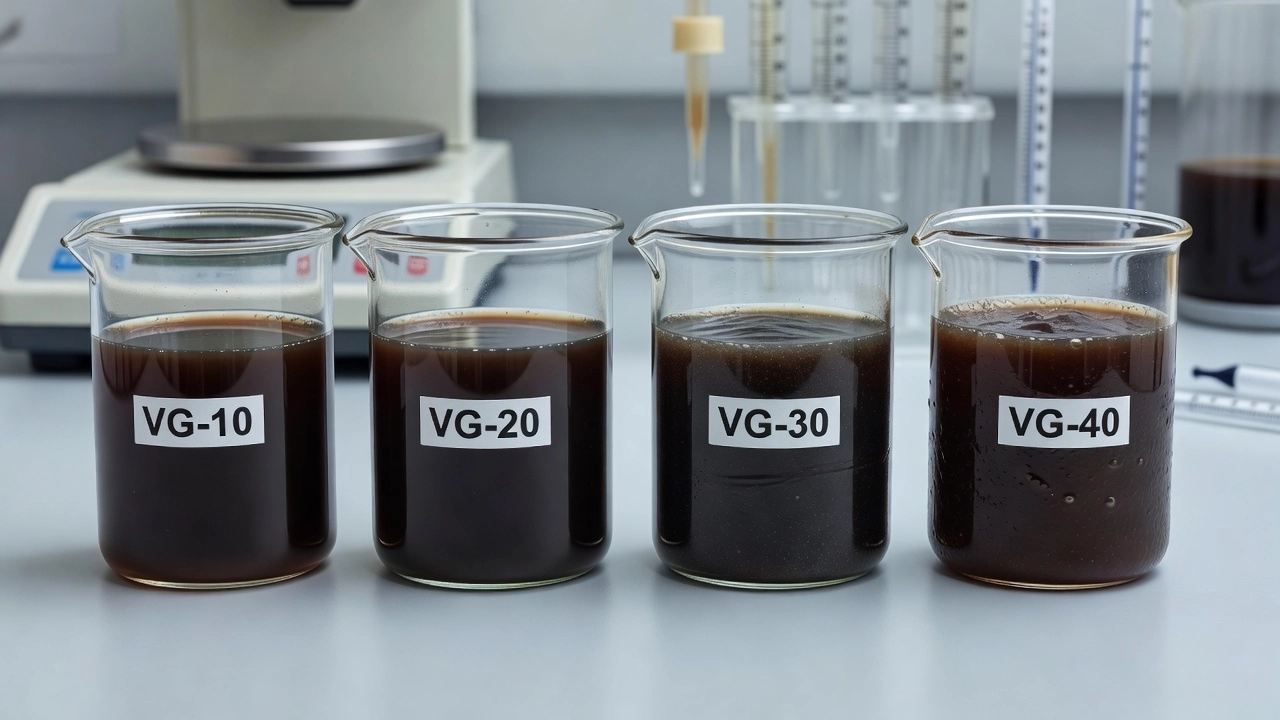
Viscosity-Graded Asphalt Binders (VG-10, VG-20, VG-30, VG-40)
Viscosity-graded (VG) asphalt binders represent a rational, performance-oriented approach to classifying paving bitumen based on its resistance to flow at critical service and construction temperatures. Unlike the traditional penetration grading system that measures binder hardness at a single temperature (25°C), the VG system evaluates binder consistency at 60°C, the temperature approximating maximum pavement surface temperature during summer, and at 135°C, the typical mixing and compaction temperature for hot-mix asphalt. This dual-temperature characterization provides engineers with a significantly more accurate prediction of binder behavior in the field.
The VG system designates four standard grades: VG-10, VG-20, VG-30, and VG-40, with ascending numbers corresponding to increasing stiffness. A VG-40 binder has a minimum absolute viscosity of 3200 poises at 60°C, making it approximately four times stiffer than a VG-10 binder at the same temperature. This stiffness hierarchy directly correlates with the binder’s resistance to rutting (permanent deformation) under load, the single most critical distress mode for asphalt pavements in hot climates and under heavy traffic.
The VG system was formally adopted by the Bureau of Indian Standards (BIS) in IS 73:2006 (third revision), replacing the penetration-grade system that had been used in India since 1950. The fourth revision (IS 73:2013) further refined the specification by introducing viscosity ranges for each grade, establishing minimum penetration values at 25°C, and, most importantly, providing a climate-based grade selection table linked to the 7-day average maximum air temperature. This made the VG system not merely a classification scheme but a complete binder selection methodology for pavement engineers.
1. The Viscosity Grading Concept
The viscosity grading concept emerged from the recognition that the penetration test, which measures how deep a standard needle penetrates a bitumen sample at 25°C under a 100-gram load for five seconds, provides limited information about binder performance at the extreme temperatures that pavements actually experience. In the early 1960s, the American Association of State Highway Officials (AASHTO) developed an improved grading system based on viscosity testing, which was published as AASHTO M 226 and ASTM D 3381. This system represented a fundamental shift from empirical classification to scientific measurement.
Viscosity is defined as the ratio between applied shear stress and the rate of shear, essentially, a measure of a fluid’s resistance to flow. In the International System of Units (SI), viscosity is expressed in pascal-seconds (Pa·s), but the traditional unit for asphalt binders is the poise (P), where 1 poise equals 1 dyne·s/cm² or 0.1 Pa·s. The VG system uses the poise for absolute viscosity at 60°C and the centistoke (cSt) for kinematic viscosity at 135°C.
The VG system operates on a fundamental principle: the flow behavior of bitumen at pavement service temperature (60°C) is the most reliable predictor of rutting resistance. Binders that flow less at 60°C will deform less under traffic loading. Simultaneously, the kinematic viscosity at 135°C ensures that the binder is fluid enough during mixing and compaction to properly coat aggregates and achieve adequate pavement density. This dual-temperature approach is the key advantage of the VG system over single-temperature penetration grading.
Two sub-systems exist within viscosity grading: AC grading (asphalt cement, tested on the original binder as-supplied) and AR grading (aged residue, tested after the binder has been subjected to a rolling thin film oven test simulating hot-mix aging). The AC system uses grades AC-2.5 through AC-40, where the number represents the target viscosity in hundreds of poises at 60°C. The AR system uses AR-1000 through AR-16000, with the number representing viscosity in poises after aging. The VG system used in IS 73 and international practice is aligned with the AC concept, testing on original binder samples.
2. Determination: Absolute Viscosity at 60°C and Kinematic Viscosity at 135°C
Two primary viscosity measurements define VG binder classification: absolute (dynamic) viscosity at 60°C and kinematic viscosity at 135°C. These measurements capture binder behavior at the two temperature extremes relevant to pavement performance and construction.
Absolute Viscosity at 60°C (ASTM D2171 / AASHTO T202 / IS 1206 Part 2)
Absolute viscosity at 60°C is the primary classification parameter for VG binders. It is determined using a vacuum capillary viscometer, a precision borosilicate glass instrument that measures the time required for a fixed volume of liquid bitumen to flow through a capillary tube under controlled vacuum and temperature conditions.
The test procedure per ASTM D2171-94 (Standard Test Method for Viscosity of Asphalts by Vacuum Capillary Viscometer) involves the following steps:
- The bitumen sample is heated to 135°C ± 5.5°C to ensure fluidity, stirred gently to prevent local overheating, and strained through a No. 50 (300 µm) sieve if solid material is suspected.
- The viscometer is preheated to the test temperature of 60°C ± 0.03°C in a precisely controlled bath.
- A vacuum of 300 mm Hg is applied to draw the bitumen through the capillary tube.
- The flow time between two etched timing marks is measured with a stopwatch accurate to 0.1 seconds.
- The viscosity in poises is calculated by multiplying the flow time in seconds by the viscometer calibration factor.
Three types of vacuum capillary viscometers are approved: the Cannon-Manning Vacuum Viscometer (CMVV), the Asphalt Institute Vacuum Viscometer (AIVV), and the Modified Koppers Vacuum Viscometer (MKVV). Each has specific dimensional characteristics that determine its viscosity range. The CMVV is the most commonly used type, with interchangeable capillary tubes covering different viscosity ranges.
The kinematic viscosity at 60°C of a typical VG-40 binder is approximately 3200-4800 poises. The test method is applicable to materials having viscosities from 0.036 to over 200,000 poises, covering all practical binder grades.
Kinematic Viscosity at 135°C (ASTM D2170 / AASHTO T201 / IS 1206 Part 3)
Kinematic viscosity at 135°C is measured using a capillary viscometer of the Cannon-Fenske or Ubbelohde type, immersed in a temperature-controlled bath at 135°C ± 0.1°C. The procedure is similar to the absolute viscosity test but uses gravity flow rather than vacuum:
- The bitumen sample is heated to 135°C and poured into the viscometer.
- The viscometer is placed in the 135°C bath and allowed to thermally equilibrate.
- The bitumen is drawn above the upper timing mark and released.
- The time for the meniscus to pass between two calibrated marks is recorded.
- Kinematic viscosity (in centistokes, cSt) is calculated as flow time × calibration constant.
The kinematic viscosity at 135°C serves as a workability check, it ensures that the binder will be sufficiently fluid during hot-mix production to properly coat aggregates. Minimum kinematic viscosity requirements increase with grade: 250 cSt for VG-10, 300 cSt for VG-20, 350 cSt for VG-30, and 400 cSt for VG-40. These minimum values help prevent tender mixes (mixtures that are excessively prone to deformation during construction) and ensure adequate film thickness on aggregates.
VG Specification Table (per IS 73:2013)
| Property | Test Method | VG-10 | VG-20 | VG-30 | VG-40 |
|---|---|---|---|---|---|
| Absolute Viscosity at 60°C, poises, min | IS 1206 (Part 2) / ASTM D2171 | 800 | 1600 | 2400 | 3200 |
| Kinematic Viscosity at 135°C, cSt, min | IS 1206 (Part 3) / ASTM D2170 | 250 | 300 | 350 | 400 |
| Flash Point (Cleveland Open Cup), °C, min | IS 1448 (P:69) / ASTM D92 | 220 | 220 | 220 | 220 |
| Solubility in Trichloroethylene, %, min | IS 1216 / ASTM D2042 | 99.0 | 99.0 | 99.0 | 99.0 |
| Penetration at 25°C, 0.1 mm | IS 1203 / ASTM D5 | 80-100 | 60-80 | 50-70 | 40-60 |
| Softening Point (Ring & Ball), °C, min | IS 1205 / ASTM D36 | 40 | 45 | 47 | 50 |
| Tests on RTFOT Residue: | |||||
| Viscosity Ratio at 60°C, max | – | 4.0 | 4.0 | 4.0 | 4.0 |
| Ductility at 25°C, cm, min (after TFOT) | IS 1208 / ASTM D113 | 75 | 50 | 40 | 25 |

3. VG Grade Selection by Climate and Traffic
The selection of the appropriate VG grade is a function of two primary factors: climate (specifically, pavement temperature) and traffic loading. The IS 73:2013 standard provides explicit guidance for grade selection based on the 7-day average maximum air temperature for the project location, calculated from a minimum of five years of historical data.
Climate-Based Selection (per IS 73:2013)
| Grade | Suitable for 7-day Average Maximum Air Temperature | Equivalent Penetration Grade | Typical Applications |
|---|---|---|---|
| VG-10 | < 30°C | 80/100 | Cold regions, surface dressing, spray applications, bitumen emulsion production |
| VG-20 | 30–38°C | – | Cold climate & high altitude regions, moderate traffic roads |
| VG-30 | 38–45°C | 60/70 | Heavy-duty pavements, highways, areas with substantial traffic loads |
| VG-40 | > 45°C | 30/40, 40/50 | Extreme hot climates, airport runways, intersections, toll plazas, heavy-load corridors |
The temperature thresholds in this table are based on the correlation between air temperature and actual pavement temperature. Pavement surface temperatures in direct sunlight can be 20–25°C higher than ambient air temperature, meaning a location with a 45°C maximum air temperature can experience pavement temperatures approaching 70°C, well above the 60°C viscosity test temperature. The VG system accounts for this through its conservative minimum viscosity requirements.
For traffic loading, the general principle is that heavier traffic and slower-moving loads require stiffer binders. This is particularly relevant for airport pavements, where aircraft loads (500,000+ lbs on main landing gear) and slow taxi speeds create severe rutting demand. The grade selection should also account for traffic volume (equivalent single axle loads), traffic speed (static vs. high-speed), and whether the pavement is subjected to channelized traffic (e.g., runway centerlines, taxiway paths).
Additional considerations include:
- Altitude: High-altitude locations (>1500 m) with cold night temperatures may require one grade softer despite high daytime temperatures due to thermal cracking risk.
- Rainfall: Heavy rainfall areas may benefit from stiffer binders to reduce water-induced damage and stripping.
- Special pavements: Intersections, roundabouts, bus stops, and airport aprons should use one grade stiffer than the climate-based recommendation due to slow/static loading conditions.
4. VG-40 for Airport Runways
VG-40 is the stiffest grade in the viscosity-graded system and is the preferred binder for airport runway pavements in hot climates and for pavements subjected to heavy aircraft loading. Its minimum absolute viscosity of 3200 poises at 60°C and minimum kinematic viscosity of 400 cSt at 135°C provide exceptional resistance to permanent deformation under the extreme loading conditions characteristic of airfield operations.
Why VG-40 for Airports?
Aircraft loading differs fundamentally from highway traffic loading in several critical aspects:
- Wheel loads: A Boeing 777 main landing gear tire can carry over 30,000 kg (66,000 lbs), producing tire pressures exceeding 200 psi (1.38 MPa). This is approximately 2–3 times higher than typical highway truck tire pressures.
- Slow speeds: Aircraft taxi at 20–50 km/h (12–31 mph), and during takeoff roll, the aircraft accelerates relatively slowly through lower speeds. This increases the load duration on the pavement, generating more viscous flow in the binder.
- Channelized traffic: Aircraft follow the same path (centerline) with high precision, concentrating loading in narrow wheelpath zones.
- High temperatures: Runway surfaces in direct sunlight can reach 60–70°C in tropical climates, creating ideal conditions for rutting if the binder is too soft.
The FAA P-401 specification (Standard Specification for Asphalt Paving for Airfields) and Unified Facilities Guide Specifications (UFGS) 32 12 15.13 reference viscosity-graded binders for airfield construction. The FAA allows the use of both performance-graded (PG) and viscosity-graded binders, with the equivalent relationship being approximately:
- VG-40 ≈ PG 76-22 or PG 82-10 (depending on modifier type and base binder)
The ICAO Aerodrome Design Manual (Doc 9157, Part 3 – Pavements) provides guidance on binder selection for airport pavements, recommending that the binder grade be selected based on the airfield reference temperature, the 7-day average maximum pavement temperature at 20 mm below the surface. For airports in regions with reference temperatures above 45°C (such as the Middle East, South Asia, parts of Southeast Asia, and the southern United States), a binder equivalent to VG-40 or higher is recommended.
Polymer-Modified VG-40
For critical airfield applications, VG-40 is often polymer-modified (producing PMB 40 or equivalent grades) to further enhance performance. Polymer modification improves:
- Elastic recovery: The ability of the binder to “spring back” after deformation, reducing permanent rutting
- Fatigue resistance: Improved resistance to cracking under repeated loading
- Fuel resistance: Enhanced resistance to jet fuel and hydraulic fluid attack
- Thermal cracking resistance: Lower stiffness at low temperatures, reducing cold-weather cracking risk
The Airport Asphalt Pavement Technology Program (AAPTP) and the National Center for Asphalt Technology (NCAT) at Auburn University have developed an Airfield Asphalt Binder Online Selection Tool that helps engineers select the appropriate binder grade based on airport location, traffic loading, and pavement structure. This tool confirms that VG-40 (or its PG equivalent) is the minimum recommended grade for main runways at airports in hot climates.

5. VG vs Penetration Grade
The penetration grading system (ASTM D946 / IS 73:1950 / EN 12591) classifies bitumen based on the depth a standard needle penetrates the sample under specified conditions (25°C, 100 g, 5 seconds). Grades such as 30/40, 40/50, 60/70, 80/100, and 100/120 represent penetration values in tenths of a millimeter. This system was the global standard for over a century and remains in use in many countries including Iran, UAE, Saudi Arabia, Oman, Kenya, Tanzania, and Indonesia.
Key Differences
| Aspect | Penetration Grade | Viscosity Grade (VG) |
|---|---|---|
| Test temperature | 25°C only | 60°C (service) and 135°C (construction) |
| Test principle | Needle penetration depth | Flow resistance (viscosity) |
| Temperature susceptibility | Cannot be determined | Can be calculated from dual-temperature data |
| Rutting prediction | Poor, a 60/70 pen grade from one source may rut differently than the same grade from another | Excellent, same VG grade gives similar rutting performance regardless of crude source |
| Number of specification tests | 14 (under older IS 73:1992) | 7 (under IS 73:2006/2013) |
| Empirical vs. fundamental | Empirical (needle penetration depth) | Fundamental (physical property, viscosity) |
| Wax sensitivity | High, waxy crudes produce misleading penetration values | Low, viscosity better captures true binder consistency |
| Cost of testing | Higher (more tests required) | Lower (fewer tests, faster execution) |
The Rationale for Replacement
The fundamental weakness of penetration grading is that penetration at 25°C does not correlate reliably with high-temperature rutting performance. Two binders with identical penetration values (e.g., both 60/70) could have significantly different viscosities at 60°C depending on their crude oil source and refining method. This means that a 60/70 binder from a waxy crude might rut severely in hot weather while a 60/70 binder from a naphthenic crude performs perfectly, yet both would be classified as the same grade.
The VG system eliminates this ambiguity by directly measuring viscosity at the temperature that matters most for rutting. Under the VG system, any two samples of the same VG grade will give similar rutting performance in hot weather, a statement that cannot be made for penetration grades.
Equivalent Grades
| VG Grade | Approximate Penetration Equivalent | Typical 60/70 Use Replacements |
|---|---|---|
| VG-10 | 80/100 | Cold regions, surface treatments |
| VG-20 | – | Intermediate (no direct pen equivalent) |
| VG-30 | 60/70 | Direct replacement for 60/70 in most applications |
| VG-40 | 30/40, 40/50 | Direct replacement for 30/40 and 40/50 |
6. VG vs Performance Grade (PG)
The Performance Grade (PG) system, developed under the Strategic Highway Research Program (SHRP) in the late 1980s and early 1990s and formalized in AASHTO M 320 and ASTM D6373, represents the most advanced binder classification methodology. PG binders are designated by two numbers (e.g., PG 64-22), where the first number is the high-temperature grade (maximum pavement temperature in °C the binder can withstand) and the second is the low-temperature grade (minimum pavement temperature in °C the binder can withstand, with a negative sign).
Fundamental Differences
| Aspect | VG System | PG System (Superpave) |
|---|---|---|
| Measurement basis | Viscosity at fixed temperatures (60°C, 135°C) | Performance parameters at project-specific temperatures |
| High-temperature test | Vacuum capillary viscometer (ASTM D2171) | Dynamic Shear Rheometer (DSR), G*/sin δ (AASHTO T315) |
| Low-temperature test | Not directly measured (inferred from penetration) | Bending Beam Rheometer (BBR), creep stiffness (AASHTO T313) |
| Fatigue test | Not directly measured | DSR after PAV aging, G*·sin δ |
| Aging simulation | TFOT or RTFOT only | RTFO (short-term) + PAV (long-term, 20-hour aging) |
| Temperature specificity | Fixed temperature (60°C for all grades) | Project-specific (binder is selected for the actual climate) |
| Climate adaptability | Four broad temperature bins | Continuous temperature scale (every 6°C) |
| Number of tests | 7 specification tests | Comprehensive rheological testing suite |
| Geographic adoption | India, South Asia, parts of Middle East | USA, Canada, Europe, Australia, China |
When to Use Which System
The VG system remains appropriate for:
- Countries and regions where the IS 73 standard is the governing specification (India, Nepal, Bangladesh, Sri Lanka)
- Projects where testing infrastructure for DSR and BBR is not available
- Applications where a simpler specification with fewer tests is preferred
- As a quality control check during production (VG tests are faster and less expensive)
The PG system is superior for:
- Projects requiring climate-specific binder selection (the PG system can differentiate between PG 64-22 and PG 70-22, while VG lumps both into VG-30 or VG-40)
- High-performance pavements (airports, heavy-load corridors) where PG testing provides more comprehensive characterization
- Projects in cold climates where low-temperature cracking is a primary concern (the PG system directly measures BBR stiffness, while VG does not)
- International airport projects where FAA or ICAO specifications reference PG binders (FAA P-401 allows PG 76-22 or PG 82-28 for airfield applications)
Practical Equivalence
For engineering purposes, the following approximate equivalences can be used:
| VG Grade | Approximate PG Grade | Typical Applications |
|---|---|---|
| VG-10 | PG 52-28 to PG 58-22 | Cold regions, surface treatments |
| VG-20 | PG 58-22 to PG 64-22 | Moderate climates |
| VG-30 | PG 64-22 to PG 70-22 | Hot climates, heavy traffic |
| VG-40 | PG 76-22 to PG 82-10 | Very hot climates, airports, heavy loads |
These equivalences are approximate and depend on the crude source and whether the binder is modified. For critical applications, direct PG testing should be performed.
7. VG Testing (ASTM D2171, D2170, IS 1206)
The testing regime for VG binders is specified in both ASTM and IS standards. The primary tests are:
Absolute Viscosity at 60°C, ASTM D2171 / IS 1206 (Part 2)
This is the defining test for VG classification. The vacuum capillary viscometer method requires careful control of:
- Temperature: ±0.03°C at 60°C
- Vacuum: 300 mm Hg ± 0.5 mm
- Timing: 0.1-second accuracy
- Sample preparation: Heating to 135°C ± 5.5°C with stirring to prevent local overheating
The viscometer calibration factor is determined using standard viscosity reference liquids. For non-Newtonian binders (such as polymer-modified binders), shear rate effects must be considered, different viscometer capillary sizes or vacuum levels can produce different results.
Kinematic Viscosity at 135°C, ASTM D2170 / IS 1206 (Part 3)
The kinematic viscosity test uses a different type of capillary viscometer (typically Cannon-Fenske or Ubbelohde) operating under gravity flow at 135°C. The test measures the time for a fixed volume of bitumen to flow through the capillary under its own hydrostatic head. The kinematic viscosity in centistokes is calculated as the product of flow time and viscometer calibration constant.
This test serves as a mixing and compaction temperature indicator. The minimum kinematic viscosity values in the specification ensure that the binder will have sufficient fluidity at 135°C to coat aggregates during HMA production. Binders with kinematic viscosities below the minimum may produce tender mixes that are difficult to compact and prone to deformation during construction.
Additional Tests
- Penetration at 25°C (IS 1203 / ASTM D5): Retained as a supplementary test to ensure minimum binder softness for fatigue cracking resistance at average service temperature.
- Softening Point (Ring & Ball) (IS 1205 / ASTM D36): Measures the temperature at which bitumen softens under a standard load, providing an additional indicator of high-temperature performance.
- Flash Point (Cleveland Open Cup) (IS 1448 P:69 / ASTM D92): Safety requirement to ensure the binder does not ignite during heating.
- Solubility in Trichloroethylene (IS 1216 / ASTM D2042): Ensures the binder is free of inorganic contaminants.
- Thin Film Oven Test (TFOT) or Rolling Thin Film Oven Test (RTFOT) (ASTM D1754 / D2872): Simulates the aging that occurs during HMA production. Tests on the aged residue include:
- Viscosity Ratio (ratio of aged viscosity to original viscosity, maximum 4.0): Controls excessive hardening during construction.
- Ductility at 25°C (minimum 75 cm for VG-10, decreasing to 25 cm for VG-40): Ensures adequate binder extensibility for fatigue resistance after aging.
Why Seven Tests Instead of Fourteen?
The IS 73:2006 revision eliminated several tests from the earlier penetration-grade specification that were found to have no clear relationship with field performance. These included:
- Specific gravity: Has no correlation with performance
- Water content: Rarely an issue with refinery-produced bitumen
- Loss on heating: Replaced by the more meaningful TFOT/RTFOT tests
- Fraass breaking point: An empirical low-temperature test with poor reproducibility, its elimination was controversial but justified by the introduction of performance-related testing
- Paraffin wax content: While wax content affects performance, the VG system’s viscosity-based classification inherently captures wax effects through their influence on flow behavior
- Penetration ratio: An unnecessary duplicate parameter
8. VG Binder and Pavement Distress
The selection of the correct VG grade directly influences pavement resistance to the three primary distress modes: rutting, fatigue cracking, and thermal cracking. The relationship between viscosity grade and each distress mode is as follows:
Rutting (Permanent Deformation)
Rutting is the formation of longitudinal depressions in wheel paths caused by the accumulation of permanent (plastic) deformation in one or more pavement layers. It is the primary high-temperature distress and is directly addressed by the VG classification system.
A binder with insufficient viscosity at 60°C (i.e., a grade too soft for the climate) will flow under load, allowing the aggregate skeleton to displace. This is particularly critical in airport pavements where:
- Aircraft tire pressures (150–250 psi) are significantly higher than truck tire pressures (100–120 psi)
- Slow-moving aircraft increase load duration, allowing more binder flow
- Channelized traffic concentrates loading in narrow wheelpaths
VG-40 provides maximum rutting resistance among standard grades and is the minimum recommended grade for airport runways in hot climates. For extreme conditions, polymer-modified VG-40 (or PG 76-22 equivalent) should be specified.
Fatigue Cracking
Fatigue cracking (also called “alligator cracking”) results from repeated tensile strains at the bottom of the bound pavement layer under traffic loading. It is the primary intermediate-temperature distress.
The relationship between binder viscosity and fatigue resistance is complex. While stiffer binders improve rutting resistance, they can reduce fatigue life if the binder becomes too brittle. The VG system addresses this through the minimum penetration requirement at 25°C, even VG-40 must have a penetration of at least 40 dmm (0.1 mm) at 25°C, ensuring a minimum level of flexibility for fatigue resistance.
For airport pavements, the binder course (the layer between surface and base) is particularly susceptible to fatigue cracking because it experiences the highest tensile strains. Selecting too stiff a binder (e.g., VG-40 in a binder course where a VG-30 would suffice) can actually reduce fatigue life.
Thermal Cracking
Thermal cracking occurs when low temperatures cause tensile stresses in the pavement surface that exceed the material’s tensile strength. This is the primary low-temperature distress and is the weakness of the VG system, it does not directly measure low-temperature binder properties.
The penetration-grade system from which VG evolved also lacked direct low-temperature measurement. The PG system addresses this through the Bending Beam Rheometer (BBR) test, which measures creep stiffness at low temperatures. For VG binders used in cold climates (VG-10, VG-20), the minimum penetration values (80-100 and 60-80 dmm respectively) provide some assurance of low-temperature flexibility, but this is an indirect measure.
For airport pavements in cold regions, the following recommendations apply:
- Use VG-10 or VG-20 for climates with low winter temperatures
- Consider polymer modification to improve low-temperature flexibility
- For critical airfield pavements in cold climates, consider upgrading to PG system specification to directly measure low-temperature performance
- Specify minimum penetration requirements and consider the penetration index (PI) as an additional measure of temperature susceptibility

9. VG in Indian and Other Specifications
Indian Standard IS 73
The adoption of viscosity grading in India represents the most significant national transition from penetration to VG classification. The timeline is as follows:
- 1950: IS 73 first published with penetration-grade classification (40/50, 60/70, 80/100, etc.)
- 1962: First revision with expanded penetration grades and separate tables for waxy and non-waxy crudes
- 1992: Second revision introducing performance tests (penetration ratio, paraffin wax content, viscosity at 60°C and 135°C, retained penetration after TFOT)
- 2006: Third revision, the critical change, grading changed from penetration to viscosity. Four VG grades established: VG-10, VG-20, VG-30, VG-40. Number of specification tests reduced from 14 to 7.
- 2013: Fourth revision introducing:
- Viscosity ranges (instead of single minimum values)
- Minimum penetration values at 25°C (instead of ranges)
- Climate-based grade selection table linked to 7-day average maximum air temperature
- Ductility test made non-mandatory
The IS 73:2013 specification is now the governing standard for all paving bitumen in India. Indian Oil Corporation (IOCL) and other major refiners commenced marketing VG-grade bitumen from all refineries in August 2009. The penetration grades (30/40, 40/50, 60/70, 80/100, 100/120) have been effectively replaced, though some legacy projects may still specify penetration grades.
Other National Specifications
South Africa: Uses a system similar to VG but with local modifications (SANRAL specifications). Grades include 40/50, 60/70, 80/100 penetration grades alongside viscosity-based classes.
Australia: Uses a viscosity-based system with grades expressed as Class 170, Class 320, Class 600, Class 1000 (where numbers represent approximate viscosity in poises at 60°C for aged residue).
Europe (EN 12591): Uses penetration grading primarily, with supplementary requirements for performance characteristics. The EN system has not adopted VG classification but has developed the PG-based system (EN 14023 for polymer-modified binders).
United States: The PG system (AASHTO M 320) has largely replaced both penetration and viscosity grading for new construction. However, ASTM D3381 (Standard Specification for Viscosity-Graded Asphalt Binder) remains current and is referenced in some legacy specifications.
Middle East: Many countries (UAE, Saudi Arabia, Qatar, Kuwait) specify both penetration grades (60/70, 40/50) for general construction and PG grades for major projects. VG is less common but is increasingly recognized due to Indian contractor influence.
10. Inspection Relevance
For airfield pavement inspectors and quality assurance engineers, understanding VG binders is critical for several reasons:
Verification of Binder Grade
When inspecting airport asphalt construction, the engineer must verify that the delivered binder matches the specified VG grade. This involves:
- Review of mill test certificates: Each batch of binder should be accompanied by a certificate from the refinery showing compliance with IS 73:2013 (or applicable standard) for the specified grade.
- Independent sampling and testing: Samples should be taken from the delivery tanker at the project site and sent to an accredited laboratory for verification testing. ASTM D2171 absolute viscosity and ASTM D2170 kinematic viscosity are the primary tests.
- Temperature monitoring: The binder must be stored and handled at appropriate temperatures (typically 150–180°C for VG-30 and VG-40) to prevent premature aging or degradation.
Field Indicators of Incorrect Grade
During pavement inspection, the following signs may indicate incorrect VG grade selection or binder-related issues:
- Rutting in new pavement (within first 1-2 years): Binder may be too soft (lower VG than required) or binder content may be excessive
- Bleeding / flushing: Excess binder rising to the surface, indicating binder too soft for the climate or excessive binder content
- Ravelling / stripping: Aggregate loss from the surface, indicating poor binder-aggregate adhesion or binder too hard for proper coating
- Premature cracking (thermal or fatigue): May indicate binder too hard for the climate (VG grade too high)
- Tender mix during compaction: Difficulty achieving target density, may indicate kinematic viscosity at 135°C too low for the mixing temperature
Testing Frequency
For airport projects, the following testing frequency is recommended:
| Test | Frequency |
|---|---|
| Absolute Viscosity at 60°C | One test per 50 tonnes or per delivery, whichever is more frequent |
| Kinematic Viscosity at 135°C | One test per 50 tonnes or per delivery |
| Penetration at 25°C | One test per 100 tonnes |
| Softening Point | One test per 100 tonnes |
| Flash Point | One test per source change |
| RTFOT residue tests | One test per 500 tonnes or per source change |
Binder Temperature Control During Construction
VG binders have specific temperature requirements during mixing, transport, and compaction:
| Grade | Mixing Temperature Range | Compaction Temperature Range |
|---|---|---|
| VG-10 | 140–160°C | 130–150°C |
| VG-20 | 145–165°C | 135–155°C |
| VG-30 | 150–170°C | 140–160°C |
| VG-40 | 155–175°C | 145–165°C |
These temperatures ensure the binder achieves the proper kinematic viscosity for coating aggregates during mixing and for achieving target density during compaction. The exact temperatures should be determined from the viscosity-temperature relationship of the specific binder used.
Documentation for Compliance
For airfield pavement acceptance, the following VG binder documentation should be maintained:
- Refinery certificate of analysis for each delivery
- Independent laboratory test results for verification samples
- Binder delivery tickets showing temperature at time of loading
- Mixing and compaction temperature records from the asphalt plant
- Core samples for binder extraction and recovery testing (to verify in-place binder properties)
- Any deviation reports if binder grade substitutions were necessary
Proper documentation ensures that the pavement complies with the specified VG grade requirements and provides a record for future forensic investigation if pavement distress develops.
References and Further Reading
- IS 73:2013, Paving Bitumen, Specification (Fourth Revision), Bureau of Indian Standards
- ASTM D2171, Standard Test Method for Viscosity of Asphalts by Vacuum Capillary Viscometer
- ASTM D2170, Standard Test Method for Kinematic Viscosity of Asphalts
- ASTM D3381, Standard Specification for Viscosity-Graded Asphalt Binder for Use in Pavement Construction
- AASHTO M 226, Standard Specification for Viscosity-Graded Asphalt Cement
- FAA AC 150/5370-10, Standards for Specifying Construction of Airports (Item P-401)
- ICAO Doc 9157, Aerodrome Design Manual, Part 3, Pavements
- UFGS 32 12 15.13, Asphalt Paving for Airfields
- IndianOil Bitumen Specification Sheet, Viscosity Grade Bitumen per IS 73:2013
Frequently Asked Questions
- What is viscosity-graded (VG) asphalt binder and how is it classified?
- Viscosity-graded asphalt binder is a paving bitumen classified by its absolute viscosity measured at 60°C (140°F) in units of poises. Four standard grades exist: VG-10 (minimum 800 poises), VG-20 (minimum 1600 poises), VG-30 (minimum 2400 poises), and VG-40 (minimum 3200 poises). Higher numbers indicate stiffer binders that resist rutting better in hot climates. The system was formalized in IS 73:2006 and later revisions, replacing penetration grading in many countries including India.
- What is the difference between VG-40 and other VG grades for airport use?
- VG-40 is the stiffest standard viscosity grade, with a minimum absolute viscosity of 3200 poises at 60°C and minimum kinematic viscosity of 400 cSt at 135°C. It is specifically recommended for locations with 7-day average maximum air temperatures exceeding 45°C and for pavements subjected to heavy traffic loads such as airport runways, intersections, and truck parking lots. VG-40 provides superior resistance to permanent deformation (rutting) under the slow-moving, heavy wheel loads of aircraft.
- How is VG-40 used in airport runway construction?
- VG-40 is specified for airport runway surfaces in hot climates and for pavements subjected to heavy aircraft loads. Its high stiffness at service temperature (60°C) provides excellent resistance to rutting and shoving caused by the slow-moving, high-pressure tires of large aircraft. The FAA P-401 specification and ICAO pavement design guidance reference viscosity-graded binders for airfield applications. VG-40 is particularly suited for runway touchdown zones, taxiway intersections, and apron areas exposed to jet fuel and heavy static loads.
- How does VG grading compare with penetration grading and PG (performance grade) systems?
- Penetration grading (e.g., 60/70, 80/100) measures binder hardness at 25°C using a needle penetration test, which does not adequately predict high-temperature performance. VG grading measures viscosity at 60°C (pavement service temperature) and 135°C (mixing temperature), providing better rutting resistance correlation. PG (performance grade, e.g., PG 64-22) is the most advanced system, testing binders with a Dynamic Shear Rheometer (DSR) at high and low temperatures to directly measure performance properties. PG is the standard in the US and Europe, while VG remains widely used in India, South Asia, and parts of the Middle East.
- What tests are performed on VG asphalt binders?
- The primary tests are: (1) Absolute Viscosity at 60°C per ASTM D2171 / AASHTO T202 using a vacuum capillary viscometer, measured in poises, (2) Kinematic Viscosity at 135°C per ASTM D2170 / AASHTO T201, measured in centistokes (cSt), (3) Penetration at 25°C per ASTM D5, (4) Softening Point per ASTM D36, (5) Flash Point per ASTM D92, (6) Solubility in trichloroethylene per ASTM D2042, and (7) Tests on RTFOT residue including viscosity ratio and ductility. These seven tests replaced the fourteen tests previously required for penetration-grade bitumen under IS 73.
- What pavement distresses are associated with incorrect VG grade selection?
- Using a binder that is too soft (e.g., VG-10 in a hot climate) leads to rutting, shoving, and bleeding under traffic loading. Using a binder that is too hard (e.g., VG-40 in a cold climate) leads to thermal cracking at low temperatures and fatigue cracking from repeated loading. Proper VG grade selection based on the 7-day average maximum air temperature and traffic loading is essential. The IS 73:2013 standard provides a climate-based selection table: VG-10 for temperatures below 30°C, VG-20 for 30-38°C, VG-30 for 38-45°C, and VG-40 for above 45°C.