What is Slab Warping and Curling in Concrete Pavements?
Definition and Distinction: Curling versus Warping
Curling and warping are two closely related but mechanically distinct forms of slab deformation in Portland cement concrete (PCC) pavements. Both describe the deviation of a concrete slab from its original flat geometry, resulting in a curved or distorted surface shape. The distinction lies in the driving mechanism.
Curling is the curvature induced in a concrete pavement slab as a result of a temperature gradient through the slab depth. The term specifically refers to deformation caused by differential thermal expansion or contraction between the top and bottom surfaces of the slab. When the top of the slab is warmer than the bottom (positive temperature gradient), the top expands relative to the bottom, causing the slab edges to curl downward. When the top is cooler than the bottom (negative temperature gradient), the top contracts relative to the bottom, causing the slab edges to curl upward.
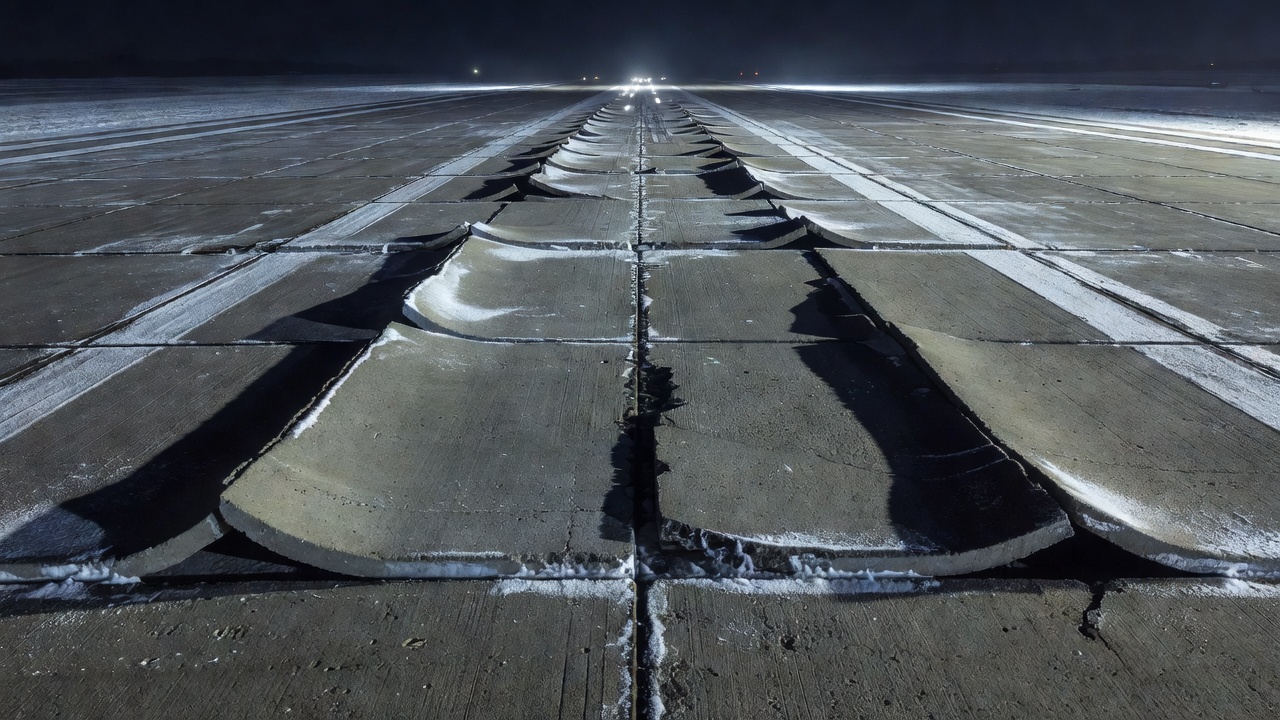
Warping is the curvature caused by a moisture gradient through the slab depth, producing differential volume changes from drying shrinkage or moisture swelling. The top surface, exposed to ambient air and solar radiation, dries and shrinks relative to the bottom of the slab which remains moist from contact with the subgrade or a vapor retarder. Conversely, if the bottom of the slab absorbs moisture from a wet subbase while the top remains dry, the bottom expands relative to the top. In both cases, the differential volume change creates a warping moment that bends the slab.
| Feature | Curling | Warping |
|---|---|---|
| Driving mechanism | Temperature gradient | Moisture gradient |
| Primary cause | Thermal expansion/contraction | Drying shrinkage / wetting expansion |
| Time scale | Diurnal (daily cycles), rapid response | Long-term (months to years) |
| Reversibility | Largely reversible with temperature changes | Partially irreversible (drying shrinkage is permanent) |
| Magnitude contribution | 40–60 percent of total measured deflection | 40–60 percent of total measured deflection |
| Sensitivity to weather | High, responds to solar radiation, cloud cover, wind | Moderate, responds to ambient RH, rainfall, drainage |
In field practice, the measured slab deflection is almost always a combination of both temperature and moisture effects. The American Concrete Institute (ACI) and the National Ready Mixed Concrete Association (NRMCA) note that the terms curling and warping are often used interchangeably in field practice, with “curling” used generically to describe upward vertical deflections at slab edges regardless of the driving mechanism. However, proper engineering analysis requires distinguishing between the two because the mitigation strategies differ, thermal curling is addressed through joint spacing and slab thickness, while moisture warping requires mix design optimization and proper curing.
A third concept, built-in curling, refers to curvature that becomes locked into the slab during construction. This occurs because the concrete sets and hardens while a temperature gradient or moisture differential exists through the slab depth. The heat of hydration during cement curing creates an internal temperature rise, and if the surface cools faster than the interior (which is typical in most placements), a temperature differential develops while the concrete is still plastic. When the concrete gains sufficient strength to resist further deformation, the existing curvature is “frozen” into the slab. This built-in curl then combines with diurnal thermal curl and long-term moisture warp to create the total measured slab curvature. The FHWA Long-Term Pavement Performance (LTPP) studies have identified built-in curling as a significant contributor to early-age cracking and reduced pavement life.
Detailed Mechanism of Curling and Warping
Thermal Gradient Curling Mechanism
The curling phenomenon is fundamentally governed by the thermo-mechanical behavior of concrete as a material. Concrete has a coefficient of thermal expansion (CTE) typically ranging from 6 to 13 microstrain per degree Celsius (με/°C), depending on aggregate type. Limestone aggregates produce lower CTE values (6–8 με/°C), while quartzite and siliceous aggregates produce higher values (10–13 με/°C). When a temperature differential exists through the slab depth, the warmer side expands more than the cooler side, creating a differential strain that forces the slab to curve.
The governing equation for curling deflection at the slab edge, based on the Westergaard curling theory (1927) as modified by Bradbury and implemented in the FHWA HIPERPAV model, is:
Ye = (1 + ν) × α × ΔT × ℓ² / h
Where:
- Ye = edge deflection (mm or in)
- ν = Poisson’s ratio of concrete (typically 0.15–0.20)
- α = coefficient of thermal expansion (με/°C or με/°F)
- ΔT = temperature differential between top and bottom (°C or °F)
- ℓ = radius of relative stiffness (mm or in)
- h = slab thickness (mm or in)
The radius of relative stiffness (ℓ) is a fundamental parameter that describes the slab’s resistance to bending under load:
ℓ = ⁴√[E × h³ / (12 × (1 − ν²) × k)]
Where:
- E = concrete elastic modulus (MPa or psi)
- k = modulus of subgrade reaction (MPa/m or lb/in³)
The Westergaard equation shows that curling deflection increases with the square of the radius of relative stiffness (ℓ²), meaning that stiffer subgrades (higher k-value) reduce curling by decreasing ℓ. The deflection is also directly proportional to the temperature differential (ΔT) and the CTE (α), and inversely proportional to slab thickness (h). A positive temperature gradient (daytime, top warmer than bottom) produces a positive ΔT, causing the slab to curl downward at the edges with the center lifting upward. A negative temperature gradient (nighttime, top cooler than bottom) produces a negative ΔT, causing upward curling at the edges.
The daily cycle of curling follows a predictable pattern. During the afternoon peak solar radiation (typically 1:00–3:00 PM), the positive temperature gradient reaches its maximum, often ranging from 5°C to 15°C (9°F to 27°F) depending on ambient temperature, solar intensity, wind speed, and slab color. As the sun sets, the surface begins to cool, and the gradient decreases. By late evening, the gradient reverses as the surface continues to radiate heat while the slab interior retains warmth from the day’s solar gain. The maximum negative gradient (maximum upward curling) typically occurs 2–3 hours before sunrise, when the surface has cooled to its minimum temperature while the slab bottom remains at near-constant temperature from the ground heat sink.
The FHWA TechBrief on Curling and Warping (FHWA-HIF-10-010) reports that the diurnal temperature gradient in typical PCC pavements ranges from −0.3°C/cm to +1.0°C/cm (−1.6°F/in to +5.5°F/in) through the slab depth. The magnitude of daily curling deflection is typically 15–25 percent of the total slab curvature, with the remainder attributed to built-in curl and moisture warping.
Moisture Gradient Warping Mechanism
Moisture warping is driven by differential drying shrinkage through the slab depth. When the top surface of a concrete slab is exposed to ambient air with relative humidity (RH) lower than the internal RH of the concrete (which is near 100 percent in fresh concrete), moisture evaporates from the surface. This moisture loss causes the surface layer to shrink. However, the bottom of the slab remains in contact with either the subgrade or a vapor retarder, maintaining near-saturated conditions. This differential creates a shrinkage gradient that produces a warping moment, curling the slab edges upward.
Research by Carlson (1934) established that moisture loss in concrete slabs is significant only in the top approximately 50 mm (2 in) of the slab, regardless of total slab thickness. The shrinkage gradient is therefore concentrated near the surface. The magnitude of the warping moment depends on several factors:
- Ambient relative humidity, lower RH increases the evaporation rate and the driving potential for drying shrinkage, producing larger shrinkage gradients and greater upward warping. A slab in Phoenix (average RH 30–40 percent) will exhibit significantly more warping than a slab in Houston (average RH 70–80 percent) with identical mix design.
- Cement type, cements with higher C₃A content (Type III high-early strength) exhibit greater drying shrinkage than those with lower C₃A content (Type V sulfate-resistant).
- Aggregate type and content, aggregates with lower modulus and higher absorption produce greater shrinkage. Higher aggregate volume reduces paste volume, decreasing total shrinkage.
- Water-to-cementitious materials ratio, higher w/cm increases the porosity of the cement paste, allowing greater moisture movement and higher drying shrinkage.
- Curing effectiveness, inadequate or delayed curing allows premature moisture loss, amplifying the shrinkage gradient.
Research by Nagataki demonstrated that the largest shrinkage gradient occurs when the slab bottom rests on a wet subgrade while the top dries, the bottom absorbs moisture and expands while the top shrinks, creating a compounded warping moment. Janssen calculated that differential shrinkage alone produces an applied curling moment of approximately 2,500 in-lb per inch of slab width for an 200 mm (8 in) thick pavement, which is comparable to the moment produced by a moderate temperature gradient.
The subbase moisture condition is critical to warping behavior. Slabs placed on vapor retarders (polyethylene sheets) develop larger shrinkage gradients than those placed on absorptive subgrades because the bottom of the slab cannot lose moisture downward through the vapor barrier. The sealed bottom remains fully saturated while the top dries, maximizing the differential. This is why the ACI and NRMCA caution against placing vapor retarders directly beneath interior slabs on grade without a granular blotter layer.
Upward Curling versus Downward Curling
The direction of slab deflection, upward or downward, depends on the sign of the gradient (temperature or moisture) through the slab depth. Understanding which condition prevails and when is essential for pavement evaluation because the two conditions produce fundamentally different effects on pavement performance.
| Condition | Gradient Sign | Top vs Bottom | Result | Critical Period |
|---|---|---|---|---|
| Nighttime / early morning | Negative (−) | Top cooler than bottom | Upward curling, edges lift | 2–3 hours before sunrise |
| Daytime (sunny afternoon) | Positive (+) | Top warmer than bottom | Downward curling, center lifts | 1:00–3:00 PM |
| Dry climate / low RH | Moisture gradient | Top drier than bottom | Upward warping, adds to thermal | Continuous (long-term) |
| Wet surface / rain event | Moisture gradient | Top wetted | Downward warping, may offset thermal | During and after precipitation |
Upward curling is the more critical condition for pavement performance and distress development. When slab edges curl upward:
- Loss of subgrade contact, the slab edge and corner lift away from the subbase, creating a void. The unsupported length at the slab edge is approximately 10 percent of slab length at doweled joints and up to 20 percent at non-doweled joints. This loss of support increases bending stresses under traffic loading by a factor of 2 to 3.
- Joint opening, upward curling opens the joint wider at the surface, reducing or eliminating aggregate interlock load transfer. Research has established that joint openings exceeding 0.6 mm (0.024 in) cause total loss of aggregate interlock, shifting all load transfer requirements to dowels or other mechanical systems.
- Water and incompressible infiltration, the opened joint allows water, sand, deicing chemicals, and debris to enter the joint and the void beneath the slab. Water accelerates subgrade softening, and incompressible materials prevent joint closure, leading to spalling and blowups.
- Pumping, when traffic loads pass over a curled-up slab, the slab rocks on its foundation, pumping water and fine material out from beneath the slab through the open joint. Pumping accelerates faulting (vertical displacement across the joint).
Downward curling produces different but also significant effects:
- Slab center loses support, the center of the slab lifts while edges press downward, creating a void beneath the mid-panel region.
- Mid-panel tensile stresses increase, the combination of downward curl and traffic loading produces tensile stresses at the top of the slab in the mid-panel region, which can contribute to longitudinal cracking.
- Edge loading increases, downward curling forces the slab edges into firmer contact with the subbase, which can increase edge loading stresses on the subbase and subgrade.
The criticality of upward curling versus downward curling explains why pavement condition surveys are often conducted during early morning hours, this is when upward curling is at its maximum, making loss of support, joint opening, and slab instability most visible to the inspector. Many airport pavement condition index (PCI) surveys following ASTM D5340 are performed in the morning specifically to capture the pavement in its most vulnerable state.
Effects on Pavement Performance
Load Transfer Efficiency
Curling directly degrades load transfer efficiency (LTE) across transverse and longitudinal joints. The upward deflection of slab corners reduces the contact area between adjacent slabs at the joint interface. For aggregate interlock joints (non-doweled), this reduction in contact area means fewer aggregate particles are engaged in shear load transfer from the loaded slab to the unloaded slab. When the joint opening exceeds 0.6 mm, aggregate interlock is effectively lost, and the joint behaves as if it has no load transfer mechanism.
For doweled joints, curling is less detrimental but still significant. Dowel bars provide positive mechanical load transfer regardless of joint opening, so doweled joints maintain higher LTE even under significant curling. However, the dowels can become locked if the curling creates binding at the dowel-concrete interface, or the dowels can become ineffective if the curling lifts the slab so much that the dowel is no longer properly engaged within the dowel socket. The FHWA Second-Generation Curvature Index (2GCI) method developed specifically to identify joints that are “working” versus “locked” based on the curvature-induced forces at the joint.
Corner Stress Amplification
The combination of curling and traffic loading produces critically high tensile stresses at slab corners. When a slab corner curls upward, it becomes an unsupported cantilever projecting from the slab body. When a traffic load (aircraft landing gear or truck axle) is applied to this unsupported corner, the bending stress at the top surface of the slab at the corner is the sum of:
- Load-induced stress, bending stress from the traffic load acting on the slab as a cantilever
- Curling stress, tensile stress from the temperature gradient (top cooler than bottom for upward curling)
- Warping stress, tensile stress from the moisture gradient (top drier than bottom)
- Residual stress, any locked-in stress from built-in curling during construction
The total stress can exceed the concrete’s flexural strength (modulus of rupture) under a single heavy load application, or more commonly, exceed the fatigue strength under repeated load applications, leading to progressive crack development. The FHWA LTPP studies have shown that curling and warping stresses contribute significantly to the fatigue damage accumulation in PCC pavements and must be accounted for in mechanistic-empirical design procedures such as AASHTOWare Pavement ME Design and the FAA FAARFIELD program.
Subgrade Support Loss and Pumping
The void created beneath a curled slab corner alters the pavement’s structural behavior fundamentally. Instead of a slab supported on a continuous elastic foundation (the Westergaard model), the curled slab behaves as a slab with a discontinuous support condition, supported at the interior but unsupported at the edge and corner.
This unsupported condition enables pumping, the ejection of water and fine subbase material from beneath the slab through the joint. The mechanism operates as follows:
- Upward curling opens the joint and creates a void beneath the corner
- Water enters the void through the open joint from rainfall or snowmelt
- A traffic load passes over the corner, forcing the slab downward
- The sudden downward displacement pressurizes the water in the void
- The pressurized water jets out through the joint, carrying suspended fine particles from the subbase
- The slab rebounds after the load passes, creating suction that draws more water into the void
With each load application, more subbase material is removed. The void grows larger, the slab loses more support, and the corner stress increases further. This self-perpetuating cycle is one of the most damaging consequences of curling in PCC pavements.
The void detection protocol in FAA Advisory Circular 150/5320-6G Appendix C.15.6 uses the ISM ratio (Impulse Stiffness Modulus ratio) from Heavy Weight Deflectometer (HWD) testing. The ISM ratio compares the stiffness measured at the slab center to the stiffness measured at the slab corner. An ISM ratio (center/corner) greater than 3 indicates poor durability and significant loss of support beneath the corner. A ratio between 1.5 and 3 indicates questionable support, while a ratio below 1.5 indicates good support conditions.
Measurement of Curling and Warping
Accurate measurement of slab curling is essential for pavement evaluation, condition assessment, and research into pavement behavior. Several measurement methods exist, each with different capabilities, resolution, and applicability.
Dipstick Walking Profiler
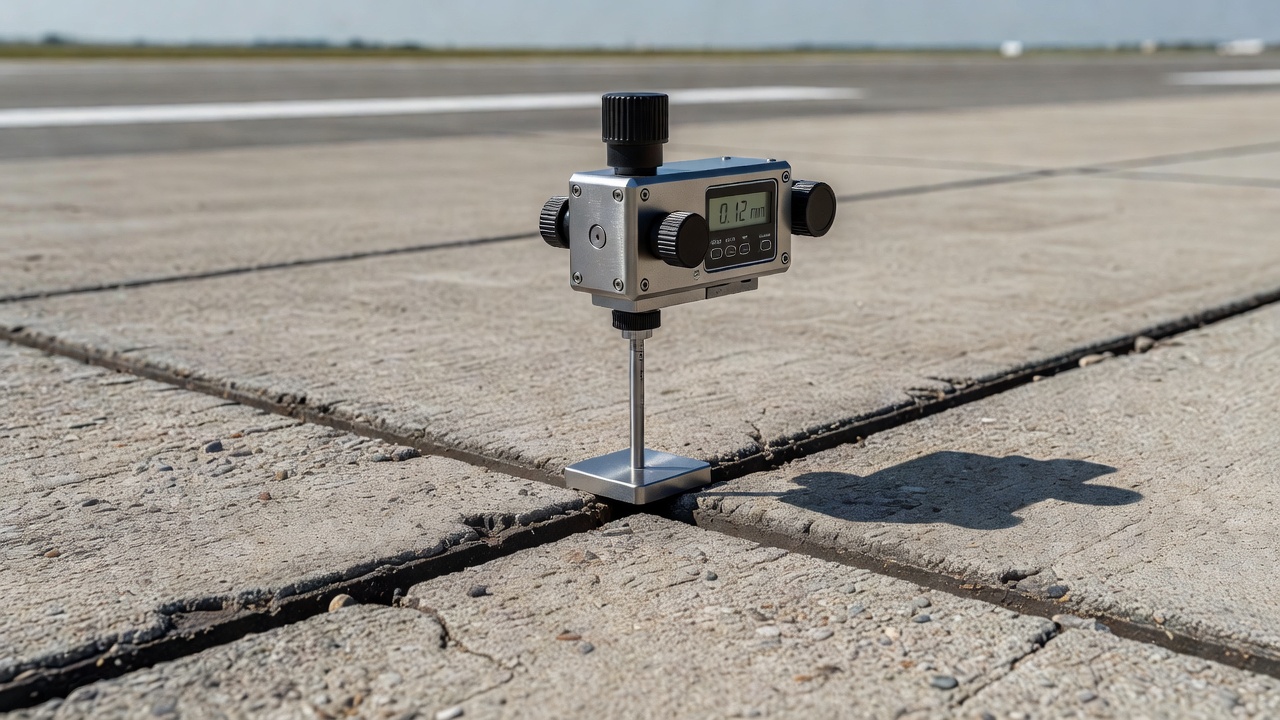
The Dipstick is a manual walking profiler that measures the elevation difference between its front and rear footpads at each step. The footpad spacing is 304.8 mm (12 in), and the footpad diameter is approximately 32 mm (1.25 in). The operator walks the profiler along a planned path, typically along the slab edge parallel to the joint, and the instrument records the relative elevation at each step.
The Dipstick has specific gain characteristics that affect its measurement capability. It has zero gain at a wavelength of 0.305 m (1 ft), meaning features at this wavelength are invisible to the instrument. It has 0.63 gain at 0.61 m (2 ft) and 0.95 gain at 2 m (7 ft). The Nyquist limit, the shortest wavelength that can be reliably measured, is approximately 0.61 m (2 ft). Wavelengths shorter than the Nyquist limit are subject to aliasing, where short-wavelength features fold into longer wavelengths and create a 7–9 percent upward bias in the International Roughness Index (IRI).
The Dipstick is suitable for small-area, low-traffic, research-grade measurements where high precision is required. It can measure curling profiles along slab edges with sub-millimeter accuracy. However, it is too slow for network-level surveys and cannot be used on active runways during operations.
Digital Level / Rod and Level Survey
Traditional surveying methods using an automatic or digital level and graduated rod can measure slab edge elevations with sub-millimeter accuracy. The survey establishes a temporary benchmark and measures elevations at specified points, typically at slab corners, mid-edge, and slab center. The difference between the measured elevation profile and the theoretical flat plane defines the curling magnitude.
This method is time-consuming and limited to small areas (typically 10–50 slabs per survey day). It is best suited for research studies and forensic investigations rather than routine pavement management.
High-Speed Inertial Profilers
Inertial profilers mounted on survey vehicles measure pavement elevation profiles at traffic speed. These instruments comply with AASHTO M 328 and ASTM E950 standards and record elevation data at 25 mm (1 in) intervals, approximately 12 times more data points than the Dipstick within the same 304.8 mm distance. This higher resolution enables detection of narrow cracks and joints that the Dipstick bridges over due to its larger footpad spacing.
The key application of inertial profiler data for curling analysis is the Second-Generation Curvature Index (2GCI) method developed by the FHWA under the Accelerated Pavement Testing Program (Chang et al. 2008). The 2GCI method:
- Synchronizes the profile data with known joint locations
- Identifies individual slabs within the profile
- Isolates each slab’s elevation profile
- Fits a Westergaard-based curling model to the profile data to determine the Pseudo Strain Gradient (PSG), the strain required to deform the slab into its measured shape
- Aggregates PSG values across all slabs in the section to produce a section-level curling index
The testing protocol for 2GCI data collection requires a minimum of 5 consecutive passes at consistent speed, conducted on a clear sunny day following a clear night to maximize the thermal gradient signal. The 2GCI method captures both diurnal and seasonal curvature variations and has been validated through the FHWA/IPCC Phase I and Phase II studies conducted in Iowa.
LiDAR (Light Detection and Ranging)
LiDAR technology provides the most comprehensive measurement of slab curling by capturing three-dimensional surface topography at millimeter-scale resolution. Two LiDAR deployment methods are used for curling measurement:
Stationary LiDAR (tripod-mounted terrestrial laser scanning) is used for detailed, small-area investigations. A single scanner setup can capture the full surface of 5–15 slabs with point spacing of 2–5 mm. The resulting point cloud is processed to create a digital surface model, from which curling can be quantified by comparing the measured slab surface to a best-fit plane. The FHWA/IPCC Phase I study in Iowa used stationary LiDAR to develop the field measurement protocol for slab curling.
Mobile LiDAR (vehicle-mounted) and drone LiDAR (UAV-mounted) systems enable network-level surveys covering entire runways or taxiways in a single pass. Mobile LiDAR systems mounted on survey vehicles at 60–80 km/h can capture 100–500 points per square meter, sufficient to detect differential slab movement, edge lift, and support loss. Drone-based LiDAR provides access to areas that are difficult to reach with ground vehicles and can capture multiple flight lines for complete coverage.
Falling Weight Deflectometer (FWD/HWD)
The Falling Weight Deflectometer (FWD) for highways or Heavy Weight Deflectometer (HWD) for airports is used for void detection beneath curled slabs. The device drops a mass (typically 4,500–27,000 kg for HWD) onto a 300 mm or 450 mm diameter plate and measures the resulting pavement surface deflection using velocity transducers placed at radial distances from the load center.
The ISM ratio method compares the Impulse Stiffness Modulus measured at the slab center to that measured at the slab corner. A higher ratio indicates greater loss of support at the corner from upward curling. The FAA protocol in Appendix C.15.6 specifies that ISM ratios exceeding 3.0 indicate poor durability from loss of support and warrant further investigation.
The FWD/HWD is also used for backcalculation of layer moduli. However, the presence of curling significantly affects backcalculation results because the slab is not in full contact with the supporting layers. The backcalculated modulus of subgrade reaction (k-value) is typically underestimated for curled slabs because the effective support area is reduced. This must be accounted for in the analysis through appropriate correction factors or temperature-gradient-specific testing protocols.
Rolling Wheel Deflectometer (RWD)
The Rolling Wheel Deflectometer is a continuous deflection measurement device that operates at traffic speed. While still in the research stage for curling-specific measurement, the RWD has shown promise for identifying slabs with poor support conditions due to curling. The device measures the pavement surface deflection under a loaded truck tire using scanning laser sensors, providing continuous deflection profiles that can indicate areas of support loss.
Typical Magnitude of Curling
The magnitude of slab curling varies widely depending on slab geometry, climate, material properties, and age. Documented field measurements from FHWA and ACI research provide the following ranges:
| Source | Measured Curl | Conditions |
|---|---|---|
| Suprenant (ACI Concrete International, 2002) | Up to 25 mm (1 in) at slab corners | Maximum observed field value |
| Suprenant (ACI Concrete International, 2002) | Typically 6 mm (1/4 in) | Typical field values for 8 in slab |
| FHWA 2GCI Study (2008) | Extreme PSG: −12.6 μstrain/cm (curled up) to +15.7 μstrain/cm (curled down) | All 38 test sites nationwide |
| FHWA 2GCI Study | Seasonal variation ≤ 8 μstrain/cm for mean PSG values | Less than diurnal range |
| FHWA TechBrief HIF-10-010 | Diurnal IRI impact up to 0.63 m/km, average 0.16 m/km | Curling effect on pavement roughness |
| FHWA faulting research | Daily expansion/contraction cycles: up to 0.5 mm faulting per year | From curling-induced joint movements |
| Joint opening threshold | 0.6 mm (0.024 in) | Opening at which aggregate interlock is lost |
Relationship Between Curling and Corner Breaks
Corner breaks (Distress Type JCP 3 in the FHWA LTPP Distress Identification Manual) are diagonal cracks that intersect the PCC slab joints near the corner, typically within approximately 2 m (6 ft) of the corner intersection point, and extend through the full slab depth. The relationship between curling and corner breaks is direct and causal, curling is a primary contributing factor to corner break formation.
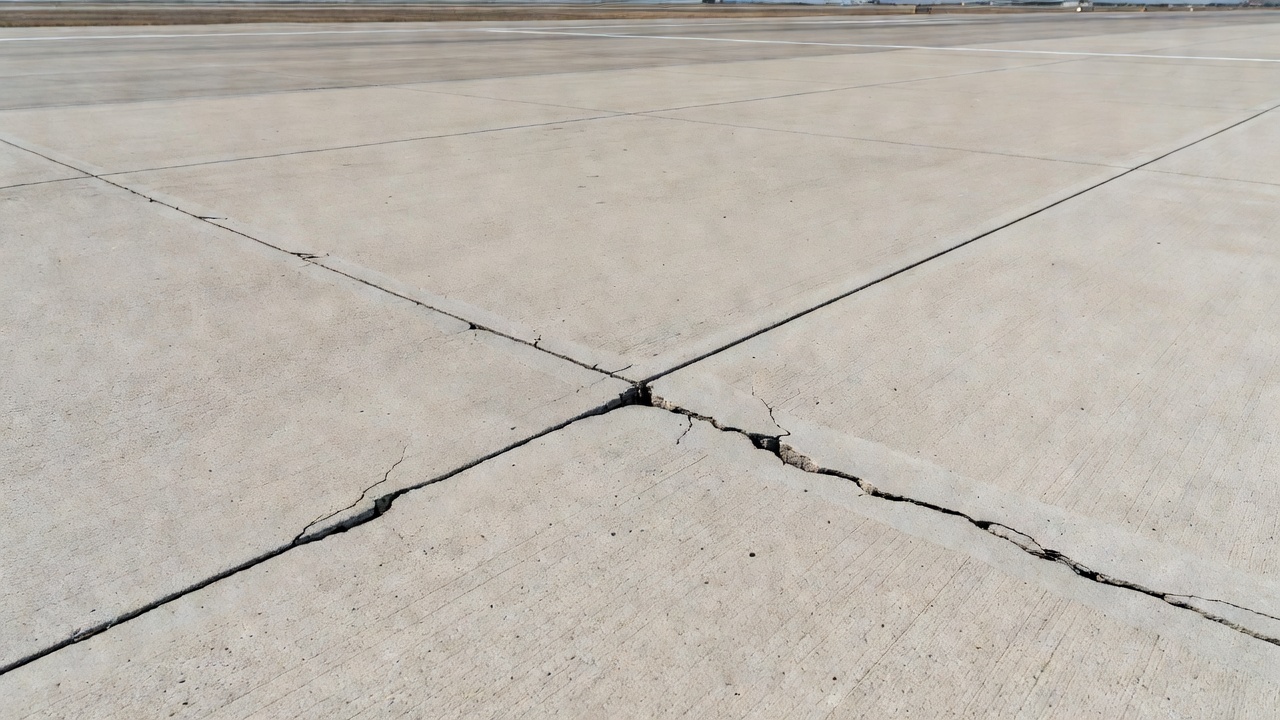
The mechanism of corner break formation under curling conditions follows a predictable sequence:
- Upward curling lifts the slab corner off the subbase, creating a void and loss of support. The unsupported corner now acts as a cantilevered slab element.
- A traffic load (aircraft landing gear or truck axle) passes over the unsupported corner. With no subbase support beneath the corner, the load-induced bending stress is concentrated at the top surface of the slab.
- Curling stresses (from the temperature gradient) and warping stresses (from the moisture gradient) are additive to the load-induced stress. The total tensile stress at the top surface of the slab corner is the sum of all three components.
- When the total tensile stress exceeds the concrete’s modulus of rupture (typically 3.5–5.0 MPa or 500–725 psi for pavement concrete) under a single loading event, or exceeds the fatigue strength under repeated loading, a crack initiates at the top surface of the slab.
- The crack propagates downward and diagonally from the corner at an angle of approximately 30–45 degrees to the longitudinal joint, following the principal stress trajectory.
- The crack typically extends through the full slab depth and intersects both the transverse and longitudinal joints, creating a triangular or trapezoidal broken corner piece.
The contributing factors to corner break formation, as identified by the FHWA and Pavement Interactive, include:
- Load repetitions at slab corners, the corner is the most heavily loaded slab region
- Poor load transfer across the joint, reduced by joint opening from upward curling
- Curling stresses, from thermal gradient (temperature curling)
- Warping stresses, from moisture gradient (drying shrinkage warping)
- Loss of subgrade support, from the void created by upward curling
- Built-in upward curling, locked-in curvature from construction conditions
The probability of corner breaks increases significantly with built-in upward curling. FHWA HIPERPAV studies have demonstrated that slabs with high built-in curl develop corner breaks at a much faster rate than slabs with low built-in curl, even under identical traffic loads.
The ASTM D5340 and ASTM D6433 PCI survey standards distinguish corner breaks from other cracking types by several features: corner breaks are always diagonal (not longitudinal or transverse), they intersect the joint at the corner (not a random location), they extend through the full slab depth (not surface-only), and the broken corner piece may be visibly displaced or loose. The severity classification depends on the crack width and whether the corner piece is loose or has been patched.
For airport pavements, corner breaks are a significant operational concern because the broken corner piece can become Foreign Object Debris (FOD) if it becomes completely detached. The FAA requires prompt repair of corner breaks that create FOD hazards, typically through full-depth slab replacement for high-severity breaks.
Curling in Airport PCC Pavements, FAA and ICAO Guidance
Curling and warping are specifically addressed in the FAA Advisory Circular 150/5320-6G (Airport Pavement Design and Evaluation, 2021) and the ICAO Aerodrome Design Manual Part 3 (Doc 9157) as fundamental considerations in rigid pavement design.
FAA AC 150/5320-6G
The FAA AC directly references curling and warping in three contexts: joint spacing rationale, void analysis protocol, and design procedures.
Joint spacing (Section 3.16) is explicitly based on the need to control cracking from temperature curling and moisture warping. The FAA states that joints are designed to “control cracking that develops due to … temperature curling and moisture warping.” The maximum joint spacing limits in Table 3-7 are derived from curling considerations:
Without Stabilized Base:
| Slab Thickness | Maximum Joint Spacing |
|---|---|
| ≤ 152 mm (6 in) | 3.8 m (12.5 ft) |
| 165–229 mm (6.5–9 in) | 4.6 m (15 ft) |
| > 229 mm (> 9 in) | 6.1 m (20 ft) |
With Stabilized Base (Cement-Treated or Lean Concrete):
| Slab Thickness | Maximum Joint Spacing |
|---|---|
| 203–254 mm (8–10 in) | 3.8 m (12.5 ft) |
| 267–330 mm (10.5–13 in) | 4.6 m (15 ft) |
| 343–406 mm (13.5–16 in) | 5.3 m (17.5 ft) |
| > 406 mm (> 16 in) | 6.1 m (20 ft) |
The FAA notes that joint spacing exceeding 6.1 m (20 ft) requires a technical analysis demonstrating that the panel size does not exceed 5 times the radius of relative stiffness. This limit ensures that curling stresses remain within acceptable bounds.
Void analysis (Appendix C.15.6) explicitly recognizes that “loss of support may exist … due to temperature curling or moisture warping.” The HWD testing protocol with ISM ratio analysis (described earlier in Section 5.5) is the standard method for detecting curling-induced voids beneath airport PCC slabs.
FAARFIELD design, the FAA’s rigid pavement thickness design procedure, uses three-dimensional finite element analysis (3D-FE) that implicitly accounts for curling effects through calibration from full-scale accelerated pavement testing at the National Airport Pavement Test Facility (NAPTF). The cumulative damage factor (CDF) calculated by FAARFIELD includes the effects of combined thermal and load-induced stresses based on the full-scale test results.
ICAO Aerodrome Design Manual Part 3
The ICAO Aerodrome Design Manual Part 3 (Doc 9157, 3rd Edition) provides pavement design guidance that references national standards (including FAA AC 150/5320-6G) for detailed curling and warping provisions. ICAO does not have a dedicated chapter on curling but manages curling effects through:
- Joint spacing limitations, consistent with national standards (referencing FAA or state DOT guidance)
- Dowel load transfer requirements, specifying dowel dimensions and spacing for different pavement thickness categories
- Subbase and drainage provisions, stabilized bases and drainage systems that reduce moisture-related warping
The ACR-PCR method (Aircraft Classification Rating, Pavement Classification Rating), adopted in FAA AC 150/5320-6G 2021 and standardized by ICAO for bearing strength reporting, uses a simplified structural analysis that accounts for pavement condition but does not explicitly model curling. However, the pavement condition surveys (PCI) that feed into the ACR-PCR rating include curling-induced distresses such as corner breaks, faulting, and pumping in the overall condition assessment.
Operational Significance in Airports
Curling in airport PCC pavements has specific operational implications that differ from highway applications:
- FOD hazard, broken corner pieces from curling-induced corner breaks become FOD hazards on runways and taxiways. FOD can be ingested into jet engines or cause tire damage, creating serious safety risks.
- Pumping on flexible pavements adjacent to rigid, water pumped from PCC joints can undermine adjacent flexible pavement sections.
- Dowel bar lock-up, in airport pavements with heavy-duty dowel bars (typically 38 mm or 1.5 in diameter), curling can cause dowel binding if the curvature is severe enough to create differential vertical movement between adjacent slabs.
- Nighttime operations, aircraft operations during early morning hours coincide with maximum upward curling, meaning the pavement is in its worst structural condition during a significant portion of operational time.
Mitigation Strategies for Curling and Warping
Mitigation of curling and warping requires a multi-faceted approach addressing design, materials, and construction. The most effective strategies are implemented during the design and construction phases because retrofitting curling mitigation after construction is difficult and expensive.
Joint Spacing Optimization
The most direct method for controlling curling is to limit the distance between contraction joints. The curling deflection at the slab edge is proportional to the square of the slab length (ℓ² term in the Westergaard equation). Halving the joint spacing reduces curling deflection by a factor of four. The NRMCA recommends a rule-of-thumb maximum joint spacing of 24 times the slab thickness (e.g., a 200 mm slab → 4.8 m joint spacing). The FAA Table 3-7 provides specific limits based on slab thickness and base type. Shorter joint spacing is particularly important for slabs on stabilized bases because the higher friction between slab and base increases restraint stresses.
Adequate Slab Thickness
Thicker slabs curl less because the self-weight of the slab provides a restoring moment that counteracts the curling moment from temperature and moisture gradients. The curling deflection in the Westergaard equation is inversely proportional to slab thickness (h). For airport pavements, the FAA minimum thickness is 150 mm (6 in) for aircraft under 60,000 lbs, with thicker sections required for heavier aircraft. However, increasing slab thickness also increases the radius of relative stiffness, which can partially offset the benefit, the relationship is complex and is best analyzed using mechanistic-empirical design software such as FAARFIELD or AASHTOWare Pavement ME Design.
Stabilized Base Layers
Cement-treated bases (CTB) and lean concrete bases (LCB) provide stiffer support that reduces differential deflection under curling. The higher modulus of subgrade reaction (k-value) reduces the radius of relative stiffness (ℓ), which in turn reduces edge deflection. However, stabilized bases come with a trade-off: higher friction between the slab and the stabilized base increases restraint stresses, which can lead to increased cracking if joint spacing is not reduced accordingly. This is why the FAA Table 3-7 specifies tighter joint spacing for stabilized bases (12.5 ft for 8–10 in slabs) compared to unstabilized bases (20 ft for slabs > 9 in).
Mix Design Optimization
Concrete mix design has a significant impact on both curling and warping. The following mix design strategies reduce curling magnitude:
- Lowest practical water content, (not slump) because water content directly controls drying shrinkage. The ACI 211 mix design method should target the lowest water content consistent with workability requirements.
- Largest practical maximum aggregate size, higher coarse aggregate volume reduces paste content, which is the source of drying shrinkage. Maximum aggregate size of 25–50 mm (1–2 in) is typical for airport pavements.
- Highest coarse aggregate content, maximizing the coarse aggregate-to-total aggregate ratio reduces the paste volume and increases the modulus of the composite material.
- Low coefficient of thermal expansion (CTE) aggregate, selecting aggregates with low CTE (limestone, 6–8 με/°C) instead of high CTE aggregates (quartzite, 10–13 με/°C) directly reduces thermal curling magnitude.
- Shrinkage-reducing admixtures (SRAs), reduce drying shrinkage by lowering the surface tension of the pore water, reducing the capillary stress that drives shrinkage. Typical SRA dosage rates of 1–2 percent by weight of cementitious materials can reduce drying shrinkage by 25–50 percent.
- Avoid excessive cementitious materials content, higher paste volume means more shrinkage. The minimum cementitious content should be used consistent with strength and durability requirements.
It is important to note that low water-to-cementitious materials ratio (w/cm) does NOT guarantee low shrinkage if the paste volume is high. A low w/cm mix with high paste content can exhibit greater shrinkage than a higher w/cm mix with lower paste content. Both w/cm and paste volume must be optimized.
Proper Curing
Curing directly affects the moisture gradient that drives warping. Moist curing (wet burlap, fogging, ponding) or high-solids curing compound (minimum 25 percent solids per ASTM C309 Type 2) should be applied immediately after finishing to minimize the moisture differential through the slab depth. Delayed or inadequate curing allows the top surface to dry while the bottom remains moist, establishing a permanent shrinkage gradient that manifests as built-in warping. The ACI 308 Guide to Curing Concrete provides detailed recommendations for curing duration based on ambient conditions.
Construction Practices
Several construction practices influence the magnitude of built-in curling:
- Concrete placement on absorptive subgrade, placing concrete directly on a damp, absorptive subgrade allows the bottom of the slab to lose moisture downward, reducing the moisture differential and the warping potential. This is contrary to common practice with vapor retarders in interior slabs, where the vapor barrier prevents downward moisture loss and maximizes the warping gradient.
- Avoid excessive bleeding, high water content or water sprayed on the surface during finishing increases bleeding, which concentrates the lowest w/c paste at the surface and creates a stronger shrinkage gradient.
- Vacuum dewatering, for slabs on vapor retarders, vacuum dewatering can reduce the w/cm in the surface layer, creating a more uniform moisture profile through the slab depth.
- Proper saw-cut timing, contraction joints must be saw-cut at the correct time (typically 4–12 hours after placement, depending on temperature and concrete strength) to ensure that the joint acts as a controlled crack plane. Late saw cutting allows uncontrolled cracking to occur first, which may not follow the planned joint layout.
Reinforcement and Load Transfer
While curling is a volume change phenomenon that cannot be prevented by reinforcement alone, properly designed reinforcement can distribute curling stresses and control crack widths:
- Reinforcement in the upper third of the slab, placed perpendicular to slab edges within 3 m (10 ft) of the edge or construction joint (per NRMCA recommendations), reinforcement controls crack widths and maintains aggregate interlock even when curling-induced cracking occurs.
- Load transfer devices (dowels), properly designed, aligned, and lubricated dowel bars minimize vertical differential movement across joints, reducing the impact of curling on faulting and load transfer loss. The FAA specifies dowel dimensions, spacing, and alignment tolerances in AC 150/5370-10H Item P-501.
- Alternative systems, shrinkage-compensating concrete (using Type K cement) and post-tensioning can reduce or eliminate curling by introducing compressive stresses that counteract the curling moment.
Detection of Curling in Drone and LiDAR Surveys
Modern pavement inspection technologies enable detection and quantification of slab curling at network scale, providing data that was previously only available through labor-intensive manual surveys. Drone-based and LiDAR-based inspection methods are transforming how airport operators assess curling in their PCC pavements.
Drone-Based Visual Surveys
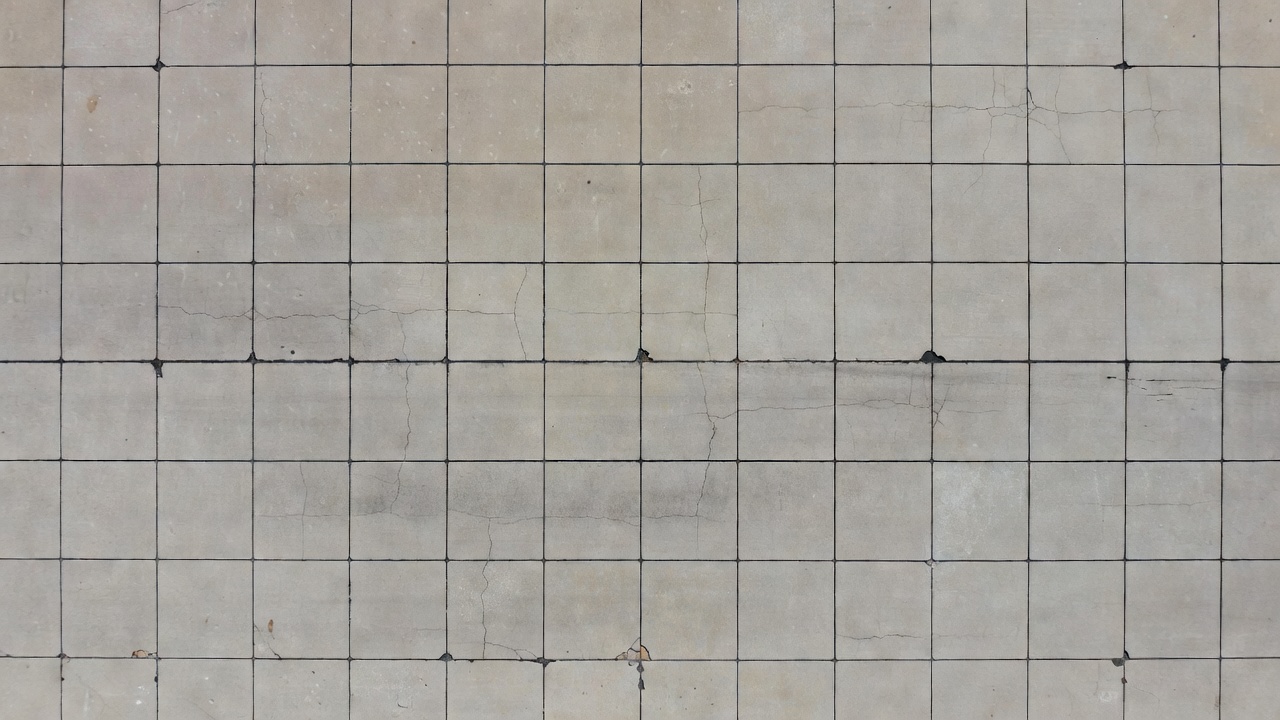
Unmanned Aerial Vehicles (UAVs) equipped with high-resolution cameras capture overlapping imagery of the pavement surface, which is processed through Structure-from-Motion (SfM) photogrammetry to create orthorectified mosaic images and digital surface models (DSMs). The DSM provides elevation data at 1–5 cm resolution across the entire pavement surface, from which curling can be detected:
- Edge lift detection, comparing the elevation at slab edges (mid-edge and corners) to the slab center elevation. Slabs with edge lift exceeding 3–5 mm relative to the slab center are flagged for further investigation.
- Joint elevation differential, measuring the elevation difference across transverse and longitudinal joints. A differential of more than 3 mm indicates faulting, which may be curling-related.
- Temporal comparison, repeated drone surveys at the same time of day (typically early morning for maximum upward curling) enable comparison of curling magnitude over time, tracking progression.
Mobile and Stationary LiDAR
LiDAR point cloud data provides the highest resolution measurement of slab curling. The point cloud is processed to extract individual slab surfaces, and a best-fit plane is computed for each slab. The deviation of each point from the best-fit plane defines the curling magnitude. Key indicators derived from LiDAR data include:
- Corner lift, the maximum upward deviation at slab corners, typically expressed in mm
- Edge curvature, the curvature profile along the slab edge, expressed as a radius of curvature or curvature index
- Slab center deflection, for downward curling conditions, the deviation of the slab center from the best-fit plane
- Void mapping, areas where the LiDAR-detected curling exceeds the expected subbase contact range, indicating potential voids beneath the slab
The FHWA IPCC Phase I study established that stationary LiDAR can detect curling with an accuracy of ±1 mm and a precision of ±0.5 mm, sufficient to quantify even low-severity curling that is not visible to the human eye.
Automated Curling Classification
Advanced pavement inspection systems (including TarmacView) use machine learning algorithms trained on LiDAR and photogrammetry data to automatically detect and classify curling severity. The classification criteria are based on the magnitude of edge lift or corner lift:
| Curling Severity | Corner/Edge Lift | Visual Detection | Pavement Management Action |
|---|---|---|---|
| None / Low | < 3 mm | Not visible to naked eye | Monitor during routine PCI surveys |
| Moderate | 3–6 mm | Slightly visible at joints under favorable lighting | Include in condition assessment, evaluate load transfer |
| High | 6–12 mm | Clearly visible, gap visible under slab edge | Schedule for evaluation, consider load transfer restoration |
| Severe | > 12 mm | Large gap visible, slab visibly dislodged | Priority repair, likely corner break formation |
Integration with HWD Testing
LiDAR and drone survey data are most valuable when integrated with HWD testing. The LiDAR-identified curling locations guide the HWD testing program, ensuring that test points are placed at slabs with known curling rather than at random locations. The combination of surface geometry data (from LiDAR) and structural response data (from HWD) provides a complete picture of curling’s effect on pavement structural capacity. The FAA ISM ratio threshold of 3.0 can be correlated with the LiDAR-derived curling magnitude to establish site-specific criteria for void identification and repair prioritization.
Thermal imaging cameras mounted on drones add another dimension to curling detection. Infrared thermography captures the surface temperature of each slab, revealing the temperature gradient pattern that drives curling. Slabs with anomalous temperature distributions (hot spots at joints, non-uniform cooling patterns) may be more susceptible to curling damage. The combination of thermal data with LiDAR geometry data enables a comprehensive curling assessment that considers both the cause (temperature gradient) and the effect (edge lift).
Summary of Key Parameters
| Parameter | Value Range | Notes |
|---|---|---|
| Concrete CTE | 6–13 με/°C | Depends on aggregate type, limestone: 6–8, quartzite: 10–13 |
| Typical temperature gradient | −0.3 to +1.0°C/cm | Diurnal variation through slab depth |
| Radius of relative stiffness (ℓ) | 500–2000 mm | Depends on E, h, and k |
| Typical edge lift (field) | 3–6 mm | 6 mm typical, up to 25 mm maximum observed |
| Joint opening for interlock loss | > 0.6 mm | Total loss of aggregate interlock |
| Dipstick sampling interval | 304.8 mm (12 in) | Also the Nyquist wavelength limit |
| Inertial profiler interval | 25 mm (1 in) | 12× Dipstick resolution |
| LiDAR curling accuracy | ±1 mm | Stationary terrestrial laser scanning |
| ISM ratio threshold (poor) | > 3.0 | FAA void detection criterion |
| IRI impact from curling | Up to 0.63 m/km | Average 0.16 m/km per FHWA study |
| Max joint spacing (FAA) | 3.8–6.1 m | Depending on thickness and base type |
| Corner break crack angle | 30–45° | Diagonal from joint intersection |
| Critical monitoring time | 2–3 hours before sunrise | Maximum upward curling period |
Frequently Asked Questions
- What is the difference between curling and warping in concrete pavements?
- Curling is slab curvature caused by a temperature gradient through the slab depth, differential thermal expansion or contraction between the top and bottom surfaces. Warping is curvature caused by a moisture gradient, typically drying shrinkage at the top surface while the bottom remains moist, or bottom swelling from moisture absorption. Curling follows diurnal cycles (daily temperature changes) and is largely reversible. Warping develops over months to years and is partially irreversible due to drying shrinkage. In practice, the measured slab deflection is almost always a combination of both temperature and moisture effects.
- When does upward curling versus downward curling occur?
- Upward curling occurs during nighttime and early morning when the slab top cools faster than the bottom, creating a negative temperature gradient (top cooler than bottom). The slab edges and corners lift upward, losing contact with the subbase. Upward curling is more critical for pavement performance because it opens joints, reduces aggregate interlock, and creates high tensile stresses at unsupported slab corners under traffic loading. Downward curling occurs during daytime when solar radiation heats the slab top warmer than the bottom (positive temperature gradient), causing the slab center to lift while edges press downward. Moisture gradients can amplify either condition, a dry surface creates upward warping while a wet surface (rain) creates downward warping.
- How is curling measured in concrete pavements?
- Curling is measured using several methods. The Dipstick walking profiler measures elevation differences at 304.8 mm intervals along slab edges. Digital level surveys provide sub-millimeter accuracy for small areas. High-speed inertial profilers (AASHTO M 328, ASTM E950) capture 25 mm interval profiles over entire pavements, enabling Second-Generation Curvature Index (2GCI) analysis developed by FHWA. Stationary and mobile LiDAR systems capture 3D surface topography at mm-scale resolution across full slab surfaces. Falling Weight Deflectometer (FWD/HWD) void analysis identifies loss of support under curled corners using the ISM ratio method. Typical field curl values range from 6 mm (typical) to 25 mm (maximum observed at slab corners).
- How does curling affect airport concrete pavement performance?
- Curling reduces load transfer efficiency across joints by lifting slab edges, which opens joints wider than 0.6 mm and causes total loss of aggregate interlock. It creates unsupported slab corners that experience 2-3 times higher tensile stresses under aircraft loading, directly contributing to corner break formation. Curling promotes pumping of subbase fines as water fills voids under curled edges, accelerates faulting at joints, and increases pavement roughness, FHWA research shows curling can increase IRI by up to 0.63 m/km. The FAA addresses curling through joint spacing limits in AC 150/5320-6G Table 3-7 (12.5 ft to 20 ft depending on slab thickness and base type), stabilized base requirements, and dowel load transfer systems.
- What mitigation strategies reduce slab curling and warping?
- Primary mitigation strategies include: 1) Limiting joint spacing, the NRMCA recommends joint spacing ≤ 24 times slab thickness, and FAA Table 3-7 provides specific maximums. 2) Adequate slab thickness, thicker slabs resist curling through greater self-weight. 3) Stabilized base layers, cement-treated or lean concrete bases reduce differential deflection. 4) Mix design optimization, lowest practical water content, largest maximum aggregate size, shrinkage-reducing admixtures, and aggregates with low coefficient of thermal expansion (CTE). 5) Proper curing, moist curing or high-solids curing compound to minimize the moisture differential. 6) Load transfer devices, dowel bars to minimize vertical movement across joints. 7) Construction timing, avoiding concrete placement during high temperature differential conditions.
- What is the relationship between curling and corner breaks?
- Corner breaks are diagonal cracks that intersect PCC slab joints near the corner (within approximately 2 m of the corner), extending through the full slab depth. The mechanism involves upward curling lifting the slab corner off the subbase, creating a loss of support condition. When an aircraft or vehicle load is applied to this unsupported corner, tensile stresses concentrate at the top surface of the slab diagonally from the corner. Curling stresses and warping stresses add to the load-induced stresses. Under repeated loading, fatigue failure occurs, producing the characteristic diagonal crack. The probability of corner breaks increases significantly with built-in upward curling, poor load transfer across the joint, and thin slab sections. The FAA void analysis protocol (Appendix C.15.6 of AC 150/5320-6G) uses the ISM ratio from HWD testing to identify loss of support beneath curled slab corners.