What is a Wearing Course (Surface Course) in Pavements?
Wearing Course, Definition and Functions
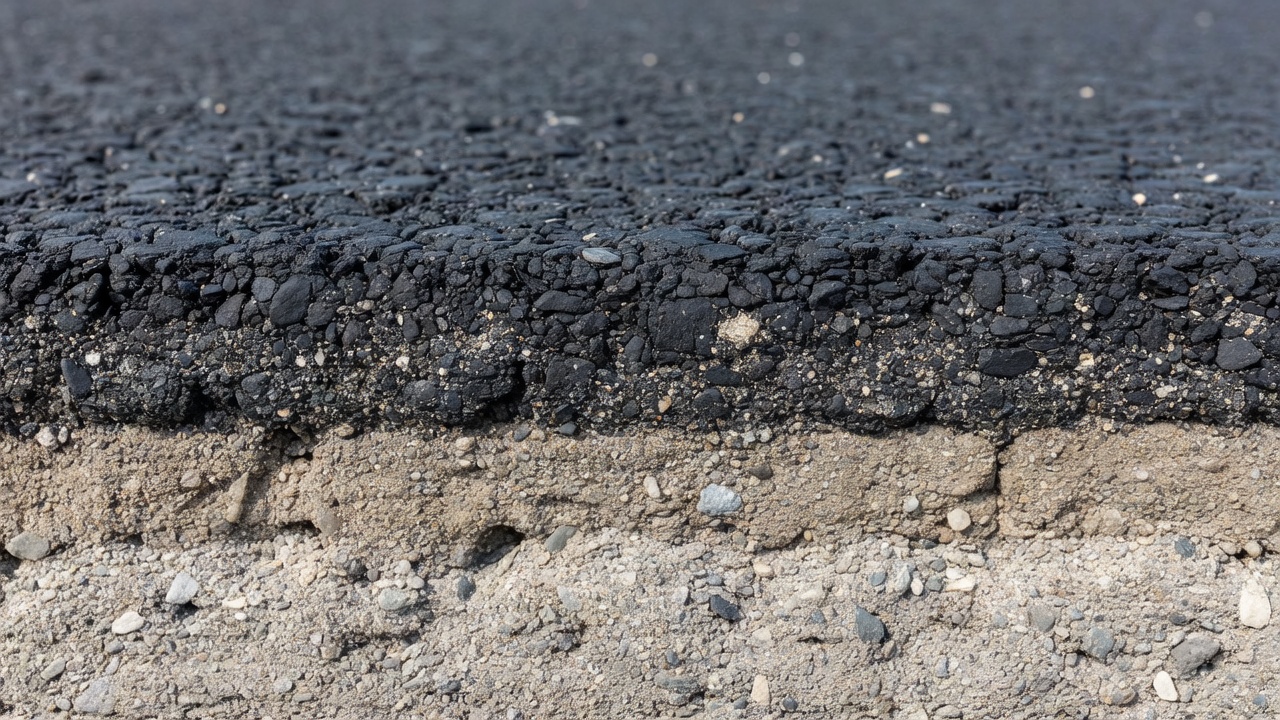
The wearing course, also called the surface course, is the topmost layer of a pavement structure. It is the layer directly exposed to traffic loads, environmental conditions, chemical spillage, and the full spectrum of operational forces that pavements must withstand. In flexible pavements, the wearing course consists of hot mix asphalt (HMA) or specialized asphalt mixtures placed in one or more lifts to a total thickness typically ranging from 75 to 150 mm (3 to 6 inches). In rigid pavements, the wearing surface is the Portland cement concrete (PCC) slab itself, which serves simultaneously as both the structural slab and the wearing surface, with thicknesses from 150 to 500 mm (6 to 20 inches) depending on the design aircraft loading.
The term “wearing course” derives from the layer’s function of wearing under traffic, it is the sacrificial layer that protects the underlying structural pavement layers from damage. The UK Ministry of Defence Specification 49 formally defines the surface course as “the layer of the asphalt surfacing immediately below the porous friction course or which directly supports the traffic.” This definition captures the critical distinction: the wearing course is the layer that directly receives and distributes traffic loads while protecting the base course and subgrade from water infiltration and mechanical damage. In modern pavement engineering terminology, “surface course” is preferred over the older “wearing course” designation, reflecting the broader range of surface course functions beyond simple abrasion resistance.
The wearing course performs five essential functions that determine pavement performance and service life. First, load distribution, the wearing course spreads concentrated wheel loads from aircraft tires, which exert contact pressures of 1.0 to 1.5 MPa (150 to 220 psi), over a wider area on the underlying base course. This load spreading prevents overstressing of the base and subgrade layers. Second, waterproofing, the wearing course must be sufficiently impermeable (in dense-graded mixtures) to prevent surface water from penetrating into the pavement structure, where it would weaken the base and subgrade. Third, friction provision, the surface must deliver adequate skid resistance across all operational speeds, in both dry and wet conditions, to enable safe braking, cornering, and directional control. Fourth, smoothness, the surface must provide a uniform riding surface free from excessive roughness, depressions, or loose particles that could affect ride quality or generate foreign object debris (FOD). Fifth, environmental and chemical resistance, the wearing course must resist weathering from UV radiation, thermal cycling, and moisture, as well as chemical attack from jet fuel, hydraulic fluid, de-icing chemicals, and other aircraft fluids.
The structural contribution of the wearing course to the overall pavement system differs between flexible and rigid pavements. In flexible pavements, the HMA wearing course contributes significant structural capacity through its stiffness and thickness, and is designed to resist tensile strains at its bottom that cause fatigue cracking. The FAA FAARFIELD design software models the HMA surface course as a structural layer with a specified resilient modulus (typically 2,000 to 4,000 MPa or 290,000 to 580,000 psi for dense-graded HMA). In rigid pavements, the PCC wearing course is the primary structural layer, providing load distribution through slab bending action, with the base course serving primarily as a uniform support and drainage layer.
ICAO Annex 14, Volume I, Aerodrome Design and Operations, establishes the international regulatory framework for runway wearing course performance. Chapter 10 (Aerodrome Maintenance) requires that paved runways be maintained to provide good friction characteristics and low rolling resistance. The Annex specifies a three-tier friction level system: the Design Objective Level (DOL) representing the friction to be achieved on new or resurfaced pavements, the Maintenance Planning Level (MPL) below which corrective maintenance should be initiated, and the Minimum Friction Level (MFL) below which the runway must be notified to air traffic as potentially slippery when wet. For the Mu-Meter continuous friction measuring device at 65 km/h (40 mph), the DOL is 0.72, the MPL is 0.52, and the MFL is 0.42. For the Grip Tester, the corresponding values are 0.74 (DOL), 0.53 (MPL), and 0.43 (MFL). These values are reproduced from ICAO Annex 14, Table A-1 and CAA CAP 683 guidance.
The minimum average macrotexture depth specified by ICAO Annex 14 is 1.0 mm (0.040 in) over the full runway length, as measured by the volumetric patch method (grease smear technique per ASTM E965) or laser profilometer (ASTM E1845). This texture depth requirement is the single most critical surface specification for runway wearing courses, as adequate macrotexture provides water drainage channels beneath the tire footprint at high speeds, preventing hydroplaning and maintaining wet-weather friction. ICAO Circular 329, AN/191 provides additional guidance on surface texture measurement protocols, friction testing procedures, and runway surface condition classification into dry, damp, wet, water patches, and flooded categories for standardized reporting to flight crews.
Wearing Course Types
The selection of wearing course type depends on traffic volume and aircraft weight, climate, available materials, construction capability, and project budget. Five principal wearing course types are used in airport pavement construction, each with distinct material composition, performance characteristics, and application requirements.
Dense-Graded Hot Mix Asphalt (HMA), FAA P-401
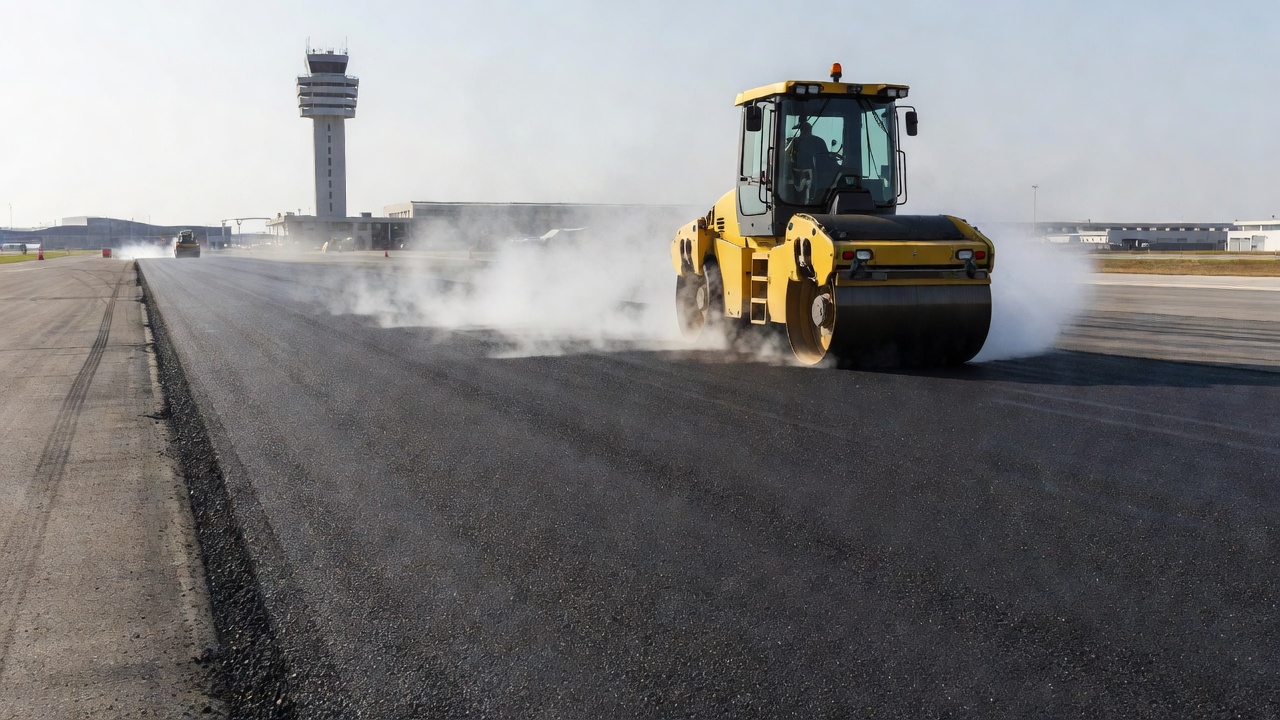
Dense-graded HMA is the standard wearing course material for airport pavements in the United States and most ICAO member states. FAA Item P-401 (Hot Mix Asphalt Pavement) in AC 150/5370-10H specifies the complete material, mix design, and construction requirements for HMA wearing courses on federally-funded airport projects. The mixture uses a continuous gradation of aggregate from coarse to fine particles, producing a dense, well-graded matrix with low air voids (3% to 5%) that provides an impermeable surface. The asphalt binder content typically ranges from 4.5% to 6.0% by weight of aggregate, with the exact optimum determined through the Marshall mix design method (AASHTO T 245).
The FAA P-401 Marshall design criteria require a minimum stability of 1,800 lb (8.0 kN), flow between 8 and 14 (0.01 in units), air voids between 3% and 5%, and voids in mineral aggregate (VMA) minimum of 13% to 15% depending on the nominal maximum aggregate size. The Asphalt Pavement Analyzer (APA) rutting test (AASHTO T340) requires rut depth under 10 mm at 4,000 passes at 250 psi and 64°C. Alternatively, the Hamburg wheel-track device (AASHTO T324) requires rutting under 10 mm at 20,000 passes. These rutting criteria ensure that the wearing course will resist permanent deformation under heavy aircraft loads, especially in hot climates where binder softening can lead to rutting.
Minimum construction lift thicknesses for P-401 wearing courses are specified by aggregate gradation: Gradation 1 (1-1/2 in or 37.5 mm NMAS) requires minimum 3 in (76 mm) lift thickness, Gradation 2 (3/4 to 1 in or 19-25 mm NMAS) requires minimum 2 in (50 mm), and Gradation 3 (1/2 in or 12.5 mm NMAS) requires minimum 1-1/2 in (38 mm) but is restricted to leveling courses only. The FAA FAARFIELD design software enforces a minimum HMA surface course thickness of 100 mm (4 in) for critical areas and 76 mm (3 in) for noncritical areas, these minima ensure that the surface course can withstand construction compaction forces and provide adequate structural contribution.
Compaction of the HMA wearing course is measured as a percentage of Total Maximum Density (TMD) per AASHTO T 209 (Rice density). The target compaction is 96% to 98% of TMD, with acceptance testing performed using nuclear density gauges (ASTM D6938) or core samples (ASTM D2726). Compaction is the single most critical construction quality parameter because inadequate density results in accelerated aging, reduced fatigue life, increased permeability, and premature raveling. The performance grade (PG) of the asphalt binder is selected based on climate zone with an additional grade bump for the wearing course position per FAA guidance, ensuring that the binder can withstand both high pavement surface temperatures (rutting resistance) and low winter temperatures (thermal cracking resistance).
Stone Mastic Asphalt (SMA)
Stone Mastic Asphalt, also called Stone Matrix Asphalt, is a gap-graded wearing course mixture that relies on a stone-on-stone skeleton of coarse aggregate particles (70% to 80% by mass) for rut resistance, with a rich mortar of fine aggregate, filler, asphalt binder (6% to 7% by weight), and stabilizing fibers (typically 0.3% cellulose fibers or 0.3% to 0.4% mineral fibers) filling the voids between the coarse aggregate particles. The stone-on-stone contact provides exceptional resistance to permanent deformation, while the rich binder mortar provides durability and flexibility.
Performance data from 86 SMA projects analyzed by the National Center for Asphalt Technology (NCAT) documents that over 90% of SMA projects had rutting under 4 mm after 2 to 6 years of service. The predicted service life of SMA on flexible pavements ranges from 16 to 32 years, compared to 11 to 27 years for Superpave mixtures depending on the state and traffic level. On composite pavements (HMA overlay on PCC), SMA provides 13 to 24 years predicted service life versus 9 to 22 years for Superpave. No evidence of raveling was observed on any SMA project in the study. The primary issue documented was fat spots resulting from segregation, low VMA, binder draindown during construction, or high binder content in localized areas.
The UK Ministry of Defence Specification 49 provides the most comprehensive specification for SMA in airfield applications. The specification requires aggregate polishing resistance of PSV 60 or higher for runways (the Polished Stone Value test measures the resistance of aggregate to polishing under traffic), a minimum surface course thickness of 40 to 50 mm, fiber stabilization of the binder, retained tensile strength of at least 80% for water sensitivity (AASHTO T 283), and binder grade of 40/60 pen or polymer-modified bitumen. The MoD Specification 49 SMA is designed to provide the macrotexture depth required by ICAO (minimum 1.0 mm) without requiring grooving, though most UK airfield SMA wearing courses are grooved as a conservative measure.
Despite its documented performance advantages, the FAA currently excludes SMA from P-401 criteria in the United States. SMA is used extensively at European airports, including London Heathrow, Frankfurt, Paris Charles de Gaulle, Amsterdam Schiphol, and at Australian airports including Sydney and Melbourne. The French airfield asphalt concrete (Béton Bitumineux pour Chaussées Aéronautiques, or BBA) is a related gap-graded material that achieves macrotexture depths of 0.8 to 1.3 mm as laid without grooving, meeting the ICAO 1.0 mm standard directly from the paving operation.
Open-Graded Friction Course (OGFC) and Porous Friction Course (PFC)
Open-Graded Friction Course and Porous Friction Course are specialized wearing course mixtures designed with 15% to 25% interconnected air voids that allow water to drain vertically through the pavement structure and exit laterally through the permeable base or pavement edge. The high void content is achieved by using a narrowly graded aggregate (typically 9.5 mm or 12.5 mm NMAS) with minimal fine aggregate, creating a porous matrix through which water flows freely. The mixture thickness is typically 19 to 40 mm (3/4 to 1-1/2 in), and the asphalt binder content ranges from 5.5% to 7.0% with polymer modification or fiber stabilization to prevent binder draindown.
The primary benefit of OGFC/PFC wearing courses is drainage of water from the tire-pavement interface. By allowing water to drain through the pavement rather than requiring it to flow laterally across the surface to the pavement edge, OGFC/PFC virtually eliminates hydroplaning risk at high speeds. The FHWA TOPS report HIF-23-015 documents that OGFC reduces wet-weather crashes by 32%, reduces splash and spray for improved wet-weather visibility, and reduces tire-pavement noise by approximately 3 dB(A), a halving of acoustic energy. The noise reduction benefit is most pronounced in the first 5 to 7 years of service, after which clogging of the pore structure by dirt, debris, and rubber deposits reduces the acoustic absorption capability.
The FAA explicitly addresses PFC in AC 150/5320-12C, paragraph 2-6, with important limitations. PFC is not recommended for runways exceeding 91 turbojet arrivals per day per runway end due to rubber deposit clogging of the pore structure. The porous layer must be constructed on HMA pavements only, not on PCC, and the existing pavement must be structurally sound, watertight, and free of major cracking. The service life of OGFC/PFC wearing courses is limited by raveling, which is the primary durability problem for open-graded mixtures. The FHWA NCHRP Report 877 (Performance-Based Mix Design of Porous Friction Courses) provides the most current guidance on OGFC/PFC mix design, including the use of polymer-modified binders, fiber stabilization, and performance testing protocols for durability, permeability retention, and ravelling resistance.
Portland Cement Concrete (PCC), FAA P-501
Portland cement concrete wearing courses are specified under FAA Item P-501 (Portland Cement Concrete Pavement) in AC 150/5370-10H. Unlike asphalt wearing courses, the PCC slab serves both as the structural pavement layer (distributing loads through slab bending action) and as the wearing surface directly exposed to traffic. The dual function places demanding requirements on concrete mix design, joint detailing, and surface texturing.
FAA P-501 requires a minimum 28-day flexural strength (modulus of rupture, MR) of typically 600 to 700 psi (4.1 to 4.8 MPa) per ASTM C78 (third-point loading). Slump limits are: up to 2 inches (50 mm) for slipform paving, up to 3 inches (75 mm) for fixed form paving, and up to 4 inches (100 mm) for hand-placed pours. Air content must be 4.5% to 7.5% for freeze-thaw durability in cold climates. The maximum water-cement ratio is 0.45 to 0.50 depending on exposure conditions, and the minimum cement content is 520 to 600 lb/yd³ (309 to 356 kg/m³). Coarse aggregate wear (Los Angeles Abrasion, ASTM C131) must not exceed 40% to 50% loss.
Surface texturing of PCC wearing courses is critical for friction. The FAA recognizes six texturing methods in AC 150/5320-12C: brush/broom finish (transverse brushing at approximately 1.5 mm depth), burlap drag finish (heavy burlap at 15 oz/yd² minimum), wire combing (rigid steel wires, 3 mm deep, 12.5 mm spacing), wire tining (flexible steel bands, 6 mm deep, 12.5 mm spacing), plastic grooving (ribbed plate or roller tube, 6 mm in plastic concrete), and saw-cut grooving (diamond blade, 6 mm x 6 mm in hardened concrete). Wire combing and wire tining are classified as texturing techniques only, they improve macrotexture but do not substitute for grooving and do not prevent hydroplaning at aircraft takeoff and landing speeds.
Joint spacing for PCC wearing courses is typically 20 feet (6.1 m) for contraction joints, which control cracking from shrinkage and temperature stresses. Construction joints are placed at lane ends between different pours. Expansion joints are required at intersections with structures and at changes in pavement section. For unrestrained slabs, the FAA recommends contraction joint spacing not exceeding 24 times the slab thickness to prevent intermediate cracking. Dowel bars (typically 1.25 to 1.5 inch diameter, 18 to 24 inches long at 12 inch spacing) are required at transverse contraction joints for pavements serving aircraft gross weights exceeding 60,000 pounds to provide load transfer across the joint and prevent faulting.
Performance Requirements
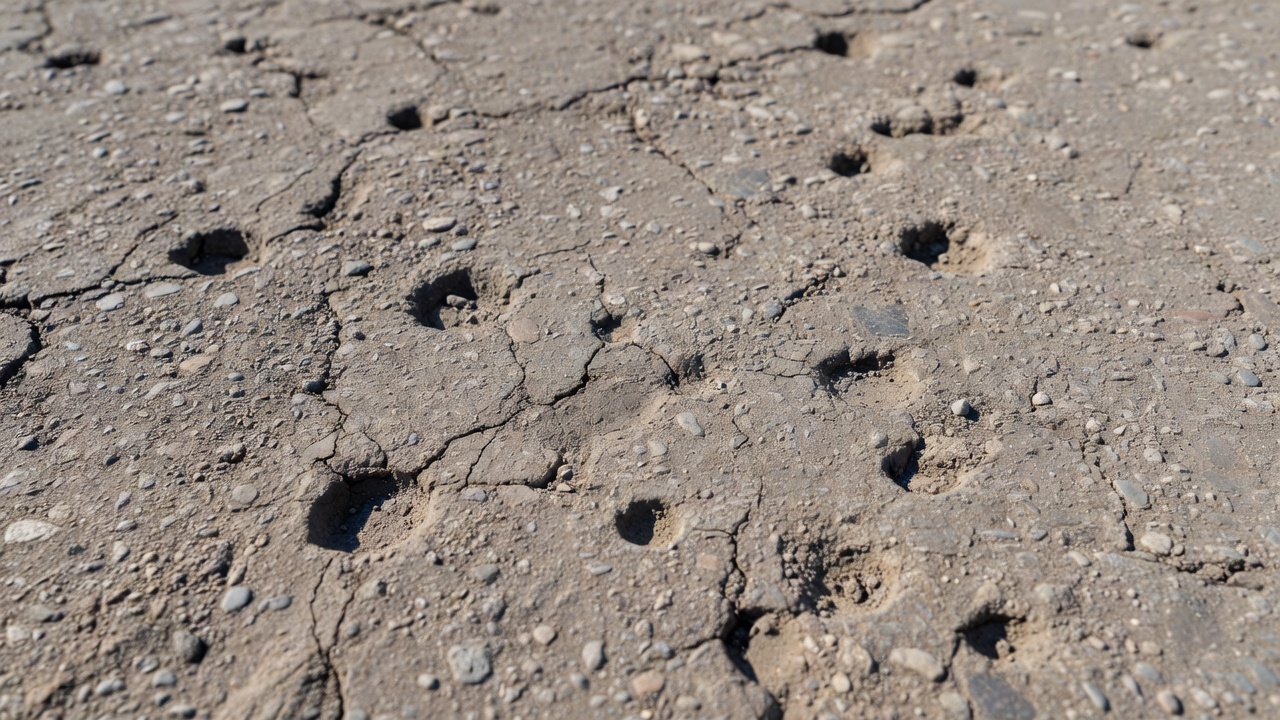
The wearing course must satisfy four fundamental performance requirements: friction, smoothness, durability, and impermeability. Each requirement has specific evaluation metrics and acceptance criteria defined by ICAO Annex 14, FAA Advisory Circulars, and industry standards.
Friction (Skid Resistance)
Friction is the most critical operational performance requirement for runway wearing courses. The friction coefficient between aircraft tires and the pavement surface determines braking distance, directional control during crosswind landings, and the ability to reject a takeoff within the available runway length. FAA Advisory Circular AC 150/5320-12C classifies friction into three categories using continuous friction measuring equipment (CFME) at 40 mph (65 km/h). For new design and construction, the target Mu value is ≥ 0.82. The Maintenance Planning Level (alert threshold requiring evaluation) is 0.60. The Minimum Friction Level (below which the runway must be notified as slippery when wet) is 0.50. At 60 mph (97 km/h), the corresponding values are 0.72 for new design, 0.50 for MPL, and 0.42 for MFL.
Friction results from two scale-dependent mechanisms: microtexture and macrotexture. Microtexture refers to the small-scale roughness of individual aggregate particle surfaces (0.001 to 0.5 mm asperities) that provides dry-weather friction by penetrating the thin water film between tire and pavement. Macrotexture refers to the larger-scale surface irregularities (0.5 to 50 mm) that provide drainage channels for bulk water escape from beneath the tire footprint at high speeds. The ICAO minimum macrotexture depth of 1.0 mm is designed to ensure adequate wet-weather friction at aircraft takeoff and landing speeds.
Friction survey frequency is specified by the FAA based on daily turbojet landings per runway end: under 15 landings, 1 year, 16 to 30–6 months, 31 to 90–3 months, 91 to 150–1 month, 151 to 210–2 weeks, over 210–1 week. When friction falls below the Maintenance Planning Level for a continuous 1,000 ft (305 m) section, an extensive evaluation is required. When friction falls below the Minimum Friction Level for 500 ft (152 m), immediate corrective action is required. Texture depth below 0.030 inches (0.76 mm) on existing pavements requires corrective action within 1 year, and texture depth below 0.010 inches (0.25 mm) requires correction within 2 months.
Smoothness
Ride quality measured by the International Roughness Index (IRI) expressed in inches/mile or m/km quantifies surface smoothness for aircraft operations. The FAA smoothness specification for HMA wearing courses uses a 4.5-meter (15-foot) rolling straightedge: the surface must not deviate more than 6 mm (1/4 inch) from the straightedge at any point. For PCC pavements, the profile tolerance is typically ± 6 mm under a 4.5-meter straightedge. Surface irregularities cause dynamic load amplification, a bump or dip that deflects an aircraft landing gear by 25 mm (1 inch) can double the instantaneous load on the pavement, accelerating fatigue damage.
Durability
Durability is the ability of the wearing course to resist deterioration from traffic abrasion, environmental aging, fuel and chemical attack, and thermal cycling over its design life. For HMA wearing courses, durability is controlled by binder content (adequate binder film thickness protects aggregate from stripping and raveling), air voids (low voids prevent water ingress and binder oxidation), aggregate quality (abrasion resistance, soundness, polishing resistance), and compaction (adequate density prevents premature aging). The FHWA Long-Term Pavement Performance (LTPP) program has documented that HMA wearing courses with air voids between 3% and 5% at construction age at approximately half the rate of mixtures with air voids above 7%, demonstrating the direct relationship between density and durability.
For PCC wearing courses, durability is controlled by air entrainment (freeze-thaw resistance), water-cement ratio (permeability and strength), aggregate freeze-thaw soundness, and joint sealant condition. The FAA requires air content of 4.5% to 7.5% for PCC in freeze-thaw climates, and limits the water-cement ratio to 0.45 to prevent excessive permeability.
Impermeability
Impermeability is the ability of the wearing course to prevent water infiltration into the underlying pavement structure. For dense-graded HMA wearing courses, the target in-place air void content of 3% to 5% provides low permeability (typically 1 x 10⁻⁵ to 1 x 10⁻⁴ cm/sec), effectively waterproofing the pavement structure. When air voids exceed 7% to 8%, permeability increases exponentially, allowing water to penetrate the pavement, weaken the base and subgrade, and accelerate stripping of the asphalt binder from aggregate. Field permeability testing using the NCAT field permeameter (ASTM D6390) provides a direct measurement of in-place HMA permeability.
For PCC wearing courses, impermeability is provided by the low water-cement ratio and adequate consolidation during placement. The maximum permeability of PCC for airfield wearing courses is typically specified as 2,500 coulombs (rapid chloride permeability test per ASTM C1202) for durable concrete in severe exposure conditions.
Airport Wearing Course Specifications, FAA Detailed Requirements
The FAA establishes the authoritative specification framework for airport wearing courses through a coordinated system of Advisory Circulars. FAA AC 150/5370-10H provides the construction specifications for Items P-401 (HMA) and P-501 (PCC). FAA AC 150/5320-6G provides the design methodology using FAARFIELD software. FAA AC 150/5320-12C provides friction, texture, and grooving requirements.
FAA P-401 Wear Course, Key Construction Changes in AC 150/5370-10H
The 2018 edition of AC 150/5370-10H introduced several significant changes to P-401 that affect wearing course construction. Compaction is now measured as percent of Total Maximum Density (TMD), aligning airport specifications with the highway industry standard (Superpave mix design). Tack coat was made a separate pay item to ensure proper bond between pavement layers. The Asphalt Pavement Analyzer (APA) rut testing requirement was introduced with a maximum of 10 mm at 4,000 passes at 250 psi and 64°C (AASHTO T340), with the Hamburg device (AASHTO T324) as an alternative requiring under 10 mm at 20,000 passes. The PG binder grade bump table was added, requiring the low-temperature grade to be based on climate plus an additional bump for the surface course position. The Quality Control Program (C-100) became a separate pay item, recognizing the importance of statistical quality control in wearing course construction.
FAA P-501 Wear Course, Key Requirements
FAA P-501 specifications for PCC wearing courses include requirements for aggregate gradation per ASTM C33, a control strip of 250 feet (76 m) for pilot and fill-in lanes, bond breaker (choke stone No. 89 or fabric) between PCC and stabilized base, and maximum fly ash CaO content of 15%. Coarseness Factor (CF) and Workability Factor (WF) per TSPWG M 3-250-04.97-05 are used to optimize aggregate gradation for workability and finishability.
Grooving Requirements, FAA AC 150/5320-12C
Runway grooving is the single most effective surface treatment for wet-weather friction improvement. FAA requirements for new grooving are mandatory for federally-funded projects: groove depth of 1/4 inch ± 1/16 inch (6 mm ± 1.6 mm), groove width of 1/4 inch ± 1/16 inch (6 mm ± 1.6 mm), groove spacing of 1-1/2 inches (38 mm) center-to-center, alignment tolerance not exceeding 3 inches (8 cm) per 75 feet (23 m), and groove bottom shape of trapezoidal or rectangular. Grooving can be performed by plastic grooving (ribbed roller or plate pressed into plastic concrete or fresh HMA) or by saw-cut grooving (diamond blade saw cutting into hardened concrete or existing HMA).
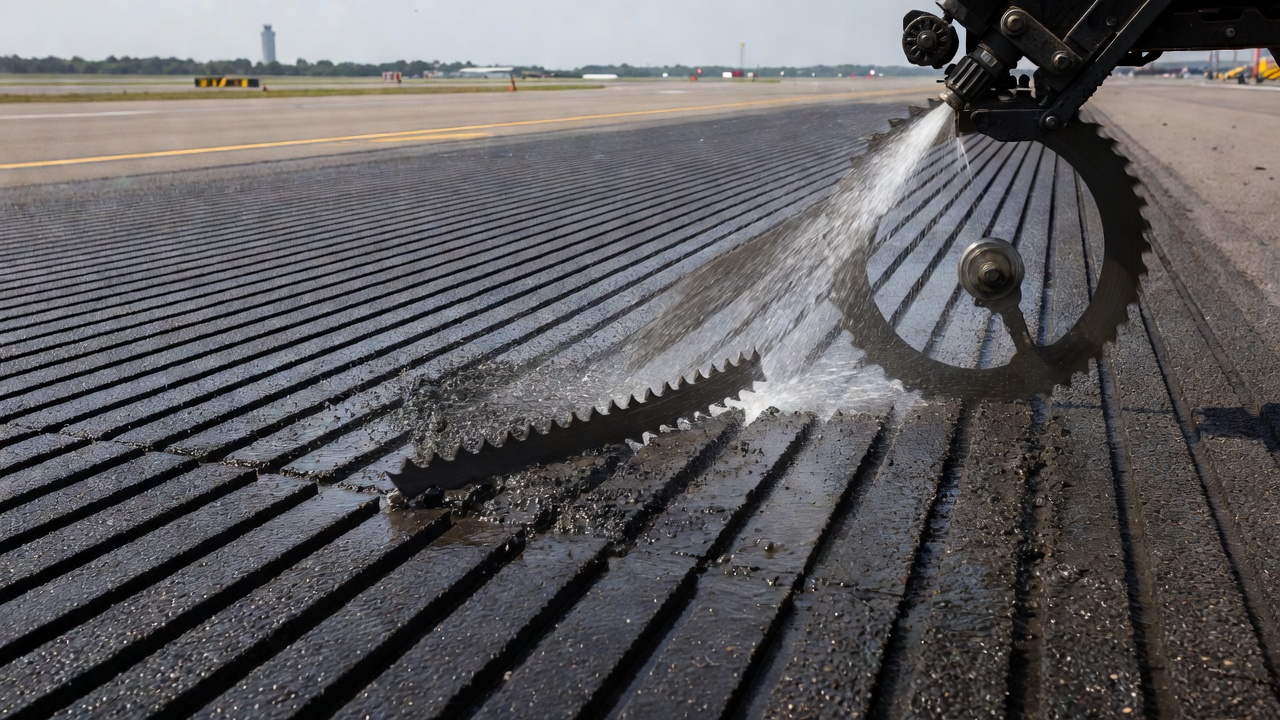
Groove wear criteria specify that when 40% of grooves measure 1/8 inch (3 mm) or less in depth and/or width for a continuous 1,500-foot (457 m) section, corrective action is required. Groove wear occurs progressively under traffic as the wearing course surface abrades. Research data from UK airports demonstrates the effectiveness of grooving: Marshall Asphalt (0/14 mm aggregate) increased texture depth from 0.3 mm (ungrooved) to 1.1 mm (grooved) and Mu value from 0.59 to 0.74.
Primary runways require full-width grooving. Runway intersections and high-speed exit taxiways require grooving patterns per Figures 2-10 and 2-11 of AC 150/5320-12C, which address the complex tire-path geometries at intersections where aircraft transition between runway and taxiway at relatively high speeds.
Wearing Course Thickness Design
The thickness of the wearing course is determined through structural design procedures that ensure the pavement can withstand the design aircraft traffic over its intended service life without exceeding allowable stress or strain limits. The FAA FAARFIELD (FAA Rigid and Flexible Iterative Elastic Layered Design) software performs the design computation using layered elastic theory.
For flexible pavements, the wearing course thickness is determined by two critical criteria: the horizontal tensile strain at the bottom of the HMA layer (controlling fatigue cracking) and the vertical compressive strain at the top of the subgrade (controlling rutting). The FAARFIELD software iteratively adjusts the HMA layer thickness until the computed strains are below allowable limits for the specified number of aircraft load applications. The FAA minimum HMA surface course thicknesses are: 4 inches (100 mm) for critical areas (runways serving aircraft over 60,000 lbs, runway ends, and other high-stress zones) and 3 inches (76 mm) for noncritical areas (taxiways, aprons, low-traffic zones).
For rigid pavements, the PCC slab thickness is determined by the computed tensile stress at the bottom of the slab under the design aircraft loading, with the stress limited to a fraction of the concrete’s flexural strength (typically stress-to-strength ratio of 0.40 to 0.50 depending on traffic volume). Typical PCC slab thicknesses range from 6 to 8 inches (150 to 200 mm) for general aviation pavements (aircraft under 12,500 lb), 8 to 12 inches (200 to 305 mm) for commuter and business aviation (up to 60,000 lb), 12 to 16 inches (305 to 406 mm) for air carrier pavements (Boeing 737/A320 class), and 16 to 20+ inches (406 to 508 mm) for heavy aircraft (Boeing 747/777/A380). For traffic exceeding 25,000 annual departures, the FAA requires a thickness increase: 4% for 50,000 departures, 8% for 100,000, 10% for 150,000, and 12% for 200,000 departures.
Common Surface Course Distresses
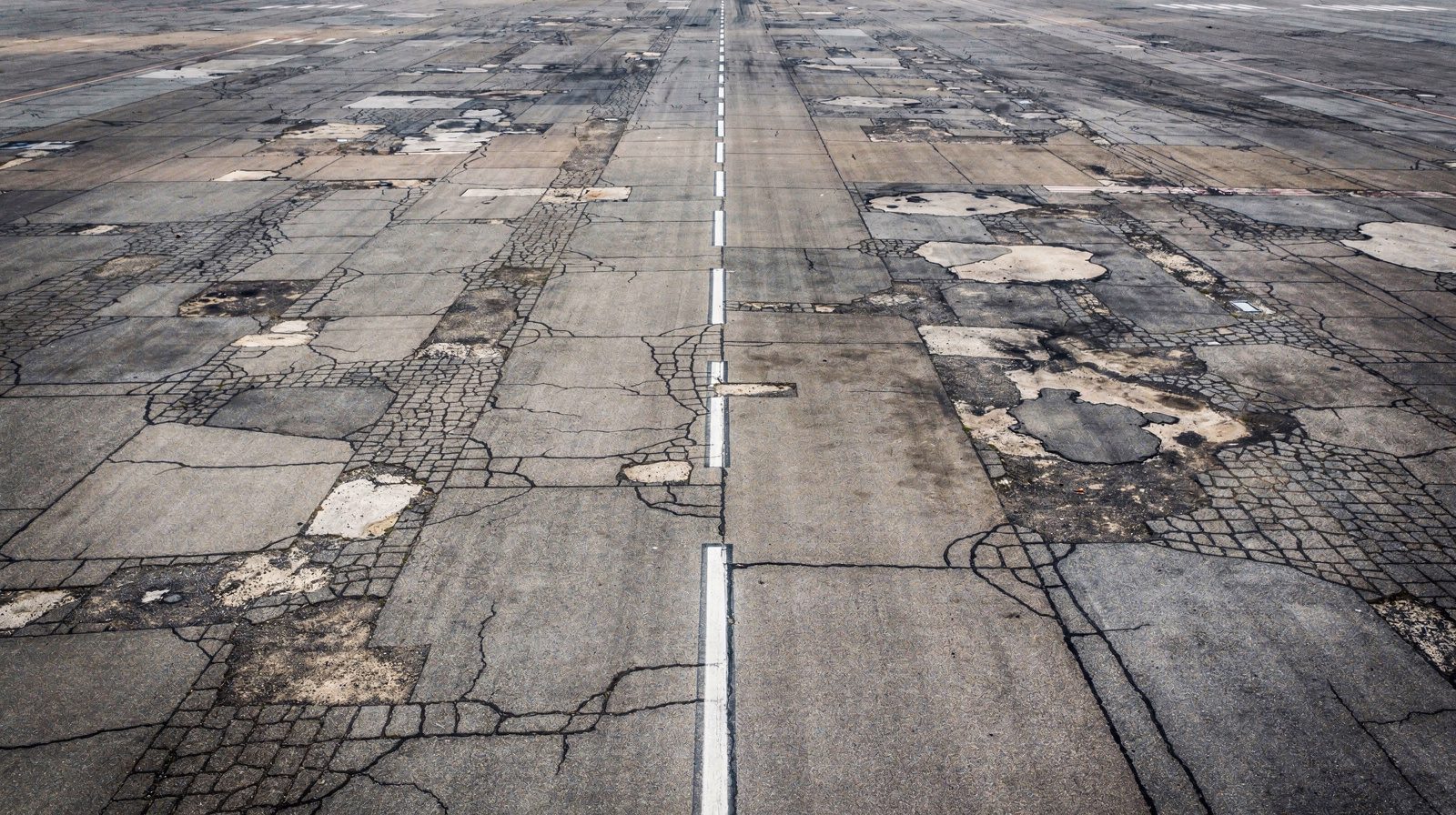
The wearing course exhibits characteristic distress patterns that pavement inspectors must identify, classify, and measure for Pavement Condition Index (PCI) assessment. ASTM D5340 identifies 17 distinct distress types for asphalt-surfaced airport pavements and 14 for Portland cement concrete pavements.
Asphalt Wearing Course Distresses
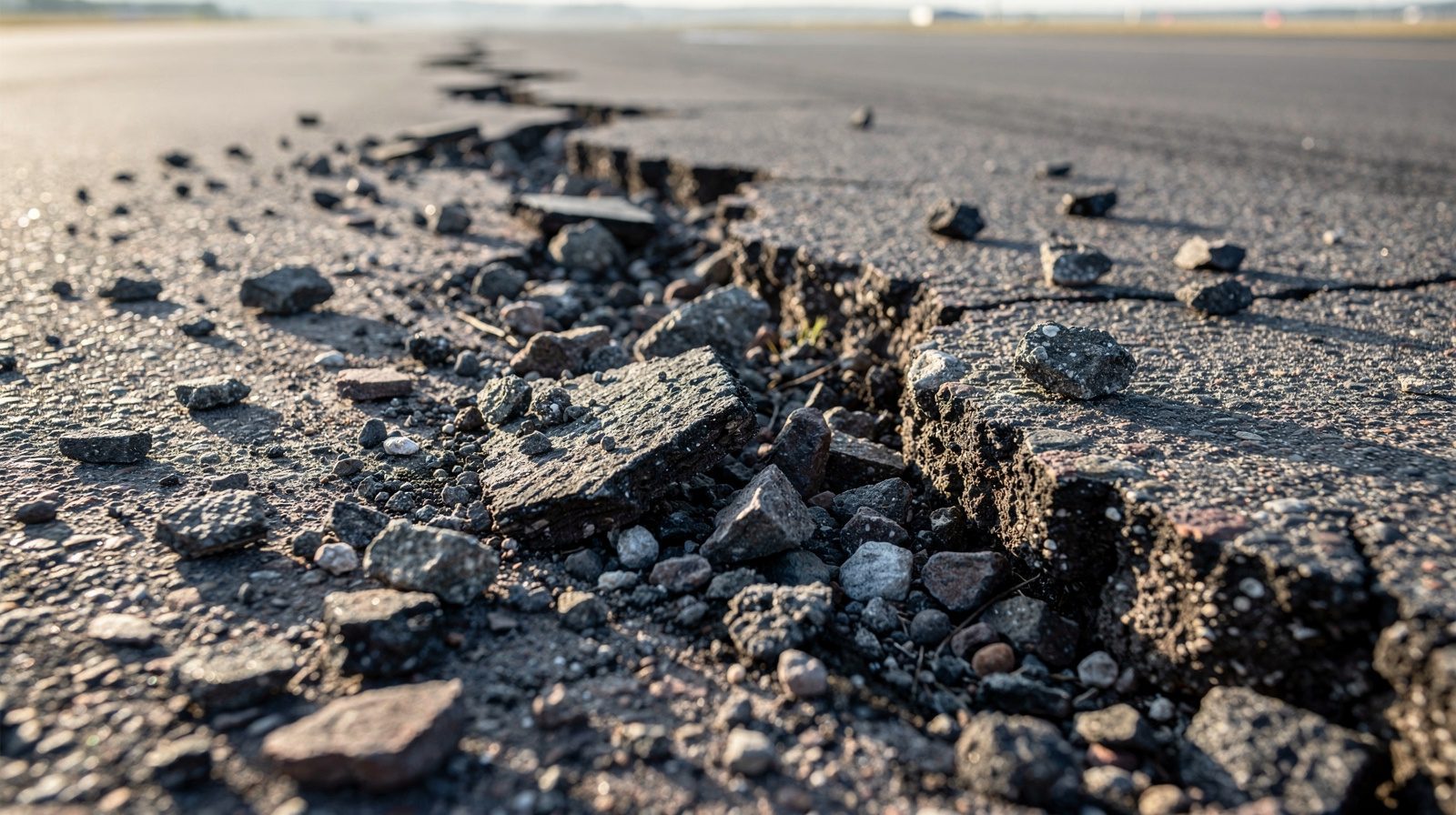
Raveling (PAVER Code 52) is the progressive loss of aggregate particles from the pavement surface downward due to binder hardening, poor compaction, insufficient binder content, or stripping of the asphalt from the aggregate. In the early stages (Low severity), the surface appears weathered with loss of fines and fine aggregate but coarse aggregate remains embedded. As raveling progresses to Medium severity, coarse aggregate begins to dislodge, creating a rough surface texture with missing aggregate pits. At High severity, the surface has lost significant aggregate depth, creating an open, pitted surface that generates FOD and accelerates further deterioration.
Bleeding (PAVER Code 42) appears as a film of bituminous material on the pavement surface, a shiny, glass-like, sticky film that significantly reduces skid resistance, especially when wet. Bleeding occurs when excess asphalt binder rises to the surface under traffic compaction or high temperatures. The primary causes are excessive asphalt content in the mix design, low air voids (under 3%), or excessive prime coat or tack coat.
Polished Aggregate (PAVER Code 51) is the wearing away of the surface texture of aggregate particles under traffic, causing the surface to become smooth and slippery. The fine aggregate matrix may become polished even if the coarse aggregate appears visually adequate because the fine aggregate provides the microtexture that generates friction at low speeds. The primary cause is the use of aggregate with inadequate polishing resistance (low PSV value). The only correction is restoration of surface texture through grooving, shot blasting, or overlay.
Alligator (Fatigue) Cracking (PAVER Code 41) consists of interconnected cracks forming small polygons resembling alligator skin. This is a structural distress indicating that the wearing course and/or base has failed under repeated traffic loading. The cracks initiate at the bottom of the HMA layer where tensile strains are highest and propagate upward to the surface. Low severity alligator cracking shows fine longitudinal hairline cracks in the wheel paths. High severity shows complete disintegration of the surface in the affected area with blocks rocking under traffic. Alligator cracking requires structural investigation of the base and subgrade, surface treatment alone will not correct the problem.
Rutting (PAVER Code 53) appears as longitudinal surface depressions in the wheel paths, often with transverse displacement (shoving or upheaval) at the depression edges. Rutting can result from structural deformation of the subgrade or base (structural rutting) or from instability in the HMA wearing course itself (mix instability rutting). Low severity rutting is under 6 mm (1/4 inch) deep on runways and high-speed taxiways, medium is 6 to 13 mm (1/4 to 1/2 inch), and high is over 13 mm (1/2 inch). Rutting over 13 mm deep on runways presents a hydroplaning hazard as water ponds in the depressions.
Jet Blast Erosion (PAVER Code 46) is surface deterioration caused by the heat and force of jet engine exhaust. It appears as discoloration, binder loss, aggregate exposure, and in severe cases, surface pitting and aggregate dislodgement in localized areas behind aircraft parking positions, at runway thresholds where aircraft apply takeoff thrust, and at holding bays. The high temperatures of modern jet engines (exhaust gas temperatures reaching 600°C to 900°C at the engine exhaust nozzle) can carbonize and burn away the asphalt binder, leaving a weakened, friable surface that generates FOD.
Slippage Cracking (PAVER Code 55) appears as crescent or half-moon shaped cracks with the open end of the crescent pointing in the direction of traffic. This distress indicates a bond failure between the wearing course and the underlying layer, caused by braking or turning forces that exceed the interlayer bond strength.
PCC Wearing Course Distresses
Scaling is the flaking or peeling away of the concrete surface due to freeze-thaw action, de-icing chemical attack, or poor curing. It typically begins as small surface flakes and progresses to expose coarse aggregate. The primary cause is inadequate air entrainment (below 4.5% air content), excessive water-cement ratio, or application of de-icing chemicals before the concrete has adequately cured.
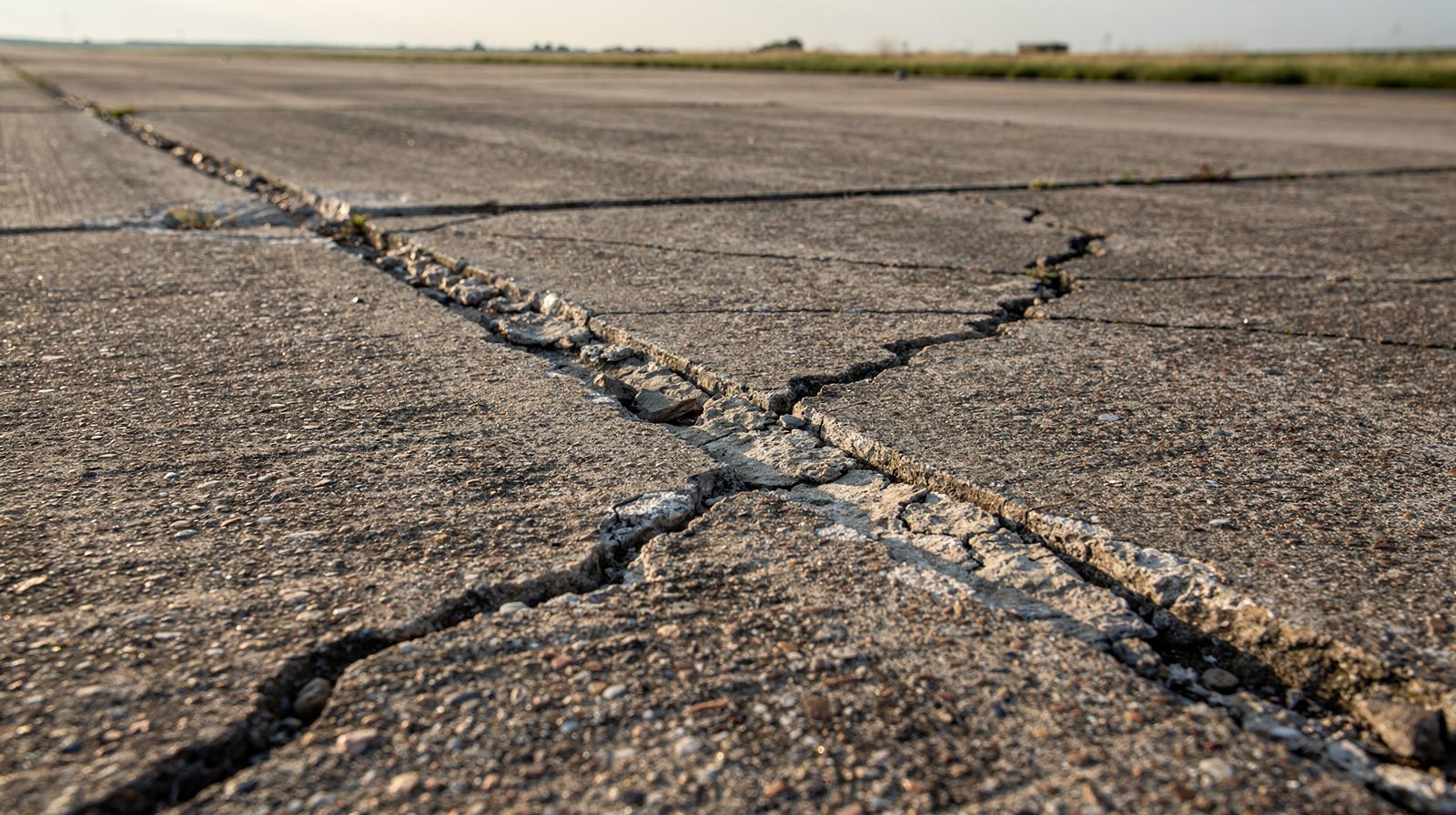
Corner Break is a crack extending from a slab corner to intersect a transverse and longitudinal joint at a distance of less than 6 feet (1.8 m) from the corner. Corner breaks result from loss of slab support (voids beneath the slab corner from base pumping) combined with traffic loading at the slab corner.
Faulting is the vertical displacement of one slab end relative to the adjacent slab at a transverse joint. Faulting results from accumulation of incompressible materials in the joint combined with pumping of fine base particles from beneath the approach slab. Low severity faulting is under 6 mm (1/4 inch), medium is 6 to 13 mm (1/4 to 1/2 inch), and high is over 13 mm (1/2 inch).
Surface Course Condition Rating
The Pavement Condition Index (PCI) is the standard methodology for quantifying wearing course condition in airport pavements. Per ASTM D5340, the PCI is calculated through a systematic field survey that identifies, measures, and rates all distresses present in a pavement sample unit. The PCI numerical scale ranges from 0 (Failed) to 100 (Excellent).
| PCI Value | Condition Rating |
|---|---|
| 86–100 | Excellent |
| 71–85 | Very Good |
| 56–70 | Good |
| 41–55 | Fair |
| 26–40 | Poor |
| 11–25 | Very Poor |
| 0–10 | Failed |
The PCI survey procedure divides the pavement into sample units (typically 25 ± 5 parking spaces for aprons, 2,500 to 5,000 ft² for runways and taxiways). Each sample unit is inspected by walking the full area and measuring every distress by type, severity, and extent. Deduct values for each distress are determined from standard tables in ASTM D5340 based on distress type, severity (Low, Medium, High), and extent (density as a percentage of the sample unit area). The total deduct value for the sample unit is the sum of individual deduct values, which is then corrected for multiple distress interactions (maximum corrected deduct value procedure) and subtracted from 100 to obtain the section PCI.
The PAVER Distress Identification Manual (USACE ERDC-CERL / AFCEC) provides comprehensive documentation of each distress type with photographic examples, measurement criteria, and severity level definitions. Crack spalling severity is defined: Light, no spall longer than 3 inches, no spalled area larger than 4 square inches, under 10% of crack faces spalled, Moderate, no spall longer than 6 inches, under 50% of segment spalled, Severe, beyond moderate criteria.
Corrugation severity is measured by mean elevation difference using a 10-foot (3 m) straightedge: for runways and high-speed taxiways, Low is under 6 mm (1/4 inch), Medium is 6 to 13 mm (1/4 to 1/2 inch), and High is over 13 mm (1/2 inch). For taxiways and aprons, the thresholds are doubled: Low under 13 mm, Medium 13 to 25 mm, High over 25 mm, reflecting the lower operating speeds and reduced roughness sensitivity on these pavements.
Surface Course Maintenance
Preservation of wearing course condition through appropriate maintenance is essential to maximize pavement service life and ensure operational safety. The FAA AC 150/5380-6C recommends a comprehensive pavement maintenance management program that includes annual inspections per ASTM D5340, a systematic schedule of preventive and remedial maintenance, annual budgeting for maintenance, and stockpiling of maintenance materials for rapid response to distress development.
Crack Sealing and Filling
Crack treatment is the most cost-effective preventive maintenance activity for wearing courses. The appropriate treatment depends on crack width: cracks under 3 mm (1/8 inch) should be monitored and sealed if active (if they show seasonal opening and closing), cracks 3 to 25 mm (1/8 to 1 inch) should be routed to a uniform width of 3/4 inch (19 mm), cleaned with compressed air, and filled with hot-applied polymer-modified sealant per FAA M-361 specification, cracks over 25 mm (1 inch) should be cleaned, filled with HMA patch material, and compacted, cracks in pavement under 5 inches thick should receive full-depth patch repair to prevent reflection cracking.
Surface Treatments
Chip seals (FAA Item P-609) provide temporary improvement of surface friction by applying a latex-modified emulsion followed by embedded aggregate chips. A fog seal applied on top minimizes loose chips and FOD generation. Chip seals are generally not recommended for active runway surfaces due to the FOD hazard from loose aggregate and are restricted to low-speed taxiways, shoulders, overruns, and non-aeronautical pavements.
Slurry seal and microsurfacing (FAA Item P-626) use Type II or Type III gradation aggregate with emulsified asphalt to produce a thin surface treatment that restores friction and seals the surface. The FAA considers these temporary measures with 2 to 5 year service life until overlay. Microsurfacing, with its polymer-modified binder and rapid-curing chemistry, is the preferred slurry-type treatment for airfield pavements.
Fog seal, a thin application of diluted asphalt emulsion, seals surface voids and re-adheres loose fines. The FAA cautions that fog seals can substantially reduce the coefficient of friction during the first year after application (AC 150/5320-12C, para 4-1) and are not recommended on surfaces with marginally acceptable friction.
Rubber removal is required at regular intervals on runways. When aircraft tires touch down on the runway surface, rubber deposits accumulate in the touchdown zone, filling surface texture and reducing friction. Removal is accomplished by high-pressure water blasting (over 10,000 psi), chemical solvents, or mechanical scouring (wire brushes or grinding). The frequency depends on traffic volume: under 15 daily jet movements, every 2 years, 91 to 150 daily, every 4 months, over 210 daily, every 2 months.
Diamond grinding for concrete pavements restores smoothness and friction by removing surface irregularities and exposing fresh aggregate. Typical grinding depth is 6 to 10 mm (1/4 to 3/8 inch). The target average texture depth after retexturing is a minimum of 0.030 inches (0.76 mm) per AC 150/5320-12C, paragraph 3-23.
Groove maintenance requires periodic measurement of groove depth. When 40% or more of grooves measure 1/8 inch (3 mm) or less in depth for a continuous 1,500 ft (457 m) section, the grooves must be recut to restore the original 1/4 inch depth.
Overlay versus Replacement Decision
The decision to overlay an existing wearing course versus reconstruct the pavement is one of the most consequential pavement management decisions. FAA AC 150/5320-6G, Chapter 4 provides the decision framework.
Pavement Preservation (non-structural surface treatments including thin overlay of 50 mm or less) is appropriate when the existing pavement has a PCI of 70 to 100, minimal structural distress, and the primary deficiencies are surface-related (friction loss, oxidation, fine cracking). Preservation treatments do not add structural capacity.
Rehabilitation via Overlay (structural enhancement) is recommended when the existing pavement PCI is 40 to 70 and structural capacity is deficient for current or forecast traffic, but the existing pavement is structurally salvageable. The overlay thickness is designed through FAARFIELD layered elastic analysis to meet the required structural number. Non-structural (functional) flexible overlays require a minimum of 50 mm (2 inches) for surface correction. Structural overlays are typically 75 to 150 mm (3 to 6 inches) depending on the required thickness addition.
Reconstruction (full removal and replacement) is required when PCI is below 40, or when the pavement exhibits severe structural failure (extensive alligator cracking, base failures, subgrade rutting), extensive D-cracking in concrete pavements, or failed subgrade conditions that cannot be corrected by overlay. Reconstruction provides a new 20-year design life at a cost typically 2 to 3 times that of an overlay.
Overlay types include: Flexible overlay on flexible pavement, mill the existing surface, apply tack coat, place HMA overlay designed per FAARFIELD. Flexible overlay on rigid pavement, requires treatment of existing joints to prevent reflection cracking through crack-and-seat, rubblization (FAA Item P-215), or saw-and-seal. Rigid overlay on rigid pavement (bonded), minimum thickness typically 50 to 100 mm (2 to 4 inches). Rigid overlay on rigid pavement (unbonded), minimum thickness typically 150 to 175 mm (6 to 7 inches) with a bond breaker layer.
The life-cycle cost analysis required by FAA AC 150/5320-6G must consider construction cost, maintenance cost, user delay costs, and remaining pavement life. Overlay typically costs 30% to 50% of reconstruction while providing 10 to 15 years of additional service life compared to 20 years for reconstruction.
The decision matrix provides guidance based on PCI: PCI 86-100, do nothing or crack seal only, PCI 71-85, crack seal and preventive seal coat, PCI 56-70, mill 25 to 50 mm (1 to 2 inches) plus 50 to 100 mm (2 to 4 inches) HMA overlay, PCI 41-55, structural overlay of 100 to 150 mm (4 to 6 inches) or partial reconstruction, PCI 0-40, full reconstruction.
Related Terms
Hot Mix Asphalt (HMA), The standard material for flexible pavement wearing courses, specified under FAA P-401 with dense aggregate gradation and controlled air voids.
Stone Mastic Asphalt (SMA), A gap-graded, stone-on-stone asphalt mixture with exceptional rut resistance and durability, used extensively at European airports.
Open-Graded Friction Course (OGFC), A porous asphalt wearing course with 15-25% air voids that drains water through the pavement structure, reducing hydroplaning.
Porous Friction Course (PFC), An FAA-specified thin porous HMA overlay (19-40 mm thick) for friction improvement with drainage capability.
Portland Cement Concrete (PCC), The rigid pavement wearing course material specified under FAA P-501 with controlled flexural strength, joint spacing, and surface texturing.
Grooving, Transverse grooves cut or formed into the wearing course surface at 1/4 inch depth and 1-1/2 inch spacing to provide water drainage channels beneath aircraft tires.
Macrotexture, Large-scale surface texture (0.5-50 mm wavelength) that provides water drainage paths for wet-weather friction. ICAO requires minimum 1.0 mm mean texture depth.
Microtexture, Small-scale aggregate surface roughness (0.001-0.5 mm) that provides dry-weather friction through tire-to-aggregate contact.
Skid Resistance, The friction coefficient between aircraft tires and the pavement surface, measured by continuous friction measuring equipment (CFME).
Pavement Condition Index (PCI), The standardized numerical rating of pavement condition per ASTM D5340, ranging from 0 (Failed) to 100 (Excellent).
Frequently Asked Questions
- What is a wearing course in pavement construction?
- The wearing course, also known as the surface course, is the topmost layer of a flexible or rigid pavement structure. In flexible pavements, it consists of hot mix asphalt (HMA), stone mastic asphalt (SMA), open-graded friction course (OGFC), or porous friction course (PFC) with a typical thickness of 75 to 150 mm (3 to 6 inches). In rigid pavements, the wearing surface is the Portland cement concrete (PCC) slab itself, typically 150 to 500 mm (6 to 20 inches) thick depending on aircraft class. The wearing course must distribute wheel loads to the base course, prevent water infiltration, provide friction for braking and cornering, resist shear stresses from aircraft, withstand jet blast and fuel spillage, and deliver a smooth surface. ICAO Annex 14 specifies that runway wearing courses must achieve a minimum average macrotexture depth of 1.0 mm and maintain friction levels above defined maintenance planning levels.
- What are the different types of wearing course materials?
- The five principal wearing course types are: (1) Dense-Graded Hot Mix Asphalt (HMA) - FAA P-401 specification, 3-5% air voids, 4.5-6.0% binder content, used as the standard airport asphalt wearing course. (2) Stone Mastic Asphalt (SMA) - gap-graded with 70-80% coarse aggregate, stone-on-stone skeleton, 6-7% binder with fiber stabilization, excellent rut resistance with over 90% of projects showing under 4 mm rutting after 2-6 years. (3) Open-Graded Friction Course (OGFC) - 15-25% air voids for water drainage through the pavement, 19-40 mm thick, reduces hydroplaning but not recommended for runways over 91 daily turbojet arrivals due to rubber clogging. (4) Porous Friction Course (PFC) - similar to OGFC, thin HMA overlay 19-40 mm thick, for use on HMA only, with optional rubber particles for durability. (5) Portland Cement Concrete (PCC) - FAA P-501 specification, 28-day flexural strength of 600-700 psi, joint spacing typically 20 ft, surface texturing required through brushing, tining, or grooving.
- What are ICAO Annex 14 requirements for runway wearing courses?
- ICAO Annex 14, Volume I establishes three critical requirements for runway wearing courses. First, a three-tier friction level system: Design Objective Level (DOL) - target friction on new or resurfaced runways, Maintenance Planning Level (MPL) - level below which corrective maintenance should be initiated, and Minimum Friction Level (MFL) - level below which the runway must be notified as potentially slippery when wet. For the Mu-Meter at 65 km/h, DOL is 0.72, MPL is 0.52, and MFL is 0.42. For the Grip Tester, DOL is 0.74, MPL is 0.53, and MFL is 0.43. Second, a minimum average macrotexture depth of 1.0 mm (0.040 in) measured by the volumetric patch method (ASTM E965) or laser profilometer (ASTM E1845). Third, runway surface condition classification into dry, damp, wet, water patches, and flooded categories for reporting to flight crews.
- What are FAA specifications for runway grooving on wearing courses?
- FAA AC 150/5320-12C specifies mandatory grooving requirements for federally-funded runway projects. Grooves must be 1/4 inch +/- 1/16 inch (6 mm +/- 1.6 mm) in both depth and width, spaced at 1-1/2 inches (38 mm) center-to-center, with alignment tolerance not varying more than 3 inches (8 cm) per 75 feet (23 m). Groove geometry must be trapezoidal or rectangular. Grooving may be performed in plastic concrete (for new PCC) using a ribbed roller or plate, or saw-cut into hardened concrete or existing HMA. When 40% of grooves measure 1/8 inch (3 mm) or less in depth for a 1,500-foot (457 m) continuous section, corrective action is needed. The FAA friction thresholds require new design/construction to achieve a Mu value of at least 0.82 at 40 mph, with the Maintenance Planning Level at 0.60 and Minimum Friction Level at 0.50.
- What are the common distresses found on wearing courses?
- ASTM D5340 (Standard Test Method for Airport Pavement Condition Index Surveys) identifies 17 asphalt surface distresses: Alligator/Fatigue Cracking (structural, interconnected cracks from load repetition), Bleeding (excess bitumen film on surface, reduces friction), Block Cracking (thermal shrinkage, divides pavement into rectangular pieces), Corrugation (ripples perpendicular to traffic from unstable base), Depression (localized low areas from settlement), Jet Blast Erosion (surface deterioration from exhaust heat), Joint Reflection Cracking (reflecting from underlying PCC joints), Longitudinal and Transverse Cracking, Oil Spillage (binder softening from fuel), Patching, Polished Aggregate (smooth worn aggregate reducing skid resistance), Raveling (progressive aggregate loss from binder hardening or poor compaction), Rutting (wheel path depressions from structural deformation or mix instability), Shoving (localized displacement from braking forces), Slippage Cracking (crescent cracks from poor bond between layers), Swell (upward bulge from frost heave or expansive soils), and Weathering (loss of binder and fines from environmental exposure). Each distress is rated by severity (Low, Medium, High) and extent for PCI calculation.
- How is wearing course condition assessed for airport pavements?
- Wearing course condition is assessed through the Pavement Condition Index (PCI) survey per ASTM D5340. PCI values range from 0 (Failed) to 100 (Excellent), with standard condition rating: 86-100 Excellent, 71-85 Very Good, 56-70 Good, 41-55 Fair, 26-40 Poor, 11-25 Very Poor, 0-10 Failed. Surveys can be Standard (full detailed per ASTM D5340), Simplified (using pre-calculated deduct value tables), or Cursory (for emergencies). Friction testing using Continuous Friction Measuring Equipment (CFME) such as Mu-Meter or Grip Tester measures surface friction values at test speeds of 40 mph (65 km/h) and 60 mph (97 km/h). Macrotexture depth is measured using the volumetric patch method (ASTM E965) or laser profilometry (ASTM E1845). The FAA requires friction surveys at frequencies ranging from 1 week (over 210 daily landings) to 1 year (under 15 daily landings). Ground Penetrating Radar (GPR) and Heavy Weight Deflectometer (HWD) testing assess structural condition of the wearing course and underlying layers.
- When should a wearing course be overlaid versus replaced?
- The overlay versus replacement decision depends on the Pavement Condition Index and structural condition. Per FAA AC 150/5320-6G, Pavement Preservation (non-structural surface treatments including thin overlay of 50 mm or less) is appropriate when PCI is 70-100 and structural distress is minimal. Rehabilitation via overlay (structural enhancement) is recommended when PCI is 40-70 and structural capacity is deficient but the existing pavement is salvageable. Reconstruction (full removal and replacement) is required when PCI is below 40, or when severe structural failure, extensive D-cracking, or failed subgrade conditions exist. Flexible overlays on flexible pavements require minimum 50 mm (2 in) for functional correction and are designed per FAARFIELD layered elastic analysis for structural overlays. Flexible overlays on rigid pavements require crack-and-seat, rubblization, or saw-and-seal treatment to prevent reflective cracking. Overlay typically costs 30-50% of reconstruction while providing 10-15 years additional life compared to 20 years for new construction.
- What maintenance techniques are used for wearing course preservation?
- Wearing course maintenance techniques include: Crack sealing and filling - monitor cracks under 3 mm, route and seal 3-25 mm cracks with hot-applied sealant, fill cracks over 25 mm with HMA patch. Chip seals (FAA P-609) - temporary friction improvement with latex-modified emulsion and embedded aggregate, fog seal on top to minimize FOD. Slurry seal and microsurfacing (P-626) - 2-5 year temporary life, Type II or Type III gradation, not recommended in cold climates with snow removal. Diamond grinding (concrete) - restores smoothness and friction, typical depth 6-10 mm (1/4 to 3/8 in). Rubber removal - high-pressure water over 10,000 psi, chemical solvents, or mechanical scouring, with frequency ranging from 2 years (under 15 daily jet movements) to 2 months (over 210 daily movements). Groove maintenance - monitor groove depth, recut to 1/4 inch when 40% of grooves reach 1/8 inch depth over 1,500 continuous feet. Retexturing targets minimum 0.030 inch (0.76 mm) average texture depth using shot blasting, milling, acid etching, or overlay.