What is Warm Mix Asphalt (WMA) Additive?
Warm Mix Asphalt (WMA) Additive, Definition and Overview
A Warm Mix Asphalt (WMA) additive is a material or technological process that enables the production, placement, and compaction of asphalt mixtures at temperatures significantly lower than conventional Hot Mix Asphalt (HMA). WMA technologies reduce mixing and compaction temperatures by 20–40°C (36–72°F) compared to HMA, which is typically produced at 150–190°C (300–375°F). WMA operates in the temperature range of approximately 100–150°C (212–302°F) , placing it between half-warm asphalt (70–100°C) and conventional HMA on the asphalt production temperature spectrum.
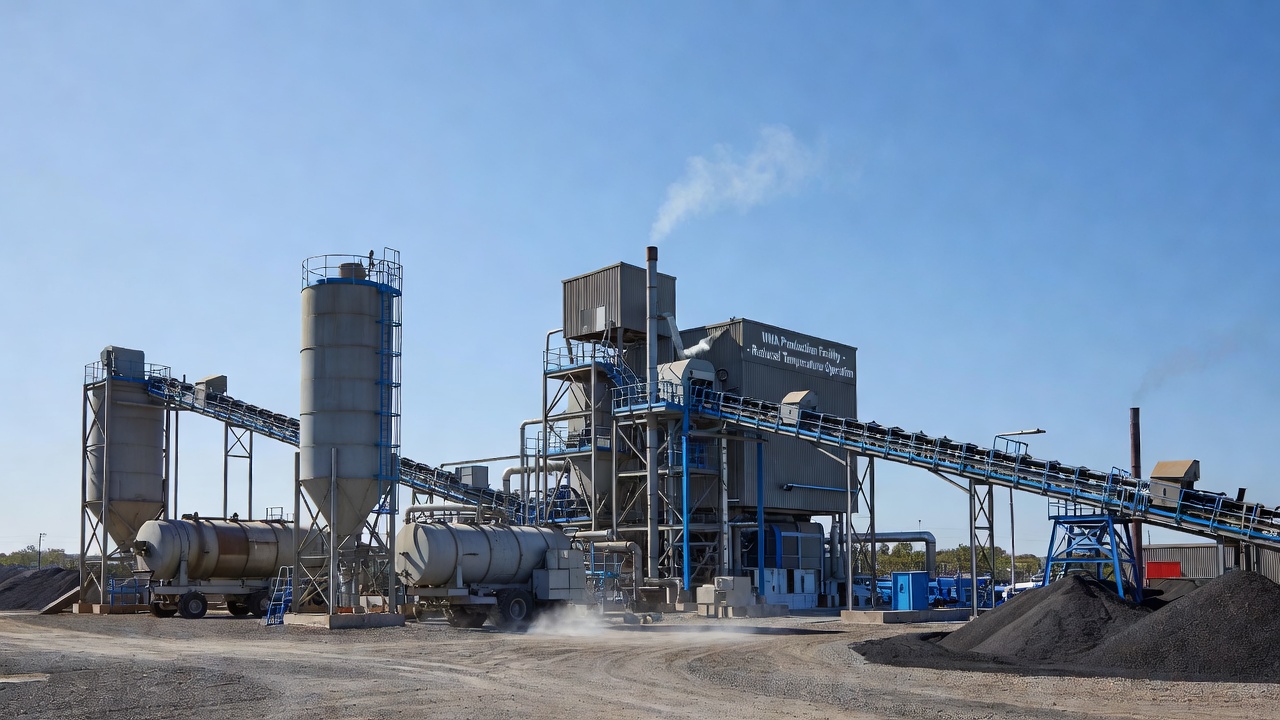
The first WMA techniques were developed in the late 1990s in Europe. The WAM-Foam® process (Warm Asphalt Mix Foam) was developed in Norway through a joint venture between Shell International Petroleum Company and Kolo-Veidekke, while organic wax additives were being trialled in Germany. The motivation for WMA development stems from the 1997 Kyoto Treaty, which set greenhouse gas reduction targets for European countries, prompting the asphalt industry to seek lower-emission production methods. Since the early 2000s, WMA technology adoption has expanded globally, driven by environmental regulations, energy costs, and worker health and safety considerations.
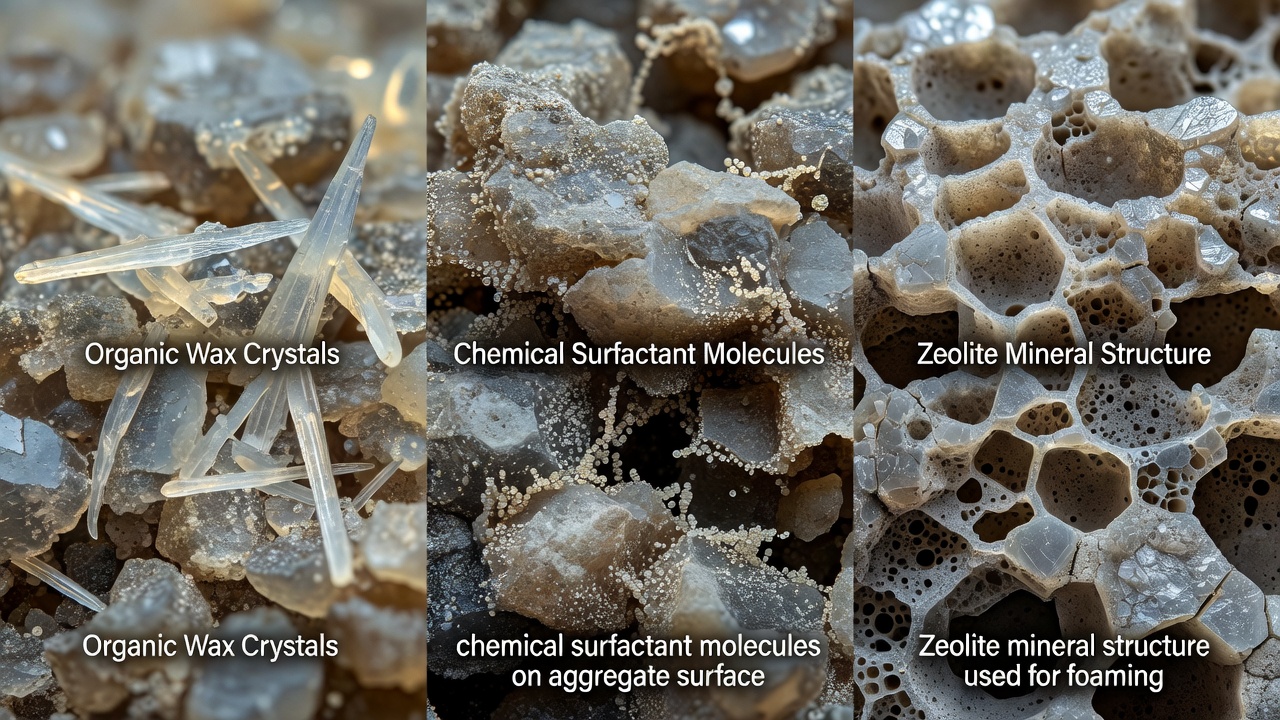
The fundamental challenge that WMA additives address is the need for sufficient binder workability to achieve complete aggregate coating and adequate compaction density at reduced temperatures. In HMA production, high temperatures (150–190°C) reduce the asphalt binder’s viscosity sufficiently to coat aggregates and provide workability during laydown and compaction. Lowering the temperature without an additive would result in high binder viscosity, poor coating, inadequate compaction, and ultimately a pavement with high air voids, reduced durability, and premature failure. WMA additives overcome this barrier through three distinct mechanisms: viscosity reduction (organic waxes), interfacial friction reduction (chemical surfactants), and temporary binder expansion (foaming).
WMA Concept and Benefits
The core concept of WMA is straightforward: produce asphalt mixtures with properties and performance equivalent to HMA while using significantly less energy to heat aggregates and binder. The immediate benefit is a reduction in energy consumption at the asphalt plant, burning less fuel to heat aggregates directly reduces operating costs and emissions. FHWA research indicates that WMA can reduce fuel energy consumption by 3–12% compared to HMA, with some specific technologies achieving up to 30–55% reduction depending on the baseline temperature and technology used.
The environmental and health benefits of WMA are substantial and well-documented. WMA reduces greenhouse gas emissions (primarily CO₂) by 20–35% compared to HMA applications, with 92–96% of total CO₂ reductions attributed to lower fuel consumption at the plant. Emissions of SO₂, NOx, particulate matter (PM10), and volatile organic compounds (VOCs) are all significantly reduced. For worker health, fume (bitumen vapor) emissions are reduced by approximately 50% for every 12°C reduction in temperature, meaning a 30°C temperature reduction yields roughly 80–85% less fume exposure. This creates a cooler, safer working environment for paving crews and reduces odor and emissions for nearby communities and workers in confined areas such as tunnels and parking garages.
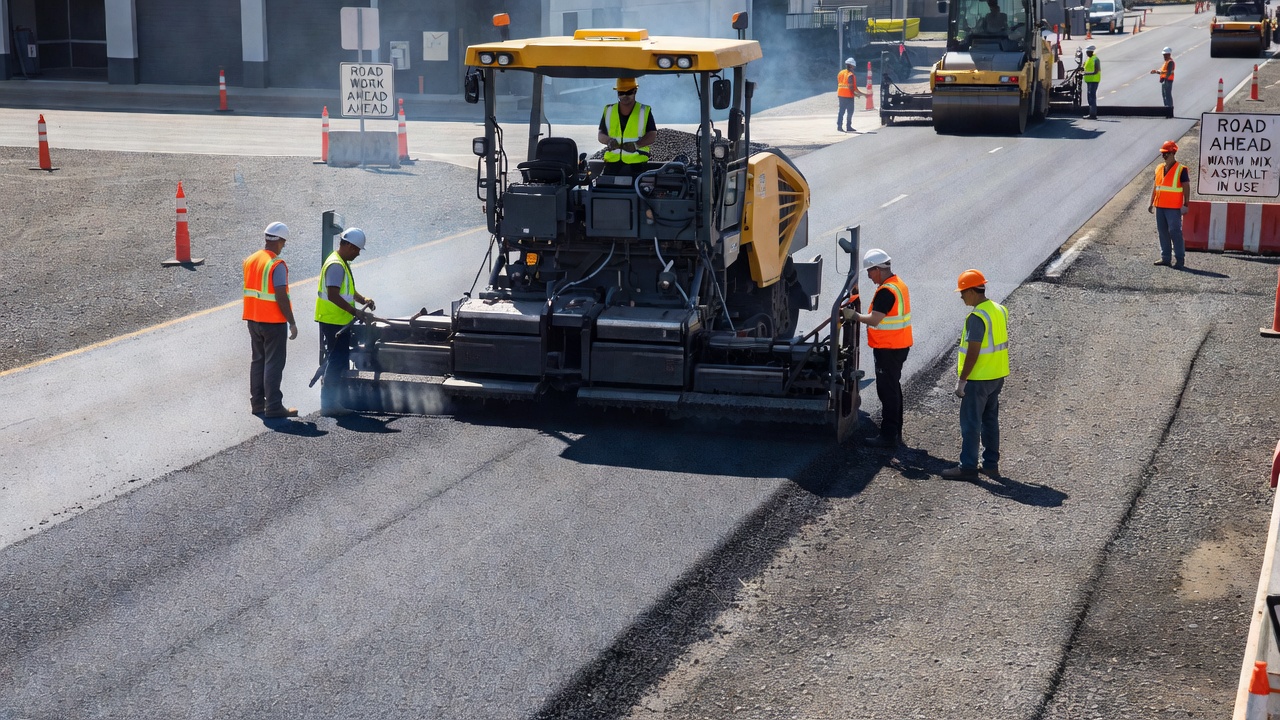
WMA offers significant manufacturing and paving benefits beyond emissions reduction. The lower production temperature causes less hardening (aging) of the binder during manufacture, which improves the thermal and fatigue cracking resistance of the pavement over its service life. WMA is fully compatible with Reclaimed Asphalt Pavement (RAP), in fact, WMA’s lower temperatures allow higher RAP content by reducing additional binder aging that occurs at HMA temperatures. The extended workability of WMA at reduced temperatures enables longer haul distances, extended paving seasons into cooler months, and night paving operations. The same WMA mix produced at HMA temperatures provides a longer compaction window due to the presence of additives, allowing crews more time to achieve target density. Conversely, WMA compacted at its normal lower temperature cools faster to ambient temperature, allowing earlier traffic opening.
Technology Categories, The Three Main WMA Approaches
WMA technologies are classified into three main categories based on their mechanism of action: organic additives, chemical additives, and foaming techniques. Each category has distinct performance characteristics, advantages, and limitations.
Organic Additives (Wax-Based)
Organic WMA additives are typically waxes that reduce the viscosity of the asphalt binder at temperatures above their melting point. The most common organic additive is Sasobit®, a Fischer-Tropsch (FT) paraffin wax produced from coal gasification. The FT process converts synthesis gas (CO + H₂) into long-chain hydrocarbons in the presence of an iron or cobalt catalyst. Sasobit has a predominant hydrocarbon chain length of 40 to 115 carbon atoms, significantly longer than naturally occurring bituminous paraffin waxes (22 to 45 carbon atoms), which gives it a higher melting point (approximately 99°C / 210°F). Sasobit is completely soluble in asphalt binder at temperatures above 115°C (240°F) and is typically added at 1.0–4.0% by weight of binder, with 3.0% being the most common dosage.
Other notable organic additives include Asphaltan B® (Montan wax derived from lignite coal, used primarily in Germany at 2.0–4.0% by binder weight), Licomont BS® (a fatty acid amide from Clariant), and 3E LT / Ecoflex (proprietary wax technology from Colas, France).
The mechanism of action for organic wax additives has two temperature-dependent phases. Above the melting point (approximately 90–115°C depending on the specific wax), the wax dissolves in the binder and reduces its viscosity, enabling aggregate coating and compaction at lower temperatures. Below the melting point (at service temperatures), the wax crystallizes and forms a lattice structure within the binder, which increases the stiffness and deformation resistance of the pavement, providing improved rutting resistance compared to unmodified HMA. This dual behavior is a key advantage of organic wax additives. Organic additives typically achieve a temperature reduction of 20–30°C.
| Property | Sasobit (FT Wax) | Asphaltan B (Montan Wax) | Licomont BS (Fatty Acid Amide) |
|---|---|---|---|
| Base material | Fischer-Tropsch paraffin wax | Montan wax from lignite coal | Fatty acid amide |
| Chain length (C atoms) | 40–115 | 22–45+ | Not specified |
| Melting point | ~99°C (210°F) | ~99°C (210°F) | ~140°C |
| Typical dosage | 1.0–4.0% | 2.0–4.0% | 3.0% |
| Temperature reduction | 20–30°C (36–54°F) | 20–30°C | 20–30°C |
| Rutting resistance | Improved (crystallization) | Improved | Improved |
Chemical Additives (Surfactant-Based)
Chemical WMA additives do not reduce binder viscosity, instead, they work at the microscopic interface between aggregate particles and the asphalt binder. These additives are surfactants (surface-active agents) and emulsifiers that reduce the interfacial surface energy and internal friction between aggregate particles and the binder film. By reducing frictional forces at the aggregate-binder interface, chemical additives enable aggregate coating and mixture compaction at lower temperatures without changing the rheological properties of the binder itself.
The most widely used chemical additive in North America is Evotherm™, developed by MeadWestvaco (now part of Ingevity). Evotherm uses a chemical package delivered as an emulsion (dispersed asphalt technology) that provides aggregate coating, workability, adhesion, and improved compaction. The third generation Evotherm 3G (also branded as REVIX™) is water-free and relies on a reduction in internal friction between aggregate particles under high shear during mixing and high stress during compaction. Evotherm is dosed at 0.5–0.7% by weight of binder and can achieve temperature reductions of 20–40°C, with field tests demonstrating reductions of up to 55°C (100°F).
Rediset® (Akzo Nobel, now Nouryon) is a chemical additive that combines cationic surfactants with an organic additive component. It is dosed at 1.5–2.0% by weight of binder and achieves a temperature reduction of approximately 30°C. Rediset is used in the United States and Norway.
Other chemical WMA additives include Anova® (Cargill), a bio-based, non-hazardous, non-corrosive liquid derived from renewable resources. Anova is dosed at 0.2–0.7% by weight of binder and achieves temperature reductions of up to 44°C (80°F). According to Cargill’s technical documentation, Anova does not change the PG grade of the asphalt binder at recommended dosages and can be added at the terminal or injected in-line at the HMA plant.
Chemical additives offer several advantages: they do not alter binder rheology, they often improve adhesion and moisture resistance at the aggregate-binder interface, they are effective with a wide range of aggregate types, and they do not require significant plant modifications (they can be dosed directly into the binder line).
Foaming Technologies (Water-Based)
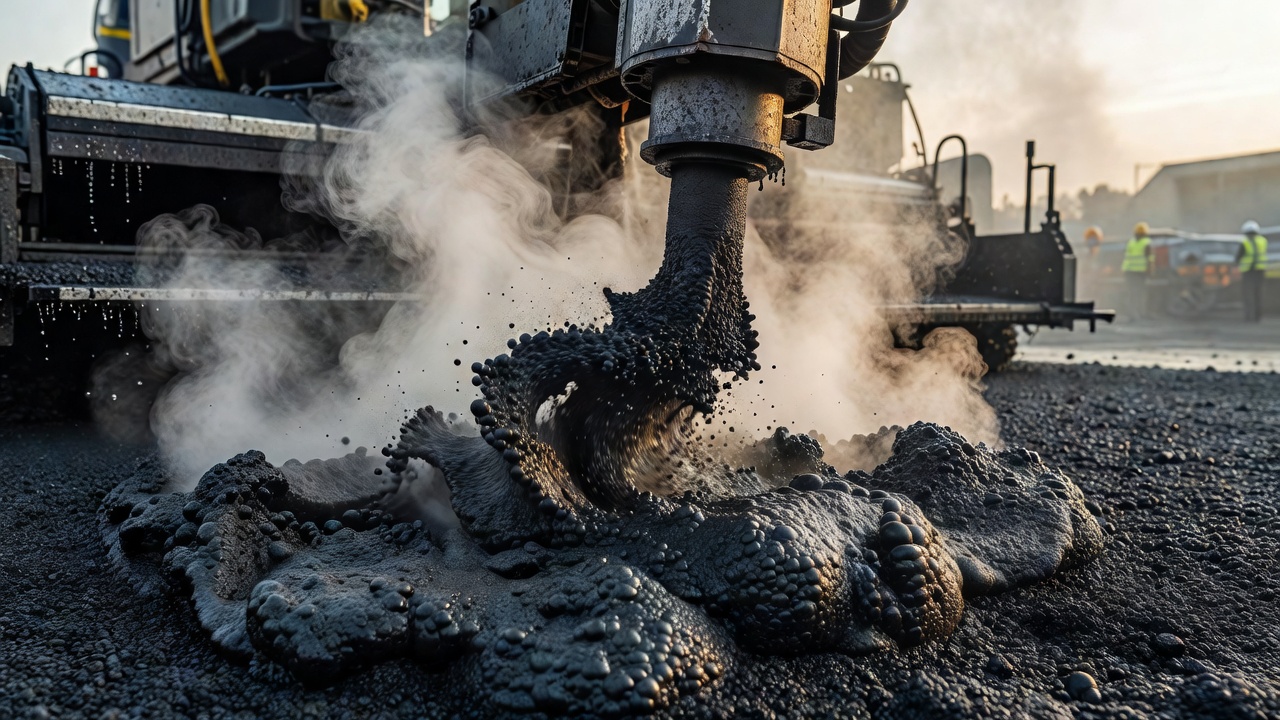
Foaming technologies reduce the effective viscosity of the asphalt binder by introducing small amounts of water into the hot binder, causing the water to vaporize into steam, which expands the binder volume and temporarily reduces its viscosity. The foaming effect is short-lived (typically lasting minutes), but sufficient for the mixing and compaction phases.
Foaming is achieved through two primary methods:
1. Direct Water Injection (Foaming Nozzles): This method injects a controlled amount of water directly into the hot binder via specially designed foaming nozzles. The water turns to steam upon contact with the hot binder (approximately 150–170°C), creating a large volume of foam that increases the binder’s effective volume by 10–20 times for a brief period. This technique requires plant modifications (foaming nozzle system, water metering, and control system) but does not require additives. Temperature reduction of 20–40°C is achievable. The WAM-Foam® process is a variant that uses a two-component binder system: a soft binder coats the aggregate first, followed by a hard foamed binder in a second mixing stage. This method was one of the earliest WMA technologies, developed in the late 1990s.
2. Water-Bearing Additives (Zeolites): This indirect foaming method uses hydrophilic minerals from the zeolite family (sodium aluminum silicate) that contain approximately 18–21% crystalline water by mass. When the zeolite is added to the mix at the same time as the binder, the water is released at temperatures above approximately 85–100°C (185–212°F), creating a controlled foaming effect. The foaming lasts for an extended period of 6–7 hours or until the mix temperature drops below 100°C.
Two commercial zeolite products are widely used:
- Aspha-Min® (Eurovia Services GmbH, Germany): A synthetic zeolite dosed at 0.3% by mass of total mix, achieving a temperature reduction of approximately 30°C (54°F) and a reported 30% reduction in fuel energy consumption. Available in 25 or 50 kg bags or bulk for silos.
- Advera® WMA (PQ Corporation, USA): A synthetic zeolite with 18–21% crystalline water content, dosed at 0.25% by weight of total mix (5 pounds per ton). Advera is manufactured in Jeffersonville, Indiana and Augusta, Georgia, USA, and is available in bags, supersacks, and bulk delivery. It achieves temperature reductions of 28–39°C (50–70°F). Advera does not change the performance grade of the binder and works with dense, gap, and open-graded mixes including polymer-modified and high RAP mixtures.
A third indirect foaming method uses natural moisture from wet sand or RAP. In this sequential technique, coarse aggregate (approximately 80% of the mix) is dried and heated to 130–160°C, coated with binder, and then cold/wet fine aggregate or RAP is added. The moisture in the cold fraction contacts the hot binder and causes foaming, facilitating coating. This technique achieves a temperature reduction of approximately 20–40°C without any purchased additive.
Hybrid Technologies
Hybrid WMA technologies combine two or more approaches to achieve their effect. Examples include:
- Low Energy Asphalt (LEA): Combines foaming (from moisture in RAP or sand) with chemical coating enhancers.
- Tri-Mix Warm Mix Injection System: Combines chemical additives with water-based foaming.
- Zeolite or fiber pellets combined with organic additives: Pre-formulated products that deliver both foaming (from zeolite) and viscosity reduction (from wax) in a single package.
- Combined foaming and chemical additive systems: Some plant systems can deliver both water injection and surfactant addition simultaneously.
Temperature Reduction Range
The temperature reduction achieved by WMA depends on the technology type, additive dosage, binder grade and source, aggregate type and moisture content, and plant configuration. The generally accepted temperature reduction ranges for each technology category are:
| WMA Technology | Typical Temperature Reduction | Typical Production Temperature Range |
|---|---|---|
| Organic (wax) additives | 20–30°C (36–54°F) | 120–150°C (248–302°F) |
| Chemical (surfactant) additives | 20–40°C (36–72°F) | 85–130°C (185–266°F) |
| Foaming – water injection | 20–40°C (36–72°F) | 110–140°C (230–284°F) |
| Foaming – zeolites | 28–39°C (50–70°F) | 110–140°C (230–284°F) |
| Emulsion-based (Evotherm) | Up to 55°C (100°F) | 85–115°C (185–239°F) |
| Bio-based (Anova) | Up to 44°C (80°F) | 85–130°C (185–266°F) |
The temperature reduction is typically expressed relative to the equivalent HMA production temperature for the same mix design. It is important to note that achieving the full temperature reduction potential requires optimization of additive dosage, mixing time, and plant settings for each specific combination of materials.
Binder Grade Implications
The use of WMA additives has implications for asphalt binder grade selection that must be carefully considered during mix design. Three factors interact:
1. Reduced Binder Aging: The lower production and storage temperatures of WMA result in less oxidative aging of the binder during manufacturing compared to HMA. This means the binder in the final WMA pavement will be softer than an equivalent HMA binder. While this softer binder can improve thermal cracking resistance and fatigue resistance, it may also reduce rutting resistance if not accounted for. This is generally considered a net benefit because it extends pavement fatigue life and reduces low-temperature cracking.
2. Organic Wax Crystallization at Service Temperatures: For organic (wax) additives, the wax crystallizes in the binder at temperatures below its melting point (approximately 90–100°C / 194–212°F). This crystallization creates a lattice structure that stiffens the binder at typical pavement service temperatures (up to 60–70°C / 140–158°F). The stiffening effect increases rutting resistance, but may also increase low-temperature stiffness and potentially reduce thermal cracking resistance. For this reason, when using organic wax additives, some agencies recommend binder grade bumping, selecting a binder that is one grade lower (softer) in the high-temperature grade to compensate for the wax stiffening effect. For example, an HMA that would use PG 70-22 might use PG 64-28 in a wax-based WMA. However, AASHTO M 320 and Superpave specifications can accommodate this through binder testing with the additive.
3. Chemical and Foaming Additives: Chemical additives (surfactants, emulsifiers) and foaming technologies (zeolites, water injection) generally do not change the binder’s performance grade at recommended dosages. Detailed rheological testing, including Dynamic Shear Rheometer (DSR) and Bending Beam Rheometer (BBR) testing of binder with and without the additive, is recommended to verify the PG grade. For zeolites (e.g., Advera), the manufacturer explicitly states that the material does not affect PG grade because it is an inorganic material that remains in the mix as fine mineral filler after water release.
WMA Moisture Sensitivity
Moisture sensitivity (also called moisture susceptibility or stripping) refers to the loss of adhesion between the asphalt binder and aggregate due to the presence of water. For WMA, early concerns focused on the possibility that lower production temperatures could lead to:
- Incomplete aggregate drying, if the aggregate is not fully dried, residual moisture can remain in the mix.
- Inadequate aggregate coating, if binder viscosity is not sufficiently reduced, the aggregate may not be fully coated, leaving exposed aggregate surfaces vulnerable to moisture damage.
- Reduced adhesion, lower mixing temperatures may not fully activate the chemical bonding between binder and aggregate.
However, extensive research and field experience have demonstrated that properly designed WMA can meet or exceed HMA moisture resistance, provided that appropriate measures are taken. These measures include:
- Anti-strip additives: Hydrated lime (typically 1.0–1.5% by weight of dry aggregate) or liquid anti-strip agents (typically 0.3–0.75% by weight of binder) are added to improve the aggregate-binder bond. Research by the FHWA has shown that hydrated lime-treated mixtures test on average 25% better than untreated mixtures in stripping resistance according to ASTM D4867.
- Chemical surfactant additives: Many chemical WMA additives (particularly those in the surfactant/emulsifier category) inherently provide improved adhesion through their surface-active chemistry, actually reducing moisture susceptibility compared to untreated HMA.
- Moisture susceptibility testing protocols: AASHTO T 283 (Resistance of Compacted Asphalt Mixtures to Moisture-Induced Damage) and ASTM D4867 (Standard Test Method for Effect of Moisture on Asphalt Concrete Paving Mixtures) are used to verify moisture resistance. The Tensile Strength Ratio (TSR), the ratio of conditioned (wet) to unconditioned (dry) indirect tensile strength, must typically meet a minimum of 0.80 (80%) for WMA, the same requirement as HMA.
- Foaming water management: For foaming technologies, the amount of water introduced is very small (typically less than 0.05% of total mix mass) and the residual water content after compaction is negligible. The binder foaming process actually creates a uniform binder film on aggregate surfaces due to the temporary volume expansion.
Proper quality control testing during WMA production, including TSR testing on plant-produced mixtures, ensures that moisture susceptibility requirements are met.
WMA Compaction and Density
Achieving target in-place density (typically 92–97% of maximum theoretical density, corresponding to 3–8% air voids depending on the application) is essential for asphalt pavement performance. Low density leads to high air voids, which allow water and air ingress, leading to moisture damage, oxidation, raveling, cracking, and premature failure.
WMA offers several compaction-related advantages over HMA:
- Improved compactibility: The reduced binder viscosity (from wax additives) or reduced inter-particle friction (from chemical additives) allows the same roller configuration and effort to achieve higher density at lower temperatures compared to HMA.
- Extended compaction time window: WMA produced at HMA temperatures (by using the additive’s workability benefit without reducing plant temperature) provides a longer period during which the mixture remains workable and compactable. This is especially beneficial for large paving projects, long hauls, and night paving.
- Cool-weather paving capability: WMA can be compacted at temperatures 10–20°C lower than HMA, allowing extended paving seasons into cooler months and in colder climates.
- Lower compaction temperature: The temperature at which compaction is completed (cessation temperature) can be lower for WMA than for HMA, allowing rollers to work longer and achieve target density more reliably.
The compaction procedure for WMA is similar to HMA, with adjustments to the temperature window based on the specific additive and mixture. Quality control during WMA compaction typically includes:
- Density testing using nuclear density gauges (ASTM D2950 / AASHTO T 355) or core samples (AASHTO T 166 / ASTM D2726).
- Temperature monitoring of the mat behind the paver and during rolling using infrared thermometers or thermal imaging to verify the target compaction temperature window.
- Roller pattern adjustment to account for the different cooling rate of WMA (which is less prone to thermal segregation than HMA due to the lower absolute temperature difference between production and ambient conditions).
WMA and Reclaimed Asphalt Pavement (RAP)
WMA is fully compatible with and complementary to the use of Reclaimed Asphalt Pavement (RAP) . The synergy between WMA and RAP content is well-documented and provides several benefits:
- Reduced RAP binder aging: RAP contains aged (stiff, oxidized) binder that, when reheated to HMA temperatures (150–190°C), undergoes additional aging. The lower WMA production temperatures (120–140°C) reduce the thermal stress and additional aging of the RAP binder, preserving more of its remaining performance characteristics.
- Higher allowable RAP content: The reduced aging at WMA temperatures allows higher RAP percentages in the mix for the same binder grade target. Some agencies have approved WMA-RAP mixes with up to 50–60% RAP content compared to typical 15–30% in HMA.
- Binder availability: The concern at lower temperatures is that the aged RAP binder may not fully blend (or “activate”) with the virgin binder. However, research shows that even at WMA temperatures, sufficient blending occurs through mechanical mixing and thermal diffusion. The use of rejuvenators (recycling agents) in combination with WMA additives can further improve the RAP binder contribution.
- Moisture from RAP: RAP stockpiles typically contain some moisture. In foaming WMA technologies, the moisture in RAP (when added as the cold/wet fraction in a sequential mixing process) can actually be beneficial, the moisture contacts the hot binder and creates natural foaming, improving coating without requiring additional water or zeolite.
- Environmental synergy: The combination of WMA and RAP provides the maximum environmental benefit, reduced energy consumption (WMA) plus reduced virgin material consumption and waste diversion (RAP). This combination is a cornerstone of sustainable pavement practices.
| Parameter | HMA without RAP | HMA with RAP | WMA with RAP |
|---|---|---|---|
| Production temperature | 150–190°C | 150–190°C | 100–150°C |
| Typical RAP content | 0% | 15–30% | 20–50%+ |
| Virgin binder requirement | 100% | 70–85% | 50–80% |
| Fuel energy consumption | Baseline | ~Baseline | 5–12% reduction |
| CO₂ emissions | Baseline | 10–20% reduction | 20–40% reduction |
| Virgin aggregate required | 100% | 70–85% | 50–80% |
WMA Long-Term Performance
Long-term field performance data for WMA pavements has been accumulating since the early 2000s, with many sections now exceeding 15–20 years of service. The key findings from long-term performance studies include:
Rutting Performance: WMA pavements generally exhibit equivalent or better rutting resistance compared to HMA controls. WMA with organic wax additives (Sasobit, Asphaltan B) benefits from the wax crystallization stiffening effect, which increases resistance to permanent deformation at service temperatures. Chemical additive and foaming WMA pavements have shown comparable rutting to HMA when the same binder grade is used.
Cracking Performance: WMA pavements often show improved cracking resistance compared to HMA, particularly for thermal cracking and fatigue cracking. This improvement is attributed to the reduced binder aging during production, the binder in WMA is less oxidized and therefore more flexible at low temperatures. However, cracking performance can be climate-dependent. Research from the Long-Term Pavement Performance (LTPP) Specific Pavement Studies 10 (SPS-10) program indicates that cracking distress is more of a concern in wet climatic zones for WMA, while rutting is more significant in dry climates. The SPS-10 study analyzed field performance of WMA overlays across multiple US states.
Moisture Damage: Early WMA field trials occasionally reported moisture damage in sections where anti-strip additives were not used or where compaction was inadequate. However, the majority of properly designed WMA pavements (with anti-strip treatment and adequate compaction) have demonstrated satisfactory long-term moisture resistance equivalent to HMA.
Aging and Stiffness: Field cores extracted from WMA pavements after extended service show lower stiffness and better ductility than adjacent HMA sections. This confirms that the reduced binder aging during production translates into longer pavement life, particularly in terms of fatigue and thermal cracking.
Overall Performance Rating: The consensus from multiple long-term studies (including Louisiana DOTD, NCAT Test Track, LTPP SPS-10, and European field trials) is that WMA pavements perform equivalently to HMA pavements when designed, produced, and compacted according to specifications tailored to the specific WMA technology and materials.
WMA in Airport Specification (FAA Item P-401)
The use of WMA on airport pavements is governed by the FAA Advisory Circular 150/5370-10 (Standards for Specifying Construction of Airports), specifically Item P-401 (Asphalt Mix Pavements). The FAA has evaluated WMA for airfield applications and has determined that WMA is a viable alternative to HMA for use on heavily trafficked airfield pavements, subject to meeting all standard P-401 requirements.
The Unified Facilities Guide Specification (UFGS) 32 12 15 has been updated to accommodate WMA technologies. Key requirements for WMA use under FAA P-401 include:
- Mix design verification: The WMA mix must meet all standard P-401 requirements for gradation, asphalt content, air voids (typically 3–5% design air voids for surface courses), Voids in Mineral Aggregate (VMA) , and Voids Filled with Asphalt (VFA) .
- Moisture susceptibility: The WMA mix must meet a minimum Tensile Strength Ratio (TSR) of 0.80 (80%) when tested in accordance with AASHTO T 283 or ASTM D4867, the same requirement as HMA.
- Performance testing: Additional performance testing (such as Hamburg Wheel-Tracking for rutting and moisture susceptibility, and Semi-Circular Bend (SCB) or Disk-Shaped Compact Tension (DCT) for cracking resistance) may be required by the specifying agency.
- Field compaction: In-place density requirements (typically 96–98% of Marshall density or 92–96% of maximum theoretical density, depending on pavement location) apply equally to WMA.
- Temperature requirements: The P-401 specification includes maximum temperatures for particular mixtures but no minimum temperatures. The minimum temperature at delivery is declared by the manufacturer, which allows flexibility for WMA temperatures.
The FAA has conducted specific research on WMA for airfield pavements through the Airport Technology Research & Development Branch, including studies at the National Airport Pavement Test Facility (NAPTF) and the William J. Hughes Technical Center. These studies have demonstrated that WMA can achieve equivalent structural performance to HMA under aircraft loading. The study “Warm-Mix Asphalt for Airfield Pavements” (Mejias-Santiago, FAA) concluded that WMA is recommended as a viable alternative to HMA for use on heavily trafficked airfield pavements.
For airport pavement engineers and inspectors, the key considerations for WMA acceptance include verifying that:
- The WMA additive or technology is pre-approved by the agency or demonstrated through a test section to produce equivalent performance.
- The quality control plan includes temperature monitoring, density testing, and moisture susceptibility testing specific to WMA.
- The compaction plan accounts for the different temperature window (WMA may have a lower but potentially longer compaction temperature window).
- The mix design includes anti-strip additives as needed to meet TSR requirements.
WMA Sustainability
WMA is a cornerstone technology for sustainable pavement construction. Its sustainability benefits span environmental, economic, and social dimensions:
Environmental Sustainability
The Life Cycle Assessment (LCA) of WMA consistently demonstrates environmental benefits compared to HMA across multiple impact categories:
- Global Warming Potential (GWP): WMA reduces CO₂ emissions by 20–35% compared to HMA due to lower fuel consumption.
- Energy Consumption: Fuel energy savings of 3–12% for typical WMA production, with specific technologies achieving up to 30–55% reduction.
- Air Quality: Reductions in VOCs (up to 41%), NOx (up to 60%), SO₂ (up to 45%), and particulate matter (PM10). Fume emissions reduced by approximately 50% per 12°C temperature drop.
- Resource Conservation: WMA enables higher RAP content, reducing virgin aggregate and binder consumption.
- Full Recyclability: WMA pavements are fully recyclable at end of life, and the reduced aging during production means that WMA RAP is of higher quality (less oxidized) than HMA RAP.
Economic Sustainability
- Fuel cost savings: Reduced energy consumption directly lowers production costs. Studies indicate that WMA can reduce fuel costs by $0.50–$1.50 per ton of mix depending on fuel prices and technology.
- Extended paving season: The ability to pave at lower ambient temperatures extends the construction season, increasing plant utilization and reducing the need for off-season storage.
- Longer haul distances: The extended workability of WMA allows plants to serve more distant job sites.
- Reduced plant wear: Lower production temperatures reduce thermal stress on plant components.
Social Sustainability
- Worker health and safety: The most significant social benefit of WMA is the dramatic reduction in fume and odor exposure for paving crews and plant workers.
- Community impact: Reduced emissions and odor at the plant and paving site improve relations with nearby communities. The ability to pave in tunnels and enclosed areas with reduced ventilation requirements is a specific social benefit.
- Night paving: WMA’s reduced temperature and emissions make it more suitable for night paving operations in urban areas.
The European Asphalt Pavement Association (EAPA) and National Asphalt Pavement Association (NAPA) both have position papers supporting WMA as a key sustainability strategy. The EAPA Position Paper “The Use of Warm Mix Asphalt” and NAPA’s “How Warm-Mix Asphalt Supports DOT Goals for Sustainability and Resilience” (June 2024) provide comprehensive guidance for agencies considering WMA adoption.
Standards and Specifications
WMA is accommodated within existing asphalt specifications through:
- European Standards (EN 13108-1 to -7): Maximum temperatures included but no minimum temperatures. The minimum temperature at delivery is declared by the manufacturer. Provisions for mixtures containing additives subject to demonstration of equivalent performance.
- AASHTO Standards: AASHTO R 35 (Superpave Volumetric Design), AASHTO T 312 (Gyratory Compactor), and AASHTO T 283 (Moisture Susceptibility) apply equally to WMA. AASHTO M 320 (Performance-Graded Binder Specification) accommodates WMA additives through binder testing with the additive.
- ASTM Standards: ASTM D6925 (Marshall Stability and Flow), ASTM D6926 (Preparation of Specimens), and ASTM D4867 (Moisture Susceptibility) apply to WMA mixtures.
- State DOT Specifications: Most US state DOTs have WMA specifications or special provisions allowing WMA use.
- ICAO and FAA: ICAO Annex 14 and FAA AC 150/5370-10 provide the regulatory framework for WMA on airport pavements.
Summary of WMA Additive Technologies
| Technology | Mechanism | Temperature Reduction | Effect on Binder | Effect on Performance |
|---|---|---|---|---|
| Organic wax (Sasobit, Asphaltan B) | Viscosity reduction above melting point, crystallization below | 20–30°C (36–54°F) | Stiffens at service temperatures | Improved rutting resistance, may require binder grade adjustment |
| Chemical surfactant (Evotherm, Rediset, Anova) | Interfacial friction reduction, improved coating | 20–40°C (36–72°F) | No significant change | Improved adhesion and moisture resistance, improved compaction |
| Direct water injection (Foaming nozzles, WAM-Foam) | Temporary viscosity reduction through binder expansion | 20–40°C (36–72°F) | No change after foaming subsides | Equivalent to HMA, requires moisture monitoring |
| Water-bearing zeolites (Aspha-Min, Advera) | Controlled foaming through crystalline water release | 28–39°C (50–70°F) | No change, zeolite remains as mineral filler | Equivalent to HMA, extended workability (6–7 hours) |
| Bio-based (Anova) | Chemical surface activity | Up to 44°C (80°F) | No change (at recommended dosage) | Improved compaction, no PG grade change |
| Hybrid (Combined technologies) | Multiple mechanisms | 20–40°C (36–72°F) | Technology-dependent | Technology-dependent |
The selection of the appropriate WMA technology depends on project-specific factors including: local availability of additives and equipment, aggregate type and mineralogy, binder grade and source, RAP content, climate conditions (ambient temperature and humidity), plant configuration (batch vs. drum, ability to add foaming nozzles or injection systems), and specification requirements of the governing agency.
For airport pavements subject to FAA P-401 or equivalent specifications, the additional requirement for performance testing (Hamburg wheel-track, SCB, DCT) and quality control verification (TSR, density, air voids) should guide technology selection toward those with established field performance data on airfield pavements.
Frequently Asked Questions
- What temperature range defines Warm Mix Asphalt?
- WMA is produced and compacted at temperatures roughly between 100°C and 150°C (212°F to 302°F). This is 20-40°C lower than conventional Hot Mix Asphalt (HMA), which is typically produced between 150°C and 190°C (300°F to 375°F). The exact temperature reduction depends on the specific WMA technology, additive dosage, binder grade, aggregate type, and mix design parameters.
- What are the three main categories of WMA technology?
- The three main categories are: (1) Organic additives, waxes such as Fischer-Tropsch wax (Sasobit) and Montan wax that melt above approximately 90-100°C and reduce binder viscosity, also improving rutting resistance at service temperatures, (2) Chemical additives, surfactants and emulsifiers such as Evotherm and Rediset that work at the aggregate-binder interface to reduce frictional forces and improve coating without changing binder viscosity, (3) Foaming technologies, water-based techniques including direct water injection via foaming nozzles and water-bearing additives such as synthetic zeolites (Aspha-Min, Advera) that release 18-21% crystalline water above 100°C to create temporary binder foaming.
- Does WMA perform as well as conventional HMA?
- Yes. Numerous studies and field evaluations spanning over 15 years demonstrate that properly designed WMA mixtures achieve equivalent or superior performance to HMA in terms of compacted density, rutting resistance, fatigue cracking resistance, and moisture damage resistance. The lower production temperatures reduce binder aging during manufacturing, which can improve thermal and fatigue cracking performance. Some WMA technologies (particularly organic waxes) improve rutting resistance at service temperatures due to the crystalline lattice structure formed below the wax melting point.
- Can WMA be used for airport pavements under FAA P-401?
- Yes. The FAA has evaluated WMA for airfield pavements and recommends it as a viable alternative to HMA for heavily trafficked airfield pavements. The FAA P-401 specification and Unified Facilities Guide Specification (UFGS) 32 12 15 have been updated to accommodate WMA technologies, provided that the mixture meets all standard P-401 requirements for gradation, asphalt content, air voids, voids in mineral aggregate (VMA), and moisture susceptibility (Tensile Strength Ratio). WMA for airfield applications requires additional quality control verification including performance testing to ensure equivalent or superior properties to conventional HMA.
- How does WMA reduce emissions and improve sustainability?
- WMA reduces fuel energy consumption at the plant by 3-12% (and up to 30-55% depending on the technology and baseline HMA temperature). This translates to 20-35% reduction in CO2 emissions, reduced SO2 and NOx emissions, and particulate matter. Fume (bitumen vapor) emissions are reduced by approximately 50% for every 12°C reduction in temperature, a 30°C reduction yields approximately 80% less fume exposure. WMA also enables higher Reclaimed Asphalt Pavement (RAP) content, further reducing the carbon footprint and virgin material consumption.
- What is the typical dosage of WMA additives?
- Dosage varies by technology type. For organic wax additives (e.g., Sasobit): 1.0-4.0% by weight of binder (typically 3.0%). For chemical additives and surfactants (e.g., Evotherm, Rediset): 0.5-2.0% by weight of binder. For foaming zeolites (e.g., Aspha-Min, Advera): 0.25-0.30% by weight of total mix. For bio-based chemical additives (e.g., Anova): 0.2-0.7% by weight of binder. The optimal dosage should be determined through mix design testing based on local materials and specifications.
- Does WMA affect binder grade selection?
- Yes, WMA can influence binder grade selection in two ways. First, the lower production temperature reduces binder aging during mixing, so the recovered binder from WMA may be softer than from equivalent HMA, this is generally beneficial for cracking resistance. Second, some organic wax additives (e.g., Sasobit) can stiffen the binder at service temperatures due to crystallization, which may warrant consideration of a one-grade-lower high-temperature binder to balance rutting and cracking performance. Most chemical additives and zeolites do not significantly change the performance grade (PG) of the binder at recommended dosages.
- Is WMA more susceptible to moisture damage than HMA?
- Early concerns about WMA moisture susceptibility arose from the lower production temperatures potentially leaving residual moisture in the mix and reducing aggregate coating. However, proper mix design including anti-strip additives (hydrated lime or liquid anti-strip agents) and adherence to AASHTO T 283 or ASTM D4867 moisture susceptibility testing protocols ensures WMA meets the same Tensile Strength Ratio (TSR) requirements as HMA. Many chemical WMA additives contain surfactants that actually improve the aggregate-binder bond and moisture resistance.