solutions
Drone Airport Inspection: Method and Limits
How a drone inspects an aerodrome between aircraft movements: the mission profile, RTK positioning, tower coordination, the evidence chain, and where…
SEP 04 2026
11 MIN
A fully managed service with certified operators. Regulatory-grade measurement of angle, photometric intensity, beam transition and position, built to ICAO, EASA or FAA, with same-day reports.
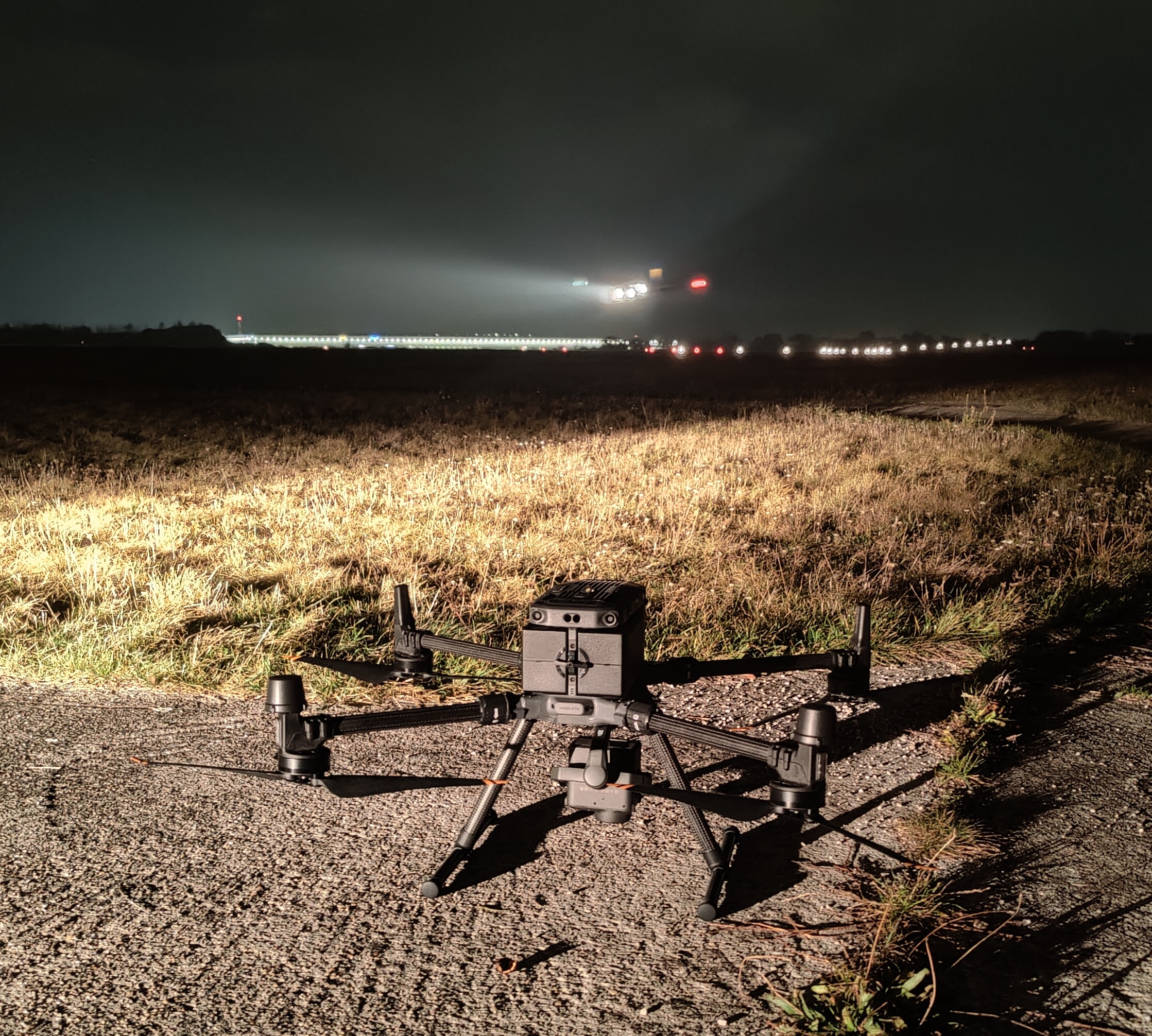
This service is bought by the person who has to sign that a precision approach path indicator is showing crews the right slope. It fits an aerodrome that has just had the units installed or re-aimed and needs the setting proven before the aid goes back into service, and it fits the maintenance manager who owes a periodic protocol and would rather not wait for the next flight inspection slot to get one.
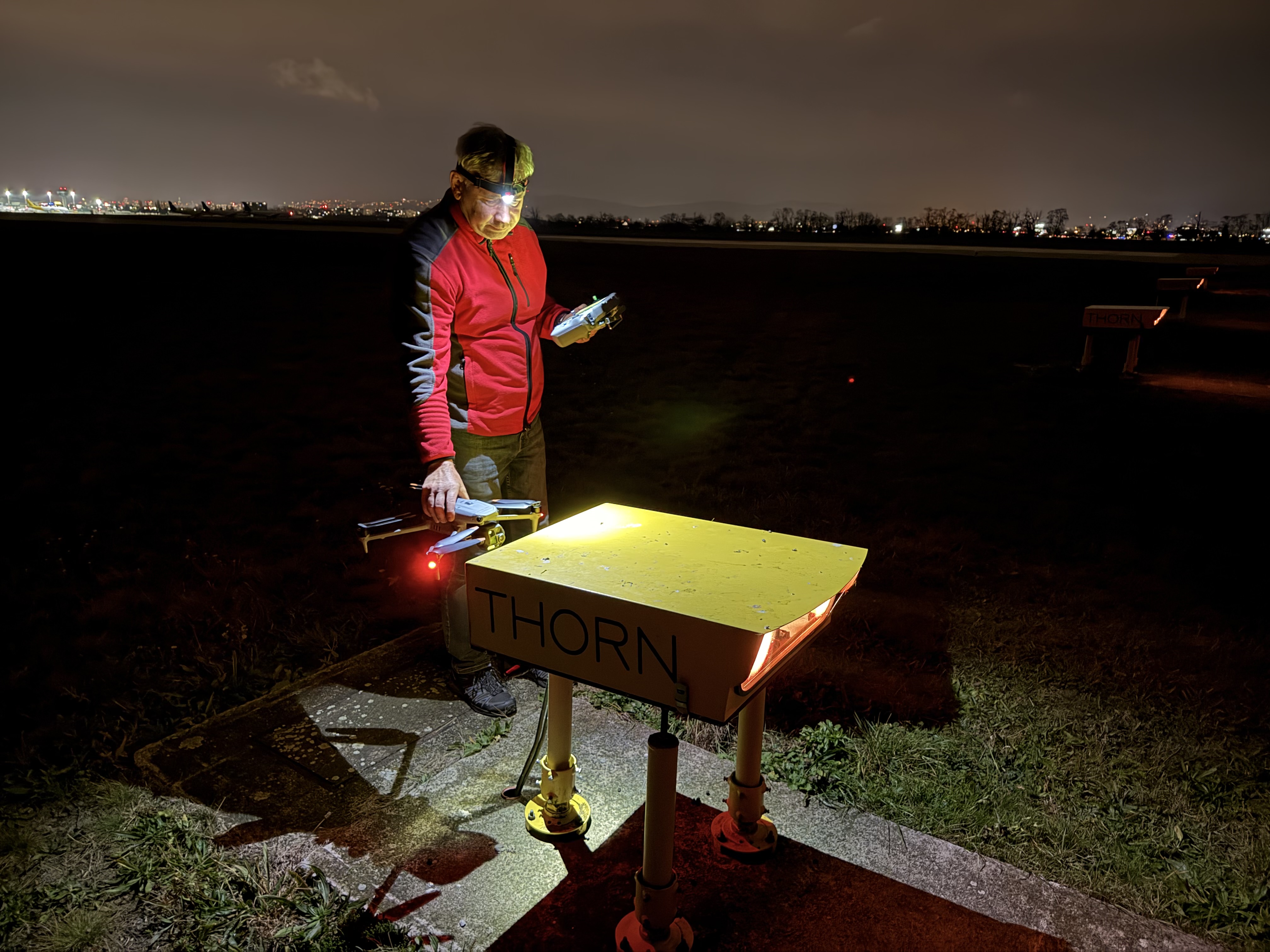
Certified operators bring the drone, the camera and the positioning gear to your aerodrome. No drone purchase, no training, nothing for your staff to set up beyond the airside access.
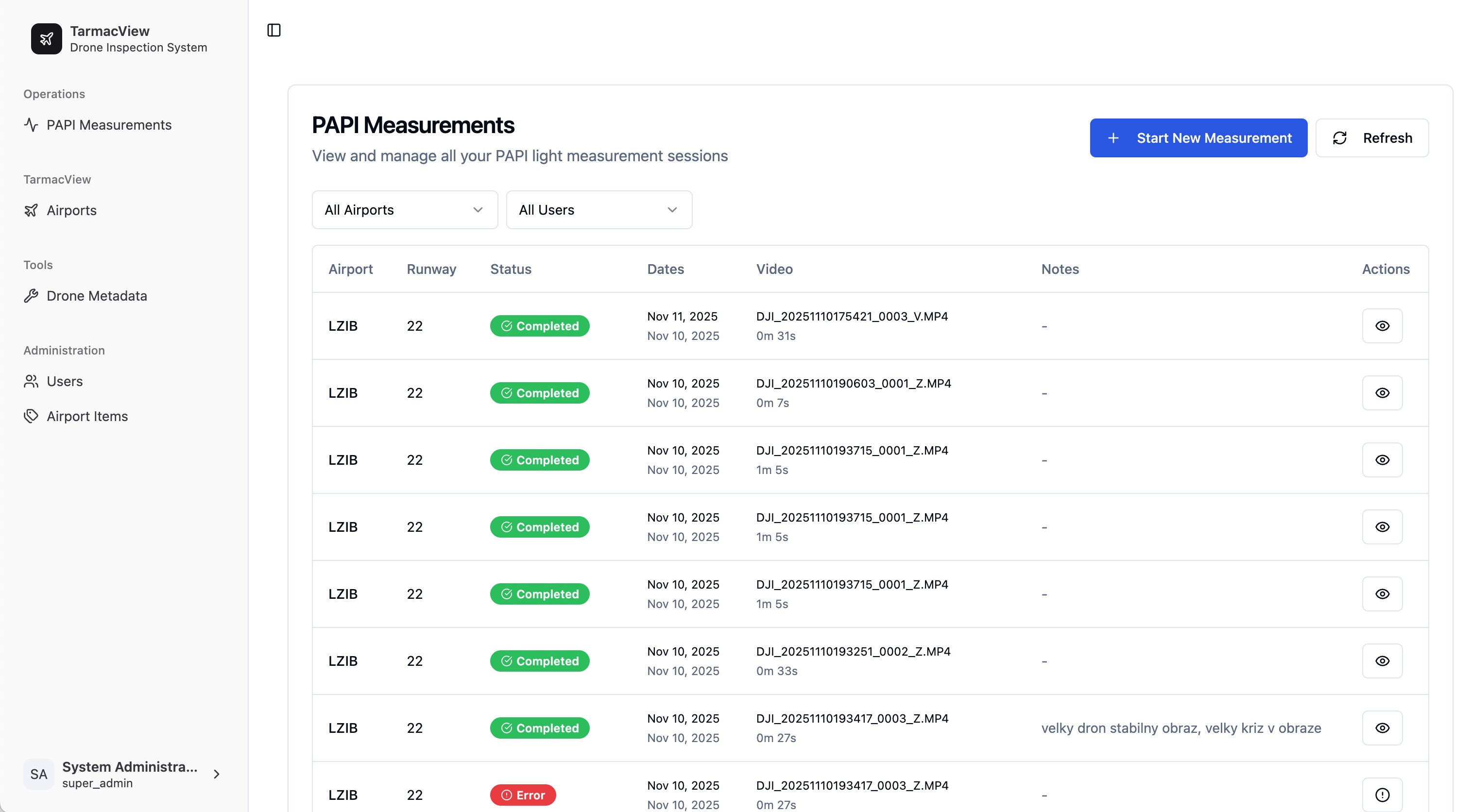
Footage goes straight into the measurement pipeline, and the protocol comes out the same day in the format your authority expects, with the adjustment value for every unit that needs one.
Three outcomes are what the service is judged on, and each has a state you can check on delivery rather than a promise you have to trust.
Every unit of every PAPI in scope comes back with its measured transition angle, the nominal it was set to, the difference, and the tolerance it was judged against. The pattern's on-slope sector is stated from the four angles together.
Where a unit fails, the protocol says by how much and in which direction, in the units your electricians set the box in, so the correction can be made without a second measurement to find out what to do.
The rows are the PAPI rows of the visual aids protocol your inspector already uses, in ICAO, EASA or FAA wording, with the flight record and the source frames attached to every finding.
The glide slope rows of the visual aids protocol, each with the tolerance it is judged against.
The angle each unit is set to, and the nominal glide path the four units produce together.
The angle at which a unit changes from white to red, measured across the transition rather than read off it.
The angular spacing between neighbouring units, which is what sets the width of each signal step in the pattern.
An aircraft flying the ILS glide path stays inside the on-slope sector the PAPI indicates.
Each unit emits the correct colour, and no red filter has faded to the point where the beam is out of specification.
Light intensity per unit and the ratio between units are correct, with all four set symmetrically.
The signal stays visible across the sector either side of the runway axis.
The signal stays visible on the runway axis through the whole approach elevation band.
Every unit changes intensity together and by the commanded step, in step with the rest of the airfield lighting.
The signal seen over the threshold matches the published minimum eye height for the runway.
The obstacle protection surface is clear, so visual contact with the runway is kept all the way down the approach.
No light near the approach can be mistaken for the glide slope signal, and none dazzles the crew.
You name the runway ends, the published glide path and threshold data, and whether the units were just installed, re-aimed or relamped. We agree whether a verification flight after adjustment is included and which protocol template your authority wants. Output is a scope note. If the published data is missing, the inspection waits for it, because an angle measured against an unknown nominal is a number without a verdict.
The passes are generated from the runway geometry, the surveyed unit positions and the nominal setting angles. The climb through the transitions, the approach descent and the coverage arc are computed so that every unit is framed at the distance and elevation the measurement needs. Output is a validated mission and a capture window request to your tower.
Flown between aircraft movements, under twenty minutes per PAPI. The drone holds on the extended centreline and climbs through each unit's transition, then flies the approach on the nominal glide path and sweeps the coverage sector. Every frame carries the RTK position. If a movement interrupts a pass, the pass is reflown unchanged.
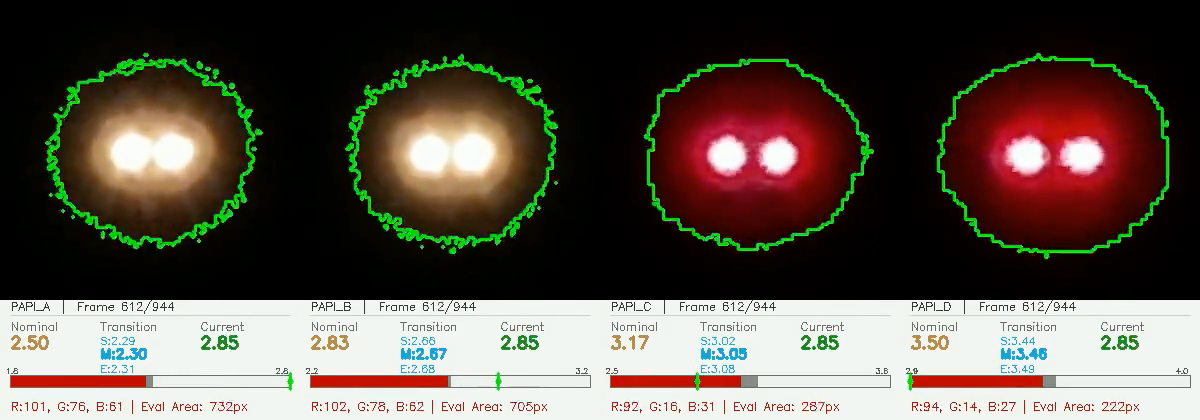
Each unit is tracked through the footage and its colour is read frame by frame. The transition angle is the elevation at which the colour changes, computed from the drone's position at those frames. Chromaticity, intensity balance, coverage and position come from the same passes. Frames the tracker is not confident about are held for review rather than dropped.
The PAPI rows of the visual aids protocol are filled in your authority's wording, with a measured value, a nominal and a verdict per unit, and the correction for every unit outside tolerance. Delivered the same day, with the flight record and the source frames attached.
Once your contractor has adjusted the units, the same passes are flown again and the protocol is reissued with the new angles. Where the adjustment can be made on the day, the verification is the same visit. Anything disputed is re-examined against the retained footage first.
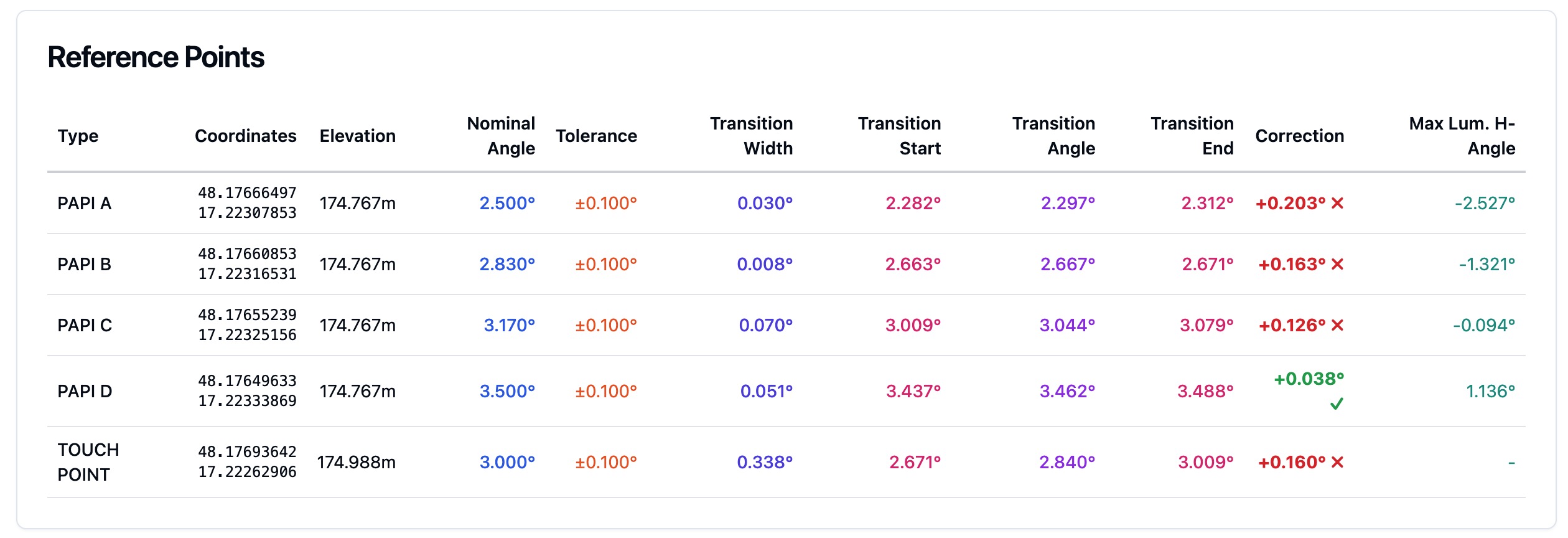
A PAPI unit shows white above its setting angle and red below it. The inspection therefore comes down to one question per unit: at what elevation, seen from the approach, does the colour change. The drone answers it by climbing through the transition at a known distance on the extended centreline while the camera records the unit and the receiver records the drone’s position. The frames in which the colour changes fix the transition angle , and because the change is read as a ratio of red to white across many frames rather than as a single judgement, the angle carries an uncertainty that can be stated.
That is also why the angle does not depend on the camera’s calibration. A ratio between two colours from the same unit is independent of the absolute response of the sensor, so the transition angle holds whatever the sensor is doing.
The intensity rows work the other way round and rely on that calibration directly. The camera is characterised against a calibrated source in the laboratory before it flies, so the light intensity of each unit is reported in candela and not only as a ratio to its neighbours and to its own dimming steps. That covers the symmetry and dimming rows of the protocol and the absolute figures an authority asks for. Two things govern whether the candela figure holds. One is the range from the camera to the unit, which comes from RTK positioning and is known frame by frame. The other is the atmospheric transmission on the day. Both are measured and applied, and the protocol prints the correction beside each value, so the number can be audited instead of taken on trust. That is a measurement in absolute units, not a certificate. Certified photometry of an individual fixture still needs a calibrated instrument at the unit, and it stays outside this service.
The chromaticity of each unit is read from the same footage, which is how a faded red filter is caught. The unit’s position comes from RTK positioning and is checked against the surveyed layout, because a unit that has been moved shows the right angle from the wrong place. The glide path the four units produce together is compared with the published ILS geometry for the harmonisation row, and the obstacle clearance row is filled from the approach descent, on which anything rising into the protection surface crosses the sightline on camera.
Retained footage is what makes a disputed angle checkable. If your inspector questions a unit’s figure, the frames it was read from are still there, with their positions, and the angle can be recomputed in front of them. A figure in a protocol with nothing behind it cannot be re-examined at all, which is the difference between a measurement and an opinion.
There is no published rate for this service, because a visit that measures one PAPI at an aerodrome an hour away and a visit that measures four and the rest of the lighting are different days of work off the same method. The cost guide gives the shape of the market, and the quote gives your figure.
Three things can stop or degrade an inspection, and each has an owner.
The colour of a unit has to be read cleanly from the approach, so fog, precipitation and low sun on the axis stop the capture. Wind above the drone's limit stops it too. The mission is flown when the window opens rather than measured through the weather. This is the most common reason a date moves.
The capture needs tower coordination and, at most aerodromes, an escort. It also needs the nominal setting angles, the published glide path and the threshold data, because the verdict is a comparison against them. Both sit with the aerodrome operator and are worth confirming before travel is booked.
A unit with a failed lamp has no transition to measure, and a unit under adjustment during the visit gives an angle that is true for a moment. We agree at scoping that the units are in the state to be measured, and a unit found otherwise is reported as such rather than scored.
How a drone inspects an aerodrome between aircraft movements: the mission profile, RTK positioning, tower coordination, the evidence chain, and where…
Discover how drone technology is revolutionizing PAPI light inspection with superior efficiency, safety, and cost-effectiveness compared to…
What drives the cost of a drone-based airfield inspection, why we quote per airport instead of publishing a rate, and what the real comparison is.
Send the aerodrome, the runway ends with a PAPI and whether the units were recently installed, re-aimed or relamped. That is enough to scope. You get a written scope note and a price back within two working days, and the scope note is not binding until you accept it.