products
Runway Edge Lights Inspection by Drone, Unit by Unit
Drone inspection of runway edge lights. Intensity, colour, beam shape and position measured for every unit, with a same-day protocol to ICAO, EASA or…
AUG 03 2026
12 MIN
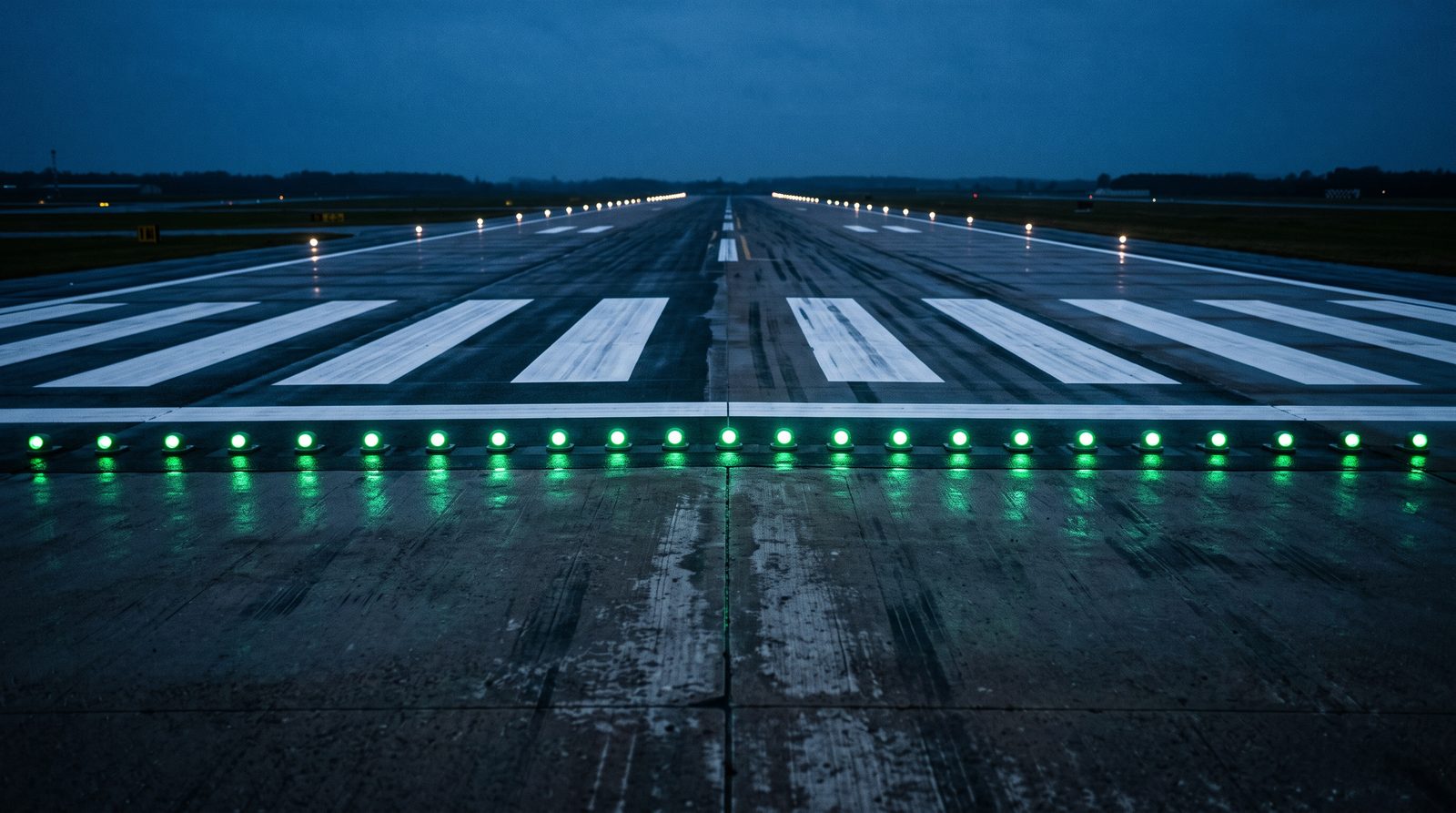
The green bar tells a crew where the runway begins and the red bar where it ends, and each one has its own serviceability limit. We fly both bars and record every unit: lit or dark, its colour, its intensity against the bar and its surveyed position. Each bar comes back scored against its own limit.
This service is bought by the person who signs the threshold and runway end rows of the visual aids protocol. It fits the electrical manager with a periodic protocol due, the aerodrome running low visibility operations where each bar has its own limit, and the operator who has just relamped a bar or moved a threshold and needs to show that every unit is lit, coloured correctly and in place.
Three outcomes are what the service is judged on, and each has a state you can check on delivery rather than a promise you have to trust.
Each fixture comes back lit or dark, with its colour, its intensity against the rest of its bar and its surveyed position. A bidirectional fixture gets a record for each face.
The threshold and the runway end are counted as separate systems and set against the serviceability objective for the operating category you name, including the rule on adjacent unserviceable lights.
The threshold and runway end rows of the visual aids protocol in ICAO, EASA or FAA wording, with the flight record and the source frames attached to every finding.
A runway end is seen from two sides, and the inspection looks at it from both.
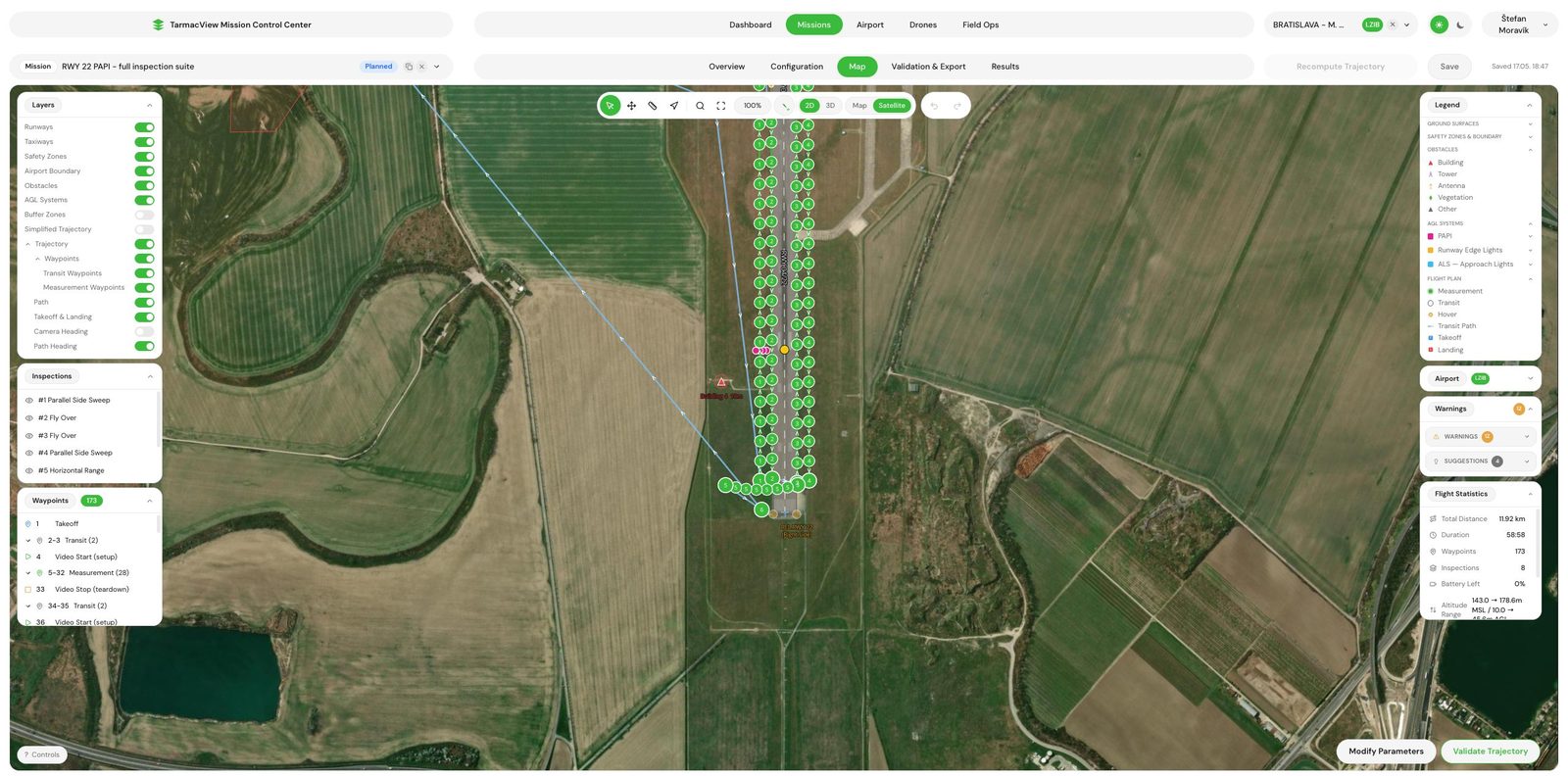
A fly-over crosses each bar above the units, so every fixture is seen down its own beam and its position is fixed against the survey. An observation arc out on the approach looks back at the threshold at the height a crew sees it from, which is how the green bar is judged as a pattern rather than as a list of units. The red end bar is seen the same way from the far side, as the crew rolling out toward it would see it.
Each fixture is tracked through the footage and scored on its own: lit or dark, its colour against the green or red it should show, and its intensity against the rest of its bar. A bidirectional unit is scored twice, once for each face, because the two faces belong to two different systems. A gap where a unit should be is reported as a missing light at its surveyed position, not as a shorter bar.
The threshold and runway end rows of the visual aids protocol, each with the figure it is judged against.
Each bar is complete across the runway, with wing bars where fitted, and every unit sits at its surveyed position.
The threshold bar shows green toward the approach and the runway end bar shows red toward the runway, on every unit and every face.
A unit whose main beam average intensity has fallen below half the specified value, or whose filter is missing, damaged or the wrong colour, is counted as unserviceable even if it is lit.
Share of units serviceable, set separately for the threshold and the runway end.
Share of units serviceable in each bar during CAT II or III operations.
Runway end lights on runways used for take-off, set by runway visual range.
No unserviceable unit sits next to another where the operating category forbids it, and the positions of any pair are given.
Every unit in both bars changes intensity together and by the commanded step.
Each unit sits at its surveyed position, and a dark or missing unit is reported against the light it belongs to.
You name the runway ends, whether wing bars are fitted, the operating category each bar must meet and whether a surveyed layout exists. We agree the intensity steps to be checked and the protocol template your authority wants. Output is a scope note. If the layout does not exist, the first visit produces it.
The fly-over and the observation arcs are generated from the unit positions and the camera optics, so every unit is framed at the distance and angle the measurement needs. Output is a validated mission and a capture window request to your tower, plus a request to your lighting control room for the steps to be commanded.
Flown between aircraft movements, usually in the same sortie as the edge row. Each bar is flown at every intensity step in scope. If a movement interrupts a pass, the pass is reflown unchanged rather than stitched.
Each unit is tracked through the footage and its state, colour, intensity and position are extracted, face by face. The units are then grouped into their systems and each system is counted against its own limit. Frames the tracker is not confident about are held for review rather than dropped.
The threshold and runway end rows of the visual aids protocol are filled in your authority's wording, with a verdict per unit, a count and a percentage per bar, and the positions of every unserviceable light. Delivered the same day, with the flight record and the source frames attached.
We walk your electrical manager through the units that failed, the faces that disagree and any pair of adjacent outages. Anything disputed is re-examined against the retained footage rather than re-flown.
A runway end carries two lighting systems that a crew reads for two different things. The threshold lights say where the landing runway begins, and the runway end lights say where the runway stops. The rules treat them as two systems. ADR.OPS.C.015 gives each its own serviceability objective, and in low visibility operations the two figures are far apart, 95 percent for the threshold and 75 percent for the runway end. A protocol that reports one count for the runway answers neither.
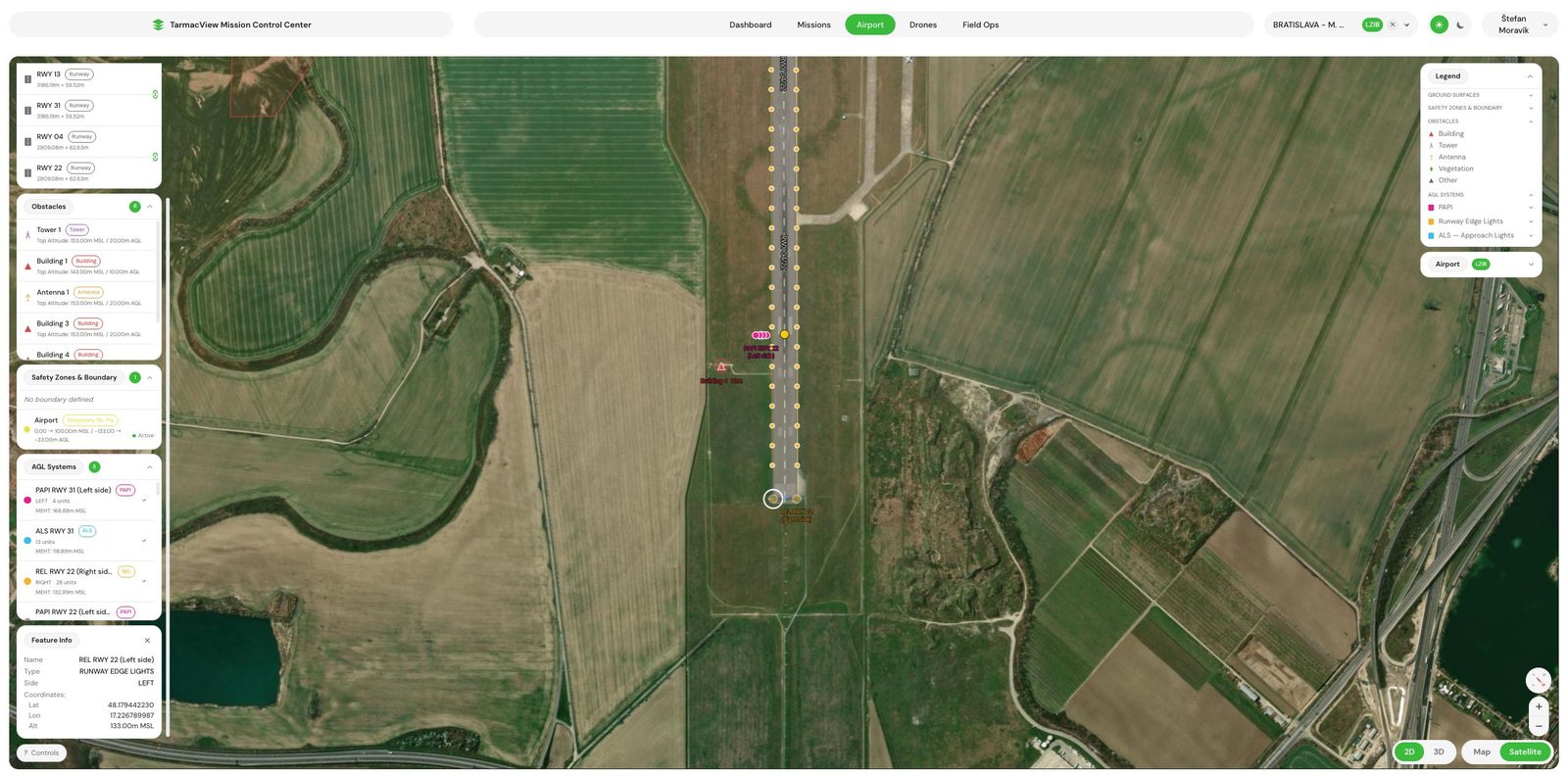
The inspection therefore counts each bar on its own. Every unit is found at its surveyed position from RTK positioning , its state and colour are read from the footage, and its light intensity is set against the rest of its bar. A unit that is lit but running well under its neighbours is the case a night walk misses. Under ADR.OPS.C.015 it is still unserviceable once its main beam falls below half the specified value, and the inspection names it with the figure that put it there.
Bidirectional fixtures are where a simple count goes wrong. One housing at the runway end can show green to the aircraft landing over it and red to the aircraft rolling out from the other direction. The two faces belong to different systems, so the inspection scores each face on its own. A red filter that has cracked or faded, which turns the end bar toward white or orange, is found from the chromaticity of that face even when the green side of the same fixture is perfect.
Retained footage is what makes a disputed verdict checkable. If your electrical manager questions a unit, the frames it was read from are still there with their positions, and the verdict can be rechecked in front of them. That is also what lets the next visit report change unit by unit, and what lets the approach lights and the PAPI be measured in the same visit without a second trip.
There is no published rate for this service, because one runway with two plain bars and two runways with wing bars and displaced thresholds are different days of work off the same method. The quote gives your figure, and the pricing page describes the combined visit.
Three things can stop or degrade an inspection, and each has an owner.
Fog, precipitation and wind above the drone's limit stop the capture. The mission is flown when the window opens rather than measured through the weather. This is the most common reason a date moves.
The capture needs tower coordination, at most aerodromes an escort, and a control room that can command the intensity steps while the drone is in position. All three sit with the aerodrome operator and are worth confirming before travel is booked.
Each unit is scored against its surveyed position and each bar against the limit for the category you name. If the threshold has moved or units were added since the layout was made, or the category is not stated, the scoring is against the wrong reference. Both are agreed at scoping.
Drone inspection of runway edge lights. Intensity, colour, beam shape and position measured for every unit, with a same-day protocol to ICAO, EASA or…
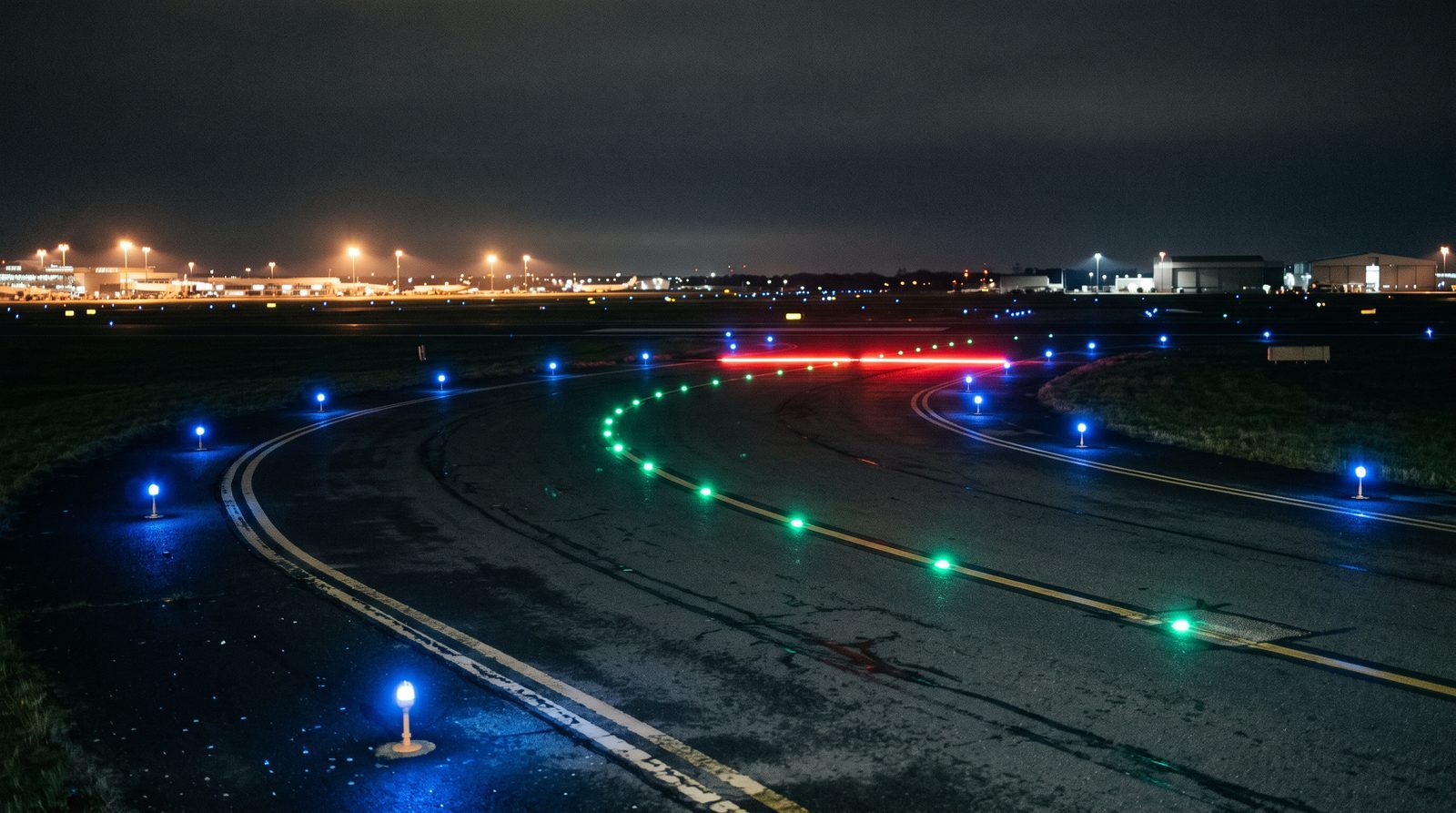
Drone inspection of taxiway lights. Every edge and centreline unit counted, stop bars and guard lights checked, each unit placed on the layout, from a…
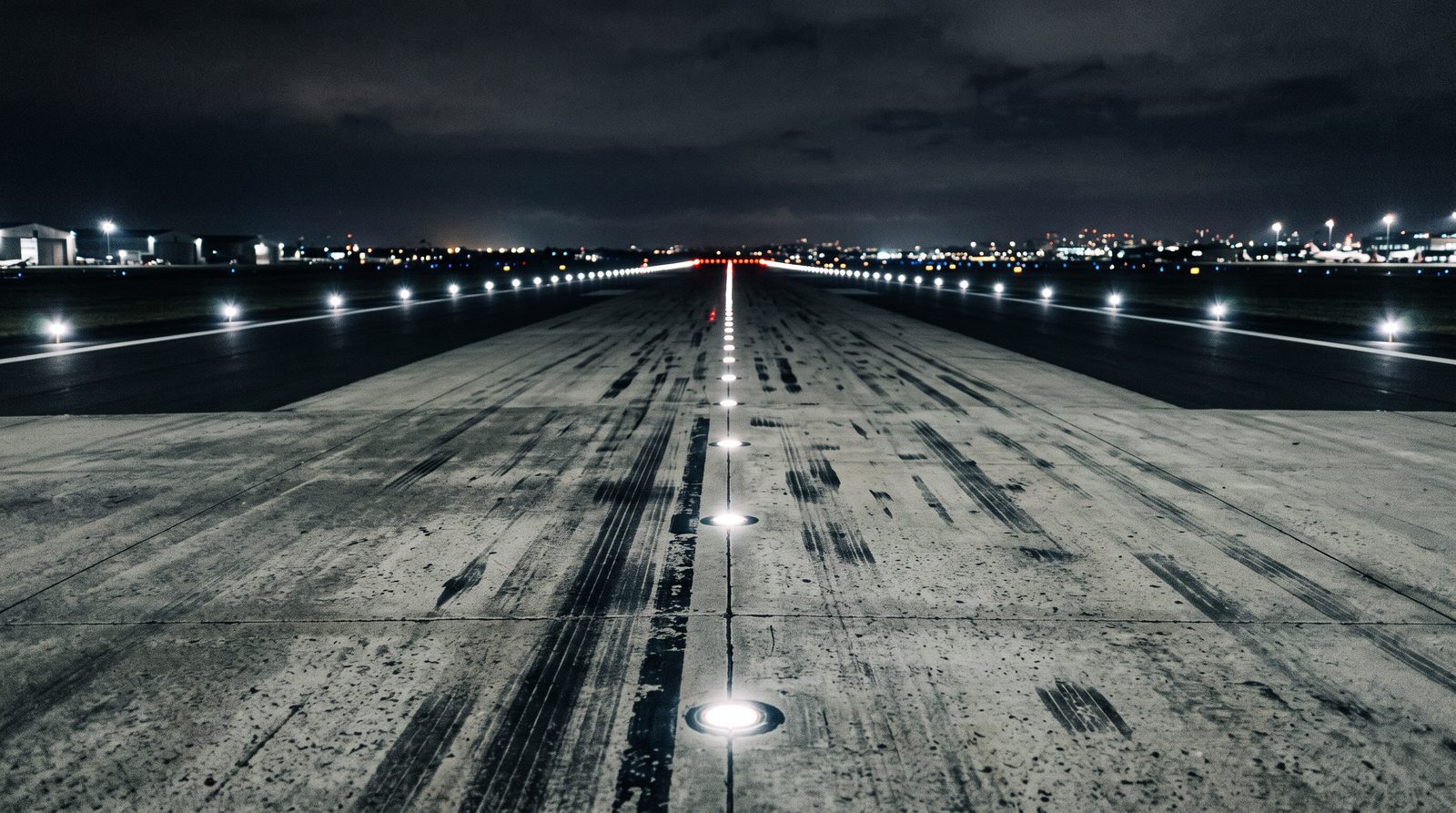
Drone inspection of runway centreline lights. Every inset unit counted, its colour coding checked and its output set against its neighbours, scored to…
Send the aerodrome, the runways and whether the runway lighting has a surveyed layout. That is enough to scope. You get a written scope note and a price back within two working days, and the scope note is not binding until you accept it.