What is a Ramp (Apron)?
Ramp (Apron) – Aircraft Parking and Servicing Area
Definition and Overview
The ramp, also known internationally as the apron, is a vital part of every airport’s operational infrastructure. It is the specifically prepared area where aircraft are parked for ground handling: passenger boarding/deplaning, cargo loading/unloading, refueling, servicing, and pre-flight preparation. According to ICAO Annex 14, the apron is defined as the part of an aerodrome intended to accommodate aircraft for loading or unloading passengers, mail, or cargo, refueling, parking, or maintenance.
The ramp is where the choreography of aircraft, ground support vehicles, and personnel enables fast, safe turnarounds. Unlike runways and taxiways, which are for aircraft movement, the ramp is the hub for all ground-based flight preparation and post-flight activities. Its design, marking, and procedures are governed by international and national aviation authorities, such as ICAO, FAA, and EASA.
The ramp is typically adjacent to terminal buildings, cargo sheds, and hangars and is the point where airside and landside operations converge. Here, the transfer of people, baggage, and cargo between aircraft and facilities takes place under strict safety and security protocols.
Primary Functions of the Ramp (Apron)
The ramp is the operational center for all ground activities involving aircraft and is designed to maximize efficiency and safety. Its main functions include:
| Function | Description |
|---|---|
| Aircraft Parking | Precise placement of aircraft in marked stands or bays for safety and accessibility. |
| Passenger & Cargo Handling | Boarding/deplaning, baggage, and cargo transfer using jet bridges, stairs, loaders, and dollies. |
| Aircraft Servicing | Refueling, water replenishment, lavatory service, catering, and aircraft cleaning. |
| Line Maintenance | Quick inspections, minor repairs, and checks performed outside hangars to minimize downtime. |
| Security & Safety Inspections | Regulatory checks for prohibited items, safety hazards, and proper equipment positioning. |
| Aircraft Towing & Pushback | Use of tugs and tractors for moving aircraft to and from stands, or repositioning for operational flow. |
| Deicing Operations | Ice and snow removal and anti-icing treatment in cold weather. |
| GSE Operations | Operation and staging of all ground support equipment (GSE) within designated areas. |
| Coordination & Communication | Synchronized activity between ramp agents, ATC, apron control, and ground handlers. |
Aircraft Parking
Aircraft are assigned to stands based on type, schedule, and operational needs. There are contact stands (with jet bridges) and remote stands (accessed by buses or stairs). Each stand’s layout ensures wingtip, tail, and engine clearance, and assignments are managed for safe, efficient flow.
Passenger and Cargo Handling
Passengers board or deplane via jet bridges or stairs. Baggage and cargo handling is carried out with belt loaders, container dollies, and integrated baggage systems. Special protocols apply for dangerous goods and high-value shipments.
Aircraft Servicing
Servicing activities, such as refueling and cleaning, occur simultaneously in a tight sequence. Refueling is governed by strict bonding, grounding, and communication procedures. Potable water, lavatory, and catering services are provided using dedicated vehicles, operating in timed slots to avoid congestion.
Line Maintenance and Inspections
Quick technical checks, fluid topping, tire/brake inspections, and avionics tests are performed on the ramp. Any issues are resolved or deferred per safety regulations before the aircraft is cleared to fly.
Security and Safety
Ramp crews conduct security sweeps, check for FOD (Foreign Object Debris), monitor for spills, and ensure all access doors and panels are secure. Safety envelopes are enforced, and only qualified personnel operate in these zones.
Aircraft Towing, Pushback, and Deicing
Pushback and towing are coordinated with ATC/apron control to prevent conflicts. Deicing/anti-icing is performed by specialized vehicles, following environmental and safety guidelines.
Ground Support Equipment (GSE) Operations
Tugs, GPUs, air start units, and catering trucks are staged in marked areas to avoid hazards and optimize turnaround time. Only trained operators may handle GSE.
Communication and Coordination
Ramp activities require robust radio communication, visual marshalling, and coordination between multiple teams and control towers.
Ramp Layout and Markings
Ramp designs and markings are standardized by ICAO and national authorities for clarity and safety.
Aircraft Stands/Bays
Each stand or bay is dimensioned for its intended aircraft types and marked for wingtip and engine clearance. Contact stands connect directly to terminals, while remote stands require passenger transport.
Taxi Lanes and Apron Taxiways
Marked yellow centerlines and edge lines guide aircraft between stands and taxiways. Apron taxiways are wide enough for aircraft and ground vehicles.
Equipment Staging Areas
Designated spaces for GSE keep equipment accessible yet out of aircraft movement zones.
Service Roads
Marked service roads allow vehicles to circulate without interfering with aircraft. Speed limits, arrows, and sometimes traffic lights control movement.
Ground Markings
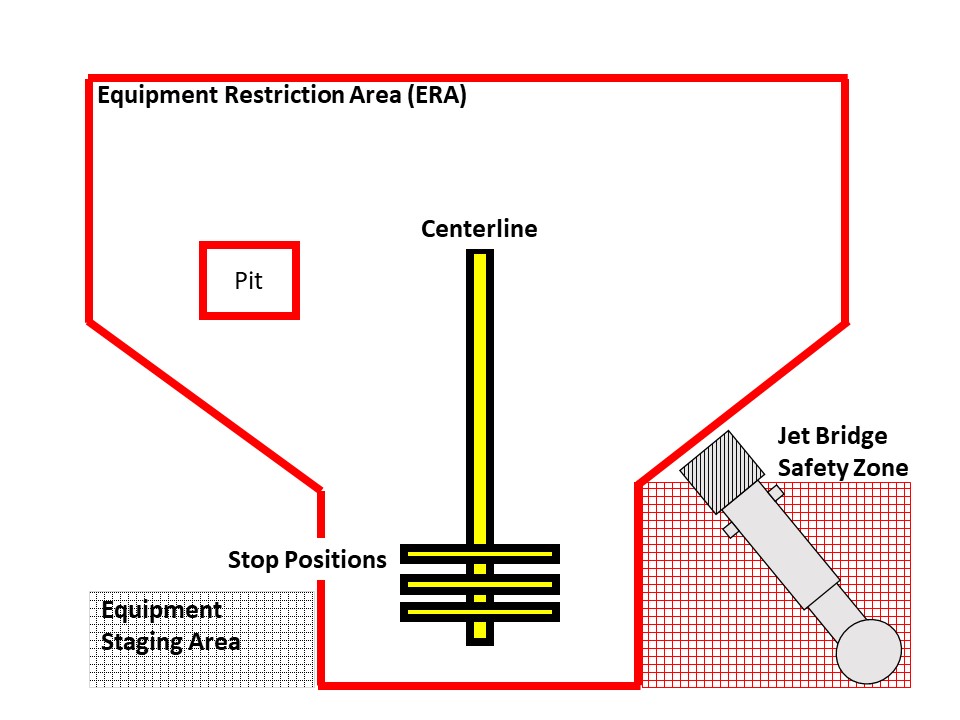
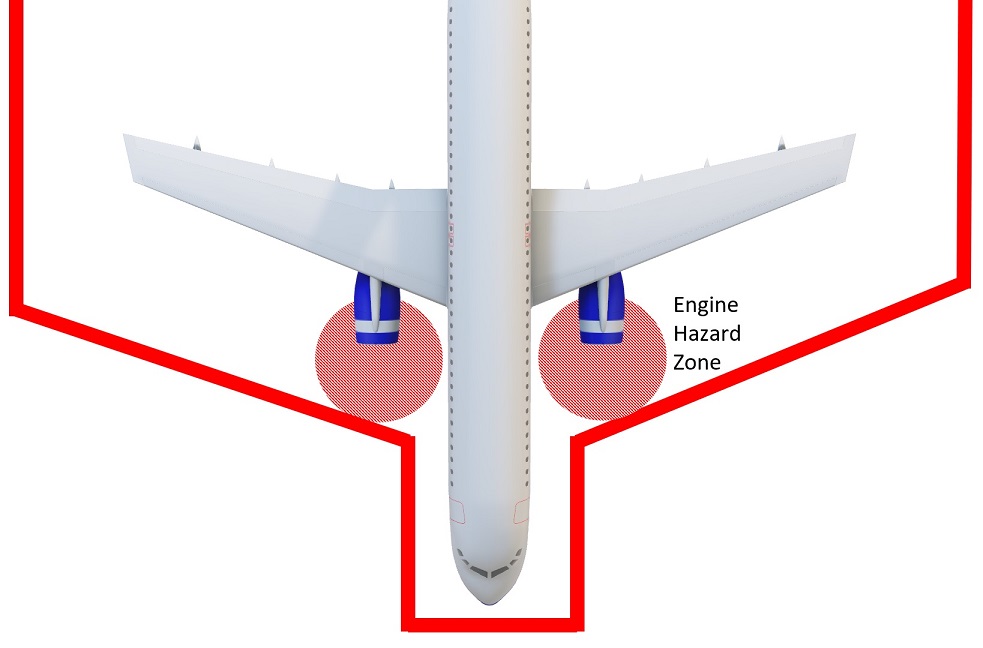
- Centerlines: Guide aircraft for precise parking.
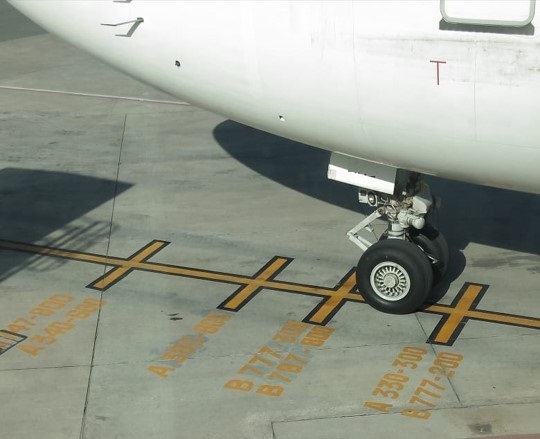
- Stop Positions: Indicate specific stopping points for different aircraft models.
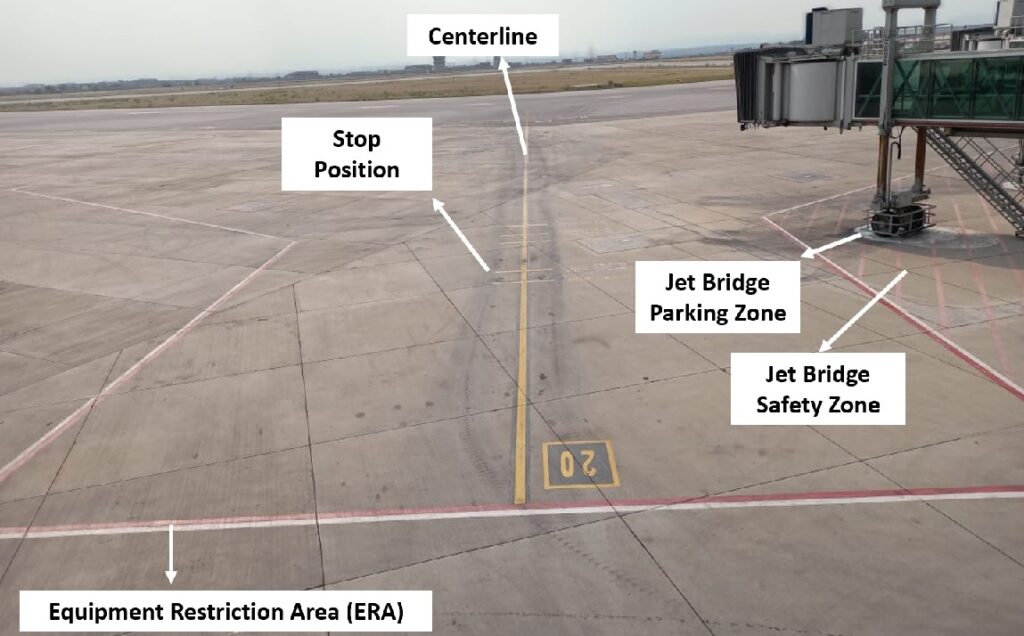
- Safety Envelopes (ERA): Marked boundaries for engine and jet blast hazard zones.
- Staging Areas: Outlined for GSE parking.
- Jet Bridge Zones: Indicate bridge swing range and safe parking spots.
- Fuel Hydrant Markings: Indicate fueling points and areas to avoid.
- FOD Bins: Marked for debris disposal.
Ramp Operational Procedures and Safety
Situational Awareness
All personnel must be alert to moving aircraft, vehicles, and equipment, especially during high-traffic or low-visibility periods.
Personal Protective Equipment (PPE)
High-visibility vests, safety footwear, and hearing protection are mandatory. Additional PPE may be required for specific tasks.
GSE Operation
Only certified staff can operate ramp vehicles and equipment. Pre-use checks are required, and defective equipment is immediately removed from service.
Vehicle Movement Protocols
Vehicles always yield to aircraft, must obey posted rules, and may not reverse toward aircraft except under marshaller guidance.
FOD Management
Ramp teams conduct regular FOD sweeps and use designated bins. Airports may use sweepers or detection systems to control debris.
Weather Precautions
Adverse weather (lightning, winds, snow) triggers specific protocols: suspending fueling, securing equipment, and increasing FOD checks.
Communication
Radio and visual signals follow standardized phraseology. Instructions must be confirmed and clarified if unclear.
Incident Reporting
Any incident, injury, or equipment contact with an aircraft must be reported and investigated before the aircraft is released.
Fitness for Duty
Ramp staff must be fit and unimpaired, with enforced rest and substance policies.
Prohibited Behaviors
Unauthorized access, horseplay, distractions, and improper device use are strictly banned.
Terminology Clarification
- Ramp: US/Canada/Maldives/Philippines usage for the parking/servicing area.
- Apron: ICAO/FAA term, internationally accepted.
- Flight Line: Military term for the apron.
- Aircraft Stand/Bay: Specific marked parking area for one aircraft.
- Tarmac: Not an official term for ramp/apron, refers only to road surface material.
- Maneuvering Area: Runways/taxiways (excludes ramp/apron).
- Movement Area: Maneuvering area plus ramp/apron.
- Air Operations Area (AOA): US regulatory term for all airside areas.
Examples and Visuals
Typical Ramp Layout
Multi-Aircraft Stand Markings
Jet Bridge Safety Zones
Engine Hazard Zones
Real-World Example
Use Cases
Routine Turnaround
Upon arrival, aircraft engines are shut down and beacons off before ground crews approach. Passengers and baggage are offloaded, and simultaneous refueling, catering, cleaning, and inspections take place. After checks and new loads, the aircraft is pushed back under ATC/apron control.
Severe Weather
Ramp teams secure aircraft and equipment, suspend fueling in electrical storms, and increase FOD checks. Operations are modified or suspended as needed for safety.
Multiple Aircraft Types
Stands with markings for various aircraft types allow flexible assignment and efficient use of space and GSE.
Emergency Response
If a fuel spill or emergency occurs, all ramp operations stop. Emergency teams respond, and the affected zone is evacuated and secured.
Ramp/apron operations are fundamental to airport efficiency and aviation safety. Robust procedures, clear markings, and continuous training ensure that the ramp remains a safe, efficient, and effective environment for ground handling and aircraft servicing worldwide.
Frequently Asked Questions
- What is the ramp (apron) at an airport?
- The ramp or apron is a designated section of an airport where aircraft are parked for ground handling activities. These include passenger boarding and deplaning, baggage and cargo handling, refueling, catering, cleaning, and minor maintenance. It is distinct from runways and taxiways and is strictly controlled for safety and security.
- How does the ramp differ from taxiways and runways?
- The ramp (apron) is used for parking and servicing aircraft, not for takeoff, landing, or taxiing between runways. Taxiways connect ramps to runways and maneuvering areas, while runways are used solely for takeoff and landing. The ramp is where ground handling, loading, and servicing tasks occur.
- What safety measures are enforced on the ramp?
- Ramp safety involves protocols such as high-visibility PPE, strict vehicle movement rules, regular FOD (Foreign Object Debris) checks, equipment staging outside safety envelopes, coordinated communication, and immediate reporting of incidents or hazards. Only trained personnel and authorized vehicles are allowed.
- What is the difference between ramp, apron, and tarmac?
- Ramp and apron are different words for the same area, the aircraft parking and servicing zone. 'Ramp' is common in the US, 'apron' is used internationally. 'Tarmac' is a colloquial term often misused for any airside area but technically refers to a road surface material, not an airport area.
- Who controls ramp operations?
- Ramp operations are coordinated by airport ramp (apron) control, ground handlers, and air traffic control (ATC). Communication and coordination are essential, especially during aircraft movements, busy periods, and emergencies. Access is tightly regulated for safety and security.