What are Airport Ground Markings?
Airport Ground Markings and Painted Airport Surface Markings: Comprehensive Glossary
Airport ground markings, also known as airport surface markings, are the backbone of safe and efficient airport operations. By providing a standardized, non-verbal language for pilots, ground vehicle operators, and airport personnel, these painted visual aids ensure the orderly movement of aircraft and vehicles on airport surfaces. The following glossary dives deep into the types, purposes, regulatory frameworks, and operational examples of each major category of airport ground markings.
Airport Ground Markings / Airport Surface Markings
Airport ground markings encompass all painted cues applied to runways, taxiways, aprons, stands, and specialized zones. These markings are created using highly durable, retroreflective paints to ensure visibility under all weather and lighting conditions. Their designs are dictated by ICAO Annex 14 and FAA AC 150/5340-1M, among other standards.
Key Functions:
- Delineate operational areas (movement/non-movement zones)
- Guide traffic flow for both aircraft and vehicles
- Demarcate safety buffers and restricted areas
- Convey critical instructions such as holding points or closures
Operational Example:
On final approach during low visibility, a pilot lines up with the runway’s painted centerline and uses side stripes and threshold markings for spatial orientation and touchdown guidance.
Regulatory Note:
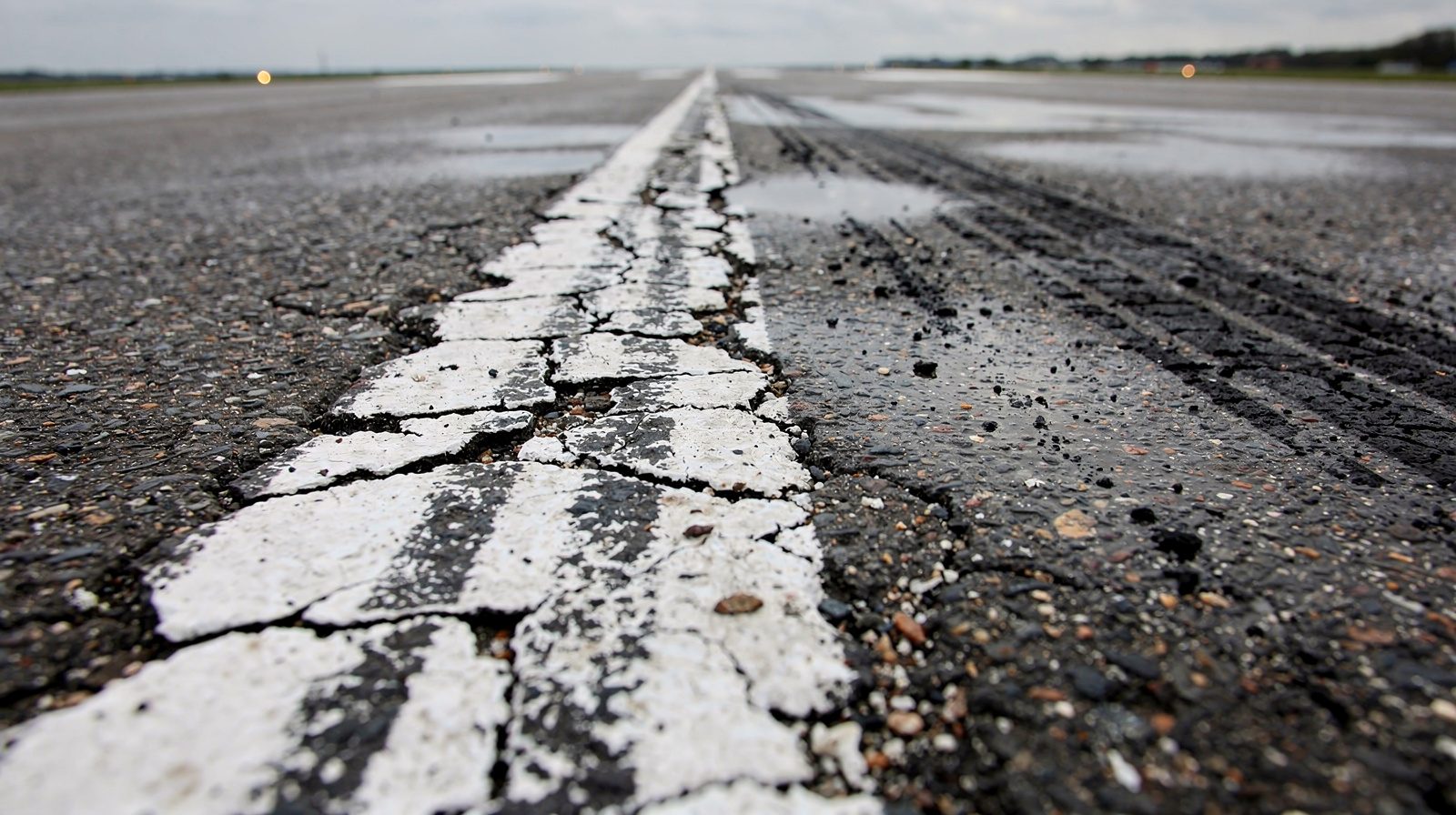
Markings must remain clean, clear, and sharply defined. Faded or ambiguous markings can cause runway incursions or operational errors, so airports maintain strict inspection and maintenance schedules.
Runway Markings
Runway markings are standardized, white-painted visual cues on the runway surface that communicate crucial information for takeoff, landing, and taxi operations.
Types and Functions:
- Runway Designation Markings: Large white numerals/letters at each end indicating magnetic heading (e.g., “09L” for 90° left).
- Runway Centerline: White dashed lines providing alignment and visibility cues.
- Threshold Markings: Broad white stripes at the start of the landing surface.
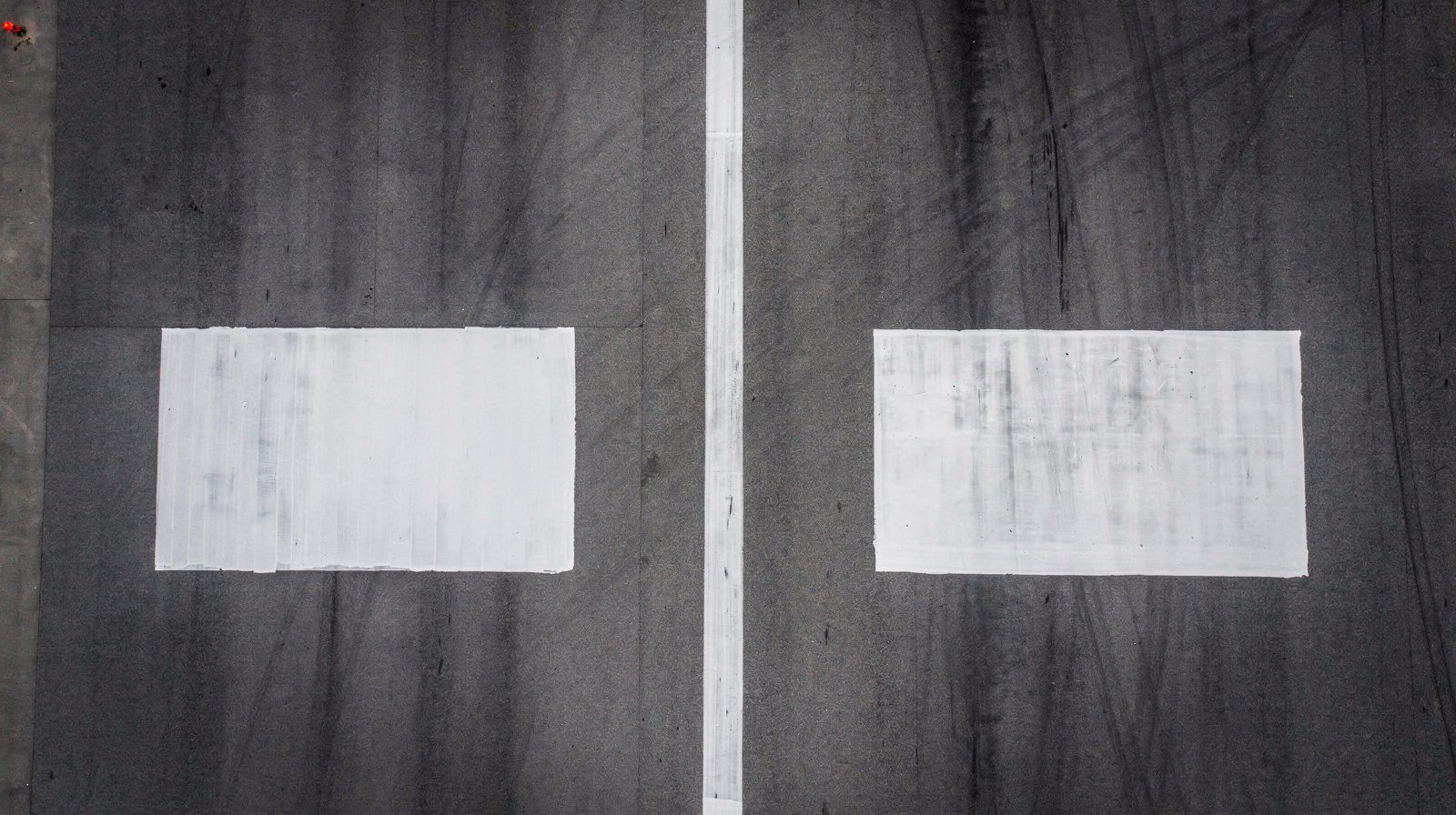
- Aiming Point Markings: Two broad white rectangles (typically 1,000 feet from threshold) for landing targets.
- Touchdown Zone Markings: Pairs of white bars at 500-foot intervals in the first 3,000 feet.
- Side Stripe Markings: Solid white runway edge lines for lateral guidance.
- Shoulder Markings: Yellow chevrons or lines for areas not for aircraft use.
- Displaced Threshold: Arrows and a transverse bar marking relocated thresholds.
Operational Importance:
These markings reduce runway excursions, overshoots, and misidentification, especially in poor visibility or at complex airports.
Taxiway Markings
Taxiway markings are yellow-painted lines and symbols that guide aircraft and vehicles between runways, aprons, and stands.
Key Components:
- Taxiway Centerline: Single, continuous yellow line for path guidance.
- Edge Markings: Double yellow lines (solid or dashed) clarifying pavement boundaries.
- Shoulder Markings: Angled yellow stripes indicating non-load-bearing shoulders.
- Surface-Painted Signs: Direction/location aids painted directly on the surface.
- Enhanced Taxiway Centerline: Dashed lines alongside centerline before runway holding points for greater awareness.
Operational Use:
Pilots follow centerline markings to avoid obstacles and stop at holding points before entering active runways.
Apron and Ramp Markings
Apron and ramp markings, mainly in yellow and white, organize parking, loading, and servicing areas for aircraft and ground vehicles.
Types:
- Stand/Nose Wheel Stop: Precise parking positions labeled by aircraft type.
- Lead-In/Lead-Out Lines: Curved/straight paths for safe aircraft movement to/from stands.
- Safety Envelopes: Areas restricting access for fueling, baggage handling, or other services.
- Vehicle Roadways: White lines/zebra patterns separating vehicle lanes from aircraft paths.
Practical Example:
After landing, marshallers use lead-in lines to guide aircraft to parking, while vehicles stay within marked roadways to avoid conflict with aircraft.
Holding Position Markings (Hold Short Markings)
Holding position (hold short) markings are critical for preventing runway incursions. They indicate where aircraft and vehicles must stop before entering a runway or protected area.
Types:
- Runway Holding Position: Two solid and two dashed parallel yellow lines at the runway/taxiway intersection. Solid lines are on the side where stopping is required.
- ILS Critical Area Hold: Two solid lines with rows of yellow dots between them to protect ILS signals.
- Taxiway Intersection Hold: Single dashed line across taxiway, used as instructed by ATC.
Operational Example:
Pilots stop at these markings and await clearance before proceeding onto an active runway, especially in low visibility.
Non-Movement Area Boundary Markings
These markings separate areas requiring ATC clearance (movement areas) from those that do not (non-movement areas, e.g., ramps).
Design:
A single solid yellow line next to a single dashed yellow line, crossing the apron/taxiway boundary. Solid line is on the non-movement side.
Usage:
Vehicles and aircraft must not cross into movement areas without ground control clearance.
Closed Runway/Taxiway Markings (“X” Markings)
Large “X” symbols indicate closed runways/taxiways, preventing accidental use.
Design:
- Runways: White “X” (typically 60 ft long arms)
- Taxiways: Yellow “X”
- Temporary Closures: Portable or illuminated “X”s
Temporary Markings
Temporary markings are used during construction or reconfiguration.
Types:
- Temporary Arrows/Lines: Guide traffic during detours.
- Blackout Paint: Covers obsolete markings to prevent confusion.
- Removable Paints: For short-term use.
Key Considerations:
Temporary markings must be clear, unambiguous, and removable without leaving “ghost markings.”
Displaced Threshold
A displaced threshold is a relocated landing threshold, marked by white arrows leading to a transverse bar.
Use:
The area before the threshold is for taxiing, takeoff, and landing rollout, but not for touchdown.
Blast Pad, Stopway, and Overrun Area (Chevrons)
Blast pads, stopways, and overrun areas are not for routine operation, they serve as safety buffers.
Marking:
Large yellow chevrons indicate areas not to be used for taxiing, takeoff, or landing.
- Blast Pad: Prevents surface erosion from jet blast.
- Stopway: For aborted takeoff only.
- Overrun: Safety buffer for overruns.
Runway Side Stripe Markings
Solid white lines along runway edges, defining usable width and aiding lateral guidance.
Runway Shoulder Markings
Yellow lines/chevrons on pavement adjacent to the runway, indicating non-usable areas.
Taxiway Shoulder Markings
Yellow stripes on taxiway shoulders, denoting non-load-bearing areas.
Surface-Painted Signs
Large, colored markings painted directly on taxiways and aprons for location, direction, and instruction.
Types:
- Direction Signs: Yellow background, black letters/arrows (e.g., “←B”).
- Location Signs: Black background, yellow letters (“A”).
- Hold Position Signs: Red background, white letters (e.g., “27-APCH”).
Geographic Position Markings (“Pink Spots”)
Geographic position markings, sometimes called “pink spots”, are special reference points on movement areas, used primarily for low-visibility operations. They allow pilots and controllers to verify an aircraft’s location relative to taxi routes or hold points.
Design:
Typically, a pink circle with a white number or letter, often accompanied by a black background for contrast.
Use:
Pilots report their position by referencing the marking’s identifier during “follow the greens” or low-visibility taxi procedures.
Conclusion
Airport ground markings are essential for the safe, organized, and efficient movement of aircraft and vehicles on the airfield. By adhering to rigorous international standards, airports ensure that these visual cues remain clear, consistent, and unambiguous under all conditions. Meticulous maintenance and regulatory compliance are vital, as faded or confusing markings can have serious safety repercussions. From the moment an aircraft lands to its journey across aprons, taxiways, and runways, these markings guide every step, making them a cornerstone of modern aviation safety and efficiency..
Frequently Asked Questions
- What standards govern airport ground markings?
- Airport ground markings are regulated by international standards such as ICAO Annex 14 and regional authorities like the FAA's Advisory Circular 150/5340-1M. These standards define the colors, dimensions, placements, and maintenance requirements for all runway, taxiway, apron, and other operational markings, ensuring uniformity and clarity worldwide.
- How are airport ground markings maintained?
- Markings are maintained through routine inspections, cleaning, repainting, and reflectivity testing. Faded or ambiguous markings are promptly restored to ensure safety. Removal of obsolete markings uses environmentally sensitive methods, and compliance with regulatory standards is mandatory to avoid operational hazards.
- Why are different colors used for airport markings?
- Colors distinguish the function and location of markings: white for runway-related information, yellow for taxiways and aprons, red for restricted or mandatory areas, and black for masking obsolete markings. This color code, defined by ICAO and FAA, helps pilots and crews quickly interpret cues under all conditions.
- What is a displaced threshold?
- A displaced threshold is a relocated runway landing threshold, marked by white arrows leading to a transverse bar. The area before the threshold can be used for taxiing, takeoff, or rollout, but not for landing touchdowns. Displacement is used for safety, obstacle clearance, or noise abatement.
- How do surface-painted signs differ from vertical signs?
- Surface-painted signs are large, colored markings on taxiways and aprons, providing directional, location, and holding information directly where pilots and drivers look during ground movement. They supplement (or temporarily replace) vertical signage, especially when snow, ice, or vehicles may obscure those signs.
This is a reference entry. TarmacView provides drone inspection services and doesn't sell the equipment or materials described in this glossary.