When Runway Markings Lose Conspicuity
A marking can be present yet invisible. How abrasion, rubber, oxidation and water degrade conspicuity, and when to repaint versus strip.
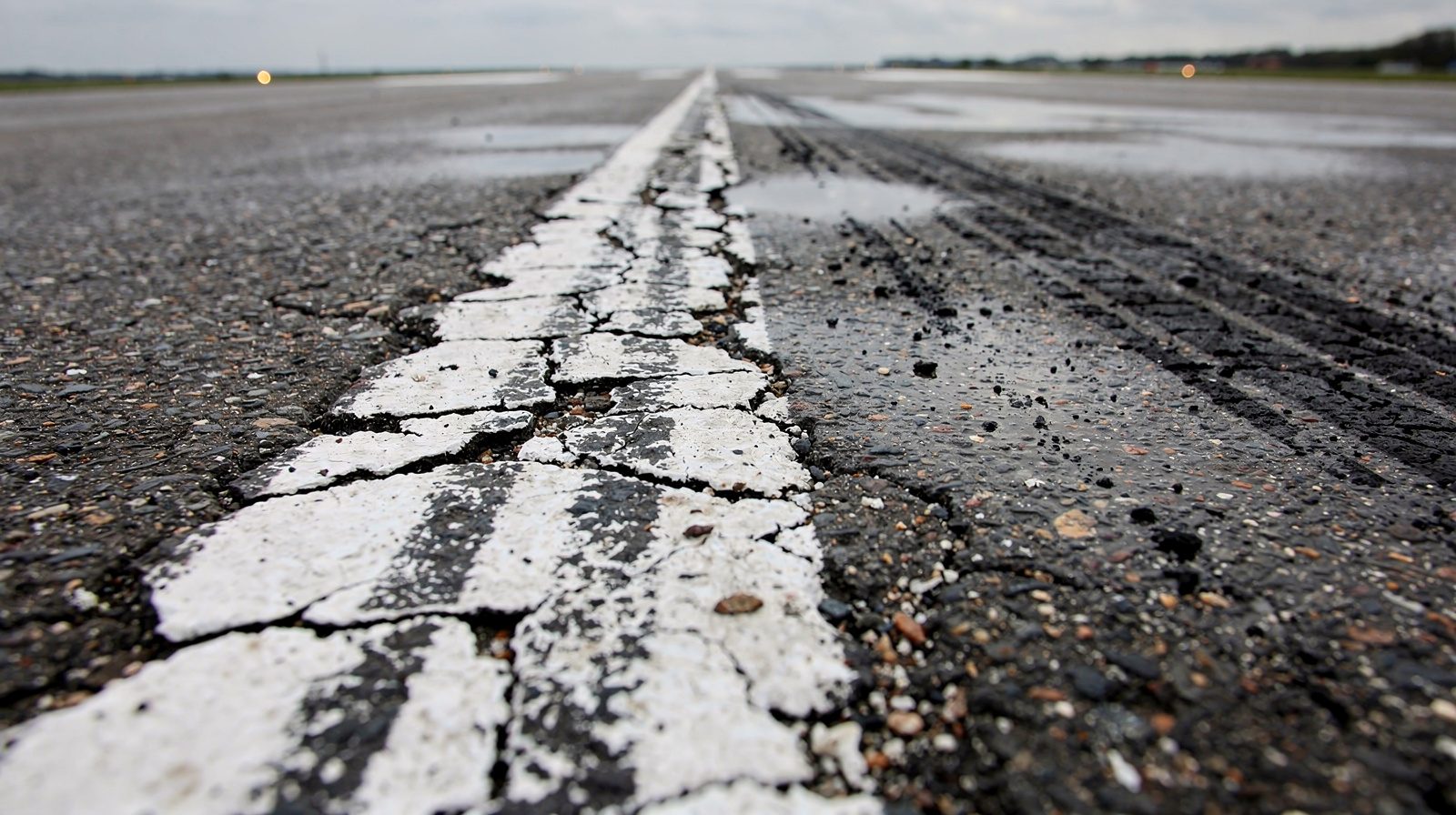 WORN STRIPE · RUBBER DEPOSIT · WET
Conspicuity is not presence
A runway marking can be fully present on the pavement and completely invisible to a pilot on approach. The distinction matters. Presence means the paint is there. Conspicuity means it can be seen.
That separation is where most marking maintenance fails. A paint stripe that has not flaked away can still fail to guide a landing aircraft if its contrast is gone, its retroreflectivity is exhausted, or if standing water washes out what little visibility remains. The marking exists. It just does not perform.
Most airfields treat markings as a binary property. A marking either works or it does not, so it either stays or gets repainted. The reality is slower and more granular. A pavement marking can spend months falling from compliant to failing without ever becoming obviously absent. The eye sees a stripe. The measurement system sees it too. The pilot does not.
What erodes conspicuity
Conspicuity loss is not one process. It is at least five, running in parallel, each with a different fix.
Abrasion and surface wear. Aircraft tires scuff and polish the paint. Jet blast sandblasts it. Snowplow blades drag grit across it. The surface becomes matte, then chalky. Once the binding agent fails, repainting is the only fix.
Glass bead loss. A marking uses embedded glass beads to return light at night. Aircraft tires and jet exhaust jar them loose. Retroreflectivity falls steadily, but most pilots do not see this because it happens uniformly across the stripe. The threshold is invisible until it is crossed.
Rubber accumulation in the touchdown zone . Aircraft tire rubber accumulates in deposits that age and harden in the landing zone. Fresh rubber reflects light. Old rubber does not. It builds an opaque film on top of the paint. Rubber removal restores conspicuity in hours. Repainting does not solve it if rubber is left behind.
Oxidation and pavement greying. The surrounding pavement degrades. UV, jets, deicing fluid and salt cause the surface to lose colour and become grey. A white marking on black asphalt is conspicuous. A white marking on grey concrete is not. This is a daytime problem. Night conspicuity comes from retroreflectivity , not contrast.
Standing water. Depressions collect standing water. A submerged marking is invisible. On a runway with poor drainage, pooling can persist for hours. A marking under water is useless regardless of paint or bead quality.
| Mechanism | What fails | Day visibility | Night visibility | Reversible | Recommended fix |
|---|---|---|---|---|---|
| Paint abrasion and wear | Paint binder erodes, surface becomes matte | Low (diffuse reflection replaces contrast) | Low (beads are exposed but surface is rough) | Only while fresh | Repaint |
| Glass bead loss | Beads are dislodged by tires and jet blast | Not directly affected | Falls steadily (fewer beads reflect light) | No | Repaint |
| Rubber accumulation (touchdown zone) | Opaque rubber film builds over the paint | Rubber obscures the white, reduces contrast | Rubber blocks light reaching the beads | Yes, by removal | Rubber strip/sweep |
| Pavement greying | Surrounding concrete oxidizes and loses colour | Contrast between marking and pavement vanishes | Unaffected (retroreflectivity does not depend on pavement colour) | No | Pavement treatment or repaint |
| Standing water | Water pooling covers the marking | Completely obscured | Completely obscured (water blocks all light) | Yes, by drainage | Improve surface drainage |
Two of those mechanisms are fixed by a power washer and a rubber sweeper. Two are fixed by a paint truck. One is fixed by drainage improvements. Treating all of them as “the marking is failing, repaint it” is the expensive way to manage a runway.
Why the touchdown zone degrades first
The first 3,000 feet of a runway, where aircraft make initial contact with the pavement, carries all the heaviest traffic. Every landing aircraft lands here. Most roll out here. The concentration is extreme.
Everything that erodes conspicuity happens faster in the touchdown zone because the flux is higher. Abrasion per flight is multiplied by every flight that uses the runway. Rubber deposits accumulate in tonnage. Bead loss accelerates. The surrounding pavement oxidizes faster because it bears the most tire contact and jet blast.
There is a secondary effect. A runway that carries heavy traffic generates standing water in the touchdown zone because the pavement settles and becomes rutted. The touchdown zone becomes a sump. When it rains, that depression fills before anywhere else on the runway and drains last.
The result is that a runway can have compliant markings at threshold and past midfield, and non-compliant conspicuity in the touchdown zone, where pilots need it most.
Why nobody sees it happening
The eye is a superb detector of change and a catastrophic meter of absolute brightness. A pilot on approach can immediately see that one fixture in a line of lights is dimmer than its neighbours. A pilot cannot see that every marking on a 10,000-foot runway has faded by the same 30 per cent, because there is nothing to compare it to.
Adaptation makes this worse. Between one season and the next, the pilot who flies this runway regularly has adapted to whatever conspicuity the markings now have. A marking that faded gradually becomes the new normal.
Circuit monitoring does not help. A runway lighting system monitors lamp state and circuit current. It does not measure light output. A marking system, if it exists, is usually a paper checklist. Visual systems cannot detect retroreflectivity loss. A retroreflectometer can, but handheld surveys are expensive and intermittent, so most airports do not have a measurement baseline. Without a baseline, there is no way to know a marking is falling until someone complains or it fails a compliance audit.
Daytime and night-time visibility are different failures
A marking can fail for day operations and pass for night, or fail for night and pass for day. These are not the same problem.
Day conspicuity depends on contrast. A white line on black pavement has high contrast. A white line on grey concrete does not. Contrast is a property of the marking and the surface it sits on, not of the marking alone.
Night conspicuity depends on retroreflectivity . A marking returns light from the aircraft’s landing lights back to the pilot. Retroreflectivity is a property of the embedded glass beads and their embedment depth. The colour of the pavement underneath is irrelevant.
A runway where the pavement has oxidized and greyed will fail daytime visual conspicuity checks while the retroreflectivity is still compliant. A runway where rubber has accumulated will fail both, because rubber blocks both the light return and the underlying white paint.
Standing water is the exception that fails both simultaneously. Water is opaque to the pilot whether the light is from the sun or from the aircraft’s lights.
What a photographic survey reveals and misses
A drone-based pavement scan at low altitude and high overlap captures every millimetre of the runway surface at a known ground resolution. A photo of a marking shows its physical state: presence or absence of paint, location and extent of abrasion, distribution of rubber deposits, discolouration from oxidation, location of pooling and standing water.
What it does not show is retroreflectivity. A marking in a photograph looks bright or dim depending on the lighting angle and the camera exposure. A marking that has lost half its bead population looks exactly the same in a photograph as one that is fully compliant, because both look like white stripes under daylight. Retroreflectivity is invisible to the camera. It requires a retroreflectometer, a specialized instrument that simulates the geometry of a pilot 30 metres ahead with landing lights on.
Similarly, a photograph shows rubber deposits, but shows almost nothing about whether they are adhesive enough to strip away by a rubber sweeper or whether they are weathered to the point where they are essentially part of the paint and will not move without repainting.
The useful finding from a photographic survey is presence, location and extent of degradation. The limitation is that it does not measure the one thing that matters for night operations: light return. A survey that finds heavy rubber deposits is actionable: strip them and measure retroreflectivity before deciding whether repainting is necessary. A survey that finds no visible defects can still mask a runway whose retroreflectivity has fallen 40 per cent.
When to strip versus when to repaint
A marking that shows rubber accumulation and still has adequate retroreflectivity needs rubber removal, not repainting. The paint underneath is fine. The problem is that the surface is dirty.
A marking that shows paint abrasion and has lost glass beads needs repainting. Cleaning will not restore beads that are gone. The binding agent is failing.
A marking that shows oxidation of the surrounding pavement with an otherwise intact white stripe needs evaluation by contrast measurement. If daytime contrast is adequate, leave it. If not, the fix depends on budget: pavement cleaning or grinding to restore pavement colour is cheaper than repainting, but offers no benefit for night operations. Repainting restores both day and night conspicuity.
A marking under standing water is a drainage problem, not a marking problem. Improved surface drainage, or localized mill-and-fill where the runway has settled into a rut, solves it permanently.
The practical outcome is that a runway inspection should produce not just a binary pass/fail, but a description of what actually failed and where. A survey that reports “runway centreline marking non-compliant, requires immediate repainting” is less useful than one that reports “runway centreline marking has rubber accumulation 150 metres past threshold, retroreflectivity adequate, recommend rubber removal and re-measurement.” One is a directive. The other is a plan.
That is why a surface scan produces a georeferenced survey of every defect: the next intervention can target the specific defect, not the whole runway. A rubber strip operation at the touchdown zone is cheaper than a runway repaint. A repaint that comes after rubber removal is more durable than one that tries to cover deposits. A drainage fix that prevents standing water extends marking life everywhere it improves.
The marking on your runway is not simply there or not there. It is conspicuous or it is not, and the path to restoring conspicuity depends on understanding what eroded it.
See also: runway surface inspection, what a drone scan reveals .
Founded by flight-inspection veterans who spent decades measuring PAPI lights for aviation authorities across Europe.
Learn more
Related terms
03 TERMSAirfield Pavement Markings
Airfield pavement markings, runway centerline, threshold, touchdown zone, taxiway centerline, holding position, and apron markings, are critical for pilot navigation. Covers marking types, materials (paint, thermoplastic, preformed tape), retroreflectivity, and AI-based marking condition assessment per ICAO Annex 14 and FAA AC 150/5340 standards.
Airport Ground Markings
Airport ground markings guide pilots and ground crews using standardized, painted visual cues on runways, taxiways, and aprons. These markings ensure safe, efficient, and organized airport operations by delineating operational areas, directing traffic, and providing critical safety information.
Marking
Airport markings are standardized visual patterns applied to surfaces like runways and taxiways, essential for safe and efficient aircraft and vehicle movement. Governed by international and national regulations, these markings provide guidance, boundaries, and safety information for airport operations.
Further reading
03 ARTICLES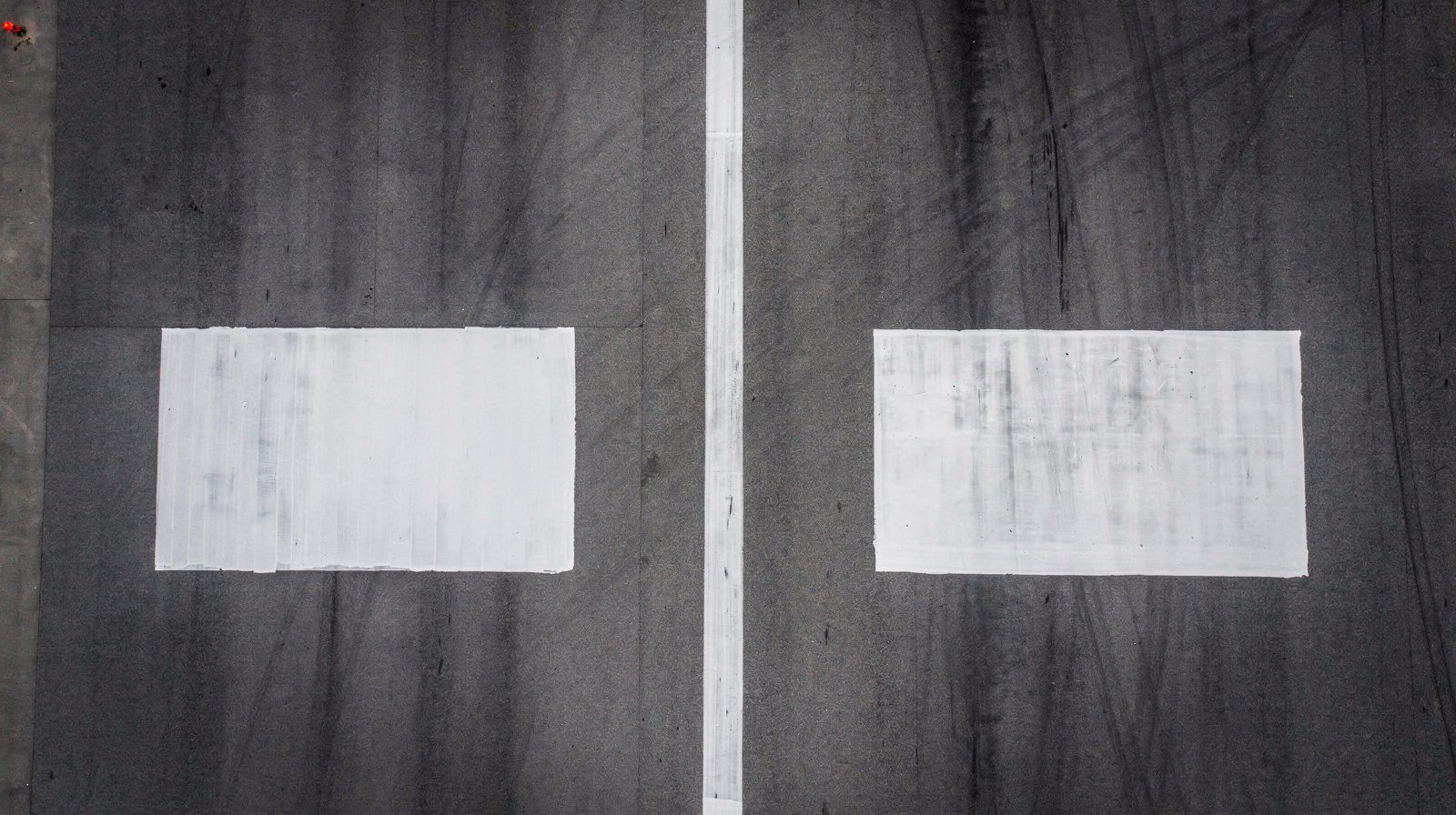
Airfield Marking Inspection: What a Drone Survey Actually Measures
Presence, geometry and conspicuity fail separately. What a nadir drone survey measures on airfield markings, and what needs a ground instrument.
When Runway Lights Drift Out of Tolerance
Runway lights do not fail suddenly. They drift. What moves a fixture out of tolerance, why nobody sees it happen, and how a measured baseline catches…
Pavement Design Life and When an Overlay Is Due
Why a single survey cannot drive an overlay decision, and why a trend across years tells you the deterioration rate that actually matters.