Pavement Design Life and When an Overlay Is Due
Why a single survey cannot drive an overlay decision, and why a trend across years tells you the deterioration rate that actually matters.
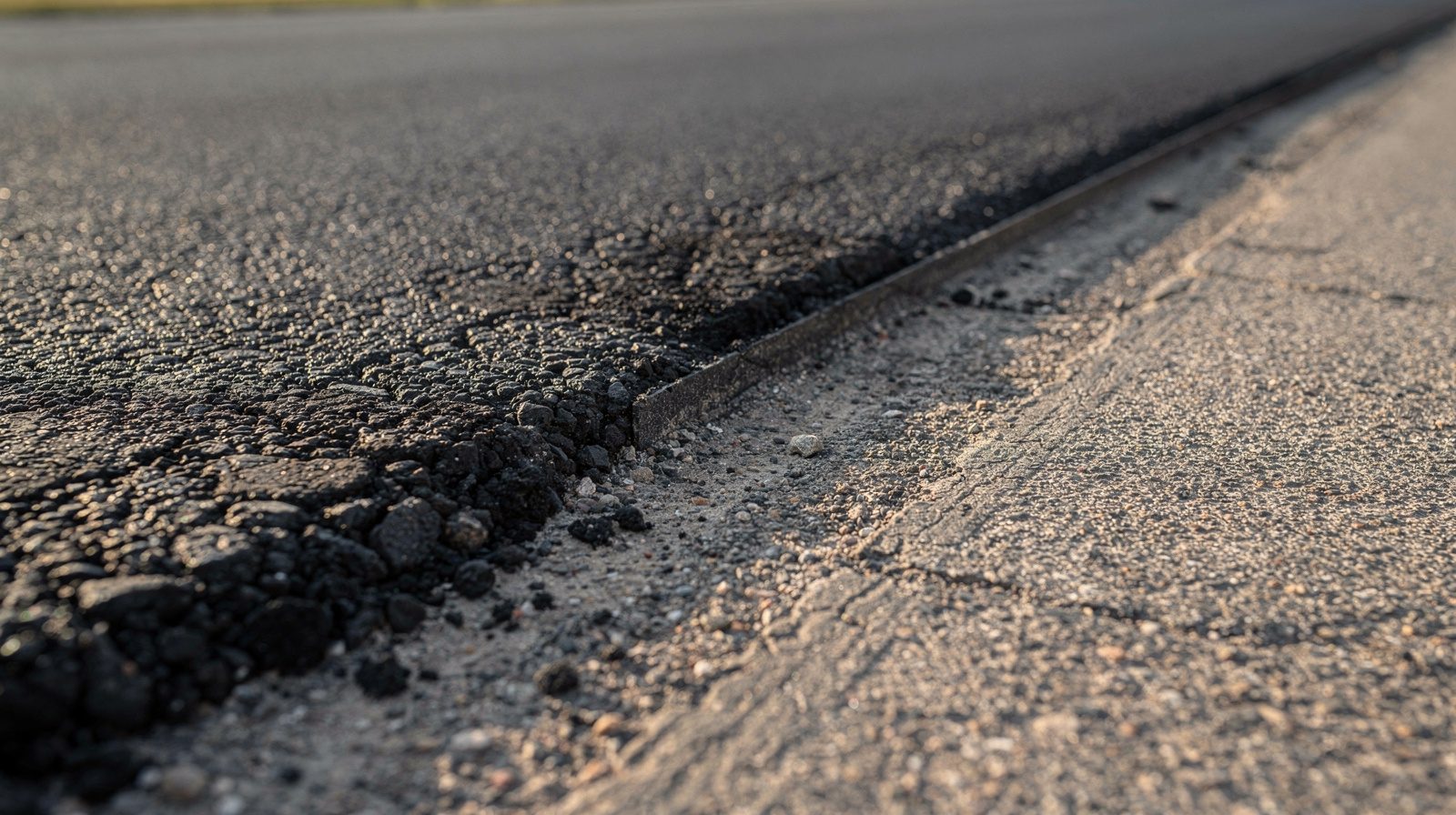 OVERLAY JOINT · MILLED EDGE · LOW SUN
The decision point is not a date
A runway reaches its “design life” and the question lands on the pavement manager’s desk: is it time for an overlay? The question itself is deceptive, because design life is not a warranty or an expiration date. It is a design assumption baked into the original pavement calculation, a stated period computed against an assumed traffic mix, not a countdown to a failure date on the calendar. A runway might see that load count in five years if traffic is heavy, or in twenty if traffic is light. The pavement does not know the calendar. It knows how many times a wheel has crossed it, and how the surface responds to that load.
So when do you actually overlay? The honest answer is that one measurement of condition cannot tell you. A runway at PCI 60 today tells you that a trained observer sees moderate deterioration on the surface right now. It tells you almost nothing about whether you should act today, wait until next year, or wait three more years. Only a trend tells you that, because only a trend gives you the rate of change. A pavement manager without a trend is flying blind, making budget decisions and maintenance schedules based on incomplete information.
The deterioration curve is not linear
Pavement condition does not decay at a steady rate. The curve is a shallow slope that becomes a cliff. A runway deteriorates slowly in its early years while the asphalt is still well-bonded and the surface texture is intact. Then, at some point, the decay accelerates. Cracking concentrates, water works into cracks and the base, and rutting deepens. The speed of deterioration changes, with slow decline turning into rapid failure.
That shape is the entire argument for intervening early. A runway in good condition today might stay stable for several years, then decline sharply over the next year or two. Wait too long and you miss the window for cost-effective repairs. A runway that is failing rapidly is also starting to shed debris from cracks and spalled joints, which becomes a runway surface condition risk long before the pavement is structurally unsafe.
One survey is a snapshot, a series is a decision
The single biggest mistake in pavement management is treating one PCI survey as a decision point. It is not. It is a photograph of condition at that moment, useful for ranking surfaces and for budget planning at a portfolio level, but it cannot tell you the direction of change or the rate of that change.
Here is why this matters: a runway at PCI 58 could be in fast decline, having dropped 7 points in one year and heading steeply down. Or it could be stable, having sat between 55 and 60 for four years and likely to stay there for another year or two. Those two runways demand completely different treatment, but a single snapshot cannot distinguish them. Add a second survey a year later, and you have the rate. A runway that dropped from 65 to 58 is deteriorating at 7 points per year and needs attention now. A runway that stayed at 58 is deteriorating at less than 1 point per year and can wait.
That is why a runway surface scan repeated at regular intervals, ideally annually for high-traffic pavement, is the only rational input to an overlay decision. One pass tells you what is there. Two passes tell you the slope of the curve. Three passes and you know whether the slope is steepening or holding steady. A pavement manager who collects data every five years cannot see the turn in the curve until it is already too late.
Types of overlays, and what evidence drives each
Pavement managers and engineers speak of three kinds of intervention, and they are not interchangeable.
A preventive maintenance treatment is a seal coat, a thin slurry seal, or a chip seal: a surface treatment that seals cracks and restores texture before significant cracking or raveling starts. It is substantially cheaper than an overlay and can extend pavement life if applied while the surface is still in good condition, when cracks are not yet concentrated. It is a buy-time intervention, not a fix, and it only works if the underlying pavement strength is still good.
A functional overlay is hot-mix asphalt placed over the existing surface. It restores the riding surface, seals cracks from the top down, and restores some texture. It does not add structural capacity. A functional overlay is the right choice while the structure still tests sound, cracking is present but not yet severe, and the underlying layers are still adequate. It is also the choice when you need to restore surface texture or profile urgently, because it is faster and cheaper than a structural overlay.
A structural overlay is thicker asphalt placed over a prepared surface, sometimes with the old surface milled or scarified first. It adds load-carrying capacity to the pavement structure itself. You specify a structural overlay when deflection testing or other evidence shows that the underlying subgrade or base layer has weakened, or when traffic loading is about to increase and the existing structure cannot support it. A structural overlay is the right choice at low PCI when the problem is structural loss, not surface condition, or when you need to extend structural life by decades rather than years. It is also necessary when a runway will need to accommodate heavier or more frequent aircraft, because a functional overlay only restores the surface, it does not add the load-carrying capacity required for a new operational level.
| Intervention | Typically considered when | What it restores | What it does not do |
|---|---|---|---|
| Preventive seal | Surface still sound, distress isolated and minor | Surface texture, delays crack propagation | Adds no structural capacity |
| Functional overlay | Moderate surface distress over a structure that still tests sound | Riding surface, seals cracks from the top down | Adds no structural capacity |
| Structural overlay | Deflection testing shows the base or subgrade has weakened, or traffic loading is increasing | Structural capacity, and the surface with it | Cannot compensate for a failed subgrade on its own |
The wrong choice here is expensive. A functional overlay on a pavement with a failed base is money thrown away, because in three years the new surface will crack at the same location. A structural overlay when a preventive seal would have sufficed spends a rehabilitation budget on a maintenance problem.
Evidence from below the surface
A surface survey, whether human-conducted or drone-captured, sees only the top layer. Pavement Condition Index is explicit about this: it measures visual distress, nothing more. It cannot see whether the air-voids in the asphalt are still sealed, whether moisture has filled the base, or whether concrete slabs under a jointed concrete runway are still well-supported.
To know whether the structure underneath is still load-carrying, you need evidence from below. Falling-weight deflectometer testing measures how much the pavement deflects under a heavy impact and infers layer stiffness from that deflection. High deflection means loss of bond or moisture-weakened base layers. Ground-penetrating radar sees voids and moisture without coring. Coring and laboratory testing of asphalt samples gives you binder oxidation, air-void content, and aggregate bonding directly.
None of these are routine. A pavement management programme runs deflection testing every five to ten years, on sections where the deterioration curve is accelerating or where a major intervention is being considered. You do not deflect test every runway every year. What you do every year or every two years is a visual survey or a drone scan, to catch the turn in the deterioration curve before it is too late.
Building the case over time
So here is a practical illustration. Your runway is at PCI 72 when measured two years ago. Last year you re-scanned it and found PCI 68. This year it is PCI 62. That is a 6-point drop in one year, approaching the steeper part of the curve. Budget for an overlay in the next 12 to 18 months, because at this rate deterioration will accelerate. Order a deflection test now to confirm that the structure is still sound enough for a functional overlay, not a structural one. The falling slope gives you a concrete basis for a capital budget request, and the trend gives the finance committee confidence that you are not guessing.
The alternative scenario: two years ago, PCI 72. Last year, PCI 71. This year, PCI 70. The slope is shallow, decay is steady and slow, and the pavement is aging normally. An overlay is still necessary, it is just not urgent. Plan it for a convenient future maintenance cycle, and measure again next year to confirm the slope has not steepened. This scenario also lets you budget predictably, knowing that an overlay is years away and not a surprise emergency.
Both pavements started at the same condition. Both will get an overlay. Both need regular measurement to guide the decision. But the pavement manager who has only one PCI survey does not know which one, and does not know whether the decision is calendar-driven or condition-driven. That ambiguity is the price of infrequent inspection.
The honest limits
A drone scan captures what is visible on the surface and gives it back with position accuracy to the centimetre. It cannot replace a physical inspection for bond condition or a deflection test for structural diagnosis. A visual survey cannot tell you whether the next freeze cycle will spall a joint or whether the subgrade is about to give way.
What it can do is establish the trend that actually matters: the rate at which the surface is deteriorating. That rate is what drives an overlay decision. And a rate, by definition, requires more than one measurement. Build the habit of regular surveys, at the same time each year if traffic is steady, and let the trend guide you.
See the related post on pavement condition assessment for the full picture of what the index can and cannot tell you.
Founded by flight-inspection veterans who spent decades measuring PAPI lights for aviation authorities across Europe.
Learn more
Related terms
03 TERMSPreventive Maintenance for Pavements
Preventive maintenance is a planned strategy of cost-effective treatments applied to pavements in good-to-fair condition to slow deterioration and extend service life, applied before significant distress develops. It contrasts with corrective (reactive) maintenance. Covers treatment selection, timing optimization, condition triggers, lifecycle cost analysis, and airport pavement preventive…
Pavement Design Life and Performance Period
Pavement design life is the planned duration for which a pavement is engineered to serve before requiring major rehabilitation or reconstruction. For airport pavements, typical design lives range from 20 years for flexible to 30–40 years for rigid pavements, governed by FAA AC 150/5320-6G and ICAO standards. The actual service life depends on traffic loading, climate, maintenance quality, and…
Seal Coat Condition Inspection
Seal coat condition inspection evaluates the wear, oxidation, aggregate loss, and cracking of seal coat surface treatments (chip seals, slurry seals, microsurfacing, fog seals) over time. Deteriorated seal coats require re-treatment to maintain pavement protection. Covers seal coat distress types, life expectancy, retreatment triggers, and how seal coat condition affects PCI ratings.
Further reading
03 ARTICLES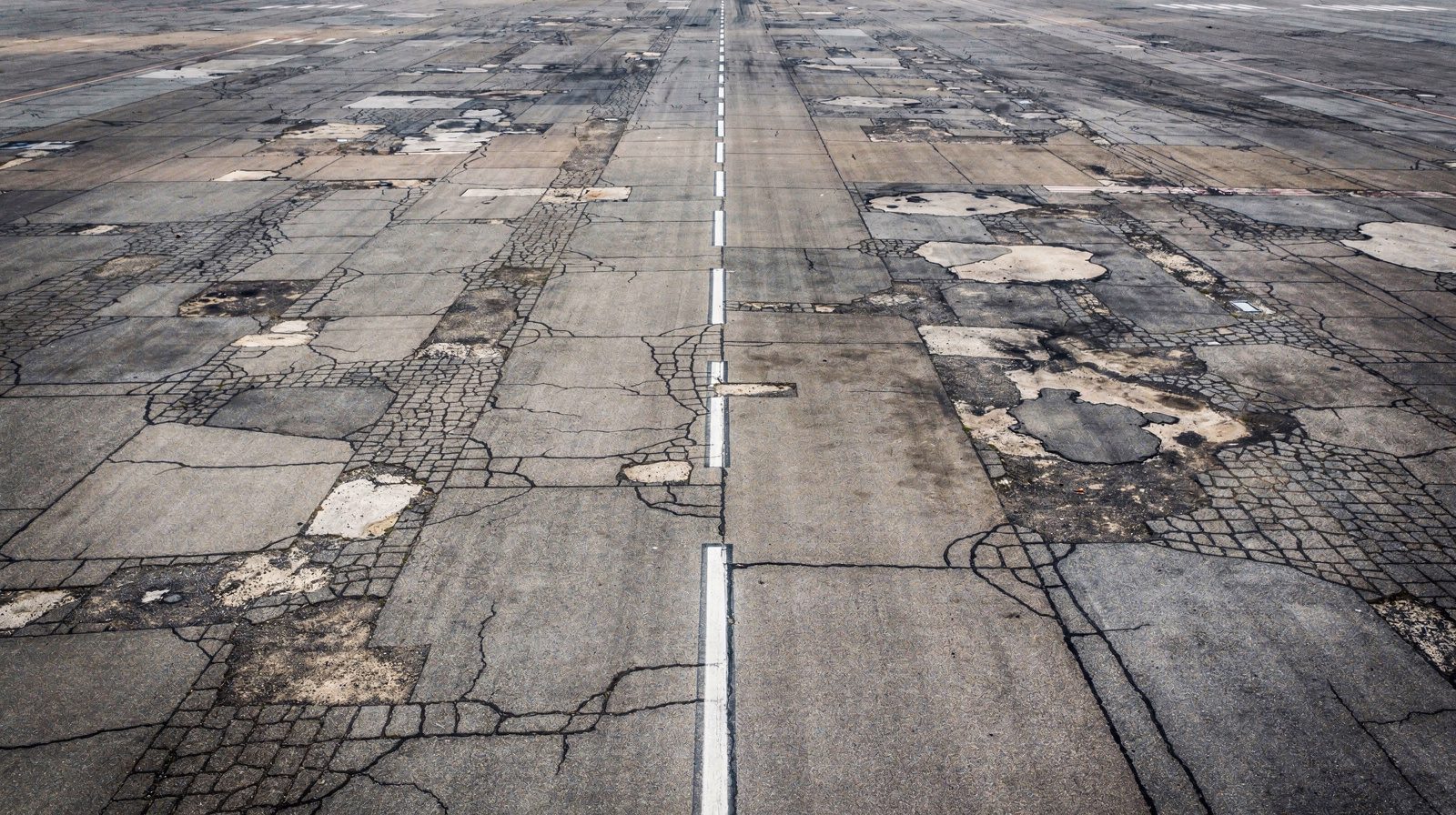
Runway Surface Inspection: What a Drone Scan Actually Sees
What a drone pavement scan resolves on a runway, what it cannot, how ground sample distance sets the smallest measurable crack, and how a scan becomes…
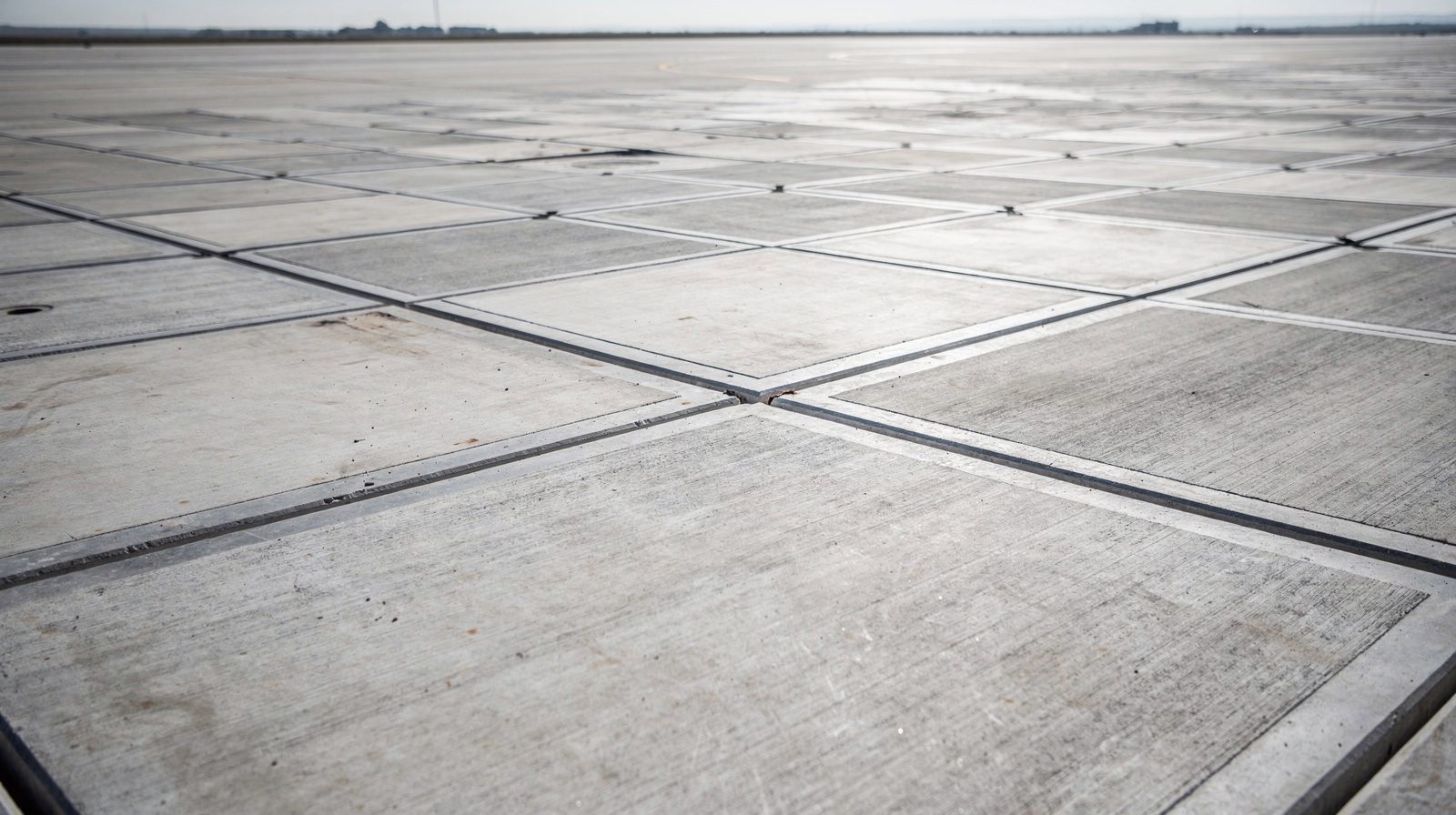
Pavement Strength: ACN-PCN and What a Survey Can Tell You
Surface condition and structural strength are different properties. What a PCN code reports, how the number is determined, and where a survey…
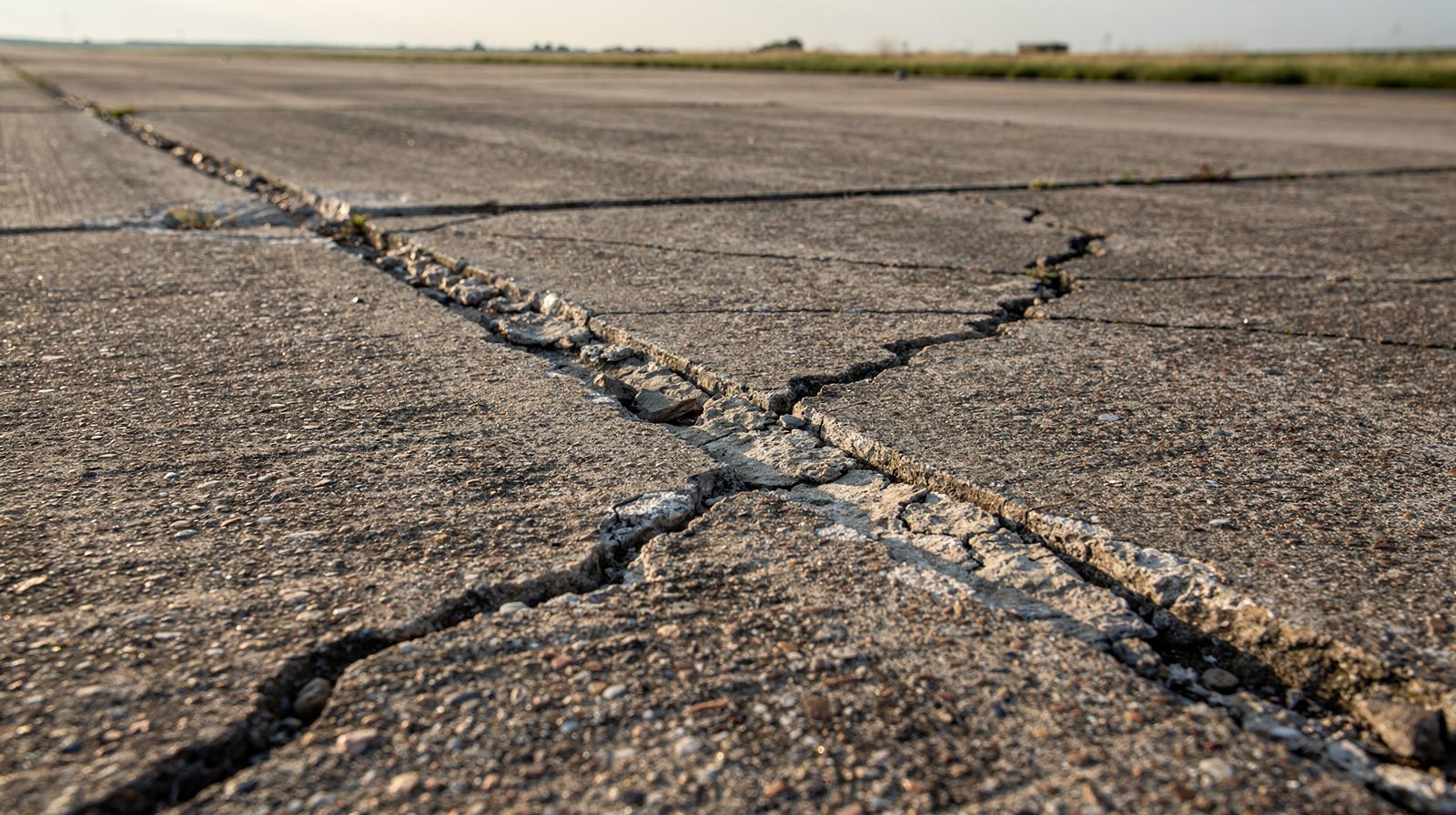
Pavement Condition Index Explained
What PCI is, how ASTM D5340 turns observed distress into a 0-100 number, what the deduct-value step does, and what the index cannot tell you about a…