What is Asphalt (Bituminous) Pavement Material in Airport Infrastructure?
Asphalt (Bituminous) Pavement Material in Airport Infrastructure
Airport pavements are the foundation of efficient, safe, and reliable air transport. At the heart of modern airside infrastructure, runways, taxiways, aprons, and access roads, lie engineered asphalt (bituminous) pavement materials. These are not ordinary road surfaces: they are meticulously specified, rigorously tested, and continually optimized to meet the unique and extreme demands of aviation.
This glossary provides an exhaustive, highly technical overview of asphalt pavement materials as applied to airports. It is intended as an advanced reference for civil engineers, airport planners, technical managers, and decision-makers who require deep technical insight and compliance with international best practices.
1. Asphalt (Bituminous) Pavement: Fundamentals
Definition and Composition
Asphalt pavement, or bituminous pavement, is a composite structure comprising mineral aggregates (crushed stone, gravel, sand) bound with bitumen, a thermoplastic hydrocarbon derived from crude oil. This mixture is designed to provide:
- Flexibility to accommodate heavy, dynamic aircraft loads without cracking.
- Impermeability to guard against water ingress and freeze-thaw cycles.
- Resilience for recovery from deformation and minor surface injuries (“self-healing”).
- Chemical resistance against aviation fuels, hydraulic fluids, and de-icing agents.
- Adaptable surface texture for friction and drainage, critical to aircraft safety.
Key Properties Table
| Property | Description |
|---|---|
| Flexibility | Flexes under load without cracking |
| Resilience | Recovers from deformation after load is removed |
| Water Impermeability | Prevents water from penetrating and damaging the structure |
| Skid Resistance | Maintains friction for safe aircraft maneuvering |
| Chemical Resistance | Resists attack from jet fuel, hydraulic fluids, and de-icing chemicals |
| Adaptable Texture | Can be grooved/textured to enhance drainage and skid resistance |
| Resistance to Oxidation | Slows aging, preserving durability |
Typical Airport Applications
- Runways: Require strict smoothness, friction, and load-bearing standards.
- Taxiways: Handle frequent aircraft movements, turning, and braking.
- Aprons: Exposed to static loads, fuel spills, and service vehicles.
- Service roads: Support airport vehicles, often with lighter construction.
Airport asphalt pavements must comply with ICAO Annex 14, FAA AC 150/5320-6, and relevant national standards.
2. Bitumen: The Essential Binder
Chemistry and Function
Bitumen is a viscoelastic, black hydrocarbon, either refined from crude oil or found in natural deposits. Its performance is characterized by:
- Penetration (softness)
- Viscosity (flow at temperature)
- Softening point
- Aging and chemical resistance
Bitumen’s thermoplastic nature means it softens when heated (for mixing/placement) and hardens on cooling, making it ideal for asphalt pavement construction.
Types and Grades
- Penetration Grade: Defined by needle penetration (e.g., 40/50, 60/70).
- Viscosity Grade (VG): Defined by viscosity at 60°C (e.g., VG-30, VG-40).
- Polymer Modified Bitumen (PMB): Enhanced with polymers for superior rutting, cracking, and chemical resistance.
- Bituminous Emulsions: Bitumen in water for cold applications and maintenance.
- Foamed Bitumen: Expanded with water for in-place recycling.
Standards: ASTM D946 (Penetration), AASHTO M226 (Viscosity), EN 12591 (Hard Paving Grade).
3. Airport Infrastructure: Pavement Hierarchy and Function
Airport infrastructure consists of interconnected systems, runways, taxiways, aprons, service roads, and more. Airside pavements are the most critical in terms of structural and functional demands.
Key Pavement Components
- Runways: Main surfaces for landing and takeoff, designed for smoothness, friction, and high load capacity.
- Taxiways: Connect runways with terminals, must withstand frequent aircraft loads and turning stresses.
- Aprons: Parking, loading, and servicing zones, require high chemical resistance and support for static loads.
- Service Roads: Built for support vehicles, with lighter but durable construction.
All must comply with regulatory standards (ICAO, FAA, EASA) for tolerances, load capacity (PCN), and safety.
4. Types of Bitumen and Asphalt Binders for Airports
4.1 Penetration Grade Bitumen
- Tested by: Needle penetration at 25°C.
- Grades: 40/50, 60/70, 80/100 (softer for cold climates, harder for hot).
- Use: Traditional for light-duty surfaces, overlays, or maintenance, less used for new main runways.
- Standards: ASTM D5, IS 73, EN 12591.
4.2 Viscosity Grade Bitumen (VG)
- Grades: VG-10, VG-20, VG-30, VG-40 (increasing stiffness).
- Selection: VG-40 preferred for main runways in hot/heavy-load climates.
- Advantage: Better high-temperature (rutting) and aging control than penetration grades.
- Standards: AASHTO M226, IS 73.
4.3 Polymer Modified Bitumen (PMB)
- Produced by: Adding polymers (SBS, EVA, SBR) to base bitumen.
- Benefits: Superior rutting, cracking, and chemical resistance, extended durability, improved surface friction.
- Use: Standard for main runways, aprons, and high-traffic taxiways.
- Grades: PMB 45/80-55, PMB 45/80-60.
- Guidance: ICAO Doc 9157, FAA P-401.
4.4 Bituminous Emulsions
- Description: Bitumen droplets dispersed in water, applied cold.
- Types: Rapid, medium, slow setting, cationic/anionic.
- Use: Tack coats, prime coats, fog seals, cold-mix asphalt, rapid repairs.
- Advantages: Safety, fast curing, environmental benefits.
- Standards: ASTM D977, ICAO maintenance guidelines.
4.5 Foamed Bitumen
- Produced by: Injecting water into hot bitumen to create a foam.
- Use: Cold in-place recycling (CIR) for sustainable rehabilitation.
- Advantages: Reduced new material use, cost, and construction time.
- Standards: AASHTO PP 28.
5. Airport Flexible Pavement Structure
Typical Layer System
- Surface (Wearing) Course: High-performance HMA or SMA, often PMB-based, for friction and durability.
- Binder Course: Intermediate load distribution and fatigue resistance.
- Base Course: Crushed aggregates, sometimes bitumen/cement stabilized.
- Subbase: Additional aggregate, especially over weak or frost-prone subgrades.
- Subgrade: Compacted natural soil or improved earth.
Design: Layer thickness/materials are determined by aircraft type, traffic, subgrade support, and climate using ICAO, FAA, and national methods.
6. Performance, Design, and Material Selection Criteria
Essential Performance Requirements
- Load-Bearing Capacity: Must resist deformation and cracking under heavy aircraft loads (often >500,000 lbs on small tire areas).
- Rutting Resistance: Achieved with stiff binders (VG-40, PMB) and optimized aggregate skeletons.
- Thermal Cracking/Fatigue: Polymer modification and correct gradation improve life under temperature swings and repeated load.
- Skid Resistance: Surface texture via aggregate and grooving to prevent hydroplaning.
- Chemical/Fuel Resistance: Key for aprons/runways, addressed with PMB and surface treatments.
- Durability: 15–20 years for main runways is typical, with minimal major rehabilitation.
Bitumen Selection Table
| Bitumen Type | Ideal Use Cases |
|---|---|
| Penetration Grade | Light-duty, overlays, maintenance |
| Viscosity Grade | Main runways/taxiways in moderate-to-hot climates |
| PMB | Main runways, aprons, high-load, extreme environments |
| Emulsions | Maintenance, tack/prime coats, rapid repair |
| Foamed Bitumen | Recycling, base stabilization, sustainability projects |
7. Airport-Specific Pavement Challenges and Solutions
Key Challenges
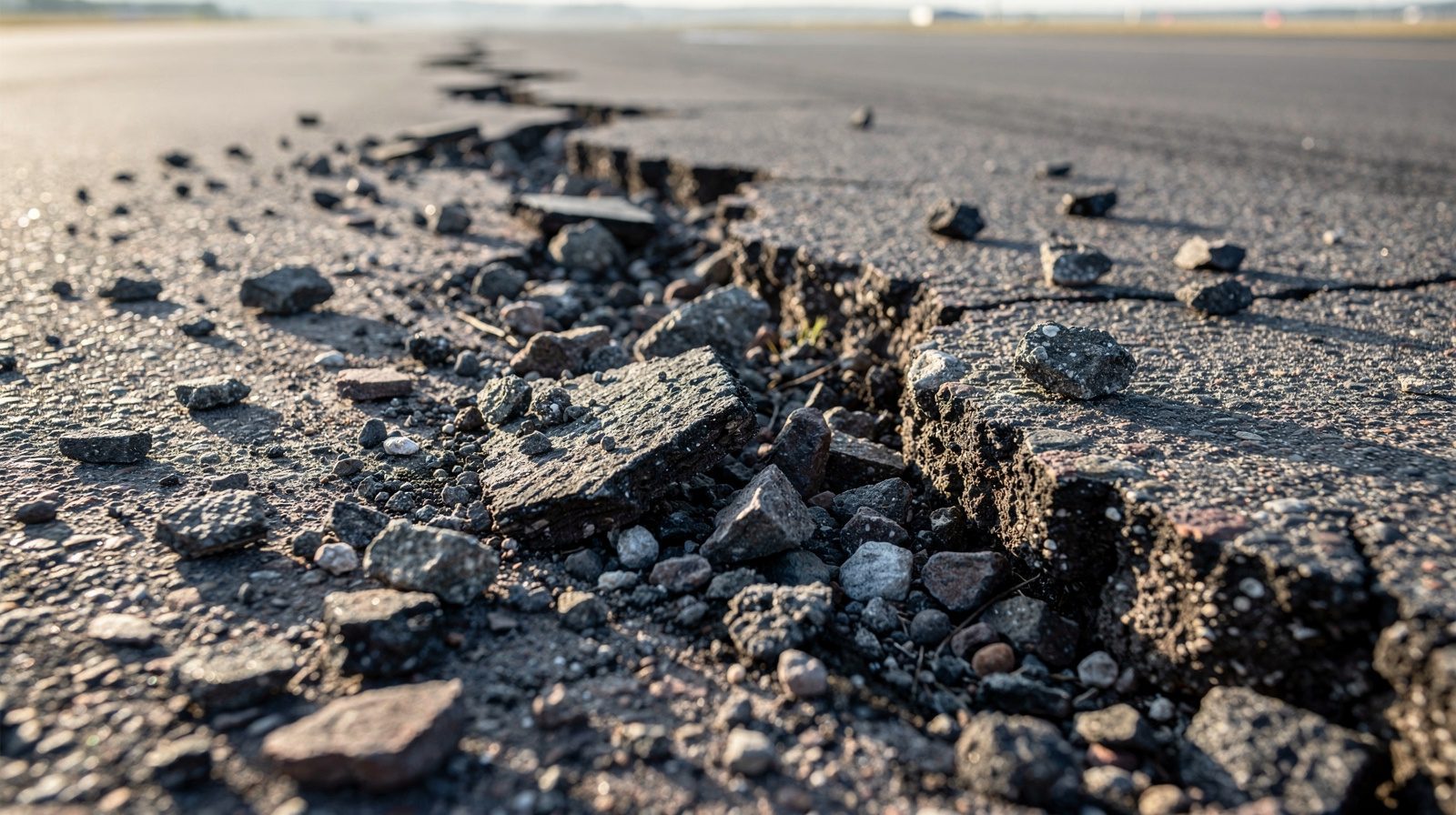
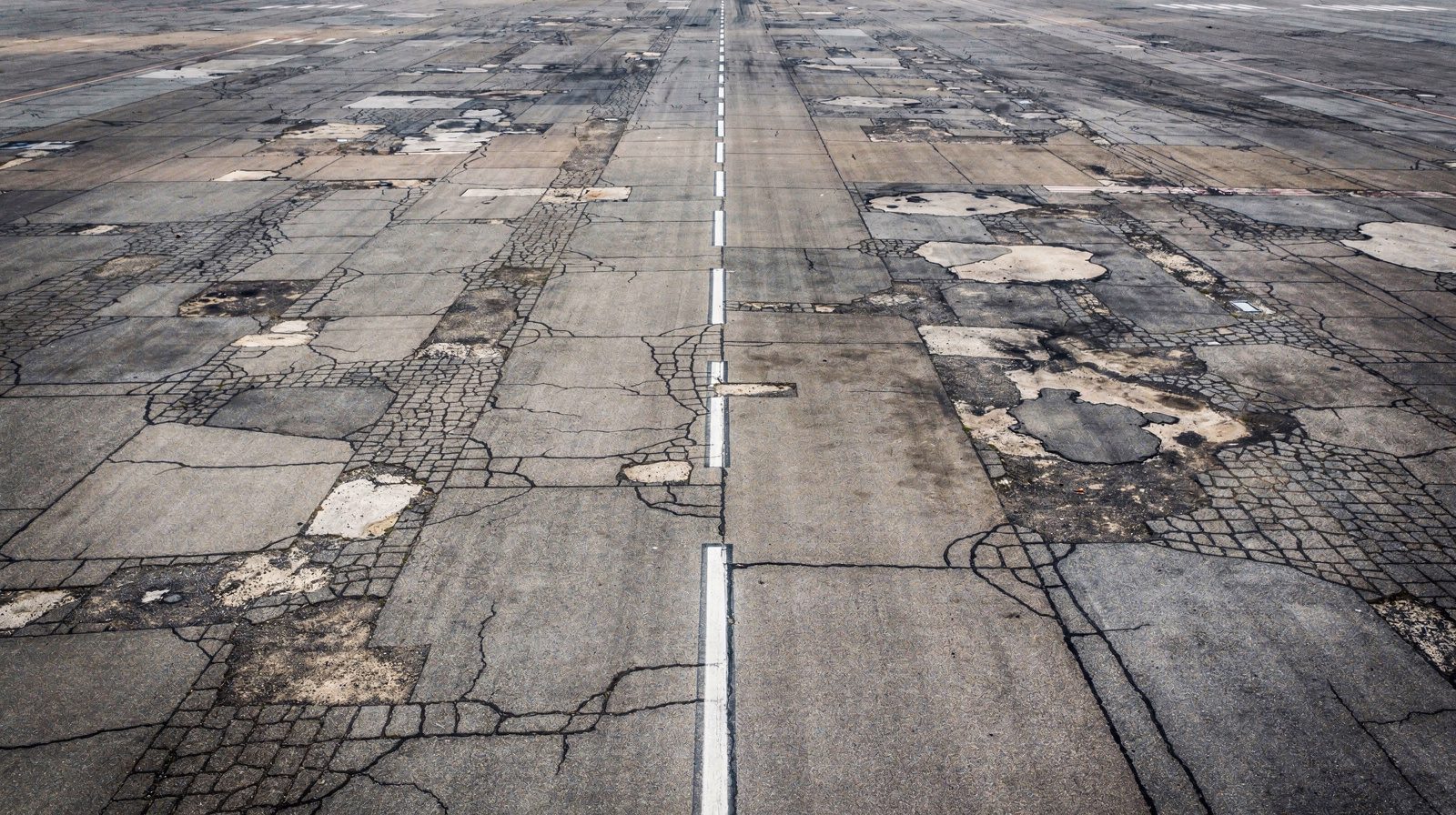
- Rutting: Under slow, heavy aircraft movements (addressed by stiff binders, optimized mixes).
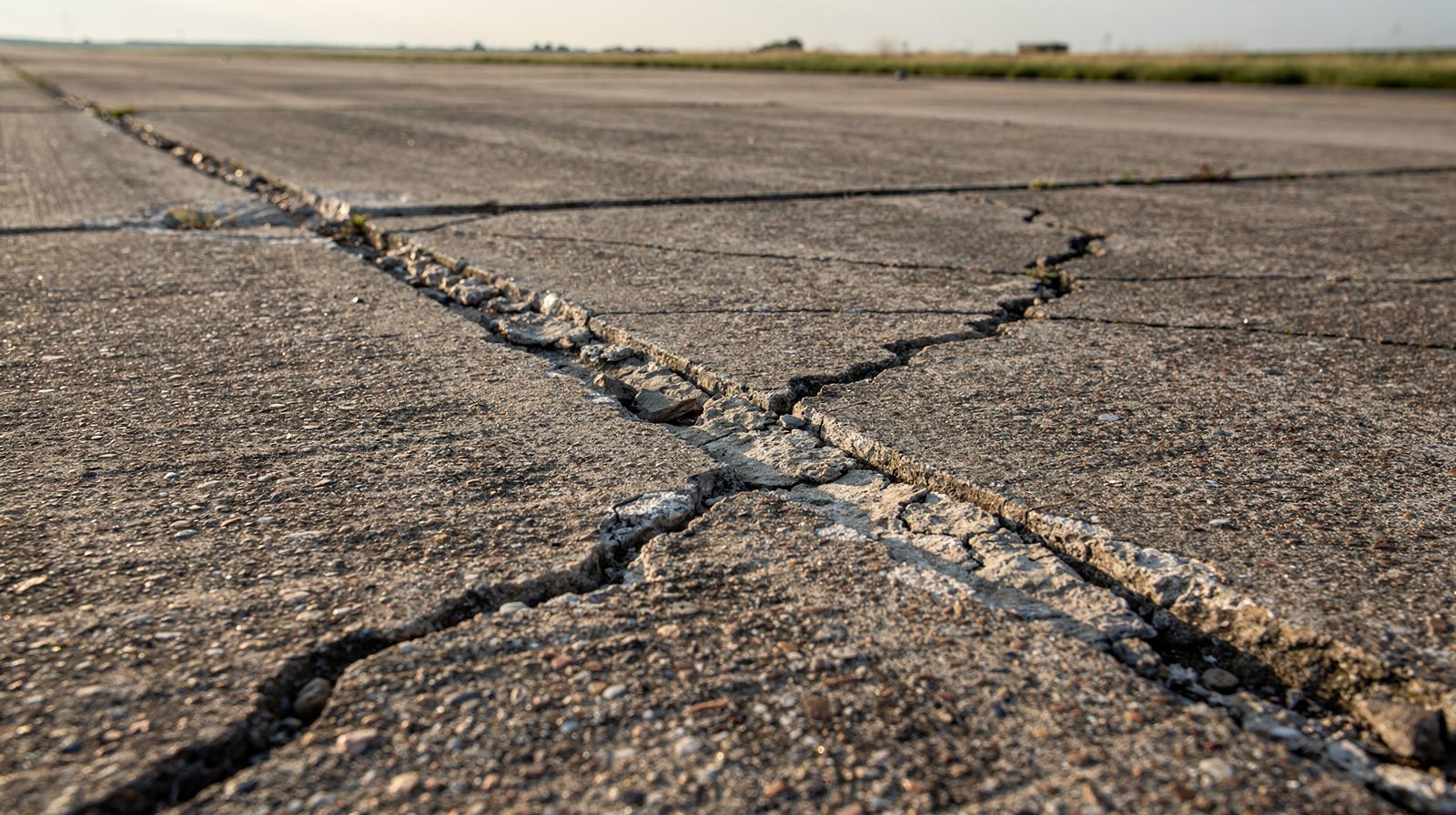
- Thermal Cracking: Due to temperature cycles (solved with PMB, proper gradation).
- Chemical Attack: Jet fuel, de-icers, and hydraulic fluids (use of PMB, protective surface treatments).
- Rapid Repair Needs: Nighttime or short-closure maintenance windows (emulsions, cold-mix, foamed bitumen recycling).
- Surface Texture Loss: Grooving and surface treatments to maintain friction.
Regulatory and Best Practice Guidance
- ICAO Aerodrome Design Manual Part 3 – Pavements
- FAA AC 150/5320-6F
- National/Regional Standards (ASTM, EN, IS, etc.)
Conclusion
Asphalt (bituminous) pavement materials are the backbone of airport infrastructure, combining advanced material science, precision engineering, and stringent regulatory compliance. Understanding their properties, binder types, structural design, and performance criteria is essential for building and maintaining safe, durable, and high-performing airport surfaces. For further technical assistance, consultation, or training, contact our airport pavement specialists.
Frequently Asked Questions
- What is bituminous (asphalt) pavement and why is it used in airports?
- Bituminous pavement is a composite material made from mineral aggregates and bitumen binder. It is chosen for airport applications due to its flexibility, ability to withstand high wheel loads, chemical resistance, and adaptability for surface texturing. Asphalt pavements comply with rigorous ICAO and FAA standards for runways, taxiways, and aprons, offering durability and safety.
- What are the main types of bitumen binders used in airport pavements?
- The main bitumen types are penetration grade, viscosity grade, polymer modified bitumen (PMB), bituminous emulsions, and foamed bitumen. The choice depends on climate, expected loading, and chemical exposure. PMB is now standard for main runways due to superior rutting, cracking, and chemical resistance.
- How are airport asphalt pavements designed to handle large aircraft loads?
- Airport pavements are designed as layered systems: a high-performance surface course (often PMB-based), a binder course, base, subbase, and compacted subgrade. The thickness and materials are selected using ICAO and FAA methodologies to distribute heavy aircraft loads, prevent rutting, and maximize service life.
- What standards and guidelines govern the use of asphalt in airport infrastructure?
- Internationally, ICAO Annex 14, ICAO Doc 9157, and FAA AC 150/5320-6F provide requirements for materials, design, construction, and maintenance. National standards (like ASTM, EN, IS) specify testing methods and binder grades. Compliance ensures safety, performance, and regulatory approval.
- What are the typical challenges for asphalt pavements at airports and how are they addressed?
- Challenges include rutting under heavy loads, thermal cracking, chemical attack from jet fuel/de-icers, and rapid repair needs. Solutions include using PMB or high-viscosity binders, optimized aggregate gradation, surface grooving for friction, and specialized maintenance techniques (e.g., emulsions, foamed bitumen recycling).
This is a reference entry. TarmacView provides drone inspection services and doesn't sell the equipment or materials described in this glossary.