What is a Runway Surface?
Runway Surface – Glossary of Pavement Materials and Airport Infrastructure
Introduction
A runway surface is the critical interface between aircraft and the ground at airports worldwide. It must withstand immense loads, provide reliable friction under all weather conditions, and remain durable through years of high-frequency use. The selection, design, and maintenance of runway surface materials are among the most vital aspects of airport infrastructure, directly impacting operational safety, longevity, and efficiency.
Runway Surface Pavement Materials
Runway surface pavement materials form the uppermost, load-bearing layer of the airfield, dictating how aircraft interact with the ground during takeoff, landing, and taxiing. These materials are engineered to balance strength, flexibility, weather resistance, friction, and maintainability, with specifications set by international (ICAO) and national (FAA) aviation authorities.
Flexible Pavement (Asphalt)
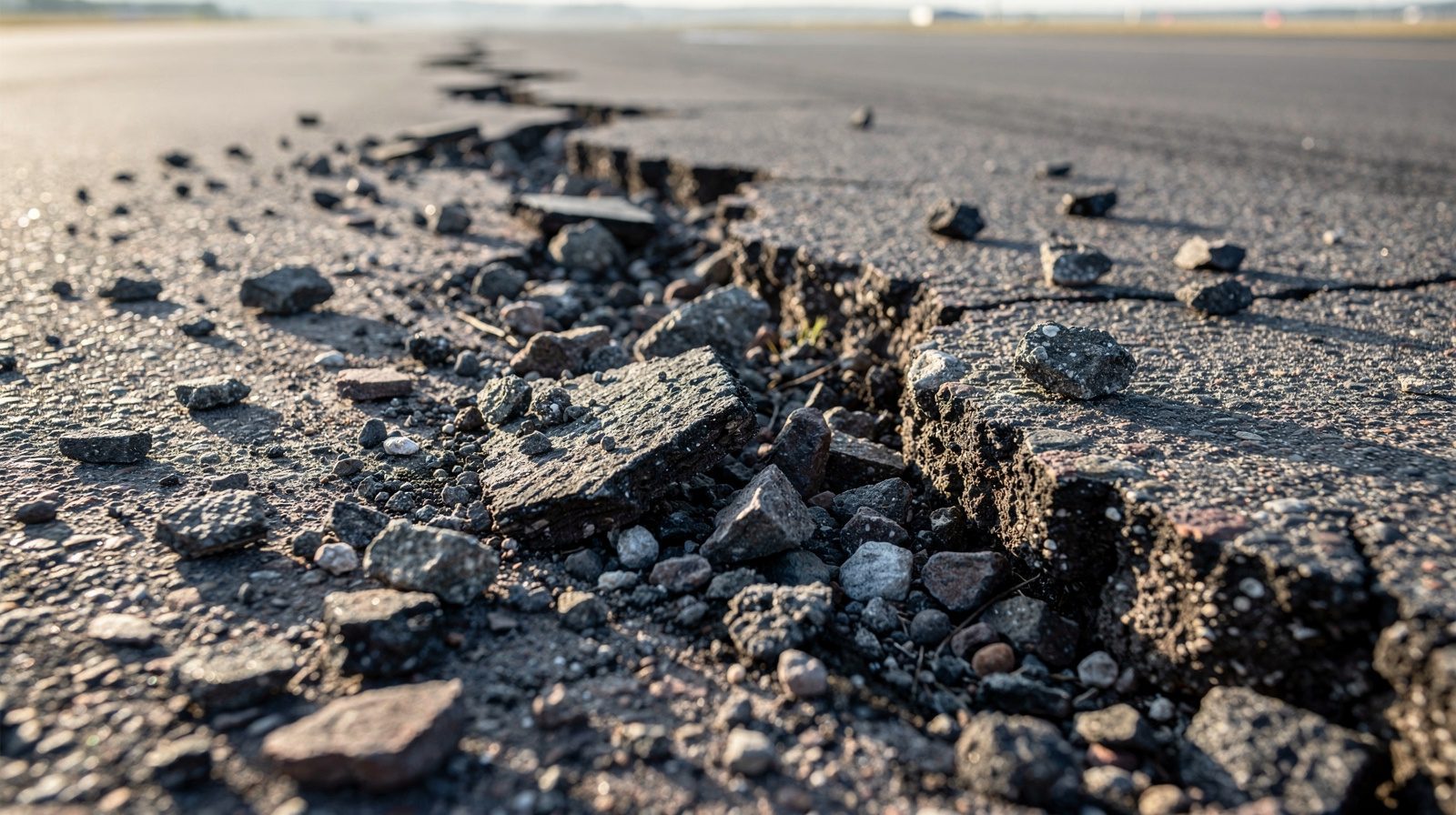
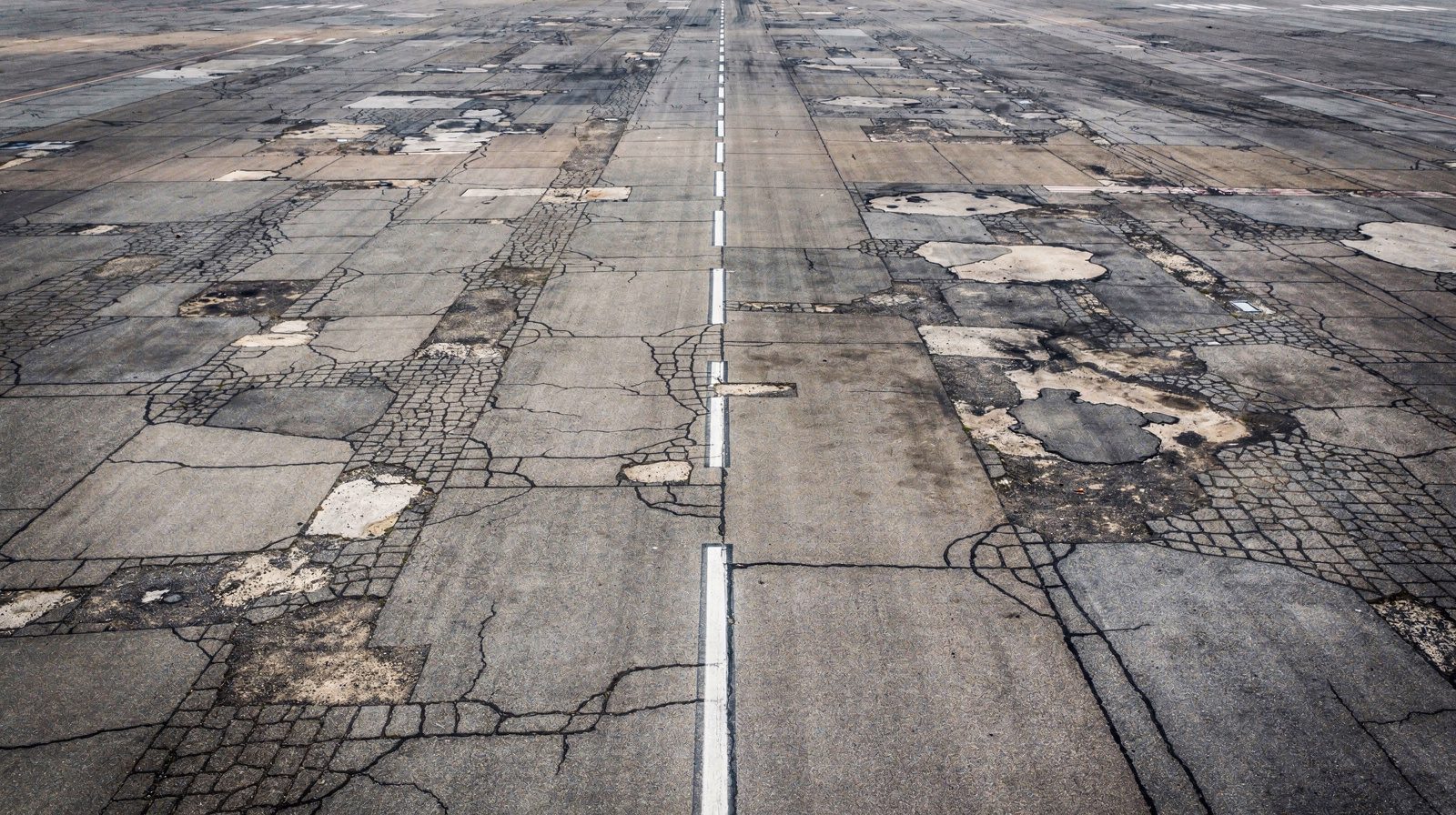
Flexible pavement, most commonly hot mix asphalt (HMA), is designed for elasticity and layered stress distribution. Asphalt surfaces accommodate minor subgrade shifts and thermal expansion/contraction, making them ideal for regions with freeze-thaw cycles. Modern asphalt mixes may include polymer-modified binders and recycled materials (RAP) for enhanced sustainability and performance. While asphalt allows for rapid construction and repair, it may require more frequent maintenance to address rutting, oxidation, and chemical degradation from fuel spills.
Rigid Pavement (Concrete)
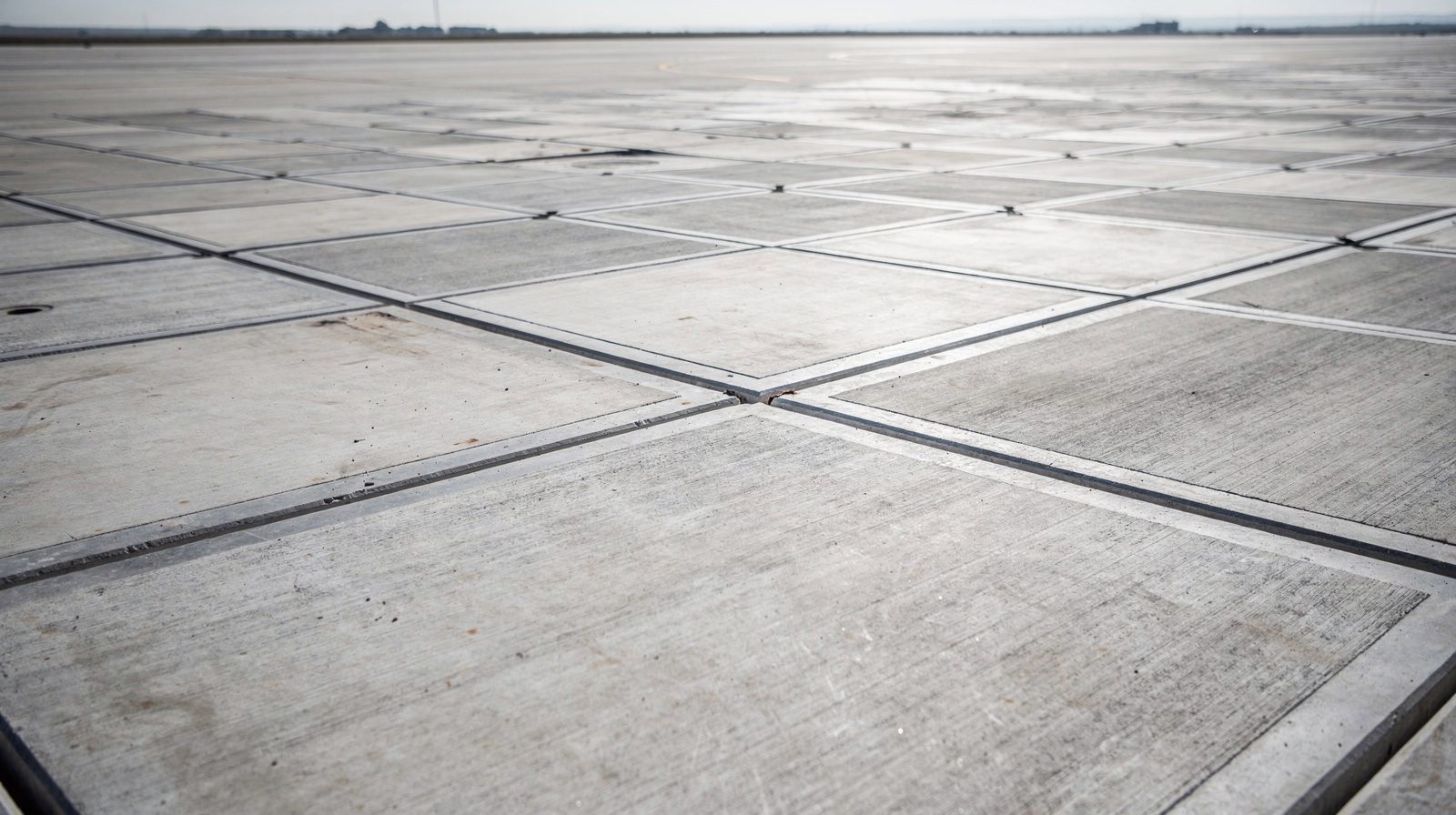
Rigid pavement utilizes Portland cement concrete (PCC) slabs to distribute loads over a wider area, minimizing subgrade stresses. Concrete’s high compressive strength and minimal deflection make it preferred for primary commercial runways and high-traffic airports. While initial construction costs and cure times are higher, properly maintained concrete runways can exceed 30 years of service life, with resistance to fuel, jet blast, and high tire pressures.
Reinforced Concrete Pavement
This pavement type incorporates steel reinforcement (rebar, mesh, or fibers) within the concrete slab to boost tensile strength, control cracking, and accommodate higher loads, especially at intersections and high-stress zones. Reinforced designs are essential for runways with frequent heavy aircraft or complex geometries, though they require careful design and corrosion protection for embedded steel.
Composite Pavement
Composite pavement systems combine a rigid concrete base with a flexible asphalt overlay, leveraging the longevity of concrete and the smoothness and repairability of asphalt. These are often used for runway rehabilitation, where an asphalt layer is applied over existing concrete to correct surface distress, improve friction, or restore smoothness.
Macadam (Tarmacadam)
Macadam is an early, now largely obsolete, flexible pavement composed of compacted stone layers bound with tar or bitumen. While inexpensive and easy to construct, macadam is unsuitable for modern jet operations due to limited strength and durability.
Gravel and Unpaved Runways
Gravel and other unpaved surfaces are constructed from compacted natural materials. They are still prevalent in remote or temporary airfields where budgets or logistics preclude paved surfaces. While cost-effective, these runways pose higher maintenance demands and FOD (foreign object debris) risks, limiting their use to lighter aircraft and specialized operations.
Pavement Construction Layers
A typical runway pavement structure comprises several layers:
| Layer | Material | Function | Typical Thickness |
|---|---|---|---|
| Subgrade | Compacted native or stabilized soil | Foundational support, bearing capacity | Varies |
| Subbase | Crushed stone, gravel, or treated agg. | Load distribution, drainage, subgrade protection | 150–500 mm (6–20 in) |
| Base Course | High-quality aggregate, ATB, CTB | Distributes load, frost protection, drainage | 150–300 mm (6–12 in) |
| Surface Course | Asphalt, concrete, macadam, or gravel | Final wearing/friction surface, weather resistance | 75–500 mm (3–20 in) |
Each layer is engineered for a specific function, from supporting structural loads to managing moisture and ensuring surface friction.
Performance Characteristics
Key performance attributes for runway surface materials include:
- Load Distribution: Asphalt offers elasticity, concrete spreads loads by slab action.
- Flexibility & Strength: Asphalt tolerates subgrade movement, concrete resists heavy, repetitive loads.
- Durability: Concrete lasts 30–40 years, asphalt requires more frequent rehabilitation.
- Surface Friction: Maintained by texturing, grooving, and overlays for safe aircraft braking.
- Environmental Resistance: Materials are selected for temperature extremes, freeze-thaw, moisture, and chemical exposure.
- Drainage: Critical to prevent water accumulation and maintain surface integrity.
Advantages and Disadvantages by Pavement Type
| Pavement Type | Advantages | Disadvantages | Use Cases |
|---|---|---|---|
| Asphalt (Flexible) | Rapid construction, smooth ride, lower cost, adaptable | Shorter lifespan, higher maintenance, rutting risk | General aviation, secondary runways |
| Concrete (Rigid) | High strength, long life, minimal maintenance, chemical resistance | Higher initial cost, longer cure, slab cracking potential | Main/commercial runways, heavy traffic |
| Reinforced Concrete | Enhanced crack resistance, supports heavy/complex traffic | Higher cost, complex construction, corrosion protection needed | Intersections, high-load taxiways |
| Composite | Combines strengths of both pavement types, faster rehab | Complex design, interface challenges, differential movement | Runway overlays, phased upgrades |
| Macadam | Low cost, simple construction, historic application | Low capacity, poor durability, not jet-suitable | Remote or historic airfields |
| Gravel (Unpaved) | Very low cost, quick build, suitable for remote/temporary use | High FOD risk, poor under jets, intensive maintenance | Bush, remote, or temporary airfields |
Surface Treatments and Friction Enhancement
To maintain safety and prolong service life, various surface treatments are applied:
- Grooving: Mandatory at most major airports, grooves improve water drainage and prevent hydroplaning.
- Slurry Seal: Thin layer restoring texture and sealing minor cracks, mainly for asphalt.
- Seal Coat: Waterproofs and protects against oxidation and UV damage.
- Porous Friction Course: Open-graded overlay to improve drainage and friction.
- Chip Seal: Binder and aggregate chips create a rough, skid-resistant finish.
Regular inspection and maintenance of these treatments are vital for safe aircraft operations.
Regulatory Standards
Runway surfaces are designed and maintained per strict guidelines:
- ICAO Annex 14: International requirements for runway construction, friction, and maintenance.
- FAA Advisory Circulars: U.S. standards (e.g., AC 150/5320-6G for pavement design).
- ASTM Standards: Material quality and testing requirements.
Environmental and Operational Considerations
Runway surface selection is shaped by:
- Aircraft fleet mix and traffic frequency
- Climate and weather patterns
- Subgrade and drainage conditions
- Lifecycle cost and sustainability goals
Innovations such as recycled materials, warm mix asphalt, and advanced concrete mixes now contribute to more sustainable and resilient runway surfaces.
Conclusion
Selecting and maintaining the right runway surface is fundamental to airport safety, efficiency, and longevity. By understanding the properties and requirements of each pavement type, airport authorities and engineers can ensure optimal performance for every operational scenario, from major international hubs to remote bush strips.
For expert guidance on runway surface design, material selection, and rehabilitation, contact our team or schedule a demo to learn how we can help optimize your airfield infrastructure.
Frequently Asked Questions
- What are the main types of runway surface materials?
- The main runway surface materials include flexible pavements (asphalt), rigid pavements (concrete), reinforced concrete, composite systems (asphalt over concrete), macadam (tarmacadam), and unpaved surfaces like gravel. Each type is selected based on aircraft load, traffic frequency, climate, and regulatory requirements.
- How is runway surface friction maintained?
- Runway friction is maintained through surface texturing (grooving, brushing), periodic application of surface treatments (slurry seal, chip seal), and overlays like porous friction courses. Regular friction testing per ICAO and FAA standards ensures safe aircraft braking and minimizes hydroplaning risks.
- Why is regular maintenance important for runway surfaces?
- Regular maintenance prevents deterioration such as rutting, cracking, and loss of friction. It extends pavement life, reduces operational disruptions, and ensures compliance with safety standards. Maintenance includes surface treatments, crack sealing, overlays, and drainage improvements.
- What are the regulatory standards for runway pavement?
- Runway pavement materials and construction are governed by ICAO Annex 14, FAA Advisory Circulars (e.g., AC 150/5320-6G), and ASTM standards. These regulations cover material selection, design, construction, testing, and maintenance to ensure safety and operational reliability.
- How do environmental factors influence runway surface selection?
- Climate, temperature extremes, freeze-thaw cycles, precipitation, and exposure to chemicals (like deicers and jet fuel) impact material performance. Asphalt offers flexibility in colder climates, while concrete provides durability and chemical resistance in high-traffic or harsh environments.
This is a reference entry. TarmacView provides drone inspection services and doesn't sell the equipment or materials described in this glossary.