Pavement Strength: ACN-PCN and What a Survey Can Tell You
Surface condition and structural strength are different properties. What a PCN code reports, how the number is determined, and where a survey genuinely helps.
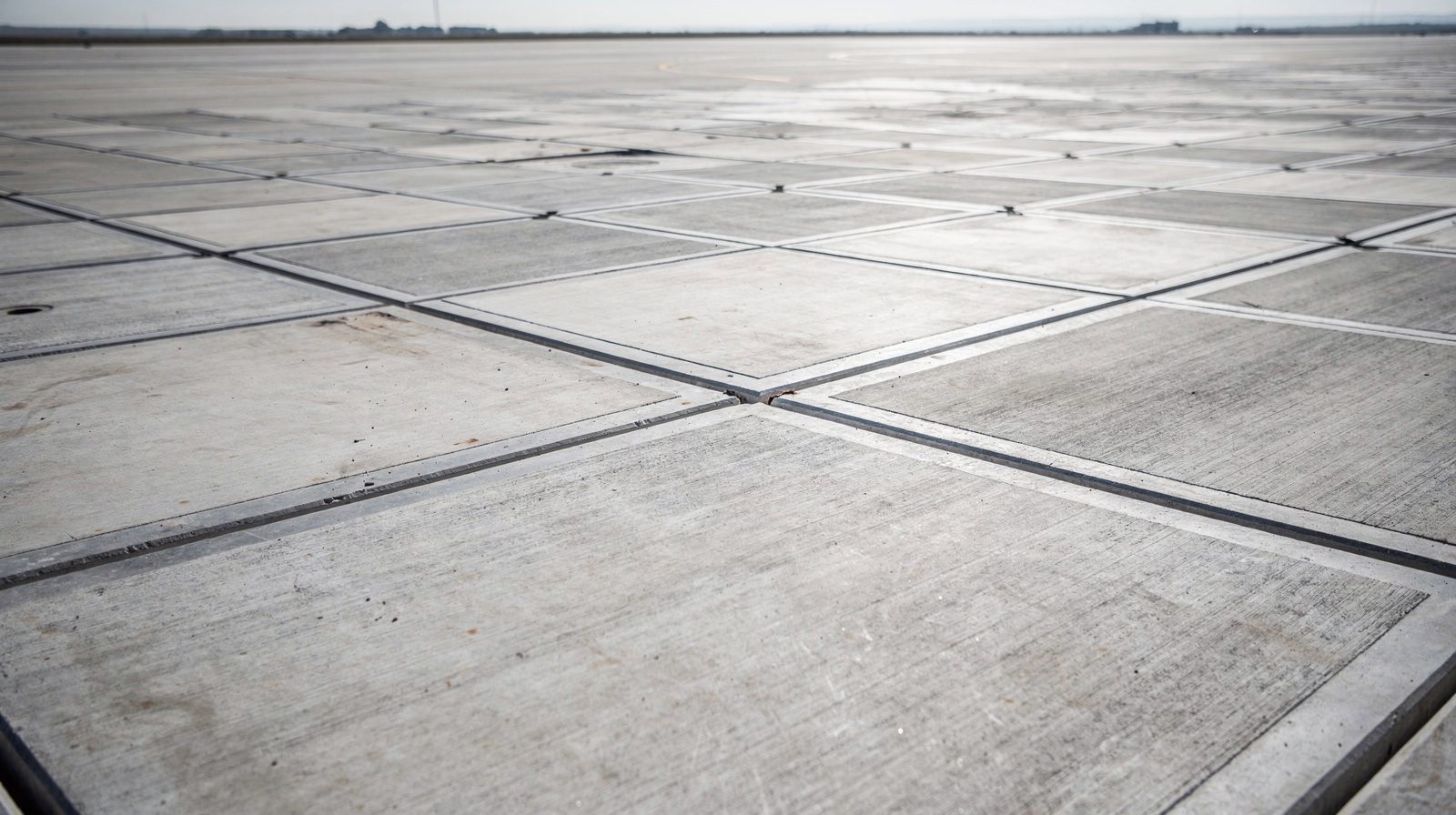 CONCRETE APRON · SEALED JOINTS · MIDDAY SUN
A pavement can look excellent and still be the wrong pavement
Two different questions get asked about the same runway, and they get confused constantly. How is the surface holding up? And how much load will the structure underneath carry, how many times, before something below the wearing course gives up?
Those are different properties. They are measured with different instruments, and a good answer to one tells you very little about the other.
A runway resurfaced last summer can present an almost flawless surface over a base that was never built for the aircraft now scheduled onto it. A twenty year old concrete apron can look tired, joints spalled and sealant long gone, and still carry everything on the schedule with margin, because the slab and the subgrade under it were designed for something heavier than anything that parks there. Surface condition and pavement strength can move in opposite directions, and regularly do.
This post is about the second question. The first has its own treatment in Pavement Condition Index Explained , and the boundary between the two is the thing worth getting right.
What a PCN actually reports
The Pavement Classification Number is a published statement of bearing strength, written as a five-part code, aimed at one decision: whether a given aircraft can use a given pavement without a weight restriction.
Read it one part at a time. The number is the strength rating. The letter after it says whether the structure is rigid or flexible, which is a question about whether there is a load-distributing concrete slab in it, not about what the top surface is made of. A concrete runway with a bituminous overlay on top is still reported as rigid. The third letter is the subgrade category. The fourth is the highest tyre pressure the surfacing will take. The fifth says how the number was arrived at, and it is the part most people skip.
| Code element | Values | Under ACN-PCN | Under ACR-PCR |
|---|---|---|---|
| Numerical value | A determined number | Strength rating on the ACN scale | Same format, different basis, not convertible |
| Pavement type | R, F | Rigid if a load-distributing slab is present, otherwise flexible | Unchanged |
| Subgrade A, high | k = 150 MN/m³, all k above 120 (rigid), CBR = 15, all CBR above 13 (flexible) | E = 200 MPa, all E at or above 150 MPa, both types | |
| Subgrade B, medium | k = 80 MN/m³, range 60–120, CBR = 10, range 8–13 | E = 120 MPa, range 100 to below 150 MPa | |
| Subgrade C, low | k = 40 MN/m³, range 25–60, CBR = 6, range 4–8 | E = 80 MPa, range 60 to below 100 MPa | |
| Subgrade D, ultra low | k = 20 MN/m³, all below 25, CBR = 3, all below 4 | E = 50 MPa, all below 60 MPa | |
| Max tyre pressure | W, X, Y, Z | W unlimited, X 1.75 MPa, Y 1.25 MPa, Z 0.50 MPa | Unchanged |
| Evaluation method | T, U | Technical evaluation, or using aircraft experience | Unchanged |
One note on that tyre pressure row, because it trips people up. Older references still quote 1.5, 1.0 and 0.5 MPa for categories X, Y and Z. The current categories are 1.75, 1.25 and 0.50 MPa. If a source gives you the older set, it predates a revision and the rest of it may be stale too.
A reporting system, not a design method, and not a condition assessment
This is the part that gets lost. EASA’s implementation guidance puts it flatly: the method is meant only for the publication of pavement strength data in the aeronautical information publication, and it is not intended as a pavement design or pavement evaluation procedure, nor does it restrict the methodology used to design or evaluate a pavement structure.
So there are three separate activities and one of them is not the others. Design produces a structure. Evaluation works out what that structure can take. Reporting compresses the result into a code an airline can compare against a published aircraft rating. The comparison rule is simple: if the aircraft rating is at or below the pavement rating, the aircraft may operate without weight restriction, subject to the tyre pressure limit. Unrestricted here does not mean unlimited, because pavement life is finite and every movement spends some of it.
Nothing in that chain is a condition assessment. A pavement with a healthy published number can be shedding aggregate, and a pavement with a poor one can be immaculate.
Two ways to arrive at the number
The last letter of the code is the honest one. It tells you how much analysis is behind everything to its left.
Technical evaluation, code T. A specific study of the pavement and the aircraft it is meant to serve. The evaluator collects the layer thicknesses, the elastic modulus and Poisson’s ratio of every layer, and the subgrade modulus. Then the traffic: aircraft type, number of departures, operating weight, and a lateral wander standard deviation that differs by movement area, because aircraft scatter more across a runway than along a taxiway and barely at all on an apron. From that comes a cumulative damage factor, the ratio of applied coverages to coverages to failure, summed across the traffic mix by Miner’s rule and computed on the subgrade failure mode. The reported number is the rating of a critical aircraft at the weight that would consume exactly the available fatigue life.
Using aircraft experience, code U. No structural model. The evaluator starts from the heaviest aircraft regularly using the pavement, then checks what the pavement is doing about it. ICAO’s guidance is explicit about that second step: the condition of the pavement in relation to cracking, distortion or wear, together with the maintenance it has needed, is of first importance. A pavement in good condition is taken to be carrying its traffic satisfactorily. Indications of advancing distress show it is being overloaded. The guidance goes further and tells the evaluator where to look, comparing behaviour in wheel paths against behaviour between them, busy taxiways against quiet ones, braking zones, and known weak spots such as low points of grade or old pipe crossings.
| Technical evaluation (T) | Using aircraft experience (U) | |
|---|---|---|
| What it needs | Layer thicknesses, layer moduli, Poisson’s ratio, subgrade modulus, traffic mix, lateral wander | Types, masses and frequency of aircraft actually using the pavement, plus a condition examination |
| How the number is derived | Cumulative damage computation to a critical aircraft at maximum allowable weight | Rating of a reference aircraft the pavement is observed to be carrying |
| Failure mode considered | Subgrade fatigue, explicitly modelled | Whatever the pavement has already shown at the surface |
| Weak when | As-built records are missing and moduli have to be assumed | The pavement is new, so overload has not surfaced yet, or very old, so some distress is normal anyway |
| Cost driver | Coring, deflection testing, laboratory work | Records and an inspection |
| ICAO position | Preferred wherever feasible, better accuracy | Fallback when technical evaluation is not feasible |
The two can give different answers for the same pavement, and neither is lying. A technical evaluation on a pavement with lost construction records assumes conservative moduli and produces a pessimistic number. A using-aircraft evaluation on a young pavement produces an optimistic one, because damage has been accumulating for three years and will not appear at the surface for another six. When an airport’s published number moves sharply after a re-evaluation, the method letter usually moved with it.
The method is changing
ICAO adopted a successor with Amendment 15 to Annex 14 Volume I in 2020. The Aircraft Classification Rating and Pavement Classification Rating method, ACR-PCR, became applicable on 28 November 2024 after a four year transition, replacing ACN-PCN. The technical guidance is in ICAO Doc 9157 Part 3, Pavements, 3rd edition, 2022. In the United States, FAA AC 150/5335-5D now covers PCR reporting through FAARFIELD, and the PCN-era edition 150/5335-5C is cancelled. EASA has deferred applicability in its member states to a later date while the method is transposed into the EU regulatory framework, so which code an airport publishes right now depends on whose rules it is under. Check your own authority rather than assuming.
Three things about that change matter operationally. The new method is no longer built around a single critical aircraft chosen by judgement, it works from the whole intended traffic mix with each aircraft’s real lateral offset from the centreline. Subgrade category moves to one elastic modulus scale covering rigid and flexible pavements alike, instead of k-values for one and CBR for the other. And there is no mathematical correlation between the two systems and no formula to convert a PCN into a PCR. A spreadsheet that claims to do it is producing fiction.
What has not changed is the structural work underneath. A technical evaluation still needs layer thicknesses and a subgrade modulus. A using-aircraft evaluation still rests on observed pavement behaviour. The reporting label changed, the physics did not.
What a survey can establish about strength, and what it cannot
Here is where a drone scan sits, and the honest version is narrow.
A camera measures the surface. Everything a published rating depends on structurally lives below it. That boundary does not move with better sensors, more overlap or a lower flight altitude.
But some surface distress is evidence about the structure, and the using-aircraft method names it as an input. Alligator cracking in the wheel path is fatigue of the bound layers under repeated load rather than ageing of the binder. Rutting that presents as a broad basin, with the asphalt cracked where it flexed to follow, points at the base or the subgrade rather than at the mix. Faulting and pumping at a joint says load transfer has gone and fines are moving underneath. And the spatial pattern carries information on its own: distress concentrated in wheel paths and absent between them is a load signature, while distress spread evenly across the surface is usually environmental.
None of that measures capacity. It is evidence about capacity, which is a different thing and still worth having.
| Question about structural capacity | Surface survey | What actually answers it |
|---|---|---|
| Is there load-related distress, and where on the surface? | ✓ | Georeferenced imagery over the full width |
| Is distress concentrated in wheel paths rather than between them? | ✓ | Full-coverage imagery with position, not sampled |
| Is deterioration accelerating between surveys? | ✓ | Repeat surveys flown over the same ground |
| Which areas should the coring programme target? | ✓ | The distress map, used to place the cores |
| How thick is each layer? | ✗ | Coring, ground-penetrating radar |
| What is the subgrade modulus? | ✗ | Plate bearing test, laboratory soil testing, or conversion from CBR |
| How much does the structure deflect under load? | ✗ | Falling weight deflectometer or heavyweight deflectometer |
| How much fatigue life remains? | ✗ | Cumulative damage computation from the above |
| What number should be published? | ✗ | A technical evaluation, or a documented using-aircraft evaluation |
The same boundary applies to the condition index. The Pavement Condition Index is a surface-distress rating, and its own standard says it cannot measure structural capacity. A high index is not a strength claim, and a low one is not proof of structural failure.
Using both kinds of information together
The division of labour is clean once the boundary is drawn. The survey tells you where to look and when something has changed. The structural testing tells you what it means and what to publish.
Three cases where that actually changes a decision. First, new load-related distress in a wheel path on a pavement whose published number was arrived at by using-aircraft experience. The evidence the code letter rests on has changed, so the code should be re-examined. Second, an asphalt overlay being planned on condition grounds. An overlay changes the reported strength, and the coring the structural evaluation needs is cheaper done alongside the overlay design than a year later. Third, adding a heavier type to the schedule. The formal check is the aircraft rating against the pavement rating, but the condition survey is what tells you whether the existing traffic is already consuming more of the structure than the model assumed.
There is also a timing gap worth naming. A published rating is valid for the traffic it was computed against and should be re-evaluated when traffic changes significantly or after major rehabilitation. Between those events, nothing in the reporting system is watching the pavement. Our runway surface scan fills that interval, and it produces the first four rows of the table above and none of the last five. We are clear about which is which in the report, because a survey that implies a strength finding it did not measure is worse than no survey.
A published rating is a statement about a structure. A survey is a description of a surface. Confusing them costs money in both directions, either coring a pavement whose cracking turns out to be entirely thermal, or putting a heavier aircraft onto a pavement whose excellent surface sits on a base that ran out of life two fleet changes ago.
Founded by flight-inspection veterans who spent decades measuring PAPI lights for aviation authorities across Europe.
Learn more
Related terms
03 TERMSPavement Strength
Pavement strength in airport infrastructure refers to the measured load-bearing capacity of paved surfaces such as runways, taxiways, and aprons, ensuring they support aircraft loads without distress or failure. Expressed via standardized indices like PCN or PCR, it is critical for operational planning, regulatory compliance, and infrastructure sustainability.
PCN – Pavement Classification Number
PCN is a global standard for reporting the load-carrying capacity of airport pavements, enabling safe aircraft operations, infrastructure planning, and regulatory compliance.
Runway Surface
Runway surface refers to the engineered materials and layered pavement systems forming the load-bearing surface of airport runways, designed to support aircraft operations safely and efficiently. Materials include asphalt, concrete, composite, and unpaved solutions, each tailored for specific operational demands and regulatory standards.
Further reading
03 ARTICLES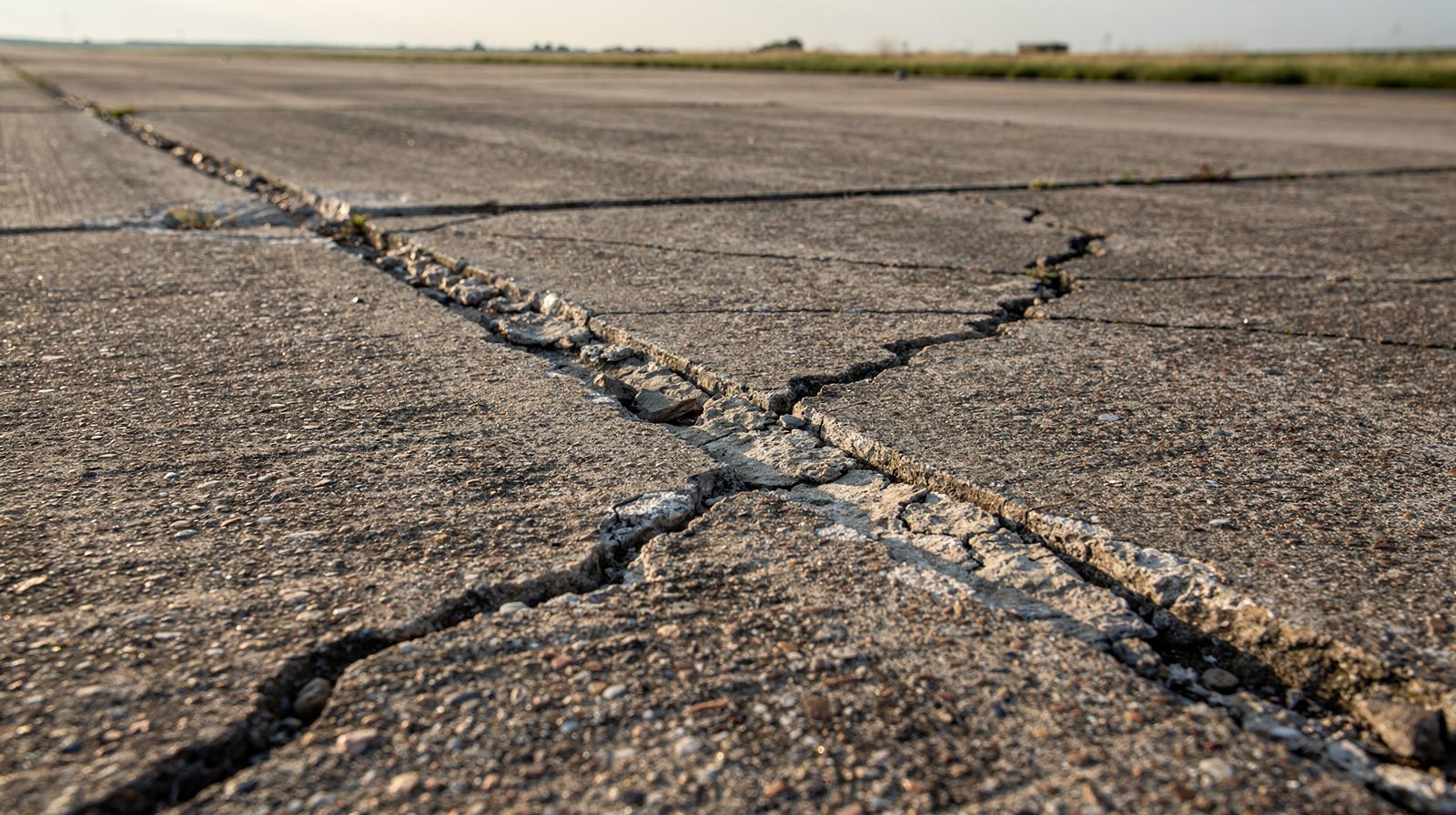
Pavement Condition Index Explained
What PCI is, how ASTM D5340 turns observed distress into a 0-100 number, what the deduct-value step does, and what the index cannot tell you about a…
Runway Surface Inspection: What a Drone Scan Actually Sees
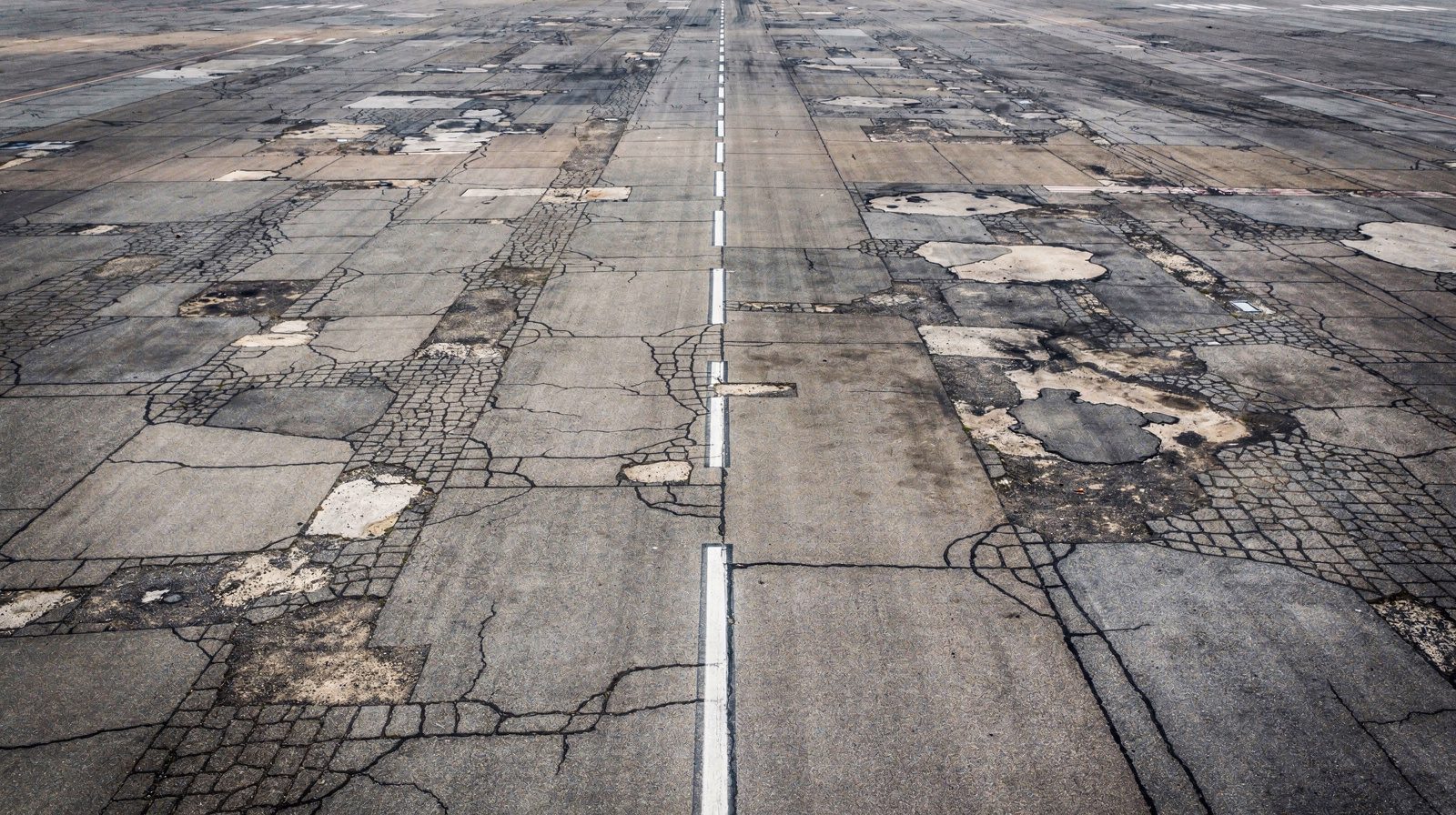
What a drone pavement scan resolves on a runway, what it cannot, how ground sample distance sets the smallest measurable crack, and how a scan becomes…
Pavement Design Life and When an Overlay Is Due
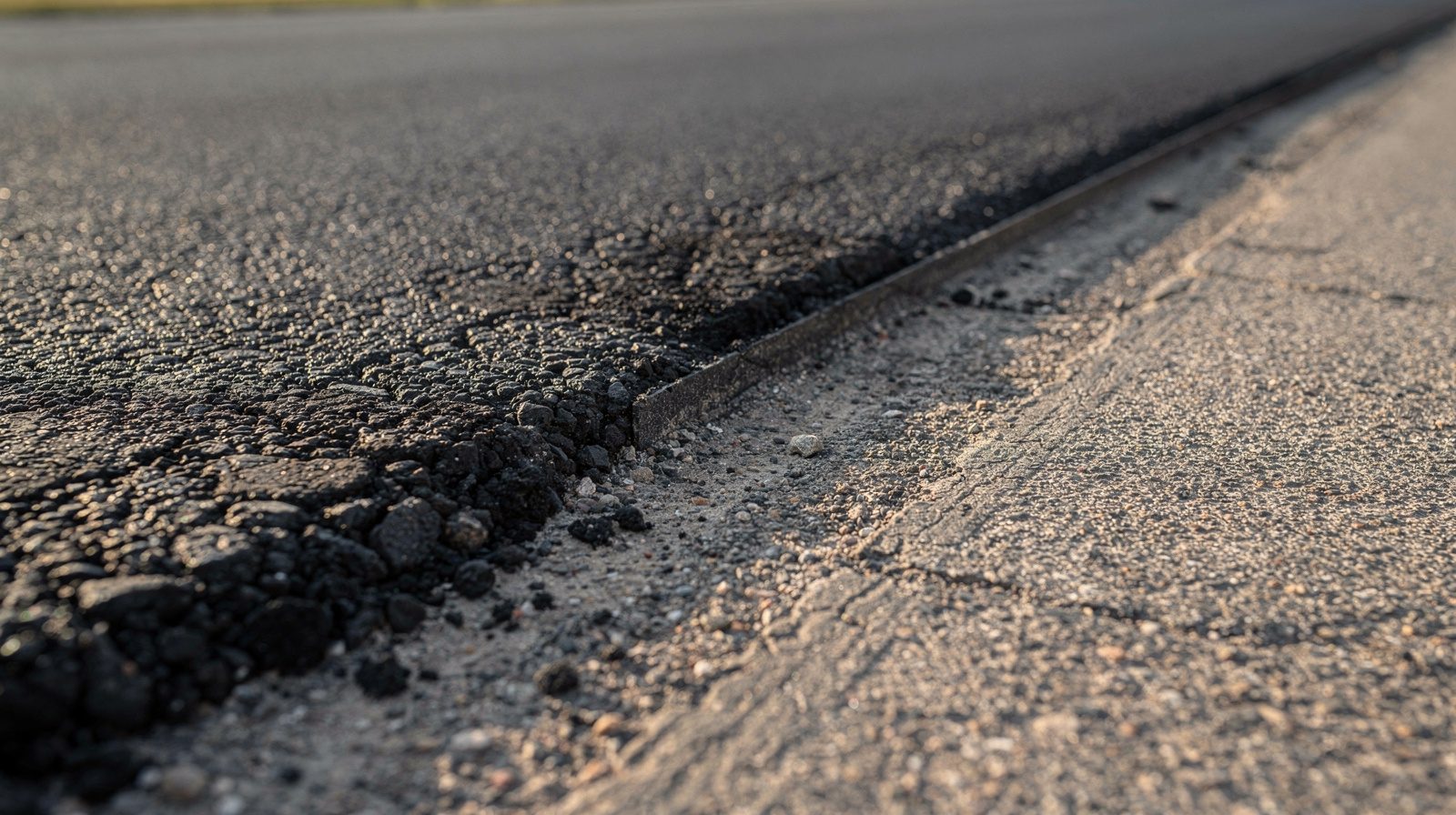
Why a single survey cannot drive an overlay decision, and why a trend across years tells you the deterioration rate that actually matters.