products
Runway Edge Lights Inspection by Drone, Unit by Unit
Drone inspection of runway edge lights. Intensity, colour, beam shape and position measured for every unit, with a same-day protocol to ICAO, EASA or…
AUG 03 2026
12 MIN
The centre line is the lighting a crew follows when it can see least, and it sits in the pavement where every aircraft rolls over it. We fly the centre line and record every unit: lit or dark, its colour against the coding it should show, its output against its neighbours and its surveyed position.
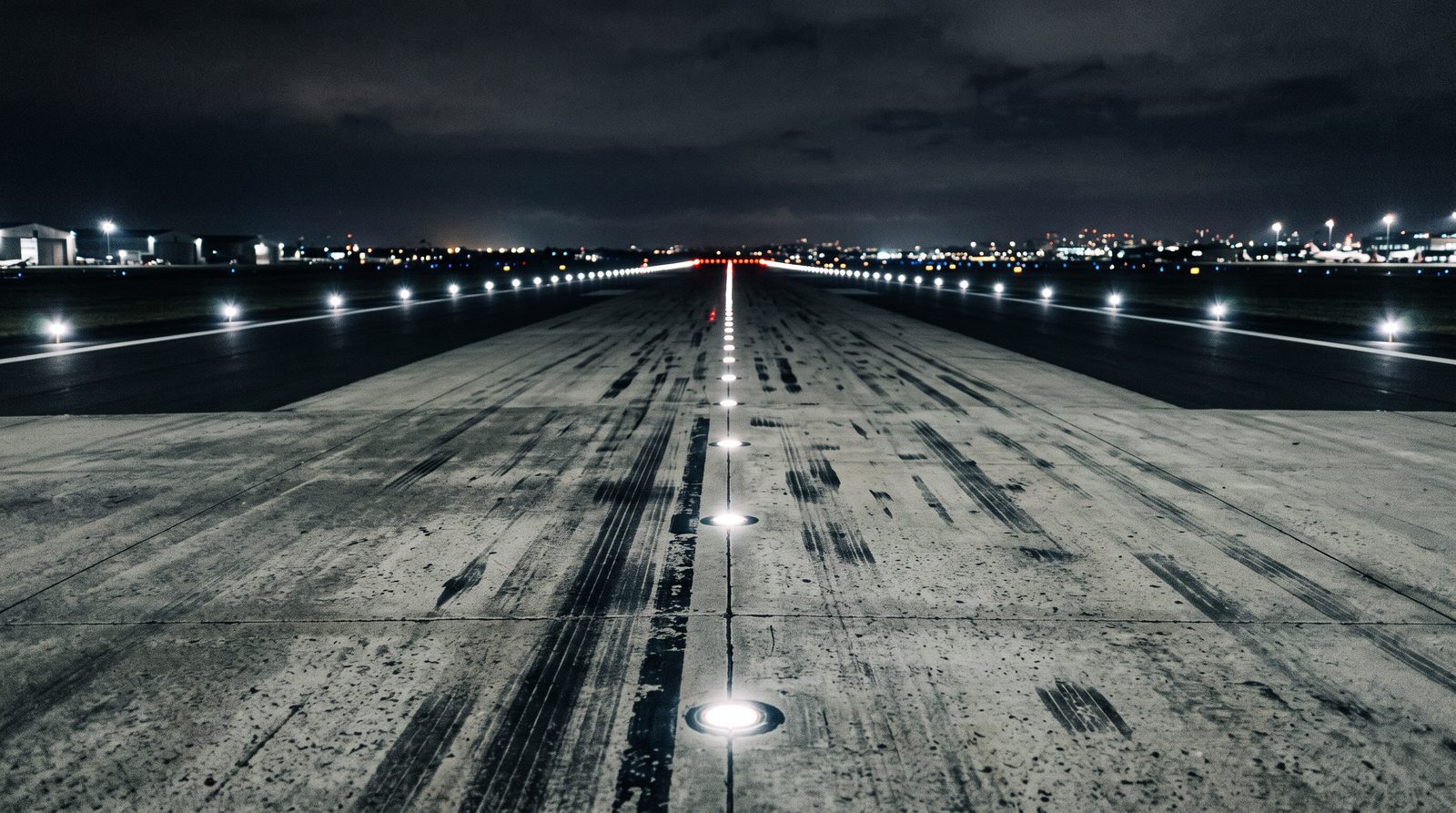
This service is bought by the person who signs the centre line rows of the visual aids protocol and knows that inset lights lose output before they go dark. It fits the electrical manager at an aerodrome with low visibility operations, the operator planning a rubber removal or a cleaning round who wants to send the crew to the right units, and the aerodrome that has resurfaced a runway and needs to show that every unit is back.
Three outcomes are what the service is judged on, and each has a state you can check on delivery rather than a promise you have to trust.
Each unit on the centre line comes back lit or dark, with its colour against the coding its position calls for, its output against its neighbours and its surveyed position.
The centre line is counted as one system and set against the serviceability objective for the operating category you name, including the rule on adjacent unserviceable lights. Touchdown zone lights, where in scope, get their own count.
Units are ordered by how far they sit below the line, so the lenses to clean and the fittings to open are listed in the order the work should be done.
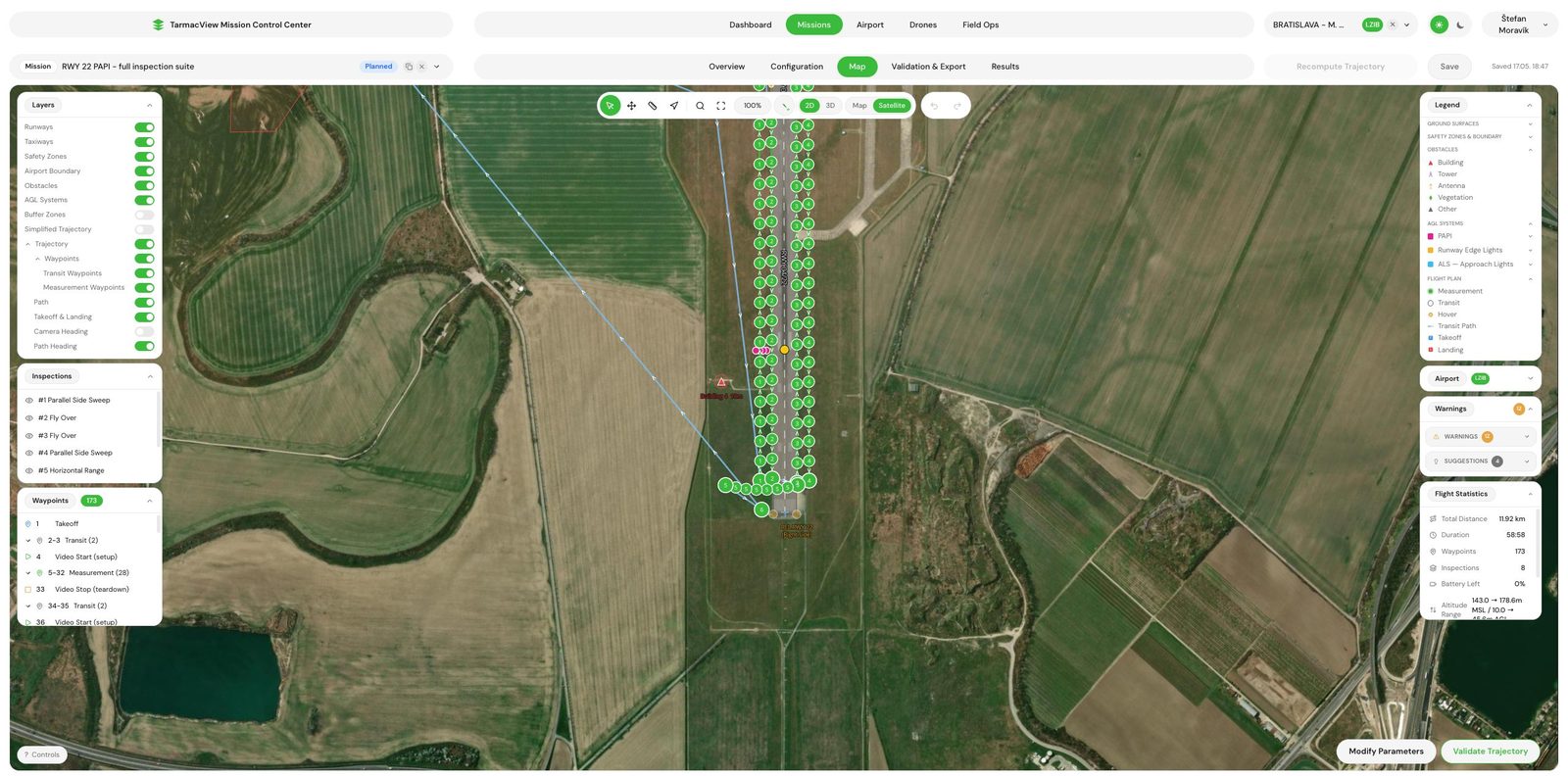
The centre line is flown along its length, so every unit is seen from the same height and angle as the ones beside it.
The drone tracks the centre line from one end to the other, generated from the surveyed unit positions, so each inset unit passes through the frame at the same distance as its neighbours. That is what makes one unit's output comparable with the next. A long runway is flown in legs that fit between movements, and each leg is reflown whole if a movement interrupts it.
Every unit is tracked through the footage and scored on its own: lit or dark, its output against the units either side, and its colour against the white, alternating or red its position calls for. A gap where a unit should be is reported as a missing light at its surveyed position, not as a shorter line.
The centre line rows of the visual aids protocol, each with the figure it is judged against.
Every unit is present along the runway axis at its surveyed position, with no unit missing from the line.
Each unit shows the colour its position calls for, white along the runway and the red and white coding toward the runway end.
A unit whose main beam average intensity has fallen below half the specified value, or whose filter is missing, damaged or the wrong colour, is counted as unserviceable even if it is lit.
Share of centre line units serviceable during CAT II or III operations.
Centre line units on a runway used for take-off in low runway visual range.
No unserviceable unit sits next to another, and the positions of any pair are given.
Where in scope, the barrettes either side of the centre line are counted as their own system.
Every unit changes intensity together and by the commanded step.
Each unit sits at its surveyed position, and a dark or missing unit is reported against the light it belongs to.
You name the runways with centreline lights, whether touchdown zone lights are in scope, the operating category the line must meet and whether a surveyed layout exists. We agree the intensity steps to be checked and the protocol template your authority wants. Output is a scope note. If the layout does not exist, the first visit produces it.
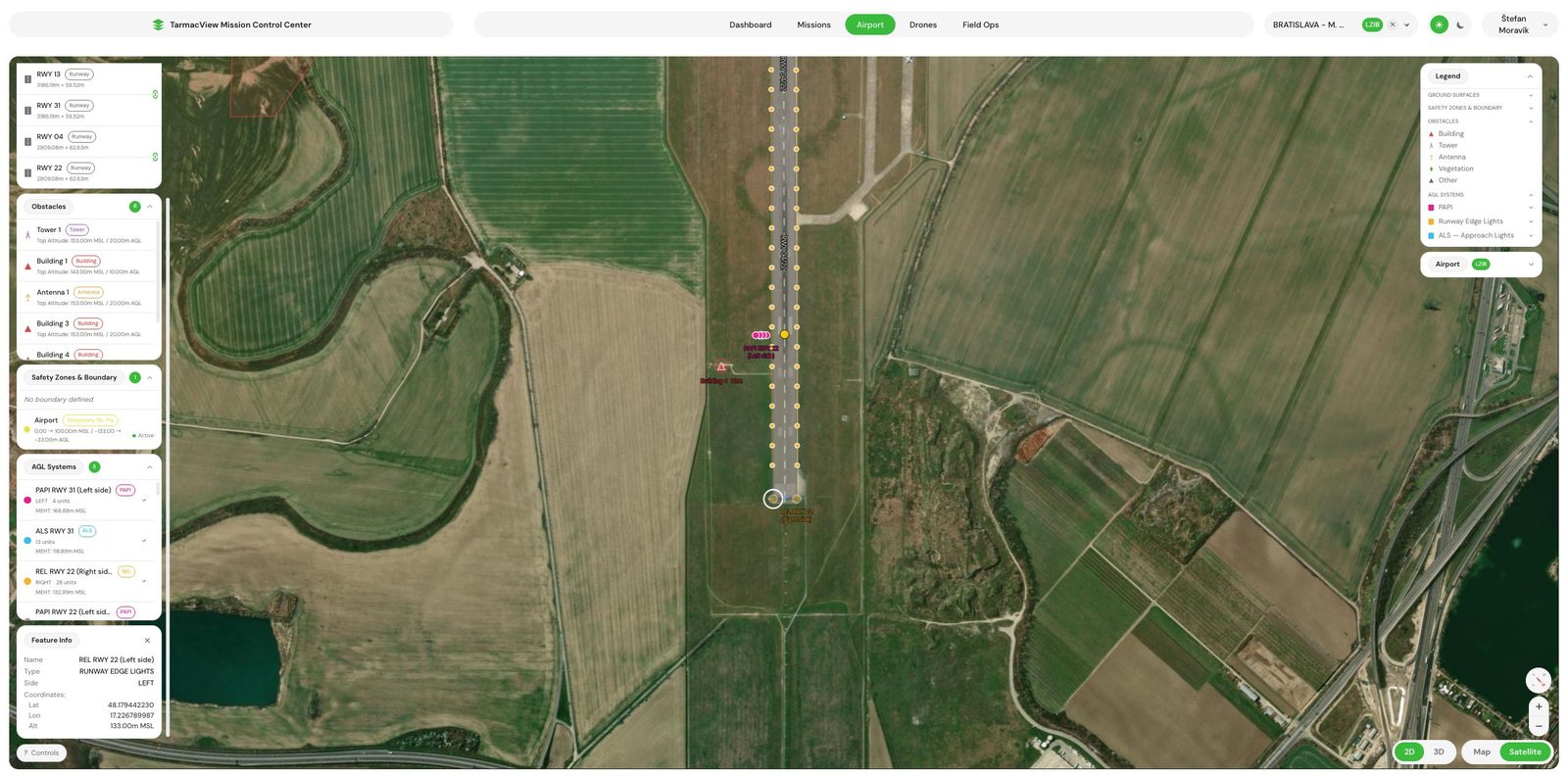
The fly-over is generated from the unit positions, the runway length and the camera optics, split into legs that fit between movements. Output is a validated mission and a capture window request to your tower, plus a request to your lighting control room for the steps to be commanded.
Flown between aircraft movements, usually in the same sortie as the edge rows and the bars at each end. Each leg is flown at every intensity step in scope, and an interrupted leg is reflown unchanged.
Each unit is tracked through the footage and its state, colour, output and position are extracted, then set against the units either side. Frames the tracker is not confident about are held for review rather than dropped.
The centre line rows of the visual aids protocol are filled in your authority's wording, with a verdict per unit, a count and a percentage for the system and a ranked list of the units to attend to. Delivered the same day, with the flight record and the source frames attached.
We walk your electrical manager through the units that failed, the ones furthest below the line and any pair of adjacent outages. Anything disputed is re-examined against the retained footage rather than re-flown.
A centreline light that is lit is not necessarily serviceable. Under ADR.OPS.C.015 a light is unserviceable once the average intensity of its main beam falls below half the specified value, and an inset unit gets there without going dark. Rubber from landing gear, dust and de-icing residue build up on the lens, and the output falls a little with every movement. The centreline lighting of a busy runway can look complete on a night walk while a run of units is well under the rest.
The inspection measures every unit from the same height and angle on one fly-over, so each unit can be set against the units either side of it. A lens under a film of rubber stands out from the clean ones beside it, and the protocol names it with its light intensity relative to the line and its position from RTK positioning . That is the list a cleaning round or a relamping should start from.
The colour coding is the second thing a count misses. Toward the runway end the centre line changes from white to alternating red and white and then to red, which is how a crew reads the runway left in front of it. A unit with the wrong filter, or a red filter that has faded, gives the wrong reading at the worst moment. Each unit’s chromaticity is read from the same footage and set against the colour its position calls for.
The system is then judged as the rules judge it. ADR.OPS.C.015 sets 95 percent serviceability for the centre line in CAT II and III operations, and forbids adjacent unserviceable lights. The protocol gives the count, the percentage and the position of every unserviceable unit, so whether the runway keeps its category is a decision the operator makes from figures rather than from an impression.
There is no published rate for this service, because a single 2,000 metre centre line and two long runways with touchdown zone lights are different days of work off the same method. The quote gives your figure, and the pricing page describes the combined visit.
Three things can stop or degrade an inspection, and each has an owner.
Fog, precipitation and wind above the drone's limit stop the capture, and standing water over inset units changes the way they read from above. The mission is flown when the window opens rather than measured through the weather. This is the most common reason a date moves.
A fly-over along the runway axis needs tower coordination and runway time between movements, at most aerodromes an escort, and a control room that can command the intensity steps. All of it sits with the aerodrome operator and is worth confirming before travel is booked.
Each unit is scored against its surveyed position and the line against the limit for the category you name. If units were moved or replaced during resurfacing since the layout was made, the scoring is against the wrong line. Both are agreed at scoping.
Drone inspection of runway edge lights. Intensity, colour, beam shape and position measured for every unit, with a same-day protocol to ICAO, EASA or…
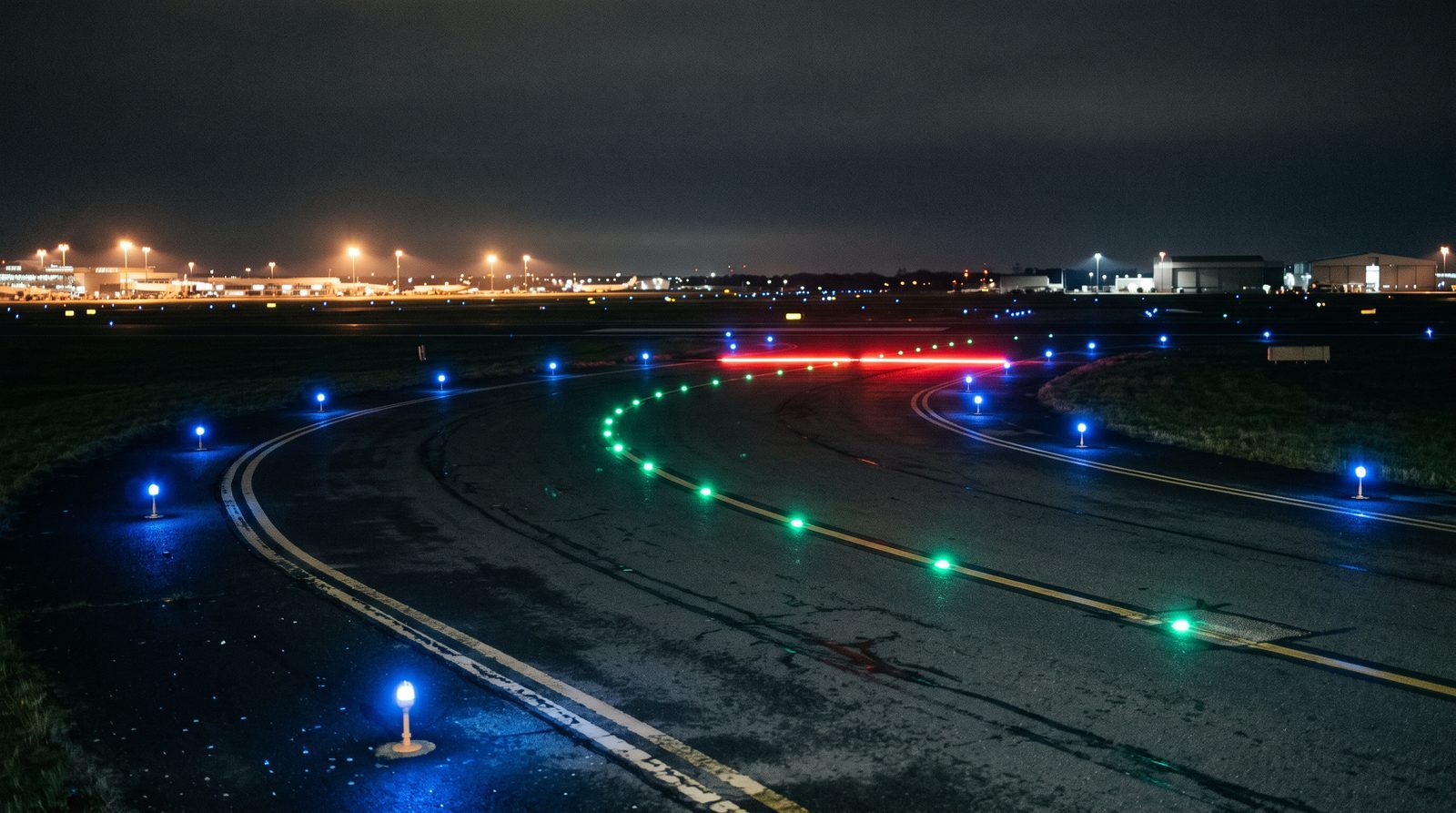
Drone inspection of taxiway lights. Every edge and centreline unit counted, stop bars and guard lights checked, each unit placed on the layout, from a…
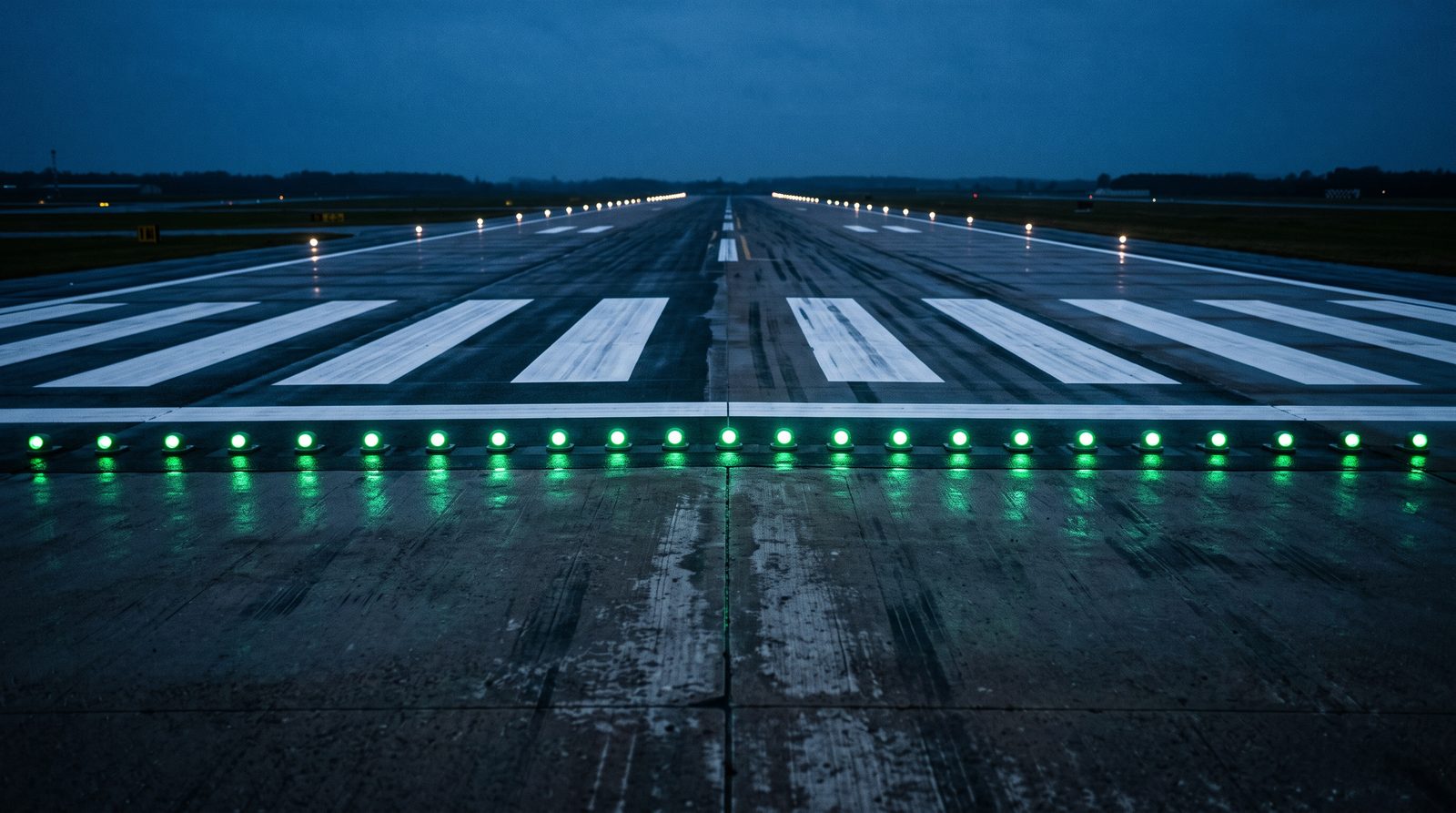
Drone inspection of runway threshold and end lights. Every unit in each bar counted, its colour checked and each bar scored against its serviceability…
Send the aerodrome, the runways with centreline lights and whether the lighting has a surveyed layout. That is enough to scope. You get a written scope note and a price back within two working days, and the scope note is not binding until you accept it.
Cookie Consent
We use cookies to enhance your browsing experience and analyze our traffic. See our privacy policy.