What is Surface Type?
Surface Type – Pavement and Ground Cover Classification (Pavement): In-depth Guide
Definition of Surface Type
Surface type is the classification assigned to a pavement or ground surface based on its material composition, layer structure, and construction method. In airport pavement management, surface type is a fundamental attribute recorded for every pavement section. It determines which inspection standards, distress catalogs, and maintenance strategies apply. Surface type is distinct from surface condition, which describes current distress such as cracks, rutting, or spalling. While condition changes throughout the pavement’s life, surface type remains fixed unless the pavement is reconstructed or overlaid with a different material. Understanding surface type is essential for prioritizing maintenance activities and making strategic long-term capital decisions.
Classification by Pavement Construction
Pavements are classified into four primary categories based on how they distribute loads and their structural composition:
- Flexible Pavements: Multiple layers of asphalt and aggregate that flex under load, distributing stress across the subgrade. Common in new construction and overlays, offering cost-effective initial construction.
- Rigid Pavements: Portland cement concrete (PCC) slabs that bear loads directly across rigid plates, transferring stress through the concrete itself to underlying base layers. Offer longer service life and superior load-bearing capacity.
- Composite Pavements: Asphalt concrete layer (typically 2 to 4 inches) bonded over an existing rigid concrete base. Combines properties of both flexible and rigid systems to maximize performance.
- Unpaved Surfaces: Gravel, crushed stone, stabilized earth, or turf used in low-traffic areas, maintenance zones, or temporary facilities. Less expensive but require more frequent maintenance.
Each category has distinct layer configurations, load-bearing mechanisms, failure modes, and maintenance requirements. Airports often contain multiple surface types across runways, taxiways, aprons, and shoulders, requiring integrated asset management strategies.
Flexible (Asphalt) Pavements
Flexible pavements consist of asphalt concrete bonded to granular base and subbase layers. This layered design distributes loads across a wider area, allowing slight flexing under traffic and temperature changes.
Key characteristics:
- Initial Cost: Lower than rigid pavements.
- Maintenance: More frequent (seal coating, overlay, patching) over 15 to 25 year service life.
- Repair Speed: Fast asphalt repairs reduce airfield downtime.
- Flexibility: Accommodates minor settlement without catastrophic failure.
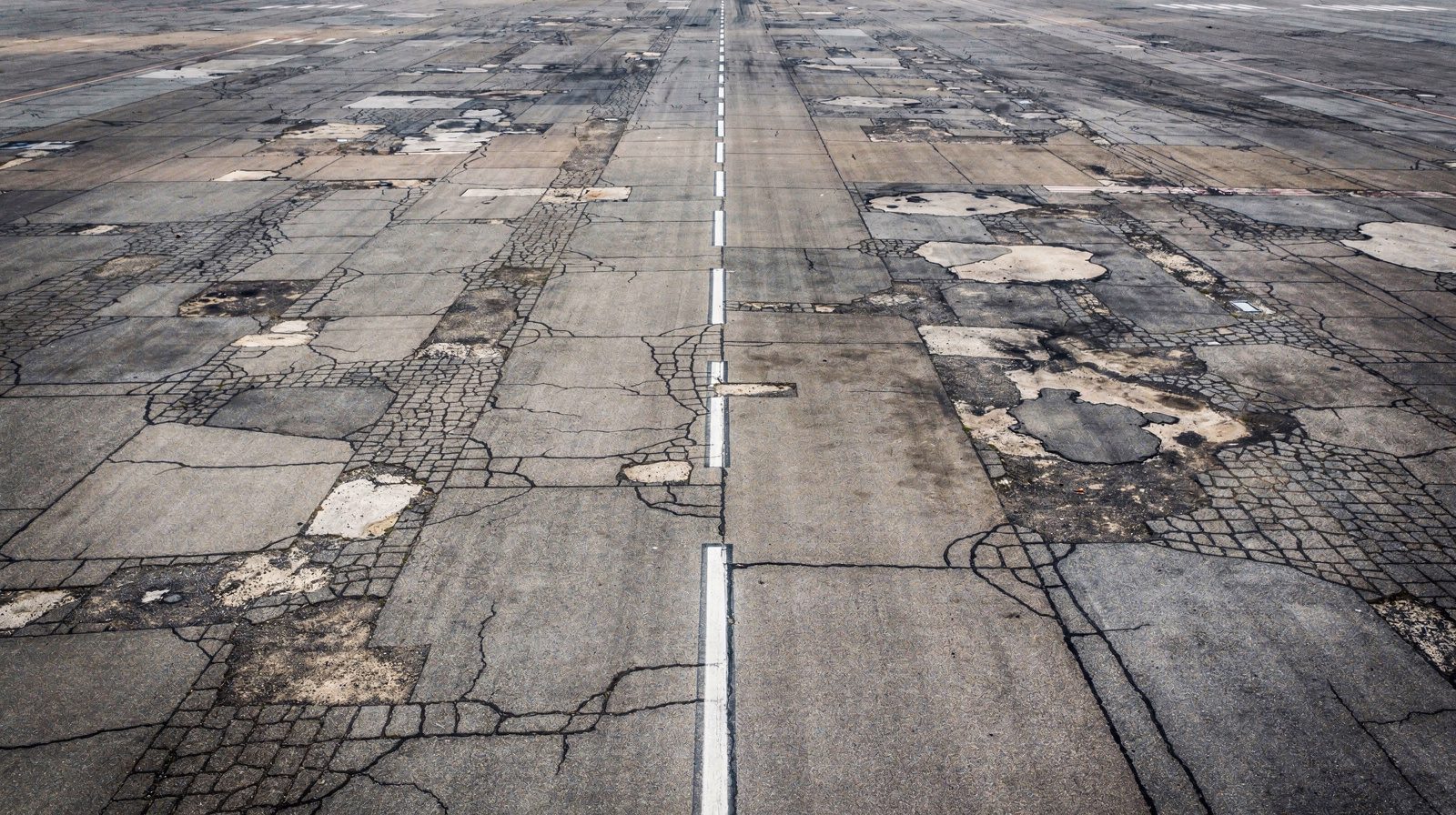
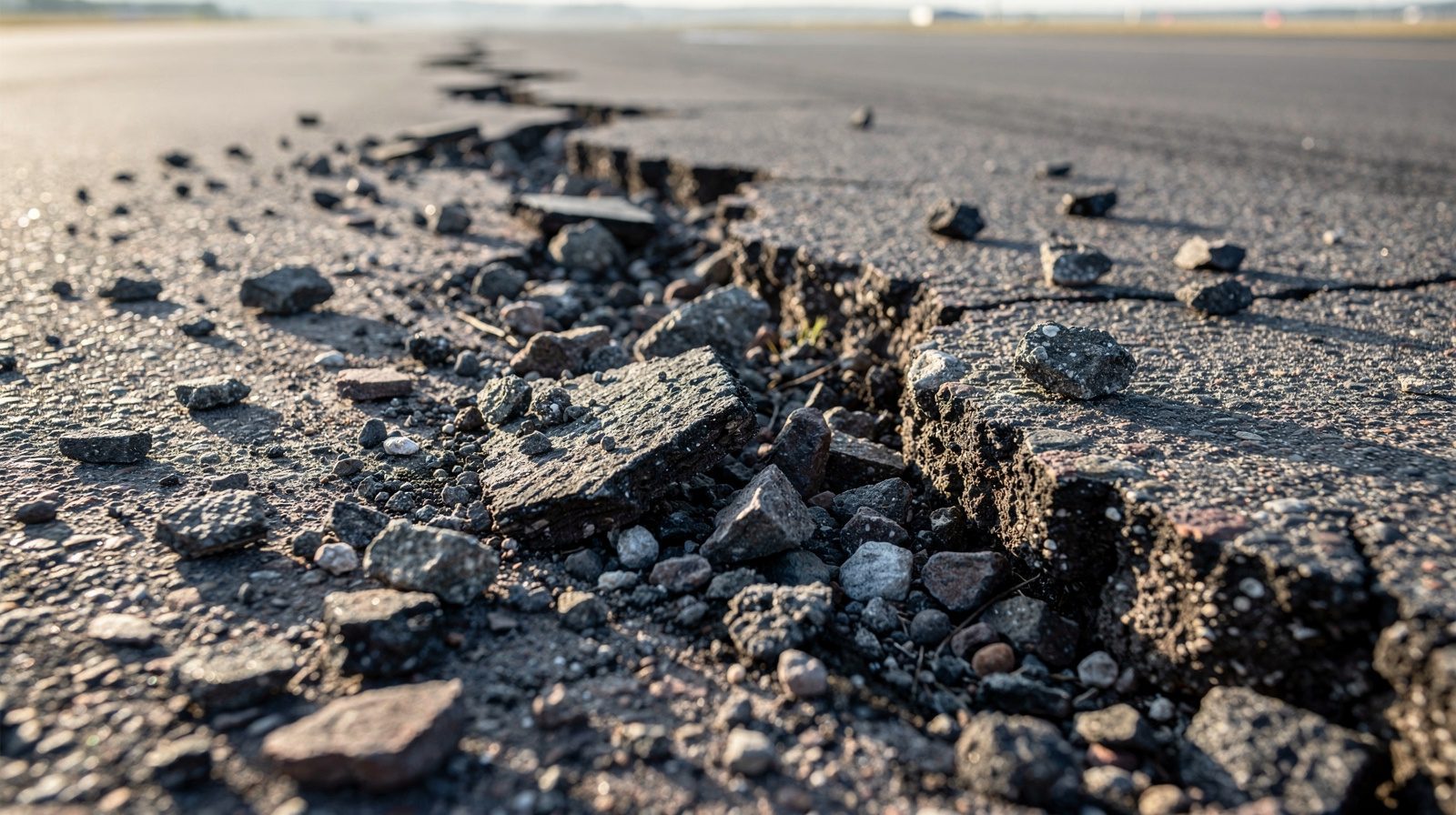
Distresses include rutting (permanent deformation), cracking (alligator, linear, transverse), raveling (aggregate loss), and bleeding (asphalt migration).
Rigid (Concrete) Pavements
Rigid pavements are constructed from Portland cement concrete (PCC) slabs, typically 8 to 14 inches thick on runways. These pavements bear loads directly through the concrete, transferring stress to a thin granular base.
Key characteristics:
- Initial Cost: Higher than asphalt.
- Service Life: Longer, often 30 to 50+ years with proper maintenance.
- Maintenance: Lower frequency but technically demanding, requiring joint maintenance and spall repair.
- Load Capacity: Excellent due to high structural stiffness.
- Joint Dependency: Proper joint maintenance is critical.
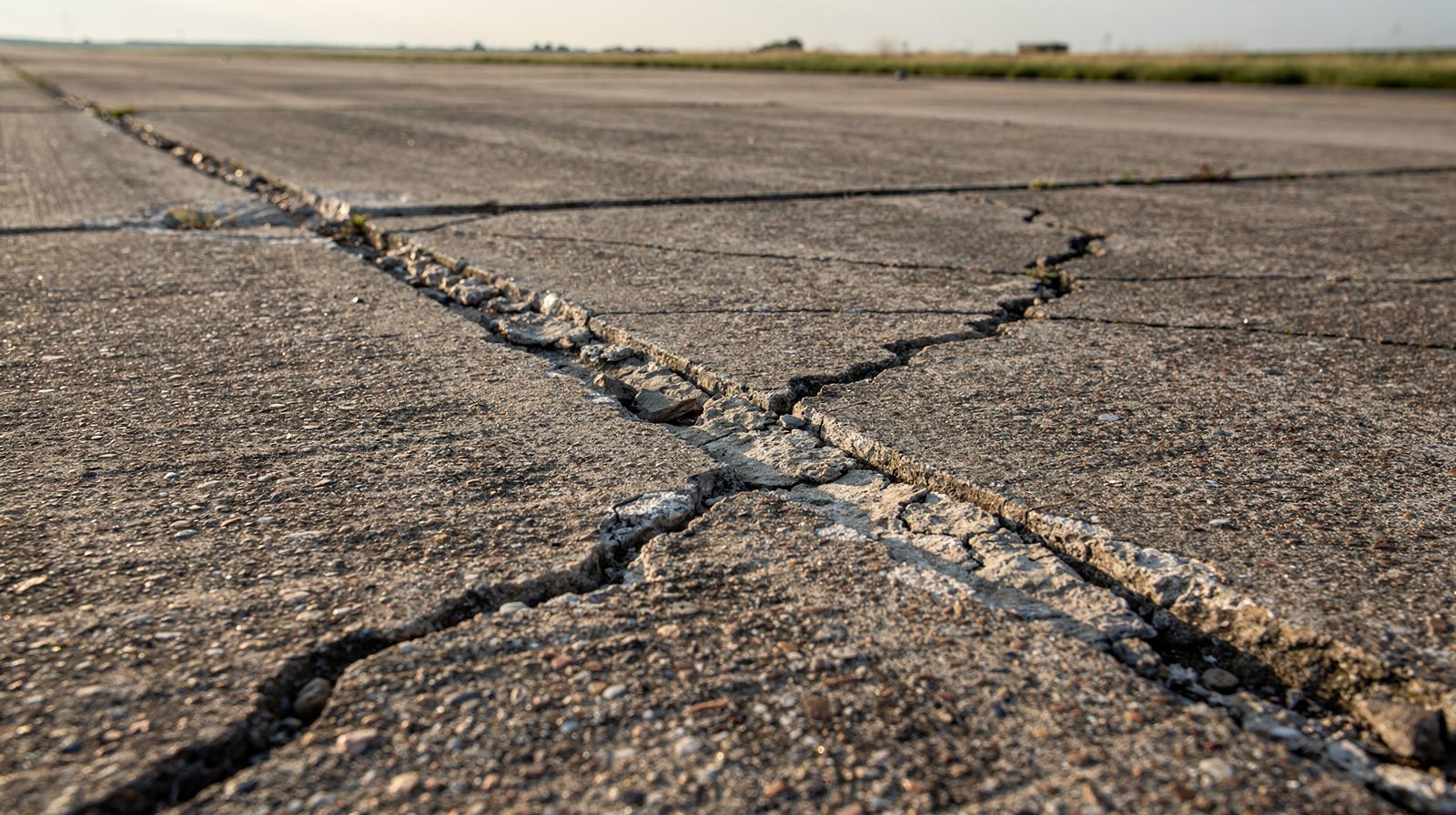
Distresses include faulting (differential slab settlement), spalling (corner/edge breakout), joint deterioration, and transverse cracking. Inspection follows ASTM D5340 and FAA standards.
Other Surface Types
- Composite Pavements: Asphalt overlay on existing concrete base. Requires monitoring for reflective cracking.
- Gravel and Crushed Stone: Low-traffic aprons and shoulders. Requires raking and recompaction.
- Stabilized Earth: Soil with cement/lime binders, used in secondary areas.
- Turf and Grass: Grass airfields and emergency overrun areas. Requires drainage management.
Surface Type in Inspection and Reporting
Correct identification of surface type is the first step in any inspection program. Inspection teams use visual observation, ground-penetrating radar (GPR), coring, and construction records to confirm surface type. Key standards include ICAO Annex 14, FAA Advisory Circulars AC 150/5320-6 and AC 150/5320-12, and ASTM D5340. The Pavement Condition Index (PCI) rating system (0 to 100) differentiates distress severity by surface type. Misidentifying surface type leads to incorrect distress coding and inaccurate assessments. Modern drone-based and AI-assisted systems use surface type to guide automated distress detection.
Maintenance and Repair Strategies by Surface Type
Each surface type demands tailored approaches:
- Asphalt: Preventive maintenance (seal coat, chip seal) extends life 3 to 7 years. Full overlay or reconstruction after 15 to 25 years.
- Concrete: Proactive joint maintenance and spall repair prevent deterioration. Diamond grinding restores friction. Reconstruction less frequent but more costly.
- Composite: Requires monitoring for reflective cracking. Preventive overlays extend life.
Correct classification enables asset managers to forecast budget needs and make strategic preservation decisions.
Condition Assessment by Surface Type
Pavement Condition Index (PCI) calculations and distress severity thresholds vary significantly by surface type. Inspectors using the ASTM D5340 standard apply different distress catalogs:
| Distress Type | Flexible Pavement | Rigid Pavement | Composite Pavement |
|---|---|---|---|
| Rutting | Primary concern | Rare (slab movement) | Possible (asphalt layer) |
| Cracking | Alligator, linear, transverse | Transverse, longitudinal, map | Reflective (from base) |
| Spalling | Edge only | Corners, edges, joints | Asphalt surface only |
| Faulting | Rare (minor) | Major concern at joints | Rare (base fault) |
| Joint Distress | N/A | Critical factor | Critical at interface |
| Raveling | Common | N/A | Asphalt surface only |
Pavement Type Characteristics and Inspection Focus
| Characteristic | Flexible (Asphalt) | Rigid (Concrete) | Composite |
|---|---|---|---|
| Design Life | 15 to 25 years | 30 to 50+ years | 20 to 30 years |
| Initial Cost | Low to moderate | High | Moderate to high |
| Maintenance Intensity | High (frequent overlays) | Moderate (joint repair) | High (monitor interface) |
| Load Capacity | Good with proper base | Excellent | Good to excellent |
| Repair Speed | Fast | Slow | Moderate |
| Primary Distress | Rutting, cracking, raveling | Faulting, spalling, joint failure | Reflective cracking |
This differentiation ensures inspectors focus on the distresses most likely to affect each pavement type and prioritize repairs appropriately.
Emerging and Sustainable Surface Types
Airport operators explore sustainable alternatives:
- Permeable Pavements: Allow water infiltration, reducing runoff and supporting stormwater management.
- Recycled Asphalt Pavement (RAP): Reduces virgin material consumption and environmental impact.
- Rubberized Asphalt: Improves flexibility and extends life.
- Low-Carbon Concrete: Emerging option with reduced carbon footprint.
Classification systems evolve to accommodate innovations while maintaining compatibility with legacy inspection methods.
Conclusion
Surface type is the foundational classification that shapes every aspect of pavement inspection, maintenance, and asset management decisions. Whether an airport operates flexible asphalt, rigid concrete, composite, or unpaved surfaces, accurate surface type identification enables standardized reporting, appropriate distress detection, and cost-effective preservation strategies over multi-decade lifecycle horizons. Modern inspection technologies, including drone-based visual assessment and AI-powered automated distress recognition, depend on correct surface type classification to deliver actionable maintenance and repair recommendations. For airport operators, asset managers, and pavement professionals, thorough understanding of surface type classification is essential to achieving safe, durable, and sustainably managed aeronautical infrastructure that serves aviation operations reliably.
Frequently Asked Questions
- What are the main types of airport pavement surfaces?
- The primary types are flexible (asphalt) pavements, rigid (Portland cement concrete) pavements, composite pavements (asphalt overlay on concrete), and unpaved surfaces such as gravel, stabilized earth, or turf. Composite surfaces are increasingly common, combining the strengths of both flexible and rigid construction.
- Why is surface type important for pavement inspection?
- Surface type determines which distress catalog and inspection standards apply. Asphalt surfaces show wear patterns (rutting, shoving) different from concrete (spalling, faulting). Identification is essential for accurate damage assessment, condition reporting, and maintenance planning.
- How does surface type affect maintenance and repair strategies?
- Flexible pavements typically require seal coats and overlays. Rigid pavements need joint maintenance and spot repairs. Composite pavements require careful management to prevent reflective cracking. Each type demands different equipment, skill sets, and treatment schedules.
- What is the difference between flexible and rigid pavements?
- Flexible pavements (asphalt) distribute loads across a wider area and are cost-effective initially but require more frequent maintenance. Rigid pavements (concrete) bear loads directly and have longer service life but are more expensive to construct and cannot be easily repaired.
- Can an airport pavement be converted from one surface type to another?
- Yes, though it is costly and disruptive. Common conversions include asphalt overlay on concrete (creating composite pavement) or removal and replacement with a different material. The choice depends on structural integrity, budget, airfield operational constraints, and long-term asset strategy.
- How do environmental and climate factors affect different surface types?
- Asphalt is sensitive to temperature extremes (thermal cracking in cold, rutting in heat) and UV damage. Concrete is durable in cold but susceptible to freeze-thaw spalling and salt intrusion. Regional climate influences the expected lifespan and maintenance intensity for each surface type.