What is a Primary Runway (Principal Runway)?
Primary Runway (Principal Runway) in Airport Operations
Definition and Purpose
The primary runway (also called the principal runway) is the main runway at an airport, specifically designated and constructed for the most frequent and critical takeoff and landing operations. This runway is carefully aligned with prevailing wind patterns to reduce crosswind exposure, which is a key factor in aviation safety. According to international standards set by the ICAO (International Civil Aviation Organization) and the FAA (Federal Aviation Administration), the primary runway must be capable of accommodating the largest and fastest aircraft that regularly operate at the airport, referred to as the “critical aircraft.”
The primary runway is typically the longest, widest, and strongest at the airport. It is equipped with the most advanced navigational aids, such as precision instrument landing systems (ILS), sophisticated lighting, and visual guidance systems. Its design and maintenance are central to airport capacity, safety, and operational reliability.
Criteria for Primary Runway Designation
Prevailing Wind Coverage
The orientation of the primary runway is determined by a comprehensive analysis of long-term wind data. The goal is to ensure that the runway provides safe takeoff and landing conditions for the majority of the year. ICAO and FAA standards require at least 95% wind coverage for the critical aircraft, which means that crosswinds must not exceed specified limits more than 5% of the time.
- Wind Roses: Visual representations called wind roses are used to analyze and display wind direction and speed frequencies, guiding runway alignment.
- Crosswind Limitations: Limits vary by aircraft category (usually 10.5, 13, or 16 knots), and the primary runway is aligned so these limits are rarely exceeded.
If a single runway cannot achieve the required wind coverage, additional crosswind runways may be constructed.
Aircraft Operations and the Critical Aircraft
The primary runway must safely support the critical aircraft, defined as the largest, fastest, and most demanding aircraft with a regular operational presence (minimum 500 annual operations). This dictates the runway’s required length, width, and pavement strength, as well as the necessary separation distances for taxiways and the placement of navigational aids.
- Airport Reference Code (ARC): This code system combines aircraft approach speed and wingspan, determining the design standards for the runway.
Runway Length, Width, and Strength
The runway’s dimensions and structure are based on:
- Critical aircraft performance requirements
- Airport elevation, temperature, and slope
- Anticipated traffic frequency and aircraft weight
Commercial primary runways are often at least 150 feet (45.7 meters) wide and can range from 6,000 to over 12,000 feet (1,829 to 3,658 meters) in length. They are constructed with high-strength materials and are assigned a Pavement Classification Number (PCN) to indicate their load-bearing capacity.
Instrument Approach Capability
A hallmark of the primary runway is its support for precision instrument approaches. Most are equipped with:
- Instrument Landing System (ILS) Category I, II, or III
- Area Navigation (RNAV) and Required Navigation Performance (RNP) approaches
- Advanced approach lighting systems (ALS)
- Runway Visual Range (RVR) measurement systems
These systems enable safe operations even in low visibility and poor weather.
Lighting and Visual Aids
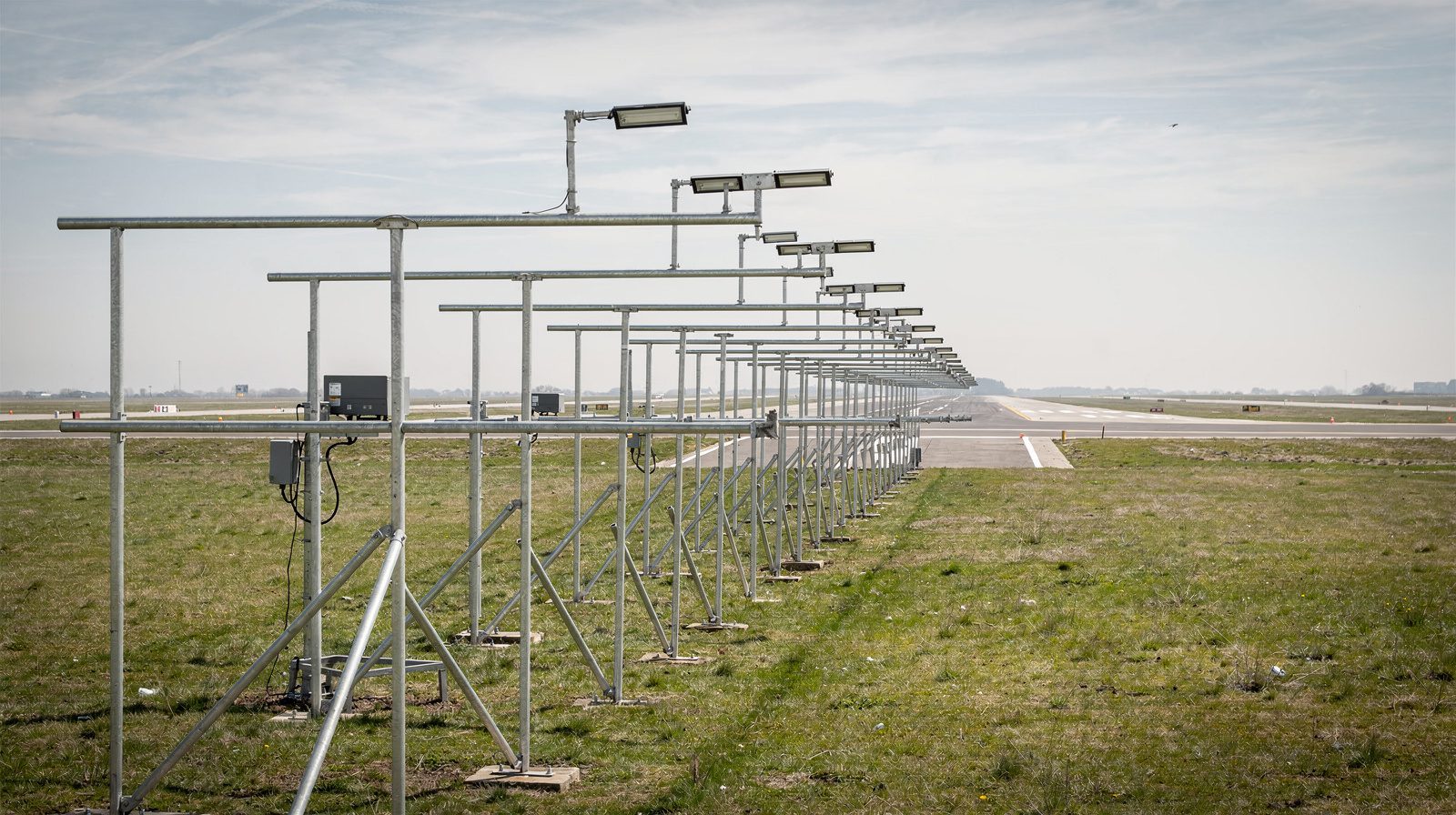
Primary runways have the most comprehensive lighting and visual systems, including:
- High-Intensity Runway Lights (HIRL)
- Touchdown Zone Lights (TDZL)
- Runway Centerline Lights
- Approach Lighting Systems (ALS)
- Precision Approach Path Indicators (PAPI) or Visual Approach Slope Indicators (VASI)
- Runway End Identifier Lights (REIL)
These ensure pilots have clear visual guidance during all phases of approach and landing.
Operational Throughput
The primary runway is designed to handle the highest volume of movements (takeoffs and landings) at the airport. Its reliability and efficiency are crucial for meeting the airport’s Annual Service Volume (ASV) and hourly throughput targets. When this runway is unavailable, airport capacity drops significantly.
Operational Considerations
Wind Coverage and Runway Orientation
Ensuring optimal wind coverage is achieved by analyzing multi-year meteorological data and constructing the runway to align with the dominant wind directions. Limits for crosswinds are determined by aircraft type, and planners use wind rose diagrams to visualize and choose the best orientation.
Traffic Patterns and Air Traffic Control
The primary runway determines the airport’s standard traffic patterns, approach and departure procedures, and circuit directions. Air traffic controllers prioritize this runway for both arrivals and departures, optimizing flow and minimizing delays.
Roles and Responsibilities
- Aerodrome Operator: Maintains runway condition, safety, and compliance with regulations.
- Tower Controller: Manages clearances for takeoff, landing, and taxiing, and ensures the runway is clear before use.
- Air Traffic Services (ATS): Coordinates traffic, manages flow, issues weather/runway condition reports, and handles emergencies.
Capacity and Throughput
The primary runway’s design and operation directly influence the airport’s maximum capacity. Factors such as runway occupancy time, aircraft mix, and the availability of rapid-exit taxiways all play a role in determining throughput.
Temporary Closures and Maintenance
During scheduled maintenance or emergencies, the primary runway may be closed, requiring the use of secondary runways. This necessitates careful planning, coordination, and communication (including NOTAMs) to maintain safety and minimize operational disruption.
Markings and Signage
Runway Markings
All markings adhere to ICAO and FAA standards for clarity and visibility:
- Runway Designator: Shows magnetic azimuth and distinguishes parallel runways (e.g., 18L/18R).
- Centerline Marking: A continuous line along the runway.
- Threshold Markings: Bars at the runway’s start for landing reference.
- Aiming Point: Large white rectangles 1,000 feet from the threshold.
- Touchdown Zone Markings: Bars at 500-foot intervals for precision approaches.
- Edge Markings: Define the usable runway area.
- Displaced Threshold: Indicated by arrows and a bar, marking areas not available for landing.
Associated Signs
- Runway Holding Position Signs: Red with white numerals at taxiway/runway intersections.
- Runway Safety Area (RSA) Boundary Markings: Yellow lines marking safety limits.
- Runway Status Lights (RWSL): In-pavement lights indicating real-time runway status for enhanced safety.
Lighting Systems
Primary runways feature:
- High-Intensity Runway Lights (HIRL)
- Approach Lighting System (ALS)
- Touchdown Zone Lights (TDZL)
- Runway End Identifier Lights (REIL)
Maintenance ensures these systems are always operational for safety in all conditions.
Associated Procedures and Safety
Runway Safety Area (RSA)
The RSA surrounds the runway to provide a buffer in case of overruns or excursions, usually extending 500 feet wide and 1,000 feet beyond each end. It’s kept clear and well-maintained to minimize damage in the event of an incident.
Runway End Safety Area (RESA)
Beyond the runway end, the RESA is designed to further reduce the consequences of overruns. ICAO recommends at least 240 meters (787 feet) for instrument runways, with adjustments made for heavier or faster aircraft.
Safety Management System (SMS)
A robust SMS framework ensures ongoing risk assessment, safety audits, and incident investigation. The SMS covers runway condition monitoring, wildlife hazard management, and emergency response planning, all centered on the primary runway.
Importance in Airport Operations
The primary runway is fundamental to airport operations, safety, and capacity. Its proper alignment, design, and maintenance enable safe and efficient operations for all user groups, including scheduled airlines, cargo carriers, general aviation, and emergency services. Investment in advanced lighting, navigational aids, and ongoing maintenance is essential for meeting evolving safety and operational standards.
Summary
The primary runway is the backbone of airport operations. Its designation, design, and maintenance are governed by international standards to ensure the highest levels of safety and efficiency. From wind analysis and critical aircraft requirements to advanced lighting and instrument systems, every aspect of the primary runway is optimized for reliability and throughput, making it a pivotal element in airport infrastructure and air traffic management.
References:
- ICAO Annex 14 – Aerodromes
- FAA Advisory Circular 150/5300-13 – Airport Design
- FAA Advisory Circular 150/5340-1 – Standards for Airport Markings
For tailored solutions, consult aviation planners and regulatory authorities to ensure compliance and optimal performance of your airport’s primary runway.
Frequently Asked Questions
- How is the primary runway chosen at an airport?
- The primary runway is selected based on a combination of prevailing wind direction (to maximize safe takeoff and landing conditions), the types of aircraft using the airport, required runway length and strength, and the need for advanced navigational and lighting aids. This process involves detailed wind analysis, assessment of critical aircraft requirements, and compliance with ICAO and FAA standards.
- Why is the orientation of the primary runway important?
- The orientation is critical because aligning the runway with prevailing winds reduces the risk and operational impact of crosswinds during takeoff and landing. This ensures safer and more efficient operations, particularly for larger and faster aircraft, and maximizes the runway's usability throughout the year.
- What is a 'critical aircraft' in the context of runway design?
- A critical aircraft is the largest and fastest aircraft that regularly uses the airport, typically defined as one performing at least 500 annual operations. Runway dimensions, strength, and navigational aids are all designed to meet the operational requirements of this aircraft to ensure safety and efficiency.
- What advanced systems are typically found on a primary runway?
- Primary runways are equipped with precision instrument approach systems (such as ILS), approach lighting systems (ALS), high-intensity runway lights (HIRL), runway centerline and touchdown zone lights, and visual guidance aids like PAPI or VASI. These systems enable safe operations in low visibility and at night.
- What happens when the primary runway is closed for maintenance?
- When the primary runway is closed, secondary or crosswind runways are used if available, often with operational restrictions due to differences in length, strength, or equipment. Detailed procedures, NOTAMs, and coordination ensure continued safety and minimize disruption during closures.
This is a reference entry. TarmacView provides drone inspection services and doesn't sell the equipment or materials described in this glossary.