What is full-scale deflection (FSD)?
Full-Scale Deflection (FSD): Definition and Fundamental Concept
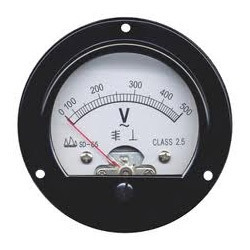
Full-scale deflection (FSD) represents the maximum movement or output an instrument’s indicator, whether a needle in an analog device or a value in a digital display, can reliably show within its calibrated measurement range. Traditionally, FSD refers to the farthest point a pointer can reach on a physical scale, in modern electronic and digital instruments, it is the highest value displayable, determined by the system’s electronic or computational limits.
FSD sets the operational boundary for measurement: any input beyond this point cannot be accurately or safely indicated. In analog systems, FSD is a mechanical constraint, in digital systems, it is set by the device’s resolution or design. Exceeding FSD risks inaccurate readings, device errors, or damage.
Historical Context: The Evolution of FSD
The concept emerges from early analog instruments like galvanometers and ammeters, where FSD was determined by the maximum safe current that could move the needle to the end of the scale. This physical endpoint was a key reference for calibration and overload protection. As measurement evolved to digital displays and electronic sensors, FSD became a computational or display limit, but its role in defining safe, meaningful measurement remained unchanged.
FSD in Analog and Digital Instruments
Analog Instruments
In analog devices, FSD is the maximum swing of the needle across the scale. For example, in a 0–100 V voltmeter, 100 V produces FSD. Exceeding FSD can compromise accuracy or damage the mechanism. Aviation analog instruments such as the Course Deviation Indicator (CDI) rely on FSD as a cue for maximum permissible deviation, standardized for safety.
Digital Instruments
In digital systems, FSD is the uppermost value representable (e.g., 4095 for a 12-bit ADC in a 0–5 V system). Digital instruments handle over-range inputs with warnings or error messages, preventing misinterpretation.
FSD in Aviation: ICAO and FAA Standards
Aviation relies heavily on FSD for standardized navigation and approach procedures. According to ICAO Doc 8168 and FAA guidance:
- ILS (Instrument Landing System): FSD on the CDI typically equals a 2.5° deviation from runway centerline. Exceeding FSD during approach signals loss of course and triggers a missed approach.
- VOR Navigation: FSD often means a 10° or 12° deviation from the selected radial.
- RNAV/GPS: FSD varies by flight phase (±2 NM en-route, ±1 NM terminal, ±0.3 NM approach).
Pilots are trained to interpret FSD as a critical threshold for corrective action.
Instrument Range, Accuracy, and Calibration
Instrument Range
FSD defines the upper measurement limit. Selecting the right instrument means ensuring expected inputs do not exceed FSD, vital for both industrial and aviation safety.
Accuracy: % Full Scale vs. % Reading
- % Full Scale (FS): Fixed error based on FSD, relative error increases at lower readings.
- % Reading (RD): Error proportional to the actual value, better at low readings.
Example Table:
| Reading (A) | % FS Error | Error (A) | Relative Error (%) |
|---|---|---|---|
| 10 | 2% | 0.2 | 2% |
| 5 | 2% | 0.2 | 4% |
| 1 | 2% | 0.2 | 20% |
Calibration
FSD serves as a reference point for calibration certificates and regulatory compliance. Aviation calibration, per ICAO and FAA, emphasizes accuracy at FSD to ensure safety.
Aviation-Specific Applications
- ILS and Localizer: FSD on the CDI = 2.5° deviation at runway threshold, exceeding this, pilots must execute a missed approach.
- VOR: FSD usually 10–12°, standardized for all procedures.
- RNAV/GPS: Dynamic FSD (±2 NM en-route, ±1 NM terminal, ±0.3 NM approach), ensuring consistent navigation cues.
Related Concepts
| Term | Relation to FSD |
|---|---|
| Full Scale (FS) | Maximum value measurable or displayable |
| Span | Difference between minimum and maximum values |
| Over-range | Input above FSD, causing errors or warnings |
| Resolution | Smallest measurable increment |
| Calibration | Adjustment to ensure accuracy up to FSD |
| CDI | Instrument where FSD is a critical operational parameter |
Regulatory Reference
- ICAO Doc 8168 (PANS-OPS): Global standards defining FSD for navigation and approach.
- FAA Instrument Flying Handbook/AIP: U.S. standards mirroring ICAO definitions, including specific FSD scaling for navigation instruments.
Example Visuals
Analog meter at FSD:
Digital gauge at FSD:
Digital instruments typically display their maximum value or indicate “OL” (overload) when FSD is exceeded.
Glossary of Terms
- Deflection: Movement of the indicator in response to input.
- Full-scale value: The highest marked value, corresponding to FSD.
- Over-range: Condition when input exceeds FSD.
- Accuracy: Closeness of measured value to the true value.
- Calibration certificate: Document verifying accuracy against the FSD.
- Course Deviation Indicator (CDI): Instrument displaying lateral navigation deviation, FSD marks max deviation.
- Instrument Landing System (ILS): Precision approach system, FSD on CDI is a standard safety margin.
- Span: Measurement range between minimum and maximum.
Summary Table
| Aspect | Description |
|---|---|
| Definition | Maximum measurable value or indicator movement on an instrument’s scale |
| Historical Origin | Rooted in analog meter design, applies to digital systems today |
| Aviation Relevance | Standardized in ICAO/FAA documents for critical safety margins |
| Accuracy Specs | Stated as % FS (fixed error) or % RD (proportional error) |
| Calibration | FSD is a reference for calibration and certification |
| Example | 0–100 psi gauge: 100 psi is FSD, ILS CDI: 2.5° deviation is FSD |
| Safety Margin | Defines operational and safety boundaries in measurement and navigation |
Deep Dive: FSD in ICAO and FAA Documents
ICAO Doc 8168, Volume I defines FSD for navigation aids and approach, declaring an aircraft established when the CDI is within half FSD for ILS/VOR procedures. FAA publications specify FSD for navigation display scaling, ensuring harmonized safety margins and operational procedures.
Key Takeaways
- FSD is the operational boundary for reliable, safe measurement in both analog and digital instruments.
- In aviation, FSD is a critical standard for navigation safety, codified in ICAO and FAA documents.
- Understanding FSD, accuracy specifications, and calibration is crucial for compliance, reliability, and safety in all technical and aviation fields.
If you need expert advice on FSD, instrument selection, or compliance with aviation or industrial standards, contact our team .
Frequently Asked Questions
- What does full-scale deflection mean in analog instruments?
- In analog instruments, full-scale deflection (FSD) is the maximum physical movement of the indicator needle, representing the highest value the device can accurately measure as defined by its calibrated scale.
- How is FSD relevant to digital measurement systems?
- In digital systems, FSD is the largest value the instrument can represent, determined by its resolution or bit depth. Inputs above this value may result in error messages or over-range indications.
- Why is FSD important in aviation?
- Aviation standards (ICAO and FAA) define FSD for navigation instruments to ensure safety. For example, a full-scale CDI deflection signals the aircraft is at the maximum allowable deviation from course or glide path, prompting corrective action or procedure changes.
- How is accuracy specified: % of full scale vs. % of reading?
- Accuracy as % of full scale (% FS) means the absolute error is constant across the entire range, while % of reading (% RD) means the error is proportional to the actual measured value. This affects measurement reliability, especially at low readings.
- What happens if an instrument is operated beyond FSD?
- For analog devices, exceeding FSD risks mechanical damage or permanent error. In digital instruments, values above FSD trigger over-range warnings or clamp readings at the maximum value to avoid misinterpretation or data corruption.
This is a reference entry. TarmacView provides drone inspection services and doesn't sell the equipment or materials described in this glossary.