What is a Storm?
Storm (Severe Weather with Precipitation and Wind) – Meteorology Glossary
Definition
A storm in meteorology refers to a significant disturbance in the atmosphere marked by hazardous elements such as intense precipitation (rain, snow, sleet, freezing rain, or hail), strong winds, and often electrical activity like lightning and thunder. Storms are classified by their potential to disrupt the environment, human activities, and infrastructure, and are capable of causing damage to buildings, agriculture, and natural landscapes.
The International Civil Aviation Organization (ICAO) and World Meteorological Organization (WMO) define a storm as an atmospheric event associated with convective activity or synoptic-scale disturbances, where wind and precipitation exceed set thresholds. For example, the U.S. National Weather Service (NWS) labels a storm as “severe” if it produces wind gusts of at least 58 mph (50 knots), hail at least 1 inch (2.5 cm) in diameter, or a tornado. Meteorologists rely on radar, satellite, and surface observations to monitor storms and issue timely warnings, especially for aviation and public safety.
Key Characteristics of Storms
Storms are complex systems with varying features depending on type, intensity, and location. Common characteristics include:
- Precipitation: Heavy rain, snow, sleet, freezing rain, or hail. Severe storms can exceed several inches of precipitation per hour, causing flash floods.
- Wind: Gusts can range from breezes (15–25 mph) to over 100 mph in tornadoes or hurricanes. Wind is driven by pressure gradients and convective activity.
- Electrical Activity: Thunderstorms produce lightning due to electrical charge separation in clouds, causing thunder and, annually, thousands of wildfires and injuries.
- Hazard Potential: Risks include flooding, tornadoes, hail, landslides, and power outages, increasing with storm severity and population density.
| Hazard | Primary Impact | Secondary Impact |
|---|---|---|
| Heavy Rain | Flooding, soil erosion | Water contamination, landslides |
| Strong Winds | Structural damage, downed trees | Power outages, transport delays |
| Hail | Crop & property damage, injuries | Insurance claims, livestock loss |
| Lightning | Fires, injuries, equipment loss | Communication disruptions |
| Tornadoes | Severe destruction, casualties | Long-term recovery needs |
Types and Classifications
Storms are categorized by their meteorological processes and the hazards they produce:
Thunderstorms
- Definition: Localized convective storms with cumulonimbus clouds, thunder, lightning, heavy rain, and sometimes hail or tornadoes. Thunderstorms can be single-cell, multicell, supercell, or squall line systems.
- Severe Thunderstorm Criteria: Hail ≥ 1 inch (2.5 cm), wind gusts ≥ 58 mph (93 km/h), or a tornado.
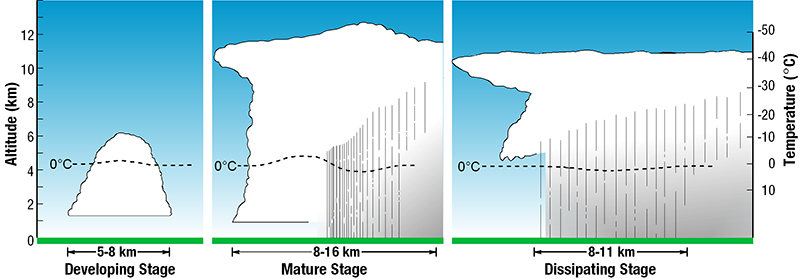
- Life Cycle: Cumulus (updrafts), Mature (updrafts + downdrafts, max hazards), Dissipating (downdrafts dominate).
- Frequency: Globally, about 16 million annually, ~100,000 in the U.S., with 10% classified as severe.
Tornadoes
- Definition: A violently rotating column of air from thunderstorm to ground. Wind speeds can exceed 200 mph (322 km/h).
- Formation: Usually from supercell thunderstorms with strong wind shear and moisture.
- Occurrence: ~1,200 per year in the U.S., mainly in “Tornado Alley.” Classified by the Enhanced Fujita (EF) scale.
Hailstorms
- Definition: Convective storms producing spherical hail through updraft cycles in thunderstorms.
- Hazards: Damage to crops, vehicles, structures, injuries. Hail ≥ 1 inch (2.5 cm) is severe.
- Aviation: Hail can severely damage aircraft, requiring avoidance protocols.
Windstorms
- Definition: Events with sustained high winds or gusts, often without significant precipitation. Includes derechos and downbursts.
- Severity: Damaging gusts: 58–74 mph, very damaging: 75–91 mph.
Winter Storms
- Definition: Produce snow, sleet, freezing rain, or blizzard conditions. Combine frozen precipitation, strong winds, and low temperatures.
- Impacts: Hazardous travel, power outages, hypothermia risk, aviation delays.
Tropical Cyclones
- Definition: Large-scale storm systems over warm oceans, tropical storms, hurricanes, or typhoons.
- Structure: Central low-pressure (eye), spiral rainbands, intense winds.
- Aviation: Disrupts flight operations and airport activities.
Flash Floods
- Definition: Sudden, intense flooding due to heavy rainfall overwhelming drainage.
- Hazard: The deadliest storm-related hazard in the U.S.
Causes and Meteorological Processes
Storms form due to a combination of atmospheric conditions:
- Moisture: Abundant water vapor from evaporation, transpiration, or advection.
- Instability: Warm, moist air near the surface with cooler air above promotes buoyant ascent.
- Lifting Mechanisms: Frontal lifting, orographic (mountains), surface convergence, or convective heating.
- Convection: Rising moist air cools, condenses, and releases latent heat, fueling storm growth.
- Atmospheric Dynamics: Jet streams, pressure gradients, and wind shear organize and intensify storms.
Example: On a hot day, surface heating creates warm, moist air. A cold front lifts it, forming cumulonimbus clouds, updrafts support hail, downdrafts produce rain and wind. Sufficient wind shear may lead to supercell formation and tornadoes.
Meteorological Use of “Storm”
Meteorologists use “storm” to describe hazardous weather from isolated thunderstorms to large cyclones. The term is key for:
- Operational Forecasting: Using models, radar, and observations to track and forecast storms, especially for aviation safety.
- Warnings and Alerts: Issuing watches (favorable conditions) and warnings (imminent or ongoing storms) to the public and aviation sector.
Related Definitions:
- Severe Storm: Meets/exceeds wind, hail, or tornado criteria.
- Watch: Conditions favorable for severe storms.
- Warning: Severe storm confirmed or imminent.
Frequency and Geographic Distribution
- Global Patterns: Most thunderstorms occur in tropical/subtropical regions (Africa, Southeast Asia, Americas). Tropical cyclones develop over warm oceans.
- U.S. Distribution: ~100,000 thunderstorms annually, 10,000 severe. “Tornado Alley” (Central Plains) is most prone due to air mass convergence.
- Trends: NOAA data (1980–2023): 186 weather/storm disasters with $1B+ damages in the U.S., with an increasing trend in recent years.
- Climate Change: IPCC reports indicate more frequent and intense storms as global temperatures and moisture rise.
Hazards and Impacts
Storms affect society with a range of hazards:
Wind
- Direct: Uproots trees, downs power lines, damages buildings, disrupts aviation.
- Secondary: Long-term utility and supply disruptions.
Precipitation
- Flooding: Overwhelms rivers and drainage, causes deaths and property loss.
- Hail: Destroys crops, vehicles, and property, aviation hazard.
- Snow/Ice: Disrupts travel and aviation, increases accident risk.
Lightning
- Direct: Starts wildfires, causes injuries and deaths.
- Aviation: Can damage aircraft electrical systems.
Tornadoes
- Destruction: Concentrated, intense damage to infrastructure and lives.
- Casualties: High loss potential during outbreaks.
Secondary Impacts
- Prolonged Outages: Affect emergency response and essential services.
- Water Contamination: Floods pollute water sources and erode soils.
- Transport Disruption: Delays commerce and emergency help.
- Agricultural Losses: Crop/livestock loss leads to food insecurity.
- Community Impacts: Evacuations, sheltering, and lengthy recovery.
Example:
In December 2021, a tornado outbreak across six U.S. states caused dozens of fatalities and widespread destruction, highlighting the catastrophic potential of severe storms.
Distinctions: Severe vs. Non-Severe Storms
| Criteria | Non-Severe Storm | Severe Storm |
|---|---|---|
| Wind Gusts | < 58 mph (50 knots) | ≥ 58 mph (50 knots) |
| Hail Size | < 1 inch (2.5 cm) | ≥ 1 inch (2.5 cm) |
| Tornadoes | None | Present or possible |
| Precipitation Rate | Moderate | Heavy, risk of flash flooding |
| Hazards | Localized/minor | Damaging winds, hail, tornadoes, floods |
Non-severe storms can still cause localized hazards, but severe storms meet the criteria for official warnings and emergency action.
Watches, Warnings, and Advisories
Meteorological agencies communicate storm risk using:
- Watch: Conditions are favorable for severe storms in a specified area/time.
- Warning: A severe storm is ongoing or imminent, immediate action is required.
- Advisory: Issued for less severe but impactful weather (e.g., heavy rain, gusty winds).
These alerts are disseminated through weather radio, mobile apps, broadcast media, and air traffic control. For aviation, specific advisories like SIGMETs and AIRMETs communicate storm hazards to pilots and controllers.
Conclusion
Storms are a central focus of meteorology due to their frequency, variability, and potential to cause widespread impacts. Understanding the types, causes, and hazards of storms is essential for public safety, aviation operations, and infrastructure resilience. Ongoing advancements in forecasting, observation technology, and emergency communication help mitigate storm risks, but preparedness and awareness remain vital as climate change increases the potential for severe weather events.
For comprehensive storm preparedness or operational weather solutions, contact us or schedule a demo .
Sources:
- National Weather Service (NWS)
- National Oceanic and Atmospheric Administration (NOAA)
- World Meteorological Organization (WMO)
- Intergovernmental Panel on Climate Change (IPCC)
- Federal Aviation Administration (FAA)
- ICAO Annex 3 Meteorological Service for International Air Navigation
Frequently Asked Questions
- What is a storm in meteorological terms?
- A storm is a significant atmospheric disturbance involving hazardous weather conditions such as heavy precipitation (rain, snow, hail), strong winds, and often lightning and thunder. Meteorological agencies define severe storms based on criteria like wind speed, hail size, and tornado occurrence.
- How do meteorologists classify storms?
- Storms are classified by their structure, hazards, and scale. Main types include thunderstorms, tornadoes, hailstorms, windstorms, winter storms, tropical cyclones, and flash floods. Classification is based on observed phenomena and potential impacts.
- What makes a storm 'severe'?
- A storm is considered severe if it produces one or more of the following: wind gusts of at least 58 mph (50 knots), hail at least 1 inch (2.5 cm) in diameter, or a tornado. These criteria are used by the National Weather Service and aviation authorities to trigger warnings.
- Why are storms important in aviation?
- Storms can cause turbulence, wind shear, lightning, hail, reduced visibility, and hazardous runway conditions. These hazards significantly impact aircraft safety during takeoff, en-route flight, and landing, requiring constant monitoring and operational precautions.
- How do meteorological agencies warn the public about storms?
- Agencies issue watches, warnings, and advisories. A 'watch' signals that conditions are favorable for severe storms, while a 'warning' means a dangerous storm is imminent or ongoing. These alerts are distributed via weather radio, apps, and media.
- Where do the most severe storms occur?
- Thunderstorms are most frequent in tropical and subtropical regions. In the United States, the central plains, 'Tornado Alley', see the highest number of severe storms and tornadoes due to unique atmospheric conditions.
- What are the main hazards caused by storms?
- Storms can cause flooding, wind and hail damage, lightning-induced fires, power outages, transportation disruptions, and, in the case of tornadoes, intense localized destruction. Secondary impacts include water contamination and prolonged recovery efforts.
- Can climate change affect storm frequency and severity?
- Yes. Studies by the IPCC and national agencies indicate that a warming climate leads to more intense storms and higher rainfall rates, increasing the risk of severe weather events and associated hazards.
This is a reference entry. TarmacView provides drone inspection services and doesn't sell the equipment or materials described in this glossary.