What is an Aviation Circuit (Traffic Pattern)?
Circuit – Electrical Path or Traffic Pattern (General Aviation)
What is a Circuit (Aviation)?
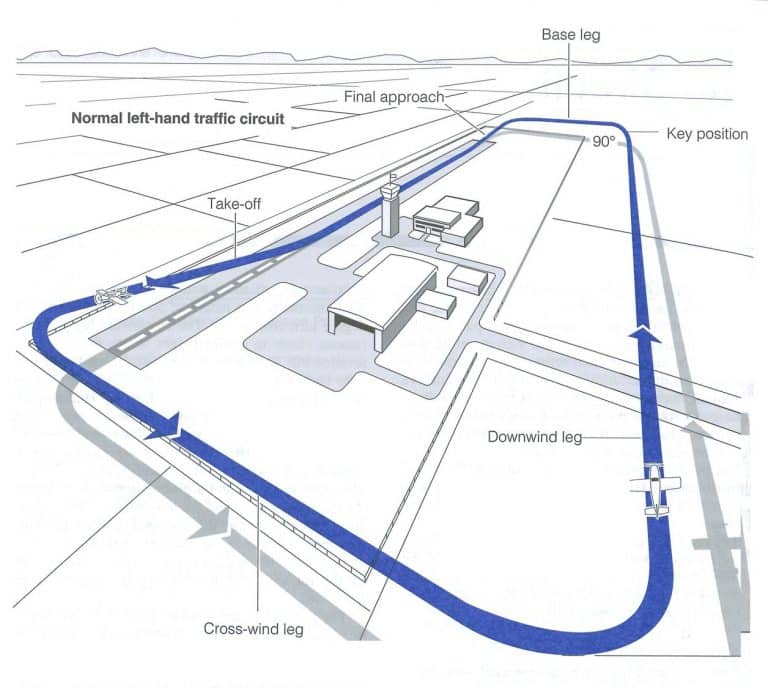
A circuit in aviation, also called an airport traffic pattern, is a precisely defined, rectangular flight track flown around an aerodrome to segregate arriving, departing, and maneuvering aircraft. The circuit is essential to maintaining both order and safety in the vicinity of airports, particularly those without radar or active air traffic control. By adhering to a standardized flow, pilots can anticipate the movements of other aircraft, significantly reducing the risk of collisions and confusion.
According to the International Civil Aviation Organization (ICAO) standards (Annex 2 and Annex 14), the circuit is flown at a specified altitude above ground level (AGL), with turns made in a designated direction (usually left unless stated otherwise). The circuit encompasses five sequential legs, Upwind, Crosswind, Downwind, Base, and Final, each with specific procedures and objectives. These patterns are used at airports worldwide, from remote grass strips to major international hubs, ensuring predictability and a clear framework for communication and separation. The circuit forms the cornerstone of flight training and safe airport operations.
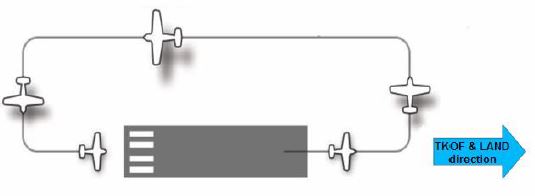
Depiction of a standard left-hand circuit, showing all five legs and the sequence of left turns.
Standard Circuit Pattern – Layout, Direction, and Altitude
Layout & Structure
A standard circuit is a rectangular path made up of five legs: Upwind (Departure), Crosswind, Downwind, Base, and Final. The circuit is established with reference to the primary runway in use.
- Standard Direction: The default is left-hand circuit (all turns to the left), providing the best visibility for pilots. Right-hand circuits are used when necessary for terrain, airspace, or noise abatement and are always published.
- Altitude: Most light aircraft circuits are flown at 1,000 feet AGL, but this varies. Check airport-specific procedures for published altitudes.
| Circuit Leg | Position | Standard Altitude (AGL) | Typical Procedure |
|---|---|---|---|
| Upwind | Takeoff | 0–500 feet | Climb straight ahead |
| Crosswind | Perpendicular | 500–1,000 feet | Climb, clear of obstacles |
| Downwind | Parallel | 1,000 feet | Level flight, pre-landing checks |
| Base | Perpendicular | 500–1,000 feet (descending) | Begin descent, set flaps |
| Final | Aligned | 500 feet to ground | Final approach, landing checklist |
Exceptions and Variations:
Some airports mandate right-hand circuits for certain runways due to obstacles or populated areas. Non-standard altitudes and patterns (such as for helicopters or gliders) are published in the Aeronautical Information Publication (AIP).
Circuit Legs – Detailed Procedures and Functions
Each circuit leg has specific procedures:
1. Upwind Leg (Takeoff/Departure Leg)
- Definition: Extends from takeoff directly ahead along the runway centerline, allowing initial climb and acceleration.
- Key Points: Climb to at least 500 feet AGL before turning, remain aligned with the runway for emergency options, maintain visual scanning for other traffic.
2. Crosswind Leg
- Definition: Perpendicular to the runway, connecting upwind to downwind. Flown once clear of obstacles and at minimum 500 feet AGL.
- Key Points: Brief segment to reach circuit altitude, ensure perpendicular track despite wind, scan for traffic joining downwind.
3. Downwind Leg
- Definition: Longest leg, parallel to and opposite the runway direction.
- Key Points: Level at circuit altitude, perform pre-landing checks (fuel, mixture, gear, flaps, radios), spacing from runway ensures safe glide path in emergencies, communicate intentions.
4. Base Leg
- Definition: Perpendicular to runway, connecting downwind to final.
- Key Points: Descend to about 500 feet AGL, deploy additional flaps, visually clear final for traffic before turning, adjust for wind drift.
5. Final Approach (Final Leg)
- Definition: Aligned with the runway centerline, descending to touchdown.
- Key Points: Stabilize approach (on glide path, correct speed, proper configuration), make final radio call, initiate go-around if approach is not stable or runway is obstructed.
Pattern Entry and Exit Procedures
Non-Towered Aerodromes:
- Enter at pattern altitude, joining downwind at a 45° angle.
- Overfly the field 500 feet above circuit altitude to check for traffic, then descend and join as standard.
- Make radio calls at entry, downwind, base, and final.
Towered Aerodromes:
- Entry and exit as instructed by ATC (may be direct to base, straight-in final, etc.).
- Obtain clearance before entering control zone or runway.
Pattern Exit:
- Exit the pattern straight ahead or at 45° from downwind at circuit altitude.
- Announce intentions, maintain vigilance for other traffic.
Visual representation of standard pattern entry (45° to downwind) and exit routes.
Safety Considerations and Common Mistakes
Collision Avoidance
- Visual scanning is essential, compensate for airframe blind spots.
- Use standard radio calls, but don’t rely solely on radios.
- Maintain proper spacing, especially with mixed aircraft types.
Wind Correction
- Adjust headings for wind drift on each leg, especially base and final.
- Use crab or sideslip techniques to maintain ground track.
Go-Around / Missed Approach
- Initiate go-around if approach is unstable, runway is not clear, or unsure of situation.
- Apply power, climb, and re-enter the circuit at pattern altitude.
Common Mistakes
- Entering at wrong altitude or position.
- Turning too early/late, disrupting traffic flow.
- Flying non-standard patterns without authorization.
- Failing to scan visually or communicate effectively.
Circuit Use Cases and Real-World Examples
Example 1: Standard Left-Hand Circuit at a Non-Towered Field
A Cessna 172 departs Runway 27, climbs to 500 feet AGL before turning left to crosswind, then to downwind at 1,000 feet AGL, performs pre-landing checks, descends on base, and turns to final for landing.
Example 2: Pattern Entry from Upwind Side
An aircraft overflies the field 500 feet above pattern altitude, checks for traffic, descends clear of circuit, joins downwind at 45°, and integrates with existing traffic.
Example 3: Right-Hand Pattern Due to Obstacle
At an airport with terrain to the left of Runway 09, a right-hand circuit is flown, all turns are to the right, procedures for altitude and communication remain unchanged.
Mnemonics and Visual Reference Aids
- Mnemonic: U-C-D-B-F (Upwind, Crosswind, Downwind, Base, Final) to memorize the sequence.
- Visual Aids: Segmented circles and L-shaped markers on airfields indicate pattern direction and entry/exit points.
Glossary of Circuit-Related Terms
- Downwind Leg: Flown parallel to and opposite the landing direction, used for checks and spacing.
- Base Leg: Perpendicular segment connecting downwind to final.
- Circuit Altitude: Published altitude for circuit flight, usually 1,000 feet AGL for light aircraft.
- Upwind Leg: Initial climb after takeoff, aligned with runway heading.
- Pattern Direction: Specifies left (standard) or right turns in the circuit.
References:
- ICAO Annex 2: Rules of the Air
- ICAO Annex 14: Aerodromes
- ICAO Doc 4444: PANS-ATM
- FAA Aeronautical Information Manual
- National Aeronautical Information Publications (AIP)
For further reading, consult your local aerodrome’s AIP entry and flight training manuals.
Frequently Asked Questions
- What is a circuit (traffic pattern) in aviation?
- A circuit, or traffic pattern, is a standardized, rectangular flight path flown around an airport to sequence arrivals and departures. It separates traffic, improves predictability, and enhances safety, especially at airports without radar or active air traffic control. The circuit consists of five legs, upwind, crosswind, downwind, base, and final, flown at a specified altitude and direction.
- Why are left-hand circuits standard in aviation?
- Left-hand circuits are standard because pilots typically sit on the left side of the cockpit, providing optimal visibility for left turns and better monitoring of other traffic. Right-hand circuits are only used when required for terrain, obstacles, or noise abatement, and are always published in airport information documents.
- What altitude is typically used for the circuit?
- Most light aircraft fly the circuit at 1,000 feet above ground level (AGL). Turbine aircraft may use 1,500 feet AGL, while some airports specify different altitudes for noise or terrain. Always check the published procedures for the specific airport.
- How do pilots enter and exit the traffic pattern?
- At non-towered airports, pilots generally enter the circuit at pattern altitude, joining the downwind leg at a 45° angle. Exiting is done by departing straight out or at a 45° angle from downwind. At towered airports, entry and exit are as instructed by ATC.
- What are common mistakes in the circuit?
- Common mistakes include entering at the wrong altitude or position, making turns too early or late, flying non-standard patterns, neglecting visual scanning, and failing to communicate intentions. These can lead to traffic conflicts and reduce safety.
This is a reference entry. TarmacView provides drone inspection services and doesn't sell the equipment or materials described in this glossary.