What is Red (Color at the Long Wavelength End of the Visible Spectrum)?
Red – Color at the Long Wavelength End of the Visible Spectrum (Photometry)
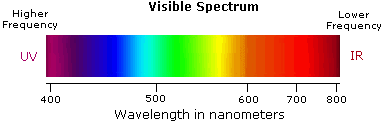
Red is the color perceived at the upper, long-wavelength boundary of the visible spectrum, corresponding to electromagnetic radiation with wavelengths between 620 and 780 nanometers (nm). It marks the transition from visible light to infrared and is fundamental in color science, photometry, safety, and technology.
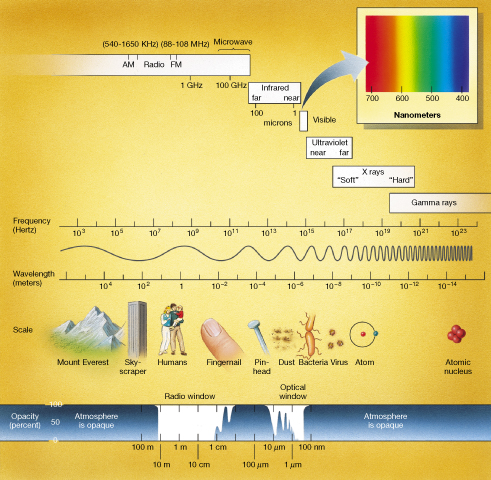
Red in the Electromagnetic Spectrum
The visible spectrum is a narrow band within the electromagnetic spectrum, and red is its long-wavelength anchor. Red light’s wavelength places it just before infrared, and its frequency ranges from approximately 4.3 × 10¹⁴ Hz to 4.8 × 10¹⁴ Hz. The energy of a red photon is lower than that of shorter-wavelength colors, calculated using the equation E = hν (where h is Planck’s constant, ν is frequency).
Table: Wavelength Ranges for Visible Colors
| Color | Wavelength Range (nm) |
|---|---|
| Violet | 400 – 420 |
| Indigo | 420 – 440 |
| Blue | 440 – 490 |
| Green | 490 – 570 |
| Yellow | 570 – 585 |
| Orange | 585 – 620 |
| Red | 620 – 780 |
Beyond 780 nm lies the infrared, invisible to the unaided human eye.
Colorimetry and Standards
Authoritative bodies such as the International Commission on Illumination (CIE) and the International Civil Aviation Organization (ICAO) rigorously define the chromaticity and wavelength boundaries for red, especially for critical applications like aviation lighting and safety signals. In the CIE 1931 color space, standard red chromaticity coordinates are around (x, y) = (0.640, 0.330). In ICAO Annex 14, red is used for warning lights and obstruction markers, with specific boundaries ensuring visibility and international standardization.
Table: ICAO Chromaticity Specification for Aviation Red
| Chromaticity Coordinate | Minimum | Maximum |
|---|---|---|
| x | 0.670 | 0.735 |
| y | 0.265 | 0.335 |
| Dominant Wavelength | 620 nm | 780 nm |
Physical Origins: Wavelength, Frequency, and Energy
Red light’s physical properties are governed by the relationship c = λν (speed of light = wavelength × frequency). Its lower photon energy (about 1.6–2.0 electron volts) has practical implications:
- Less atmospheric scattering than blue/violet, making red effective for warning signals and sunsets.
- Efficient penetration through fog and haze, critical in aviation and transportation.
Human Perception of Red
Human vision is trichromatic, relying on three types of cone cells:
- L-cones: Sensitive to long wavelengths (peak ~564–580 nm) – responsible for red.
- M-cones: Medium wavelengths (green).
- S-cones: Short wavelengths (blue).
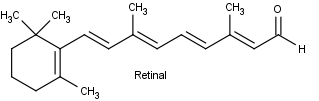
Red is perceived when L-cones are predominantly stimulated. The CIE standard observer models these sensitivities, forming the basis for colorimetry and digital color reproduction.
Red in Photometric Measurement
Photometry quantifies light intensity in specific wavelength bands. The Johnson-Cousins UBVRI system is widely used in astronomy, the R-band (600–750 nm) isolates red emissions.
Table: Johnson-Cousins UBVRI Photometric Passbands
| Passband | Wavelength Range (nm) | Center (nm) | Color Region |
|---|---|---|---|
| U | 300 – 400 | ~365 | Ultraviolet |
| B | 400 – 500 | ~440 | Blue |
| V | 500 – 600 | ~550 | Green/Visual |
| R | 600 – 750 | ~700 | Red |
| I | 750 – 900 | ~850 | Near-infrared |
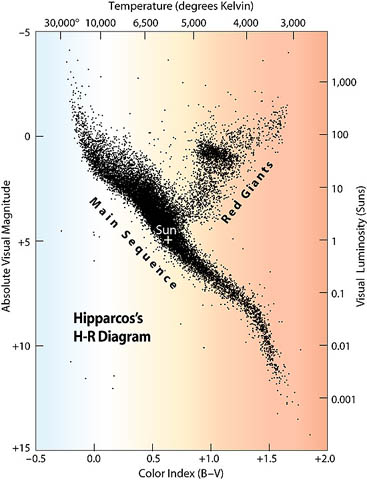
Calibration is referenced to standard stars (e.g., Vega), and the (V–R) color index is used to estimate temperatures and properties of stars, especially red giants and supergiants.
Chemistry and Materials Science of Red
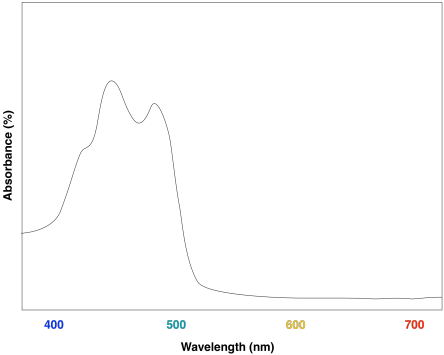
Red color in materials arises from molecular structures that absorb blue/green light and reflect/transmit red. Key contributors include:
- Beta-carotene, lycopene, anthocyanins: Natural pigments in plants and foods.
- Azo dyes, synthetic chromophores: Used in industrial dyes, coatings, and textiles.
- Inorganic pigments: Iron oxide (Fe₂O₃), cadmium selenide (CdSe), providing durable reds in paints and plastics.
Red in Lighting and Display Technologies
Red LEDs (620–650 nm) are standard in indicators, aviation lights, automotive signals, and digital displays. Materials like gallium arsenide phosphide (GaAsP) are engineered for efficient red emission.
In digital displays (LCD, OLED, CRT), red is one of the three additive primaries (RGB) that produce the full color gamut. Standardized chromaticity ensures accurate color reproduction across devices.
Aviation lighting uses red for cockpit illumination and emergency signals, with strict adherence to photometric and chromaticity criteria for safety and night vision preservation.
Red in Signal and Safety Applications
Red is the universal color for warning and prohibition, especially in transportation and aviation. ICAO and FAA define precise requirements for chromaticity, intensity, and flash rates for red signals (e.g., obstruction lights, stop bars). These standards ensure red is highly visible and unmistakable, even in adverse conditions.
Red’s long wavelength and atmospheric transmission make it ideal for:
- Marking obstacles (towers, runways, tall buildings)
- Emergency stop signals
- Fire equipment markers
Red in Astronomy
In astronomy, red photometry is crucial for characterizing cool stars (red giants, supergiants) and identifying features like H-alpha emission (656.3 nm) in nebulae and star-forming regions. Color indices combining red and visual bands provide insights into stellar temperature, age, and chemical composition.
Red in the Environment and Nature
Red features prominently in natural phenomena:
- Red sunsets and sunrises: Long wavelengths penetrate atmospheric particles, scattering blue/green and leaving red hues.
- Auroras: Red auroras (630 nm) arise from high-altitude oxygen emissions.
- Biological coloration: Red pigments in plants (anthocyanins, carotenoids) attract pollinators and protect against UV, in animals, red can signal warning or mating readiness.
Summary Table: Key Properties of Red
| Property | Value/Description |
|---|---|
| Wavelength | 620–780 nm |
| Frequency | 4.3–4.8 × 10¹⁴ Hz |
| Energy | 1.6–2.0 eV per photon |
| CIE Chromaticity | (x, y) ≈ (0.640, 0.330) |
| ICAO Red | Strict chromaticity/intensity boundaries |
| Primary Color | Additive (RGB) |
References
- CIE (International Commission on Illumination). “Colorimetry.” CIE Publication No. 15.
- ICAO Annex 14 – Aerodromes, International Civil Aviation Organization.
- Johnson, H.L., & Morgan, W.W. (1953). “Fundamental stellar photometry for standards of spectral type on the revised system of the Yerkes spectral atlas.” Astrophysical Journal.
- Nassau, K. (1983). “The Physics and Chemistry of Color.” Wiley.
- Wikipedia contributors. “Red.” https://en.wikipedia.org/wiki/Red
Red is more than just a color, it is a scientific, technological, and cultural anchor at the edge of human vision, essential for measurement, safety, and communication.
Frequently Asked Questions
- What is the wavelength range of red in the visible spectrum?
- Red occupies approximately 620–780 nanometers in the visible spectrum, marking the long-wavelength (low-frequency) end of human-visible light. This boundary is recognized by scientific standards such as those from the CIE and ICAO.
- Why is red used for safety and warning signals in aviation?
- Red’s long wavelength penetrates atmosphere well and is easily distinguished by the human eye, even at low intensities. International standards (ICAO Annex 14) specify exact chromaticity for red signals to prevent confusion and maximize safety.
- How does the human eye perceive red?
- Red is perceived when long-wavelength (L) cones in the retina are stimulated by light in the 620–780 nm range. These cones' photopigments trigger nerve impulses that the brain interprets as red.
- What is the role of red in photometry and astronomy?
- In photometry, red is measured using dedicated filters (e.g., Johnson-Cousins R-band) to quantify light intensity and color indices, essential for calibrating instruments and characterizing celestial objects like red giants.
- What materials produce red color in chemistry and materials science?
- Red color arises from chromophores with specific molecular structures (e.g., beta-carotene, azo dyes) and inorganic pigments (e.g., iron oxide, cadmium selenide), which absorb blue/green light and reflect red.
This is a reference entry. TarmacView provides drone inspection services and doesn't sell the equipment or materials described in this glossary.