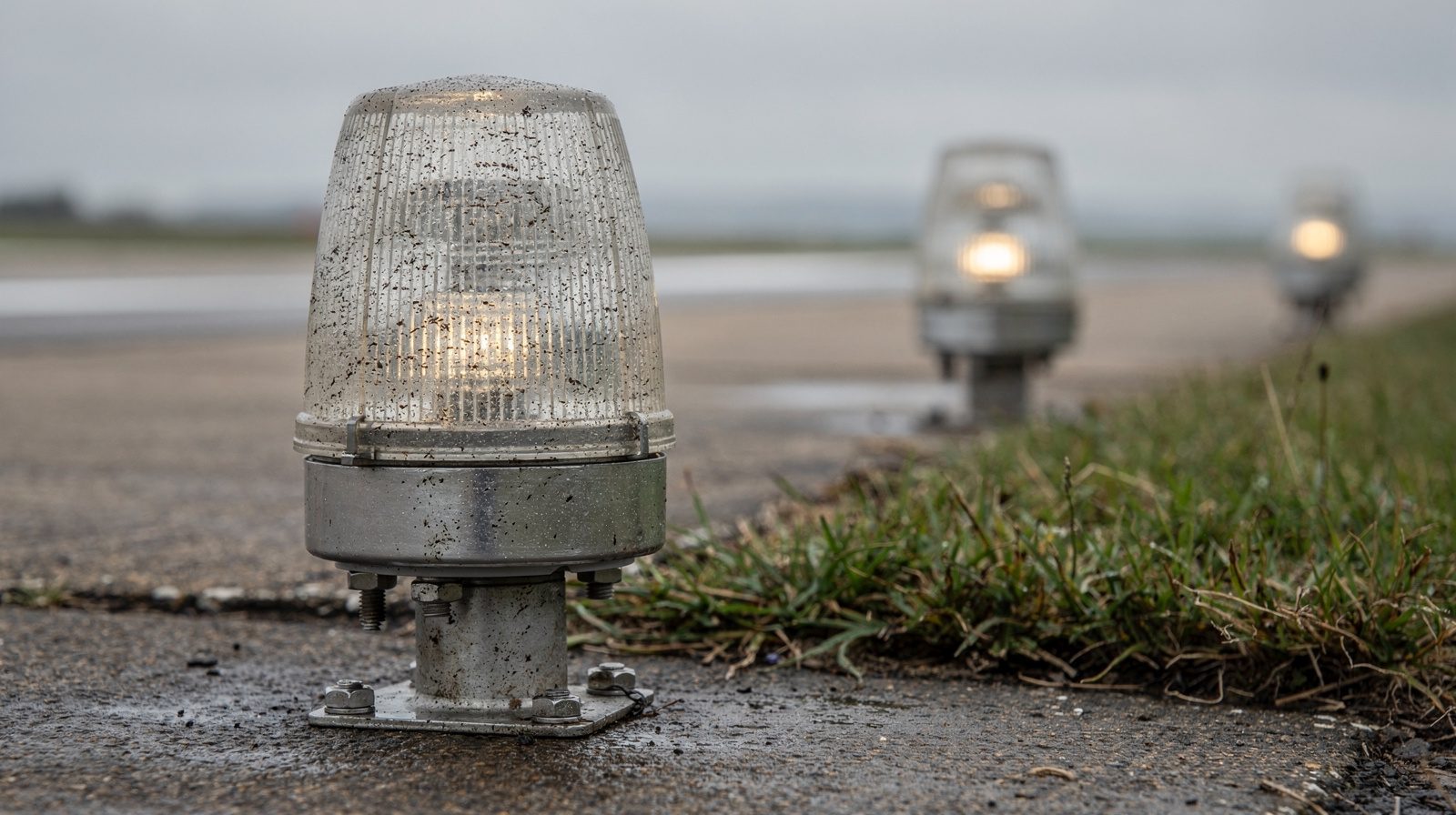
What is Lamp Failure and Lighting System Maintenance?
Lamp Failure, Cessation of Lamp Operation, and Maintenance in Lighting Systems
Lighting systems are fundamental to safety and functionality in environments ranging from airport runways to operating theatres. Lamp failure, where a lamp ceases to emit required light, can compromise safety, productivity, and regulatory compliance. Understanding failure mechanisms, diagnostic techniques, and maintenance strategies is essential for system reliability and compliance with standards such as those set by the International Civil Aviation Organization (ICAO), the Federal Aviation Administration (FAA), and other authorities.
Key Definitions
Lamp Failure
Lamp failure occurs when a lamp no longer emits light within the specified parameters. This may be due to sudden (catastrophic) failure, like a filament break, or gradual (parametric) failure, such as lumen depreciation in LEDs or phosphor degradation, where output drops below regulatory thresholds (e.g., 70% of initial output).
Categories of Lamp Failure:
- Catastrophic: Abrupt, complete loss of light (e.g., filament break, arc tube rupture).
- Parametric: Gradual decline, with output falling below minimum standards.
- Intermittent: Sporadic operation, often due to loose connections or unstable power.
Regulatory Context:
ICAO and similar bodies require real-time monitoring and prompt replacement of failed lamps in safety-critical systems, such as runway and taxiway lights. Maintenance is scheduled to preempt unscheduled failures, ensuring compliance and safety.
Lamp Failure Types Table
| Failure Type | Description | Detection Method |
|---|---|---|
| Catastrophic (Abrupt) | Complete loss of light output | Visual, automated sensors |
| Parametric (Gradual) | Output below threshold (e.g., L70, L80, 50%) | Photometric measurement |
| Intermittent | Sporadic due to connection or power issues | Automated monitoring |
Cessation of Lamp Operation
Cessation of lamp operation is the point at which a lamp stops emitting light, whether from permanent failure or temporary interruption. For regulated systems, it is typically defined as failing to provide the minimum required photometric output.
- Permanent cessation: End-of-life failure (burnt-out filament, failed driver).
- Temporary cessation: Power interruption, loose contact.
In airfield lighting, cessation is automatically detected, logged, and triggers maintenance action per stringent timelines.
Lighting Maintenance
Lighting maintenance is the systematic process of keeping lighting systems operational, efficient, and compliant. It includes:
- Inspection and cleaning
- Functional and photometric testing
- Lamp and component replacement
- Calibration and recordkeeping
Best Practices:
- Routine cleaning of luminaires and optics
- Scheduled group relamping (especially in critical systems)
- Inspection of sockets, wiring, and control gear
- Predictive maintenance using sensors and networked controls
Regulatory Note:
ICAO, FAA, and similar standards define maintenance intervals and procedures, particularly for navigational and emergency lighting.
Lamp Life
Lamp life refers to the expected operational period before failure or unacceptable lumen depreciation. Expressed as average rated life (e.g., 50% failure in a test group) or lumen maintenance (L70 = hours at which output is 70% of initial).
| Lamp Type | Typical Life | Failure Mode/Metric |
|---|---|---|
| Incandescent | 750–2,500 hours | Catastrophic |
| Fluorescent | 7,000–30,000 hours | L70, catastrophic |
| Metal Halide | 6,000–20,000 hours | Catastrophic, parametric |
| LED | 25,000–100,000+ hrs | L70, L80, L90 |
| Halogen | 2,000–5,000 hours | Catastrophic |
In Practice:
Critical systems often adopt group relamping before end-of-life to maintain uniformity and reduce downtime.
Lumen Maintenance
Lumen maintenance is a measure of how well a lamp retains its initial light output over time. For LEDs, the most common metric is L70 (70% of initial output). Lumen maintenance is affected by:
- Lamp/driver quality
- Thermal management
- Power quality
- Environmental conditions
Regulatory Impact:
Lamp replacement strategies and compliance checks rely on accurate lumen maintenance data.
Maintenance Factor (MF)
Maintenance factor (MF) is a multiplier used in lighting design to ensure sufficient illumination throughout the maintenance cycle, despite aging, dirt, and failures.
MF = LLMF × LMF × LSF × RSMF
- LLMF: Lamp Lumen Maintenance Factor
- LMF: Luminaire Maintenance Factor
- LSF: Lamp Survival Factor
- RSMF: Room Surface Maintenance Factor
Sample Calculation:
If LLMF = 0.9, LMF = 0.93, LSF = 0.98, RSMF = 0.95,
then MF ≈ 0.78
Usage:
Factored into design calculations to ensure compliance at all times.
Lighting System Components
Key components in lighting systems include:
- Lamp: The light-emitting source (incandescent, LED, HID, etc.)
- Luminaire: Enclosure supporting the lamp, optics, and electrical connections
- Ballast/Driver: Regulates supply to the lamp
- Control Gear: Switches, dimmers, sensors, controllers
- Wiring and Sockets: Ensures safe, reliable connections
Failures in any component can result in lamp failure or degraded performance.
Causes and Mechanisms of Lamp Failure
Electrical Causes
- Power supply fluctuations: Surges, sags, or harmonics damaging lamps or drivers
- Ballast/driver failure: Overheating, aging, or voltage spikes
- Socket/switch faults: Corrosion, loose connections
- Wiring faults: Damaged insulation, incorrect connections
Example:
Runway lighting systems use automated monitoring to detect and isolate electrical faults quickly.
Mechanical Causes
- Vibration/shock: Filament breakage (incandescent, halogen)
- Thermal cycling: Weakening of glass envelopes, seals, and solder joints
- Physical impact: Breakage or latent damage
- Installation errors: Improper handling, overtightening
Environmental Causes
- Temperature extremes: Shorten lamp/driver life, hinder starting (fluorescent, HID)
- Humidity/moisture: Corrosion, electrical shorts
- Dust/dirt: Blocks light, increases heat, accelerates aging
- Chemicals: Degrade materials, cause insulation failure
Protection:
Enclosures with high IP ratings and environmental controls are vital for reliability.
Lamp-Specific Failure Modes
| Lamp Type | Common Failure Modes | Typical Lifespan |
|---|---|---|
| Incandescent | Filament breakage, glass rupture | 750–2,500 hours |
| Fluorescent | Cathode depletion, starter/ballast failure, gas loss | 7,000–30,000 hours |
| HID (Metal Halide) | Arc tube rupture, electrode wear, ballast failure | 6,000–20,000 hours |
| LED | Driver failure, phosphor degradation, solder fatigue | 25,000–100,000 hours |
| Halogen | Filament evaporation, quartz blackening | 2,000–5,000 hours |
Diagnosis and Troubleshooting Procedures
Step-by-Step Diagnostic Checklist
- Visual Inspection: Check for damage, soiling, loose parts, corrosion.
- Power Verification: Test supply voltage, check breakers, fuses, switches.
- Component Testing: Replace lamp, test/replace ballasts, drivers, starters.
- Control System Evaluation: Review settings, sensor inputs, network status.
- Environmental Assessment: Look for heat, moisture, dust, or vibration issues.
Example:
A non-functioning fluorescent lamp may require sequential replacement of the lamp, starter, and ballast, along with socket and wiring inspection.
Typical Symptoms and Root Causes
| Symptom | Probable Causes |
|---|---|
| No light output | Power issue, socket/ballast/driver/lamp failure |
| Flickering/intermittent | Loose contacts, voltage instability, failing gear |
| Reduced output | Lumen depreciation, dirty optics, voltage drop |
| Overheating fixture | Incompatible lamp, blocked ventilation |
Special Considerations by Lamp Type
- Metal Halide: Listen for buzzing, inspect for arc tube darkening. Use group relamping.
- LEDs: Check for color shift, dimming, total failure (often driver-related).
- Medical/Surgical: Confirm color temperature, uniformity, and backup function.
Maintenance Practices and Preventive Strategies
Proactive maintenance improves reliability, reduces costs, and ensures compliance:
- Routine maintenance: Scheduled inspections, cleaning, and lamp replacement.
- Preventive maintenance: Group relamping, component testing, and environmental control.
- Predictive maintenance: Sensors and smart systems detect impending failure, triggering alerts.
Best Practices:
- Follow manufacturer and regulatory guidance for critical applications.
- Use only compatible, high-quality replacement components.
- Maintain detailed maintenance logs for regulatory compliance.
Regulatory and Industry Standards
- ICAO Annex 14: Specifies airfield lighting failure rates, response times, and maintenance.
- FAA Advisory Circulars: U.S. standards for airport lighting and maintenance.
- IEC/EN Standards: Define lamp life, photometric testing, and safety.
- NEMA Guidelines: Address lamp types and enclosure ratings for safety.
Compliance:
Adhering to these standards ensures safe, effective, and reliable lighting in regulated environments.
Conclusion
Lamp failure is an inevitable reality in all lighting systems, but its risks can be minimized through a combination of robust design, systematic maintenance, and regulatory compliance. Understanding failure mechanisms, monitoring lamp status, and applying preventive and predictive strategies ensures that lighting systems in critical environments, such as airports, hospitals, and industrial facilities, remain reliable, safe, and compliant.
Contact us to discuss how advanced monitoring, smart maintenance, and high-performance components can optimize your facility’s lighting reliability.
Frequently Asked Questions
- What is lamp failure?
- Lamp failure is when a lamp ceases to emit light within required parameters, due to electrical, mechanical, or environmental causes. It can be abrupt (catastrophic) or gradual (parametric, such as lumen depreciation). Regulatory standards like ICAO define lamp failure as falling below specific photometric output.
- How is lamp failure detected in critical environments?
- In environments like airports or hospitals, lamp failure is detected through automated monitoring and control systems that alert maintenance teams in real time. Visual inspections and periodic photometric measurements also play a role, especially for parametric failures.
- What are the main causes of lamp failure?
- Common causes include electrical issues (power surges, ballast or driver failure), mechanical stresses (vibration, shock), environmental factors (temperature extremes, humidity, dust), and lamp-specific degradation (filament breakage, phosphor wear in LEDs, cathode depletion in fluorescents).
- What is the difference between catastrophic and parametric lamp failure?
- Catastrophic failure is a sudden loss of light (e.g., filament breakage, arc tube rupture), while parametric failure is a gradual reduction in output below acceptable thresholds (e.g., lumen depreciation in LEDs). Both require action under regulated standards.
- What is maintenance factor (MF) and why is it important?
- Maintenance factor is a calculated value in lighting design that accounts for reductions in output due to lamp aging, dirt, and component degradation. It ensures lighting systems deliver minimum required illumination throughout their service life, factoring into compliance and safety.
- How are lamp failures addressed in regulated environments like airports?
- Regulations (e.g., ICAO Annex 14) specify acceptable failure rates and mandatory response times for lamp replacement in airfield lighting. Automated systems track lamp status, and maintenance protocols require prompt intervention to maintain safety and compliance.
- What preventive maintenance strategies improve lighting reliability?
- Routine inspections, cleaning, group relamping, component testing, and predictive maintenance using smart sensors help detect issues early and extend lighting system life. Maintenance schedules are based on lamp type, criticality, and environment.
This is a reference entry. TarmacView provides drone inspection services and doesn't sell the equipment or materials described in this glossary.