What is PCL (Pilot Controlled Lighting)?
PCL – Pilot Controlled Lighting (Airport Lighting)
Overview
Pilot Controlled Lighting (PCL) is a radio-based system enabling pilots to activate and adjust airport lighting from their aircraft. This technology is essential at nontowered or unattended airports, particularly during nighttime or low-visibility conditions, when no personnel are available to operate airfield lights. By giving pilots direct control, PCL promotes safety, accessibility, and cost efficiency by ensuring lights are only used as needed.
What is Pilot Controlled Lighting?
PCL is a system that allows pilots to control airport lighting, such as runway, taxiway, and approach lights, using their aircraft’s VHF radio. The process involves transmitting a series of microphone clicks (presses of the push-to-talk button) on a designated frequency. The airport’s PCL receiver interprets these clicks and activates the appropriate lights for a preset period (typically 15 minutes). Some systems also allow pilots to adjust light intensity to match current conditions.
In the US, PCL operation is standardized under the FAA’s L-854 specification. In Canada, it is known as ARCAL (Aircraft Radio Control of Aerodrome Lighting). The system is common at general aviation airports, particularly those lacking the staff or budget for around-the-clock operations.
How Does PCL Work?
- Frequency Selection: The pilot tunes the aircraft’s radio to the published PCL frequency (often the CTAF or UNICOM frequency).
- Activation: The pilot keys the microphone a prescribed number of times in a short period (e.g., 7 clicks in 5 seconds).
- Lighting Response: The PCL receiver at the airport decodes the input and turns on the lights for a preset period.
- Intensity Adjustment (Type K): Some systems allow intensity changes by varying the number of clicks (e.g., 3 for low, 5 for medium, 7 for high).
- Automatic Shutoff: Lights turn off automatically after the preset time unless reactivated.
PCL systems are designed for universal compatibility with general aviation aircraft radios and are guided by international standards such as ICAO Annex 14.
Key Components of a PCL System
- Radio Receiver/Decoder: Listens for the activation pattern and connects to the lighting system.
- Relay Unit: Switches the power to the airfield lighting circuits.
- Lighting Infrastructure: Includes runway, taxiway, and approach lights, as well as optional components like windsock or perimeter lighting.
- User Interface: For maintenance and diagnostics, often a touchscreen or web dashboard.
- Power Management: Protects circuits, manages energy use, and provides automatic recovery after outages.
- Remote Diagnostics & Analytics: Advanced systems offer remote monitoring, status alerts, and data analytics for maintenance and compliance.
Types of PCL Systems
- Type J: Basic system, 5 microphone clicks activate lights at a preset intensity (on/off only).
- Type K: Advanced, allows intensity selection with 3 (low), 5 (medium), or 7 (high) clicks. May allow separate control of lighting circuits.
Always refer to the airport’s documentation to determine the available system and activation method.
Lighting Controlled by PCL
Common lighting elements under PCL control include:
- Runway Edge Lights: Define the usable runway at night or in poor visibility.
- Runway End Identifier Lights (REILs): High-intensity flashing lights at runway thresholds.
- Threshold Lights: Mark runway ends with green/red lights.
- Taxiway Edge Lights: Blue lights outlining taxi routes.
- Approach Lighting Systems (ALS): Arrays extending from runway thresholds for approach guidance.
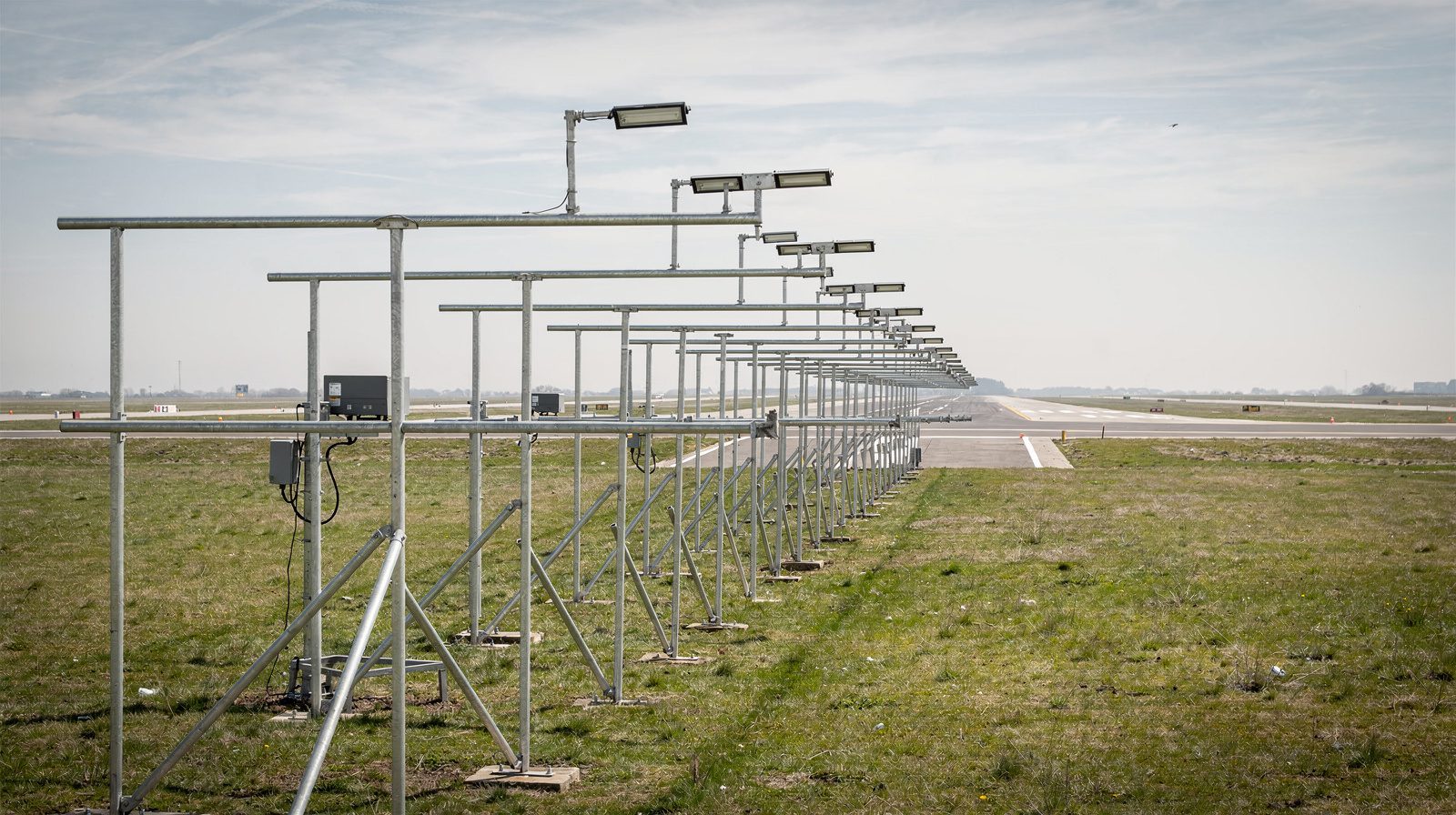
- VASI/PAPI: Visual indicators for approach slope guidance.
- Windsock Lighting: Illuminates windsocks for wind direction at night.
- Perimeter/Security Lighting: In some configurations, for overall airfield visibility.
Practical Scenarios
- Night Arrivals: Pilots arriving at a dark, nontowered airport activate the lights as they approach, enabling safe landing and taxiing.
- IFR Approaches: In poor visibility, pilots use PCL to set maximum intensity for clear visual cues.
- Cost Management: Small airport operators reduce power usage and costs by using PCL instead of continuous lighting.
- Simulator Training: Student pilots practice PCL procedures in flight simulators to gain real-world readiness.
Step-by-Step: Using PCL
- Check Documentation: Confirm PCL frequency and procedure in the airport’s Chart Supplement or NOTAMs.
- Tune Radio: Set COM1 to the PCL frequency.
- Activate: Key the mic the specified number of times (per system type) within 5 seconds.
- Observe: Confirm lights turn on. Retry if necessary.
- Adjust/Reactivate: For intensity or to reset the timer, repeat the activation sequence as needed.
- Monitor: Some systems flash warning lights before automatic shutoff, reactivate if more time is needed.
Advanced Features
Modern PCL systems may offer:
- Remote Web Activation and Diagnostics
- Automatic Gain Control for Signal Reliability
- Data Logging and Analytics
- Test Modes for Maintenance
- Auto Recovery after Power Outages
- Compliance with FAA, ICAO, and Transport Canada standards
These features enhance reliability, operational efficiency, and ease of maintenance.
Benefits of PCL
- Safety: Pilots can access lighting whenever needed, reducing the risk of accidents during night or low-visibility operations.
- Cost Savings: Lights only operate when needed, lowering energy and staffing costs.
- Environmental: Reduces unnecessary light pollution and energy usage.
- Flexibility: Airports can remain accessible outside staffed hours.
- Simplicity: Universally compatible with standard aircraft radios, easy for pilots to use.
Regulatory Standards
PCL systems are regulated under:
- FAA L-854 (US)
- ARCAL (Canada)
- ICAO Annex 14 (International)
- FAA Advisory Circular 150/5345-49
Conclusion
Pilot Controlled Lighting is a vital technology for general aviation and smaller commercial airports. By empowering pilots to manage airfield lighting as needed, PCL enhances safety, reduces costs, and makes airports more accessible, especially after hours or in remote areas.
For airports seeking to improve safety and efficiency, upgrading to a modern PCL system is a proven, cost-effective solution.
For more details or to explore PCL installation and upgrades, contact our team or schedule a demo today.
Frequently Asked Questions
- How does Pilot Controlled Lighting (PCL) work?
- PCL systems allow pilots to activate and adjust airfield lighting by keying their aircraft’s radio microphone a specific number of times on a published frequency. The system’s receiver decodes the clicks and turns on the lights for a preset period, with some systems allowing pilots to select the light intensity.
- Where is PCL commonly used?
- PCL is most commonly found at nontowered or unattended airports, especially those with limited staff or budget. It is standard at many general aviation facilities in the US, Canada, and worldwide, making airfields accessible and safe during nighttime or low-visibility periods.
- What lighting can be controlled by PCL?
- PCL can control a range of airfield lighting including runway edge lights, threshold lights, taxiway lights, approach lighting systems (ALS), windsock lights, and sometimes security or perimeter lights. The exact configuration is detailed in the airport’s documentation.
- What is the difference between Type J and Type K PCL systems?
- Type J PCL systems provide simple on/off activation at a preset intensity, while Type K systems allow pilots to select between multiple intensity levels (low, medium, high) using different microphone click sequences.
- How do pilots know which frequency and method to use?
- Pilots must refer to the airport’s official documentation, such as the Chart Supplement, NOTAMs, or approach plates, to identify the correct frequency and activation procedure for the PCL system at a given airport.