What is Pulsed Light?
Pulsed Light – Light Emitting Brief Flashes in Airport Lighting
Definition
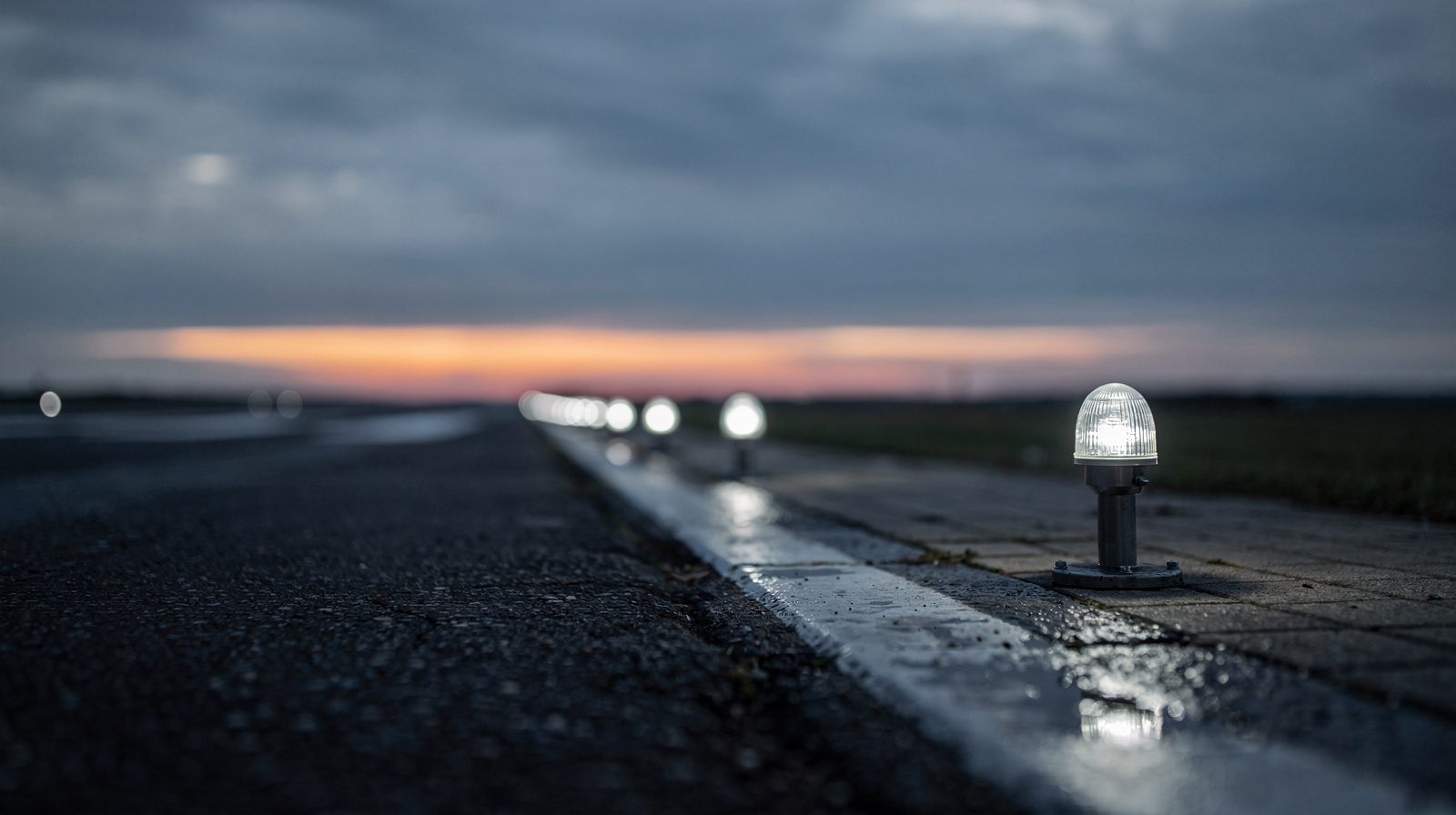
Pulsed light designates a lighting system engineered to emit rapid, controlled flashes or bursts of light at defined intervals instead of a continuous beam. In airport and aviation environments, pulsed light, also referenced as flashing, strobe, or blinking light, is a critical tool for maximizing conspicuity, enabling hazard signaling, and demarcating navigation boundaries. These systems are integral to airfield lighting schemes, serving both as a visual cue for pilots and as a safety mechanism to highlight runways, taxiways, obstructions, and moving vehicles. The core principle lies in the human eye’s increased sensitivity to changes in luminance, which enables pulsed lights to stand out against both ambient and continuous background illumination. This enhances both immediate recognition and long-range detection. Regulatory bodies such as the FAA and ICAO mandate specific parameters for pulsed lighting, encompassing flash rate, pulse duration, intensity, and chromaticity, to ensure uniformity and effectiveness worldwide. Pulsed light is widely deployed in anti-collision systems, obstruction marking, runway end identification, and specialized wildlife deterrence applications. Its design, measurement, and maintenance require precise compliance with international standards to guarantee operational safety and reliability under all visibility conditions.
Technical Principles of Pulsed Light
What Is Pulsed (Flashing) Light?
Pulsed or flashing light is a form of temporal light modulation in which the luminous output is intentionally varied between ‘on’ and ‘off’ states, or between high and low intensity, at predefined intervals. Key parameters include:
- Frequency (Hertz/flashes per minute): number of flashes per time unit.
- Pulse Duration: length of each flash (usually milliseconds).
- Intensity: brightness, measured in candela (cd).
- Amplitude: peak brightness during the flash.
- Duty Cycle: ratio of the on-time to the total cycle.
Effective intensity is a calculated value combining instantaneous intensity and temporal characteristics, representing the perceived brightness to observers.
Technology
- Xenon Flash Tubes: Used for high-intensity, high-reliability strobes.
- Rotating Beacons: Mechanical rotation creates a pulsed effect.
- LED Arrays: Allow precise control over flash patterns, intensity, and color, and are increasingly standard for new installations due to efficiency and longevity.
Physical and Physiological Principles
Humans are more sensitive to sudden changes in light, especially between 1–4 Hz (60–240 flashes per minute). Pulsed lights in these ranges can be detected up to five times more reliably than steady lights, particularly in peripheral vision and low-contrast scenarios. This is critical for pilots and ground staff working in visually complex airfield environments.
Careful design avoids visual fatigue, distraction, or afterimages, all of which could compromise safety.
Control Methods
- Fixed Systems: Static settings for frequency and intensity.
- Programmable Systems: Microprocessor-controlled LED systems with adaptive flash rates and intensity.
- Pilot-Controlled Lighting (PCL): Pilots can remotely activate or adjust lights via radio.
- Networked/Integrated Control: Centralized platforms for monitoring, remote diagnostics, and maintenance scheduling.
Measurement and Compliance Validation
Specialized high-speed photometers or radiometers are used to measure flash characteristics (peak intensity, duration, effective intensity). Compliance testing is required annually or after major maintenance, with all results documented for regulatory review.
Applications in Airport Lighting
Aircraft Anti-Collision Lighting
Pulsed lights are essential for aircraft anti-collision systems, which include red beacons and high-intensity white strobes on fuselage, wingtips, and tail. Red beacons warn ground personnel, while white strobes maximize in-flight visibility. The FAA requires a minimum effective intensity of 400 candela and a flash rate of 40–100 flashes per minute.
Obstruction Lighting
Tall structures (towers, wind turbines, cranes) must have obstruction lights, red for night, white for day, at regulated intensities and flash rates (20–60 fpm typical). Many systems switch color based on ambient light to reduce community light pollution.
Runway & Taxiway Identification
Runway End Identifier Lights (REILs)
REILs use a pair of high-intensity white pulsed lights (60–120 fpm) at runway thresholds, enabling rapid identification by approaching pilots.
Runway Guard Lights
“Wig-wags” are alternating pulsed yellow lights at runway/taxiway intersections (45–60 fpm), alerting pilots to active runways.
Airport Rotating Beacon
A motorized or electronic beacon emits sweeping pulsed signals (white/green) visible for miles, indicating airport location and type.
Taxiway Centerline Lights
Pulsed green or yellow pavement lights guide ground movement, especially in low visibility.
Airport Rescue and Emergency Lighting
Airport rescue and fire fighting (ARFF) vehicles use high-intensity pulsed strobes (red/blue) for maximum visibility during emergencies.
Wildlife Strike and Hazard Mitigation
Pulsed blue or white lights can deter birds and other wildlife, reducing strike risks. Systems are activated during peak wildlife activity and may be automated via motion sensors.
Regulatory Standards
FAA Requirements
The FAA specifies parameters for pulsed lighting, including minimum intensity (e.g., 400 cd for anti-collision lights), flash rates, color, and duty cycle. Regular testing and documentation are mandatory.
ICAO Standards
ICAO Annex 14 sets global standards for intensity, color, flash characteristics, and photometric performance. Regular compliance checks are required.
Testing and Validation
High-speed photometers and regular field/lab testing ensure pulsed lights meet regulatory benchmarks for intensity, flash rate, and color.
Types of Pulsed Light in Airport Lighting
| Type | Location/Use | Color | Flash Rate (typ.) | Regulatory Reference |
|---|---|---|---|---|
| Anti-Collision | Aircraft fuselage, wingtips | Red/White | 40–100 fpm | FAA AIM, ICAO Annex 14 |
| Obstruction | Towers, buildings, turbines | Red/White | 20–60 fpm | FAA AC 70/7460-1, ICAO Annex 14 |
| REIL | Runway threshold | White | 60–120 fpm | FAA AC 150/5345-51, ICAO Annex 14 |
| Runway Guard | Runway/taxiway intersections | Yellow | 45–60 fpm | FAA AC 150/5345-46, ICAO Annex 14 |
| Rotating Beacon | Airport high mast | White/Green | Rotating sweep | FAA AIM, ICAO |
| ARFF/Emergency | Rescue vehicles | Red/Blue | Variable (pulsed) | Local/FAA ARFF |
| Wildlife Deterrent | Runway periphery | White/Blue | Variable | FAA Wildlife Hazard Abatement |
Technical Parameters in Detail
Frequency (Hz) / Flash Rate (fpm)
Defines on/off cycles per second/minute. FAA/ICAO approved rates maximize visibility without causing flicker fusion or distraction. Ranges from 0.67 Hz (40 fpm) to 2 Hz (120 fpm) depending on application.
Pulse Duration
Each flash lasts between 100–500 ms. Shorter pulses are more attention-grabbing, longer pulses appear brighter but less distinct.
Intensity (Candela/Lux)
Minimums vary: anti-collision and high-intensity obstruction lights may exceed 2,000 cd, in-pavement lights may use 32–400 cd.
Chromaticity
Color standards (white, red, yellow, blue/green) are strictly defined to avoid confusion among different lighting functions.
Duty Cycle
Ratio of flash on-time to total cycle time, tailored per application to balance visibility and energy consumption.
Maintenance and Energy Efficiency
Modern pulsed lighting (especially LED) offers reduced maintenance, greater reliability, and lower energy use than legacy xenon or halogen systems. Solar-powered options are increasingly common for remote or off-grid sites.
Summary
Pulsed light is a foundational element of airport and aviation safety, providing highly visible, attention-capturing cues for pilots and ground staff. Its use spans anti-collision, obstruction, navigation, emergency, and wildlife management applications, all governed by rigorous international standards for performance and compliance. Advances in LED technology, smart controls, and integrated systems are driving ongoing improvements in energy efficiency, reliability, and adaptability.
To ensure effectiveness, all pulsed lighting systems must be specified, installed, measured, and maintained in strict accordance with FAA and ICAO standards. Regular testing and documentation are essential for operational safety and regulatory compliance.
For more on pulsed light standards and best practices, consult FAA Advisory Circulars and ICAO Annex 14.
Further Reading
- FAA Advisory Circular 150/5345-51: Specification for Runway and Taxiway Light Fixtures
- ICAO Annex 14: Aerodromes, Volume I – Aerodrome Design and Operations
- FAA AC 70/7460-1: Obstruction Marking and Lighting
For customized solutions or compliance support, contact us or schedule a demo .
Frequently Asked Questions
- What is pulsed light in airport lighting?
- Pulsed light in airport settings refers to lighting systems that emit controlled, brief flashes at set intervals, rather than a continuous beam. These systems are used for signaling, hazard marking, navigation, and wildlife deterrence on airfields, making them more conspicuous and effective for pilots and ground personnel.
- Why is pulsed light preferred over continuous light in some airport applications?
- Pulsed light is more easily detected by the human eye, especially in complex or low-visibility environments. The rapid changes in brightness stand out against ambient lighting, improving safety for pilots by highlighting hazards, runways, and obstructions more effectively than steady lights.
- Where are pulsed lights used in airports?
- Pulsed lights are used in anti-collision lighting on aircraft, obstruction marking (e.g., towers, wind turbines), runway end identifier lights (REIL), runway guard lights, rotating beacons, emergency vehicles, and wildlife deterrence systems.
- How are pulsed lights controlled and monitored?
- Pulsed lighting can be fixed or programmable, with modern systems often using microprocessor-based controllers for dynamic adjustment. Many are integrated into centralized airport lighting control systems for monitoring, diagnostics, and remote operation.
- What standards regulate pulsed airport lighting?
- Pulsed lighting at airports is regulated by the FAA (Federal Aviation Administration) and ICAO (International Civil Aviation Organization), which set requirements for intensity, flash rate, color, pulse duration, and maintenance. Regular testing and documentation are required to ensure compliance.
This is a reference entry. TarmacView provides drone inspection services and doesn't sell the equipment or materials described in this glossary.