What are Sequenced Flashing Lights (SFL)?
Sequenced Flashing Lights (SFL) – Glossary & Technical Reference
Definition and Context
Sequenced Flashing Lights (SFL) are specialized, high-intensity approach lighting fixtures that flash in a controlled, sequential pattern along the extended centerline of the runway. This sequence creates a distinctive “running” or “ball of light” effect, providing pilots with dynamic, directional visual cues during final approach, especially under low-visibility conditions such as fog, heavy precipitation, or night. SFLs are a critical feature of Approach Lighting Systems (ALS) for runways certified for CAT II/III precision landings.
SFLs are governed by international standards set by the International Civil Aviation Organization (ICAO Annex 14, Volume I) and the Federal Aviation Administration (FAA) in the United States. Their deployment is mandatory for runways supporting the lowest instrument approach minima, integrating with other ALS elements like steady-burning lights and side rows to enhance safety and operational efficiency.
Operational Role and Functionality
Purpose
The core function of SFL is to provide an unmistakable, moving approach path for pilots during the critical transition from instrument flight to visual landing. The rapid, sequential flashes help pilots quickly identify the runway alignment and threshold, even when background lighting or visibility conditions are poor.
- Dynamic Visual Cue: The “moving” effect helps pilots judge distance, orientation, and alignment with the runway centerline.
- Enhanced Conspicuity: High-intensity flashes penetrate fog and precipitation better than steady-burning lights alone.
- Operational Safety: Reduces risk of misalignment, runway excursions, or missed approaches in challenging weather.
Integration
SFLs are a required component in high-intensity ALS configurations such as ALSF-1 and ALSF-2 for CAT II/III runways. They are also found in medium-intensity systems (MALSR, SSEALS) and as threshold identification aids (RTILs) where additional conspicuity is necessary.
Typical Use Cases
- Major international airports with frequent low-visibility operations.
- Military and expeditionary airfields with portable SFL systems for temporary runways.
- Airports in fog-prone or high-precipitation regions to maintain operational minima.
Technical Features
System Architecture
A modern SFL system comprises:
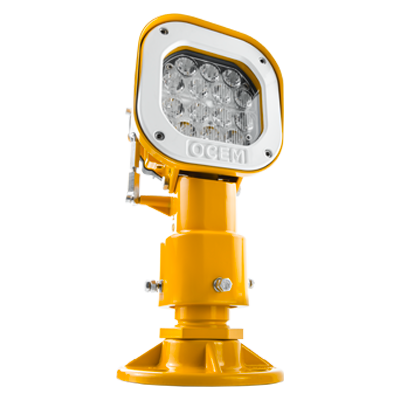
- Sequenced Flashing Fixtures: High-intensity LEDs (or legacy xenon strobes), either elevated or inset, meeting ICAO photometric and color requirements.
- Digital Sequencer Controller: Coordinates flash timing (1–2 Hz), intensity steps, and system diagnostics.
- Power Supply: Usually AC mains (with backup battery/solar modules for redundancy).
- Communication Interfaces: CAN bus, RS-485, or equivalent, for integration with Airfield Lighting Control and Monitoring Systems (ALCMS).
- Environmental Protection: IP68/IP69 ratings, frangible couplings, and operational range from -40°C to +75°C.
Key Performance Criteria
- Uniformity and Intensity: Adherence to ICAO Figure 2.1 for photometric output, color, and distribution.
- Sequencing Accuracy: Reliable, precisely timed flash progression toward the runway threshold.
- Redundancy: Automatic recovery and fail-safes for power or controller faults.
- Maintenance: Modular design for rapid component replacement, remote monitoring of lamp status and system health.
System Design and Integration
Layout
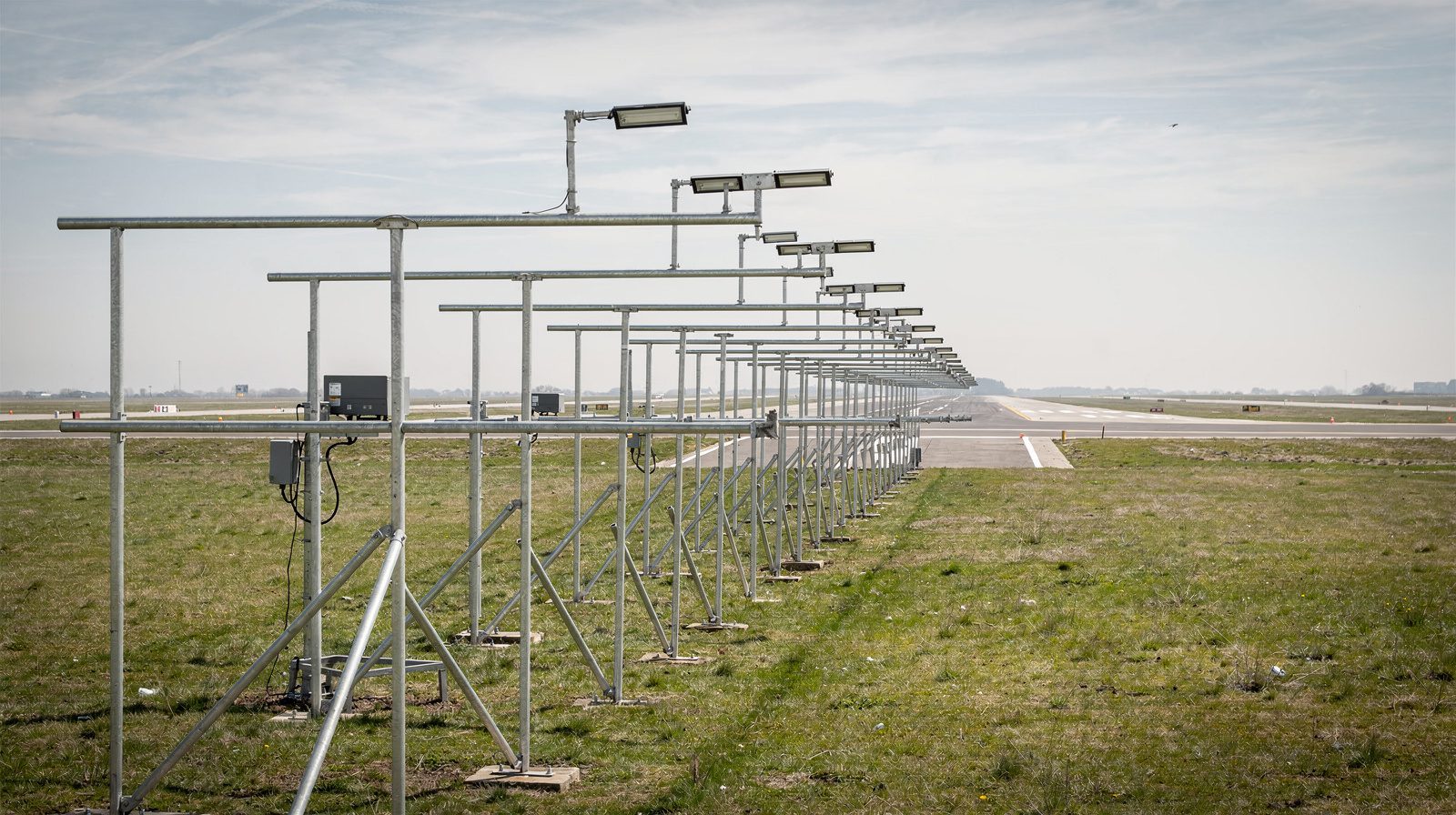
- Spacing: Typically 30 meters (100 feet) between fixtures, extending up to 900 meters (ICAO) or 3,000 feet (FAA) from the threshold.
- Sequence: Flashes begin at the farthest fixture and progress rapidly toward the runway.
- Integration: SFLs are interleaved with steady-burning approach bars and side rows for layered visual guidance.
Examples
- ALSF-2 (FAA): 15 SFLs and over 240 steady-burning lights for CAT III approaches.
- MALSR: 5 SFLs combined with medium-intensity steady lights for CAT I use.
- Portable SFL: Battery or solar-powered, for rapid deployment at temporary airfields.
Installation
- Wiring: Primary/secondary cabling with central controller and distributed terminal boxes.
- Mounting: Elevated or inset, with frangible supports for safety.
- Accessibility: Designed for maintenance without disrupting runway operations.
Compliance and Standards
- ICAO Annex 14, Volume I, Section 5.3.4: Specifies SFL requirements for approach lighting, including photometric, environmental, and frangibility standards.
- FAA AC 150/5340-30: Details ALSF-2, MALSR, and SFL/RAIL design and operation for US airfields.
- Testing: Photometric, color, ingress protection, and frangibility tests required for certification.
Use Cases
- Major Hubs: Heathrow, O’Hare, and other CAT III runways use ALSF-2 with SFL for all-weather safety.
- Military/Expeditionary: Portable SFL for rapid setup of safe approach paths in field conditions.
- Regional Airports: MALSR with SFL for enhanced CAT I guidance.
- Threshold Identification: SFL as RTIL in complex visual environments.
SFL vs. RAIL
| Feature | SFL (Sequenced Flashing Lights) | RAIL (Runway Alignment Indicator Lights) |
|---|---|---|
| Placement | Along ALS centerline, up to runway threshold | May extend beyond ALS, ends before steady lights |
| Sequencing | Timed sequence, moving “running light” effect | Not sequenced, may flash independently |
| Operational Use | Required for CAT II/III, per ICAO/FAA | Supplemental, not mandatory for precision ALS |
| Integration | Synchronized with ALS controller | May operate independently or parallel to ALS |
Glossary of Related Terms
- Airfield Ground Lighting (AGL): All lighting systems across an airfield, including approach, runway, taxiway, and apron lights.
- Approach Lighting System (ALS): Structured array of steady/flashing lights extending from the runway threshold to guide approaching aircraft.
- High-Intensity Approach Lighting System (HIALS): ALS with powerful fixtures, required for CAT II/III, often includes SFL.
- Steady-Burning Lights: Provide continuous illumination for static visual reference.
- Instrument Landing System (ILS): Radio navigation for precise lateral and vertical approach guidance.
- Threshold Identification Light (TIL/RTIL): Lights marking the runway’s usable start, improving threshold visibility.
- Obstruction Lighting: Marks obstacles near runways or flight paths for safety.
Standards and References
- ICAO Annex 14, Volume I, Section 5.3.4
- FAA AC 150/5340-30
- ALS-DTS-SFL Installation Manual (PDF)
- Manufacturer guidance: OCEM, Avlite, TKH Airport Solutions
Diagrams & Schematics
For detailed wiring and installation, refer to:
Key Characteristics Table
| Attribute | Description |
|---|---|
| Purpose | Dynamic visual guidance for approach in low-visibility conditions |
| Standard Compliance | ICAO Annex 14, FAA ALSF-2, MALSR, AC 150/5340-30 |
| Location | Runway centerline, up to 900m (ICAO) or 3000ft (FAA) from threshold |
| Fixture Types | Elevated or inset, LED or xenon, modular |
| Control | Digital sequencing, intensity steps, remote monitoring |
| Sequencing | 1–2 flashes/sec, precise running effect |
| Integration | With steady-burning approach bars, threshold/side lights |
| Power | AC mains, battery, solar, or hybrid |
| Environmental | IP68/IP69, -40°C to +75°C, frangible supports |
| Applications | CAT II/III, military/expeditionary, threshold identification |
Additional Technical Notes
Photometric Requirements
All fixtures must meet ICAO Figure 2.1 criteria for brightness, beam spread, and color, ensuring visibility from all required approach angles and distances.
Synchronization and Maintenance
Precise sequencing is essential: controller redundancy and real-time monitoring reduce risk of confusing cues. LED technology minimizes maintenance, but regular checks for contamination or faults remain necessary.
Summary
Sequenced Flashing Lights (SFL) are a vital part of modern airport approach lighting, delivering moving, high-contrast guidance to pilots during low-visibility approaches. Their sequenced flash pattern ensures safe, efficient landings at the world’s busiest and most challenging airports, while portable SFL systems extend these safety benefits to temporary and expeditionary airfields. Compliant with stringent international regulations, SFL systems are engineered for reliability, integration, and ease of maintenance, making them indispensable to aviation safety and operational resilience.
This glossary entry is a technical resource for aviation professionals, engineers, and regulators seeking comprehensive knowledge of Sequenced Flashing Lights (SFL) in airport lighting infrastructure.
Frequently Asked Questions
- What is the main operational benefit of SFL compared to steady-burning approach lights?
- SFLs create a moving, high-contrast visual cue that is more easily detected in low-visibility conditions. The sequential flashing improves depth perception and orientation, making final approach and landing safer, especially in fog, rain, or visually complex environments.
- Are SFLs required for all runways?
- No. SFLs are mandatory for CAT II/III precision approach runways according to ICAO and FAA standards. Simpler approach lighting systems for CAT I or non-precision runways may not include SFLs.
- Can SFL systems be used in temporary or expeditionary airfields?
- Yes. Modern SFL systems are available as portable, stand-alone units powered by batteries or solar panels, making them suitable for rapid deployment in military, humanitarian, or emergency operations.
- What is the difference between SFL and RAIL?
- SFLs are sequenced, centerline approach lights integrated within ALS arrays, designed to create a moving light effect. RAILs are alignment indicator lights that may be installed outside the main ALS, typically do not sequence, and serve as auxiliary alignment aids.