What is a Light Fixture?
Light Fixture – Complete Lighting Unit Including Housing and Optics – Airport Lighting
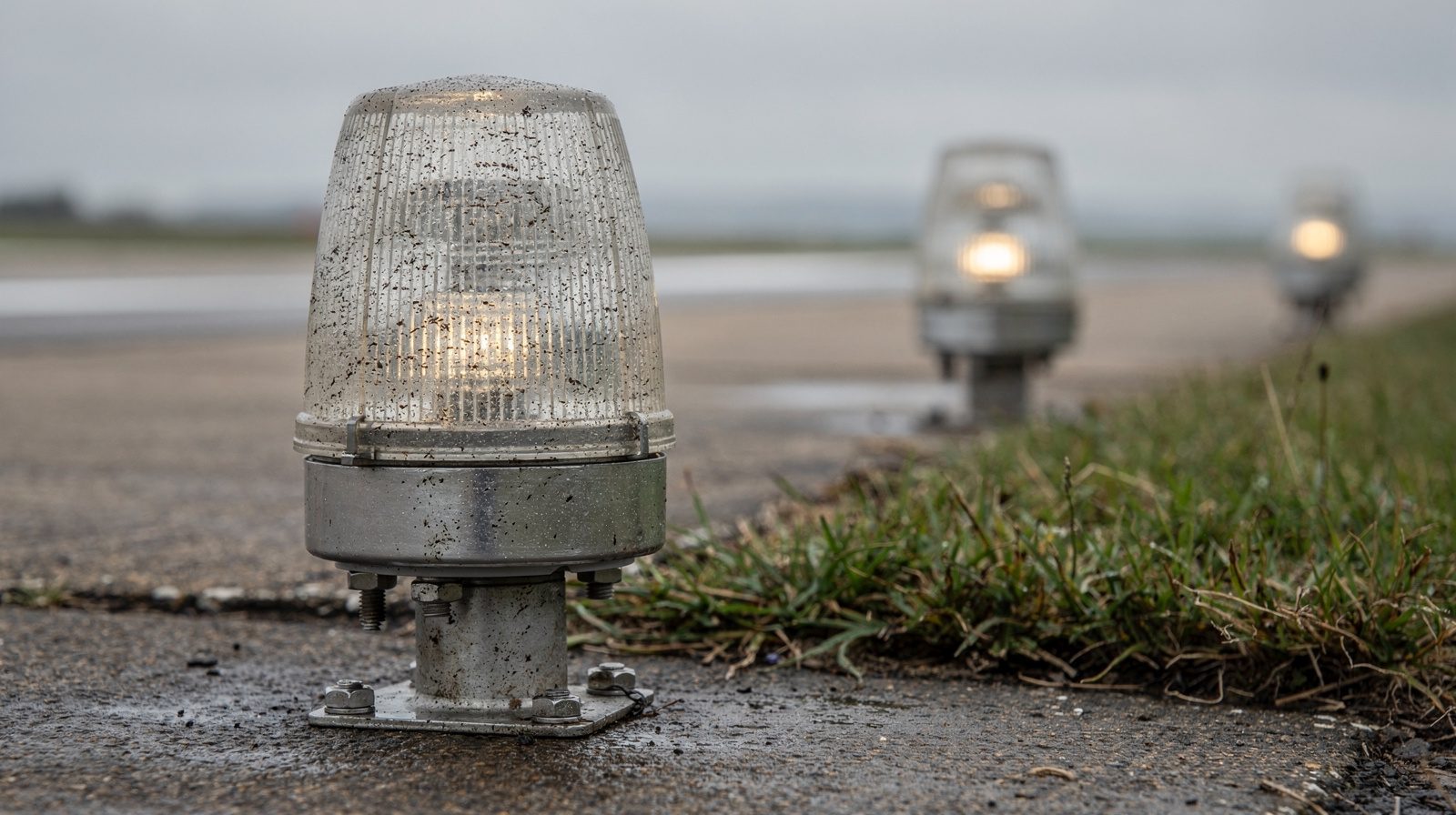
A light fixture in the airport environment, also called a luminaire, is a complete lighting system integrating a light source, optical components, protective housing, electrical circuits, and mounting hardware. Unlike a basic lamp or bulb, a fixture is a purpose-built unit engineered to rigorous international safety, performance, and reliability standards. In airports, these units are essential for safe navigation, guidance, and operations across runways, taxiways, aprons, hangars, terminals, and landside areas.
Airport Light Fixture: Core Definition
A light fixture for aviation is designed to:
- Deliver precise illumination and photometric output.
- Withstand extreme weather, mechanical impacts, jet blast, and chemical exposure.
- Enable quick installation, maintenance, and replacement.
- Integrate seamlessly with airfield lighting control and monitoring systems.
- Meet ICAO Annex 14 and FAA AC 150/5345-46 certification standards.
Key Components
| Component | Function & Importance |
|---|---|
| Lamp/LED Module | Main light source, LEDs are preferred for energy efficiency, longevity, and stable output. |
| Optics | Lenses/reflectors shape and direct the beam for required intensity, spread, and color. |
| Housing | Protects internal elements from weather, vibration, and impact. Rated to high IP/IK standards. |
| Electrical System | Includes drivers, surge protection, quick-connects, and sometimes remote monitoring capabilities. |
| Mounting Hardware | Secures the fixture to poles or bases, frangible types break away for airfield safety. |
| Seals/Gaskets | Prevent ingress of water, dust, and chemicals. |
| Sensors/Controls | Enable dimming, wireless communication, and automation for energy and operational efficiency. |
Types of Airport Light Fixtures
Airfield Lighting
- Runway Edge & Threshold Lights: High/medium-intensity, white/red/yellow, frangible mounts, LED or legacy lamp options.
- Taxiway Lights: Blue or green color, low-glare optics, robust housing.
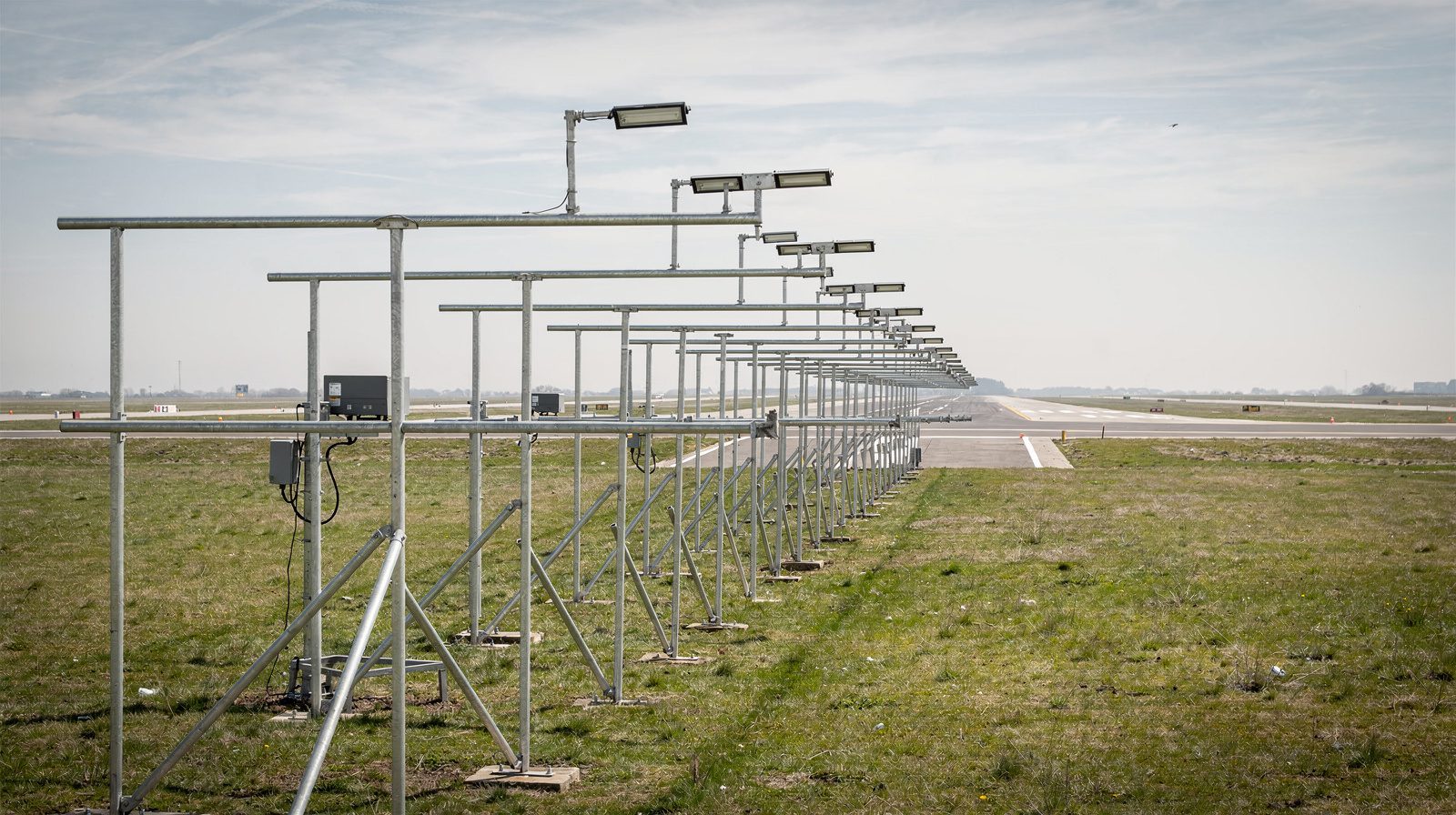
- Approach Lights: Focused beams for pilot guidance in low visibility, often with adjustable aiming.
- Runway Guard Lights: Flashing yellow for runway/taxiway intersections, high-visibility, frangible mounting.
Apron & Area Lighting
- High Mast Floodlights: 15–40m poles, 28,000–150,000+ lumens, advanced optics for wide and uniform coverage.
- Vapor-Tight/Tri-Proof Linear Fixtures: For baggage, maintenance, or canopy areas, IP65+ and chemical-resistant.
Hangar & Interior Lighting
- High/Low Bay LEDs: For hangars, durable against oil, fuel, and vibration, delivering high lux at height.
- Flat Panels/Troffers: Used in terminals, offices, uniform, glare-controlled, with high color rendering.
Perimeter, Parking, and Security
- Pole/Area Lights: Wide coverage, dusk-to-dawn control, robust marine-grade finishes.
- Wall Packs/Bulkheads: Stairwells, entry points, surface mounted, high impact and weather resistance.
- Emergency/Exit Lights: Battery backup, UL-listed for safety compliance.
Functional Roles and Use Cases
- Runway/Taxiway: Provide critical visual guidance, ensuring compliance with photometric, color, and frangibility standards.
- Apron/Stand: Ensure safe aircraft parking and servicing with shadow-free, glare-controlled illumination.
- Hangar: Minimize downtime with durable, easily serviced high bays.
- Terminal/Public Areas: Create comfortable environments with efficient, low-glare lighting and emergency backup.
- Parking/Security: Enhance safety with high-output, controlled lighting and integrated motion/daylight sensors.
Technical Features & Performance
- Energy Efficiency: LEDs offer 60–80% savings over HID/fluorescent lamps (140–150 lm/W common).
- Long Lifespan: 50,000–176,000 hours (L70), reducing maintenance and operational disruption.
- Ingress/Impact Protection: IP65–IP67 and IK08–IK10 ratings for weather/mechanical resilience.
- Color Quality: CRI >80, selectable CCT (3000–6000K) for comfort and compliance.
- Smart Controls: 0–10V/DALI/wireless dimming, motion/daylight sensors, system integration.
- Compliance: Meets FAA, ICAO, UL/ETL, DLC, RoHS, CE, ISO standards.
- Serviceability: Modular, quick-connect, and tool-free designs minimize downtime.
Compliance and Standards
- FAA AC 150/5345-46: U.S. specification for airfield lighting equipment.
- ICAO Annex 14: Global standard for aerodrome design and lighting.
- UL/ETL: North American electrical safety.
- DLC Premium: Energy efficiency and rebate eligibility.
- RoHS/CE/ISO 9001: Environmental and quality certifications.
Non-compliance can risk regulatory penalties and operational safety.
Advantages of Modern LED Airport Light Fixtures
- Cost Savings: 50–80% lower energy use, long life, fewer replacements, and reduced labor.
- Enhanced Safety: Instant-on, precise output, reliable operation in all conditions.
- Environmental Benefits: Lower greenhouse emissions, less hazardous waste, compliance with green standards.
- Operational Flexibility: Smart controls enable adaptive lighting, supporting airport sustainability goals.
Best Practices for Selection and Maintenance
- Ensure certification (FAA/ICAO/UL/DLC) for all fixtures.
- Prioritize modular, serviceable designs for fast replacement.
- Select optics tailored for specific airfield or terminal tasks.
- Integrate controls for energy management and compliance.
- Schedule regular inspections to maintain optimal performance and safety.
Summary
A light fixture in airport lighting is far more than just a lamp, it is a sophisticated, highly engineered system essential for aviation safety, efficiency, and compliance. By integrating advanced optics, robust housing, smart controls, and certified components, airport fixtures ensure reliable illumination for every operational zone, from runways to terminals.
For airports facing rising operational demands and tighter efficiency standards, modern LED light fixtures offer a proven path to safer, more sustainable, and cost-effective lighting.
For expert guidance or to schedule a demonstration of certified airport lighting solutions, contact our team or request a demo today!
Frequently Asked Questions
- What is a light fixture in airport lighting?
- A light fixture in airport lighting is a purpose-built assembly combining a light source (such as an LED module), optical components, protective housing, electrical controls, and mounting hardware. It is designed to deliver specified illumination, withstand extreme conditions, and meet ICAO and FAA safety and performance standards for critical areas like runways, taxiways, aprons, hangars, and terminals.
- Why are specialized light fixtures essential for airports?
- Airport environments require lighting that can operate reliably under harsh conditions including jet blast, chemicals, vibration, water ingress, and extreme temperatures. Fixtures must also provide precise photometric output, color coding, and be frangible to minimize damage if struck, all while complying with international aviation regulations.
- What are the main components of an airport light fixture?
- Core components include a high-reliability light source (often LED), impact- and weather-resistant housing, precision optics for controlled light distribution, robust electrical systems for safe and efficient operation, mounting hardware (often frangible), and advanced controls or sensors for energy management and automation.
- How do LED fixtures improve airport lighting?
- LED fixtures deliver 60–80% energy savings over legacy lamps, offer instant-on performance, and have lifespans up to 176,000 hours. They enable advanced optical control, reduce maintenance frequency, and are easily integrated with smart controls for adaptive lighting, making them ideal for airfield and terminal use.
- What certifications and standards must airport light fixtures meet?
- Airport fixtures must comply with FAA AC 150/5345-46 (US), ICAO Annex 14 (global), UL/ETL (electrical safety), DLC Premium (energy efficiency), RoHS (environmental), and ISO 9001 (quality systems). Compliance ensures performance, safety, and eligibility for rebates or incentives.
This is a reference entry. TarmacView provides drone inspection services and doesn't sell the equipment or materials described in this glossary.