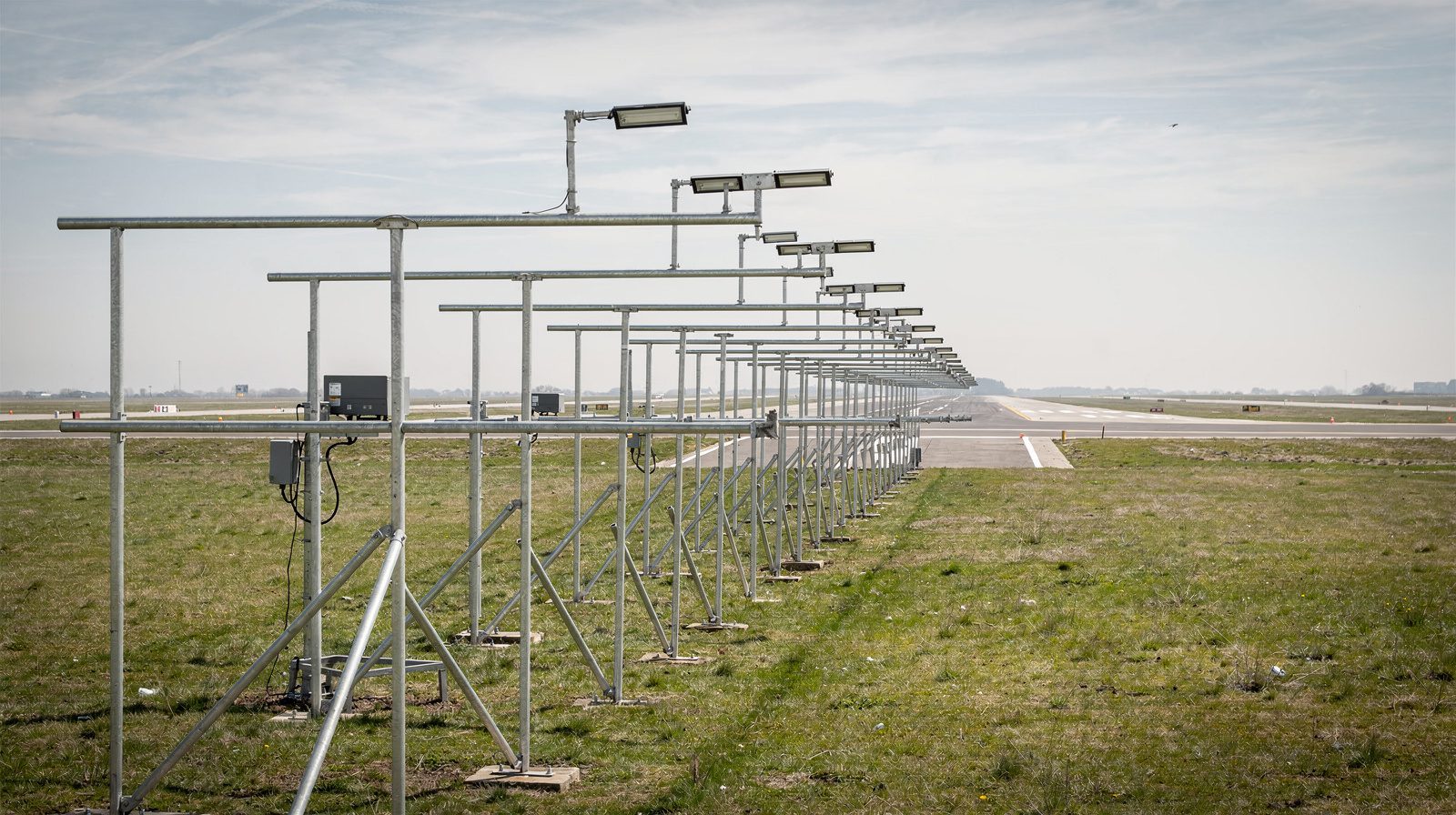
What is an LED Lamp in Airport Lighting?
LED Lamp – Solid-State Light Source Using Light-Emitting Diodes in Airport Lighting
Definition
An LED lamp in airport lighting is a specialized solid-state light source utilizing light-emitting diodes (LEDs) to provide illumination and visual signaling across airfields. Unlike incandescent or halogen lamps, which emit light via heated filaments, LED lamps use electroluminescence in semiconductor materials, offering controlled, efficient, and durable lighting. Their application spans runway and taxiway edge lights, centerline guidance, approach lighting systems (ALS), PAPI (Precision Approach Path Indicators), and obstruction lighting, all while meeting rigorous standards from bodies like ICAO and the FAA. Modern LED lamps are engineered for precise beam control, regulatory color compliance, and robust performance in demanding airfield environments.
Background and Evolution of Airport Lighting Technologies
Incandescent and Halogen Technologies
Early airport lighting relied on incandescent lamps, which emit light by heating a tungsten filament. While inexpensive and simple, incandescents are inefficient, converting most energy to heat, with lifespans rarely exceeding 2,000 hours. Halogen lamps improved slightly on efficiency and durability, using halogen gases to extend filament life and maintain brightness, but still suffered from high energy consumption, heat output, and frequent maintenance needs.
Both types of lamps produced broad, continuous spectra, offering decent color rendering, but lacked the chromatic precision needed for advanced airfield signaling. Their short lifespans and maintenance intensity became unsustainable as airport traffic and operational complexity grew.
Emergence of Solid-State Lighting
Solid-state lighting (SSL), primarily LEDs, transformed airport lighting following breakthroughs in semiconductor technology. Initial LEDs in the 1960s were limited to low-power red indicators, advances through the 1980s and 1990s led to high-brightness, multi-color, and then white LEDs using phosphor conversion. SSL offered:
- Directional emission for reduced light spill
- Instant-on capability
- Precise color control to meet regulatory standards
- Dramatically improved energy efficiency and lifespan
By the 2010s, airports began large-scale retrofits, replacing legacy lamps with LED systems, slashing energy costs and maintenance intervals.
Regulatory Drivers for LED Adoption
Government mandates and industry standards accelerated LED adoption. In the US, the Energy Independence and Security Act (EISA) of 2007 pushed for energy-efficient lighting, effectively phasing out inefficient lamps. Regulatory updates followed:
- FAA Engineering Brief No. 67 guides LED use in airfields.
- ICAO Annex 14 and SAE AS25050 define performance, color, and intensity standards for LED fixtures.
These actions ensured that LED systems met or exceeded safety and visual performance benchmarks, catalyzing a global shift toward solid-state lighting in airports.
Scientific and Technical Fundamentals of LED Lamps
Solid-State Lighting Principles
LEDs operate via electroluminescence: when current passes through a forward-biased p-n semiconductor junction, electrons and holes recombine, emitting photons. The photon’s wavelength (and thus the light’s color) is determined by the semiconductor’s bandgap.
- InGaN and GaN: Used for blue and white LEDs
- AlGaInP: Used for red and amber LEDs
This direct conversion of electricity to light means LEDs achieve far higher efficiencies than thermal or gas-discharge lamps, with minimal heat and exceptional durability, ideal for the vibration-prone, outdoor environments of airfields.
LED Structure and Operation
Key components of an airfield-grade LED lamp include:
- Semiconductor chip: The electroluminescent source
- Optical encapsulant/lens: Shapes and protects the light output
- Heat sink: Manages temperature for longevity
- Driver circuitry: Converts airfield power (e.g., 6.6A series circuits) to regulated LED current, with dimming and fault protection
- Sealed housing: Ensures IP67/IP68 protection from weather and debris
Operationally, LEDs provide:
- Forward voltages of 2–3.5V (color-dependent)
- Highly controllable, narrow-beam emission
- Modular assemblies for easy maintenance and upgrades
Spectral Characteristics and Color Generation
LEDs emit within narrow spectral ranges, allowing intense, saturated colors ideal for visual signaling:
- Direct emission for red, green, blue, and amber
- Phosphor conversion for white (blue or UV LED with phosphor coating)
- RGB mixing in advanced systems for custom colors
LEDs are binned and tested to meet strict chromaticity requirements (CIE 1931 coordinates), ensuring regulatory compliance and color stability. Unlike incandescents, LEDs emit negligible infrared, boosting efficiency but requiring supplemental measures for snow/ice management.
Comparison with Traditional Lighting
| Attribute | Incandescent/Halogen | LED (Solid-State) |
|---|---|---|
| Luminous efficacy | 10–35 lm/W | 80–180+ lm/W |
| Operational life | 1,000–5,000 hours | 35,000–100,000+ hours |
| Heat output | High | Low |
| Color control | Filtered, broad spectrum | Direct, precise, tunable |
| Maintenance | Frequent | Minimal |
| Environmental impact | High (waste, energy) | Low (long life, low energy) |
Key insights: LEDs dramatically reduce energy use and maintenance, provide superior color control, and enhance safety and reliability in airfield operations.
Application of LED Lamps in Airport/Airfield Lighting
Airfield Lighting Systems Using LEDs
LEDs are now standard in:
- Runway edge/centerline lights: Ensure clear runway alignment
- Taxiway edge/centerline lights: Guide aircraft safely on the ground
- Approach lighting systems (ALS): Extend visual cues into the approach path
- Precision Approach Path Indicators (PAPI): Signal correct glideslope via color-coded beams
- Runway guard lights (RGL/ERGL): Flashing yellow LEDs warn of active runways
- Obstruction/wind cone lights: Mark hazards and indicate wind direction
Each fixture type is engineered for specific photometric and colorimetric requirements, ensuring compliance and operational effectiveness.
Installation and Integration Considerations
Direct replacement: Many LED fixtures are plug-and-play upgrades for existing bases and circuits, reducing installation time and airfield downtime.
Power compatibility: Airfields use series circuits (6.6A typical), LED drivers ensure correct, regulated power and maintain compatibility with legacy constant current regulators.
Color/chromaticity compliance: LEDs are manufactured and tested to fall within regulatory color boundaries for each application.
Thermal/environmental management: As LEDs emit less heat, snow/ice management may require integrated heaters or conductive designs to keep lenses clear.
Maintenance/monitoring: LED systems offer built-in diagnostics, remote monitoring, and predictive maintenance features, further enhancing reliability and reducing operational costs.
Benefits, Limitations, and Future Trends
Benefits
- Energy efficiency: Up to 80% energy savings
- Reduced maintenance: Long operational life, less frequent servicing
- Instant-on: No warm-up time, critical for emergency and signaling
- Precise color output: Maintains regulatory compliance, improves pilot recognition
- Environmental sustainability: Lower carbon footprint, less landfill waste
Limitations
- Initial investment: Higher upfront cost (offset by energy/labor savings)
- Snow/ice accumulation: Less heat means fixtures may require supplemental heating in cold climates
- Compatibility: Requires careful integration with existing airfield circuits
- IR output: Minimal, which may affect some night vision systems
Future Trends
- Intelligent lighting: Integration with airfield control systems for adaptive light levels and remote diagnostics
- Further efficiency gains: Ongoing advances in LED efficacy and driver electronics
- Sustainability focus: Expanding use of recyclable materials and reduced hazardous substances
- Wider global adoption: As costs continue to fall and regulatory standards harmonize
Conclusion
LED lamps have become the cornerstone of modern airport and airfield lighting, delivering unparalleled efficiency, reliability, and performance. Their adoption supports safer, more sustainable, and cost-effective airport operations, meeting the rigorous demands of today’s aviation environment while preparing for the technological and regulatory challenges of tomorrow.
For airports seeking to modernize, LED lighting offers an unmatched combination of operational excellence and long-term value.
See Also
References
- FAA Engineering Brief No. 67
- ICAO Annex 14, Vol I – Aerodrome Design and Operations
- SAE International, AS25050 – Lamp, Incandescent, Airfield Lighting, General Specification For
Frequently Asked Questions
- What is an LED lamp in airport lighting?
- An LED lamp in airport lighting is a solid-state light source that uses light-emitting diodes to provide illumination and signaling on runways, taxiways, and approach systems. Unlike traditional incandescent or halogen lamps, LEDs offer higher efficiency, greater longevity, precise color emission, and improved reliability, making them essential for modern airfield visual aids.
- How do LED lamps differ from incandescent and halogen lamps in airport environments?
- LED lamps generate light via electroluminescence within a semiconductor, not by heating a filament. This results in much higher luminous efficacy, lower heat production, longer lifespan (often exceeding 50,000 hours), and more precise color control. LEDs are also more durable and require significantly less maintenance compared to incandescent and halogen lamps.
- What are the regulatory standards for LED lamps in airport lighting?
- LED lamps for airport use must comply with strict standards set by bodies such as the FAA, ICAO, and SAE International. These standards specify requirements for intensity, chromaticity, beam spread, environmental durability, and electrical compatibility to ensure safe and effective visual guidance for pilots and ground crews.
- Where are LED lamps used in airport lighting systems?
- LED lamps are used in a variety of airfield lighting systems, including runway edge and centerline lights, taxiway guidance, approach lighting systems (ALS), precision approach path indicators (PAPI), obstruction lights, wind cone illumination, and runway guard lights. Their versatility and performance have made them the technology of choice for modern airfields.
- What are the benefits of using LED lamps in airport lighting?
- LED lamps provide major benefits: energy savings (up to 80% less consumption), lower maintenance costs due to longer operational life, instant-on performance, precise and stable color output, reduced environmental impact, and enhanced reliability, especially in demanding weather and high-traffic conditions.
- Are there any challenges with using LED lamps in airfield lighting?
- Challenges include ensuring compatibility with legacy airfield circuits, managing snow/ice accumulation due to lower heat output, and initial investment costs. However, modern LED fixtures address these issues with advanced electronics, integrated heaters, and long-term cost savings.
This is a reference entry. TarmacView provides drone inspection services and doesn't sell the equipment or materials described in this glossary.