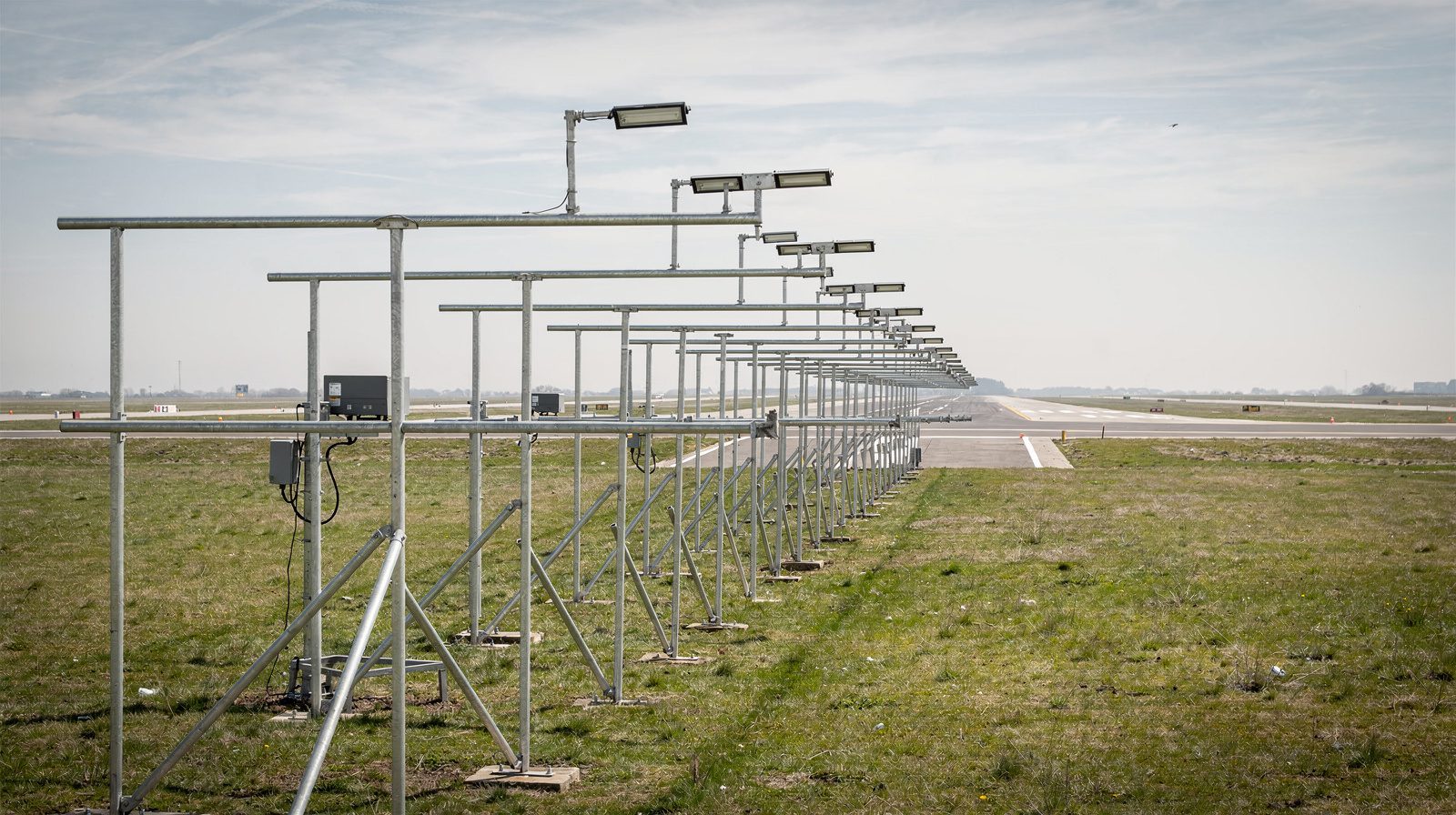
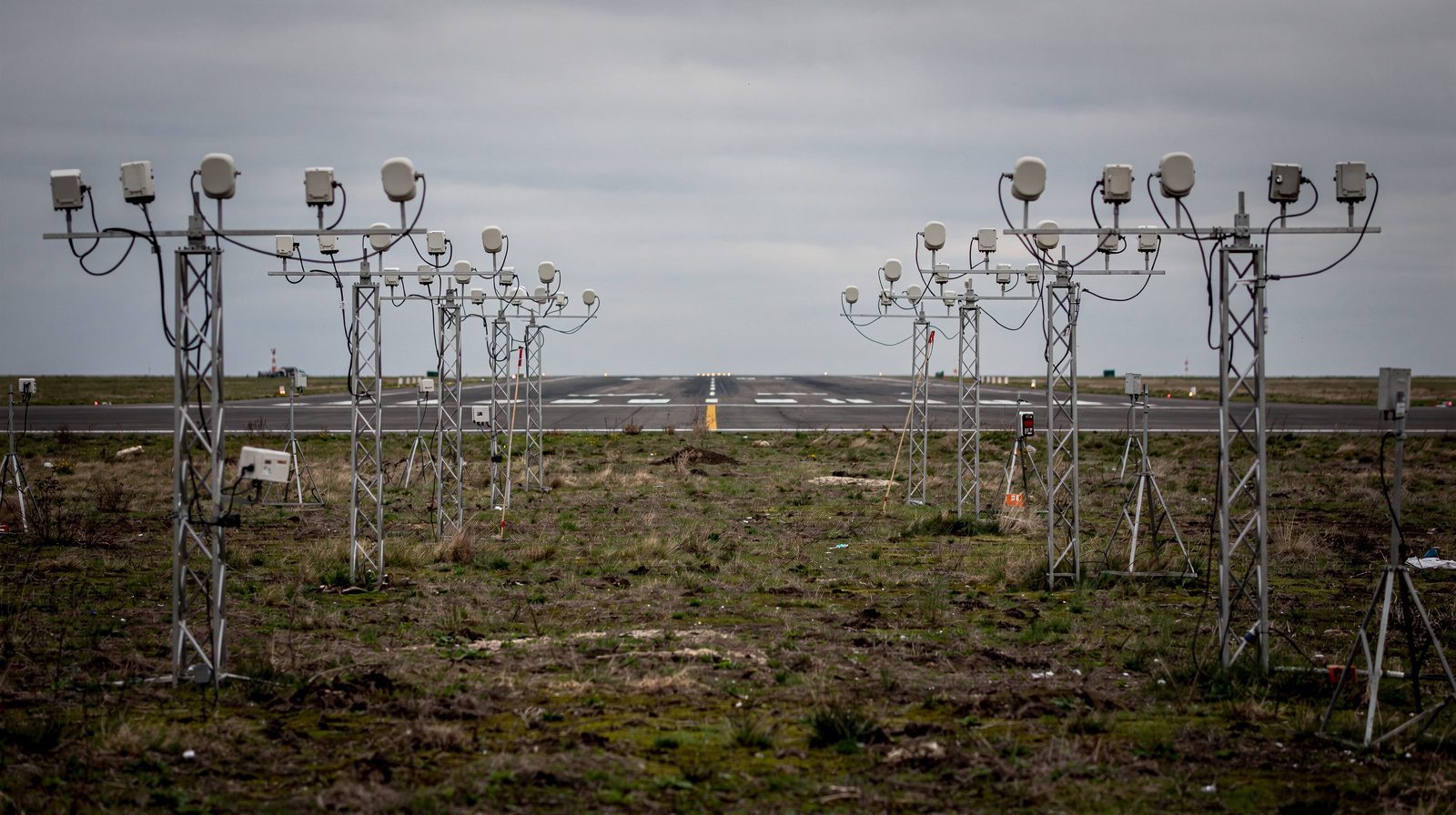
What are Visual Aids?
Visual Aids – Equipment Providing Visual Information in Airport Operations
Visual aids are a cornerstone of safe and efficient airport operations. They include a wide range of equipment and installations, such as lighting systems, pavement markings, airfield signage, windsocks, and digital display solutions, designed to convey clear and standardized visual information to pilots, ground personnel, and vehicle operators. These systems are heavily regulated by international standards to ensure consistency, reliability, and safety across all airports.
Categories of Visual Aids
1. Lighting Systems
Lighting systems are the most prominent visual aids, guiding aircraft and vehicles during low visibility, night operations, and critical maneuvers.
Runway Lighting
- Runway Edge Lights: White lights outlining runway edges, yellow in caution zones near runway ends.
- Centerline Lights: Embedded in the runway, transitioning from white to alternating red/white and then red as the end approaches, providing distance-to-go cues.
- Touchdown Zone Lights (TDZL): White lights in the touchdown area that help pilots aim for the optimal landing point.
- Runway End Identifier Lights (REIL): High-intensity flashing lights at runway thresholds for rapid identification.
- Threshold/End Lights: Green at thresholds (runway start) and red at ends, clearly defining usable limits.
Taxiway Lighting
- Taxiway Edge Lights: Blue lights marking taxiway boundaries.
- Taxiway Centerline Lights: Green lights guiding the optimal taxi route, especially at complex airports.
- Stop Bar and Clearance Bar Lights: Red (stop) and yellow (clearance) in-pavement lights at holding points and intersections for incursion prevention.
Approach Lighting Systems (ALS)
- ALS: Extend from the runway threshold into the approach zone, combining steady and sequenced flashing lights to guide pilots from instrument to visual landing.
- Configurations: Vary from simple crossbars to complex ALSF-2 or SSALR systems for precision runways.
Apron and Stand Guidance Lighting
- Apron Floodlighting: Provides broad illumination for ground handling and turnaround activities.
- Advanced Visual Docking Guidance Systems (A-VDGS): Use sensors and digital displays for precise aircraft parking and alignment.
2. Visual Glide Path and Approach Indicators
- VASI (Visual Approach Slope Indicator): Two or three bars of lights providing color-coded (red/white) descent guidance.
- PAPI (Precision Approach Path Indicator): Four-light linear array providing highly accurate glide path information via combinations of red and white lights.
- Tri-Color and Pulsating VASI: Compact or cost-effective alternatives, using color changes or pulse rates.
- Alignment of Elements System: Simple panels or markers for visual approach alignment at small airports.
3. Signage and Markings
Airfield Signage
- Mandatory Instruction Signs: Red with white text, marking critical points like runway entrances.
- Location Signs: Yellow on black, indicating current position.
- Direction Signs: Black on yellow, providing routing information.
- Informational Signs: Include radio frequencies, boundaries, and other operational data.
Painted Markings
- Runway Markings: White, including centerlines, thresholds, aiming points, and numbers.
- Taxiway Markings: Yellow, such as centerlines, edges, and holding position indicators.
- Apron Markings: Define stand guidance lines, safety envelopes, and vehicle roadways.
4. Windsocks and Weather Visual Indicators
- Windsocks: Textile tubes providing immediate wind direction and approximate speed, visible from runways and aprons.
- Landing Direction Indicators and Signal Panels: Supplement windsocks, especially at airports lacking advanced weather display systems.
5. Digital Visual Solutions
- Flight Information Display Systems (FIDS): Networked digital screens providing real-time flight and operational information.
- Digital Signage and Wayfinding: Interactive kiosks, video walls, and maps for passenger navigation and alerts.
- Advanced Visual Docking Guidance Systems (A-VDGS): Real-time digital guidance for aircraft parking, integrating sensors and airport management systems.
Regulatory Standards
Visual aids are governed by a robust regulatory framework:
- ICAO Annex 14: The global standard for airport visual aids, specifying design, placement, color, intensity, and redundancy requirements.
- FAA AIM and Advisory Circulars: US guidance, equivalent in technical rigor.
- EASA CS-ADR-DSN: European standards for airport design and visual systems.
Compliance is mandatory for certificated airports and is audited regularly.
Placement, Visibility, and Maintenance
Proper placement and configuration are vital for effectiveness:
- Location: Dictated by ICAO/national standards for visibility and clarity.
- Color-Coding: White (runways), blue (taxiway edges), green (taxiway centerlines), red/white (glide path indicators).
- Avoiding Confusion: Sited to prevent confusion with non-aeronautical lighting and avoid visual clutter.
- Visibility: High-intensity lights and high-contrast, durable markings ensure performance in poor weather and night.
- Maintenance: Regular inspection, cleaning, repainting, and testing. Redundancy and backup power are essential for critical systems.
Integration with Digital Systems
Modern airports increasingly integrate visual aids with digital management systems:
- Central Monitoring: Real-time control and monitoring of lighting, signage, and guidance systems.
- Data Analytics: Support operational decisions, safety assurance, and performance analysis.
- Automation: Systems like A-VDGS and FIDS are linked with airport operations for streamlined workflows.
Safety Implications
Visual aids minimize risk by:
- Enhancing Situational Awareness: Immediate, intuitive cues for pilots and ground staff.
- Preventing Incursions and Errors: Standardization reduces misunderstandings and misnavigation.
- Supporting All Conditions: Remain effective in darkness, fog, rain, and other challenging environments.
- Fail-Safe Design: Analog aids provide backup if digital systems fail.
Examples and Use Cases
- PAPI on Approach: Pilots use PAPI lights to confirm a stable 3° glide path, cross-checking with instruments for safety.
- A-VDGS on the Apron: Automated docking systems provide precise parking guidance and integrate with turnaround management for operational efficiency.
- Taxiway Lighting at Night: Blue edge and green centerline lights guide aircraft safely to parking areas in low visibility.
- Digital Signage for Wayfinding: Passengers use interactive maps and dynamic displays to navigate terminals and respond to flight changes.

Conclusion
Visual aids are indispensable for safe, efficient, and globally standardized airport operations. They combine legacy analog systems with cutting-edge digital technologies to provide clear, reliable visual information for every aspect of aircraft and vehicle movement. Ongoing maintenance, regulatory compliance, and integration with airport management platforms are essential to realizing their full safety and operational benefits.
Frequently Asked Questions
- What distinguishes visual from non-visual navigational aids?
- Visual aids provide direct, visible cues, such as lights, markings, and signs, used primarily under Visual Flight Rules (VFR) or to supplement instrument navigation. Non-visual aids, like VOR, ILS, and DME, transmit navigation information via radio signals and are primarily used for Instrument Flight Rules (IFR) operations where external visual reference is not possible.
- How do visual aids enhance safety at airports?
- Visual aids offer standardized, instantly recognizable cues that guide pilots and ground personnel, reducing the risk of runway incursions, misalignment, and navigation errors. Their reliability under all weather and lighting conditions is essential to safe airport operations.
- Are digital visual aids replacing traditional systems?
- Digital solutions such as Advanced Visual Docking Guidance Systems (A-VDGS) and interactive signage increasingly supplement traditional visual aids, offering enhanced precision and real-time updates. However, analog systems like painted markings and windsocks remain vital as basic, fail-safe references.
- Which standards govern the use of visual aids at airports?
- ICAO Annex 14 sets the global standard for visual aids, covering technical specifications for lighting, signage, and markings. In the US, the FAA Aeronautical Information Manual (AIM) and Advisory Circulars provide detailed guidance, while EASA CS-ADR-DSN applies in Europe. Compliance with these standards is mandatory for certificated airports.
This is a reference entry. TarmacView provides drone inspection services and doesn't sell the equipment or materials described in this glossary.