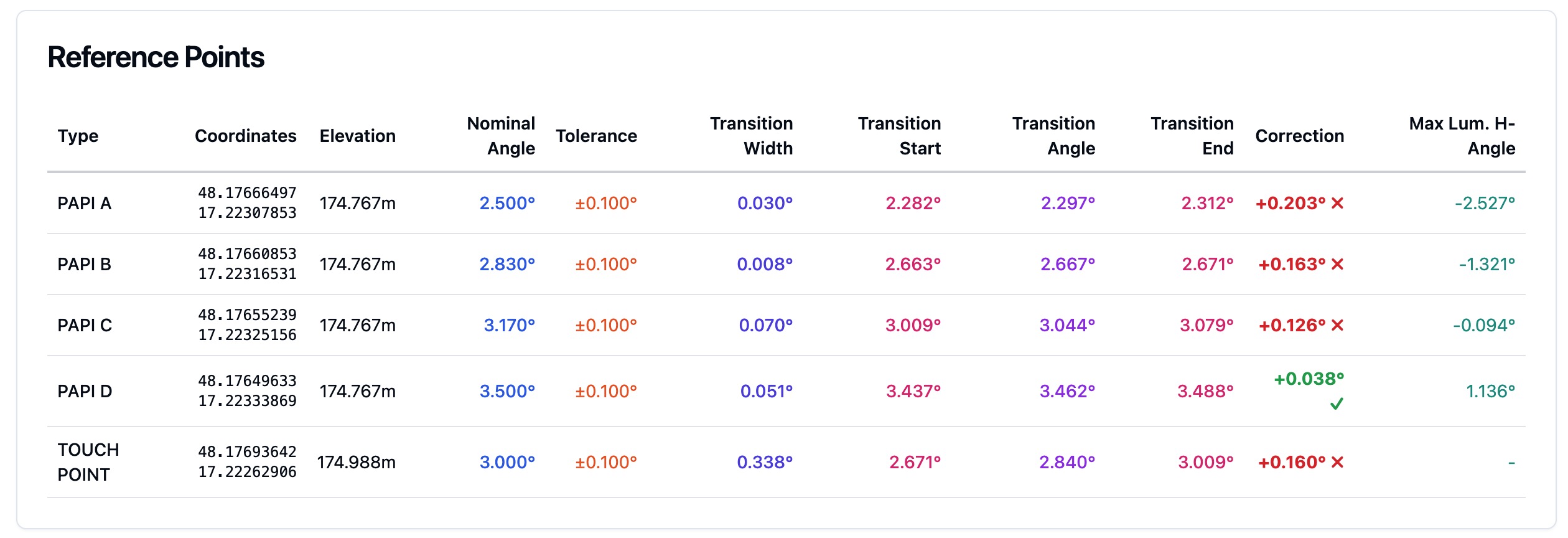
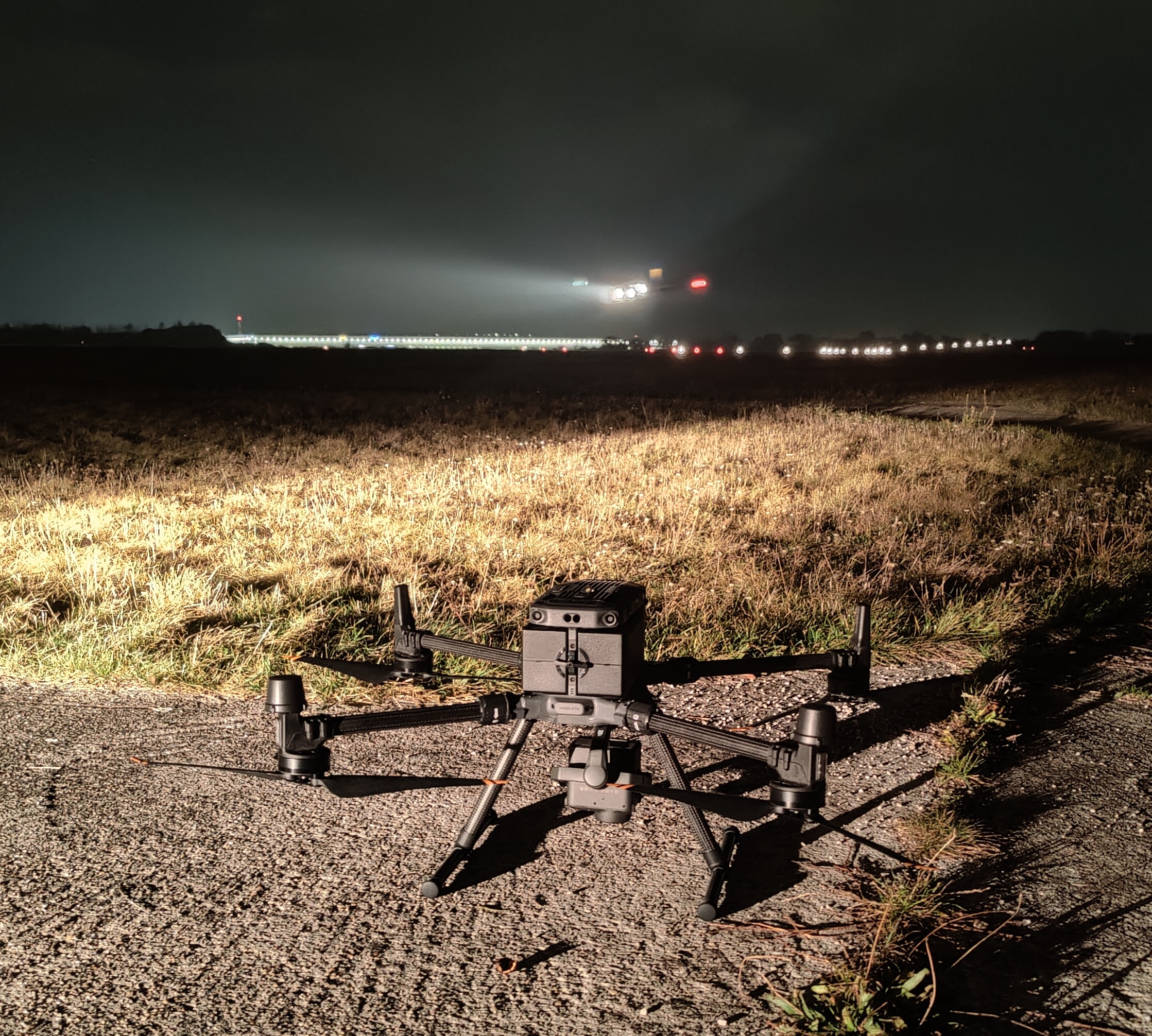
What is an A-PAPI (Abbreviated Precision Approach Path Indicator)?
A-PAPI (Abbreviated Precision Approach Path Indicator) is a visual glide path indicator system that uses two light units (instead of four, as found in standard PAPI) to provide pilots with immediate feedback about their approach angle during landing. Typically installed on the left side of the runway, A-PAPI is a solution for locations where installing a full PAPI system is not feasible due to space, cost, or operational constraints.
System Overview and Operation
A-PAPI light units are installed in a straight, horizontal line and set perpendicular to the runway centerline, usually 10 meters (33 feet) from the runway edge. Each unit projects two color sectors, white (seen when above the approach slope) and red (seen when below). The sharp transition between colors allows pilots to quickly determine if they are above, on, or below the optimal glide path:
| A-PAPI Display | Glide Path Position | Pilot Action |
|---|---|---|
| Both lights white | Well above glide path | Increase descent rate |
| One white, one red | On or very close to path | Maintain current approach |
| Both lights red | Below glide path | Decrease descent rate/climb |
Mnemonic:
- White on white: “Too high, check your height.”
- Red on white: “On the slope, you’re all right.”
- Red on red: “Too low, beware ahead.”
Modern A-PAPI units use LED technology for reduced power consumption, long operational life, and compatibility with solar or hybrid power sources. This makes them ideal for remote, temporary, or low-infrastructure airfields.
Regulatory Standards and Installation
A-PAPI is regulated globally by ICAO Annex 14 and in the US by FAA AC 150/5345-28H . Key requirements include:
- Precise alignment to ensure accurate glide path indication.
- Frangible (breakaway) mounting for safety.
- Photometric standards for visibility in all lighting conditions.
- Environmental resistance to withstand weather and jet blast.
A-PAPI may be controlled remotely by air traffic control or by pilots via radio.
Comparison: A-PAPI, PAPI, and VASI
| Feature | A-PAPI | PAPI | VASI |
|---|---|---|---|
| Light units | 2 | 4 | 2+ (bars) |
| Glide path indications | 3 (above/on/below) | 5 (finer) | 2 (basic) |
| Typical use | Small/remote | Major runways | Legacy/limited |
| Maintenance | Minimal (LED) | Moderate | Moderate |
A-PAPI is especially favored for secondary runways, general aviation fields, and remote or temporary installations.
Best Practices
- Pilots: Use A-PAPI throughout the final approach, cross-check with other instruments, and be mindful of aircraft eye height effects.
- Operators: Regularly verify optical alignment, keep lenses clean, and upgrade to LED if possible for reduced maintenance.
- Maintenance: Ensure frangibility, monitor power sources, and inspect hardware for safety.
A-PAPI systems offer essential, cost-effective visual approach slope guidance for a wide range of airport environments, improving landing safety where full-scale PAPI is impractical. Their simplicity, regulatory acceptance, and adaptability, especially with modern LED and solar options, make them a smart choice for airfield operators worldwide.
Frequently Asked Questions
- Can A-PAPI be used in all weather and lighting conditions?
- Yes, A-PAPI is designed for day and night use and performs in most weather conditions. However, its visibility may be reduced in dense fog, snow, or heavy rain.
- Is A-PAPI suitable for large jet aircraft?
- A-PAPI can be used by most aircraft, including jets. However, for primary runways with frequent jet operations, a full four-unit PAPI is recommended for enhanced precision.
- What are the main maintenance tasks for A-PAPI?
- Routine tasks include alignment checks, lens cleaning, and, if using halogen, bulb replacement. LED versions minimize maintenance due to long life and low power use.
- How is A-PAPI powered at remote or temporary locations?
- A-PAPI can be powered by mains, solar panels with batteries, or portable generators. Modern LED units are especially suited for off-grid or temporary use.
- Can pilots activate A-PAPI lights remotely?
- Yes, at many airports A-PAPI can be integrated with pilot-controlled lighting, allowing pilots to activate the system via radio from the cockpit.
- Is A-PAPI recognized by international regulators?
- Yes, A-PAPI is specified in ICAO Annex 14, recognized by the FAA, and widely accepted by civil and military aviation authorities.
This is a reference entry. TarmacView provides drone inspection services and doesn't sell the equipment or materials described in this glossary.