The Operational Benefits of Drone-Based PAPI Inspection
Discover how drone technology is revolutionizing PAPI light inspection with superior efficiency, safety, and cost-effectiveness compared to traditional flight inspection aircraft.
Introduction
Airport maintenance teams face a constant challenge: ensuring critical infrastructure like PAPI (Precision Approach Path Indicator) lights remain compliant with ICAO standards while minimizing disruption to flight operations. Traditional inspection methods using flight inspection aircraft have served the industry for decades, but they come with significant operational constraints, costs, and safety considerations.
Enter drone-based PAPI inspection, a technological leap that’s transforming how airports approach this essential maintenance task. In this comprehensive article, we’ll explore the operational benefits that make drone inspection not just an alternative, but a superior solution for modern airports.
Key Benefits at a Glance
Why airports worldwide are switching to drone-based PAPI inspection
- Minimal Disruption
Inspect without closing runways. Operations continue normally while drones work in brief windows between flights.
- 50-70% Cost Savings
Dramatically lower costs compared to flight inspection aircraft, with superior data quality.
- Enhanced Safety
Keep personnel off active runways. Remote operation eliminates exposure to aircraft and runway hazards.
- Zero Emissions
Battery-powered drones replace fuel-guzzling aircraft, supporting your sustainability goals.
- Predictive Maintenance
Frequent, affordable inspections enable trend analysis and proactive maintenance planning.
- Same-Day Results
Cloud-based processing delivers complete ICAO-compliant reports within hours, not days.
The Traditional Challenge: Flight Inspection Aircraft
Before diving into the benefits of drone technology, it’s important to understand the limitations of conventional methods. Flight inspection aircraft require:
- Ferry charges for the transit to your aerodrome, billed in flight hours at 60-70% of the measurement rate unless the visit is shared with an ILS or VOR calibration
- Dependence on somebody else’s schedule, because avoiding that ferry means waiting for a radio aid calibration to come round
- A narrower scope, verifying the PAPI transition angles, the approach lighting and the runway lighting, but not measuring each light unit by unit, and not covering the markings or the pavement
- Weather dependencies requiring high visibility and cloud ceilings
- Advance scheduling often weeks or months in advance
One thing conventional flight inspection does not require is a runway closure: the aircraft flies approaches with the runway open. The constraint is cost and scheduling rather than occupancy, and it is why many airports end up deferring PAPI inspections longer than ideal.
Minimal Runway Impact: Operations Without Disruption
Where the disruption actually comes from
It is worth being precise about this, because the claim is routinely overstated. A flight inspection aircraft does not close the runway, and neither does a drone. The method that does book a closure is ground-based mobile photometry, which drives the length of the runway with a photometer on a vehicle and needs the strip to itself for as long as that takes.
What a drone survey removes is not a closure but the other three constraints:
- No waiting for somebody else’s calibration flight to make the visit affordable
- No ferry charge, because the crew drives
- No commitment made weeks ahead, since a drone visit is cheap to reschedule when the weather turns
The Drone Solution
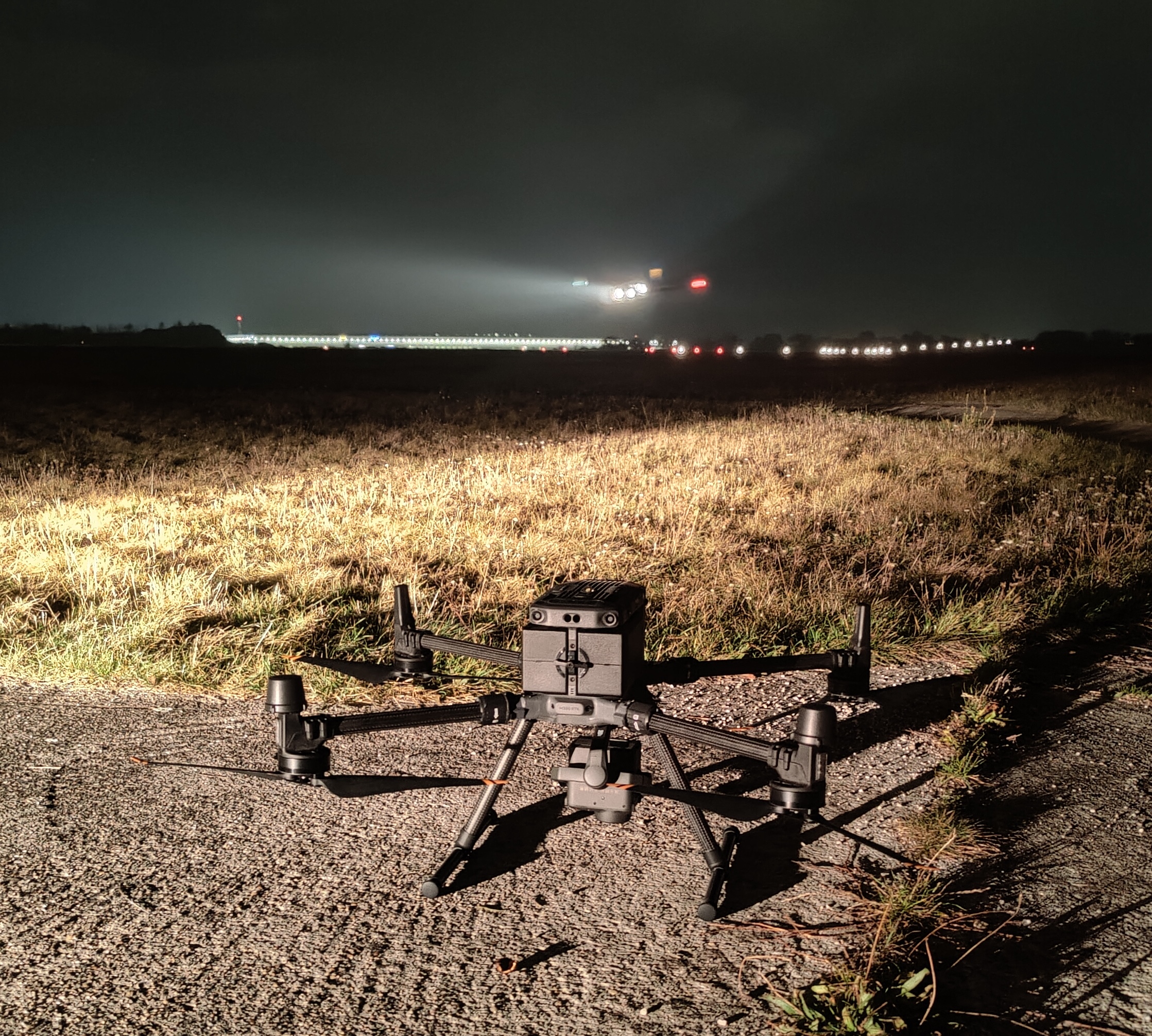
Our drone-based solution completely changes this dynamic. Designed to operate seamlessly within active aerodrome traffic, the system allows inspections to be performed in short time windows between scheduled landings and takeoffs.
How it works in practice:
- Pre-flight coordination: The drone operator coordinates with Air Traffic Control (ATC) to identify suitable time windows
- Rapid deployment: The drone can be airborne and collecting data within minutes
- Dynamic operation: If a plane needs to land, ATC issues a command, and the operator immediately moves the drone to a pre-designated safe zone clear of the runway strip, all within seconds
- Automatic resume: Once the aircraft has cleared, the drone resumes the inspection mission automatically from the exact point of interruption
This capability ensures that the runway remains available for normal operations, minimizing delays and maintaining revenue flow. A complete PAPI inspection can be completed in under 20 minutes of actual drone flight time, spread across multiple short windows throughout the day if needed.
Real-World Impact
Consider a medium-sized airport with 100 daily movements and no ILS to calibrate. An inspection aircraft flown in for the lights alone carries its transit both ways, which at 60-70% of the measurement flight-hour rate costs more than the hour of measurement it delivers. A drone crew drives, works in 3-4 brief periods of 5 minutes each between movements, and measures the approach lighting and the arrays light by light, and scans the pavement, in the same visit. The saving is the transit and the scope, not a closure that was never going to happen.
Weather Independence: Wider Operational Window
The Aircraft Weather Challenge
Flight inspection aircraft face significant weather limitations:
- Must maintain visual contact with the runway from several miles away
- Require cloud ceilings of at least 1,000-1,500 feet
- Cannot operate in low visibility conditions (typically need 5+ km visibility)
- Must abort approaches in marginal weather conditions
These requirements mean that inspections are often delayed for days or weeks waiting for suitable weather windows, particularly in regions with frequent fog, low clouds, or seasonal weather patterns.
Drone Advantages in Marginal Conditions
While drones cannot fly in zero visibility or heavy rain (and we’re transparent about these limitations), our operational window is significantly wider than that of flight inspection aircraft.
Key advantages:
- Close-range operation: We measure from 300-400m distance and low altitudes, not miles out on a glide slope
- Lower visibility requirements: Can operate safely in conditions with 1-2 km visibility
- Low cloud tolerance: Can work under cloud layers as low as 300-400 feet
- Reduced wind sensitivity: Modern professional drones handle moderate winds that would challenge aircraft approaches
This means inspections can proceed in conditions that would ground a traditional inspection flight, reducing weather-related delays by an estimated 60-70%.
Practical Example
An airport in Northern Europe needed quarterly PAPI inspections but faced persistent morning fog from October through March. Traditional flight inspection required waiting for clear afternoons, often delaying inspections by 2-3 weeks. With drone inspection, they now complete all measurements during brief clear periods in the late morning, maintaining their inspection schedule year-round.
Enhanced Safety: Protecting Personnel and Operations
Traditional Safety Risks
Conventional PAPI inspection methods expose personnel to several risks:
- Runway incursions: Maintenance staff must access active runway areas
- Aircraft conflicts: Personnel working near approach zones during active operations
- Equipment hazards: Large inspection aircraft operating in confined airport spaces
- Human error: Manual measurements subject to fatigue and environmental stress
Drone Safety Benefits
Our remote inspection method fundamentally eliminates many of these risks:
Personnel Safety:
- No staff need to be physically present in the approach zone during measurements
- Operators work from safe, designated areas away from active runways
- Reduced exposure to aircraft noise, jet blast, and other hazards
- Elimination of night-time runway access requirements
- Smaller operational footprint reduces conflict zones
- Rapid clearance capability (seconds vs. minutes for aircraft)
- No risk of runway damage from heavy inspection aircraft
- Automated flight paths eliminate pilot error in approach geometry
Data Quality and Safety:
- Consistent, repeatable measurements eliminate human subjectivity
- Digital records provide audit trails for safety investigations
- Real-time data validation catches errors immediately
- Historical trending identifies degradation before failures occur
Environmental Responsibility: Zero Emissions
The Carbon Cost of Traditional Inspection
Flight inspection aircraft are significant polluters:
- A typical PAPI inspection flight burns 200-400 liters of aviation fuel
- Generates 500-1,000 kg of CO₂ emissions per inspection
- Produces noise pollution affecting airport communities
- Contributes to local air quality degradation
For an airport conducting quarterly inspections on multiple runways, this adds up to several tons of CO₂ annually, just for PAPI verification.
The Drone Alternative
Battery-operated drones offer a dramatically cleaner solution:
- Zero direct emissions during operation
- Minimal noise compared to aircraft engines
- Renewable energy compatible: Batteries can be charged from solar or wind power
- Smaller carbon footprint: Even accounting for battery production and electricity generation
This aligns with the aviation industry’s growing commitment to sustainability and helps airports meet their environmental targets without compromising safety or compliance.
Cost Reduction: Superior Data for Less
Breaking Down Traditional Costs
Flight inspection aircraft operations involve substantial expenses:
- Aircraft rental: €2,000-5,000 per flight hour
- Crew costs: Pilot, co-pilot, and inspection specialist
- Fuel: €500-1,000 per inspection
- Airport fees: Landing, parking, and handling charges
- Coordination overhead: ATC, scheduling, and administrative costs
A single PAPI inspection can easily cost €5,000-10,000, making frequent inspections prohibitively expensive for many airports.
Drone Economics
Our drone-based solution offers dramatic cost savings:
- 50-70% lower total cost per inspection
- No aircraft rental or crew expenses
- Minimal fuel costs (battery charging)
- Reduced coordination overhead due to operational flexibility
- Economies of scale: Can inspect multiple runways in a single session
But it’s not just about saving money, it’s about getting more value:
- Superior accuracy: ±1 minute of arc vs. ±3-5 minutes for aircraft
- More frequent inspections: Affordable enough for monthly or even weekly checks
- Comprehensive data: Full video documentation plus analytical measurements
- Faster results: Same-day reports vs. days or weeks for aircraft inspections
Rapid Turnaround: Same-Day Results
Traditional Processing Delays
Flight inspection data typically requires:
- Post-flight data download and transfer
- Manual analysis and report generation
- Quality control review
- Final report compilation
This process can take 3-7 days, during which airports may be operating with potentially non-compliant PAPI systems.
Drone Advantage: Immediate Insights
Our cloud-based processing delivers:
- Automated upload: Video data transfers during or immediately after flight
- Cloud processing: AWS infrastructure handles heavy computation
- AI-assisted analysis: Automated detection and measurement
- Same-day reports: Complete ICAO-compliant documentation within hours
This rapid turnaround means:
- Immediate corrective action if issues are detected
- Reduced compliance risk from operating with unknown defects
- Better maintenance planning with real-time data
- Audit readiness: Always have current inspection documentation
Predictive Maintenance: From Reactive to Proactive
The Power of Frequent Data
Traditional inspection costs make quarterly checks the norm. But what if you could inspect monthly, or even weekly, without breaking the budget?
Frequent, cost-effective drone inspections enable a paradigm shift:
Historical Trending:
- Track PAPI alignment drift over time
- Identify seasonal patterns (thermal expansion, ground settling)
- Predict when adjustments will be needed
- Plan maintenance during optimal windows
Failure Prevention:
- Detect gradual degradation before it becomes critical
- Identify patterns that precede failures
- Reduce emergency callouts and rush repairs
- Extend equipment life through timely intervention
Data-Driven Decisions:
- Build statistical models of your specific PAPI systems
- Optimize maintenance schedules based on actual performance
- Justify capital expenditures with hard data
- Demonstrate compliance trends to regulators
Real-World Example
A European airport implemented monthly drone inspections and discovered that one PAPI system drifted by 0.3° every 6 weeks due to ground settling. Previously, this would have been caught only during quarterly inspections, potentially causing non-compliance periods. Now, they schedule preventive adjustments every 8 weeks, maintaining continuous compliance and avoiding emergency maintenance.
Integration with Modern Airport Operations
Simplified ATC Coordination
Unlike flight inspection aircraft that require:
- Complex airspace reservations
- Coordination with approach control
- Potential conflicts with IFR traffic
- Extended communication overhead
Drone operations integrate smoothly:
- Simple NOTAM procedures
- Direct coordination with tower controller
- No impact on instrument approaches
- Minimal radio communication required
Flexible Scheduling
The operational flexibility of drones means:
- No advance booking of inspection aircraft weeks in advance
- Opportunistic inspections during weather windows or low-traffic periods
- Emergency response: Can inspect within hours if issues are suspected
- Seasonal optimization: More frequent checks during challenging weather periods
Scalability
As your airport grows, drone inspection scales effortlessly:
- Multiple runways: Inspect all runways in a single day
- Additional equipment: Add more PAPI systems without proportional cost increase
- New technologies: Easy to expand to other lighting systems (VASI, approach lights, etc.)
- Network operations: Multi-airport operators can share equipment and expertise
Conclusion: The Future of Airport Maintenance
Drone-based PAPI inspection isn’t just an incremental improvement over traditional methods, it’s a fundamental transformation of how airports approach this critical safety task.
The benefits are clear and measurable:
- Minimal operational disruption: Inspect without closing runways
- Weather independence: Wider operational window than aircraft
- Enhanced safety: Protect personnel and reduce operational risks
- Environmental responsibility: Zero emissions, minimal noise
- Cost effectiveness: 50-70% savings with superior data quality
- Rapid results: Same-day reports for immediate action
- Predictive capability: Frequent inspections enable proactive maintenance
As aviation continues to evolve, airports that embrace drone technology for PAPI inspection will find themselves better positioned to meet regulatory requirements, control costs, and maintain the highest safety standards, all while minimizing disruption to their core business of moving passengers and cargo.
The question isn’t whether to adopt drone-based PAPI inspection, but how quickly you can integrate this game-changing technology into your maintenance operations.
Ready to experience these benefits at your airport? Contact our team to schedule a demonstration or discuss how drone-based PAPI inspection can transform your maintenance operations.
Want to learn more about the technology? Explore our technical deep dive or review our service models to find the best approach for your airport.
Founded by flight-inspection veterans who spent decades measuring PAPI lights for aviation authorities across Europe.
Learn more
Related terms
03 TERMSAutomated Drone-Based Infrastructure Inspection
Automated drone inspection uses pre-programmed flight paths, computer vision, and AI analysis to survey infrastructure assets including runways, bridges, roads, and buildings with minimal human piloting. This technology produces consistent, repeatable data for Pavement Condition Index computation, defect detection, and change monitoring across civil aviation and transportation infrastructure.
A-PAPI Abbreviated Approach Path Indicator
A-PAPI (Abbreviated Precision Approach Path Indicator) is a two-light visual glide path indicator system installed at airports to help pilots maintain the correct approach angle during landing, especially where space, cost, or operational constraints prevent installation of a full PAPI.
Precision Approach Path Indicator (PAPI)
A complete overview of the Precision Approach Path Indicator (PAPI), the globally standardized visual glide slope aid that enhances safe landings at airports, heliports, and airfields. Learn about its design, operation, calibration, maintenance, and role in aviation safety.
Further reading
03 ARTICLES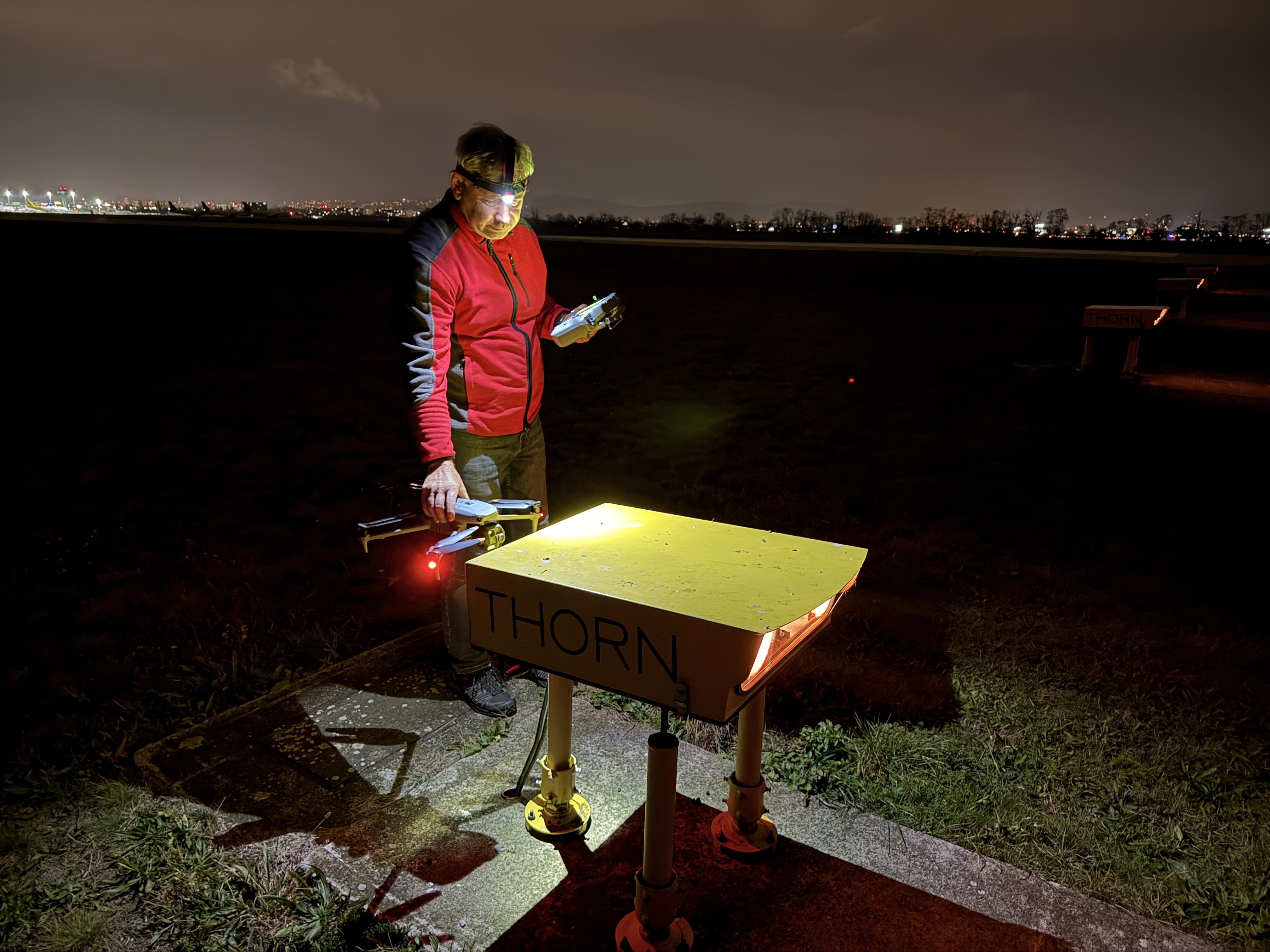
PAPI Lights Inspection and Calibration Check by Drone
Drone PAPI inspection. Each unit's transition angle, colour, intensity balance and surveyed position measured, with a same-day protocol to ICAO, EASA…
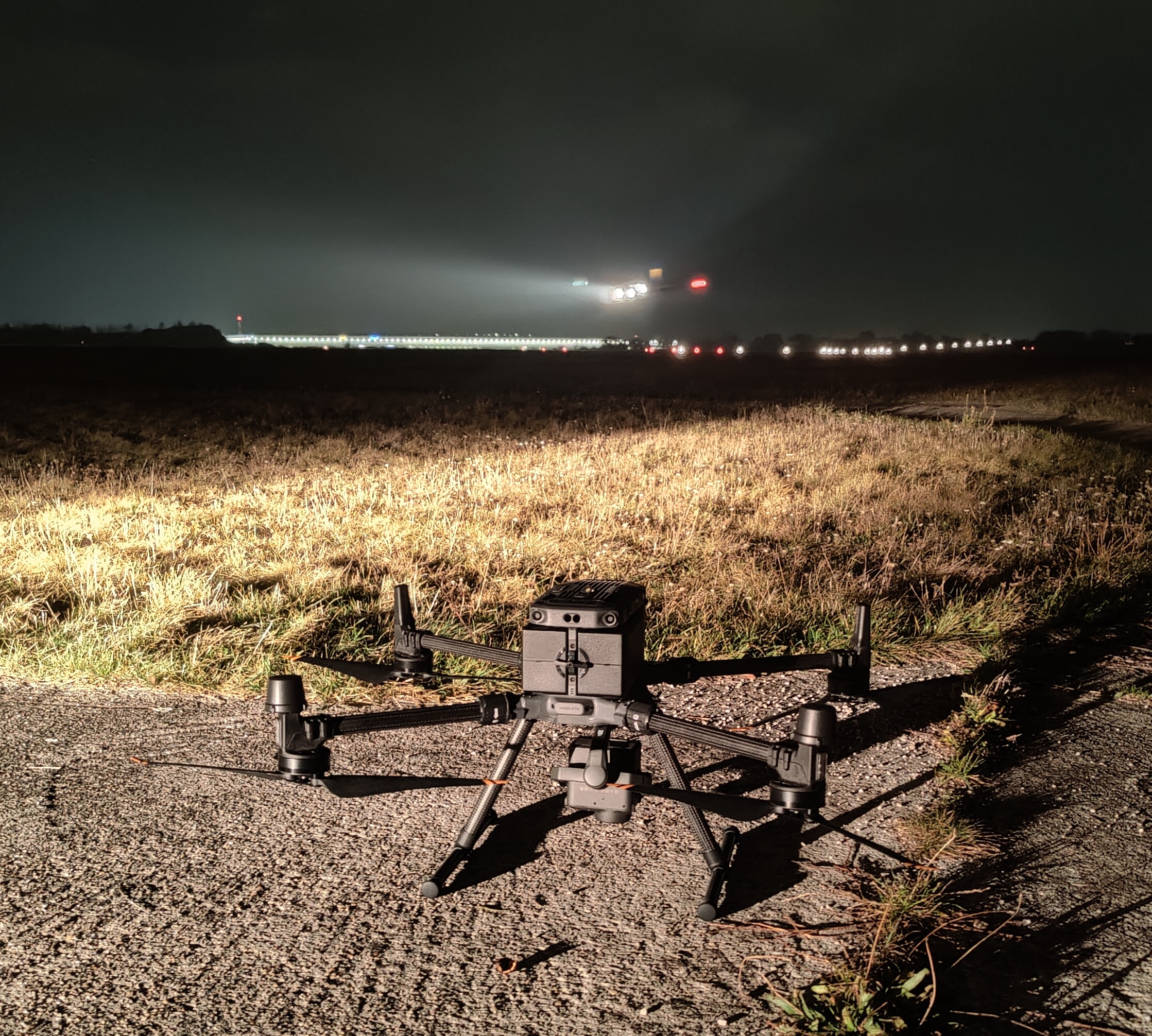
Drone Airport Inspection: Method and Limits
How a drone inspects an aerodrome between aircraft movements: the mission profile, RTK positioning, tower coordination, the evidence chain, and where…
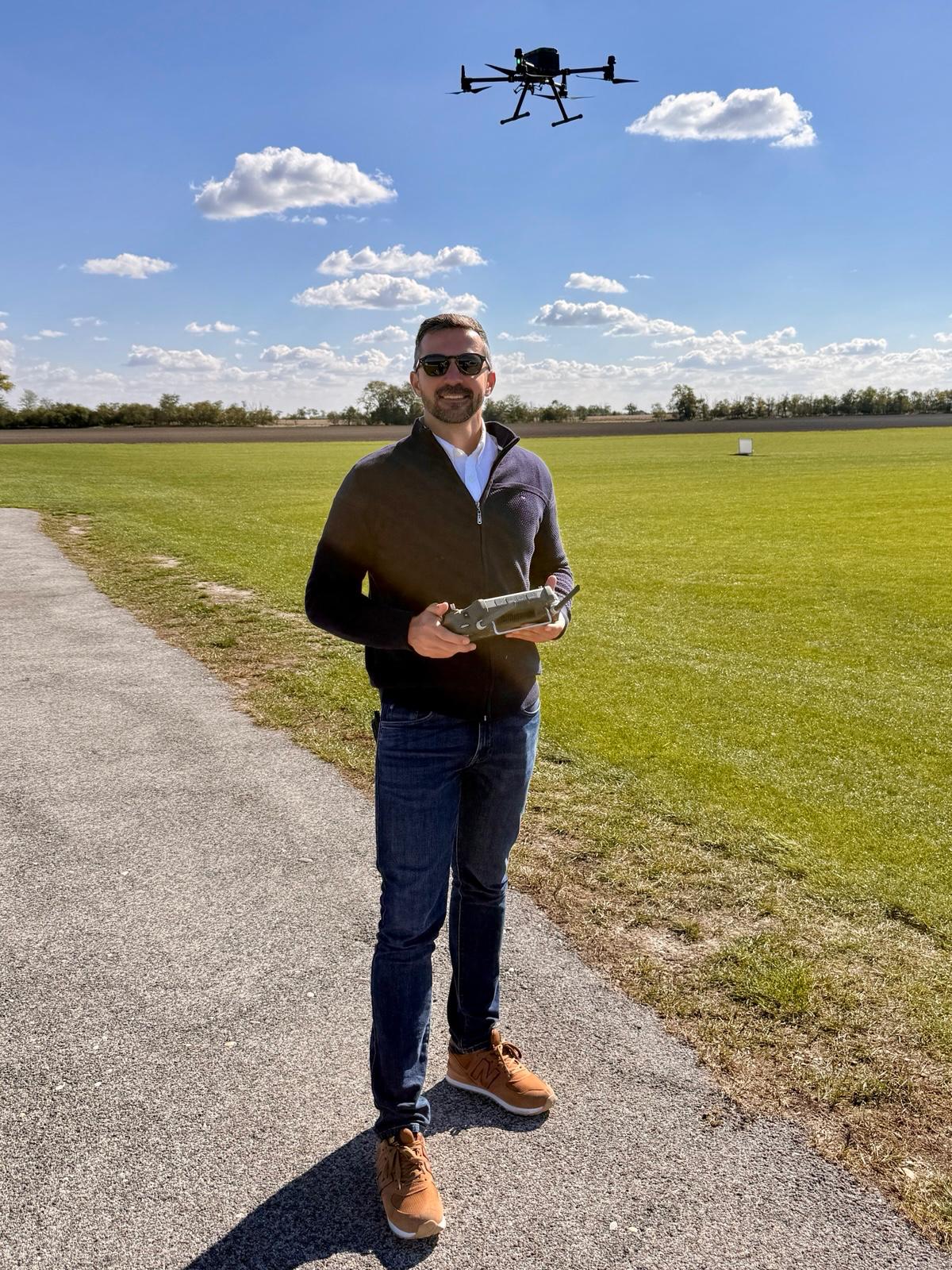
What a PAPI Inspection Actually Costs
What drives the cost of a drone-based airfield inspection, why we quote per airport instead of publishing a rate, and what the real comparison is.