What is a Turn Pad?
Turn Pad (Runway Turnpad, Turning Pad, 180° Turn Area)
A Turn Pad is a dedicated, paved area constructed at or adjacent to the end of a runway, purpose-built to allow aircraft, especially large commercial jets, to safely and efficiently execute a 180-degree turn. This specialized infrastructure is known as a runway turnpad, turning pad, or 180-degree turn area. Its necessity arises in scenarios where the runway width alone is insufficient for large aircraft to turn, or where there are no taxiway connections at the runway terminus.
Turn pads are meticulously engineered, considering the turning radii and wheelbase of the largest aircraft using the runway. Their geometry, often fan-shaped, semi-circular, or circular, is determined by the aircraft’s main gear track and overhang. Surface strength and friction match or exceed the runway’s, ensuring integrity under dynamic loads and safe traction in all weather. Turn pads most frequently appear at runway ends without taxiway exits, but may also be found at intermediate points for operational flexibility.

Operational Context: Why and Where Turn Pads Are Used
Turn pads are essential wherever runway geometry or airport layout constrains aircraft ground operations, commonly at airports where runways end without a taxiway connection. Aircraft may need to “backtrack” along the runway, taxiing to its end, then making a 180-degree turn using the turn pad to align with the runway for takeoff or to exit after landing.
Challenges Turn Pads Address:
- Runway Width Constraints: Large aircraft (e.g., Boeing 777, A350, A380) require a larger turning circle than most runways provide.
- Taxiway Connectivity: Without a parallel taxiway or an exit at the runway end, turn pads are necessary for safe maneuvering.
- Surface Protection: Turn pads prevent pavement damage and rutting that would occur if heavy aircraft made tight turns on standard runway pavement.
- Operational Scenarios: They enable backtrack departure, 180° turn after landing, safe repositioning during maintenance, or clearing the runway after an aborted takeoff.
Benefits:
Turn pads enhance safety by providing a predictable, reinforced surface for ground maneuvers. They protect runway integrity, allow use of full runway length (critical for heavy or long-haul departures), and support a variety of aircraft, including Code F jets.
Regulatory Standards and Guidance for Turn Pads
ICAO Standards
ICAO Doc 9981-2.4.1 and Annex 14, Vol. 1 (Aerodromes), Chapter 3 specify when and how turn pads must be provided:
- For aircraft Codes D, E, and F, turn pads at runway ends are mandatory if a taxiway is not present.
- For Codes A, B, and C, turn pads are recommended but not strictly required.
FAA Standards
The FAA requires adequate paved space at runway ends for safe turning maneuvers, as detailed in AC 150/5300-13 (“Airport Design”), though the term “turn pad” may not always be used. Markings, lighting, and depiction on airport diagrams are all regulated for safety and compliance.
Summary Table: Regulatory Requirements
| Aircraft Code | Taxiway at Runway End? | Turn Pad Requirement |
|---|---|---|
| D/E/F | No | Mandatory |
| A/B/C | No | Recommended |
Technical and Design Details of Turn Pads
Geometry and Dimensions
- Shape: Typically fan-shaped, semi-circular, or circular.
- Dimensions: Determined by the largest aircraft’s turning radius plus a safety margin. For an A380, this may exceed 60 meters in diameter, for a 737, around 30–40 meters.
- Shoulders: Include extra paved or stabilized area for overrun and jet blast protection.
Surface and Pavement Strength
- Friction & Texture: Must meet or exceed runway friction values, often grooved for drainage and grip.
- Structural Strength: Built for the heaviest aircraft’s static and dynamic loads.
- Jet Blast Protection: Shoulders and blast zones prevent erosion and FOD generation.
Markings and Lighting
- Markings: Centerline extensions, edge lines, sometimes chevrons or holding lines as per ICAO/FAA standards.
- Lighting: Edge lights (blue/white) for night/low-visibility, centerline lights may extend into the pad on complex airfields.
- Signage: Painted or lighted signs for holding positions or direction.
Inspection and Maintenance
- Routine Inspection: Includes checking pavement, shoulders, markings, lighting, and surface friction.
- Maintenance: Focuses on pavement integrity, FOD removal, jet blast erosion, and marking visibility.
Integration with Other Airfield Features
Turn pads are coordinated with runway markings, airport diagrams, and ATC procedures to ensure seamless and safe operations.
Use Cases and Real-World Examples
Airports with Turn Pads
- Rize-Artvin Airport (LTFO), Turkey: Features fan-shaped turn pads with clear markings and blast protection.
- Zirku Airport (OMAZ), UAE: Provides turn pads for medium- and large-sized aircraft where no parallel taxiway exists.
- Grant County International Airport (KMWH), USA: Uses large circular turn pads for both civil and military jet operations.
Operational Examples
- Backtrack Departure: A 737 enters the runway, backtracks to the end, uses the turn pad for a precise 180° turn and lines up for takeoff.
- Landing and Turnback: A regional jet rolls to the end, turns on the pad, and taxis to the apron.
- Emergency/Aborted Takeoff: The turn pad provides a safe area for turning and clearing the runway promptly.
Related Terms and Concepts
- Runway Markings: White lines and numbers guiding aircraft, turn pads may feature their extensions.
- Taxiway / Runway Intersection: The absence of which often necessitates turn pads.
- Holding Position Markings: Indicate where aircraft/vehicles must hold before entering a runway.
- Runway Safety Area (RSA): Graded area around the runway, turn pads are separate but may be integrated for safety.
- Movement Area: All surfaces for aircraft movement, including turn pads, requires ATC clearance.
- Runway Shoulders: Paved/stabilized surfaces adjacent to runways or turn pads for support and jet blast resistance.
Turn Pad Design Parameters (Technical Table)
| Design Element | Specification/Consideration |
|---|---|
| Shape | Fan-shaped, semi-circular, or circular |
| Diameter/Radius | Based on largest aircraft’s turning radius plus safety margin (e.g., 60+ meters for Code F) |
| Pavement Strength | Equal to or greater than runway, supports static and dynamic loads |
| Surface Friction | Minimum runway-equivalent, often grooved or textured |
| Shoulders | Paved/stabilized, supports occasional excursions, resists jet blast |
| Markings | Centerline extensions, edge lines, chevrons, holding lines as per ICAO/FAA |
| Lighting | Edge lights, possibly centerline lights, matching runway/taxiway standards |
| Inspection | Regular schedule, after major weather or heavy usage |
| Maintenance Focus | Pavement integrity, friction, FOD removal, marking visibility, lighting |
Real-World Example: Turn Pad at Rize-Artvin Airport
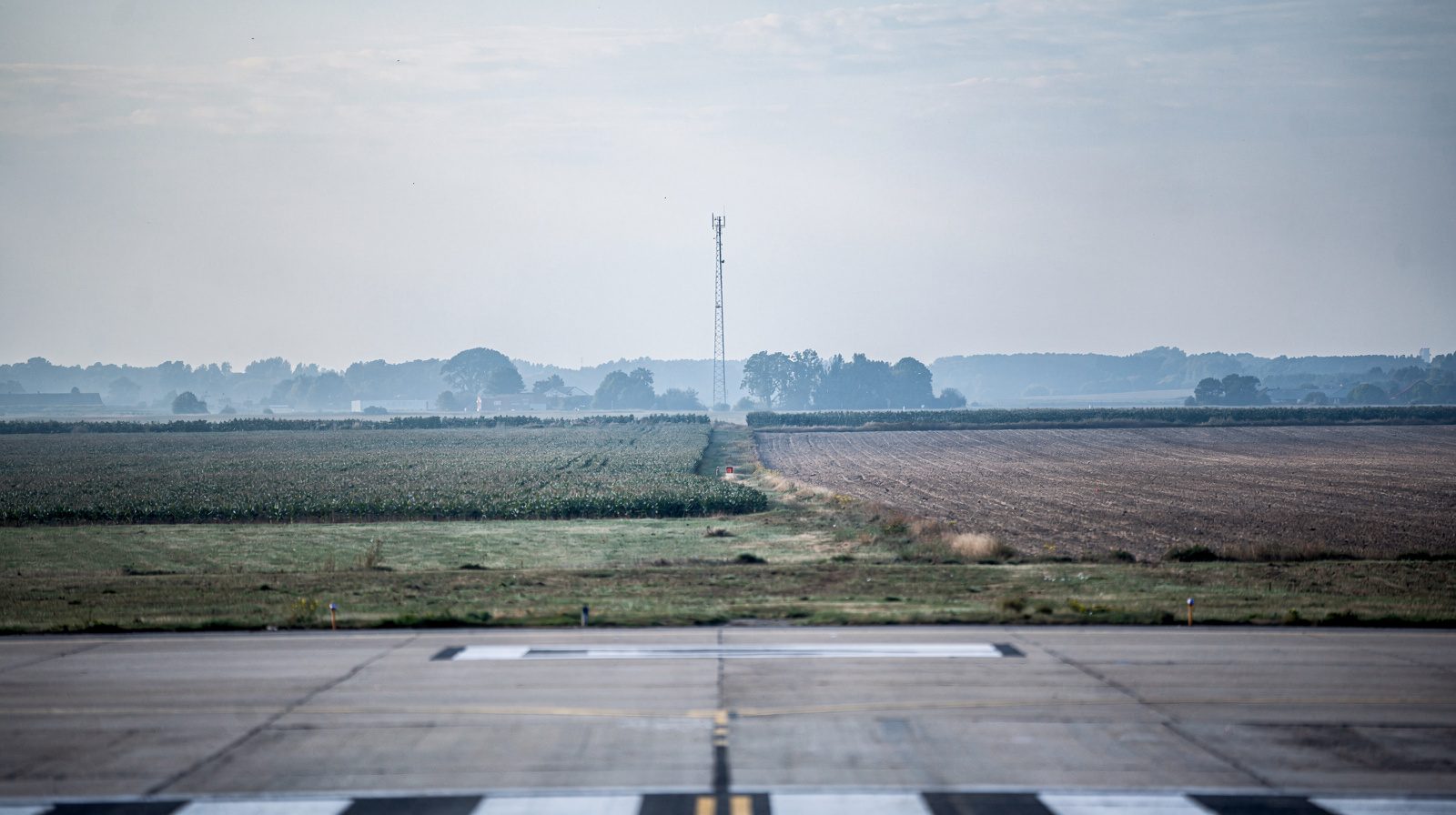
This photo shows a typical fan-shaped turn pad, clearly marked for centerline guidance and with reinforced shoulders to support safe, efficient aircraft maneuvering.
References and Further Reading
- ICAO Doc 9981: Procedures for Air Navigation Services, Aerodromes
- ICAO Annex 14, Vol. 1, Aerodromes
- FAA AC 150/5300-13: Airport Design
- Airport Pavement Design Manuals
Glossary Keywords
runway markings, taxiway runway, holding position markings, runways taxiways, surface painted holding position, aiming point, air traffic control, runway holding position, airport diagrams, runway safety area, taxiway markings, runway incursions, runway centerline, painted taxiway, movement area, runway taxiway, airport operations, ground vehicles
Turn pads are a vital, often underappreciated feature of airport infrastructure, ensuring that even the largest aircraft can safely and efficiently operate on constrained airfields worldwide.
Frequently Asked Questions
- Are turn pads required at all airports?
- Turn pads are not universally required. Their necessity depends on runway width, taxiway layout, and the types of aircraft operating. For large aircraft (ICAO Codes D/E/F) using runways without end taxiways, ICAO makes turn pads mandatory. For smaller aircraft or runways with adequate taxiways, they may not be needed.
- How do turn pads differ from blast pads or stopways?
- Turn pads are paved for aircraft to perform turning maneuvers. Blast pads are built to absorb jet blast at runway ends and are not used for taxiing. Stopways are runway extensions for emergency overruns, not for regular aircraft movement or turning.
- What markings are found on a turn pad?
- Typical markings include centerline extensions, edge lines, and sometimes chevrons or holding position lines. These conform to ICAO and FAA standards to guide pilots during turns and assure safety.
- Can ground vehicles use turn pads?
- Only with explicit clearance from air traffic control. As part of the movement area, turn pads are reserved for aircraft and authorized vehicles to ensure operational safety.
This is a reference entry. TarmacView provides drone inspection services and doesn't sell the equipment or materials described in this glossary.