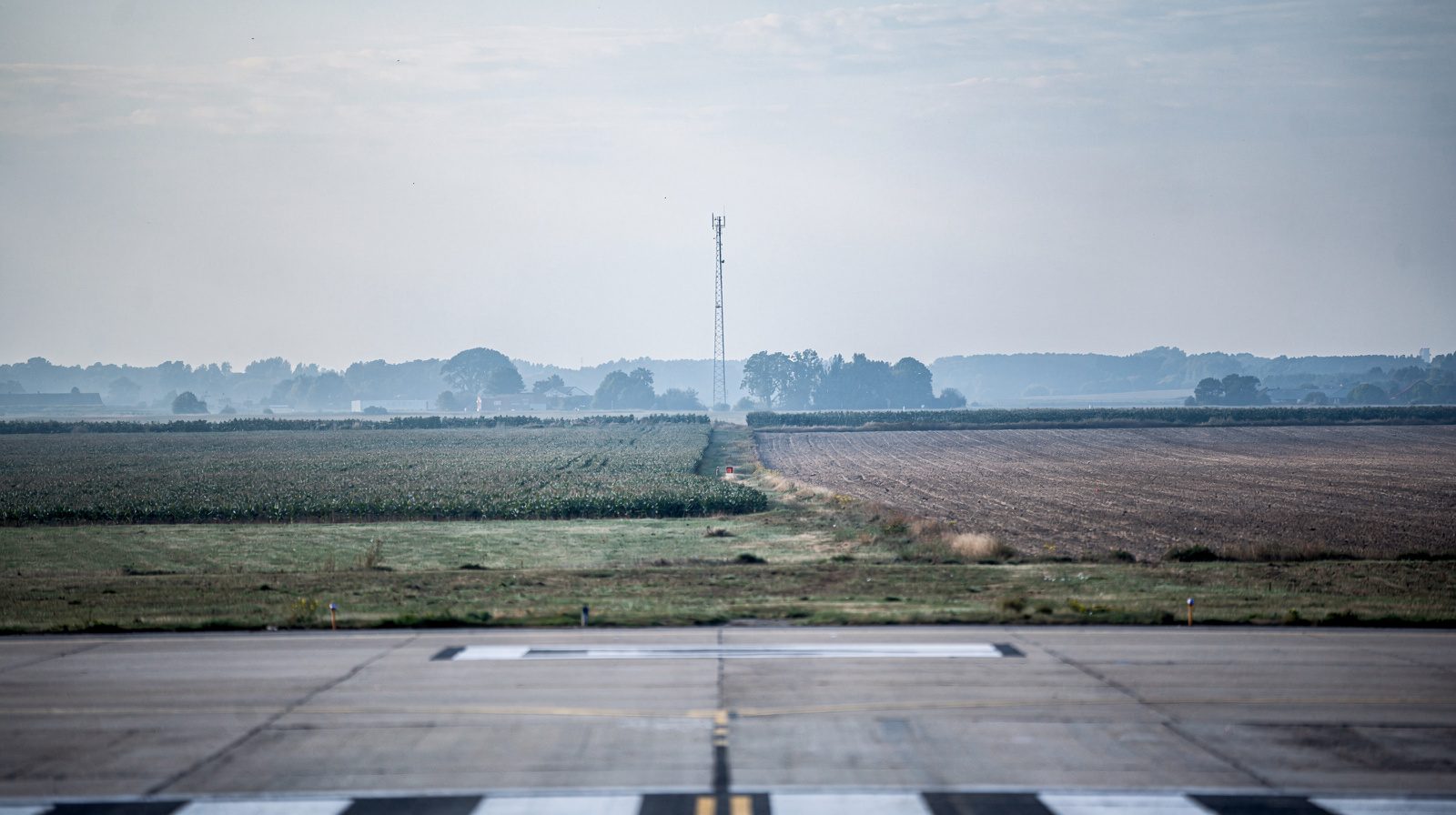
What is a Runway Safety Area (RSA)?
Runway Safety Area (RSA)
The runway safety area (RSA) is a prepared area around a runway that reduces damage to aircraft that undershoot, overshoot or leave the runway.
RSA stands for runway safety area. This is the FAA definition in AC 150/5300-13B. The RSA also gives fire-fighting and rescue vehicles easier access during such an event.
Why the RSA exists
AC 150/5300-13B Appendix I says that the current RSA standards rest on 90 percent of overruns staying inside the RSA. The area has an old history. Early airfields had a “landing strip” that supported aircraft without structural damage. The FAA later renamed it “runway safety area” to show its function.
RSA, RESA and runway strip
The term “runway safety area” belongs to the FAA. ICAO Annex 14 and EASA CS-ADR-DSN use two other terms:
- Runway strip. An area that includes the runway and the stopway. It reduces the risk of damage to an aircraft that runs off the runway and protects aircraft that fly over it.
- Runway end safety area (RESA). An area symmetrical about the extended runway centre line, next to the end of the strip. It reduces the risk of damage to an aeroplane that undershoots or overruns the runway.
The FAA RSA covers both functions in one area. Use the term of the authority that governs the airport.
AC 150/5300-13B names other areas and a line that sit around the RSA. None of them replaces the RSA. The section below compares them.
“Runway protected area” and “runway safety zone” are not defined terms in AC 150/5300-13B, Annex 14 or CS-ADR-DSN. Searches for them usually mean one of the areas above.
RSA, ROFA, RPZ, OFZ and the BRL
Each item has its own purpose in AC 150/5300-13B:
- RSA: a prepared surface around the runway that reduces the risk of damage in an undershoot, overshoot or excursion (definition 83).
- Runway object free area (ROFA): a clear area limited to equipment that air and ground navigation needs. It gives wingtip protection when an aircraft leaves the runway, and it is wider than the RSA (3.12).
- Runway protection zone (RPZ): an area at ground level before the threshold or beyond the runway end. It protects people and property on the ground (definition 82). It replaces the older “clear zone”.
- Obstacle free zone (OFZ): the airspace along the runway and the extended centreline that is clear of obstacles. It protects aircraft that land, take off or fly a missed approach (definition 69).
- Building restriction line (BRL): a line that the airport sets on its layout plan. It shows suitable locations for buildings (6.7.1).
The RSA and the ROFA are ground areas around the runway. The RPZ lies beyond the runway end. The departure RPZ starts 200 ft (61 m) beyond the runway end (3.13.1). Figure 3-26 shows it overlapping the outer part of the RSA and the ROFA.
The ROFA must be clear of above-ground objects that stand higher than the nearest point of the RSA (3.12.1). PAPI power control units and supplemental wind cones may stand in the ROFA when no wingtip conflict exists. The test uses the outer main gear of the design aircraft at the RSA boundary.
The BRL protects the OFZ, the ROFA, the RPZ and other surfaces (6.7.1). It is a planning line and not a prepared surface.
FAA dimensions
The RSA is symmetrical about the runway centre line and the extended centre line. Its length and width depend on the runway design code (RDC). The RDC combines the aircraft approach category (A to E) with the airplane design group (I to VI). The AC 150/5300-13B Appendix G tables give these values for visual runways and for visibility minimums not lower than 3/4 mile.
| Runway design code | Length beyond departure end | Length prior to threshold | Width |
|---|---|---|---|
| A/B-I | 240 ft (73 m) | 240 ft (73 m) | 120 ft (37 m) |
| A/B-II | 300 ft (91 m) | 300 ft (91 m) | 150 ft (46 m) |
| A/B-III | 600 ft (183 m) | 600 ft (183 m) | 300 ft (91 m) |
| A/B-IV | 1,000 ft (305 m) | 600 ft (183 m) | 500 ft (152 m) |
| C/D/E-I to VI | 1,000 ft (305 m) | 600 ft (183 m) | 500 ft (152 m) |
Four rules change these values:
- The length beyond the runway end starts at the runway end. When a stopway is present, it starts at the stopway end (footnote 9).
- The length prior to the threshold for A/B-III and larger codes applies only when the runway end has electronic or visual vertical guidance. A precision approach path indicator (PAPI) counts as visual vertical guidance. Without guidance, use the length beyond the departure end (footnote 11).
- Lower visibility minimums raise the values for A/B-I to A/B-III. For A/B-I, the length is 600 ft and the width is 300 ft when the minimums are lower than 3/4 mile.
- For C/D/E-I and C/D/E-II, a width of 400 ft (122 m) is permissible when 500 ft is not practical (footnote 13).
ICAO and EASA RESA dimensions
ICAO Annex 14 3.5.3 requires a RESA of at least 90 m from the end of the strip. This applies to code 3 and 4 runways, and to instrument runways of code 1 and 2. The length may be shorter with an arresting system. Annex 14 3.5.4 recommends the following lengths:
- 240 m for code 3 and 4
- 120 m for code 1 and 2 instrument runways
- 30 m for code 1 and 2 non-instrument runways
The width must be at least twice the runway width (3.5.5). It should equal the graded width of the runway strip where practicable (3.5.6). The strip itself extends at least 60 m beyond the runway end for code 2, 3 and 4 (3.4.2). EASA CS ADR-DSN.C.215 gives the same lengths and widths as “should” provisions.
Attachment A section 9 of Annex 14 adds guidance. The RESA should be long enough to contain overruns and undershoots that reasonably probable adverse factors cause. On a precision approach runway, the ILS localizer is normally the first upstanding obstacle, and the RESA should extend up to it. The State should publish the RESA and any arresting system in the AIP.
What the RSA must be
AC 150/5300-13B 3.10.1 requires that an RSA is:
- cleared and graded, with no potentially hazardous ruts, humps, depressions or other surface variations
- drained so that water does not collect
- able to support snow removal equipment, fire-fighting equipment and the occasional passage of aircraft under dry conditions, without major damage to the aircraft
- graded to the longitudinal and transverse grades of section 3.16.5
The soil must meet the compaction criteria of Specification P-152 in AC 150/5370-10. 14 CFR 139.309 sets similar requirements for safety areas of runways and taxiways that air carriers use. It also fixes the minimum size. The safety area must be at least as large as it was on 31 December 1987. If construction began later, it must be as large as the FAA authorised then.
RSA grades
Section 3.16.5 and Table 3-6 give the grade limits:
- In the first 200 ft (61 m) beyond the runway end, the longitudinal grade is 0 to 3 percent. Any slope is downward from the end.
- Beyond the first 200 ft, the maximum negative grade is 5 percent.
- Longitudinal grade changes stay within plus or minus 2 percent per 100 ft (30.5 m).
- The transverse side slope of the RSA along the runway is 1.5 to 5 percent for aircraft approach categories A and B. It is 1.5 to 3 percent for categories C, D and E.
The ICAO and EASA documents give similar limits for the RESA as recommendations. The longitudinal slope should not exceed a downward 5 percent. The transverse slope should not exceed 5 percent up or down. No part of the RESA should penetrate the approach or take-off climb surface (Annex 14 3.5.9 to 3.5.11, CS ADR-DSN.C.230).
Objects in the RSA
AC 150/5300-13B requires an RSA free of objects, except those that need to be there because of their function. The AC adds these rules:
- Keep the RSA clear of all parts of a holding or taxiing aircraft and of a holding or moving ground vehicle.
- An object higher than 3 inches (76 mm) above grade must have a frangible point no higher than 3 inches above grade.
- A foundation, concrete pad or handhole must carry snow removal and rescue vehicles. Its top must be between flush with grade and 1 inch (25 mm) above grade.
- Do not place an object in the standard RSA dimensions when it is not essential there, even if the RSA is non-standard.
On navigation aids, the AC advises grading the RSA so that approach lighting towers and the localizer antenna array do not need non-frangible supports (3.10.2).
In the ICAO and EASA documents, the same ideas appear as recommendations for the RESA. Annex 14 3.5.7 recommends that operators remove any object in the RESA that may endanger aeroplanes. EASA CS ADR-DSN.C.220 permits no fixed object on a RESA, except frangible equipment that air navigation or aeroplane safety needs.
Non-standard RSAs and arresting systems
AC 150/5300-13B 3.10.2 says the FAA does not consider a modification of standard for non-standard RSA dimensions. The standard stays in effect even when natural objects, man-made objects or surface conditions prevent it. The AC tells designers to evaluate all practicable alternatives. FAA Order 5200.8, Runway Safety Area Program, sets the process for the RSA determination.
An engineered materials arresting system (EMAS) is a bed of material that slows an aircraft that leaves the runway end. The AC allows it as an alternative where the standard RSA cannot be built. A properly designed EMAS gives an equivalent level of safety. It does not reduce the standard RSA width. A primary design condition is to stop the critical aircraft when it leaves the runway at 70 knots. Appendix G footnote 10 allows the RSA length to shrink to the length that the EMAS needs.
Annex 14 allows the same idea. A RESA may be shorter when the operator installs an arresting system, subject to acceptance by the State. Attachment A also covers a RESA that is hard to build. In that case, the operator must consider reducing declared distances. This makes room for the RESA and an arresting system.
Airfield inspection
Under 14 CFR 139.327, an airport certificate holder inspects the airport daily, when an unusual condition arises, and after an accident or incident. The inspection checks compliance with 14 CFR Part 139 subpart D, which includes 14 CFR 139.309. That rule lists ruts, humps, depressions, water accumulation and objects that should not be in a safety area.
TarmacView plans drone survey flights and captures imagery of an aerodrome. TarmacView does not certify an RSA or RESA, and it does not rate their grades or dimensions.
Frequently Asked Questions
- How does a runway safety area differ from a clear zone and a building restriction line?
- The RSA is a prepared surface around the runway. A clear zone is the former name of the runway protection zone (RPZ), a ground area at the runway end that protects people and property. A building restriction line (BRL) is a planning line for buildings on the airport. AC 150/5300-13B defines each for a different purpose.
- What does RSA stand for in aviation?
- At an airport, RSA stands for runway safety area. It is the FAA term for the prepared area around a runway that reduces damage to an aircraft that undershoots, overruns or leaves the runway.
- Is a runway safety area the same as a runway end safety area?
- No. The RSA is the FAA term. It surrounds the runway, and its dimensions depend on the runway design code. The runway end safety area (RESA) is the ICAO and EASA term. It lies only beyond the end of the runway strip. ICAO Annex 14 and EASA CS-ADR-DSN do not use the term "runway safety area".
- What are the runway safety area dimensions?
- For visual runways and visibility minimums not lower than 3/4 mile, the FAA RSA is 120 to 500 ft (37 to 152 m) wide. It is 240 to 1,000 ft (73 to 305 m) long beyond the departure end. The runway design code sets the values. AC 150/5300-13B Appendix G lists each case.
- How long is a runway end safety area under ICAO and EASA?
- ICAO Annex 14 requires at least 90 m beyond the end of the runway strip. This applies to code 3 and 4 runways, and to instrument runways of code 1 and 2. It recommends 240 m for code 3 and 4, and 120 m for code 1 and 2 instrument runways. The width must be at least twice the runway width. EASA CS ADR-DSN.C.215 states the same lengths as "should" provisions.
- What are the grading rules for a runway safety area?
- The FAA requires a cleared and graded RSA with no potentially hazardous ruts, humps or depressions. In the first 200 ft (61 m) beyond the runway end, the longitudinal grade is 0 to 3 percent, sloping down from the end. Beyond that, a downward grade is at most 5 percent. AC 150/5300-13B section 3.16.5 gives the full limits.
- What if a standard RSA cannot be built?
- For the FAA, an engineered materials arresting system (EMAS) is an acceptable alternative where the standard dimensions cannot be reached. AC 150/5300-13B says a properly designed EMAS gives an equivalent level of safety. The FAA does not consider a modification of standard for non-standard RSA dimensions. Under ICAO and EASA, a RESA may be shorter when the airport installs an arresting system.
- Is a "runway protected area" or "runway safety zone" the same as an RSA?
- No. AC 150/5300-13B, ICAO Annex 14 and EASA CS-ADR-DSN do not define either term. People who use them usually mean the RSA, the runway strip, the runway object free area or the runway protection zone. Each of these is a separate area with its own purpose and size.
References
- faa-ac-150-5300-13b
- AC 150/5300-13B, Airport Design (Change 1) FAA
- icao-annex-14-vol-i
- Annex 14 to the Convention on International Civil Aviation, Aerodromes, Volume I, Ninth Edition (July 2022, with Amendment 18) ICAO (copy hosted by Swiss FOCA)
- easa-cs-adr-dsn
- Easy Access Rules for Aerodromes (Regulation (EU) No 139/2014), CS-ADR-DSN Issue 7 EASA
- ecfr-14-cfr-139-309
- 14 CFR 139.309, Safety areas US Government Publishing Office (eCFR)
- ecfr-14-cfr-139-327
- 14 CFR 139.327, Self-inspection program US Government Publishing Office (eCFR)
This is a reference entry. TarmacView provides drone inspection services and doesn't sell the equipment or materials described in this glossary.