A Second Opinion on Your Airfield Lighting
An independent drone check of your PAPI and airfield lighting after a flight inspection, a re-aim or pilot reports. Every unit measured, the evidence kept.
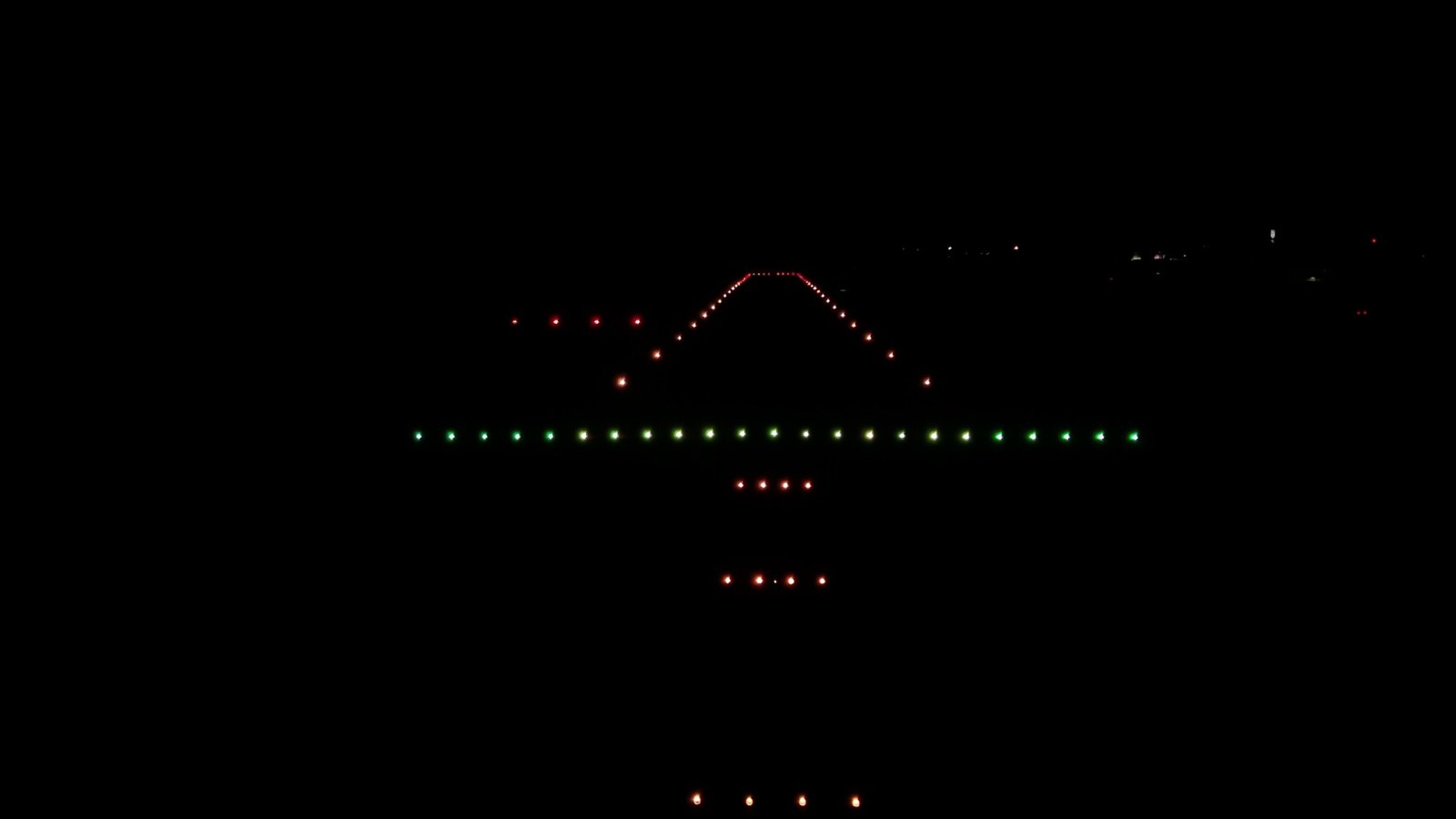
- 01 A second opinion measures lights that already have a result. It adds a value per unit to a flight inspection, a contractor's re-aim or your own check.
- 02 The measurement is independent because TarmacView does not adjust, replace or certify fittings. It measures, reports and leaves the decision with the aerodrome.
- 03 Flight inspection verifies the PAPI, the approach lighting and the runway lighting. The drone measures them unit by unit and keeps the frames behind each value.
- 04 Where a radio aid calibration is already scheduled, the aircraft verifies the lights for around 3,000 EUR. A separate aircraft visit for the lights adds ferry both ways.
- 05 Neither method closes the runway. The drone flies between aircraft movements, on a date agreed with the aerodrome.
On this page · 9 sections
Who asks for a second opinion?
Nobody orders a second opinion on lights they trust. The request comes when an aerodrome holds a result and still has a question. It opens in four ways.
- A flight inspection has verified the lights, and the aerodrome wants a measured value for each unit before it signs off.
- A contractor has re-aimed or reinstalled a precision approach path indicator (PAPI) , and nobody has seen the units from the approach since.
- The aerodrome’s own clinometer checks read correctly at the box, and pilots still report an indication that looks wrong.
- The authority is about to review the maintenance file, and the file holds a conclusion without the data behind it.
Every Slovak commercial airport has come to us this way. Trenčín Airport asked for a check after its PAPI was reinstalled, and again after its contractor re-aimed it. Žilina Airport asked us for a second opinion as well.
The two main Slovak commercial airports called after pilots complained about PAPI indications. In both cases the complaints followed a flight inspection and the repair that came after it. We came, measured the PAPI and handed over the results. A pilot report after an inspection and a repair does not show that either was wrong. It shows that somebody has to measure.
Where does it apply, and where does it not?
It applies when a lighting result exists and a decision depends on it. The decision may be a sign-off, an answer to a flight crew or a submission to the authority. The method is the same for a regional aerodrome with one PAPI and for an airport with a full approach lighting system.
It does not apply to radio navigation aids. An instrument landing system (ILS) or a VHF omnidirectional range (VOR) is calibrated by a flight inspection aircraft. No drone method on this page does that. It does not apply when a light is dark, which is a job for the maintenance contractor. And it does not replace a flight check that your maintenance programme requires.
A second opinion at a glance
- When it is asked for
- After a flight inspection, a contractor's re-aim, your own checks or a pilot report, when a decision depends on the result.
- What is measured
- The transition angle of every PAPI unit, seen from the approach. Other lighting systems are measured light by light on request.
- Who measures
- TarmacView, which does not adjust, replace or certify fittings. The measurement has no stake in the repair.
- Runway
- No closure is booked. The drone flies between aircraft movements, and flight inspection does not close the runway either.
- Time on site
- About 15 minutes from take-off to results per runway side. About 30 minutes for both PAPI systems.
- What you receive
- A protocol with a measured value, a nominal value and a verdict per unit. The raw video and positioning log are retained.
- Price
- Quoted per aerodrome. No rate is published.
- What it is not
- Not a flight check, not a radio navigation aid calibration and not an absolute intensity measurement in candelas.
What does a second opinion add to the result you have?
Three things. Each one answers a different question from the person who has to sign.
A value per unit
Flight inspection verifies the PAPI transition angles, the approach lighting and the runway lighting in about an hour of flying. That is a verification, and the aerodrome can rely on it. A drone measurement adds a figure for each unit. The figure is the angle at which the light changes from red to white, seen from the approach. When a result is questioned, a named unit and a measured error settle more than a second verdict.
Independence from the work
TarmacView measures and reports. It does not adjust, replace or certify fittings, so the measurement has no stake in the repair it checks. The contractor re-aims, the aerodrome decides, and the protocol records what each unit read before and after.
Data that can be reopened
The raw video and the positioning log are retained. A disputed value can be recomputed from them without another flight. How a drone measurement becomes evidence sets out the chain from camera frame to reported angle, with its error budget.
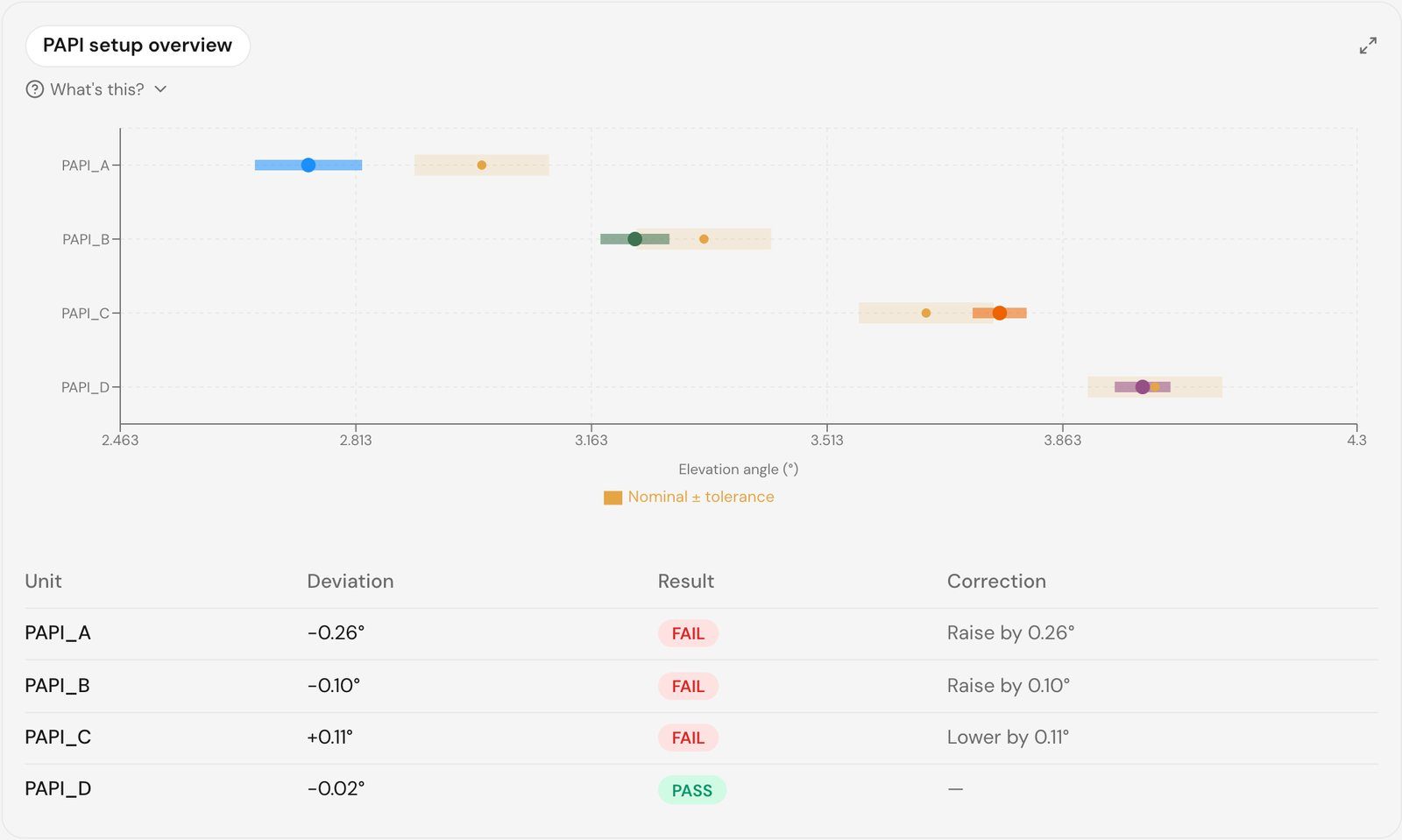
Measured transition angle per unit against its nominal value and tolerance. A second opinion puts this table next to the result you already hold.
How does a second opinion run?
The visit follows five steps. At Trenčín the measurement, the contractor’s re-aim and the re-check closed in 17 days. With the contractor on site from the start, the same sequence can close in one visit.
From the first result to a closed question
- 01
Send the result you already hold
Send the flight inspection report, the contractor's record or your own check sheet, with the nominal setting angle of each unit.
WhyA second opinion is a comparison. Without the first result, the measurement is only another inspection.
Done whenBoth sides know which units and which values are in question before anyone travels.
If notIf no record exists, the first measurement becomes the baseline and the comparison starts from it.
- 02
Agree the date and the window
Pick a date that fits your traffic and your technician. If a contractor will re-aim, book the same day.
WhyThe measurement needs the PAPI switched on, the tower informed and somebody at the lighting panel.
Done whenTower, technician and drone crew hold the same date, and no runway closure is booked.
If notWind or rain postpones a drone flight. The visit moves to the next agreed date.
- 03
Measure every unit from the approach
The drone climbs through a vertical profile in front of each wing bar, several times per runway end. Each transition angle is computed from frames positioned by real-time kinematic (RTK) satellite navigation.
WhyOne unit off its angle changes what the crew sees. Measuring all of them shows which one, and by how much.
Done whenEvery unit has a measured transition angle that repeats across the flights.
If notIf an aircraft movement interrupts a pass, the drone clears the runway strip and the pass is flown again.
- 04
Compare the two results
Set each measured angle against its nominal value, its tolerance and the result you already hold.
WhyAgreement and disagreement are both findings. Either one answers the question the aerodrome started with.
Done whenThe protocol names every unit outside tolerance, with the direction and size of its error, or confirms all units inside it.
If notWhere the two results differ, the retained frames allow the value to be recomputed and reviewed.
- 05
Close the question
Your technician or contractor re-aims the named units. The drone then flies the same profiles, and the protocol records the result.
WhyA finding is closed only when the corrected unit has been measured again.
Done whenThe maintenance file holds a dated measurement before and after the adjustment for each unit.
If notIf a unit is still outside tolerance, the finding stays open and the aerodrome decides whether to withdraw the PAPI.
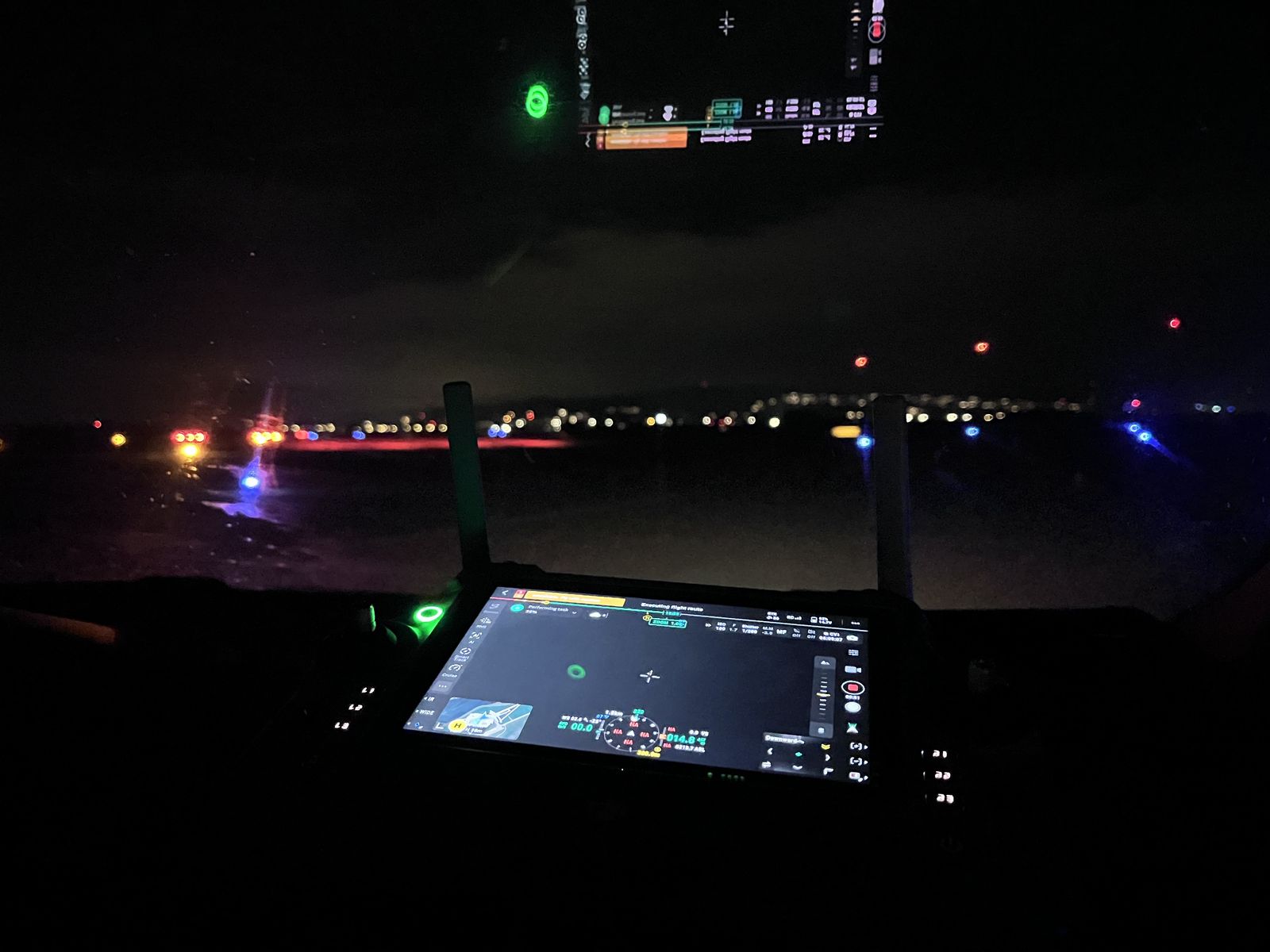
The re-check at Trenčín, flown on the day the contractor re-aimed the units. The same profiles as the first visit make the two results comparable.
What you already hold, and what a second opinion adds
| What you already hold | What the second opinion adds | Evidence you receive | Where it stops |
|---|---|---|---|
| A flight inspection report | The transition angle of each PAPI unit, measured from the approach | Measured angle, nominal value and tolerance per unit, with the source frames | Radio navigation aids, which stay with the aircraft |
| A contractor's re-aim | The same profiles flown after the adjustment | A dated record per unit before and after the work, as at Trenčín | The adjustment itself. TarmacView measures and reports, and does not re-aim |
| Your own clinometer checks | What the approach sees, which a reading at the box cannot show | The angle of each unit as the flight crew meets it | The clinometer check at the box, which stays with your technician |
| Pilot reports | Every unit on the reported runway end, and the glide path the units produce together | A dated finding that names the unit, or shows all units within tolerance | The decision to withdraw the PAPI, which is the operator's |
| An approach or runway lighting result | Each light imaged from the approach, for pattern, colour and relative output | Units that are missing, misaligned or drifting from their neighbours | Absolute intensity in candelas, which needs a calibrated photometer |
| A file for the authority | The raw video and the positioning log behind each value | A protocol and the data to recompute a disputed value | Acceptance, which your authority decides |
What does it cost against a return visit by the aircraft?
Neither method publishes a rate, and TarmacView quotes each aerodrome. The aircraft figures below come from a flight inspection operator active in Slovakia, Czechia and Hungary.
- A measurement flight hour costs about 3,000 EUR, and one bidirectional runway takes about an hour.
- Where an ILS or VOR calibration is already scheduled, the aircraft verifies the lights on that visit for around 3,000 EUR.
- A separate visit for the lights alone adds ferry, charged at 60 to 70 percent of the flight-hour rate.
- With an hour of ferry each way, that separate visit comes to roughly 6,600 to 7,200 EUR.
So the answer depends on the calendar. If the aircraft is due anyway, ask it to look again, and buy the drone for the record per unit. If it is not due, a second look by aircraft means a separate visit, and the drone is the cheaper route. The drone survey versus flight inspection comparison and the PAPI calibration cost guide show the arithmetic.
What are the limits?
A second opinion is useful because it is narrow. Five limits apply to every visit.
- It is not a flight check. The European acceptable means of compliance ask for flight checks of the lighting at least yearly and after major maintenance. No text we read names a drone measurement as one.
- It does not cover radio navigation aids. An ILS or a VOR keeps its flight inspection.
- It does not state intensity in candelas. Output is reported relative to neighbouring units and to the commanded dimming step.
- It does not repair anything. Re-aiming stays with your technician or contractor.
- It does not decide acceptance. The International Civil Aviation Organization (ICAO) names an unmanned aircraft as an alternative method for measuring PAPI settings, in Doc 9157 Part 4, paragraph 8.3.43. Your authority still decides what it accepts, as the regulatory acceptance guide explains.
Related pages
- Why airports ask for a second opinion gives the reasons the Slovak airports had.
- PAPI wrong after a flight check covers pilot complaints that follow an inspection and a repair.
- PAPI out of tolerance covers the visit that confirms, re-aims and re-checks a unit.
- Airfield lighting inspection covers the yearly programme, not a single disputed result.
- Airfield lighting inspection companies lists who measures what, by drone, vehicle and aircraft.
- PAPI inspection sets out everything measured per unit.
- Set your PAPI right the first time covers the precision of the measurement and flying it with your own drone.
To ask for a second opinion, send the result you hold and your runway ends to TarmacView .
Frequently Asked Questions
- Does a second opinion replace the flight inspection?
- No. Flight inspection verifies the PAPI transition angles, the approach lighting and the runway lighting, and it calibrates radio navigation aids. A second opinion measures the same lights unit by unit from the approach. The European acceptable means of compliance ask for a flight check of the lighting at least yearly. Whether a drone measurement can stand in for one is for your authority to decide.
- Who can calibrate PAPI lights at a small airfield?
- Three parties share the work. The aerodrome's lighting technician or contractor sets each unit at the box. A flight inspection organisation or a drone measurement service then verifies the result from the approach. TarmacView measures and reports and does not adjust the units. At Trenčín Airport the external PAPI contractor re-aimed the units, and TarmacView measured them before and after.
- Is a drone check cheaper than bringing the aircraft back?
- It depends on what is already scheduled. Where a radio navigation aid calibration is due, the aircraft verifies the lights on that visit for around 3,000 EUR. A separate aircraft visit for the lights alone carries ferry both ways, at 60 to 70 percent of the flight-hour rate. That is the case where the drone costs less. TarmacView quotes each aerodrome and publishes no rate.
- Does the runway close for a second opinion?
- No closure is booked. The drone flies between aircraft movements in coordination with the tower, and the aircraft always has priority. A flight inspection does not close the runway either. It takes about 15 minutes from take-off to results for one runway side. Both PAPI systems take about 30 minutes.
- What does the aerodrome receive?
- A protocol with the measured transition angle of every PAPI unit, its nominal value, the tolerance and a verdict. Units outside tolerance are named with the direction and size of the error. The raw video and the positioning log are retained, so a disputed value can be recomputed. The measured values belong to your maintenance record.
- Will the authority accept a drone measurement?
- That is the authority's decision, so ask it in writing. ICAO Doc 9157 Part 4, paragraph 8.3.43, names an unmanned aircraft as an alternative method for measuring PAPI settings. Paragraph 8.3.46 adds that the camera must be operationally validated and that the State may require special authorization. No text we read names a drone measurement as a flight check.
- Which lights can a second opinion cover?
- The PAPI comes first, because its result is an angle per unit. The same visit can cover the approach lighting, the runway edge, threshold and end lights, and the taxiway lights. Output is reported relative to neighbouring units and to the commanded dimming step. Absolute intensity in candelas needs a calibrated photometer.
References
- easa-ear-aerodromes
- Easy Access Rules for Aerodromes (Regulation (EU) No 139/2014), including CS-ADR-DSN Issue 7, revision of March 2026 European Union Aviation Safety Agency
- icao-doc-9157-p4
- Doc 9157, Aerodrome Design Manual, Part 4: Visual Aids International Civil Aviation Organization
- cee-operator-rates
- Flight calibration rates and durations in the Slovak, Czech and Hungarian market Written exchange with a flight inspection operator active in the region
- expert-review-2026-09
- Review of the aircraft duration and scope Written review by an aeronautical ground aids measurement specialist
- tarmacview-trencin-case-study
- Trenčín Airport: PAPI Re-aimed and Re-checked After the Festivals TarmacView
- tarmacview-evidence
- How a Drone Measurement Becomes Evidence TarmacView