Trenčín Airport: PAPI Re-aimed and Re-checked After the Festivals
How Trenčín Airport (LZTN) got its PAPI back in tolerance after the summer festivals: a drone check, re-aiming by TechniServ and a re-check in September 2026.
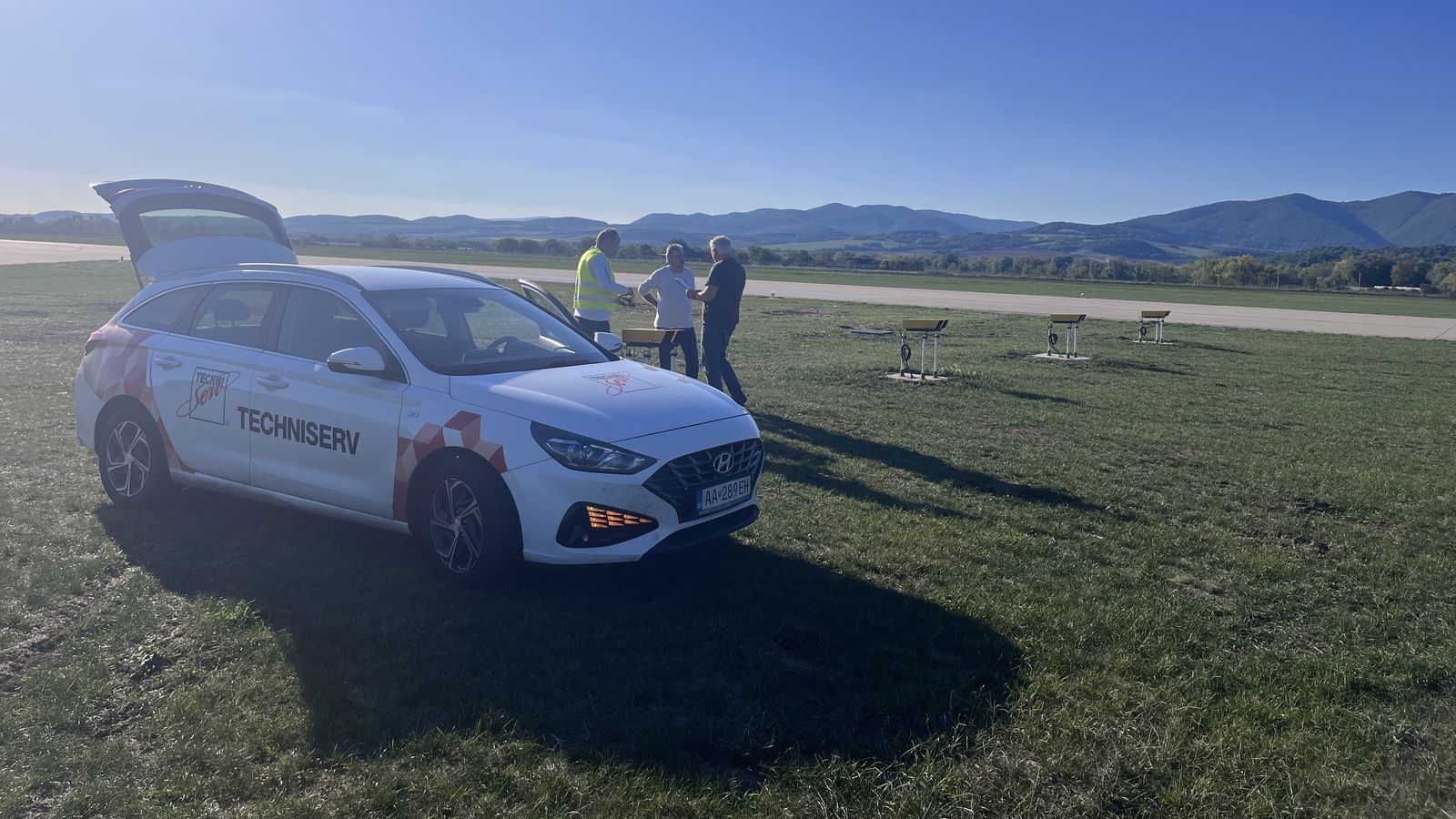
- 01 A PAPI that has been taken down and put back is a reinstallation, not a lamp change. Each unit needs its angle measured again from the approach before anyone relies on it.
- 02 The first check named the units that were off on each runway end, so the contractor went to known boxes with a known direction of error rather than re-aiming all eight.
- 03 The re-check flew the same profiles as the first visit, which turned a contractor's adjustment into a measured closure in the aerodrome's maintenance record.
- 04 Measure, adjust, measure again took 17 days here. With the contractor on site the first night it can close in one visit.
The engagement at a glance
- Aerodrome
- Trenčín Airport (LZTN), Slovakia. One runway, 04/22, with a four-unit PAPI at each end.
- Trigger
- The PAPI was dismantled for the summer festivals on the airfield and reinstalled afterwards.
- First check
- 11 September 2026, flown at night. Two of the four units on each runway end outside tolerance.
- Adjustment
- TechniServ, the lighting contractor the aerodrome called in, re-aimed the units on 28 September 2026.
- Re-check
- 28 September 2026, from dusk into the night, the same profiles as the first visit.
- Outcome
- All eight units back within tolerance on their transition angles, and the glide path within tolerance on both runway ends.
- Evaluated against
- Predpis L-14, the Slovak transposition of ICAO Annex 14 Volume I.
The airport and why the PAPI came out
Trenčín Airport sits in the Váh valley in western Slovakia, with a single runway, 04/22, and a PAPI at each end. Each PAPI is a row of four units on adjustable legs, set at four angles, so a pilot on the correct slope sees two red and two white.
In summer the airfield is a festival ground. Several events take over the site, and the PAPI units were taken down for the season and put back once the last one was over. A unit that is unbolted, moved and set up again has lost its aiming. Its legs are adjusted again, and its angle depends on how carefully that was done and on the ground it now stands on.
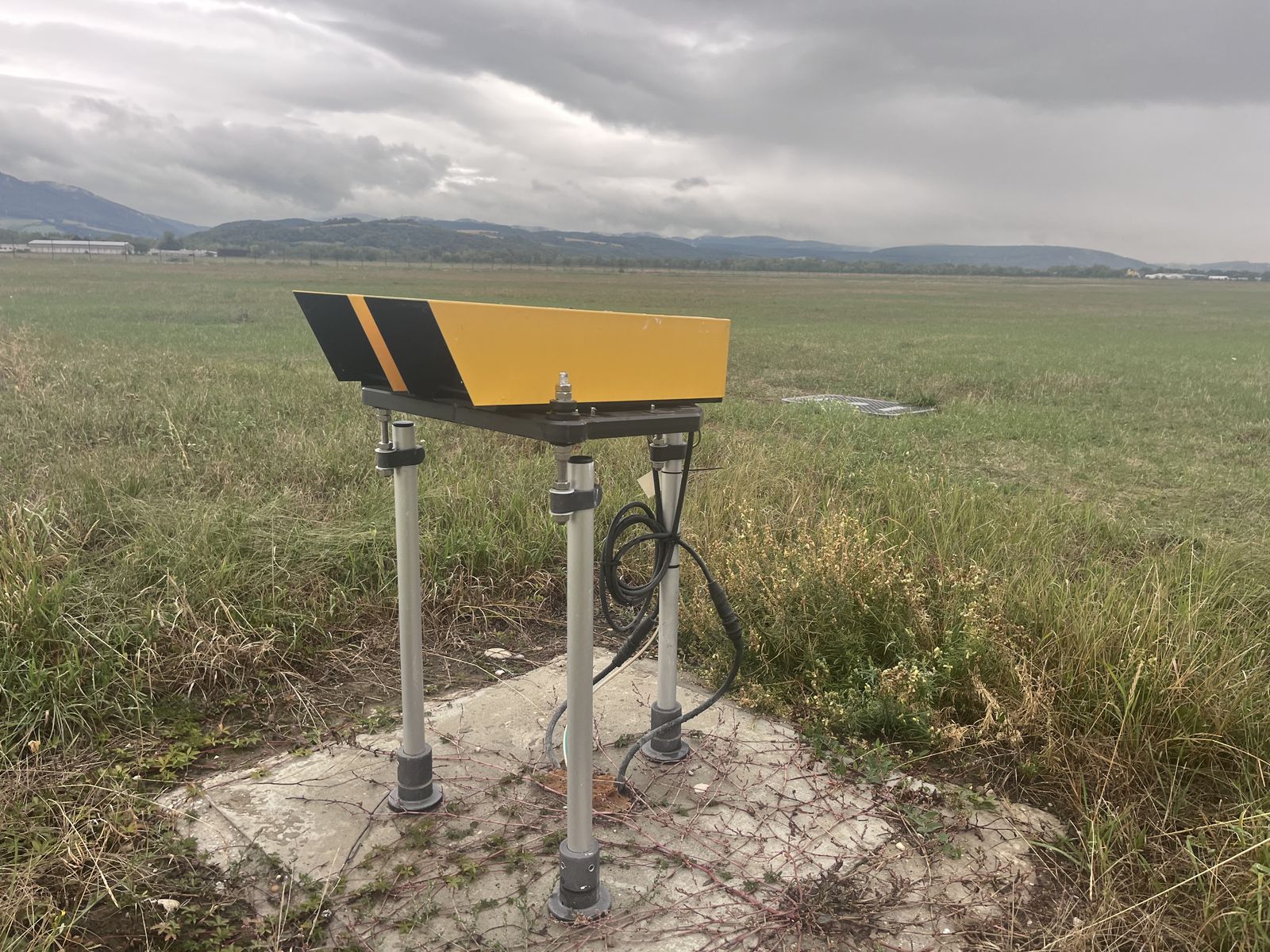
One of the reinstalled units on the day of the first check. The angle the approach sees is set by the four legs and the base under them.
The aerodrome wanted to know, before relying on the PAPI again, whether each unit showed the angle it was meant to. It asked TarmacView to measure both systems.
What the first check found
TarmacView flew both PAPIs on the evening of 11 September 2026. The drone, a DJI Matrice 4T with RTK positioning, climbed through a vertical profile in front of each wing bar after dark, several times per runway end, and the transition angle of every unit was computed from the frames where its light changed from red to white. Each unit’s position had been surveyed, so every angle is geometry measured from the approach, not an impression.
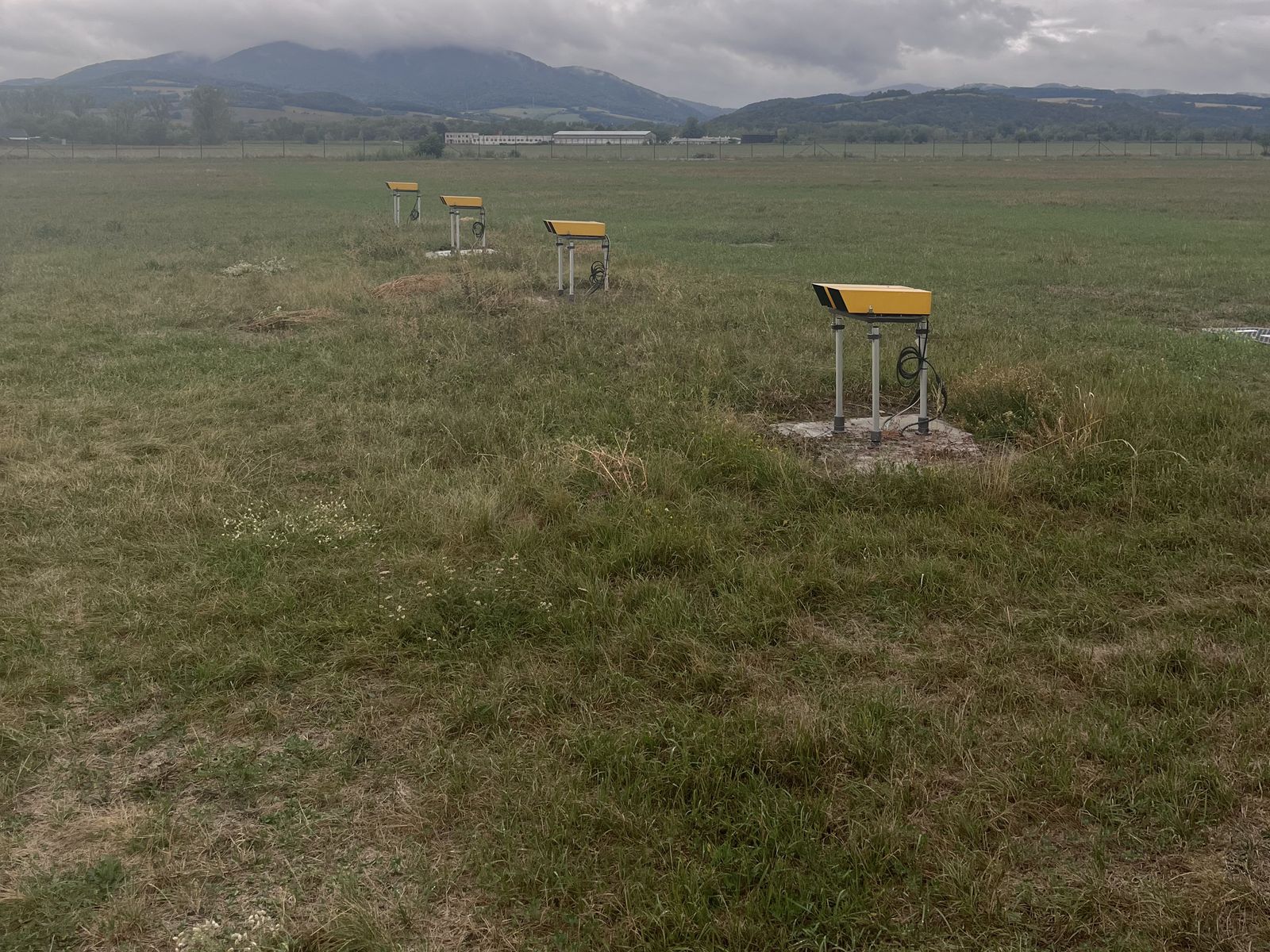
One wing bar of four units. On both runway ends, two of the four read outside tolerance.
The result was clear and repeatable across flights. On runway 04, two of the four units sat outside the tolerance of their setting angle. On runway 22, two more did, and the glide path the pilot sees was off with them. The report rated both PAPIs as restricted, with the approach path indication unreliable until the units were corrected. It named each unit, the direction of its error and its size, and recommended checking those units with a clinometer at the box. It went to the aerodrome on 14 September 2026.
Re-aiming and the re-check
With the units named, the aerodrome called in TechniServ, its lighting contractor. The crew did not have to re-aim all eight boxes and hope. It went to the four that were off, knowing which way each one needed to move.
TechniServ worked at the units during the day on 28 September 2026, and TarmacView came back the same day. Once the adjustment was done, the drone flew the same profiles as on the first visit, from dusk into full darkness, across four sessions and seventeen runs over the two runway ends.
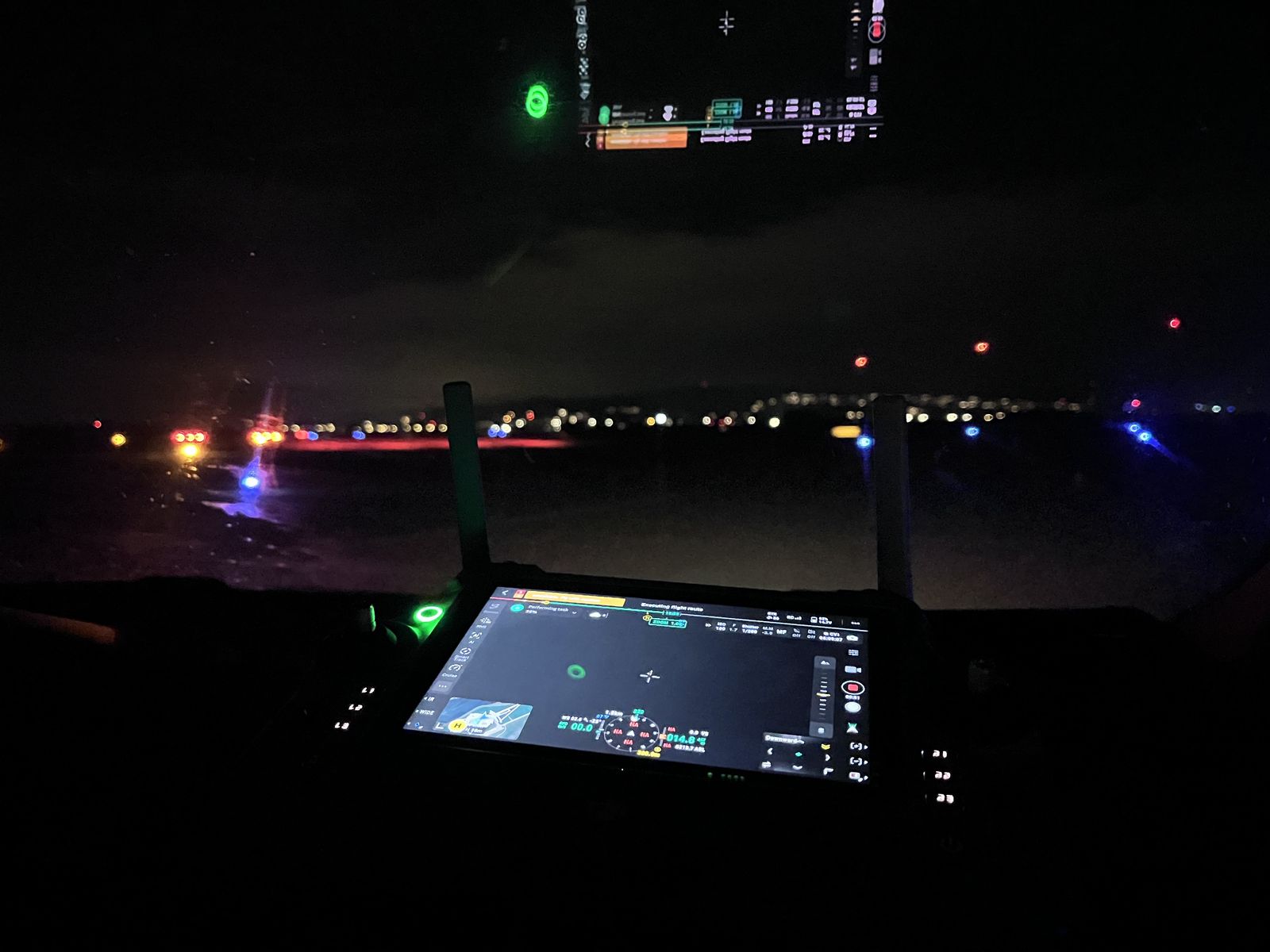
The re-check after dark. The controller flies the planned profile in front of the wing bar while the runway and approach lights stay on.
Every one of the eight units came back within tolerance of its setting angle, on both runway ends. The glide path measured within tolerance on both, and the widths of the sectors below, on and above the slope were within tolerance too. The revalidation protocol, issued on 30 September 2026, carried no further recommendations on the angles.
Timeline
| Date | What happened | Who |
|---|---|---|
| Summer 2026 | PAPI dismantled for the festival season and reinstalled afterwards | Aerodrome |
| 11 Sep 2026 | Night drone measurement of PAPI 04 and PAPI 22 | TarmacView |
| 14 Sep 2026 | Report delivered: four units outside tolerance, both PAPIs restricted | TarmacView |
| After the report | Lighting contractor called in to re-aim the named units | Aerodrome |
| 28 Sep 2026, daytime | Named units re-aimed | TechniServ |
| 28 Sep 2026, dusk and night | Re-check of both PAPIs, same profiles as the first visit | TarmacView |
| 30 Sep 2026 | Revalidation protocol issued, all eight units within tolerance | TarmacView |
What the aerodrome has now
Two dated protocols that tell one story. The first shows which units the reinstallation left out of tolerance and by how much. The second shows the same units, measured the same way, back within it. Between them sits the contractor’s adjustment, so anyone opening the maintenance file later can see what was found, what was changed and what it measured afterwards. That is the kind of record the EU maintenance rule, ADR.OPS.C.015, asks for after corrective maintenance, and it is the form a flight inspection or an authority review can start from.
It also has a baseline. The next time the units come down for the summer, the re-check gives a measured state of every unit to compare the reinstallation with.
What we would do differently
Measure before the units come out. The aerodrome’s previous protocol had all eight units within tolerance, which points at the reinstallation as the cause. Without a measurement taken just before the festivals, that stays likely rather than proven. A short check before dismantling costs one evening and makes the after-check a direct comparison.
Have the contractor on site the first night. The first visit only measured, and the fix needed a second visit 17 days later. The angles are computed on a field laptop on site, so a technician standing at the wing bar could have re-aimed the named units that night and the drone could have flown the profile again before everyone went home. The trade-off is booking two crews for an evening when nobody yet knows whether anything is wrong.
Plan the check into the festival calendar. The reinstallation date is known months ahead. Booking the measurement for the first evening after it keeps the gap between putting the units back and knowing they are right as short as it can be.
Related
The steps this engagement followed are the ones on PAPI out of tolerance : confirm which unit is off, re-aim it, re-check it. The PAPI inspection service page sets out everything measured per unit. If the units come out because of works on the runway itself, the lighting checks after works cover the rest of the runway lighting too. For how a drone measurement and the flight inspection aircraft divide the work, see drone survey versus flight inspection .
Frequently Asked Questions
- Why was the PAPI taken down at all?
- Trenčín Airport hosts several festivals on the airfield over the summer. The PAPI units were dismantled for the festival season and installed again once it was over. Each unit sits on adjustable legs on a small concrete base, and putting it back means setting its angle again from scratch. That is why the aerodrome wanted the result measured rather than assumed.
- Why does this page not show the measured angles?
- The measured values belong to the aerodrome's maintenance record, not to a marketing page. This case study reports what was found and what changed, unit counts and dates, with the operator's agreement. The protocols themselves, with every angle, sector width and glide path figure, went to the aerodrome.
- Who adjusted the units?
- TechniServ, the lighting contractor the aerodrome called in after reading the first report. TarmacView measures and reports. It does not adjust, replace or certify fittings, which keeps the measurement independent of the work it checks. The aerodrome decided what to do with each finding and when the PAPI went back into normal use.
- Did the drone re-check replace a flight check?
- No. It showed, from the approach, that every unit's transition angle was back within tolerance after the re-aiming. The EASA acceptable means of compliance ask for special flight checks after major maintenance or changes, and whether a reinstallation needs one is for the aerodrome and its authority to settle. The drone measurement means the aircraft, when it comes, checks a PAPI already confirmed and corrected.
- Was the runway closed for the measurements?
- No closure was booked for either visit. The profiles were flown at dusk and after dark in front of each wing bar, with the PAPI switched on and the flights coordinated with the aerodrome. On the re-check day the contractor worked at the units during the day and the drone flew once they were done.
- Does this apply to other reasons for taking a PAPI down?
- Yes. An air show, a works area next to the runway, a damaged foundation or a box replaced after a mower strike all end the same way: a unit set again by hand that nobody has seen from the approach. The sequence is the same as at Trenčín. Measure every unit, adjust the ones that are off, and measure again before closing the job.
References
- easa-ear-aerodromes
- Easy Access Rules for Aerodromes (Regulation (EU) No 139/2014), including CS-ADR-DSN Issue 7 European Union Aviation Safety Agency
- icao-annex-14-v1
- Annex 14 to the Convention on International Civil Aviation, Volume I: Aerodrome Design and Operations International Civil Aviation Organization
- icao-doc-9157-p4
- Doc 9157, Aerodrome Design Manual, Part 4: Visual Aids International Civil Aviation Organization