What are Low Visibility Procedures (LVP) in Aviation?
Low Visibility Procedures (LVP) in Aviation Operations
Definition
Low Visibility Procedures (LVP) are comprehensive protocols, technical standards, and regulatory controls invoked at airports during periods of reduced visibility, such as fog, heavy precipitation, or low clouds, to ensure the safe, orderly movement of aircraft, vehicles, and personnel. LVPs protect critical navigation signals, prevent runway incursions, and maintain situational awareness for pilots and air traffic controllers. Mandated by ICAO Annex 14 and national authorities (e.g., UK CAA CAP 168, FAA Order 8000.94A), LVPs support precision approaches (CAT II, OTS CAT II, CAT III) and low visibility take-offs (LVTO) by enforcing strict safeguarding and operational controls whenever visual oversight is compromised.
Purpose and Scope
Purpose
LVPs are designed to:
- Ensure airport safety and operational continuity when visibility falls below normal thresholds.
- Prevent hazards such as runway incursions, signal interference, and loss of situational awareness.
- Safeguard ILS/MLS sensitive areas and enforce stricter ground movement controls to maintain safety during low visibility.
Scope
LVPs apply to all certified/licensed aerodromes supporting precision approaches or LVTO, both civil and military. They govern:
- Aircraft movement (approach, landing, taxi, take-off)
- Vehicle and personnel access in maneuvering areas
- Use of special holding points, stop-bars, and lighting systems
- Coordination and compliance among airport operators, ATC, pilots, and ground handlers
Key Terms and Definitions
| Term | Definition |
|---|---|
| Low Visibility Operations (LVO) | Operations during reduced visibility, applying LVP and associated safeguards. |
| Runway Visual Range (RVR) | The measured distance over which a pilot can see runway markings or lights from the centerline. |
| SMGCS/A-SMGCS | Surface Movement Guidance and Control Systems that guide and monitor ground movements safely in low visibility. |
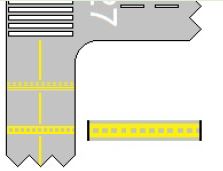
| CAT II/III Holding Points | Special holding positions on taxiways to protect ILS areas, preventing signal interference. |
| ILS Sensitive Area | Area near ILS antennas where presence of aircraft/vehicles can affect signal integrity. |
| Low Visibility Take-Off (LVTO) | Take-off when RVR is below standard minima (typically <400–550m). |
| Precision Instrument Approach | Approach using navigation aids (ILS/MLS) providing lateral and vertical guidance (CAT I/II/III). |
| Runway Incursion | Unauthorized presence of an aircraft, vehicle, or person on a runway, posing a collision risk. |
Regulatory Framework
LVPs are mandated by:
- ICAO Annex 14, Vol. I: Global standards for aerodrome design and low visibility operations.
- CAP 168 (UK CAA): UK requirements for LVP and aerodrome licensing.
- FAA Order 8000.94A/B (US): US standards for LVO and surface movement systems.
- UAE AMC-44: UAE-specific compliance measures for LVP.
- RA 3274 (UK Defence): Military aerodrome LVP requirements.
Compliance is audited regularly, and LVP plans must be detailed in operational manuals and notified to users via NOTAMs and briefings.
Visibility Conditions and Thresholds
Visibility at airports is categorized to determine LVP activation:
| Condition | Definition | Typical RVR | Operational Actions |
|---|---|---|---|
| 1 | Normal visual oversight by pilots/ATC | >1200m | No LVP needed |
| 2 | Pilots can taxi visually, ATC cannot see | 1000–400m | Prepare LVP, start safeguarding |
| 3 | Both pilots/ATC lack visual control | 400–75m | Full LVP, maximum safeguarding |
| 4 | Pilots cannot taxi visually | <75m | Maximum LVP, A-SMGCS required |
Approach Categories and Minima
| Category | Decision Height | RVR | Visual Reference |
|---|---|---|---|
| CAT I | ≥200 ft | ≥550m | Approach/runway lights |
| CAT II | <200–100 ft | ≥350m | Runway lights/markings |
| CAT IIIA | <100 ft/none | ≥200m | Lights/markings |
| CAT IIIB | <50 ft/none | 50–200m | Lights/markings |
| CAT IIIC | No DH | No RVR limit | Not in use (no visual reference) |
Image Example of CAT II/III Holding Points:
Triggering and Implementation of LVP
LVP activation is based on RVR and cloud ceiling measurements, with typical triggers:
- Safeguarding Initiation: RVR ≤ 1000m or cloud ceiling ≤ 300ft.
- Full LVP: RVR < 550m or ceiling < 200ft.
- LVTO: Take-off permitted with RVR as low as 400m if compliant.
Activation Steps
- Monitor meteorological data (METAR, RVR sensors).
- Initiate safeguarding by withdrawing non-essential activities.
- Notify all stakeholders and verify all systems (stop-bars, holding points).
- ATC formally declares LVP via radio/NOTAM.
- Enforce operational restrictions and positive control.
- Maintain LVP until conditions improve and safeguarding is withdrawn.
Procedural and Operational Requirements
Aerodrome Operator
- Develop and review LVP plans for infrastructure and operations.
- Withdraw non-essential personnel/vehicles and safeguard ILS/runway areas.
- Maintain and test visual aids (markings, lighting).
- Coordinate with ATC and ensure training for all personnel.
Air Traffic Control (ATC)
- Monitor weather and trigger LVP as needed.
- Communicate LVP status to all parties.
- Increase separation minima and enforce positive control.
- Use SMR/A-SMGCS for ground surveillance.
- Prohibit conditional clearances and use CAT II/III holding points.
Pilots
- Ensure aircraft and crew are qualified/equipped for LVP.
- Confirm LVP status and comply with published minima.
- Adhere strictly to taxi/holding instructions and maintain situational awareness.
Hazards and Risk Mitigation
Key Hazards
- Runway incursions due to reduced awareness.
- Collisions during taxi/take-off/landing.
- ILS signal interference from breaching critical/sensitive areas.
- Delayed emergency response.
Mitigation
- Use SMR/A-SMGCS for monitoring.
- Employ illuminated stop-bars, guard lights, and clear signage.
- Curtail non-essential activities and enforce positive control.
- Simplify taxi routes and use follow-me vehicles.
- Conduct regular LVP drills and cross-agency coordination.
Surface Movement Guidance and Control
SMGCS provides structured guidance, markings, lighting, procedural controls.
A-SMGCS adds automation, surveillance, and alerting, essential below RVR 400m.
- CAT II/III holding points: Further from runway, protect ILS.
- Stop-bars: Red lights across taxiways, illuminated to prevent runway entry.
- Guard lights: Flashing/yellow lights at runway entrances for added awareness.
Practical Use Cases
Example 1: LVP Initiation
Fog drops RVR to 500m, ATC initiates safeguarding, withdraws vehicles, activates stop-bars, and notifies all users. CAT II/III holding points enforced and individual taxi clearances issued.
Example 2: Taxi Under LVP
Aircraft landing in RVR 350m stops at CAT III holding point, ATC provides sequential taxi clearance, monitored via ground radar, with follow-me vehicle if needed.
Example 3: Simulation Networks
On platforms like IVAO, LVP is simulated when published minima are breached. Real-world procedures are mimicked for training, including holding points and ATC vigilance.
Expanded Glossary
Aerodrome Operator: Manager of overall airport operations and safety, including LVP.
Apron: Aircraft parking/loading area, usually outside LVP scope unless adjacent to movement area.
Conditional Clearance: ATC clearance dependent on a condition (e.g., “Line up after landing aircraft passes”), not allowed during LVP.
Critical Area (ILS/PAR): Defined area around navigation aid antennas, protected during LVP.
Decision Height (DH): Altitude on approach where pilot must decide to continue or go around, based on visual cues.
Enhanced Vision System (EVS): Cockpit technology (e.g., infrared) improving visibility in low conditions, potentially reducing RVR minima.
Foreign Object Debris (FOD): Debris on airfields, hazardous in low visibility.
Holding Point: Marked stop location for aircraft/vehicles, with CAT II/III types for LVP.
Instrument Landing System (ILS): Precision approach aid, requiring protection of sensitive areas during LVP.
Movement Rate: Number of aircraft movements the airport can safely handle, reduced in LVP.
NOTAM: ‘Notice to Airmen,’ used to publish LVP activation/withdrawal.
Runway Incursion: Unauthorized entry onto a runway, high risk during LVP.
Safeguarding: Measures to protect runways and navigation signals during LVP.
Stop-Bar: Row of red lights at holding points, illuminated to prevent unauthorized runway entry.
Surface Movement Radar (SMR): Radar for tracking ground movements, vital in low visibility.
References
- ICAO Annex 14, Volume I – Aerodrome Design and Operations
- UK CAA CAP 168 – Licensing of Aerodromes
- FAA Order 8000.94A/B – Low Visibility Operations/SMGCS
- UAE AMC-44 – Acceptable Means of Compliance for LVP
Summary
Low Visibility Procedures (LVP) are critical for airport safety during adverse weather. By combining regulatory controls, advanced technology, and strict operational discipline, LVPs enable safe, efficient movement of aircraft and vehicles when visibility is severely reduced. Their success depends on the coordinated efforts of airport operators, ATC, pilots, and ground staff, backed by continuous training, robust systems, and clear communication.
For further consultation or implementation support, contact us or learn more about our aviation safety services .
Frequently Asked Questions
- When are Low Visibility Procedures (LVP) activated?
- LVPs are activated when Runway Visual Range (RVR) or cloud ceiling drops below specified minima for standard operations, typically due to fog, heavy rain, or low clouds. Each airport has precise trigger points, often RVR less than 550 meters or cloud ceiling below 200 feet, defined in their operational manuals and based on ICAO and national regulations.
- What are the main components of LVP at an airport?
- LVP includes withdrawal of non-essential vehicles and personnel from maneuvering areas, activation of CAT II/III holding points, use of stop-bars and guard lights, strict ATC control, and protection of ILS critical and sensitive areas. Advanced surface movement guidance systems (SMGCS/A-SMGCS) and enhanced lighting/signage are also key components.
- Why are LVPs important for airport safety?
- LVPs prevent runway incursions, loss of situational awareness, and interference with precision approach signals when visibility is low. Without LVP, the risk of collisions, navigational signal interference, and operational errors increases significantly.
- How do pilots and ground crews participate in LVP?
- Pilots must be LVP-qualified and comply with stricter taxi, take-off, and landing procedures, including using designated holding points and verifying minima. Ground crews and vehicle drivers require special training, follow defined routes and restrictions, and coordinate closely with ATC.
- What technology supports low visibility ground operations?
- Surface Movement Radar (SMR), Advanced Surface Movement Guidance and Control Systems (A-SMGCS), illuminated stop-bars, runway guard lights, and clear marking/signage all contribute to maintaining safety and efficiency during LVP.
This is a reference entry. TarmacView provides drone inspection services and doesn't sell the equipment or materials described in this glossary.