What is a Flood Light?
Flood Light
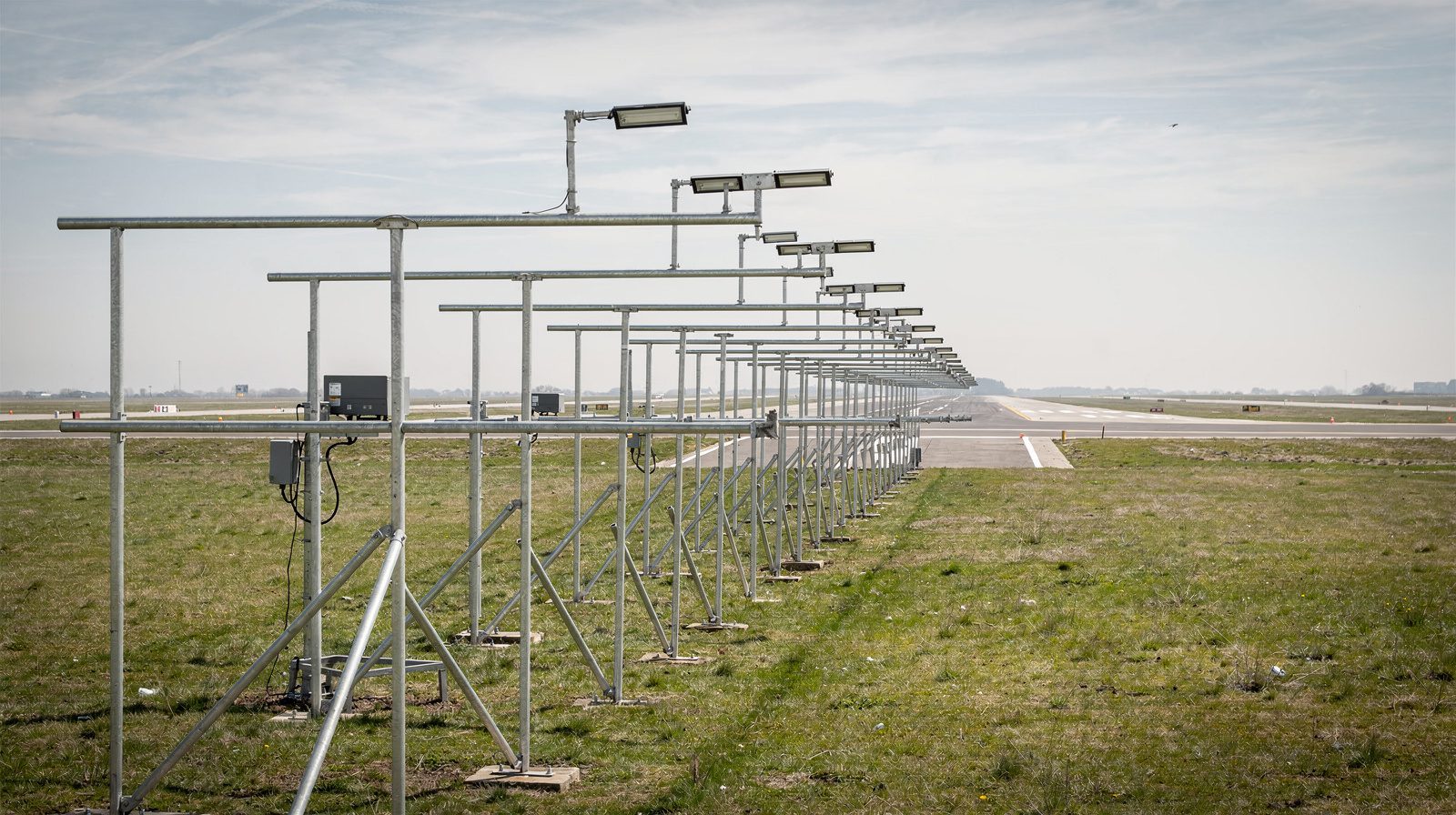
A flood light is a powerful, wide-beam lighting fixture designed to illuminate large indoor or outdoor areas with consistent, high-intensity light. In airport and industrial environments, flood lights are critical for ensuring operational safety, security, and efficiency, providing visibility for aircraft, crew, vehicles, and passengers under all conditions.
Definition and Purpose
Flood lights are engineered to project a broad, uniform beam, typically with angles from 45° to 120° or more, over expansive surfaces. This even coverage is crucial for eliminating shadows and dark zones, facilitating safe movement and accurate operations. In airports, flood lights are fundamental to airfield lighting systems, illuminating aprons, taxiways, parking lots, and terminal exteriors to meet strict international standards.
Modern flood lights are built to withstand harsh environments. They feature robust housings (often die-cast aluminum), corrosion-resistant coatings, and high ingress and impact protection (IP65/IP66, IK08/IK10), ensuring long-term reliability in the face of weather, dust, vibration, and temperature extremes.
Technical Structure and Components
Flood lights are sophisticated assemblies, typically comprising:
- LED Light Source: The industry standard for efficiency (120–160 lm/W), longevity (50,000–100,000+ hours), and robust performance.
- Optics: Precision lenses or reflectors define the beam spread (wide, medium, or narrow), control glare, and ensure even distribution.
- Driver/Electronics: Regulate power, provide surge protection, support dimming (0–10V, DALI), and enable diagnostics.
- Thermal Management: Heat sinks and sensors maintain optimal temperature for long LED life.
- Housing: Powder-coated, corrosion-resistant aluminum with gaskets for high IP ratings.
- Mounting: Yoke, trunnion, slip-fitter, pole, or high-mast brackets for adjustable, secure installation.
- Controls/Accessories: Sun visors, laser pointers for aiming, photocells, and smart controls for automation and monitoring.
Each component is engineered for maximum reliability, low maintenance, and compliance with international safety standards.
Flood Light Technologies: LED vs. Legacy
- LED Flood Lights: Superior efficiency, longevity, color rendering, and instant-on operation. Support smart controls, minimize maintenance, and reduce energy costs.
- Metal Halide / High-Pressure Sodium: Once standard, now largely replaced due to lower efficiency, poor color rendering, slow startup, and frequent replacements.
- Halogen/Fluorescent/Induction: Largely obsolete in large-area and critical applications due to inefficiency and short service life.
LED flood lights are now the dominant choice in airports and industry due to their operational and environmental benefits.
ICAO and FAA Standards
Flood lighting at airports must comply with rigorous standards:
- ICAO Annex 14: Specifies minimum average illuminance (20 lux for aprons), uniformity ratios, color rendering, glare control, and fixture placement to avoid hazards.
- FAA AC 150/5370-10 & Engineering Brief No. 67: Define performance, mounting, aiming, durability, and maintenance specifications.
- Obstruction Avoidance: Masts/fixtures must not infringe critical airspace and should be located or designed for frangibility where necessary.
Compliance is mandatory for safety certification and operation.
Photometric Performance and Lighting Design
- Luminous Flux: Ranges from 4,000 to 180,000+ lumens for airport applications.
- Illuminance (Lux): ICAO recommends 20–50 lux for aprons, higher for maintenance/security.
- Uniformity Ratios: High uniformity (≥0.7) prevents shadows and glare.
- Beam Angle: Wide (90–120°) for area coverage, narrower for targeted zones.
- Color Temperature/CRI: Daylight white (5,000K) and CRI ≥70 (≥80 for security-critical areas).
- Glare Control: Visors, shields, and optics protect crew and pilots.
Lighting designers use photometric modeling to optimize coverage and regulatory compliance.
Environmental and Mechanical Protection
Flood lights for airports and industry must endure extreme conditions:
- IP65/IP66: Total dust protection and resistance to strong water jets.
- IK08/IK10: Impact resistance against accidental or deliberate strikes.
- Corrosion Resistance: Marine-grade coatings and stainless steel fasteners.
- Temperature Range: Operational from -40°C to +50°C or wider.
These protections guarantee performance and longevity in the field.
Mounting, Aiming, and Installation
- Mounting Systems: Yoke/trunnion for adjustability, slip fitters for poles, and high-mast brackets for elevated sites.
- Aiming Tools: Lasers and scales for precision orientation.
- Installation Practices: Secure, accessible mounting, protected wiring, compliance with obstacle clearance and maintenance needs.
Proper setup ensures optimal light distribution and compliance.
Control Systems and Smart Integration
- Dimming: Adaptive lighting via 0–10V, DALI, or wireless controls to save energy and extend lifespan.
- Smart Controls: Remote monitoring, scheduling, diagnostics, and integration with airport management systems.
- Photocells/Timers: Automated dusk-to-dawn operation.
- Emergency Controls: Redundant circuits and backup power for critical areas.
Smart lighting reduces costs, enhances flexibility, and supports sustainability.
Airport-Specific Applications
- Apron Lighting: High-mast flood lights for aircraft stands and servicing areas.
- Terminal Exteriors: Ensures passenger safety and smooth vehicle movement.
- Perimeter/Security: Wide-beam lights enable surveillance and deter intrusions.
- Hangars/Maintenance: High illuminance for inspection and repair.
- Obstruction Lighting: Highlights hazards and critical structures.
Each application demands tailored photometric and mechanical solutions.
Industrial and Commercial Uses
- Warehouses/Factories: Safe movement and efficient operations.
- Ports/Rail Yards: Nighttime logistics and security.
- Sports Arenas: Broadcast-grade visibility and comfort.
- Urban Infrastructure: Public spaces, bridges, and event venues.
- Hazardous/Marine: Explosion-proof and corrosion-resistant models for safety.
Flood lights are integral across all large-area lighting needs.
Energy Efficiency and Environmental Impact
- High Efficacy: LED flood lights provide up to 80% energy savings versus legacy systems.
- Long Service Life: Fewer replacements, lower maintenance, and waste reduction.
- Low Light Pollution: Precision optics minimize spill and uplight, protecting local environments.
- Reduced Carbon Footprint: Lower power use and RoHS compliance support sustainability targets.
- Utility Rebates: Many certified models qualify for energy rebates.
These factors support operational budgets and environmental responsibility.
Certification, Warranty, and Compliance
- UL/ETL Listed: North American safety standards.
- DLC Premium: High efficiency and performance, often required for rebates.
- CE/RoHS: European safety and environmental compliance.
- SASO/NEMA: Regional standards for global markets.
- Warranty: 5–10 years typical, ensuring fixture reliability and support.
Proper certification is essential for safe, legal, and cost-effective lighting installations.
Related Terminology
- Flood Light: Wide-beam, high-output area lighting.
- Beam Angle: Width of light spread.
- Luminous Efficacy: Lumens per watt.
- Illuminance: Lux (light on a surface).
- CRI: Color Rendering Index.
- IP/IK Rating: Protection against dust, water, and impact.
- High Mast Lighting: Elevated flood lighting for large zones.
Flood lights are a foundation of modern airport and industrial lighting, delivering safety, performance, and efficiency in the world’s most demanding environments.
Frequently Asked Questions
- What is the main purpose of a flood light in airport environments?
- Flood lights provide broad, uniform illumination over large areas such as aprons, taxiways, and terminal exteriors, ensuring safe aircraft movement, ground crew operations, and passenger safety at all hours.
- How do LED flood lights compare to traditional lighting technologies?
- LED flood lights offer higher energy efficiency, longer lifespan, instant-on capability, better color rendering, and lower maintenance compared to metal halide, high-pressure sodium, or halogen flood lights.
- What standards apply to flood lighting at airports?
- International standards from ICAO (Annex 14) and national regulations like FAA Engineering Brief No. 67 specify minimum illuminance, uniformity ratios, color rendering, glare control, and durability requirements for airport flood lights.
- What environmental protections should airport flood lights have?
- Airport flood lights should have high ingress protection (IP65 or IP66) for dust and water resistance, impact protection (IK08/IK10), corrosion-resistant finishes, and wide operating temperature ranges to ensure reliability in harsh conditions.
- How are flood lights installed and aimed for optimal performance?
- Flood lights are mounted using adjustable brackets or high mast systems. Professional aiming tools and photometric planning ensure uniform coverage, minimal glare, and compliance with regulatory standards.
- Can airport flood lights be integrated with smart controls?
- Yes, many modern flood lights support smart controls for dimming, remote monitoring, automated scheduling, motion sensing, and integration with airport management systems.
This is a reference entry. TarmacView provides drone inspection services and doesn't sell the equipment or materials described in this glossary.