What is an Obstacle Limitation Surface (OLS)?
Obstacle Limitation Surface (OLS): Comprehensive Glossary
Introduction
Airports are complex environments where safety is paramount. One of the core tools for maintaining safe aircraft operations is the Obstacle Limitation Surface (OLS) system: a set of precisely defined, imaginary three-dimensional surfaces enveloping the aerodrome, established to regulate and monitor the height and placement of obstacles near runways and flight paths. The OLS ensures both regularity and safety, forming the foundation for airport planning, development control, and operational safeguarding.
Definition and Purpose
An Obstacle Limitation Surface (OLS) is a regulatory construct, not a physical one. OLS are imaginary planes, sloping or horizontal, set around an airport to define the upper limit for any object or structure in the vicinity. Any penetration of these surfaces by a proposed or existing object (building, antenna, crane, terrain, etc.) could be a danger to aircraft, especially during approach, landing, take-off, or missed approach procedures.
OLS systems are globally mandated under ICAO Annex 14, Volume I, and reflected in national regulations (e.g., FAA Part 77, EASA rules). They are essential for:
- Ensuring safe clearance for all routine and emergency flight operations.
- Providing a legal and technical basis for evaluating and controlling land use and development around airports.
- Serving as a reference for aeronautical studies when obstacles are identified.
- Supporting master planning, safe expansion, and infrastructure management at aerodromes.
Application and Regulatory Context
Every certified aerodrome, regardless of size or complexity, must implement a tailored set of OLS, based on:
- Runway type (instrument, precision, non-precision, or visual)
- Aeroplane Design Group (ADG) / Aerodrome Reference Code
- Airport elevation
- Operational category and traffic
OLS are mapped into aerodrome charts and published in the national Aeronautical Information Publication (AIP). They are crucial for:
- Planning new airport infrastructure (terminals, hangars, control towers)
- Evaluating proposed external developments (buildings, wind turbines, masts)
- Ongoing safety assessments and audits
Regulatory authorities enforce OLS by requiring notification and assessment for any proposed structure that may infringe these surfaces. Non-compliance can result in operational restrictions or loss of airport certification.
OLS Components
The OLS system comprises a series of interconnected surfaces, each with a specific protective function:
Approach Surface
A wedge-shaped, sloped surface extending from the end of the runway, providing obstacle protection for aircraft on final approach and landing.
- Geometry: Defined by length, slope (e.g., 3.33% for precision runways), inner edge width, divergence, and outer edge width.
- Importance: Obstacles penetrating this surface are high risk and require urgent mitigation.
Take-off Climb Surface
A sloped surface extending from the end of the runway or clearway, designed to ensure departing aircraft have obstacle-free airspace during initial climb.
- Typical slope: 2.5% (ICAO) or 40:1 (FAA)
- Operational context: Especially critical for engine-out scenarios
Transitional Surfaces
Sloping surfaces that extend laterally and upward from the edges of the runway and approach surfaces, protecting aircraft during low-altitude maneuvers near the runway.
Inner and Outer Horizontal Surfaces
Flat, horizontal planes set at specific heights above the aerodrome elevation.
- Inner horizontal surface: Typically at 45m above aerodrome elevation, covering the immediate airport vicinity.
- Outer horizontal surface: Typically at 150m above the Aerodrome Reference Point (ARP), extending to the outer limit of controlled airspace.
Conical Surface
A sloped surface that connects the inner and outer horizontal surfaces, providing a transitional buffer as aircraft climb or descend.
Inner Approach/Transitional/Balked Landing Surfaces
Additional surfaces established for precision approach runways, offering extra protection during low-visibility or missed approach (balked landing) operations.
Key Related Terms
Aerodrome
A defined area (land or water) for aircraft arrival, departure, and surface movement, including all supporting infrastructure. The type, size, and operational profile of the aerodrome directly influence the OLS dimensions and requirements.
Obstacle
Any object, either fixed or mobile, that:
- Is on an area intended for aircraft movement.
- Extends above an OLS.
- Is assessed as a hazard to air navigation.
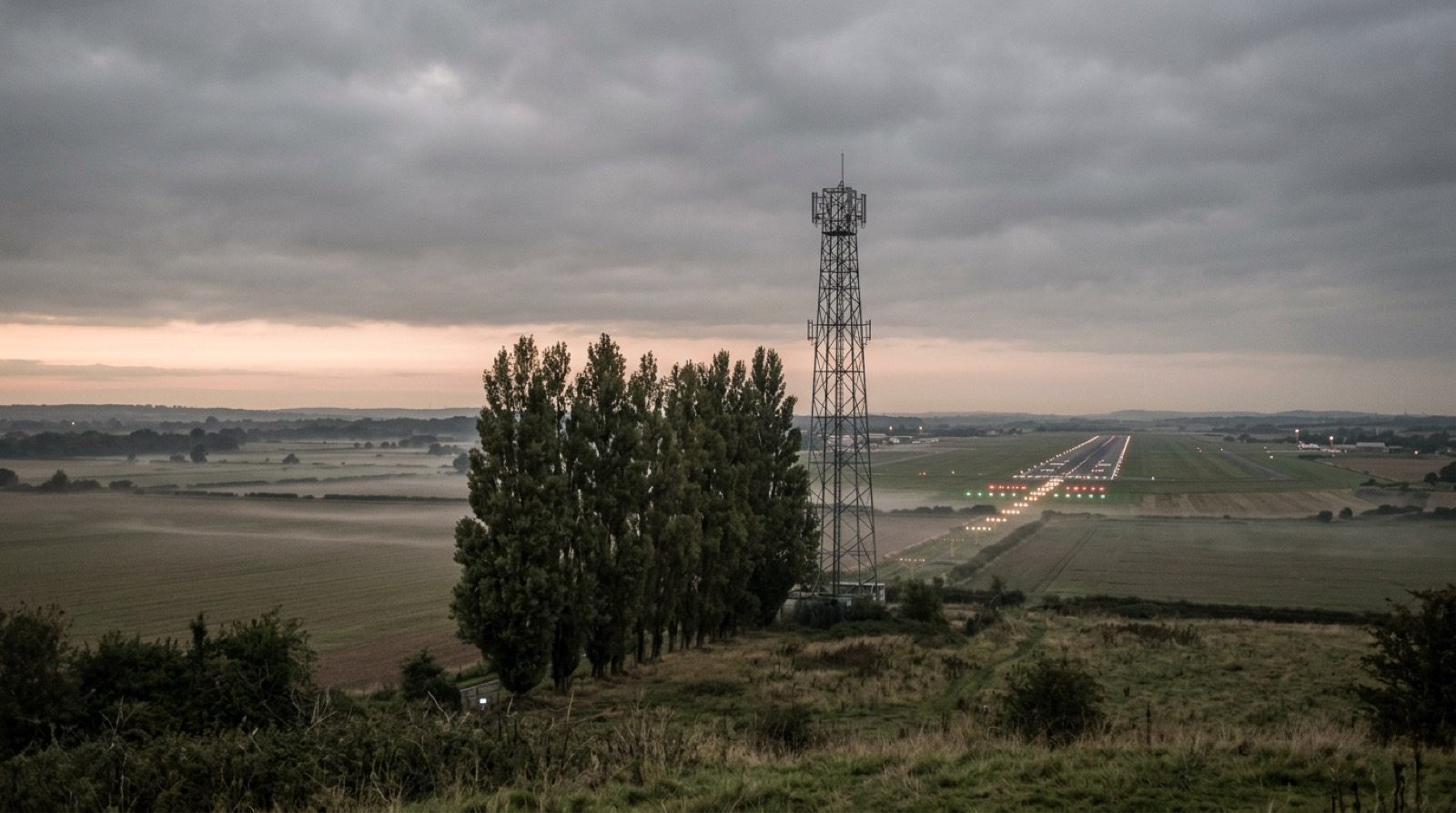
Examples: buildings, antennas, cranes, trees, vehicles, or even people in certain circumstances.
Obstacle-Free Zone (OFZ)
A critical volume of airspace above the runway and its immediate approach and missed approach paths, where no objects (except essential, frangibly-mounted navigational aids) are permitted. It provides the highest level of clearance for aircraft.
Obstacle Evaluation Surfaces (OES)
A new category (ICAO Annex 14 Amendment 18) of secondary surfaces beyond the most restrictive OLS. Penetration of OES is not automatically prohibited but requires a detailed risk assessment and operational review.
Aerodrome Reference Point (ARP)
The central geographical coordinate (latitude/longitude) of the aerodrome, used as a datum for mapping OLS and publishing airport data.
Aerodrome Elevation
The height (MSL) of the highest point on the usable landing area. All OLS heights are referenced to the aerodrome elevation.
Runway and Runway Types
- Instrument Runway: Supports instrument approaches (precision or non-precision).
- Precision Approach Runway: Allows very low visibility operations (e.g., ILS Cat II/III).
- Visual Runway: Used only under visual conditions.
Runway type determines the strictness and shape of OLS.
Aeroplane Design Group (ADG) / Code
Aircraft classification by wingspan and landing gear span, influencing OLS geometry and airport infrastructure requirements. Larger ADGs require more extensive protective surfaces.
OLS in Airport Planning and Development
Safeguarding Procedures
Aerodrome operators, local authorities, and developers must coordinate on all proposed construction, landscaping, or even temporary structures (like cranes) within the OLS envelope. The process typically involves:
- Notification to the aviation authority.
- Assessment against published OLS.
- Aeronautical study if penetration is possible or planned.
- Implementation of mitigation measures (design changes, height restrictions, operational procedures, or NOTAMs).
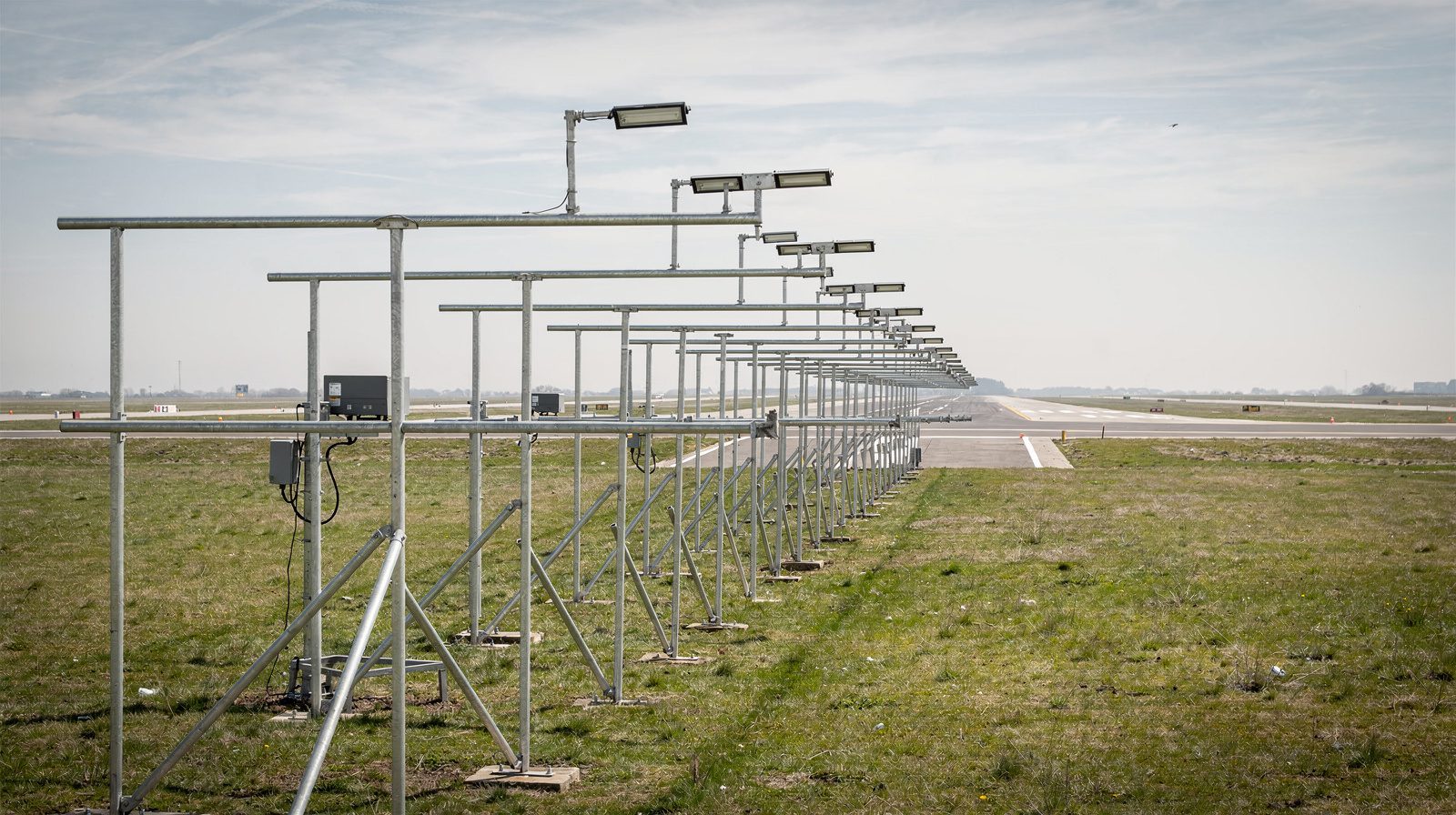
The OLS is not the only surface an object can penetrate: the visual approach slope indicator has its own obstacle protection surface built from the runway geometry, and re-checking the PAPI obstacle protection surface after resurfacing, nearby construction or a season of vegetation growth is what catches the penetrations that no obstacle register yet holds.
Obstacle Assessment and Mitigation
When an object is found to penetrate the OLS:
- An aeronautical study is conducted to determine the risk to flight operations.
- Mitigation may include lowering the object, moving it, shielding (if other existing structures already provide sufficient protection), or changing operating procedures (e.g., displacing runway thresholds).
- In some cases, especially with essential airport infrastructure, frangible mounting (easily breakable on impact) is required.
Regulatory Compliance
OLS are a core requirement for aerodrome certification. Failure to maintain clear OLS can result in:
- Imposed operating restrictions
- Loss of instrument approach procedures
- Decertification or reduction of airport category
OLS and Urban Development
As cities grow closer to airports, balancing development with OLS protection is a significant challenge. The introduction of Obstacle Evaluation Surfaces (OES) allows for performance-based, risk-managed assessments, helping authorities make informed decisions that balance aviation safety with economic and urban needs.
International and National Standards
ICAO Annex 14 is the global standard for OLS, but individual countries may have additional or stricter requirements (e.g., FAA, EASA, CASA Australia, DGCA India). It is essential for stakeholders to consult the latest standards, amendments, and national legislation when planning new developments or airport upgrades.
Conclusion
The Obstacle Limitation Surface (OLS) system is fundamental to airport safety, planning, and compliance. It provides a regulated, geometric basis for controlling obstacles around aerodromes, safeguarding aircraft during all flight phases, and facilitating safe and efficient airport operations. Whether you are an airport operator, planner, developer, or regulator, understanding and adhering to OLS requirements is non-negotiable for the future of safe aviation.
Further Reading:
- ICAO Annex 14, Volume I – Aerodrome Design and Operations
- FAA Part 77 – Safe, Efficient Use, and Preservation of the Navigable Airspace
- EASA Certification Specifications for Aerodromes (CS-ADR-DSN)
- ICAO OLS Workshop Materials
Note: All diagrams are for illustration purposes only. Consult official documents for precise technical details and regulatory requirements.
Frequently Asked Questions
- What is an Obstacle Limitation Surface (OLS)?
- An OLS is a system of defined imaginary surfaces around an airport that establishes the maximum permissible height for obstacles to protect aircraft during approach, landing, take-off, and other critical flight phases. It is a regulatory and planning tool based on ICAO Annex 14 standards.
- Why are OLS important for airports?
- OLS protect aircraft by ensuring that the airspace around runways and flight paths remains clear of hazardous obstacles. They are essential for safe airport operations, planning, and regulatory compliance, preventing terrain, buildings, or other objects from endangering flights.
- How are OLS designed and implemented?
- OLS design is based on runway type, airport elevation, aeroplane design group, and operational needs. Surfaces are mapped onto aerodrome charts and enforced by national aviation authorities. Any proposed structure near the airport must be assessed against the applicable OLS.
- What happens if a structure infringes the OLS?
- If a proposed or existing structure penetrates the OLS, it triggers an aeronautical study and risk assessment. Mitigation may include reducing the object's height, relocating it, imposing operational restrictions, or, if risk is unacceptable, denying the proposal.
- What are the main types of OLS surfaces?
- Key OLS components include the approach surface, take-off climb surface, transitional surfaces, inner and outer horizontal surfaces, conical surfaces, and sometimes inner approach and balked landing surfaces. Each has specific geometry and protective functions.
This is a reference entry. TarmacView provides drone inspection services and doesn't sell the equipment or materials described in this glossary.