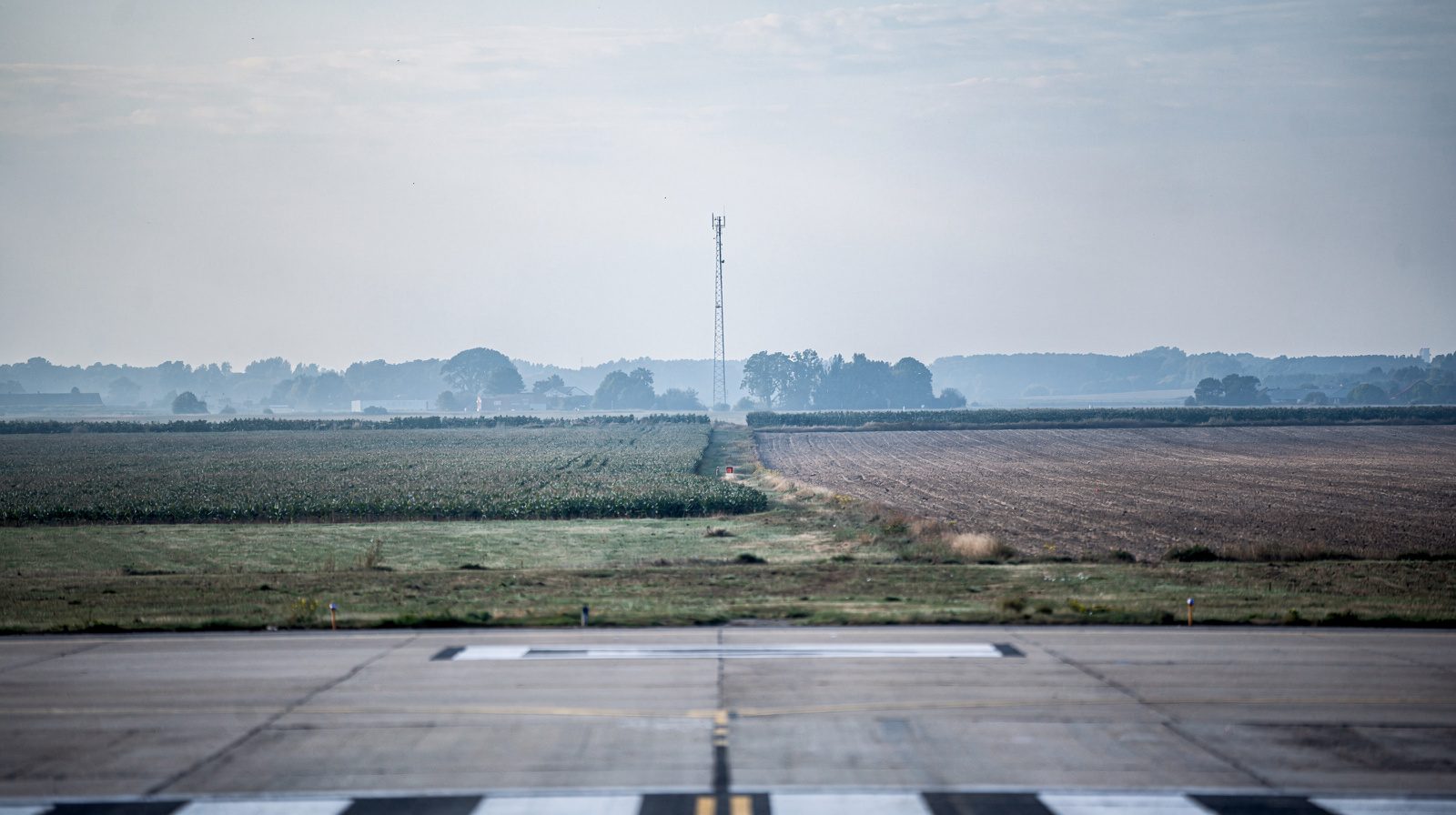
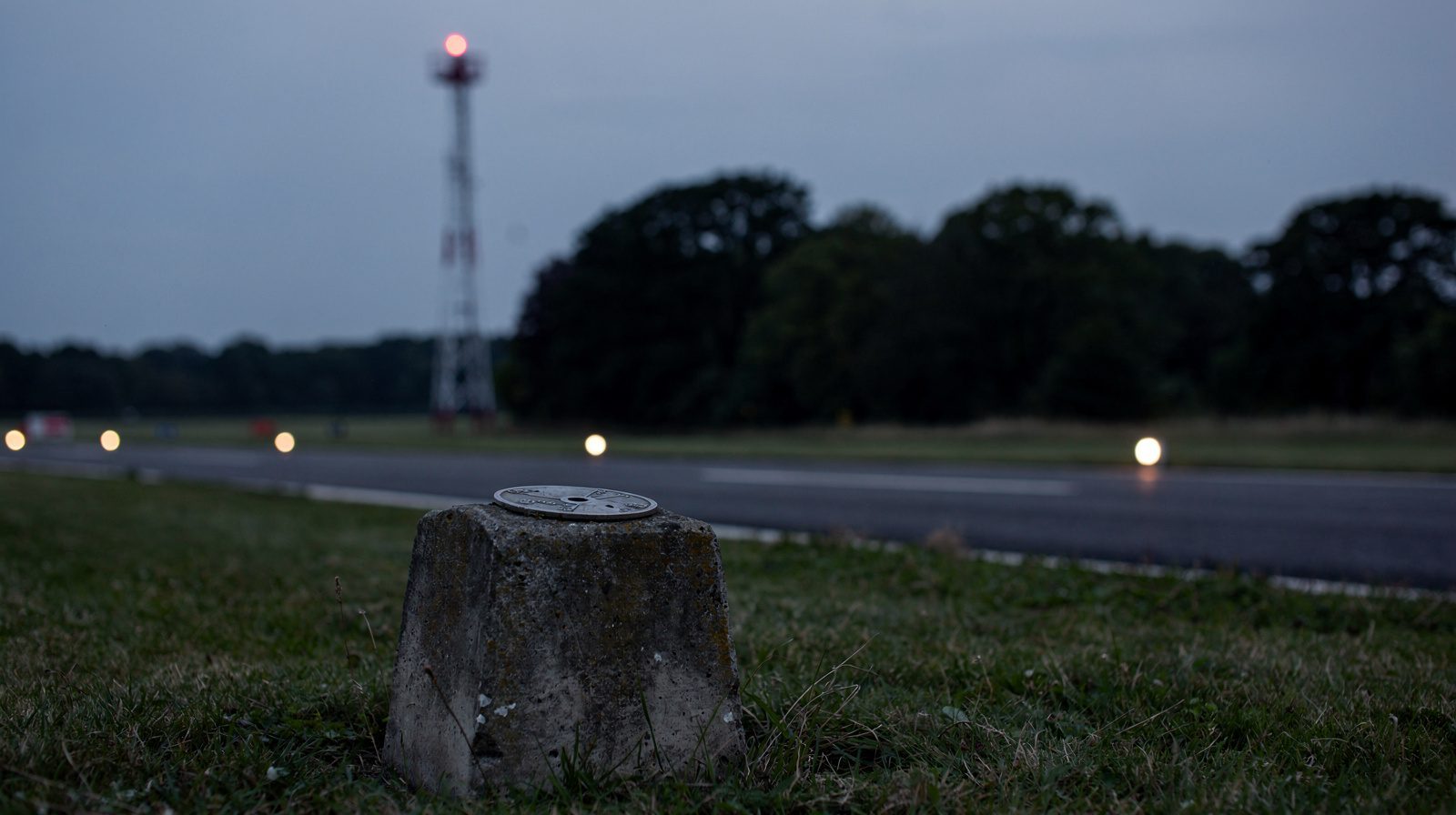
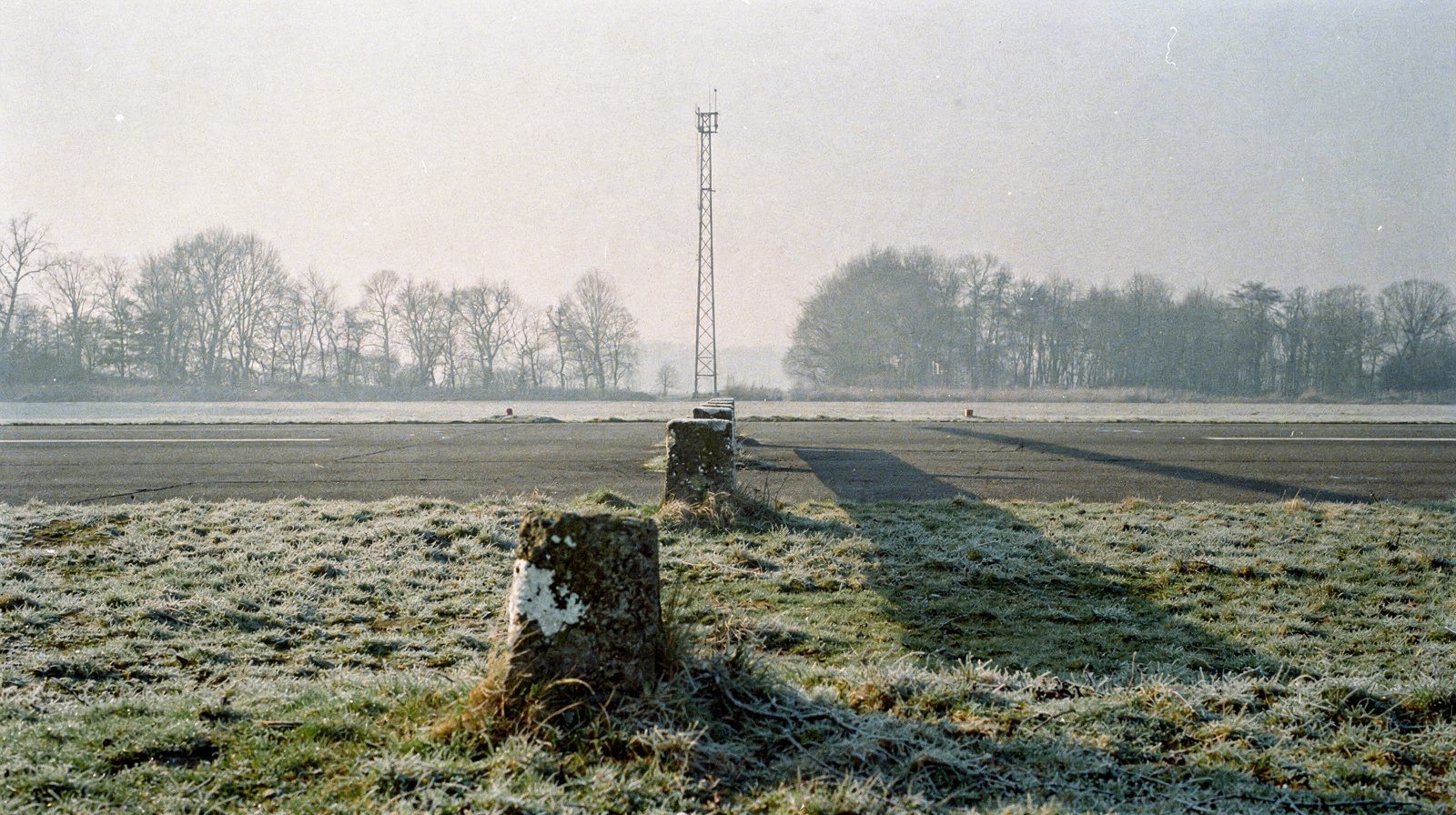
What is an Obstacle at an Aerodrome?
Definition
An obstacle is a fixed or mobile object on an aircraft movement area, extending above a protection surface, or assessed as a hazard. The definition also covers a part of an object. The object can be temporary or permanent. The EU rules (Regulation (EU) No 139/2014) and ICAO Annex 14 use the same wording.
The three conditions
An object is an obstacle if it meets at least one of these conditions:
- It is located on an area intended for the surface movement of aircraft.
- It extends above a defined surface that protects aircraft in flight. The obstacle limitation surfaces are the main set of these surfaces.
- It stands outside those surfaces, and an assessment finds it a hazard to air navigation.
For the third condition, CS ADR-DSN.J.487 says to regard objects 150 m or more above ground as obstacles. A safety assessment can show that an object is no hazard. The rule applies to the area under the control of the aerodrome operator.
Temporary and mobile objects
The definition covers fixed objects whether they are temporary or permanent. A crane can be an obstacle for the weeks that it stands. The same surface rules apply to it.
Mobile objects are also obstacles. On a precision approach runway, mobile objects should stay below the inner approach, inner transitional and balked landing surfaces. This applies while the runway is in use for landing (CS ADR-DSN.J.480).
The aerodrome operator monitors temporary obstacles too. The worksite control procedure should cover cranes. It should set lighting and operating height limits. The limits avoid infringement of the obstacle limitation surfaces. They also avoid interference with radio navigation aids and with the line of sight of the air traffic services tower (AMC1 ADR.OPS.B.070(c)(6)).
The surfaces that define an obstacle
Each obstacle limitation surface protects one phase of flight. CS-ADR-DSN Chapter H describes them as follows:
- The approach surface is an inclined plane before the threshold. It protects the final approach.
- The transitional surface slopes up and outwards from the side of the runway strip and the approach surface. It defines the area that is available for buildings, other structures and trees.
- The inner horizontal surface is a horizontal plane above the aerodrome. It protects visual manoeuvring before landing.
- The conical surface slopes up and outwards from the edge of the inner horizontal surface. It protects visual manoeuvring near the aerodrome.
- The take-off climb surface is an inclined plane beyond the runway end or clearway. It protects take-off and climb-out.
- The inner approach, inner transitional and balked landing surfaces protect precision approaches and balked landings. Together they form the obstacle free zone .
The outer horizontal surface is a plane beyond the conical surface. CS ADR-DSN.H.410 has no dimensions for it. The guidance gives a broad specification for runway code 3 or 4. Tall structures can matter if both conditions are true. They are higher than 30 m above local ground. They are also higher than 150 m above aerodrome elevation, within 15 000 m of the aerodrome centre.
Which surfaces apply depends on the runway. A non-instrument runway has the conical, inner horizontal, approach and transitional surfaces. A non-precision runway has the same set. A precision approach runway of Category II or III adds the inner approach, inner transitional and balked landing surfaces (CS ADR-DSN.J.470, J.475 and J.480). For a Category I runway, the specification lists the conical, inner horizontal, approach and transitional surfaces. The guidance adds the inner approach, inner transitional and balked landing surfaces (GM1 ADR-DSN.J.480).
Dimensions of the surfaces
Table J-1 of CS-ADR-DSN sets the dimensions for the approach runways. The table below shows the values for code number 4. The heights and slopes in the specification are maximum values. The other dimensions are minimum values. All dimensions are measured horizontally unless noted.
| Surface and value | Non-instrument | Non-precision | Precision Cat I | Precision Cat II or III |
|---|---|---|---|---|
| Inner horizontal, height above datum | 45 m | 45 m | 45 m | 45 m |
| Inner horizontal, radius | 4 000 m | 4 000 m | 4 000 m | 4 000 m |
| Conical, slope | 5 % | 5 % | 5 % | 5 % |
| Conical, height above inner horizontal | 100 m | 100 m | 100 m | 100 m |
| Approach, length of inner edge | 150 m | 280 m | 280 m | 280 m |
| Approach, distance from threshold | 60 m | 60 m | 60 m | 60 m |
| Approach, divergence each side | 10 % | 15 % | 15 % | 15 % |
| Approach, first section length and slope | 3 000 m at 2.5 % | 3 000 m at 2 % | 3 000 m at 2 % | 3 000 m at 2 % |
| Transitional, slope | 14.3 % | 14.3 % | 14.3 % | 14.3 % |
| Inner approach, width, length and slope | - | - | 120 m, 900 m, 2 % | 120 m, 900 m, 2 % |
| Inner transitional, slope | - | - | 33.3 % | 33.3 % |
| Balked landing, inner edge, distance from threshold and slope | - | - | 120 m, 1 800 m, 3.33 % | 120 m, 1 800 m, 3.33 % |
Three notes apply to the table. The Category I column is for runways with code number 3 or 4. The width of the inner approach surface and the inner edge of the balked landing surface are 140 m where the code letter is F. The balked landing surface starts 1 800 m after the threshold or at the end of the runway, whichever is less.
The approach surface of an instrument runway with code number 3 or 4 has a first section, a second section and a horizontal section. The total length is 15 000 m. The length of the second and the horizontal sections is variable. For a non-instrument runway, the approach surface has one section of 3 000 m.
Code number 1 and 2 runways have smaller surfaces. For a non-instrument runway, the inner horizontal surface has a radius of 2 000 m for code 1 and 2 500 m for code 2. It is 4 000 m for code 3 and 4. The transitional surface has a slope of 20 % for code 1 and 2, and 14.3 % for code 3 and 4.
The take-off climb surface has its own table (Table J-2). For runways with code number 3 or 4, it has these dimensions:
- inner edge 180 m long, 60 m from the runway end
- divergence of 12.5 % on each side
- final width 1 200 m
- final width 1 800 m for a track with heading changes of more than 15° in IMC or in VMC at night
- length 15 000 m
- slope 2 %
What the rules require
New objects should not be permitted above an approach or transitional surface. The exception is an object shielded by an existing immovable object. Above the conical and inner horizontal surfaces, a safety assessment can also accept a new object. It must show no adverse effect on safety and no significant effect on regularity of operations.
Existing objects above a surface should be removed as far as practicable. The same exceptions apply. CS ADR-DSN.J.470 states these rules for a non-instrument runway. J.475, J.480 and J.485 repeat them for the other runway types.
When a surface is infringed, the guidance says to consider these points (GM1 ADR-DSN.H.405):
- the nature of the obstacle and its position relative to the surface origin and the extended runway centre line
- the amount by which the surface is infringed
- the gradient that the obstacle presents to the surface origin
- the type of air traffic
- the instrument approach procedures that the aerodrome publishes
The safety measures can include these:
- a note in the AIP
- marking and lighting of the obstacle
- a change to the declared distances
- a limit to visual approaches only
- limits on the type of traffic
Objects that penetrate the surfaces may also raise the obstacle clearance altitude or height of an instrument approach procedure (GM1 ADR-DSN.H.405).
Marking and lighting
Marking and lighting an obstacle shows its presence. It does not necessarily reduce the operating limits that the obstacle causes. In the EU specifications, a fixed obstacle that extends above a take-off climb, approach or transitional surface should be marked. It should also be lighted if the runway is used at night. Obstacles near a taxiway are marked, and lighted if the taxiway is used at night. Obstacles that CS ADR-DSN.J.487 covers should be marked and lighted (Q.841). See obstacle light .
Who does what
The aerodrome operator monitors the obstacle limitation surfaces and the marking and lighting of obstacles. The operator has procedures to mitigate the risks from obstacles (ADR.OPS.B.075). The monitored area includes the areas that the operator can see during the inspections of the manoeuvring area (AMC1 ADR.OPS.B.075). The post who can carry out an aerodrome obstacle survey covers who may survey obstacles and what the operator must show.
The operator also measures and reports obstacle and terrain data to the aeronautical information services. The data includes the top elevation, the type, and the marking and lighting of each obstacle (AMC1 ADR.OPS.A.005(b)). See aerodrome obstacle chart .
Obstacle data
The EASA guidance divides the area around an aerodrome into coverage areas for terrain and obstacle data (GM4 ADR.OPS.A.005(a)):
- Area 2 is the aerodrome surroundings. Area 2a is the runway strip plus any clearway. Area 2b extends 10 km from the ends of Area 2a. Area 2c extends outside Areas 2a and 2b, up to 10 km from Area 2a. Area 2d extends to 45 km from the aerodrome reference point or to the TMA boundary, whichever is nearest.
- Area 3 borders the movement area. It extends 90 m from the runway centre line. It extends 50 m from the edge of all other parts of the movement area.
- Area 4 is 900 m before the threshold of a Category II or III runway. It is 60 m wide on each side of the extended centre line.
The data collection surface of Area 3 is 0.5 m above the horizontal plane through the nearest point of the movement area. Area 2a uses a surface 3 m above the nearest runway elevation.
The numerical requirements for obstacle data differ by area:
| Value | Area 2 | Area 3 | Area 4 |
|---|---|---|---|
| Vertical accuracy | 3 m | 0.5 m | 1 m |
| Vertical resolution | 0.1 m | 0.01 m | 0.1 m |
| Horizontal accuracy | 5 m | 0.5 m | 2.5 m |
| Confidence level | 90 % | 90 % | 90 % |
| Integrity level | Essential | Essential | Essential |
The operator provides electronic obstacle data for the obstacles in Area 2 within the aerodrome boundary that are a hazard to air navigation. The operator also provides data for objects that penetrate the obstacle limitation surfaces (AMC1 ADR.OPS.A.005(c) and (d)).
In the United States
The FAA does not use the word obstacle in this sense. It uses obstruction to air navigation. This is an object higher than any of the heights or surfaces in Subpart C of 14 CFR Part 77. The FAA presumes an obstruction is a hazard unless an aeronautical study finds that it is not (AC 150/5300-13B, sections 1.5 and 3.4.12). See aviation obstruction .
Under 14 CFR 77.17, an existing object is an obstruction if it is higher than 499 ft above ground at its site. This includes a mobile object. Near an airport with a runway longer than 3 200 ft, the limit is lower. Within 3 nautical miles it is 200 ft above ground or above airport elevation, whichever is higher. It rises 100 ft for each additional nautical mile, up to 499 ft. An object that is above an imaginary surface of 77.19 is also an obstruction.
The Part 77 surfaces differ from the ICAO surfaces. The horizontal surface is a plane 150 ft above the airport elevation. Its radius is 5 000 ft for utility or visual runways and 10 000 ft for other runways. The conical surface rises at 20 to 1 for 4 000 ft beyond it (77.19). A person who plans construction or alteration of more than 200 ft above ground must file a notice with the FAA (77.9).
Frequently Asked Questions
- What are the obstacle limitation surfaces?
- They are imaginary surfaces around a runway that define the airspace that should stay free of obstacles. They protect aircraft in the approach, the take-off climb and visual manoeuvring. The main surfaces are the inner horizontal, conical, approach, transitional and take-off climb surfaces. Precision approach runways add inner approach, inner transitional and balked landing surfaces.
- Is every object above a surface an obstacle?
- Yes. Any fixed or mobile object, or part of one, that extends above a defined surface that protects aircraft in flight is an obstacle. The definition does not depend on the height of the object or on a hazard assessment. Whether the object may stay is a separate decision.
- What is a temporary obstacle?
- A temporary obstacle is a fixed object that stays for a limited time, such as a crane. The EU and ICAO definition covers fixed objects whether they are temporary or permanent. The same surface rules apply. For a crane, the worksite control procedure should set lighting and a height limit that avoids infringing the obstacle limitation surfaces.
- How high is the inner horizontal surface?
- The inner horizontal surface is 45 m above the elevation datum for every runway class in Table J-1 of CS-ADR-DSN. Its radius depends on the code number. It is 2 000 m for code 1, 2 500 m for code 2 and 4 000 m for code 3 and 4. For instrument runways with code 1 or 2, it is 3 500 m.
- Can an object outside the obstacle limitation surfaces be an obstacle?
- Yes, if an assessment finds it a hazard to air navigation. CS ADR-DSN.J.487 says to regard objects 150 m or more above ground as obstacles. A safety assessment can show that such an object is no hazard. The rule applies to the area under the control of the aerodrome operator.
- Must an obstacle be removed?
- Not always. Existing objects above a surface should be removed as far as practicable. The exceptions are objects shielded by an existing immovable object and objects that a safety assessment accepts. Marking, lighting and other measures can also apply.
- How accurate must obstacle data be?
- It depends on the area. The EASA guidance for obstacle data gives a vertical accuracy of 3 m and a horizontal accuracy of 5 m in Area 2. In Area 3 next to the movement area, both are 0.5 m. In Area 4 on a Category II or III runway, vertical is 1 m and horizontal is 2.5 m. The confidence level is 90 % in all areas.
- Is an obstacle the same as an obstruction?
- No. Obstacle is the ICAO and EU term. The FAA uses obstruction to air navigation for an object higher than the heights or surfaces in 14 CFR Part 77, Subpart C. The two terms use different surface systems.
References
- easa-ear-aerodromes
- Easy Access Rules for Aerodromes (Regulation (EU) No 139/2014), including CS-ADR-DSN Issue 7 EASA
- icao-annex-14-vol-i-9ed
- Annex 14, Volume I: Aerodrome Design and Operations, 9th edition, July 2022 ICAO
- faa-ac-150-5300-13b
- AC 150/5300-13B, Airport Design (Change 1) FAA
- ecfr-14-cfr-77
- 14 CFR Part 77, Safe, Efficient Use, and Preservation of the Navigable Airspace US Government, Electronic Code of Federal Regulations
This is a reference entry. TarmacView provides drone inspection services and doesn't sell the equipment or materials described in this glossary.