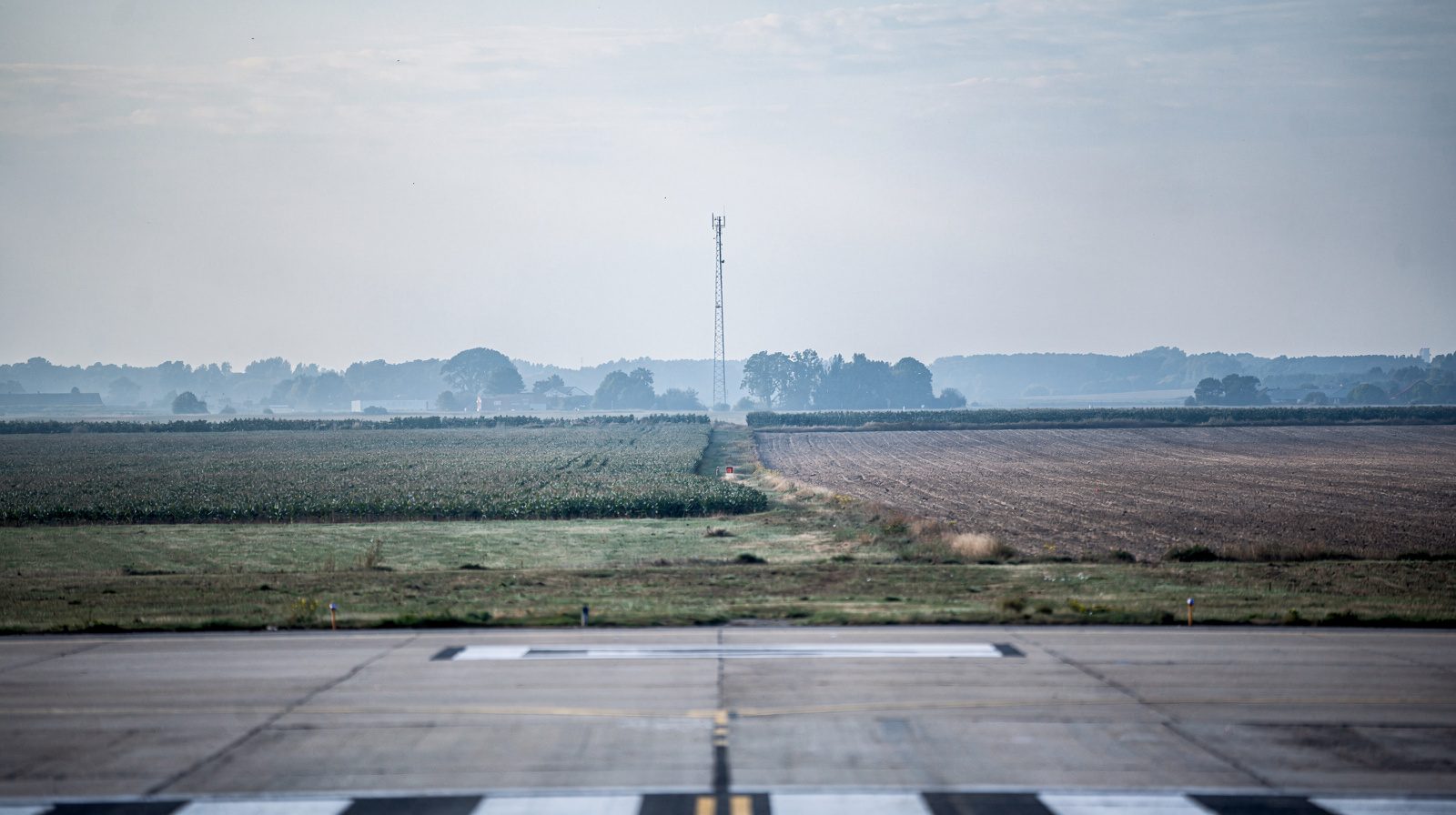
What is Terminal Area?
Terminal Area (Airspace Around Airports) – In-Depth Aviation Operations Glossary
Definition and Scope
The Terminal Area (also known internationally as the Terminal Maneuvering Area, or TMA) is a specifically designated volume of controlled airspace that surrounds a major airport or a group of airports. It is engineered to accommodate the convergence of numerous arriving and departing flights, resulting in the highest traffic density and operational complexity in the airspace system. The primary objective of the terminal area is to ensure the safe, orderly, and efficient transition of aircraft between enroute flight and airport operations.
Key Characteristics
- Vertical and Lateral Boundaries: Typically extends from near the surface (or a specified altitude) upward, often reaching 10,000 feet above airport elevation, but may be customized to local requirements.
- Sectorization: Often divided into sectors, each managed by specialized ATC positions, to handle complex flows and varying traffic types.
- Complex Traffic Mix: Includes commercial jets, turboprops, business aircraft, and general aviation, all converging in a relatively small volume of airspace.
- Regulated Entry: All aircraft must comply with specific entry requirements, including ATC clearance, communication procedures, and equipment mandates.
Terminal Areas are depicted on aeronautical charts (such as Terminal Area Charts and VFR sectionals), with boundaries and vertical limits tailored to local traffic flows, runways, terrain, and adjacent airspace.
Terminal Area Structure and Classification
ICAO and National Distinctions
Globally, ICAO uses the term Terminal Maneuvering Area (TMA), while older North American terminology references the Terminal Control Area (TCA). In the US, most former TCA airspace is now classified as Class B or C.
Types of Terminal Airspace
- Class B Airspace: Encloses the busiest airports, from the surface or a base altitude up to 10,000 feet MSL. It has a custom shape, often depicted as an upside-down wedding cake.
- Class C Airspace: Surrounds airports with significant commercial traffic, usually from the surface to 4,000 feet AGL, with two concentric rings.
- Class D Airspace: Covers smaller towered airports, typically from the surface to 2,500 feet AGL and a 4-5 NM radius.
- Terminal Radar Service Area (TRSA): Found mainly in the US, TRSAs provide radar-based services for IFR and optionally VFR flights around airports not meeting Class B or C criteria.
Each class is depicted with unique symbology on charts (solid blue for Class B, solid magenta for Class C, dashed blue for Class D, thick black for TRSA).
Functions and Services in the Terminal Area
Within terminal airspace, ATC provides a comprehensive suite of services:
- Sequencing: Arranging aircraft in order for arrival/departure, taking into account aircraft type, speed, and wake turbulence.
- Separation: Maintaining safe distances (typically 3-5 NM laterally, 1,000 feet vertically) between aircraft.
- Radar Surveillance: Real-time monitoring, vectoring, and conflict resolution.
- Traffic Advisories: Informing pilots of proximate traffic, especially important for VFR flights.
- Clearances and Instructions: Issuing route, altitude, and speed assignments, as well as approach and departure clearances.
- Taxi and Ground Control: Managing movement on the airport surface, including runways, taxiways, and ramp areas.
These services are delivered by TRACON (Terminal Radar Approach Control) facilities in coordination with airport control towers and enroute centers.
Operational Procedures
Entry and Exit
- Aircraft enter via Standard Terminal Arrival Routes (STARs) or designated fixes.
- Departures utilize Standard Instrument Departures (SIDs) or assigned vectors.
- Handoffs between enroute centers and terminal controllers are precisely coordinated.
Communication Protocols
- Two-way radio communication is mandatory.
- Class B entry requires explicit ATC clearance, Class C and D entry require acknowledgment of callsign.
- Failure to establish communication can lead to regulatory action or denial of entry.
Sequencing, Separation, and Holding
- Controllers use radar and automation tools to sequence and separate aircraft.
- Holding patterns may be assigned to manage surges or weather disruptions.
- Speed and altitude restrictions are enforced to maintain orderly flow.
Traffic Patterns
- VFR aircraft follow standardized traffic patterns at published altitudes (typically 1,000 feet AGL for pistons, 1,500 for turbines).
- Patterns are depicted in airport directories and on charts.
Coordination
- Continuous coordination occurs with adjacent airspace sectors and facilities, especially during high traffic or adverse weather.
Equipment and Pilot Requirements
- Two-way Radios: Required for all controlled airspace operations.
- Transponder (Mode C) and ADS-B Out: Mandatory for most terminal areas.
- Pilot Certification: Class B requires at least a private pilot or properly endorsed student, C and D allow students with proper training.
- Preflight Preparation: Pilots must review NOTAMs, ATIS/ASOS, and ensure all documents and equipment are compliant.
Terminal Area Entry Checklist
- Confirm boundaries and vertical limits
- Verify equipment functionality (radio, transponder, ADS-B)
- Obtain current weather/ATIS
- Establish ATC contact at appropriate distance
- Ensure all documentation is onboard
Terminal Area vs. Other Airspace Types
| Feature | Terminal Area (Class B/C/D/TRSA) | Enroute Airspace (Class A/E) | Uncontrolled Airspace (Class G) |
|---|---|---|---|
| Traffic Density | High to moderate | Low to moderate | Low |
| ATC Services | Sequencing, separation, radar | IFR separation, some advisories | Minimal or none |
| Entry Clearance | Required (varies by class) | IFR clearance only | Not required |
| Equipment | Radio, transponder, ADS-B | Radio, transponder (IFR) | None (VFR) |
| Pilot Certificate | Varies (Private+ for Class B) | Instrument rating (Class A, IFR) | None (VFR) |
| Chart Depiction | Terminal/sectional charts | Enroute charts | Sectional charts |
Historical and Regulatory Background
- Post-WWII: Rapid growth in aviation drove the need for structured terminal airspace.
- Radar Era: Radar enabled real-time surveillance, leading to TRACONs and vectoring procedures.
- Regulatory Milestones: Incidents led to speed restrictions, equipment mandates, and stricter reporting for terminal operations.
- Modernization: NextGen (US) and SESAR (Europe) initiatives enhance terminal airspace with PBN, ADS-B, and automation.
- Reclassification: 1993 saw harmonization into Class B, C, and D, aligning with ICAO.
Examples and Use Cases
- Major Metroplex Arrival: An A320 to Heathrow is sequenced via STAR, vectored, and may hold before final clearance.
- VFR in TRSA: A Piper Archer at Harrisburg elects radar service for enhanced safety.
- Mixed Operations: Atlanta’s terminal area handles simultaneous operations by jets, turboprops, and general aviation with complex sequencing.
- Weather Diversions: Controllers issue reroutes and holds to manage traffic during storms.
Safety Considerations and Common Mistakes
- Collision Risk: High density and speed differentials demand vigilance and compliance.
- Communication Errors: Late or incorrect radio calls can cause unauthorized entry or loss of separation.
- Equipment Failures: Prompt reporting and contingency procedures are critical.
- Speed Violations: Adherence to published speed limits is mandatory unless cleared otherwise.
- Regulatory Infractions: Noncompliance with entry or equipment rules can result in enforcement action.
Glossary of Terms
- Terminal Area (TA): Controlled airspace around an airport managed by ATC for arriving and departing flights.
- Terminal Control Area (TCA)/Terminal Maneuvering Area (TMA): Airspace at the confluence of routes near major airports.
- TRACON: Terminal Radar Approach Control, the ATC facility for terminal operations.
- STAR: Standard Terminal Arrival Route.
- SID: Standard Instrument Departure.
- TRSA: Terminal Radar Service Area, providing radar services around certain US airports.
For pilots, controllers, and aviation professionals, mastery of terminal area operations is foundational to safe, efficient flight in the world’s busiest skies.
Frequently Asked Questions
- What is the Terminal Area in aviation?
- The Terminal Area is a defined region of controlled airspace around an airport or cluster of airports where Air Traffic Control manages the high-density mix of arriving and departing flights. It is specifically designed for the safe, efficient transition of aircraft between enroute airspace and airport operations, using layered boundaries and specialized procedures.
- How is a Terminal Area structured and classified?
- Terminal Areas are structured with both vertical and lateral boundaries, tailored to local geography, traffic, and airport layouts. They may include Class B, C, D airspace, or TRSAs, and are often sectorized for controller workload management. Each class has specific entry, equipment, and communication requirements, and is depicted distinctly on aeronautical charts.
- What services does ATC provide in the Terminal Area?
- ATC provides sequencing, separation, radar monitoring, vectoring, speed control, and clearances for arriving and departing aircraft. Ground operations, taxi routing, and runway management are also coordinated. These services maintain safety and maximize efficiency in the busiest portions of the airspace system.
- What equipment and pilot requirements apply in Terminal Areas?
- Aircraft must have two-way radios, Mode C transponders (and ADS-B Out in most regions), and pilots must hold appropriate certificates and endorsements. Entry into certain classes of airspace (notably Class B) requires explicit ATC clearance, while others require simply establishing two-way communication.
- How does the Terminal Area differ from enroute or uncontrolled airspace?
- The Terminal Area is highly structured, with mandatory ATC participation, detailed procedures, and strict equipment and certification requirements due to high traffic density. Enroute airspace is focused on aircraft in cruise, often at higher altitudes, while uncontrolled airspace has minimal requirements and limited ATC services.
This is a reference entry. TarmacView provides drone inspection services and doesn't sell the equipment or materials described in this glossary.