What is Omni-directional Lighting?
Omni-directional – Radiating Equally in All Horizontal Directions (Airport Lighting) Glossary
Definition
An omni-directional light, in airport and airfield lighting, is a fixture engineered to radiate light evenly in all horizontal directions, covering a full 360 degrees around its vertical axis. This ensures the luminous intensity remains consistent no matter the observer’s position, providing critical visual cues, such as runway edges, taxiways, and obstacles, to pilots and ground personnel from any approach angle. These lights are crucial for maximizing safety and operational efficiency, especially during night or low-visibility conditions.
Omni-directional lighting forms the backbone of airport visual aid systems, as mandated by the International Civil Aviation Organization (ICAO) Annex 14 and the Federal Aviation Administration (FAA) standards. The term typically applies to runway edge lights, omni-directional approach lighting system (ODALS) units, and obstruction lights, each designed to be visible from all directions to ensure constant guidance and hazard warning.
Unlike directional lights, which focus light in a narrow beam, omni-directional fixtures eliminate “blind spots,” supporting intuitive visual environments for all airport users. Their construction utilizes symmetrical lenses, reflectors, or LED arrays to achieve uniformity.
In summary, omni-directional airport lights are indispensable, providing 360-degree horizontal illumination compliant with global aviation safety standards.
Principle of Operation
Omni-directional airport lights distribute light energy evenly around the horizontal axis, so the intensity does not vary with the observer’s position. This is achieved through precise optical and mechanical design, following the requirements of ICAO, FAA, and other regulators.
Key Operation Features:
- Optical Elements: Symmetrical lenses or diffusers refract and scatter light evenly in the horizontal plane. The vertical spread is limited (typically 6–15° above horizontal) to maximize visibility while minimizing upward light pollution.
- LED Arrays: Modern fixtures use ring-shaped arrays of LEDs to maintain consistent intensity at every azimuthal angle.
- Reflectors: In traditional systems, reflectors inside the fixture enhance horizontal coverage by redirecting stray light.
- Control Systems: Lighting intensity can be dynamically adjusted for weather or operational needs (high, medium, low settings).
All omni-directional lights undergo rigorous photometric testing to confirm compliance with uniformity and intensity requirements.
Omni-directional Lighting in Airport Applications
Omni-directional lighting is fundamental to safe, efficient airport operations. Its widespread use provides reliable visual references under all circumstances.
Runway Edge Lights
Runway edge lights are the most common omni-directional fixtures. Installed along both sides of the runway at intervals (typically 60 meters for precision runways), these lights define the runway’s lateral limits for pilots during takeoff, landing, and taxiing. The 360-degree beam ensures visibility from any position. Color changes (white, yellow for caution zones, red for runway ends) are standardized for safety.
Modern LED runway edge lights offer energy efficiency, long life, and minimal maintenance, meeting stringent photometric standards.
Omni-directional Approach Lighting System (ODALS)
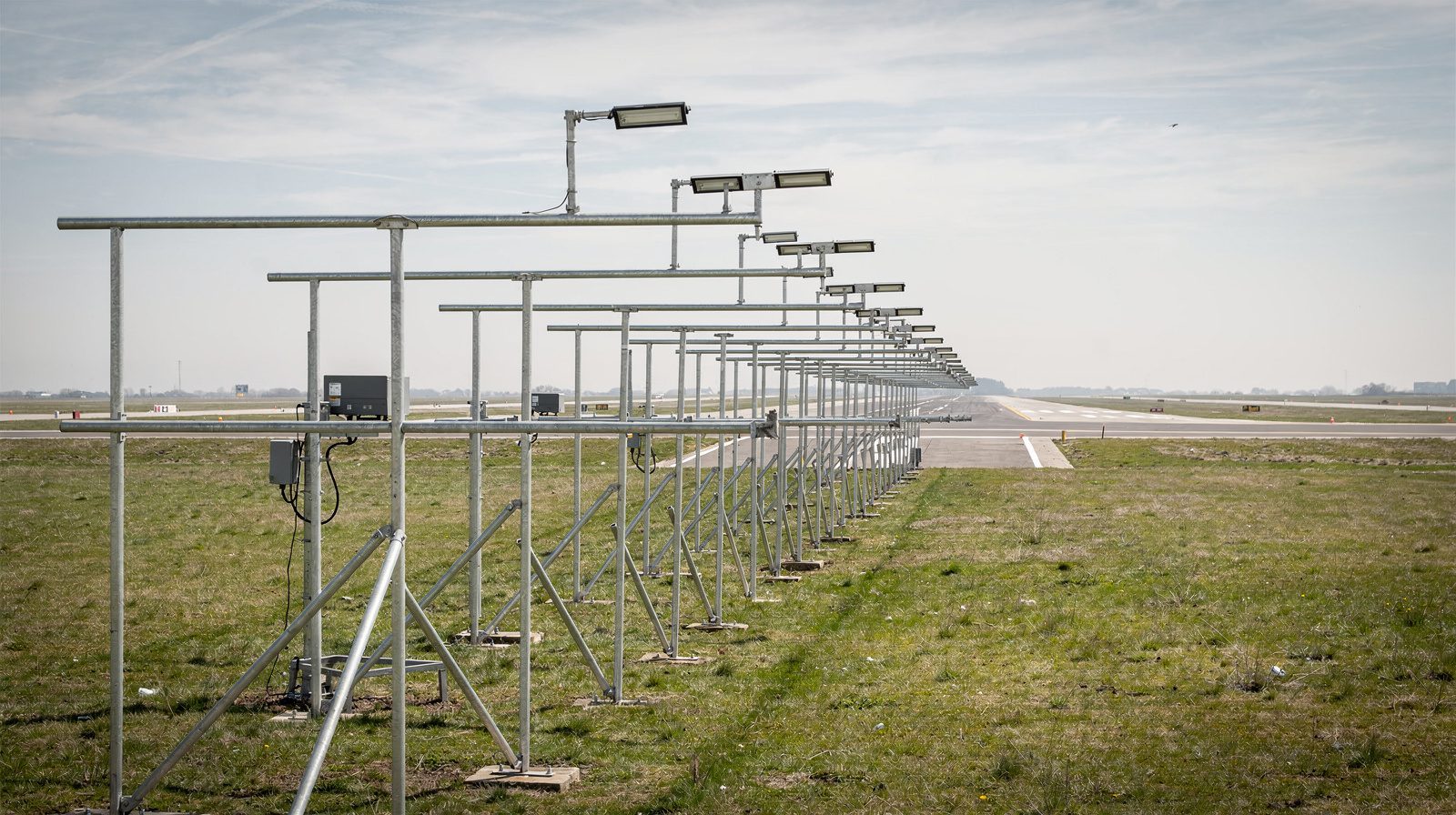
ODALS are installed on non-precision approach runways to provide critical cues for pilots during final approach. A typical ODALS comprises seven omni-directional flashing lights: five aligned along the runway centerline and two at the flanks. The system operates at 60 flashes per minute, with intensity settings to match visibility needs. The omni-directional pattern ensures guidance is always visible, even if the aircraft is off the intended approach path.
Obstruction Lights
Obstruction lights mark fixed hazards (towers, hangars, antennas) that could pose collision risks. Always omni-directional, these fixtures ensure hazards are visible from any direction. They are installed atop and at intermediate levels of tall structures, emitting continuous or flashing red (or sometimes white) light as required by ICAO and FAA standards. Modern obstruction lights are often solar-powered LEDs for reliability.
Technical Characteristics
Radiation Pattern
The defining feature is a uniform, 360-degree luminous output in the horizontal plane. The radiation pattern, when viewed from above, forms a perfect circle with minimal intensity variation (<±10%). The vertical beam is limited (typically 8–15°) to target pilots’ eye levels and meet environmental requirements.
Photometric testing ensures compliance with uniformity and minimum intensity standards.
Beamwidth & Coverage
- Horizontal Beamwidth: Always 360°, guaranteeing all-around visibility.
- Vertical Beamwidth: Typically 8–15°, tailored to application (runway edge, ODALS, obstruction).
- Uniformity: ICAO requires a minimum uniformity ratio (e.g., for runway edge lights, minimum to average intensity ≥0.4), eliminating “dead zones.”
- Spacing: Runway edge lights are spaced to guarantee at least two are always visible from any point along the runway axis.
Intensity & Color
- Runway Edge Lights: 50–200 candela (cd) typical, with high-intensity variants for larger airports.
- ODALS: High: 5,000 cd, Medium: 1,500 cd, Low: 300 cd.
- Obstruction Lights: Continuous red, minimum intensity set by type (per ICAO/FAA).
- Color: White for most runway/taxiway lights, yellow for caution, red for ends/obstructions.
LED technology is now standard, offering high efficacy, long lifespan (>50,000 hours), and low maintenance.
Compliance & Standards
Omni-directional airport lights must comply with:
- ICAO Annex 14, Volume I: Global standard for airport lighting performance, color, and installation.
- FAA AC 150/5345-51: U.S. standard for ODALS and other systems.
- EN/IEC Standards: For European and international harmonization.
Compliance is verified through laboratory photometric measurement, environmental testing, and certification.
Functional Importance in Airport Operations
Omni-directional lighting ensures:
- Consistent pilot visual guidance: Pilots can identify runways, taxiways, and obstacles from any approach.
- Runway/taxiway identification: Edges are clearly marked for all movements.
- Ground vehicle navigation: Vehicles stay safely on prescribed routes.
- Operational flexibility: Supports changing traffic patterns or emergencies.
- Regulatory compliance: Meets standards for night and low-visibility operations.
Use Cases and Examples
Runway Edge Lighting at a Regional Airport
A regional airport with a 2,000-meter runway uses omni-directional LED edge lights every 60 meters. The final 600 meters transition to yellow, warning pilots of the runway end. The 360-degree coverage means pilots always see clear runway boundaries, regardless of approach or taxi direction.
ODALS on a Non-precision Runway
A non-precision runway is equipped with an ODALS system: seven omni-directional flashers (five along the centerline, two at the threshold flanks), all visible from any approach angle. This ensures pilots can identify the runway, even when approaching from an offset or during a circling approach.
Obstruction Lighting for Airfield Structures
A new control tower and hangar are fitted with omni-directional red LED obstruction lights, visible from all directions to approaching aircraft. Lights are placed at the top and intermediate levels to comply with ICAO/FAA rules.
Emergency/Portable Lighting
During runway maintenance, portable omni-directional lights mark a temporary taxiway and closed sections. Their all-around visibility ensures clarity for both pilots and ground vehicles in changing operational scenarios.
Advantages and Operational Benefits
- Uniform visibility: No blind spots, pilots and vehicles always see critical cues.
- Enhanced safety: Reduces risk of incursions, excursions, and collisions.
- Simplified installation: No need for precise aiming or alignment.
- Regulatory compliance: Meets global aviation safety requirements.
- Modern technology: LEDs offer efficiency, long life, and low maintenance.
Summary
Omni-directional airport lighting is essential for safe, effective airfield operations. By emitting light equally in all horizontal directions, these fixtures ensure that pilots and ground personnel always have clear, reliable visual cues, whether marking runways, approaches, or obstacles. Rigorously regulated and continually evolving with LED technology, omni-directional lights are foundational to aviation safety worldwide.
Frequently Asked Questions
- What does 'omni-directional' mean in airport lighting?
- In airport lighting, 'omni-directional' refers to a light fixture designed to emit light equally in all directions on the horizontal plane, 360 degrees around its axis. This ensures that vital visual markers like runway edges, threshold lights, and obstruction markers are visible from any approach angle, supporting safe and reliable airfield operations.
- Where are omni-directional lights used in airports?
- Omni-directional lights are widely used in airport environments for runway edge lights, taxiway edge lights, approach lighting systems like ODALS, and obstruction lights on towers or buildings. They provide consistent visibility for pilots and vehicles from all directions, which is crucial for night or low-visibility operations.
- How do omni-directional lights differ from directional lights?
- Omni-directional lights emit light equally around the horizontal plane, providing 360-degree coverage. Directional lights, in contrast, focus their output in a specific angle or direction, such as Precision Approach Path Indicators (PAPI) that guide pilots on vertical descent paths. Omni-directional lights are used where all-around visibility is critical.
- Are omni-directional airport lights regulated?
- Yes. International and national aviation authorities like ICAO and FAA set strict standards for the intensity, color, uniformity, and installation of omni-directional airport lights. These regulations ensure the lights provide sufficient, consistent visibility to meet operational and safety requirements.
- What are the benefits of omni-directional airport lighting?
- Key benefits include continuous visual cues from any angle, improved safety for pilots and ground personnel, simplified installation (no alignment needed), and enhanced compliance with aviation standards. Modern omni-directional lights, especially LED-based, also offer energy efficiency and reduced maintenance.
This is a reference entry. TarmacView provides drone inspection services and doesn't sell the equipment or materials described in this glossary.