What is directional light in airport lighting?
Directional Light in Airport Lighting
Directional lighting is a cornerstone of modern airport infrastructure, providing the focused, high-intensity beams essential for safe and efficient aircraft operation. By projecting light precisely where it is needed, these systems give pilots and airfield personnel the visual cues required for approach, landing, taxiing, and takeoff, especially during night or low-visibility conditions. This page offers a comprehensive overview of directional light within airport lighting, including definitions, technical standards, regulatory guidance, and practical applications across the airfield.
Understanding Directional Light
Directional light refers to a lighting fixture engineered to emit most of its luminous output in a tightly controlled beam, focusing energy toward a defined area or trajectory. The key to this control lies in optical elements, reflectors, refractive lenses, or beam-shaping housings, that collimate and direct the light. In airport lighting, directional light is used not for general illumination, but for delivering highly visible guidance or signals to pilots and ground vehicles.
Key Features
- Beam Control: Directional lights emit within a precise angular sector, typically described in horizontal and vertical spread degrees. This ensures optimal visibility for users in critical positions, such as pilots on approach.
- High Intensity: Concentrating energy into a narrow beam yields high luminous intensity (candelas), essential for long-distance visibility and adverse weather operation.
- Targeted Illumination: These systems illuminate only the intended area, such as a runway or approach path, reducing visual clutter and enhancing clarity.
- Minimal Spill/Glare: Carefully designed optics limit stray light, reducing glare for pilots and light pollution for the environment.
- Color Coding: Strict standards apply: white for runway and approach, green for thresholds, red for ends, yellow/amber for caution. Colors are produced via filters, coated lenses, or specific LED sources.
- Regulatory Compliance: Fixtures must meet FAA and ICAO requirements for output, durability, safety, and maintainability.
| Aspect | Directional Lighting | Omnidirectional/General Lighting |
|---|---|---|
| Light Emission | Focused, narrow beam (e.g., 10°, 30°, 60°) | Distributed in all or most directions |
| Primary Purpose | Guidance, signaling, critical demarcation | General illumination, area lighting |
| Airport Example | Runway edge light, PAPI, REIL | Apron floodlight, taxiway area light |
| Intensity Distribution | High intensity in target direction | Lower, uniform intensity in all directions |
| Glare/Light Pollution | Minimal, controlled | Higher, may cause glare or spill |
Regulatory Standards
Directional lighting at airports is governed by a well-defined regulatory framework:
United States (FAA)
- Aeronautical Information Manual (AIM): Explains use and interpretation of airport lighting.
- Advisory Circular 150/5340-30J: Technical specs for installation, photometric output, color, fixture placement, and maintenance.
- FAA Engineering Briefs: Cover new technologies (e.g., LED fixtures), testing, and best practices.
International (ICAO)
- Annex 14, Convention on International Civil Aviation – Aerodromes: Sets global requirements for intensity, beam spread, color, and system redundancy.
- Aerodrome Design Manual, Part 4: Offers detailed guidance on layout, installation, and maintenance.
Key Regulatory Considerations
- Photometric Performance: Minimum/maximum intensity, uniformity, and color.
- Beam Geometry: Precise limits for beam spread and alignment.
- Durability: Resistance to weather, vibration, UV.
- Electrical Safety: Aviation-grade wiring, grounding, and controls.
- Maintenance: Routine inspections and photometric tests.
International airports must often comply with both FAA and ICAO standards to ensure seamless pilot experience and system interoperability.
Applications of Directional Light in Airport Lighting
Runway Edge Lights
Runway edge lights delineate the lateral boundaries of the runway, providing essential visual guidance during night or low-visibility operations.
- Design: Elevated or inset fixtures, focused beams visible to aircraft aligned with the runway.
- Intensity: High (HIRL), medium (MIRL), or low (LIRL) based on airport category.
- Color: White for most of the runway, transitioning to yellow near the end.
- Spacing: ≤200 feet apart, 2–10 feet from runway edge.
- Beam Spread: Typically ±10° from centerline, intensity adjustable.
- Compliance: FAA AC 150/5340-30J and ICAO Annex 14.
Approach Lighting Systems (ALS)
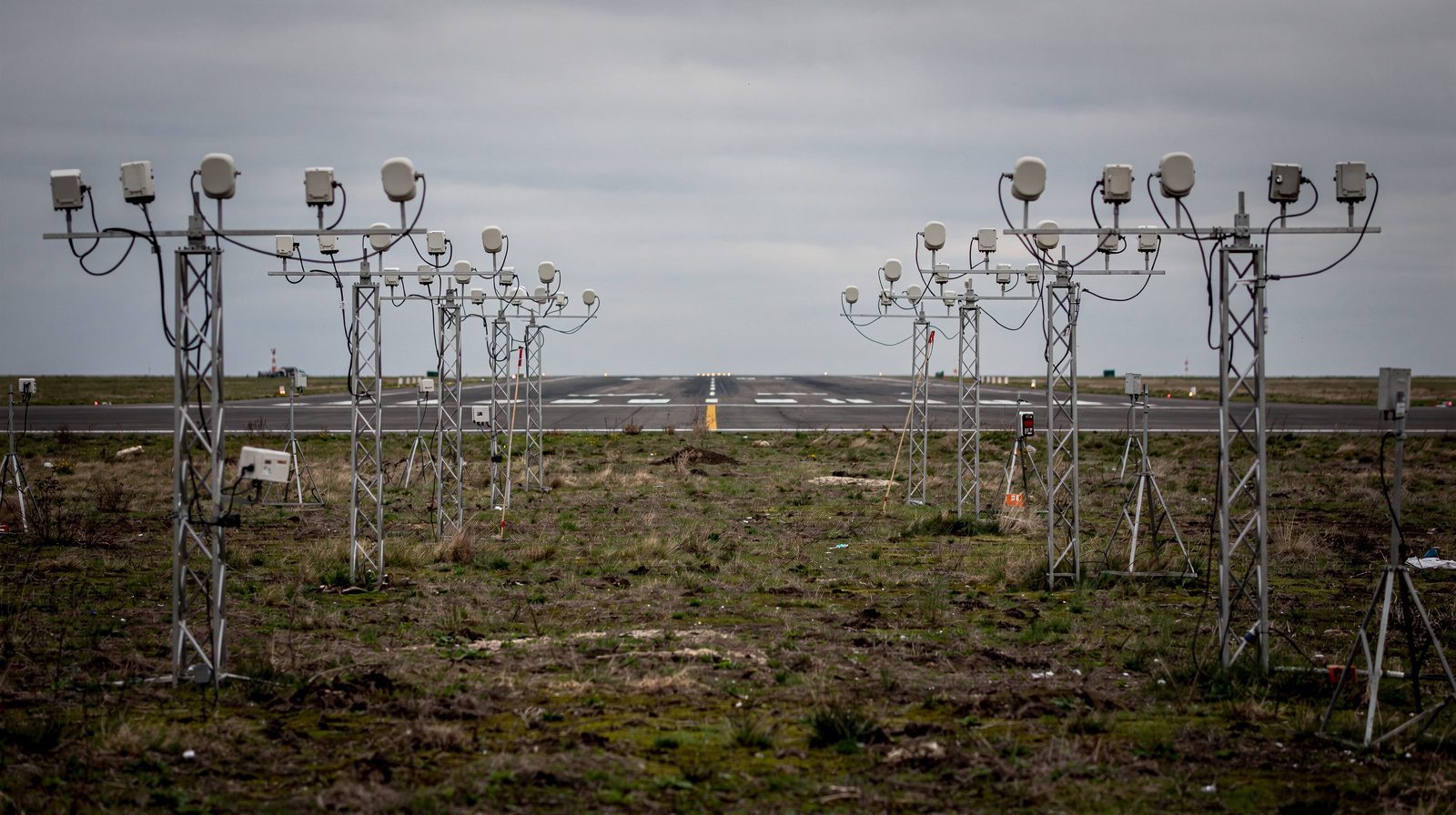
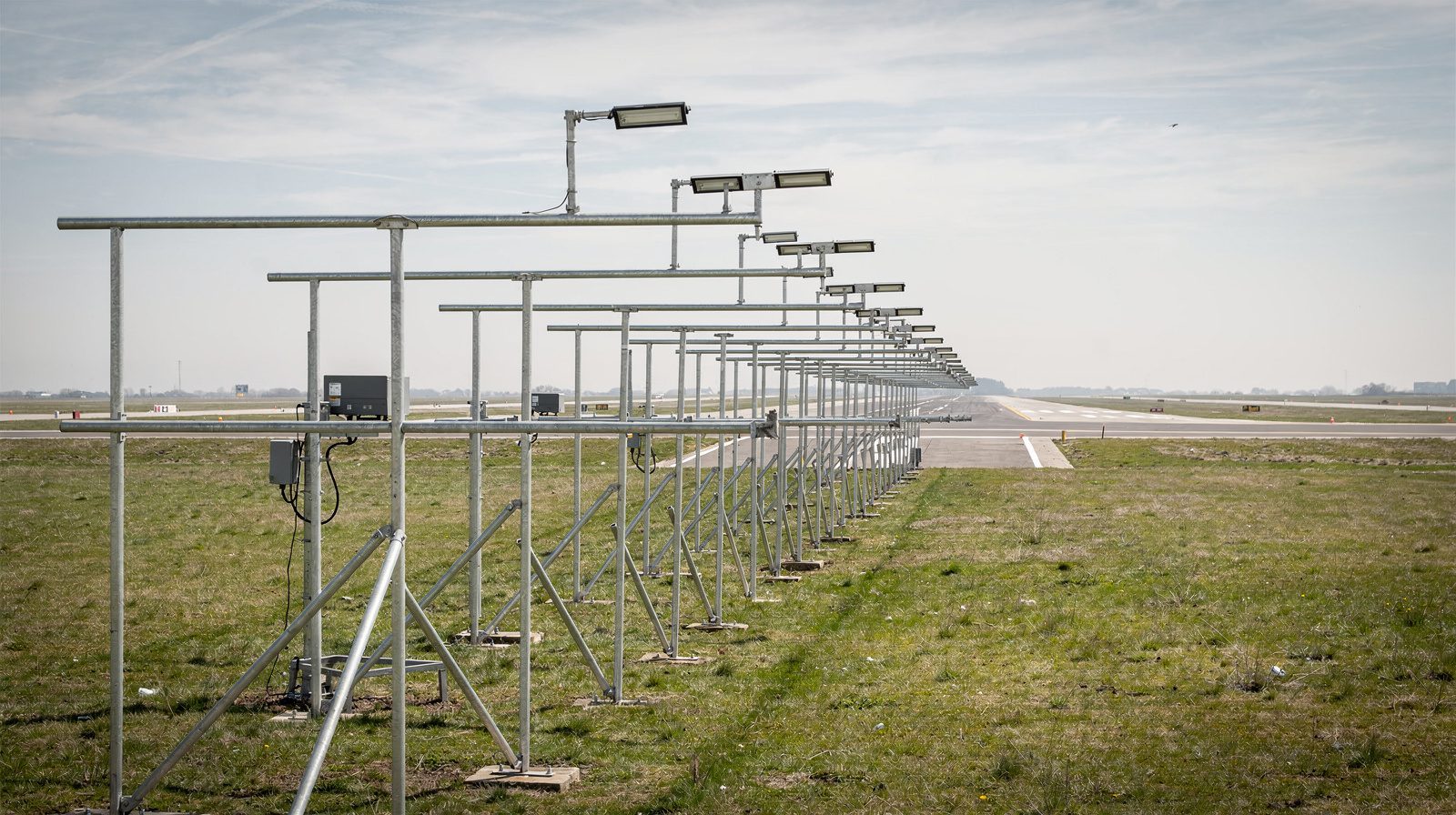
ALS are extensive arrays of high-intensity directional lights guiding pilots from instrument approach to visual runway alignment.
- Components: Light bars, crossbars, sequenced flashers (“rabbit”).
- Configuration: 1,400–3,000 feet in length, aligned with approach.
- Beam Control: Narrow, high-intensity beams along approach path.
- Color: White, red for terminating bars, green for thresholds.
- Spacing: Light bars/flashers at 100-foot intervals.
- Operational Value: First visual reference in low visibility, enables precision approach minima.
Runway End Identifier Lights (REILs)
REILs are two synchronized, high-intensity, flashing directional lights on each side of the runway threshold.
- Purpose: Rapid, unmistakable threshold identification, especially in cluttered or poorly contrasted environments.
- Beam Spread: Typically ±15° horizontal, ±10° vertical.
- Flash Rate: 60–120 flashes per minute, white color.
- Compliance: FAA/ICAO alignment, intensity, and flash rate standards.
Visual Approach Slope Indicators (VASI)
VASIs are directional systems providing vertical approach angle guidance.
- Design: Two or three bars of lights, left of runway.
- Optics: Beams split into red (low) and white (high) vertical sectors.
- Glide Path: Standard 3°, visible up to 5 miles (day) and 20 miles (night).
- Color Codes:
- Red over red: below glide path.
- Red over white: on glide path.
- White over white: above glide path.
- Compliance: FAA/ICAO standards for color, intensity, and alignment.
Precision Approach Path Indicator (PAPI)
PAPI refines approach angle feedback with a linear array of two or four directional light units.
- Location: Single line, left of runway.
- Indications:
- 4 white: well above glide path.
- 3 white/1 red: slightly above.
- 2 white/2 red: on path.
- 1 white/3 red: slightly below.
- 4 red: well below.
- Beam Coverage: ±10° horizontally, visible up to 3.4 nm.
- Regulations: FAA/ICAO standards for alignment, intensity, and calibration.
Centerline and Touchdown Zone Lights
Centerline lights (embedded along runway center) and Touchdown Zone Lights (TDZL, parallel rows beyond the threshold) are crucial for alignment and touchdown, especially in low visibility.
- Centerline: White, changing to red/white then red near runway end, tightly focused beams.
- TDZL: Rows of white bars, extending 3,000 feet or to runway midpoint, directional beams visible from approach.
Technical and Operational Benefits
- Enhanced Safety: Precise, highly visible guidance reduces risk of runway incursions, excursions, and landing/takeoff errors.
- Reduced Visual Clutter: Targeted beams prevent confusion and minimize light pollution.
- Adaptability: Modern LED-based directional lights offer adjustable intensity, longer lifespan, and lower maintenance.
- Environmental Compliance: Minimized spill and glare protect wildlife and reduce energy usage.
Maintenance and Inspection
Routine maintenance is mandated to ensure directional lights maintain their photometric and color standards. This includes:
- Photometric Testing: Verifying beam intensity and spread.
- Alignment Checks: Ensuring fixtures point along approved axes.
- Color Consistency: Confirming compliance with regulatory chromaticity.
- Physical Inspection: Assessing fixture condition, wiring, and mounting.
Conclusion
Directional light is a vital, highly regulated element of airport lighting systems. Its ability to project intense, focused beams for guidance, signaling, and critical demarcation underpins safe airfield operations in all conditions. By adhering to rigorous FAA and ICAO standards, airports ensure that directional lighting delivers maximum safety, clarity, and efficiency for every flight.
For further details or technical standards:
Frequently Asked Questions
- What is the purpose of directional lights at airports?
- Directional lights provide focused illumination and visual guidance to pilots and ground vehicles, especially during approach, landing, and taxiing. Their precision ensures safety, minimizes confusion, and complies with regulatory requirements.
- Which airport lighting systems use directional light?
- Key systems include runway edge lights, approach lighting systems (ALS), runway end identifier lights (REIL), visual approach slope indicators (VASI), precision approach path indicators (PAPI), and centerline/touchdown zone lights.
- How is directional light different from omnidirectional lighting?
- Directional light emits a focused beam along a specific axis, while omnidirectional lighting emits light uniformly in all directions. Directional light is used for signaling and guidance, whereas omnidirectional lighting is used for general area illumination.
- Who regulates airport directional lighting standards?
- In the United States, the Federal Aviation Administration (FAA) sets standards. Internationally, the International Civil Aviation Organization (ICAO) provides global requirements. Compliance with these agencies ensures harmonized and safe airport operations.
- What colors are used in directional airport lights, and what do they mean?
- White indicates usable runway or approach areas, green marks thresholds, red warns of the runway end, and yellow/amber signals caution zones. Strict color coding ensures pilots receive clear, unambiguous visual cues.
This is a reference entry. TarmacView provides drone inspection services and doesn't sell the equipment or materials described in this glossary.